| 1812 |
USG sends food aid to Venezuela after earthquake. President James Madison and Congress appropriate $50,000 for wheat flour aid. |
| 1847 |
Choctaw nation in Oklahoma raises famine relief funds for Ireland. |
| 1914-1919 |
Commission for Relief in Belgium during WWI channels U.S. wheat that fed 10 million people in Belgium and Northern France, daily. Future president Herbert Hoover organizes first large scale food logistics to combat famine. |
| 1918-22 |
American Relief Administration provides 700,000 MT of famine-relief food aid to Russia, Poland, Austria. |
| 1930 |
U.S. Foreign Agricultural Service posts agricultural attachés around the world, starting in South Africa, Sydney, Belgrade. |
| 1943 |
Catholic Relief Services (CRS) channels food aid in war-torn Europe. U.S. foods for Europe went through the United Nations Relief and Rehabilitation Administration (UNRRA) and the UN Food and Agricultural Organization. |
| 1944 |
Dutch famine (Amsterdam, Rotterdam, The Hague) led to US Operation Chowhound of B-17 Airdrops of flour, meat, eggs. Later US military trucked in food as Operation Faust. |
| 1945 |
WWII famine relief. George McGovern in the 741st Bomb Squadron flew surplus food aid to Trieste in northeastern Italy. George McGovern later becomes first director of the Office of Food for Peace, and Democratic nominee for President. |
| 1945-47 |
CARE Packages as WWII relief, using surplus US Army “10-in-1” rations stockpiled for the canceled invasion of Japan. CARE leaders negotiated with the Army to acquire nearly 3 million pre-packaged rations. Post-WWII US aid also flowed through multilateral channels like UNRRA, the Marshall Plan/GARIOA. CARE and CRS bridged U.S. surpluses through private networks. |
| 1948-49 |
USG and UK airlift 296,000 tons of food (and coal) to West Berlin. CARE delivered 230,000 packages to Berlin on its own planes. |
| 1948-51 |
American Friends Service Committee, CARE, and USG provide aid to famine threatened parts of India during the Partition that created India & Pakistan. US passed India Emergency Food Aid Act providing 2 million MT of grain. |
| 1950s |
India looms large as major concern for large food shortages & famine. US provided large scale grain shipments under Title I and II. |
| 1950s |
US holds large domestic reserves, including surplus dairy products. FFP framed as a benefit to US farmers as safety valve for purchasing surplus production. |
| 1954 |
FFP assistance to Korea includes large quantities of wheat flour shipped under Title I, a total of $1.6 billion through 1974. Later in 1987, Korea became a food donor. |
| 1954 |
Western Wheat Associates (U.S. wheat growers) used food aid for market development, teaching bakers in Japan and India how to use wheat flour. |
| 1954 |
PL 480 signed into law by President Eisenhower with primarily Title 1 government to government food going to governments. |
| 1954-59 |
Food aid to Pakistan, Japan, Taiwan, Yugoslavia, Greece, Italy, Spain. |
| 1955 |
CARE’s Board of Directors votes to not dissolve, but to refocus the organization’s aid from Europe to other continents, hence the name changes from Cooperative for American Remittances to Europe to “Cooperative for American Relief Everywhere.” This passed by a single vote. CARE implements Title I and II food aid in Haiti, Guatemala, Honduras, India and Dominican Republic. |
| 1958 |
“Food and Fiber as a Force for Freedom” Senate report recommends food as a force for democracy and coins the phrase “food for peace”, written by Senator Hubert Humphrey, future nominee for US president. |
| 1959 |
INCAP in Central America creates Incaparina weaning food to prevent malnutrition. |
| 1961 |
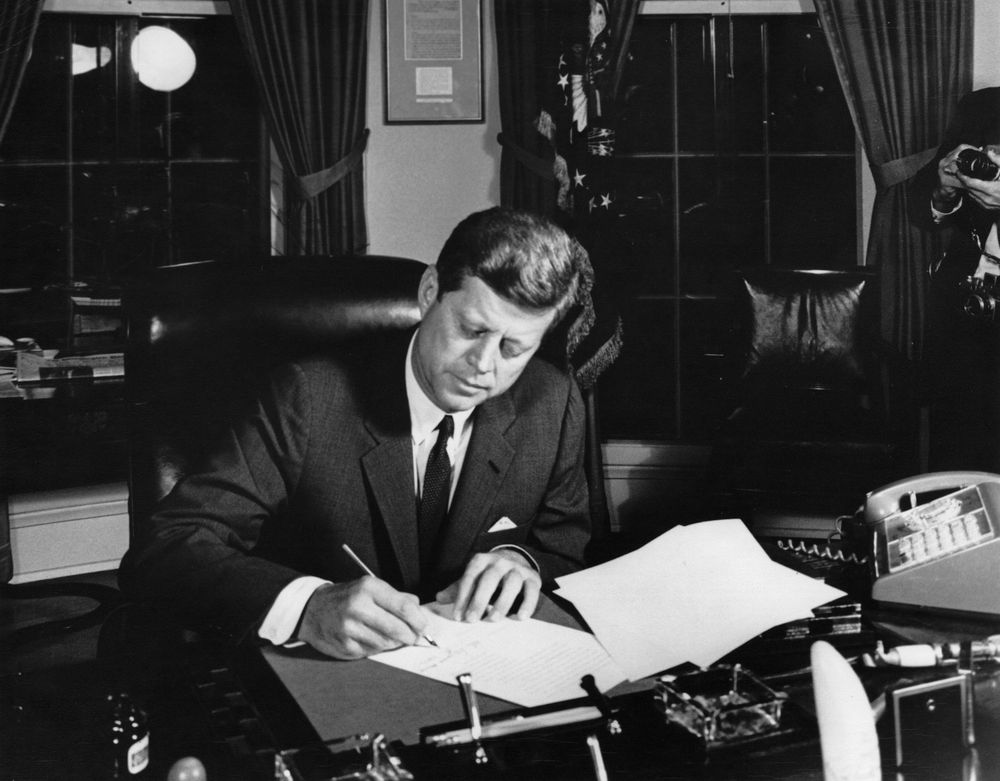
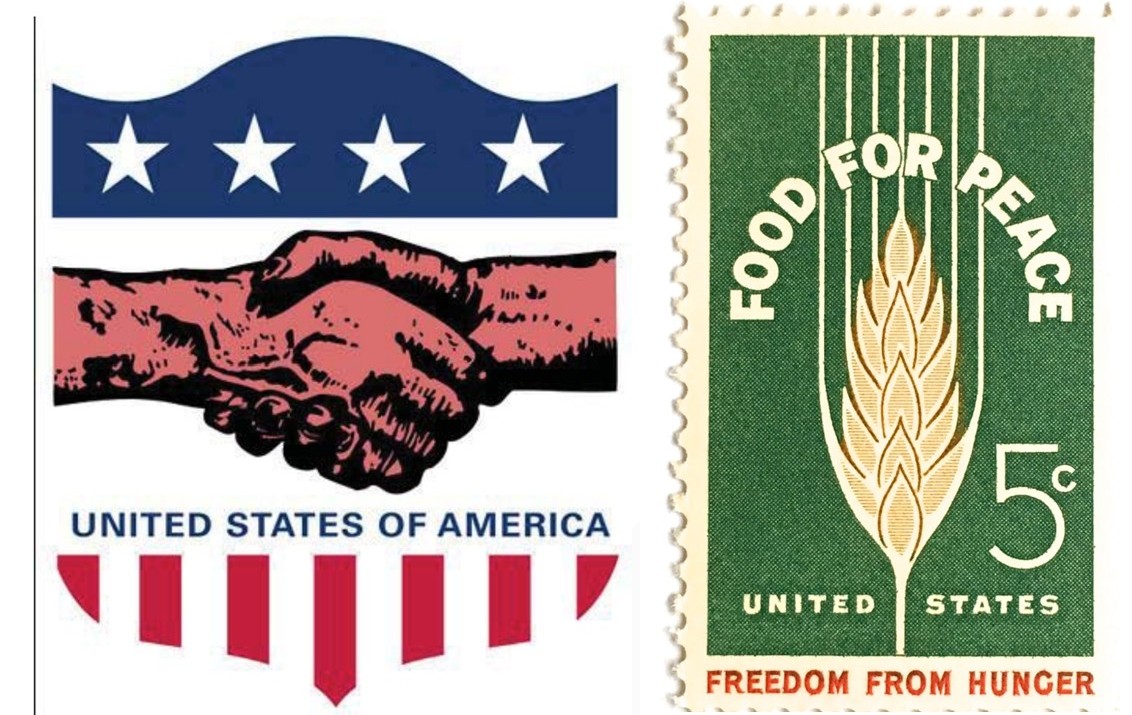
President John F. Kennedy rebrands the initiative “Food for Peace” and consolidates U.S. overseas assistance under the U.S. Agency for International Development (USAID). Title III food aid created to incentivize agricultural modernization. |
| 1961 |
WFP proposed by George McGovern, the first director of the U.S. Food for Peace program, as a three-year UN “experiment” to internationalize food aid. |
| 1963 |
FFP fuels Operation Niños: Ag Secretary Orville Freeman claimed that U.S. food reached one in four Latin American children, that rural school-meal programs in Bolivia and Peru doubled school attendance. Food for Work also in S America. |
| 1966 |
Egypt gets soft loans to purchase PL 480 food. |
| 1966 |
Food aid in India peaked during the severe Indian famine of 1965–1966. During this time, the U.S. used food aid as a heavy diplomatic lever. CARE receives food aid for emergency food program in drought areas. President Johnson involved in every food aid decision related to India. |
| 1966 |
The 1966 Food for Peace Act PL 89-808 reframes aid from surplus disposal to development conditionality and economic development. President Johnson transfers FFP direction from the White House to the State Department. Johnson emphasized agricultural reforms as a precondition for a country to receive food aid. |
| 1966 |
Likuni Phala fortified weaning food is pioneered in Malawi. |
| 1968 |
USAID offers Corn-Soy Milk (CSM) and Corn-Soy Blend (CSB) as fortified foods. |
| 1968-69 |
U.S. C-97 Stratofreighters (Boeing) help deliver $50M of food aid to Biafra during war in Nigeria, via CRS, CARE, the ICRC and Joint Church Aid. First large scale deployment of new CSB. First live-televised famine; introduced kwashiorkor. |
| 1972 |
World food crisis, Sahel famine. |
| 1972-1974 |
Dan Shaughnessy directs Food for Peace and planning for the 1974 UN World Food Conference. Henry Kissinger plays central role in targeting countries for food aid. |
| 1975 |
Integrated Child Development Services large child nutrition program in India. USG Corn Soya Milk and non-fat dried milk provided through South India Flour Mills for CARE’s “balahar” fortified food for school feeding, led by Tim Lavelle. |
| 1976 |
World Hunger Education Service begins educating the public and USG about food aid issues and begins quarterly publication of the journal, Hunger Notes. |
| 1977 |
Title III food aid revised to focus on barter for debt forgiveness and tying aid more explicitly to policy reforms and long-term development in recipient countries. |
| 1979 |
Two key publications: Amartya Sen’s Poverty & Famines demonstrates that food insecurity is not only about food availability but also about access. Lincoln Chen demonstrates that risk of death increases non-linearly by degree of child wasting. |
| 1979 |
U.S. donates polished (thiamine removed) white rice to anti-Khmer Rouge groups in Cambodia, resulting in epidemic beriberi (deficiency disease). |
| 1980s |
Maternal Child Health (MCH) is main type of project supported by food aid, having grown during the 1970s. Food for Work also common for roads/infrastructure. |
| 1983 |
Church World Service (CWS) stops taking USG FFP resources, following controversial episode of 60 Minutes on CBS about CWS programs in countries with communist governments. CWS goes overnight from being the largest food aid agency in the world to one of the smallest. |
| 1984 |
Burma Border Consortium of NGOs formed, purchasing food locally for Burmese refugees in camps in Thailand, supported by the U.S. Department of State. |
| 1985 |
Food for Progress Act explicitly references “Private Voluntary Organizations” or PVOs. Food for Progress authorized CCC financing for grants or credit sales to support agricultural development in developing countries and emerging democracies. |
| 1985 |
6 million MT of food sent for African famine. Two supplemental appropriations made for Ethiopia famine. FFP manages $500M for Ethiopia alone, plus more for Sudan, and across 21 African countries. |
| 1985 |
Farm Bill promotes PVO/NGO monetization, using Title II as an alternative revenue stream to direct-dollar grants. U.S. Dry Bean Council positioned pintos and black beans as shelf-stable, high-value food for NGOs to monetize. Initially monetization was to pay for internal transport, which was later funded by USAID in the 1990s. |
| 1985 |
Ellen Levinson creates the Coalition for Food Aid of NGOs in Washington, DC to promote the roles of NGOs in food aid. Title II Enhancement Grant (later, Title II Strengthening Grant) for PVO headquarters capacity building. |
| 1986 |
Famine Early Warning System Network (later named FEWS.NET), established on the advice of Tufts University’s President Jean Meyer. Credit also to John Field. |
| 1989 |
Collapse of Soviet Union shifts emergency food aid gradually away from refugees fleeing regimes in host countries, instead to internally displaced persons. |
| 1990 |
Food Aid Management funded by FFP with 5 original PVO members. |
| 1990 |
Fred Cuny pioneers local purchase of food as a more appropriate response to food needs in Ethiopia. |
| 1990s |
PVOs promote local village “grain reserves” with food aid for resilience. |
| 1990-93 |
End of US food aid to Somalia leads to famine throughout 1992. President Bush directs US airlifts food via C-130s in late 1992. U.S. Food aid monetized to reduce retail prices across the country in 1993, but after famine has receded. |
| 1990 |
“Partial monetization” turns into “100% monetization” for many NGOs. |
| 1991 |
Famine Mitigation Project of experts convened by USAID to recommend best practices to prevention of famine. Including livestock, water, local food purchase. |
| 1992 |
Food aid mobilization to former Soviet states where food insecurity tied to pensions lost from ruble devaluation. USG works through Red Cross movement. Operation Provide Hope channeled 25,000 MT to the Caucasus and Central Asian “Stans.” ADRA involved in Armenia and other states. |
| 1992 |
Bosnia: Operation Provide Promise began July 2, 1992, becoming the longest-running humanitarian airlift in history. USG provided sorties into besieged Sarajevo, delivering food and other aid to civilians trapped by the Yugoslav war. |
| 1992 |
Food Aid Management (FAM) publishes Generally Accepted Commodity Accountability Principles, GACAP, representing all NGOs working with US food aid. |
| 1990s |
PVO/NGO “cooperating sponsors” include CRS, CARE, World Vision, Save the Children, ADRA, Land O Lakes, ACDI/VOCA, Food for the Hungry International, Project Concern, Africare, Technoserve, Partners for Development, World Relief, Mercy Corps, Lutheran World Relief, IOCC, UMCOR, and International Relief and Development. CARE is often lead food agency in refugee camps, while CRS is lead for IDPs. |
| 1992-1994 |
FFP defines food security as: availability plus access plus bio-utilization. |
| 1993-1996 |
FFP Director Robert Kramer rebalances food aid from entrenched USAID Mission projects to areas of greatest need (emergencies), and pushed WFP to recognize the greater priority in emergencies of food. |
| 1993 |
FAM publishes NGO manual, Monetizing Food Aid, a Guide for PVOs. |
| 1992 |
CRS’ Mike D’Adamo travels to Rome to strike a partnership with WFP, opening an era of WFP collaboration with NGOs. |
| 1994 |
CARE and CRS account for roughly 72% of PVOs’ regular Title II programs. |
| 1995 |
2 million refugees plus almost as many IDPs received some 240,000 MT of food in Rwanda and neighboring countries, following genocide and flight. |
| 1995-97 |
North Korea’s famine received over 1.1 million metric tons. |
| 1996 |
André Briend & Michel Lescanne create Plumpy’Nut, the first RUTF, at Nutriset. |
| 1997 |
WFP strikes agreements partnering with NGOs for distribution activities. |
| 1998 |
USG requires vegetable oil be fortified with vitamin A (and later, Vitamin D). |
| 1997-2001 |
Asian financial crisis as currencies lost purchasing power. NGOs like IRD, and WFP used food aid as social protection safety nets. |
| 1999 |
The majority of US food aid now channeled through WFP, not NGOs. |
| 1999 |
USAID, FAM and the Canadian Govt convene food experts at a symposium at the American Red Cross to document feasibility of fortifying emergency food aid at the local level to mitigate micronutrient deficiency diseases widely seen among refugees. |
| 2000 |
Global Food for Education Initiative $300 million, with CCC resources. Over next two decades, 5.5 billion meals for 31 million school children in 48 countries. |
| 2000 |
Congress passes International Food Relief Partnership Act, amending Title II to authorized grants to US nonprofits to create shelf-stable food products for aid, such as Breedlove Foods in Texas. |
| 2001 |
FFP Officer Tim Lavelle organizes long-term Bridge of Friendship pipeline from hub of Termez over the Amu Darya river from Uzbekistan to Afghanistan, facilitating hundreds of thousands of tons of famine-preventing food aid into Afghanistan. |
| 2002 |
FFP nutritionist Tom Marchione promotes new formulations of CSB and nutrient-dense foods as part of commodity docket. |
| 2002 |
CTC/CMAM modality for treating malnourished children with RUTF promoted. |
| 2002 |
New McGovern-Dole Food for Education program passed in 2002 Farm Bill. This moves school feeding from Food for Peace to USDA. |
| 2002 |
No more funding for Title III, a government-to-government program under PL 480 where the foreign government sold food for local currency proceeds. |
| 2003 |
Large-scale U.S. emergency food aid rejected by five southern African famine-affected countries because US corn is genetically modified. Eventually the grain was milled in S. Africa before transporting to Zimbabwe, Malawi, Zambia, etc. |
| 2000s |
Food aid targets HIV/AIDS response primarily in sub-Sahara Africa. USAID Administrator Natsios pushes for more flexibility for local purchase of food. |
| 2003 |
Dr. Patricia Wolff from Washington University, St Louis, founds “Meds & Foods for Kids” in Haiti and produces Medika Mamba. |
| 2003 |
FANTA and FFP develop criteria for prioritization of non-emergency countries. |
| 2004 |
Jeanie Markunas retires from long career overseeing Food for Peace. |
| 2004 |
C-SAFE consortium (World Vision, CARE, CRS) manages food aid across southern Africa, with the World Food Programme as a sub-grantee. |
| 2004 |
Globally, World Vision now channels food aid mostly as a sub-awardee under WFP whereas a few years earlier it was primarily a prime. |
| 2005–2011 |
RUTF increasingly mainstreamed among NGOs, UNICEF & USAID as part of a shift from blended-flour to lipid-based products for targeted feeding of malnourished. |
| 2006 |
SMART survey manual released, about measuring acute malnutrition and mortality, with the intent to standardize reliable data across agencies. In 2008, the Global Nutrition Cluster designated Action Against Hunger (ACF) as the global convener of SMART, including ongoing infrastructure, guidance, consultations. FAM hosts a workshop about SMART for monitoring malnutrition. |
| 2008 |
Farm Bill Sec. 3206 created the pilot USDA Local and Regional Food Aid Procurement Program. The rule established grants for field-based projects consisting of local or regional procurement. |
| 2007 |
USAID & IFRC plan food aid reserves for future pandemics that contract markets. |
| 2008 |
Prices for corn and oil increased 125% over a short period, increasing malnutrition worldwide. The USG provided additional $2.8 billion across all international food aid programs, delivering 2.3 million metric tons for 43 million people. |
| 2009 |
Decades of US food aid to India ends. Meanwhile, India donates food to WFP. |
| 2009 |
Land O’Lakes International Development nonprofit pilots local purchase of food baskets in Zambia for people with HIV. |
| 2009 |
Food Aid Quality Review research starts at Tufts University School of Nutrition. |
| 2010 |
Congress approves The Emergency Food Security Program (EFSP) to allow cash and voucher assistance, instead of only in-kind commodities, using International Disaster Assistance funds. |
| 2010 |
MSF launches “starved for attention” campaign criticizing the US for donating CSB instead of only procuring RUTF. |
| 2010s |
Ongoing scale up of RUF production by MANA and Edesia (U.S. NGOs). |
| 2010-2011 |
Despite early warnings, over 200,000 Somalis die when US cuts off food aid because of Patriot Act. Food aid reinstated only after hunger season ended in 2011. |
| 2010s |
“Sequencing, layering, and integration” promoted in FFP program designs. |
| 2012 |
International Food Assistance Improvement Act of 2012 (H.R. 4141) sought to enhance nutritional quality and cost-effectiveness of food aid |
| 2014 |
Farm Bill expanded Section 202(e) flexibility. USAID increase in authorized 202(e) funding to provide cash transfers, food vouchers, & local purchase modalities. |
| 2014 |
Charles Hanrahan retires from the Congressional Research Service, after 29 years researching international food aid. |
| 2015 |
Resilience Food Security Activities (RFSAs) formally introduced as new design of FFP development programs. |
| Mid 2010s |
Multi-year, development cooperative agreements, “MYAPs”, replaced by “DFAPs” as main form of FFP projects implemented by NGOs. |
| 2017 |
Food to four well-publicized man-made famines: S Sudan, Somalia, Yemen & Nigeria. |
| 2018 |
89% of FFP resources for emergencies. Development food aid % at all time low.
RFSAs emphasize new “graduation model”, along with theories-of-change, learning, and ‘pause and reflect.’ |
| 2019 |
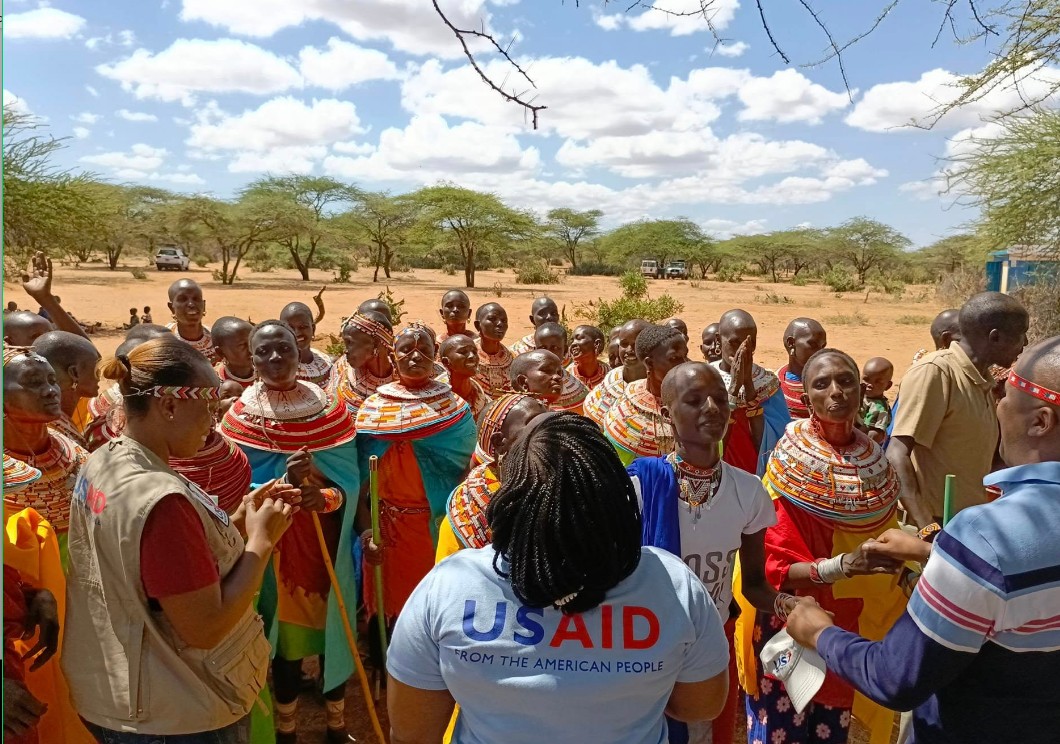
USAID funds Nawiri resilience (RFSA) program in Kenya for northern, arid lands. |
| 2020 |
Top recipient countries of US food aid from 2015 to 2020 were Yemen, Syria, South Sudan, Somalia, Ethiopia, DRC, Sudan, Afghanistan, Kenya, and Nigeria. |
| 2022 |
Response to Ukraine war leads to full draining of the Bill Emerson Humanitarian Trust. USG also provides $388 million for shipping/freight, totaling $670 million. |
| 2023 |
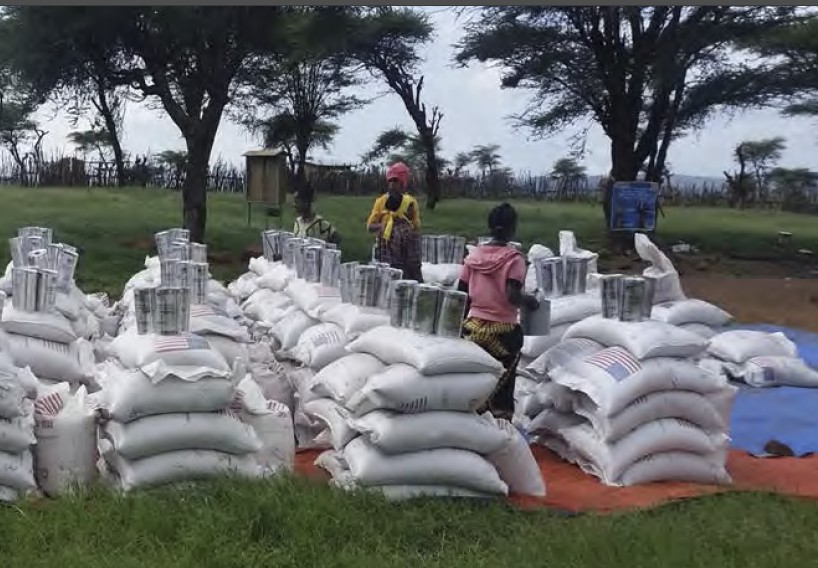
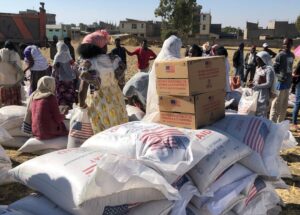
USG and WFP shut down food pipelines to Ethiopia. USAID Administrator on June 8 suspended food aid across Ethiopia because of widespread, coordinated theft of U.S. food by multiple actors (including to military units and markets). This stopped aid for ~20 million people amid drought and post-conflict needs. |
| 2024 |
First RFSA program in Somalia. |
| 2025 |
DOGE terminates many FFP (RFSA) and Food for Progress programs, while authority for FFP and FEWS shifted to State Department. A few RFSAs are re-started: Mercy Corps in Kenya, ADRA in DRC, Food for the Hungry in Ethiopia, and CRS in Haiti. |
| 2025 |
December: FFP transitions again, to US Department of Agriculture which in February commits $452 million to WFP and bids new emergency programs for DRC, El Salvador, Ethiopia, Guatemala, Haiti, Kenya, & Rwanda. |
| 2026 |
July: FFP announces $235 million to CRS for Ethiopia and Sudan. |
| 2026 |
USG provides private and UN food aid in recovery from earthquake in Venezuela. |




 The partner county governments agreed to sustaining gains post-closeout, including asset handovers and policy integration. The NGOs also observed a chronic deficiency in prioritizing and budgeting of government resources for nutrition, and political leaders frequently lack awareness of the importance of multisectoral nutrition approaches.
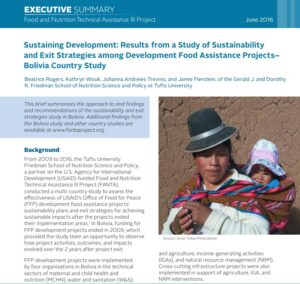 clinics where cash transfers and supplements were available. See:
 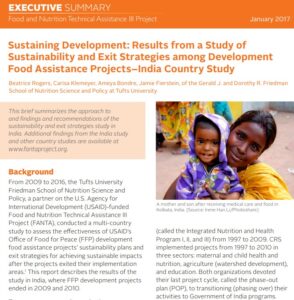 government programs. CARE transitioned the food supply chain to the Integrated Child Development Service. Many Anganwadi Centers maintained uninterrupted food supply for preschool children after exit. Take home rations were less reliable. In Orissa, distribution dropped dramatically due to irregular deliveries. In some states, beneficiaries reported that the quality of government rations had degraded so much that some fed it to animals. Mothers continued attending health days only to receive the rations. Catholic Relief Services attempted to transition school feeding programs to the Mid Day Meals program. This largely failed because the government lacked motivation to provide free food to private religious and boarding schools.
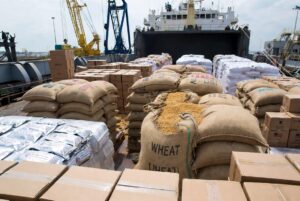
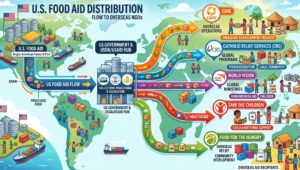 intense competition for these new FFP program awards is expected. NGOs such as CARE, CRS, World Vision, Mercy Corps, Save the Children and Action Against Hunger applied for FFP grants.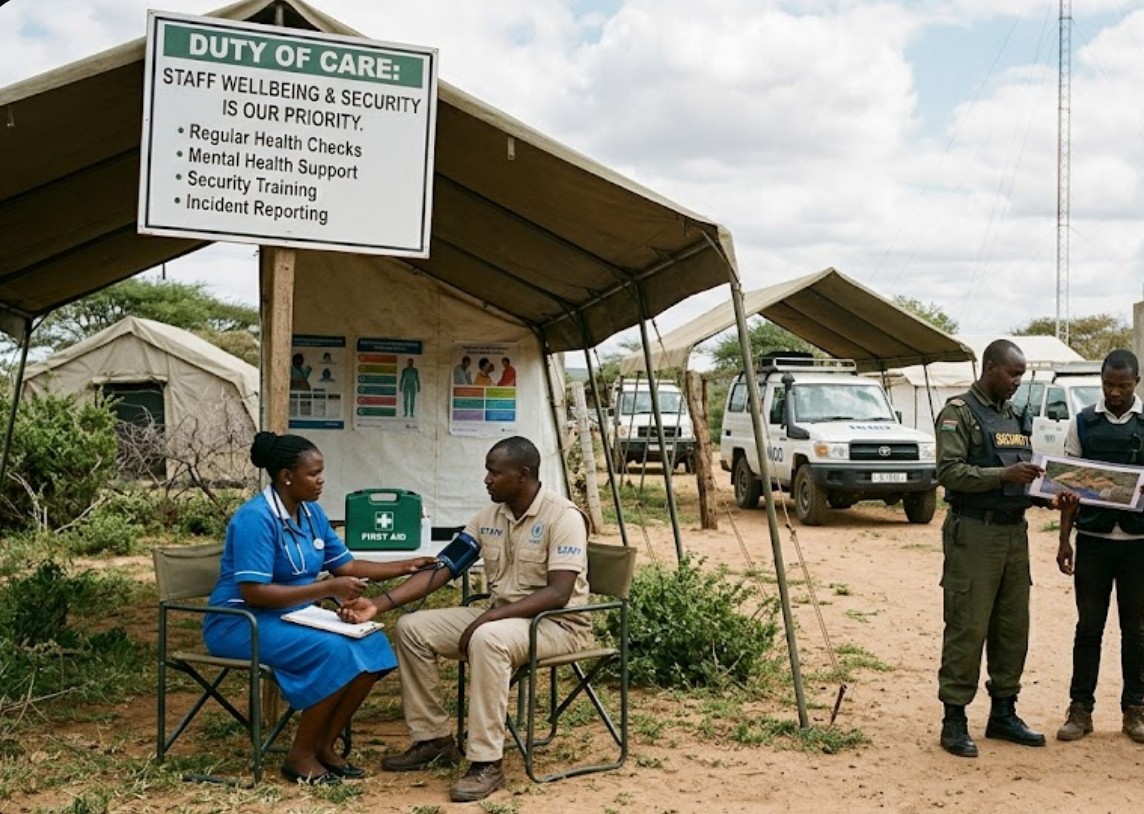
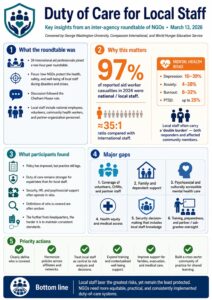 remain siloed within organizational systems and responsibilities, weakening crisis response.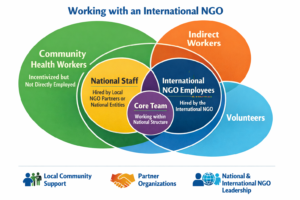
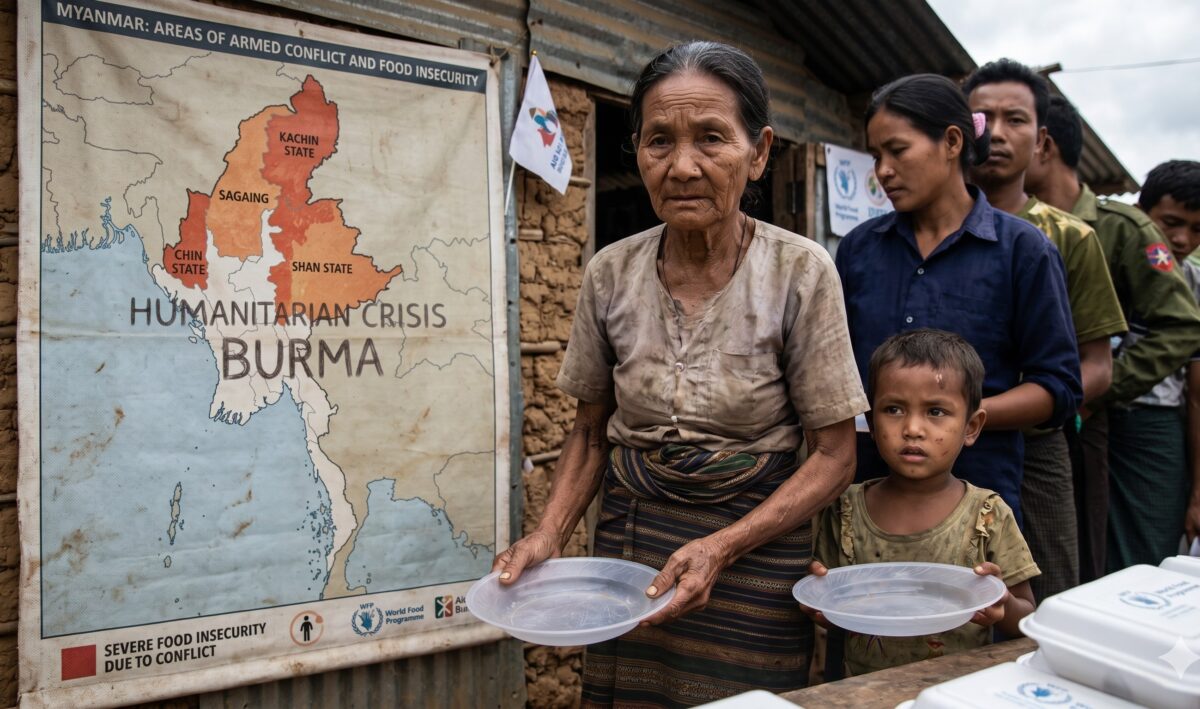
 WFP also runs school feeding programs in areas with high food insecurity, providing nutritious meals to children in schools.