U.S. Food Aid (Part 7): Lessons of Exit & Sustainability

July 21, 2026   This is the seventh part of a Hunger Notes series that review of lessons of U.S. food aid.

The ultimate goal of aid agencies’ food aid projects is to solve hunger problems in a lasting way.  Rarely, however, are aid agencies able to come back and see what improvements persisted after the project was over.

Unique and powerful research conducted by Beatrice Lorge Rogers and Jennifer Coates of Tufts University’s School of Nutrition (commissioned by the USG Food for Peace program) looked in-depth at what happens after food assistance projects ended. Their key conclusion was that project success at the moment of exit does not reliably predict long term sustainability.  (see:  synthesis report.)

The study found that many interventions that looked strong around the end of implementation weakened or collapsed once external aid resources and incentives disappeared.  As a result, the researchers argued that sustainability must be designed from the beginning of a project, not added late in the final year. They emphasized that sustained outcomes require three jointly necessary factors. These are:  1) a continuing source of resources, 2) technical and managerial capacity, and 3) motivation that does not depend on project inputs. A fourth factor, linkages to institutions, is often essential for phase over. The study stated that “endline achievement is not evidence of durability” and that “hope is not a strategy.”  In a series of reports produced by Tufts University, they demonstrated that sustainability is a trajectory that unfolds over years, not a status measured at a single point in time.

The research followed twelve NGO projects funded by the US Food for Peace program in four countries: Bolivia, Honduras, India, and Kenya. These projects had been deemed to have been generally successful at the time of their completion, and had documented sustainability plans.  Included in the study were ADRA, CARE, Save the Children, World Vision, Food for the Hungry, ACDI/VoCA, Counterpart International, and local sub-awardees.  The Tufts study used mixed methods and collected data at exit and again one to three years later. It examined whether services continued, whether practices were maintained, and whether outcomes persisted or changed. The findings challenged common assumptions in development programming.

One assumption they found NGOs too often make is that once people have been trained, they will continue the activity. But the study found that training alone was not enough. People also needed motivation, resources, linkages, and opportunities to refresh knowledge. Another assumption is that establishing contact between community actors and government services will create a durable relationship. The study found that linkages were sustainable only when responsibilities were explicit, the receiving institution valued the activity, and the institution had staff, authority, budget, and supplies.

The research also showed that abrupt exits often led to collapse, while gradual exits that allowed independent operation before departure were more promising.

Across countries, sustainability requires deliberate integration of resources, capacity, motivation, and linkages. These factors need to be built into program design from the start. The study found that the first three factors were jointly necessary. No project achieved lasting sustainability without all three functioning together. Resources refer to a continuing source of financial, material, or human capital. Capacity refers to technical and managerial skills. Motivation refers to incentives that do not rely on project inputs. Linkages refer to vertical connections to institutions that can provide supervision, supplies, or market access. The study found that projects often achieved high impact at exit because they were supplying resources and incentives; but, once those supports disappeared, outcomes could remain stable, improve, erode, or change in unexpected ways. The researchers warned that focusing exclusively on maximizing impact at exit, as is common, can undermine sustainability.

“Even evidence of continued impact at one point in time post-exit may not predict long-term sustainability.”

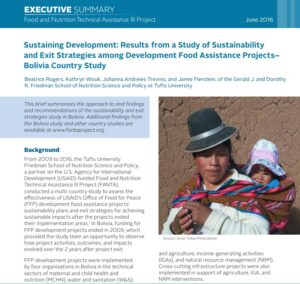
Case examples illustrate these findings.  In Bolivia, NGOs built piped water systems and established community water committees. Households paid monthly user fees. The systems were highly sustainable because they combined resources, capacity, and motivation. The user fees provided resources. The committees had strong managerial capacity. Households valued the benefit of piped water and were motivated to pay. In contrast, water quality testing and chlorination collapsed. NGOs had managed and paid for water testing until the final day. Committees had never practiced independent operation. Beneficiaries disliked the taste of chlorine and did not perceive the need for treatment. Motivation was absent.

“Impact and sustainability are distinct achievements, and an exclusive focus on impact at exit may jeopardize sustainability. For example, providing free resources up to the time of project exit may maximize project impact, but the withdrawal of those resources poses a bigger threat to sustainability than a gradual withdrawal with the development of substitute resources.”

In agriculture, NGOs relied on model farmers to teach improved techniques. They provided free inputs to incentivize the model farmers. When the free inputs ended, almost all model farmers stopped training others. In maternal and child health, NGOs provided free food rations to mothers as incentives to attend community growth monitoring sessions. When the free food stopped, mothers abandoned the sessions. Many volunteer community health workers lost motivation and felt their roles had diminished. Mothers shifted participation to government clinics where cash transfers and supplements were available.  See:  Bolivia synthesis.

In Honduras, abrupt withdrawal of free food rations caused a sharp decline in mothers’ participation in health monitoring. Community health workers became demotivated. Interventions that established fee for service models and gradual transitions were more sustainable. Community managed piped water systems achieved high sustainability because they secured resources through user fees, built capacity, and maintained motivation. Linking farmers directly to commercial buyers was effective. Farmers continued agricultural practices and incomes because the linkage provided market access and motivation. Phase over to government programs struggled due to national resource constraints and a political crisis. Government health systems lacked resources to supervise volunteer health workers. Without supervision and supplies, the workers’ functionality declined.

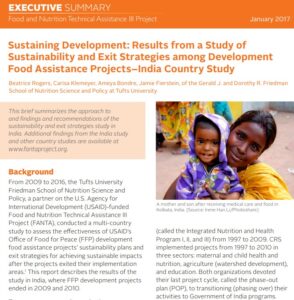
In India, the government context shaped sustainability. The Indian Supreme Court ruled that food is a basic human right, and the government banned import of genetically modified corn soy blends. Food for Peace projects devoted their final phases to transitioning food aid responsibilities to government programs. CARE transitioned the food supply chain to the Integrated Child Development Service.  Many Anganwadi Centers maintained uninterrupted food supply for preschool children after exit. Take home rations were less reliable. In Orissa, distribution dropped dramatically due to irregular deliveries. In some states, beneficiaries reported that the quality of government rations had degraded so much that some fed it to animals. Mothers continued attending health days only to receive the rations. Catholic Relief Services attempted to transition school feeding programs to the Mid Day Meals program. This largely failed because the government lacked motivation to provide free food to private religious and boarding schools.

“The study findings demonstrate that it is critical to verify the validity of a project’s underlying theory of change at the project design stage and to reassess its validity throughout project implementation.”

The most sobering lesson from India was that the projects failed to reduce child malnutrition. The assumption that combining food supplementation with health education would reduce undernutrition was not supported by evidence.   See:  Synthesis of India study.

In Kenya, gradual exit was effective. CARE’s Community Savings Mobilization project organized savings groups and provided training. CARE provided no external seed capital. All loan funds came from members’ savings. CARE graduated the groups to independent operation after one year. For the remainder of the project, CARE served only as an on call technical resource. Three years after exit, the groups were thriving and multiplying. They had high motivation and solid organizational capacity. In agriculture, CARE required basmati rice farmers to assume the cost of premium seeds before exit. This resulted in independent producer associations. In contrast, abrupt exits led to collapse. NGOs managed water quality testing until the final day. Committees had never practiced budgeting or hiring services. Beneficiaries disliked chlorine. The practice was abandoned. In maternal and child health, NGOs distributed free food rations as incentives. When the free food ended, participation collapsed. Volunteer health workers lost motivation. In livestock health, community-based animal health workers charged fees from the beginning. Livestock owners valued the benefit and paid. The fees provided resources and motivation. This intervention was highly sustainable.

Across all four countries, the study found that free handouts pose severe risks to sustainability when no alternative local source is established. Free food rations, free agricultural inputs, and free services created expectations that could not be maintained. When the free resources ended, participation and service delivery collapsed. The study found that fee for service models were more sustainable when culturally appropriate and introduced early.

Charging fees established expectations and built market viability. Attempting to impose fees at the end of a previously free project almost always failed. The study also found that linkages to institutions were often necessary but not always viable. Linkages succeeded when the partner had resources, motivation, and capacity. Linkages failed when the partner lacked budget, staff, or political will. The study stated that “government will take over is not a strategy unless the government unit has both commitment and operational capacity.”

The research also emphasized the importance of designing for context and resilience. Projects operate within environments shaped by political, economic, and environmental shocks. In Kenya, droughts devastated yields and livestock herds shortly after exit. Farmers continued applying improved techniques, but the shock wiped out yields. They lacked resources to purchase inputs for the next season. In Honduras, a constitutional crisis reduced government resources and undermined planned phase over of health services. Sustainability plans must account for predictable shocks. Projects should integrate crop insurance, promote diversified income streams, and establish drought resistant infrastructure.

RECOMMENDATIONS

  • •  Post-project sustainability needs to be designed from the start of the project. NGOs should consider embedding lasting resources, build capacity, align with intrinsic motivation, and secure viable linkages.
  • •  Donors should extend timelines when there is evidence of progress. True capacity building and phase over often require more than five years.
  • •  Donors should fund post project evaluations five to ten years after exit. Sustainability is a trajectory, not a one time status.
  • •  Projects should avoid free handouts unless a local source of resources will exist after exit. Fee for service models and business approaches are more sustainable when introduced early.
  • •  Projects should cultivate multiple layers of government ownership. Continuity should not depend on a single political stakeholder. Commitments should be incorporated into municipal plans, budgets, administrative decisions, departmental responsibilities, and civil service job descriptions.
  • •  Projects should ensure that linkages are viable. Responsibilities must be explicit. The receiving institution needs to value the activity and have staff, authority, budget, and supplies. Mechanisms for communication, supervision, and accountability must remain active.
  • •  Projects should plan gradual exits. Communities and local organizations need time to operate independently while the NGO is still present. Abrupt exits often lead to collapse.
  • •   Projects should design for resilience. They should anticipate shocks and build systems that can withstand them.

The studies’ headline conclusion is that achieving high impact at exit does not guarantee long term sustainability.  The researchers found that “even evidence of continued impact at one point in time post exit may not predict long term sustainability.” They argued that sustainability requires resources, capacity, motivation, and linkages. These factors must be deliberately integrated into program design. The study influenced USAID’s Food Assistance and Food Security Strategy. Development awards came to require explicit sustainability plans and exit strategies. The four factor vocabulary entered mainstream guidance. The research provided a blueprint for designing programs that outlive their funding cycles. It showed that lasting development success depends not on short term statistical triumphs but on long term resilience and independent operation.

These studies had a profound influence on USG planning.  FFP’s decade strategy (released October 2016) explicitly reframed the agency’s development goal around sustaining gains; it “broadens the previous goal of reducing food insecurity to one that envisions improving food security and sustaining it,” and commits FFP and partners to “strive for greater impact with greater efficiency and sustainability.” Tufts and its collaborators state the connection directly. In a Tufts Now feature (Jan 2017):  “Food for Peace has already incorporated many of the recommendations from the Tufts study in its guidance to aid organizations.” Implementing partners echoed this; ACDI/VOCA (2021) described FFP as having “incorporated many of the recommendations that arose from Tufts University research into its 2016–2025 strategy, now requiring detailed sustainability plans for all DFSAs.”

Refer to:

https://www.fantaproject.org/research/exit-strategies-ffp

https://www.fantaproject.org/sites/default/files/resources/India-Exit-Strategies-Report-Jan2017.pdf

The past FANTA project (formerly, USAID) also continues to provide summaries and links.

y


U.S. Food Aid (Part 6): A Timeline of U.S. Food Aid

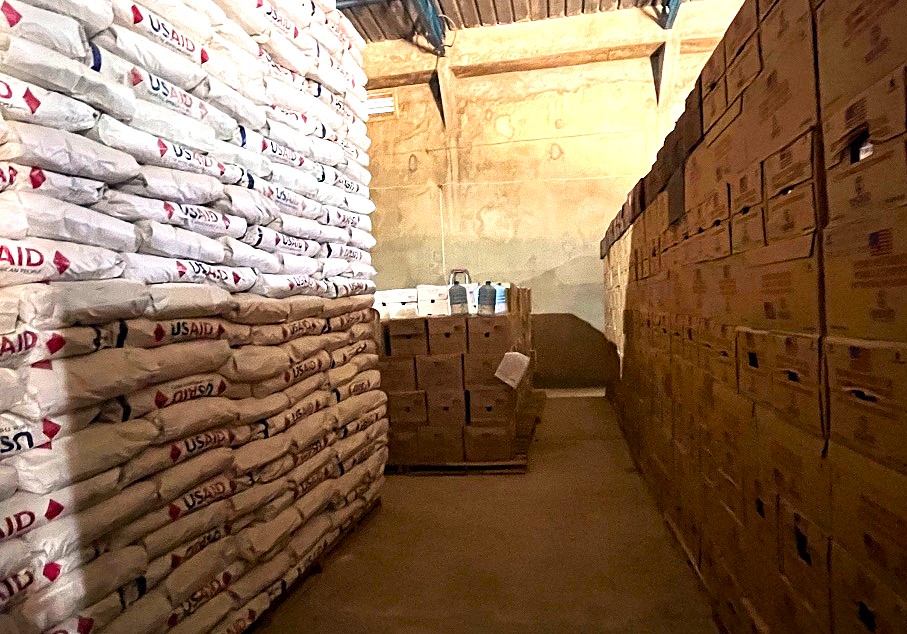
July 20, 2026    This is the sixth posting in an effort to inform the public and USDA about Food For Peace lessons and directions.  Below is a timeline of selected milestones in the history of U.S. food aid sent overseas. World Hunger Education Service compiled this from a range of sources with inputs from various experts. It selects for different ways that the US has provided foods to other countries with a particular emphasis on Food for Peace, PL 480, Title II.

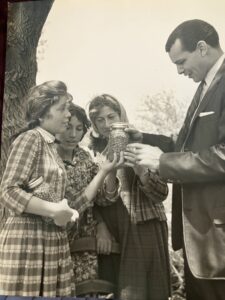
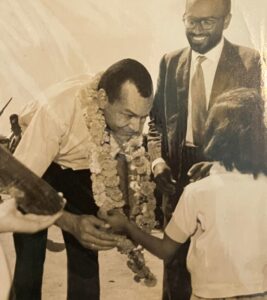
Notably, at the time of this publication the key food aid initiative is the same as the first, in 1812: aid to Venezuela in response to an earthquake. Contents in this table is meant to complement and not reiterate content published in other articles here at Hunger Notes.   Photo credit:  The John F. Kennedy Presidential Library and Museum, Boston

Timeframe U.S. Food Aid Milestones
1812 USG sends food aid to Venezuela after earthquake. President James Madison and Congress appropriate $50,000 for wheat flour aid.
1847 Choctaw nation in Oklahoma raises famine relief funds for Ireland.
1914-1919 Commission for Relief in Belgium during WWI channels U.S. wheat that fed 10 million people in Belgium and Northern France, daily. Future president Herbert Hoover organizes first large scale food logistics to combat famine.
1918-22 American Relief Administration provides 700,000 MT of famine-relief food aid to Russia, Poland, Austria.
1930 U.S. Foreign Agricultural Service posts agricultural attachés around the world, starting in South Africa, Sydney, Belgrade.
1943 Catholic Relief Services (CRS) channels food aid in war-torn Europe. U.S. foods for Europe went through the United Nations Relief and Rehabilitation Administration (UNRRA) and the UN Food and Agricultural Organization.
1944 Dutch famine (Amsterdam, Rotterdam, The Hague) led to US Operation Chowhound of B-17 Airdrops of flour, meat, eggs. Later US military trucked in food as Operation Faust.
1945 WWII famine relief. George McGovern in the 741st Bomb Squadron flew surplus food aid to Trieste in northeastern Italy. George McGovern later becomes first director of the Office of Food for Peace, and Democratic nominee for President.
1945-47 CARE Packages as WWII relief, using surplus US Army “10-in-1” rations stockpiled for the canceled invasion of Japan. CARE leaders negotiated with the Army to acquire nearly 3 million pre-packaged rations. Post-WWII US aid also flowed through multilateral channels like UNRRA, the Marshall Plan/GARIOA. CARE and CRS bridged U.S. surpluses through private networks.
1948-49 USG and UK airlift 296,000 tons of food (and coal) to West Berlin. CARE delivered 230,000 packages to Berlin on its own planes.
1948-51 American Friends Service Committee, CARE, and USG provide aid to famine threatened parts of India during the Partition that created India & Pakistan. US passed India Emergency Food Aid Act providing 2 million MT of grain.
1950s India looms large as major concern for large food shortages & famine. US provided large scale grain shipments under Title I and II.
1950s US holds large domestic reserves, including surplus dairy products. FFP framed as a benefit to US farmers as safety valve for purchasing surplus production.
1954 FFP assistance to Korea includes large quantities of wheat flour shipped under Title I, a total of $1.6 billion through 1974. Later in 1987, Korea became a food donor.
1954 Western Wheat Associates (U.S. wheat growers) used food aid for market development, teaching bakers in Japan and India how to use wheat flour.
1954 PL 480 signed into law by President Eisenhower with primarily Title 1 government to government food going to governments.
1954-59 Food aid to Pakistan, Japan, Taiwan, Yugoslavia, Greece, Italy, Spain.
1955 CARE’s Board of Directors votes to not dissolve, but to refocus the organization’s aid from Europe to other continents, hence the name changes from Cooperative for American Remittances to Europe to “Cooperative for American Relief Everywhere.” This passed by a single vote. CARE implements Title I and II food aid in Haiti, Guatemala, Honduras, India and Dominican Republic.
1958 “Food and Fiber as a Force for Freedom” Senate report recommends food as a force for democracy and coins the phrase “food for peace”, written by Senator Hubert Humphrey, future nominee for US president.
1959 INCAP in Central America creates Incaparina weaning food to prevent malnutrition.
1961 President John F. Kennedy rebrands the initiative “Food for Peace” and consolidates U.S. overseas assistance under the U.S. Agency for International Development (USAID). Title III food aid created to incentivize agricultural modernization.
1961 WFP proposed by George McGovern, the first director of the U.S. Food for Peace program, as a three-year UN “experiment” to internationalize food aid.
1963 FFP fuels Operation Niños: Ag Secretary Orville Freeman claimed that U.S. food reached one in four Latin American children, that rural school-meal programs in Bolivia and Peru doubled school attendance. Food for Work also in S America.
1966 Egypt gets soft loans to purchase PL 480 food.
1966 Food aid in India peaked during the severe Indian famine of 1965–1966. During this time, the U.S. used food aid as a heavy diplomatic lever. CARE receives food aid for emergency food program in drought areas. President Johnson involved in every food aid decision related to India.
1966 The 1966 Food for Peace Act PL 89-808 reframes aid from surplus disposal to development conditionality and economic development. President Johnson transfers FFP direction from the White House to the State Department. Johnson emphasized agricultural reforms as a precondition for a country to receive food aid.
1966 Likuni Phala fortified weaning food is pioneered in Malawi.
1968 USAID offers Corn-Soy Milk (CSM) and Corn-Soy Blend (CSB) as fortified foods.
1968-69 U.S. C-97 Stratofreighters (Boeing) help deliver $50M of food aid to Biafra during war in Nigeria, via CRS, CARE, the ICRC and Joint Church Aid. First large scale deployment of new CSB. First live-televised famine; introduced kwashiorkor.
1972 World food crisis, Sahel famine.
1972-1974 Dan Shaughnessy directs Food for Peace and planning for the 1974 UN World Food Conference. Henry Kissinger plays central role in targeting countries for food aid.
1975 Integrated Child Development Services large child nutrition program in India. USG Corn Soya Milk and non-fat dried milk provided through South India Flour Mills for CARE’s “balahar” fortified food for school feeding, led by Tim Lavelle.
1976 World Hunger Education Service begins educating the public and USG about food aid issues and begins quarterly publication of the journal, Hunger Notes.
1977 Title III food aid revised to focus on barter for debt forgiveness and tying aid more explicitly to policy reforms and long-term development in recipient countries.
1979 Two key publications: Amartya Sen’s Poverty & Famines demonstrates that food insecurity is not only about food availability but also about access. Lincoln Chen demonstrates that risk of death increases non-linearly by degree of child wasting.
1979 U.S. donates polished (thiamine removed) white rice to anti-Khmer Rouge groups in Cambodia, resulting in epidemic beriberi (deficiency disease).
1980s Maternal Child Health (MCH) is main type of project supported by food aid, having grown during the 1970s. Food for Work also common for roads/infrastructure.
1983 Church World Service (CWS) stops taking USG FFP resources, following controversial episode of 60 Minutes on CBS about CWS programs in countries with communist governments. CWS goes overnight from being the largest food aid agency in the world to one of the smallest.
1984 Burma Border Consortium of NGOs formed, purchasing food locally for Burmese refugees in camps in Thailand, supported by the U.S. Department of State.
1985 Food for Progress Act explicitly references “Private Voluntary Organizations” or PVOs. Food for Progress authorized CCC financing for grants or credit sales to support agricultural development in developing countries and emerging democracies.
1985 6 million MT of food sent for African famine. Two supplemental appropriations made for Ethiopia famine. FFP manages $500M for Ethiopia alone, plus more for Sudan, and across 21 African countries.
1985 Farm Bill promotes PVO/NGO monetization, using Title II as an alternative revenue stream to direct-dollar grants. U.S. Dry Bean Council positioned pintos and black beans as shelf-stable, high-value food for NGOs to monetize. Initially monetization was to pay for internal transport, which was later funded by USAID in the 1990s.
1985 Ellen Levinson creates the Coalition for Food Aid of NGOs in Washington, DC to promote the roles of NGOs in food aid. Title II Enhancement Grant (later, Title II Strengthening Grant) for PVO headquarters capacity building.
1986 Famine Early Warning System Network (later named FEWS.NET), established on the advice of Tufts University’s President Jean Meyer. Credit also to John Field.
1989 Collapse of Soviet Union shifts emergency food aid gradually away from refugees fleeing regimes in host countries, instead to internally displaced persons.
1990 Food Aid Management funded by FFP with 5 original PVO members.
1990 Fred Cuny pioneers local purchase of food as a more appropriate response to food needs in Ethiopia.
1990s PVOs promote local village “grain reserves” with food aid for resilience.
1990-93 End of US food aid to Somalia leads to famine throughout 1992. President Bush directs US airlifts food via C-130s in late 1992. U.S. Food aid monetized to reduce retail prices across the country in 1993, but after famine has receded.
1990 “Partial monetization” turns into “100% monetization” for many NGOs.
1991 Famine Mitigation Project of experts convened by USAID to recommend best practices to prevention of famine. Including livestock, water, local food purchase.
1992 Food aid mobilization to former Soviet states where food insecurity tied to pensions lost from ruble devaluation. USG works through Red Cross movement. Operation Provide Hope channeled 25,000 MT to the Caucasus and Central Asian “Stans.” ADRA involved in Armenia and other states.
1992 Bosnia: Operation Provide Promise began July 2, 1992, becoming the longest-running humanitarian airlift in history. USG provided sorties into besieged Sarajevo, delivering food and other aid to civilians trapped by the Yugoslav war.
1992 Food Aid Management (FAM) publishes Generally Accepted Commodity Accountability Principles, GACAP, representing all NGOs working with US food aid.
1990s PVO/NGO “cooperating sponsors” include CRS, CARE, World Vision, Save the Children, ADRA, Land O Lakes, ACDI/VOCA, Food for the Hungry International, Project Concern, Africare, Technoserve, Partners for Development, World Relief, Mercy Corps, Lutheran World Relief, IOCC, UMCOR, and International Relief and Development. CARE is often lead food agency in refugee camps, while CRS is lead for IDPs.
1992-1994 FFP defines food security as: availability plus access plus bio-utilization.
1993-1996 FFP Director Robert Kramer rebalances food aid from entrenched USAID Mission projects to areas of greatest need (emergencies), and pushed WFP to recognize the greater priority in emergencies of food.
1993 FAM publishes NGO manual, Monetizing Food Aid, a Guide for PVOs.
1992 CRS’ Mike D’Adamo travels to Rome to strike a partnership with WFP, opening an era of WFP collaboration with NGOs.
1994 CARE and CRS account for roughly 72% of PVOs’ regular Title II programs.
1995 2 million refugees plus almost as many IDPs received some 240,000 MT of food in Rwanda and neighboring countries, following genocide and flight.
1995-97 North Korea’s famine received over 1.1 million metric tons.
1996 André Briend & Michel Lescanne create Plumpy’Nut, the first RUTF, at Nutriset.
1997 WFP strikes agreements partnering with NGOs for distribution activities.
1998 USG requires vegetable oil be fortified with vitamin A (and later, Vitamin D).
1997-2001 Asian financial crisis as currencies lost purchasing power. NGOs like IRD, and WFP used food aid as social protection safety nets.
1999 The majority of US food aid now channeled through WFP, not NGOs.
1999 USAID, FAM and the Canadian Govt convene food experts at a symposium at the American Red Cross to document feasibility of fortifying emergency food aid at the local level to mitigate micronutrient deficiency diseases widely seen among refugees.
2000 Global Food for Education Initiative $300 million, with CCC resources. Over next two decades, 5.5 billion meals for 31 million school children in 48 countries.
2000 Congress passes International Food Relief Partnership Act, amending Title II to authorized grants to US nonprofits to create shelf-stable food products for aid, such as Breedlove Foods in Texas.
2001 FFP Officer Tim Lavelle organizes long-term Bridge of Friendship pipeline from hub of Termez over the Amu Darya river from Uzbekistan to Afghanistan, facilitating hundreds of thousands of tons of famine-preventing food aid into Afghanistan.
2002 FFP nutritionist Tom Marchione promotes new formulations of CSB and nutrient-dense foods as part of commodity docket.
2002 CTC/CMAM modality for treating malnourished children with RUTF promoted.
2002 New McGovern-Dole Food for Education program passed in 2002 Farm Bill. This moves school feeding from Food for Peace to USDA.
2002 No more funding for Title III, a government-to-government program under PL 480 where the foreign government sold food for local currency proceeds.
2003 Large-scale U.S. emergency food aid rejected by five southern African famine-affected countries because US corn is genetically modified. Eventually the grain was milled in S. Africa before transporting to Zimbabwe, Malawi, Zambia, etc.
2000s Food aid targets HIV/AIDS response primarily in sub-Sahara Africa. USAID Administrator Natsios pushes for more flexibility for local purchase of food.
2003 Dr. Patricia Wolff from Washington University, St Louis, founds “Meds & Foods for Kids” in Haiti and produces Medika Mamba.
2003 FANTA and FFP develop criteria for prioritization of non-emergency countries.
2004 Jeanie Markunas retires from long career overseeing Food for Peace.
2004 C-SAFE consortium (World Vision, CARE, CRS) manages food aid across southern Africa, with the World Food Programme as a sub-grantee.
2004 Globally, World Vision now channels food aid mostly as a sub-awardee under WFP whereas a few years earlier it was primarily a prime.
2005–2011 RUTF increasingly mainstreamed among NGOs, UNICEF & USAID as part of a shift from blended-flour to lipid-based products for targeted feeding of malnourished.
2006 SMART survey manual released, about measuring acute malnutrition and mortality, with the intent to standardize reliable data across agencies. In 2008, the Global Nutrition Cluster designated Action Against Hunger (ACF) as the global convener of SMART, including ongoing infrastructure, guidance, consultations. FAM hosts a workshop about SMART for monitoring malnutrition.
2008 Farm Bill Sec. 3206 created the pilot USDA Local and Regional Food Aid Procurement Program. The rule established grants for field-based projects consisting of local or regional procurement.
2007 USAID & IFRC plan food aid reserves for future pandemics that contract markets.
2008 Prices for corn and oil increased 125% over a short period, increasing malnutrition worldwide. The USG provided additional $2.8 billion across all international food aid programs, delivering 2.3 million metric tons for 43 million people.
2009 Decades of US food aid to India ends. Meanwhile, India donates food to WFP.
2009 Land O’Lakes International Development nonprofit pilots local purchase of food baskets in Zambia for people with HIV.
2009 Food Aid Quality Review research starts at Tufts University School of Nutrition.
2010 Congress approves The Emergency Food Security Program (EFSP) to allow cash and voucher assistance, instead of only in-kind commodities, using International Disaster Assistance funds.
2010 MSF launches “starved for attention” campaign criticizing the US for donating CSB instead of only procuring RUTF.
2010s Ongoing scale up of RUF production by MANA and Edesia (U.S. NGOs).
2010-2011 Despite early warnings, over 200,000 Somalis die when US cuts off food aid because of Patriot Act. Food aid reinstated only after hunger season ended in 2011.
2010s “Sequencing, layering, and integration” promoted in FFP program designs.
2012 International Food Assistance Improvement Act of 2012 (H.R. 4141) sought to enhance nutritional quality and cost-effectiveness of food aid
2014 Farm Bill expanded Section 202(e) flexibility. USAID increase in authorized 202(e) funding to provide cash transfers, food vouchers, & local purchase modalities.
2014 Charles Hanrahan retires from the Congressional Research Service, after 29 years researching international food aid.
2015 Resilience Food Security Activities (RFSAs) formally introduced as new design of FFP development programs.
Mid 2010s Multi-year, development cooperative agreements, “MYAPs”, replaced by “DFAPs” as main form of FFP projects implemented by NGOs.
2017 Food to four well-publicized man-made famines: S Sudan, Somalia, Yemen & Nigeria.
2018 89% of FFP resources for emergencies. Development food aid % at all time low.
RFSAs emphasize new “graduation model”, along with theories-of-change, learning, and ‘pause and reflect.’
2019 USAID funds Nawiri resilience (RFSA) program in Kenya for northern, arid lands.
2020 Top recipient countries of US food aid from 2015 to 2020 were Yemen, Syria, South Sudan, Somalia, Ethiopia, DRC, Sudan, Afghanistan, Kenya, and Nigeria.
2022 Response to Ukraine war leads to full draining of the Bill Emerson Humanitarian Trust. USG also provides $388 million for shipping/freight, totaling $670 million.
2023 USG and WFP shut down food pipelines to Ethiopia. USAID Administrator on June 8 suspended food aid across Ethiopia because of widespread, coordinated theft of U.S. food by multiple actors (including to military units and markets). This stopped aid for ~20 million people amid drought and post-conflict needs.
2024 First RFSA program in Somalia.
2025 DOGE terminates many FFP (RFSA) and Food for Progress programs, while authority for FFP and FEWS shifted to State Department. A few RFSAs are re-started: Mercy Corps in Kenya, ADRA in DRC, Food for the Hungry in Ethiopia, and CRS in Haiti.
2025 December: FFP transitions again, to US Department of Agriculture which in February commits $452 million to WFP and bids new emergency programs for DRC, El Salvador, Ethiopia, Guatemala, Haiti, Kenya, & Rwanda.
2026 July: FFP announces $235 million to CRS for Ethiopia and Sudan.
2026 USG provides private and UN food aid in recovery from earthquake in Venezuela.

U.S. Food Aid (Part 1): Reflections about Food Aid by Long-Term Practitioner

July 7, 2026    by Mara Russell     This is the first in a series of articles by Hunger Notes about the U.S. Food for Peace (FFP) Program.  “Food for Peace Title II Non-Emergency Programs: What are they and Why are they needed?”

In the United States, government-funded “Food for Peace” (FFP) programs  transitioned from USAID to the State Department when the former agency was dissolved  in 2025. Several months later, the Food for Peace program was transferred to the United States Department of Agriculture (USDA), a large federal agency that had not managed this program previously. Soon after this transition, $452 million in FFP resources was awarded directly to the U.N. World Food Programme (WFP) for food activities in the Democratic Republic of the Congo (DRC), El Salvador, Ethiopia, Guatemala, Haiti, Kenya and Rwanda.[i]

Then, as recently reported in Hunger Notes, in 2026, USDA released a “Notice of Funding Opportunity” for nonprofits (NGOs) for new Emergency Food for Peace programs, naming the same set of countries that were eligible for food assistance.  These upcoming programs are scheduled to be worth $357 million in total.[ii]  Since a total of $1.2 billion was appropriated by Congress for Food for Peace in FY26,[iii], USDA is now considering how to implement the rest of the funding for “development” or non-emergency food programs, referred to during the past seven years as Resilience Food Security Activities or “RFSAs.”[iv].

One critical variable that non-emergency programs have leveraged during recent cycles of USG funding is timeframe. These NGO-administered programs are generally five years in length, while emergency programs only last for a maximum of two years. Emergency programs are designed to address the impacts of acute (wasting) malnutrition and severe food insecurity. Resources in emergency programs are provided to address short- to medium- term impacts of a severe shock. This can be due to a natural disaster such as an earthquake, a severe storm, drought, or  severe conflict. The spread of an epidemic or pandemic disease can also result in such impacts, either due to a breakdown of production and markets, or due to people being at greater risk of malnutrition due to the impacts of a disease. Or shocks can result from a combination of several things.

On the other hand, non-emergency programs focus on preventing emergencies.   They address the underlying causes of hunger that tend to become more serious when conditions are such that food supplies become limited, or people lose access to food due to the types of shocks outlined above. These underlying causes, such as poverty, cultivation practices that result in poor yields, inadequate services or limited safety-nets that result in food insecurity and malnutrition, lack of income earning opportunities, poor access to water for agriculture and for drinking and inadequate sanitation that can cause water-borne disease- a significant underlying cause of acute and chronic malnutrition, lack of attention to the special nutrition needs of women of childbearing age, pregnant women and young children, and lack of capacity to prepare for potential shocks that impact food security and nutrition. These are complex issues that call for a combination of access to goods and services, while adopting of behaviors and practices within households.  Programs also ensure that the food consumed meets the standards of a healthy diet, prevent water-borne disease, and build resilience to unexpected shocks.

This takes time. There is a limit to what can be done in only one or two years. This is especially the case because according to the 2026 USDA Emergency funding opportunity, it takes between 45 and 90 days from the award of a program until food aid from the Food for Peace program can be exported from the United States, and then up to another 6 months for commodities to arrive in the country where they will be distributed.[v]

A second factor has to do with geography.  Emergency food aid programs are in countries and locations where there is an active ongoing shock, and large concentrations of people, including refugees and internally displaced people, living in a situation of extreme food and nutrition insecurity that should be addressed immediately.  Identification of these locations is guided by early warning systems or methodologies that classify people based on the degree to which they are currently food insecure or malnourished. The system that tends to be most respected internationally is the U.N.’s Integrated Phase Classification or IPC system. During its existence, USAID utilized this system, and now USDA is using it also as a way of designating where and among whom an emergency program should be implemented. In its recent funding request, USDA stated that a minimum of 20% of the population to be targeted with food aid should be living at IPC 3 or higher. The IPC classifies populations at levels 1 through 5 based on the severity of food insecurity as follows: 1 = None/Minimal, 2 = Stressed, 3 = Crisis, 4 = Emergency and 5 = Famine. The “shorthand” clarification used for those populations needing immediate assistance are those at IPC 3+.[vi]
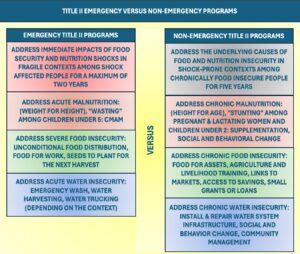
However, non-emergency programs aim to reduce the likelihood that people living in a particular geographic area will experience conditions at or above IPC 3. Countries prioritized for these programs may already have sizeable populations at IPC 3+, but there may not be significant active shock conditions causing this situation. Sometimes, populations may be at IPC 3+ due to a shock that has previously increased food insecurity and malnutrition. For instance, after the Haiti earthquake in 2010, there were emergency programs that addressed food insecurity, malnutrition, reconstruction and access to food for the people impacted by this shock.  However, by 2013, many of the immediate impacts of the quake, such as food insecurity and displacement were initially addressed, but there was a need to address long-term root causes of malnutrition and vulnerability.  At that time USAID implemented a non-emergency program that sought to address these underlying causes and increase the ability of the country to cope with severe shocks.[vii]

Many countries where non-emergency programs are implemented experience cyclical shocks that recur on a periodic basis. They do not always exist in shock situations but may be impacted by droughts or floods during serious weather events, such as El Niño or La Niña events. During the El Niño event in 2023-2024, most of the harvest of the country of Zimbabwe was ruined due to inadequate and poorly timed rainfall.[viii]  However, on-going non-emergency programs continued to increase yields, increase incomes and reduce malnutrition, while emergency programs supported households and communities as necessary with additional food and other emergency assistance. Most of these countries also experience an annual “hunger season”, which tends to occur anywhere from 3-6 months prior to the next harvest when food stocks and cash earned from the prior harvest have been depleted.  Thus, while non-emergency programs are not implemented in contexts where active shocks occur, they may be targeted within fragile environments where hunger seasons make life very tenuous for people living in those geographies.

Another important element in these programs are the participants who are targeted. In emergency programs, large portions of the population are highly vulnerable due to the impacts of a disaster, such as an earthquake, a hurricane or other cyclonic storm, or severe conflict. In these cases, those targeted for assistance may have been displaced, or otherwise lost everything – including their health. In such emergency situations, it does not matter whether people were rich or poor prior to such shocks.
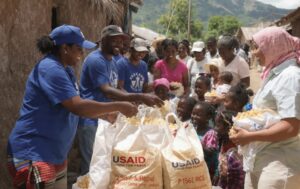
However, Title II non-emergency program participants tend to be those who are poorest, receive the fewest services, and are at greatest risk of malnutrition and food insecurity.  Often the focus is on those who have the least to fall back on when shocks occur and tend to be those most impacted by annual hunger seasons and other severe shocks.  A case in point is the Ethiopia Productive Safety-Net Program (PSNP), which has been supported by Title II non-emergency food aid since its inception in 2005.[ix] The PSNP targets people who are impacted by the annual hunger season through a Cash or Food for Assets (FFA) activity that creates a safety-net during the period of greatest vulnerability in normal years while developing assets that communities can use during good years and fall back on in bad years. The PSNP is supported by the Ethiopian government as well as several other donors. During normal years, a certain number of households are targeted for the program based on their chronic food insecurity and malnutrition. However, during years when poor crop yields and impacts increase the number of households needing food assistance, the number of households targeted increases to also address the needs of those who would not normally be included in the PSNP program.

In addition to selecting participants based on their food insecurity, there is a difference between how emergency and non-emergency programs select participants when it comes to malnutrition. In the case of emergency programs, care is taken to address the needs of people who are acutely malnourished, mainly children under 5 and pregnant and lactating women. In the case of emergency programs, acute malnutrition, in which the body loses weight rapidly, becomes a major risk. Moderate acute malnutrition exists when body weight for height among children under 5 falls below 2 standard deviations from the global mean, and severe acute malnutrition exists when this falls to 3 standard deviations below the mean.  If the rate of wasting malnutrition in a population reaches or exceeds 10%, this is deemed a humanitarian emergency requiring immediate rehabilitation using ready to use therapeutic and supplementary foods  that provide concentrations of fat, calories, protein and other nutrients all aimed at ensuring survival and rapid weight gain. Women of childbearing age, including those who are pregnant or breastfeeding as well as men also benefit from rehabilitation with RUTF or ready to use supplementary foods (RUSF), designed to also rehabilitate people in these conditions. These products are available via Title II.

However, in the case of non-emergency programs, participants are targeted based on the rate of “Stunting”, or chronic malnutrition, which exists when height-for-age among children under the age of 5 falls below 2 standard deviations under the global mean. The logic behind this is that there are milestones for linear growth that children need to reach before the age of 2 to avoid being developmentally disabled and to ensure a healthy life. Infants and young children under age 2 in this condition can recover from this and their linear growth can catch up to normal levels before they reach age 2.  However, after these children reach age 2, it becomes extremely difficult for their growth to catch up.  It is possible for a child to be both chronically and acutely malnourished (also known as “wasted”). It is also possible for stunted children not to be wasted and wasted children not to be stunted. However, there are certainly connections between these different types of malnutrition.  Nonetheless, stunting and wasting are indicative of different situations based on how and when they occur within the population. High levels of acute malnutrition indicate the existence of an acute shock as it does not take long for children to become acutely malnourished. This occurs when children are deprived of the food they need for a period of days or weeks (at most). However, it can take a long time for a child to become stunted. Children become stunted because they lack sufficient nutrients in their diet (both macro- and micro-nutrients) to fulfill their daily requirements. It takes months for a child to become stunted, and it also takes a long time for them to overcome this problem. If there are a lot of stunted children in the population, this indicate that the population is chronically food insecure and poor.

Thus, non-emergency Title II programs target populations with high chronic malnutrition rates among children under 5 as this is a clear red flag that there is a significant poverty and food insecurity problem within these populations. Targeting participants from these areas indicates that while there may not an active shock situation, there may still be a lot of food insecurity – which left unaddressed – could lead to more serious problems.  People living in these contexts are on the edge, and one missed harvest due to a storm or drought or earthquake or locust swarm or violent attack could result in them becoming part of the emergency case load of Title II programs.

Non-emergency Title II programs focus on ensuring that infants are exclusively breastfed until they are six months old, and that beyond that time their diets consist of the types of diverse foods that children of their age need to meet their linear growth milestones by age two. At the same, these programs  also address the underlying causes of chronic malnutrition. They train mothers to feed their children properly, including exclusive breastfeeding, take care to prevent water-borne disease through handwashing and use of clean water. At the same time, these programs recognize that mothers will be unable to feed their children the types of food they need if they are not able to produce or purchase it throughout the year. Raising these issues among all community members can build support and solidarity to ensure that children’s and women’s dietary needs are met. In addition, creation of clean water access and sanitation – including installation of accessible working water points and household latrines – support practices such as frequent handwashing with soap, and reduction of open defecation. These practices in turn reduce water-borne disease from hindering the absorption of the nutritious food being consumed. And, integrating these practices into people’s lives takes a long time, thus the longer timeframe of these programs is critical.
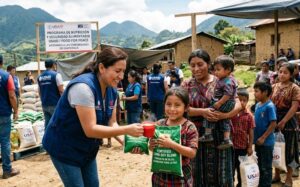
Non-emergency programs also provide a few more benefits that make them important to reduce the emergency caseload of Title II. They target countries and regions that are fragile and shock prone. They can detect changes in conditions,  both positive and negative, which can reduce time lags on responses. If the number of acutely malnourished children begins to escalate – this could easily occur within the areas where populations are most food insecure. If harvests begin to fail due to weather impacts, many farmers in the geography where the program is implemented (they may or may not be participants) will experience these conditions first.  The presence of an implementer (NGO) in these areas can ensure the monitoring of IPC levels, levels of acute malnutrition, impacts on harvests and prevalence of diseases – including those that are water-borne.

At the same time, these programs seek to enable participants to anticipate and cope better with the types of shocks that normally impact these geographic areas. Reviewing the history of the targeted population, it is possible to learn more about the major shocks that typically impact them, and they are sometimes cyclical. For instance, locust swarms may occur every so often in parts of East Africa. Working with communities likely to be impacted by these swarms during years when they don’t occur to prepare for when the locusts return will help participants to cope more effectively when this happens. There are now many agricultural technologies that enable farmers to adapt to drought. This could range from water-harvesting, to irrigation, to use of drought-adopted seeds, to reorienting productive systems through methods such as Resilient Design and Perma-gardening.[x]  The last two types of systems prevented farmers from losing their crops during the El Niño drought event in Zimbabwe mentioned above.[xi] It was a non-emergency Title II programs that provided training to farmers to enable them to maintain their crops in the face of this severe drought.

Finally, one of the key underlying causes of food insecurity is poverty.  Farmers may depend on their crops for food, but they need cash to fall back on when their crops fail, and they need to purchase food from markets. Also, for farmers to maintain their land and plant crops, they need cash for inputs and often to pay for land,  either as the owner or as a renter or lease holder.  It also costs money for children to attend school, and it costs money to get to markets, visit health centers, buy fertilizers and crop-protection products. Maintaining water points and latrines can also cost money because spare parts and their installation is not free. And when the program is over after five years of investment, ensuring that people not only achieve but also sustain their food security will mean that people have a secure source of cash and savings to fall back on.  Otherwise, closing the program will be commensurate to a shock for those who have benefitted from it.

A methodology that has proven itself over the years, and within the past nine years in Title II non-emergency programs has been the Graduation Approach.[xii]  Developed and initiated by BRAC in Bangladesh, this approach has been tested throughout the world in fragile contexts where large numbers of poor and food insecure people live.[xiii] The approach targets extremely poor people, provides them with food assistance safety-nets  and then links them to a savings and loan group where they meet others in their situation and obtain peer group support. At the same time, they are provided training in a livelihood opportunity for which there is demand within their context. This livelihood training could be agricultural (crops or livestock) or non-agricultural in nature and offers people the opportunity to become employed or operate their own business. After their training is complete, participants  receive small grants or assets (such as equipment or animals) that enable them to start their activities until they become viable. During this time, they continue to receive coaching and mentoring so that they can be successful within their chosen livelihood. They also receive training and support with respect to nutrition, water and sanitation and learn to anticipate and respond effectively to shocks. The Graduation Approach has been shown to ensure a high return on investment and results are sustained over time after the end of the program.[xiv]

Now that the program has moved to USDA, the leadership is reviewing the program and will likely make changes that will increase the cost  of food and ocean freight versus what is provided to those in need.[xv]  The recent Emergency Program set of funding opportunities stipulated that at least 50% of program budgets must be devoted to commodities and ocean freight.[xvi] This reduced the funding that could be provided to internal transportation storage and handling to distribute commodities. It also reduced the funds that could be provided for technical interventions such as monitoring of severe food insecurity and levels of acute malnutrition, training mothers about how to monitor and refer their children, and enabling technical interventions that will help people to recover from emergency situations. It is possible that the same 50% requirement may be put in place by USDA for future Non-Emergency Programs, and this could reduce the resources available to enable the sustainable improvement of food security and nutrition in extremely poor and fragile contexts as described above.

Changes in the legislation over the years made it possible to integrate international disaster assistance funds  with emergency Food for Peace programs enabling the use of cash, vouchers and local, regional and international procurement  to ensure that the right resources were available at the right time to address peoples’ needs. This prevented the need to wait 6 – 8  months for U.S. commodities to arrive in country to begin addressing acute malnutrition.  As noted above, the impact of acute malnutrition is rapid and if not addressed quickly will lead to death.

Similarly, U.S. legislative changes enabled the coordinated use of Development Assistance funds with non-emergency Food for Peace programs, which covered the cost of the complex interventions discussed above. These resources also provided the opportunity for programs to transition people away from dependence on U.S. food aid and foreign assistance.  While food aid has been important for non-emergency programs to build stability for those suffering chronic food insecurity, we will not ultimately accomplish Title II’s objectives if people remain dependent on food aid at the end of each program.

As global conditions worsened around the turn of the century, the need for emergency food aid programs increased around the world.  These needs began to reduce the funds available to pay for non-emergency programs. Thus, in the 2008 U.S. Farm Bill, a Non-Emergency “Safe Box” was integrated into Title II legislation to establish minimum funding to ensure that these programs could continue to be implemented. Currently $365 million is designated for the implementation of these programs.  $700 million of USG  funding from FY26 and FY27 allocations may be made available soon for these programs.[xvii]

While much remains unclear about the future of U.S. Title II non-emergency food aid programs, the need for activities that reduce and prevent high levels of acute and chronic food insecurity and malnutrition has not diminished,  and perhaps has increased, during the 18 months since the 2025 Executive Order to pause foreign assistance was announced.[xviii] It is also clear that addressing the underlying causes of food and nutrition insecurity is still important. Hopefully, USDA will hold true to this fundamental mandate of these programs. This will entail implementing these programs over a 5-year timeframe, in fragile geographies where shocks are frequent, among participants who are chronically poor and/or malnourished, while increasing peoples’ ability to cope with shocks, and producing outcomes that are sustainable.  If these are not the Title II mandate’s parameters for non-emergency programs, they run the risk of violating legislation..

Further Reading:

Food for Peace / U.S. Food Aid

Global Hunger, IPC, and Malnutrition

Country-specific articles relevant to your examples (Haiti, Ethiopia, Zimbabwe, DRC, etc.)

REFERENCES:

[i] Miolene, Elissa, USDA takes over Food for Peace with $452M World Food Programme deal, 29 January 2026.

[ii] U.S. Department of Agriculture, Food for Peace Notice of Funding Opportunity, Fiscal Year 2025, May 13, 2026

[iii] Miolene, Elissa, House locks Food for Peace into USDA with 50% commodity requirement,1 May 2026,

[iv]  These progras were known variously as Development Activity Programs (DAPs), Multi-Year Activity Programs (MYAPs), Development Food Assistance Programs (DFAPs), Development Food Security Activities (DFSAs) and Resilience Food Security Activities (RFSAs). There were differences between these programs, but those differences were not necessarily associated with the names given to them.

[v] U.S. Department of Agriculture, Food for Peace Notice of Funding Opportunity, Fiscal Year 2025, May 13, 2026, https://grants.gov/search-results-detail/362375.

[vi] Integrated Phase Classification, https://www.ipcinfo.org/ipcinfo-website/ipc-overview-and-classification-system/en/?__cf_chl_f_tk=vmmArOlbSf51oWrK_G0UqCVyP0w6jSuy9SVydqdsIlk-1783098737-1.0.1.1-XKb_PsSY1mVf1b2u8K3Udd85lbGsjDgfDcO0yyY9UrE,

[vii] https://borgenproject.org/kore-lavi-provides-food-security-in-haiti/; accessed July 3, 2026.

[viii] United Nations, UN News, Zimbabwe faces worsening food crisis due to El Niño droughts, 7 August 2024, https://news.un.org/en/story/2024/08/1152936.

[ix] IFPRI, Productive Safety-Net Program, https://essp.ifpri.info/productive-safety-net-program-psnp/, accessed July 3, 2026

[x] FANRPAN, Scaling up Resilience Design in Zimbabwe: Position Paper, https://fanrpan.org/wp-content/uploads/2025/01/Takunda_CareSlideDeck-1.pdf.

[xi] Chitsa, Tanaka, Growing Hope: Community gardens flourish amidst El Nino challenges, 27 August 2024, https://www.carezimbabwe.org/growing-hope-community-gardens-flourish-amidst-el-nino-challenges/.

[xii] AVSI, Graduating to Resilience, https://www.avsi.org/en/graduating-to-resilience

[xiii] BRAC, Graduation Out of Ultra Poverty, https://www.brac.net/solutions/development/ending-poverty/ultra-poor-graduation/

[xiv] Abrams, William, Joshua Goldstein, Larry Reed, Carine Roenen, and Jean Francois Tardif, The Business Case for Investing in Graduation, September 2017, ultra-poverty.org, https://www.ultra-poverty.org/blog-post/the-business-case-for-investing-in-graduation/#.

[xv] Miolene, Elissa, House locks Food for Peace into USDA with 50% commodity requirement, 1 May 2026,

[xvi] U.S. Department of Agriculture, Food for Peace Notice of Funding Opportunity, Fiscal Year 2025, May 13, 2026,

[xvii] Miolene, Elissa, US Dept of Agriculture to reboot Food for Peace’s ‘safe box’ programs,

[xviii] The White House, Reevaluating and Realigning United States Foreign Aid, January 20, 2025, https://www.whitehouse.gov/presidential-actions/2025/01/reevaluating-and-realigning-united-states-foreign-aid/.

Mara Russell is a career programmer of Food for Peace Title II food aid including leading Food Aid Management, and spearheading CARE’s food aid for decades.
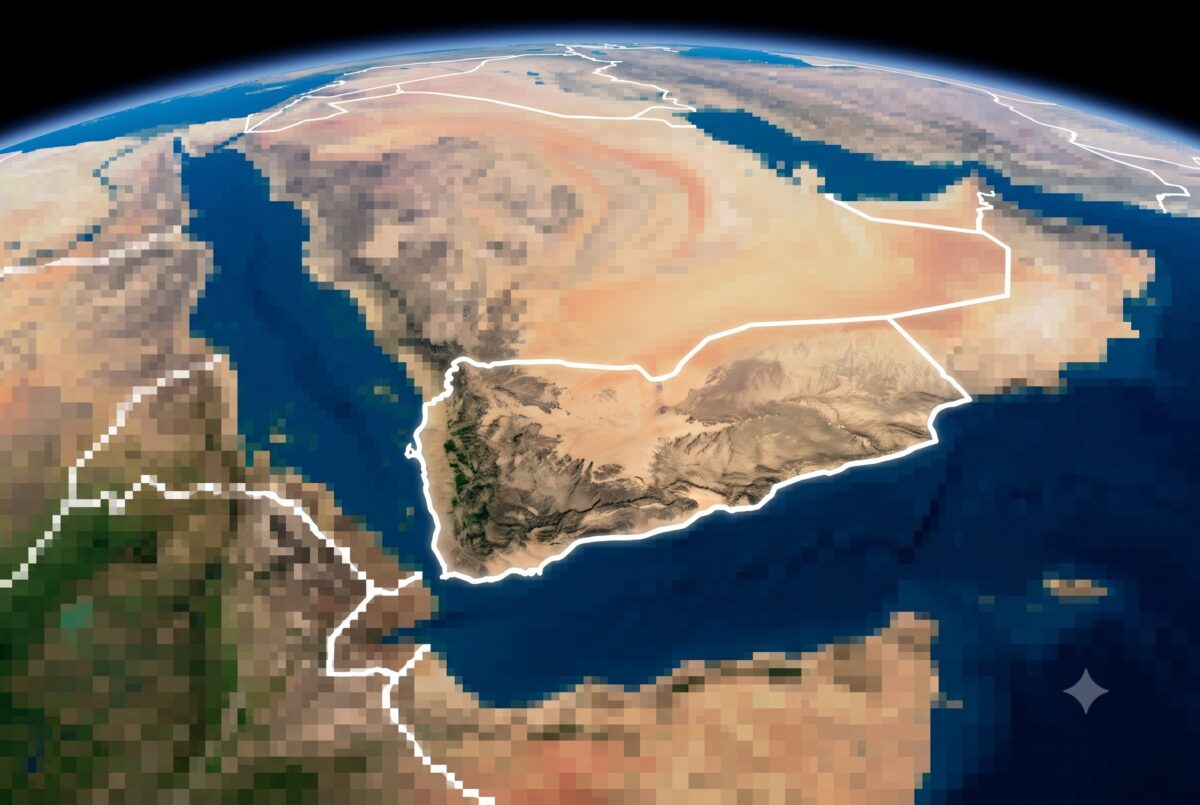
Most of Yemen is Now Hungry, UN Declares

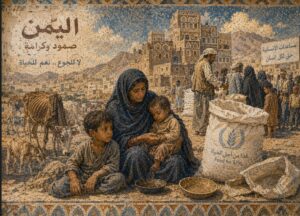
June 17, 2026    Yesterday, the UN was advised that the extent of food insecurity in Yemen had ratcheted up further:  “The hunger crisis in Yemen is worsening sharply, with the share of people unable to meet basic food needs rising from about half to nearly 60 percent within a month,” UN Under-Secretary-General for Humanitarian Affairs and Emergency Relief Coordinator Tom Fletcher warned on Tuesday, calling for urgent funding to prevent further starvation.  “The number of Yemenis facing the most severe levels of deprivation has increased from one in four to nearly one in three. More than 18 million people, …are now experiencing acute hunger, ” Fletcher told the UN Security Council during a June 16 briefing.

Over 2.2 million children under five are acutely malnourished, including more than half a million in the severe, life-threatening form. Nearly half of all children under five suffer chronic malnutrition (stunting), locking in lifelong disadvantages for a generation. In hard-hit areas, half of households with young children report at least one malnourished child, while one in four has a malnourished pregnant or lactating woman.

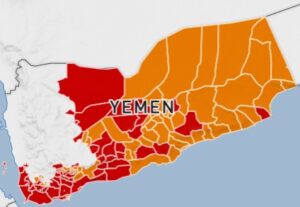
The Integrated Food Security Phase Classification System (IPC) of famine predicts and projects a growing number of regions moving into Phase 4 — Emergency, shown in red in the map at right — for the period September to December 2026.  The Orange Zones are very food insecure and Red are emergency.

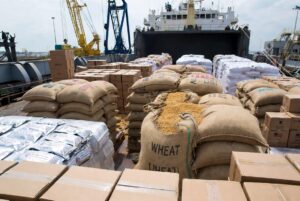
The 2026 Yemen Humanitarian Needs and Response Plan of the U.N. requested $2.16 billion for aid in order to reach 12 million of the 22.3 million people in need of assistance.  Yet, donor fatigue and competing global crises threaten another shortfall. Recent floods have destroyed displacement camps and livelihoods, while economic pressures and regional shipping tensions continue to inflate food and fuel prices. In government-controlled areas alone, nearly half the population now are now suffering crisis-level acute food insecurity, with emergency levels expected to climb through the lean season.The country’s arid climate, limited arable land, and chronic water scarcity have always constrained domestic production. Yemen has long depended on imports for over 90 percent of its food, especially wheat, of which it imports around 96 percent, leaving it acutely vulnerable to global price spikes, shipping disruptions, currency collapse, and fuel shortages that drive up transport costs.  War has only deepened this dependency.

The current civil war, fueled by Iranian support to Houthi rebels, has made humanitarian aid more difficult.  NGOs that had been building long-term food resilience for years had to shift to more short-term life-saving aid.  Damaged irrigation, lost livestock, displacement of farmers, and soaring input costs have left cereal production well below average. Even when commercial imports through Red Sea ports remain adequate in volume, economic collapse and rial devaluation put basic staples beyond reach for millions.

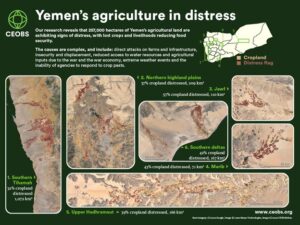
The chart at right comes from the CEOBS Report: Yemen’s agriculture in distressceobs.org

What is new and especially alarming in 2026 is the sharp contraction of the humanitarian response itself. In January, the World Food Programme announced it was terminating operations and contracts for its 365 staff in Houthi-controlled northern Yemen, home to roughly 70 percent of the country’s humanitarian needs—after repeated obstructions, arbitrary detentions of aid workers, and an increasingly impossible operating environment. This followed earlier suspensions and adds to chronic underfunding.  The 2025 appeal was only 29 percent funded, forcing agencies to scale back nutrition, health, and food programs nationwide.

Yemen’s food insecurity has deep roots, but the convergence of aid cutbacks, operational halts in the areas of greatest need, economic freefall, and climate shocks risks erasing fragile gains in nutrition and pushing more families beyond their breaking point.

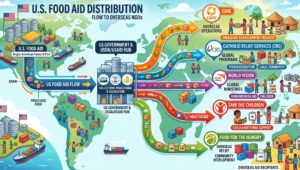
Aid agencies helping to address malnutrition in Yemen include:  the International Committee of the Red Cross, Action Against Hunger, Save the Children, the International Rescue Committee, Médecins Sans Frontières, CARE, Norwegian Refugee Council, Danish Refugee Council, Oxfam, Islamic Relief, Medair and the Adventist Development and Relief Agency.  Relief International is working with WFP in food aid in the south of Yemen.  UNICEF coordinates much of the nutrition programming for children and mothers, and the U.N. Nutrition Cluster (led by UNICEF), which reports for 44 operational nutrition partners in Yemen.

Further information, see:  https://www.nutritioncluster.net/country/yemen

and https://fscluster.org/yemen


New Food for Peace Programming by the U.S. Department of Agriculture

May 24, 2026    BACKGROUND:   The primary way that the United States government, working with nonprofits, has fought hunger and malnutrition around the world has been through the U.S. Food for Peace program (originally Public Law 480, or PL 480), which began in 1954 and was expanded by President Kennedy in 1961, at which time it took on the name Food for Peace (FFP). Over seven decades, it has reached roughly 4 billion people in 150 countries through a mix of emergency relief and longer‑term development projects. Annual funding has typically ranged from $1.2–2 billion in recent years for the core Title II program (the main grant‑based humanitarian component), though overall international food assistance outlays have averaged $2–2.6 billion, fluctuating with global needs.

The structure and flow of resources for FFP begin with Congress, where appropriations come through agriculture and foreign operations bills. In its early history, most FFP aid went to “development,” but over time the balance has shifted toward emergencies. The main food commodities provided by the United States have been wheat, rice, sorghum, corn‑soy blends, beans, peas, lentils, vegetable oil, and ready‑to‑use supplemental foods. These are purchased competitively from U.S. farmers and producers and often bagged on ocean freighters bound for Africa, Asia, Latin America, and the Middle East.

RECENT ADMINISRATIVE SHIFTS:   After the Trump Administration dissolved USAID in 2025, FFP planning and administration moved temporarily to the State Department and then, in late 2025, to the U.S. Department of Agriculture, with a strong “America First” focus on buying American‑grown foods. In December 2025, USDA and the U.S. Department of State signed an interagency agreement for USDA to take over FFP. USDA has long supervised other in‑kind international food aid programs, including the school‑feeding‑focused McGovern‑Dole Food for Education and the development‑focused Food for Progress (FFPr) programs, each delivered via partnerships with NGOs and the U.N. World Food Programme.

For many months it had been unclear how USDA would redesign FFP, how it would work with other organizations to deliver aid, and where. Then, in early May 2026, USDA announced a $350 million allocation of foods to WFP. In response, U.S. Wheat Associates announced that it “welcomes the announcement of the award of 20,000 metric tons (MT) (735,000 bushels) for emergency feeding programs under the U.S. Department of Agriculture’s (USDA) administration of the FFP program.”

NEW OFFERINGS

The new May 2026 Notice of Funding Opportunities published by USDA for NGO proposals sets out three reforms USDA has applied to the inherited portfolio:

  • *-100% U.S. origin for every commodity procured.
  • *-Strict traceability of every taxpayer dollar to guard against fraud, waste, and diversion.
  • *-“Offboarding and graduating” criteria, so that Title II funding “prioritizes emergency and in‑need geographies rather than forever‑aid countries.”

At present, the geographic scope has narrowed. NGO applications can only be submitted for seven countries: Democratic Republic of the Congo, El Salvador, Ethiopia, Guatemala, Haiti, Kenya, and Rwanda—a notable contraction from the broader Title II caseload USAID historically managed. Award sizes range from $20 million to $200 million, with USDA anticipating seven to fourteen awards out of $357 million in available federal funding, and a performance period of 18 to 24 months. The application submission deadline was June 12, 2026. Eligible applicants include public or private organizations, including intergovernmental organizations, language that explicitly keeps WFP and similar multilateral partners involved, while foreign governments are excluded.

With the large‑scale defunding of U.S. NGOs and other aid partners in 2025, intense competition for these new FFP program awards is expected.  NGOs such as CARE, CRS, World Vision, Mercy Corps, Save the Children and Action Against Hunger applied for FFP grants.
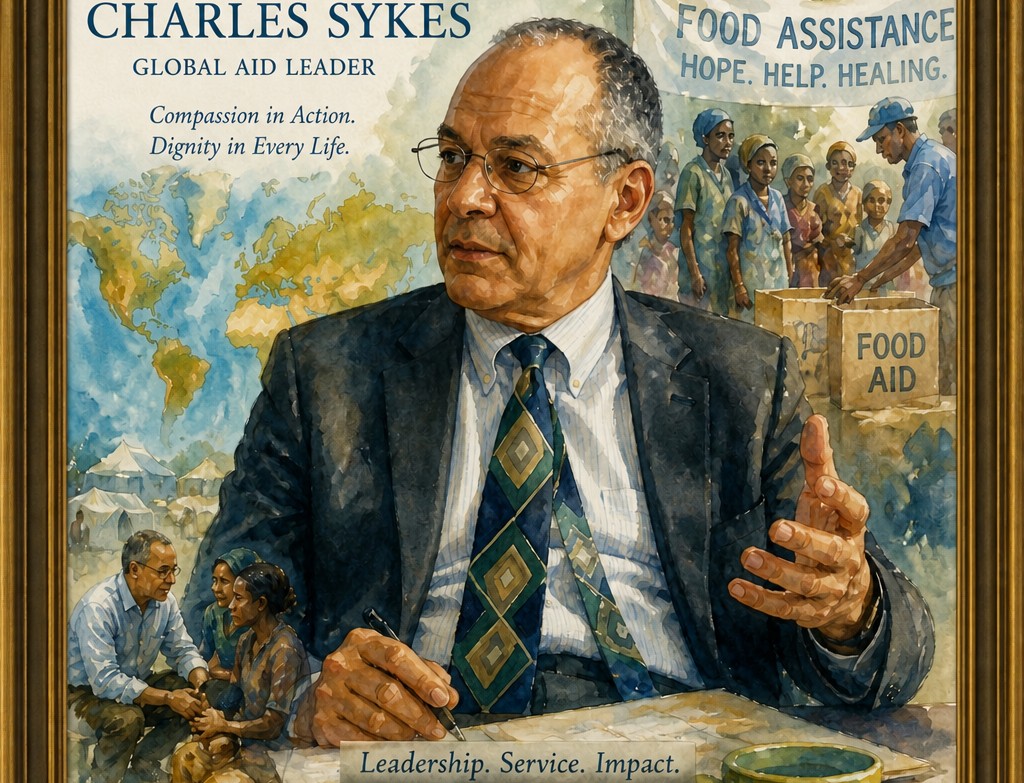

At the same time, USDA is layering the program on top of its existing Food for Progress (FFPr) framework. Separate from Title II FFP, the new FY26 Food for Progress solicitation to NGOs—released last week, closing July 6, 2026, with awards expected by late September—makes up to $226 million available across seven countries: Bangladesh, Bolivia, Ecuador, Morocco, Philippines, Sri Lanka, and Thailand, with awards of $28–35 million over four‑to‑five‑year performance periods. Food for Progress operates on a monetization model authorized under the Food Security Act of 1985 (7 U.S.C. § 1736o) in which the USDA buys U.S. commodities domestically and ships them overseas, the NGO sells them in emerging markets, and the NGO uses the proceeds to fund agricultural development.  Monetization used to be standard as well for FFP programs particularly in the 1990s.

Both of these competitions for bids are concurrent with USDA funding opportunities for school feeding (McGovern‑Dole).

See also:  USDA:  https://www.fas.usda.gov/programs/food-peace

https://alliancetoendhunger.org/wp-content/uploads/2026/04/FINAL-FY27-ATEH-Senate-Agriculture-Appropriations-Letter-1.pdf

and:  https://www.devex.com/news/house-locks-food-for-peace-into-usda-with-50-commodity-requirement-112420

A primer from the Congressional Research Service here

In Memoriam: Charlie Sykes, CARE Leader and Food Aid Advocate

May 16, 2026    Charlie Sykes, who defined a life well lived, passed away at 92 years of age, on May 8.   He is survived by his wife, Anya, two children who both pursued careers in international aid (his daughter, Agnieszka and Chris) and four grandchildren:  Sasha, Coline, Lazlo, and Marek.

Anya Sykes wrote Charlie “lived a rich and meaningful life.”

Charlie spent 34 years with the private volunteer organization, CARE USA.  After early postings in Greece (Field Representative) and Algeria (Deputy Director, 1961–63), he was Country Director successively for Poland, Pakistan, India, Egypt (1964–1980), and Dominican Republic (1978-1980).

In the 1960s, Charlie took on one of the largest aid programs in the world, in India where CARE (then the largest aid agency in the world) managed feeding programs for children in schools.  Dan Shaugnessy was with USAID in India at the time and remembers:  “He directed some amazing and very successful CARE programs there that were jointly funded, including the huge CARE midday meals program, Project Poshak, the Balahar blended foods project, and other innovative programs.”

Colleague Franesca Nelson reflects:  “Charlie’s unwavering commitment to nourish the hungry made perhaps the most significant contribution to the nutritional wellbeing of children in the twentieth century  through CARE’s school feeding programs around the world. He was a visionary, …and most of all a wonderful human being.

After his years managing large CARE programs in India and Pakistan, Charlie shifted to Washington, DC, working in close coordination with CARE’s President, Dr. Philip Johnston (who passed away three years ago).  From 1980 to 1994 he served as CARE’s Vice President for Public Policy — the head of CARE’s Washington, DC office and its principal lobbyist on Capitol Hill.  As Executive Vice President of CARE, Charlie was one of the most influential proponents of aid, shaping how Congress framed assistance legislation and appropriations.  He was the lead voice among nonprofits in fighting for anti-hunger programs and food aid.

Former CARE Emergency Coordinator, Tom Alcedo writes:  “Charlie always took the time to check with the field to ensure their position and interest were being considered, thus resulted in many positive outcomes, especially related to USAID and other USG funding. …During my time in Peru,  Charlie was especially effective in getting our country office authorization to monetize excess farm commodities and program those funds to assist hundreds of thousands of people living in poverty.  Charlie will be missed.”

Interviewed by management guru, Peter Drucker, Charlie explained:  The most important thing in working with government is patience and cultural respect. Non-profits must be careful when working with other cultural groups. A leader must get to know an organization before collaborating with it

He collabrated closely with other NGOs in the Coalition for Food Aid.

Shaugnessy again:  “He was a major proponent of NGO’s working with national and local governments and not trying to do things on their own. He believed NGO food aid could only be successful if it was carried out as a partnership with the host government, and he proved it with those successful programs. He carried that belief into later assignments including Egypt, Care New York, Care Washington, DC and finally as a Deputy Assistant Secretary of State in the 1990’s.”

Sykes was named a 1991 recipients of the Presidential End Hunger Award.

Ellen Levinson worked with him in the Coalition for Food Aid and remembers:  “Driven by his knowledge of hunger’s devastating and generational impact, Charlie was instrumental in building a broad-based, national constituency for global food aid. He was both my mentor and a colleague, beloved for his warmth, insights, and dedication.”

After serving as Deputy Assistant Secretary of State, in the Refugee Bureau of the Department of State during the Bill Clinton presidency, which included travel to refugee camps in Africa, Charlie then accepted and served for over ten years from 2001-2011 – first as Treasurer, then Chair, and then as a regular Trustee of the international aid agency, Partners for Development (PFD).

Executive Director Jack Marrkand remembers:  “Charlie had a deft touch in avoiding micro-management on operational matters but still ensuring that PfD was staying true to its mission and its overarching strategic plan.    He was greatly respected by his colleagues on the board from whom he was able to elicit helpful input and advice.”

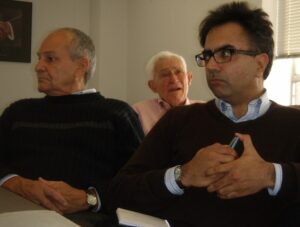
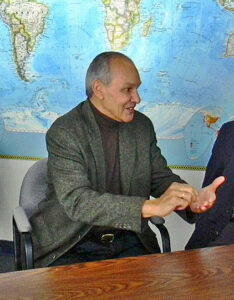
Fellow PFD board member and long-time friend, Wasiq Khan (sitting next to Charlie in the photo at right) remembers:  “Charlie had this saint-like beatific quality to him.  It was obvious when one was in his physical presence that he left his ego somewhere else and forgot to retrieve it.    ….  I think that quality of being above the fray, above self-dealing of any sort, was what gave Charlie the respect of his peers.  It was the way Charlie listened patiently and always with profound empathy and genuine positive interest that drew so many of us to seek his counsel and company…. Wherever he went, he wanted to know where people were from, what their lives were like, how history had shaped their journeys.  Charlie read voraciously  and liked nothing more than  chatting about a great book, a fascinating trip somewhere, or encounters he had had with interesting people.  The world never ceased to fascinate. … he was a very free person.  His mind could focus on the curious, the beautiful, the uncanny.”
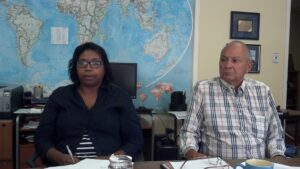
Donna Ellis of PFD (shown with Charlie at right) says that he “was the kind of person who understood the balance between being a strong leader and remaining approachable. He was incredibly impactful holding a position of authority but still made a point to lead with warmth and a genuine smile.”

Armin Bušatlić, a Bosnian, ran the local Bosnia program implemented under Charlie’s tenure, and remembers how “dedicated he was in helping us handle the project crisis we faced; he clearly cared a lot about the work and did a lot of good for the region.”

PFD director William Graham recalls:  “I am glad I had a chance to work with him.   Charlie was easy going, well informed about the Bosnia program and I appreciated his guidance and feedback.”  When Graham needed help getting his Macedonian wife immigration status, Charlie and his wife provided the critical support.  “Tanja and I are forever grateful to Anya and Charlie for their support and guidance.”  Charlie was proud of his wife Anya ‘s legal work, usually on behalf of immigrants , with AYUDA for many years.

Charlie was always an athlete, playing basketball and, into his later years, tennis with his friends from the World Bank and PFD.  One of them, Stephen O’Brien, remembers:   “On the tennis courts at the Arlington YMCA….was where he dominated!  With his height and innate athletic ability he was virtually unbeatable by the rest of us. But we changed partners from set to set so at least once per match one could count on playing as Charlie’s partner and winning! 

Jack Marrkand again:  “Up until quite recently Charlie always stayed in touch with occasional calls and letters politely requesting updates about both work and family. At a lunch some years ago, Charlie gave me a copy of the book, “Black Ball Tales,” whose opening chapter profiles his father, Frank (Doc) Sykes.”

In 2025, a history of Doc Sykes was published, “Dream Merchant of the Perfect Game, the Life and Legacy of Frank Doc Sykes,”  by Bernard McKenna.  Doc Sykes does not appear in Major League Baseball statistics because African Americans were not allowed in that league at that time, despite the fact that his pitching record of 30 wins in a season with a no-hitter, which is better than Dizzy Dean who had 30 wins but not a no-hitter.  No other pitcher in the last 120 years has accomplished that.  One generation removed from slavery, Doc Sykes attended Atlanta Baptist College (now Morehouse College) and then earned his degree from Howard University’s dental/medical school, a rare feat of parallel excellence, since he was simultaneously a major-league-caliber pitcher. He effectively ran two demanding professional careers at once, athlete and physician, in an era when either was rare.

Charlie was deeply proud of his famous father, shown at right, one of the greatest American baseball pitchers of all time, who pitched a no-hitter playing for the Baltimore Black Sox, with a career 3.5 ERA over 15 competitive seasons.
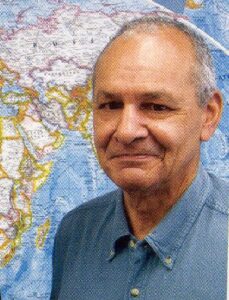
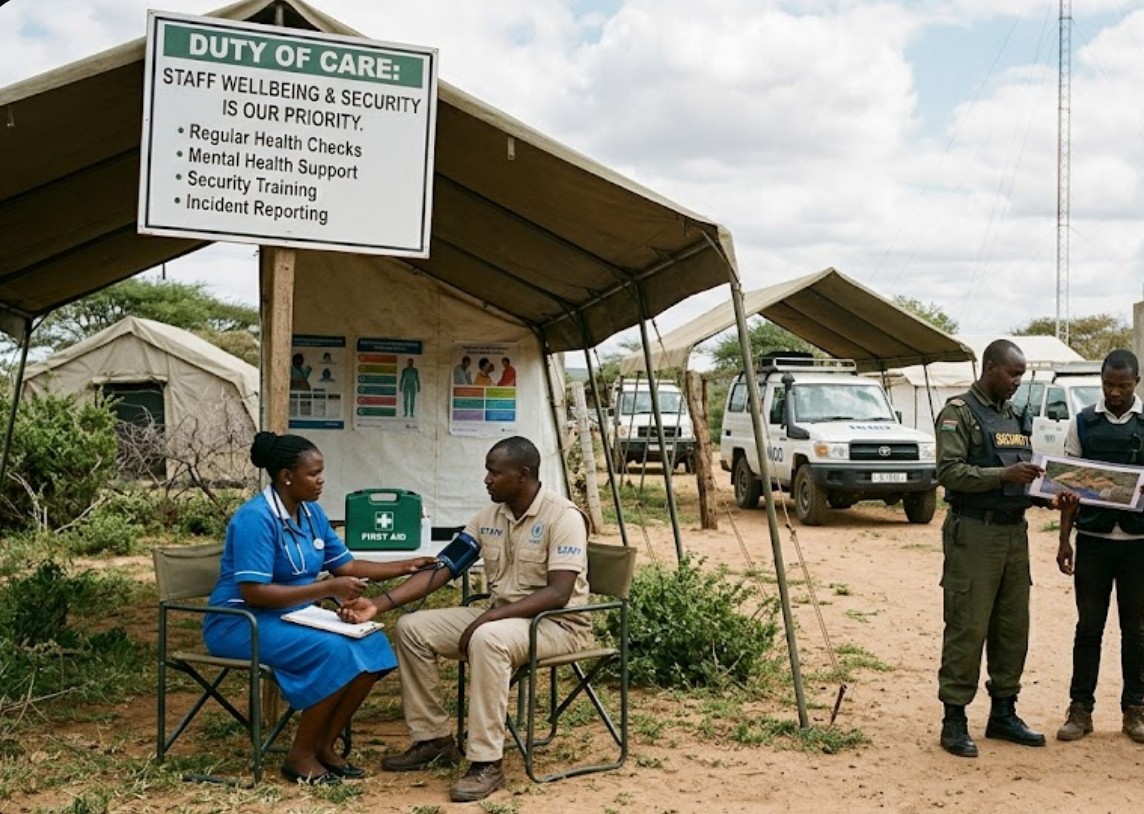
Known as “Doc Sykes” he challenged the segregationist policies of the time. He fought for the integration of juries nationally beginning with the Scottsborro trial in Alabama where he testified for the  nine young African-American boys in 1931 facing an all-white jury.  Considered seminal in the advancement of U.S.  judicial equality, the Scottsboro trials were held after two white women, falsely accused nine boys, ages 12 to 20, of rape in order to justify their own whereabouts illegally onboard an interstate cargo train.  Doc Sykes’ testimony along with the whole trial experience later influenced novelist Harper Lee when she wrote To Kill a Mockingbird, a best-seller, and which was rendered into one of the most important movies of all time, and won 8 Academy Awards including “best picture” in 1963.

In the Scottsboro trials, the accused’s collective guilt was pre-judged by the public, with newspaper headlines assuming their responsibility before all-white juries tried, convicted and sentenced to death all but one defendant in a matter of a day.   Doc (in fact he was a dentist) Sykes testified about the qualifications of Black residents to serve on juries, presenting a list of around 200 qualified Black potential jurors in the area.  In doing so he challenged the systematic exclusion of Black citizens from jury pools (and thus the all-white juries), which violated fair trial rights. His testimony helped highlight pervasive racial discrimination in jury selection.  Very soon thereafter, the U.S. Supreme Court ruled (e.g., Powell v. Alabama in 1932 and Norris v. Alabama in 1935) that defendants were entitled to fair jury selection processes, advancing equal protection under the law.

The Scotssboro cases exposed the deep-seated racial biases of the Southern legal system to the world. Seeing how the machinery of justice could be entirely subverted by racial prejudice left a permanent impression on novelist Lee. When she set out to write her masterpiece in the late 1950s, the Scottsboro trials served as her historical blueprint for the systemic injustice she wanted to critique in To Kill a Mockingbird.

The model of Doc Sykes standing up for racial justice influenced Charlie to fight for humanitarian themes around the world, a life of service in and out of government. During his years with CARE, the nonprofit distributed some 12 million metric tons of food aid to some 150 million people, mostly children.

Jack Marrkand again:  “It was a privilege to know Charlie Sykes for many years and to be guided and inspired by his commitment, unfailing optimism, and wisdom.”

Wasiq Khan, again, sums up the views of many, “We were drawn to Charlie because we wanted to be just a little bit more like him: handsome and athletic into his eighties, great conversation on almost any topic, and the feeling that you were heard and understood by someone you trusted deeply.”

Roundtable Meeting NGOs’ the Duty of Care for National Staff

May 9, 2026       Increasingly aid agencies have argued for more decision- making, resources and active roles for “local”, or national, actors in aid programs, including food, nutrition and other development and humanitarian efforts.  At the same time, aid agencies have taken efforts to provide balanced “duty of care” (DoC) for local employees, partners, volunteers and their families during disasters.  But best practice standards remain unclear and there are many challenges, if not barriers, to achieving the goals of DoC across security, training, psychosocial care, rest and relaxation, legal support, relocation and other dimensions.

On March 13, World Hunger Education serivce (publisher of this online educational platform, “Hunger Notes”) partnered with Compassion International and George Washington University in hosting a roundtable of experts from two dozen aid agencies, for a two-hour open discussion to share lessons about DoC.

A central concern was the persistent gap between policy and practice. Local staff often work in dangerous environments, carry the “double burden” of being both responders and affected community members, and have limited access to evacuation, psychosocial support, family assistance, and equitable medical care. Participants also noted that security, HR, and wellness systems remain siloed within organizational systems and responsibilities, weakening crisis response.
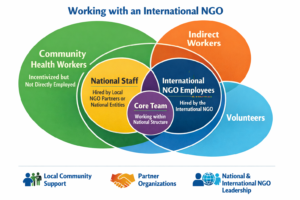
One participant said, “In disasters national staff deployed away from home are exposed to crisis contexts and deserve the same evacuation protections as international staff.”

The roundtable highlighted additional problems in federated NGO structures and sub-granting systems, where responsibility for partner staff is often unclear. Family support, remote work options during conflict, and coverage for indirect workers remain underdeveloped. At the same time, participants cited emerging improvements: more donor attention, growing mental health awareness, contextualized well-being frameworks, and some stronger onboarding and training models.

“Framing duty of care as mission-driven (not compliance- or HR-driven) is the key to getting executive support.”

Overall, the meeting concluded that NGOs need clearer definitions of who is covered, more equitable protections for local staff, harmonized policies, better training, and a stronger cross-sector community of practice.

See this downloadable below: 

Hunger in Niger

Niger is one of the countries within the Sahel region on the southern border of the great Sahara Desert in West Africa.  Niger rests directly north of Nigeria, and is home to over 24 million people.  As the country enters April which this year is the month of Ramadan, it is sobering to observe the current food security conditions in-country.

Niger is bounded by neighboring countries that suffer from Islamist attacks and recent coups. Niger’s rainy and cropping season runs from roughly May-October, and Niger it entering its lean season.  This is before the annual harvest at the end of the rains, in October/November 2022. An estimated 4.4 million Nigeriens will be food insecure between June-August 2022 (according to the Cadre Harmonise monitoring system) and the number of food insecure individuals is estimated to be roughly double the numbers seen in 2021.  These critical numbers are expected to worsen in the coming months, as the war in Ukraine has already affected world grain supplies, resulting in higher basic food prices within Niger, as well as increases in prices of, fuel and fertilizer which are expected to rise significantly in the coming months.

Malnutrition rates in Niger have not improved significantly in the last ten years and acute malnutrition remains at approximately 10% of children under the age of five.  International aid agencies have been responding, including CARE and Catholic Relief Services which are in the middle of five year food and nutrition programs, funded by USAID, in Maradi and Zinder regions, respectively.  The World Food Programme has piloted vulnerable adolescent girls with folic acid, iron and school meals, with the finding of significantly increased retention and graduation from schools.  The European Union also provides food and humanitarian assistance to Niger.

Niger also hosts over 800,000 internally displaced persons (IDPs), refugees or other uprooted people, and these populations are also food insecure.  Niger’s national cereal production for 2021 of ~3.5 million MT decreased by 40% from the previous 5-year average, food prices for its staples of millet, sorghum and maize have so far all increased by ~15% from the previous 5-year average, and are expected to further increase in the coming months as Niger’s lean season progresses. The food supply, combined with low forage supplies for livestock and continued physical insecurity due to Islamist attacks and threats all paint a very challenging picture for the Niger Government and its international partners to respond to these domestic food and physical security needs.   The nonprofit Action Contre la Faim, or Action Against Hunger in the U.S., provides nutrition, health and water in southwest and southeast Niger.

Compared to its neighbors, Niger is an island of relative stability due to successful elections last year and a relatively lower Islamist threat than the neighboring countries of Mali and Burkina Faso, though conditions can quickly change.  Niger’s continuing food security challenges are similar to hunger challenges throughout the entire Sahel region.  Climate change adds to these continuing challenges, linked to land degradation, water access, lower and inconsistent rainfall, high human fertility rates, and low literacy rates, especially for women.  Niger remains resilient, but this relatively small country and region, a continent away from Ukraine and eastern Europe, show the far-reaching global effects that current conflict will have on both rich and poor countries, especially those that rely on imported food, fuel and fertilizer to mitigate national food insecurity.

Cadre Harmonisehttps://www.ipcinfo.org/ipc-country-analysis/details-map/en/c/1152560/

https://fews.net/west-africa/niger

https://ec.europa.eu/echo/where/africa/niger_en

WFP:  https://www.ennonline.net/attachments/2928/FEX_58_Niger_p2.pdf