
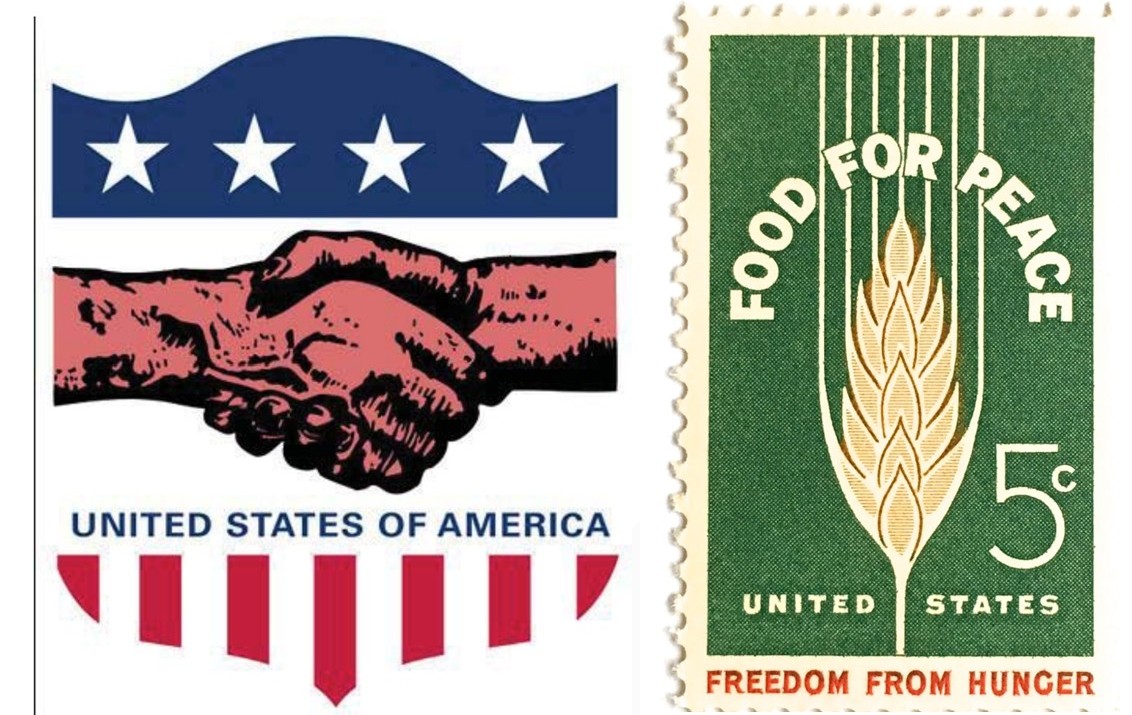
New Food for Peace (FFP) Action by the U.S. Department of Agriculture

May 24, 2026    BACKGROUND: The primary way that the United States government, working with nonprofits, has fought hunger and malnutrition around the world has been through the U.S. Food for Peace program (originally Public Law 480, or PL 480), which began in 1954 and was expanded by President Kennedy in 1961, at which time it took on the name Food for Peace (FFP). Over seven decades, it has reached roughly 4 billion people in 150 countries through a mix of emergency relief and longer‑term development projects. Annual funding has typically ranged from $1.2–2 billion in recent years for the core Title II program (the main grant‑based humanitarian component), though overall international food assistance outlays have averaged $2–2.6 billion, fluctuating with global needs.

The structure and flow of resources for FFP begin with Congress, where appropriations come through agriculture and foreign operations bills. In its early history, most FFP aid went to “development,” but over time the balance has shifted toward emergencies. The main food commodities provided by the United States have been wheat, rice, sorghum, corn‑soy blends, beans, peas, lentils, vegetable oil, and ready‑to‑use supplemental foods. These are purchased competitively from U.S. farmers and producers and often bagged on ocean freighters bound for Africa, Asia, Latin America, and the Middle East.

RECENT ADMINISRATIVE SHIFTS:   After the Trump Administration dissolved USAID in 2025, FFP planning and administration moved temporarily to the State Department and then, in late 2025, to the U.S. Department of Agriculture, with a strong “America First” focus on buying American‑grown foods. In December 2025, USDA and the U.S. Department of State signed an interagency agreement for USDA to take over FFP. USDA has long supervised other in‑kind international food aid programs, including the school‑feeding‑focused McGovern‑Dole Food for Education and the development‑focused Food for Progress (FFPr) programs, each delivered via partnerships with NGOs and the U.N. World Food Programme.

For many months it had been unclear how USDA would redesign FFP, how it would work with other organizations to deliver aid, and where. Then, in early May 2026, USDA announced a $350 million allocation of foods to WFP. In response, U.S. Wheat Associates announced that it “welcomes the announcement of the award of 20,000 metric tons (MT) (735,000 bushels) for emergency feeding programs under the U.S. Department of Agriculture’s (USDA) administration of the FFP program.”

NEW OFFERINGS

The new May 2026 Notice of Funding Opportunities published by USDA for NGO proposals sets out three reforms USDA has applied to the inherited portfolio:
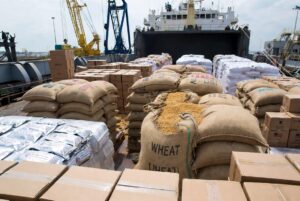
  • *-100% U.S. origin for every commodity procured.
  • *-Strict traceability of every taxpayer dollar to guard against fraud, waste, and diversion.
  • *-“Offboarding and graduating” criteria, so that Title II funding “prioritizes emergency and in‑need geographies rather than forever‑aid countries.”

At present, the geographic scope has narrowed. NGO applications can only be submitted for seven countries: Democratic Republic of the Congo, El Salvador, Ethiopia, Guatemala, Haiti, Kenya, and Rwanda—a notable contraction from the broader Title II caseload USAID historically managed. Award sizes range from $20 million to $200 million, with USDA anticipating seven to fourteen awards out of $357 million in available federal funding, and a performance period of 18 to 24 months. The application submission deadline is June 12, 2026. Eligible applicants include public or private organizations, including intergovernmental organizations, language that explicitly keeps WFP and similar multilateral partners involved, while foreign governments are excluded.

With the large‑scale defunding of U.S. NGOs and other aid partners in 2025, intense competition for these new FFP program awards is expected.  NGOs such as CARE, CRS, World Vision, Mercy Corps, Save the Children and Action Against Hunger are expected to be seeking FFP grants.
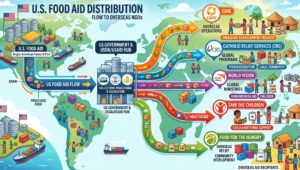
At the same time, USDA is layering the program on top of its existing Food for Progress (FFPr) framework. Separate from Title II FFP, the new FY26 Food for Progress solicitation to NGOs—released last week, closing July 6, 2026, with awards expected by late September—makes up to $226 million available across seven countries: Bangladesh, Bolivia, Ecuador, Morocco, Philippines, Sri Lanka, and Thailand, with awards of $28–35 million over four‑to‑five‑year performance periods. Food for Progress operates on a monetization model authorized under the Food Security Act of 1985 (7 U.S.C. § 1736o) in which the USDA buys U.S. commodities domestically and ships them overseas, the NGO sells them in emerging markets, and the NGO uses the proceeds to fund agricultural development.  Monetization used to be standard as well for FFP programs particularly in the 1990s.

Both of these competitions for bids are concurrent with USDA funding opportunities for school feeding (McGovern‑Dole).

See also:  USDA:  https://www.fas.usda.gov/programs/food-peace

https://alliancetoendhunger.org/wp-content/uploads/2026/04/FINAL-FY27-ATEH-Senate-Agriculture-Appropriations-Letter-1.pdf

and:  https://www.devex.com/news/house-locks-food-for-peace-into-usda-with-50-commodity-requirement-112420

A primer from the Congressional Research Service here
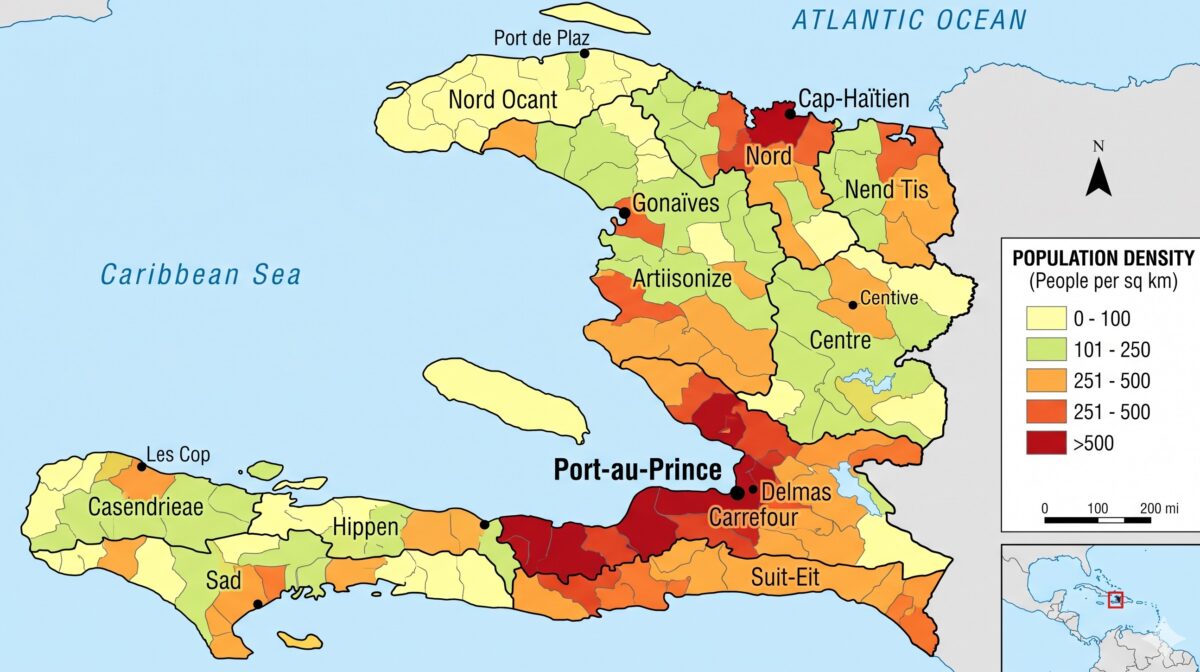
Hunger in Haiti

April 28, 2026:   Over the last six years, the food crisis in Haiti has grown steadily worse.  In 2019–2020, around 3.7 million Haitians were in food insecurity (IPC) Phase 3 or above.  By 2022–2023, that was approaching 4.7 million, nearly half the population. The most recent UN Integrated Phase Classification system analysis shows 5.7 million people (more than half the population) facing high levels of acute food insecurity, with 1.9 million in IPC Phase 4 (Emergency).

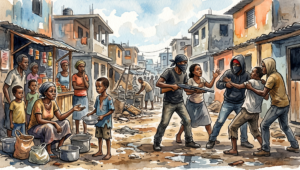
What distinguishes Haiti from other countries is the degree to which hunger is caused by gangs.  Historically, gang violence in Haiti was largely concentrated in specific slums of Port-au-Prince. While devastating for those communities, the national food supply chain, which relies heavily on imports through the capital’s port, remained somewhat functional.  Between October 2024 and June 2025, gang violence expanded westward into the Artibonite and Centre Departments, where 92,000 and 147,000 people were displaced respectively. By early 2025, the violence had also expanded into previously untouched areas of the country, and gangs began expanding north, south and east toward the Dominican Republic border, with the apparent goal of controlling key roads used for illegal weapons trafficking.

Gangs directly affect Haiti’s food economy.   Haiti imports over 70% of its rice and wheat but gangs now control key maritime and overland routes , strangling the entire country’s supply chain.  The Port of Port-au-Prince is blocked, forcing rerouting to Cap-Haïtien, raising costs.

Agricultural output in the Artibonite is down by at least 48%, according to the technical coordinator at the Artibonite Valley Development Organization. Gangs have taken over irrigation canals that feed the valley, leaving fields barren. Agriculture has stopped entirely in areas like Petite Rivière, Verrettes, and Pont-Sondé, where fields lie fallow and are overrun by weeds.   Gangs control irrigation systems (e.g., in Liancourt, Verrettes), forcing farmers to pay “taxes” for water or share their harvest.  Major markets (e.g., Croix-des-Bossales) are >80% non-functional.
UN World Food Program analysis using European Space Agency satellite imagery found up to 3,000 hectares of Artibonite farmland abandoned in 2023 compared to 2018, and hunger in these areas jumped from 40% to 57% in a single year.

According to ACLED, instances of sociopolitical violence almost doubled in three years , from 455 events in 2020 to 874 in 2023. The number of violent events in January 2024 was more than 70% higher than January 2023, and more than 60% above the five-year average.  As a result, over 1.4 million people are displaced (double the number from just a year ago), overwhelming host communities.  More than 5,600 people were killed in 2024 alone. Between October 2024 and June 2025, another 4,864 people were killed.
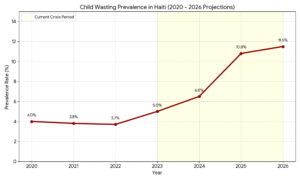
The graph at right shows how the prevalence of child malnutrition has increased over recent years.

The International Rescue Committee (IRC) reports that 75% of households cannot afford health services, and nearly 50% of the population survives on less than $3 a day.

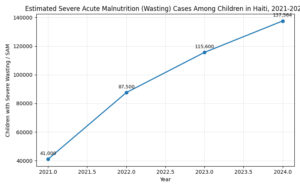
In this 2026 cycle, UNICEF has targeted over 129,000 children (aged 6–59 months) for treatment of Severe Acute Malnutrition.  UNICEF’s estimate of the increase in the number of cases of severe malnutrition is shown in the graph below.

Aid agencies have been continuously trying to provide life-saving assistance.  NGOs such as CARE, Catholic Relief Services and World Vision have led large consortia to promote nutrition in Haiti for decades, though the ability of outside agencies to operate has become constrained.  Today, agencies responding include:

  • -Action Against Hunger US is involved in Haiti. They support populations affected by violence and displacement, delivering critical food assistance and cash support in the Nord-Ouest region. In Nord-Est and Sud, their focus is on preventing malnutrition through targeted interventions. In Port-au-Prince, they provide vocational training, treat children suffering from malnutrition, and offer primary healthcare services to over 30,000 people.
  • -Catholic Relief Services (CRS) provides food assistance.
  • -CARE provides food to displaced populations.
  • -Compassion International provides food and voucher support through 365 church partners, helping children and caregivers.
  • -GOAL is providing cash for food security.
  • -Malteser International supports food security and nutrition, working with community health centers to identify and support malnourished children, pregnant women, and breastfeeding mothers.
  • -Médecins Sans Frontières (MSF/Doctors Without Borders) provides mobile and maternity clinics.
  • -Partners In Health (PIH/Zanmi Lasante): PIH deploys mobile food clinics staffed with medical professionals and community health workers to sites in the Artibonite region. They seek to identify malnourished children early so treatment can be delivered before health problems become fatal
  • -World Vision. World Vision is active in Haiti with child-focused hunger work, including school meals and other food support. Recent World Vision materials also describe food packages and support tied to the hunger crisis in Haiti.
  • -Meds & Food for Kids (MFK). This is a particularly important nutrition-focused Haiti organization. MFK produces therapeutic and supplemental foods in Haiti and works with Haitian clinics to treat malnourished infants and toddlers; it also runs school-feeding support with Vita Mamba

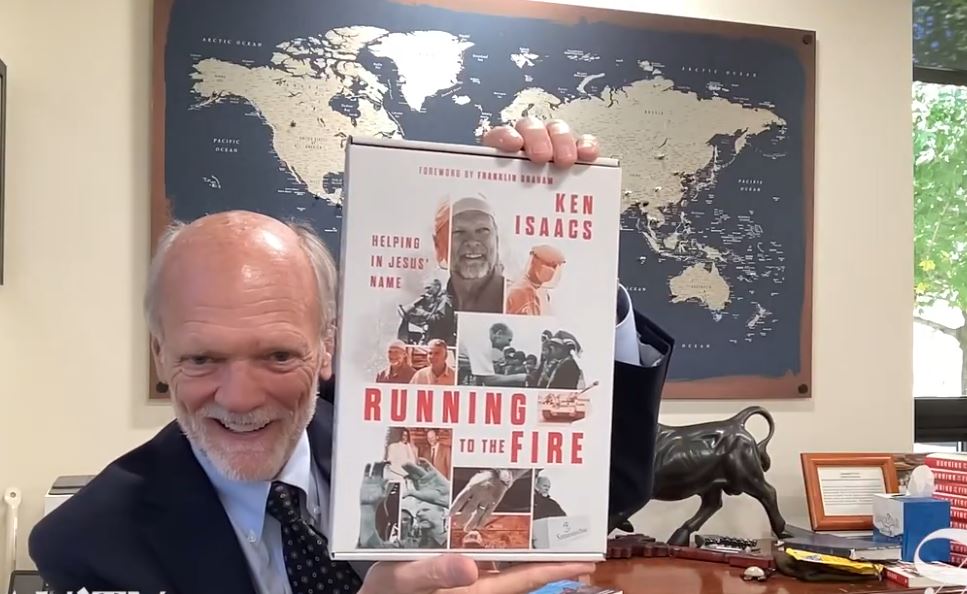
A Crucible of Courage: A Review of Ken Isaacs’ “Running to the Fire”

Ken Isaacs spent more than three decades with Samaritan’s Purse, rising to executive vice-president and helping turn Franklin Graham’s organization into one of the largest Christian relief agencies on earth. In Running to the Fire he recounts that journey through a series of crisply told, boots-on-the-ground stories: drilling wells in Marxist Ethiopia, delivering child “Christmas” care boxes in besieged Sarajevo, providing food aid and building 15,000 transitional shelters after Haiti’s 2010 earthquake, and negotiating with warlords across Sudan and Congo.

Isaacs is candid about the practical lessons learned the hard way: be radically transparent with any armed group, never promise what you can’t deliver, and—if you’re around people with guns—make friends fast.

Isaacs’ journey as a humanitarian worker is marked by a profound sense of purpose and an unwavering dedication to helping others.  The book is a testament to the power of faith in guiding one’s path and the impact that a single individual can have on the lives of countless others. Throughout the book he acknowledges the key roles of his colleagues and his wife and his faith citing inspirational biblical passages in each chapter.

Isaacs begins his story talking about inspiration from Gideon, the Apostle Paul, David, and others from the Bible who were men who thought in terms of what they could do, not what they couldn’t do. He credits his tendency toward having a nomadic lifestyle to his childhood going to different schools in different cities. Isaacs made his first trip to Africa to Togo in March 1985 as a volunteer drilling water wells. He was asked to take a job drilling wells in Ethiopia following the 1985 famine.

The book conveys the unpredictable, helter skelter bouncing around between countries and continents that marks the life of disaster relief workers.  Isaacs began working regularly for Samaritan’s Purse in 1988. In 1988 he hit the ground running on a new well drilling project owned by the Ethiopian Kale Haywat Church. Founded in 1927, the church is now its own denomination of 10 million members with headquarters in Addis Ababa. The immediate dilemma was working within the church’s structure to establish the program while having to liaison with the communist government that was oppressive to Christians.  “Quite the challenge” he describes.

He tells about the origins and population displacements during the Bosnia War of the 1990s.   He praises his colleague there, Dr. Mike Van Royen, who went on to set up the humanitarian program at Harvard.  Isaacs recalls the origins of the U.S.-based Operation Christmas Child Project, a successful program in Bosnia which Samaritan’s Purse later took over globally.

Following a letter from a missionary in 1997 to Franklin Graham, Samaritan’s Purse began organizing relief flights and supplies into South Sudan.  Sudan and South Sudan became one of the largest areas of aid for Samaritan’s Purse over many years.

Isaacs writes with a reporter’s eye for detail and a missionary’s heart for people. His prose is straightforward yet vivid, often weaving biblical reflection into practical accounts of logistics and survival.

While working in Afghanistan he learned about listening to local actors:  “I learned two principles from working in the region of the world. First, you always want to be transparent and let them know exactly who you are. Just be yourself and be the same to everyone. Second, if you’re around people with guns, it’s a good idea to try to make them your friends.  Do not be contentious. Which is why I had no hesitation to sit cross-legged on the floor to eat with the Mujahideen.”

In 2004, Isaacs moved to Washington, taking on the job overseeing the large Office of U.S. Foreign Disaster Assistance at USAID. He reflects, “I soon learned that Washington, D.C., is complicated, diluted, and highly inefficient. While I understood politics and complex power struggles, I wasn’t prepared for the politicization of humanitarian response.” After that assignment, he returned to Samaritan’s Purse as the overall Vice President for Programs and Government Relations.

Flying to Haiti after its 2010 earthquake, he recounts how quickly he was able to organize partnerships, rental of a camp for surgical care for earthquake victims after the 2010 earthquake. “One thing I learned later,” he says, “was that the sand most often used in Haitian concrete has a very high level of salt, which causes corrosion on the rebar inside the concrete, creating structural weakness. The obstacle wasn’t constructing shelters, but as our surveys had revealed, finding available land. We would request residency for 36 months. The next step was to set up a system of prefabrication utilizing a U.S. supply chain of pressure treated dimension lumber, specifically 2x4s.”  For reconstruction, Samaritan’s Purse devised a simple basic house plan of 12 feet by 12 feet. “The roofs would be 9 feet high at the front and sloped to 8 feet in the back for drainage. I am very pleased to tell you that 15,030 houses were constructed and set up.”

While Isaacs provides vivid descriptions of fieldwork, the memoir tends to gloss over failures and tensions within crisis response, limiting the reader’s exposure to the full complexity of humanitarian aid.  Yet it is a valuable primary-source record of what large-scale Christian relief looked like on the ground from the late 1980s through the 2010s, written by someone who was actually in the room (or the refugee camp, or the crashed helicopter) when decisions were made. Readers curious about the mechanics of emergency response—how you charter planes into active war zones, why Haitian concrete fails, or how a shoebox campaign scaled to 200 million children—will find plenty of nuts-and-bolts detail.  The book does not describe other aid agencies or provide systematic analysis of how aid could be improved, though he has recently been an advisor about humanitarian aid to the U.S. Department of State.

“Running the Fire” is not just a personal memoir; it is also a call to action. Isaacs’ experiences serve as a powerful reminder of the urgent need for humanitarian aid and the critical role that organizations like Samaritan’s Purse play in addressing global crises. The book encourages readers to reflect on their own responsibilities and the ways in which they can contribute to making a difference in the world.   In the end Isaacs wants the book to do two things: honor the national staff and local churches who do the real work, and prod comfortable Western Christians to “run to the fire” themselves.

– S Hansch, Hunger Notes Contributor / WHES Board Member