


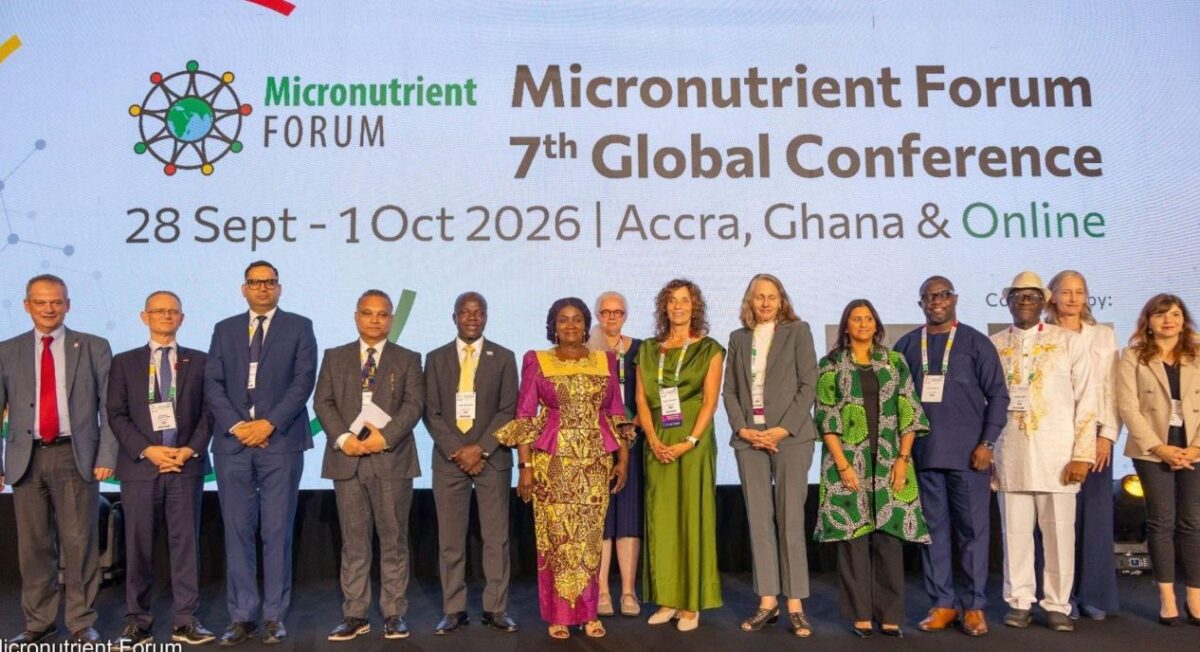
October 8, 2026 Nutrition specialists gathering in Accra last week returned to a recurring challenge: how to translate evidence on preventing malnutrition into policies and programs that reach people at scale. Several thousand nutrition and aid specialists participated in person and online in the Micronutrient Forum’s 7th Global Conference, held in Accra, Ghana, from September 28 to October 1. With the theme “Nutrition at the Frontiers of a Changing Environment,” the conference brought together research, policy, and program experience across nutrition, food systems, climate, and development.
Presentations examined climate-resilient, nutrient-rich crop varieties; improvements in food storage and processing; and innovative financing. Across these topics, speakers emphasized the importance of political leadership, sustained investment, and coordination.
Presenter Ziauddin Hyder reflected on the event:
“Ending malnutrition requires more than isolated projects. It demands strong political leadership, sustainable domestic financing, and coordinated action across sectors. Bangladesh is committed to transforming this vision into action by integrating nutrition into primary health care and ensuring that multisectoral investments converge to improve maternal and child nutrition.”
Participants included Action Against Hunger, World Vision, Catholic Relief Services, the Hunger Project, GAIN, Population Action International, AGRA, iDE, UNICEF, IFPRI, FAO, WFP and the Ghanaian Government. Private sector participants included BioAnalyt Gmbh, Hexagon Nutrition, and Particles for Humanity. A number of presentations were by the Consultative Group on International Agricultural Research (CGIAR) or IFPRI. The Government of Ghana, the African Union (AU), and the African Development Bank (AfDB) were major participants as well.
Dr. Saskia Osendarp, who is Executive Director of the Micronutrient Forum, called on the international community to not only take stock of progress but also translate evidence into actionable recommendations for research, policy, and programs, while building on and celebrating African leadership in nutrition.
Presentations covered a wide range of recent progress in battling malnutrition, spanning climate change, behavior change, processed foods, testing for deficiencies, fortification, nutrient supplements and funding.
FORTIFICATION
A widely echoed takeaway from the forum was the growing body of evidence on what works: across diverse contexts, food fortification emerged as one of the most cost-effective and impactful public health interventions, especially when implemented with mandatory legislation.
The Food Fortification Initiative presented a systematic review about the effectiveness of large-scale food fortification across 10 fortification vehicles, plus reviews on milk fortification, fortified soy/fish sauce, the impact of mandatory folic acid fortification on neural tube defects, congenital heart defects, and clefts, folate status, methods for estimating fortified-food coverage, integration of fortification into food systems, and a new rapid spot assay for zinc in fortified grains.
The ten-person CRS delegation concluded that: “We know what works. Now is the time to scale it,” supported by abstracts from their fortification work in Madagascar, Niger, and Ghana. CRS highlighted how its fortification programming in West Africa, built with governments, regional institutions, the private sector, and civil society, has strengthened policy frameworks, regulatory monitoring, quality assurance, and compliance, improving access to micronutrient-rich foods “for millions of vulnerable populations.”
Gaps in Compliance: Research from countries like Bangladesh and Nigeria revealed significant compliance gaps, particularly highlighting the disparity between branded and unbranded staple foods (like edible oil and salt). Experts noted that markets frequently fail to deliver adequately fortified foods to consumers due to these blind spots. From Cambodia, a 2023 cross-sectional assessment of vendors in about 150 public rural primary schools, related to unhealthy school foods found that 98% of vendors said they knew the directive, and most could identify sugary and energy drinks as prohibited. Yet, that awareness did not change what was sold.
A rapid zinc test may make food-fortification monitoring much easier. The Food Fortification Initiative featured an abstract about developing and validating a qualitative spot assay for zinc in fortified cereals. The associated method uses xylenol orange, which produces pink or purple spots when added zinc is present in refined wheat flour or fortified white rice. Testing takes only 10–15 minutes, excluding reagent preparation. This gives millers and inspectors a relatively inexpensive screening tool for checking whether zinc was added. It detects presence, however, rather than establishing that the food contains the legally required concentration.
GAIN’s contributions included Svenja Jungjohann’s presentations on discrepancies between market assessments and household exposure in Bangladesh, and compliance gaps in branded and unbranded oil and salt in Bangladesh and Nigeria. Annette Mongina Nyangaresi presented implementation research about digital fortification-quality systems.
Latin America has been a historic pioneer in large-scale food fortification (vitamin A–fortified sugar in Guatemala, near-universal salt iodization, wheat flour fortification in 18 countries. Rice fortification (already mandatory in Costa Rica, Nicaragua and Panama, and being developed in the Dominican Republic, Brazil and Colombia) was flagged as an underused frontier.
SUPPLEMENTS FOR A WIDE RANGE OF VITAMINS AND MINERALS
There was a heavy push for expanding distribution of “multiple micronutrient supplements” (MMS) for pregnant women, with 48 countries now exploring or implementing it, noting that women prefer a full 180-day supply, which supports adherence. Vitamin Angels, profiled earlier in Hunger Notes, presented about scaling up multiple micronutrient supplements, and Ghana’s phased rollout of Multiple Micronutrient Supplements (MMS) focused on evidence building and system preparedness.
Participants noted that supplement packaging is a sensitive part of nutritional efficacy: repackaging can reduce vitamin potency.
A poster looked at the effect of nutrition education on multiple micronutrient supplementation knowledge, attitudes, and practices among pregnant women in Abuja, Nigeria. In selected antenatal clinics, structured nutrition education produced large gains: about 89% reached a good knowledge score and 81.6% a positive attitude toward use of multiple micronutrient inputs.
One session moderated by Jian Yan and Parul Christian of Johns Hopkins, addressed dose-response trials in undernourished women. A supplement’s nominal nutrient content does not by itself establish whether it corrects deficiency. Dose-response research seeks amounts that achieve adequate status without excessive exposure.
UNDERSTANDING MICRONUTRIENT DEFICIENCIES
UC Davis and Cambridge experts underscored that half the world has inadequate intake of at least one micronutrient, and biological stressors amplify these gaps. Sight and Life presented about anemia among women, noting that anemia is the #1 global cause of lost DALYs for adolescents 10–19, University researchers emphasized that blood loss, infections, and genetic conditions are major contributors to anemia—often overshadowing simple iron deficiency narratives. This has implications for screening, treatment protocols, and national anemia strategies.
Dr. Parmi Suchdev presented about “Micronutrients, inflammation, and life-course vulnerability,” explaining how systemic inflammation can change or obscure bio-markers of nutrient deficiencies.
CHILD NUTRITION
The Child Health and Mortality Prevention Surveillance (CHAMPS) team presented key research highlighting maternal health and life-course vulnerabilities: Malnutrition is the main underlying cause in older children. It was the most frequent underlying cause among infants and children (20.8%), with sepsis and pneumonia more often the final event. An earlier analysis found malnutrition causal or significant in 39.5% of these deaths, 89.1% of which also had an infectious cause.
World Vision presented about father-to-father support groups which helped exclusive breastfeeding increase from 64.8% to 94.7%, while women meeting minimum dietary diversity increased from 11.2% to 54.9%. WV also presented about strengthening RUTF supply chains for continuity of care of child wasting, with West Africa as their example.
CLIMATE CHANGE IMPACTS
University scholars presented evidence that climate change is reducing the micronutrient content of staple crops. Crop science experts showed that rising CO₂ levels and erratic rainfall patterns lower iron, zinc, and protein density in cereals. At the same time, rapid dietary transitions in African cities are reducing micronutrient diversity, increasing reliance on processed foods, and stressing traditional food systems.
The AGRA Regional Director, Sunil Dahiya: “Higher carbon dioxide levels reduce the zinc and iron in staples like rice and wheat. The bowl looks the same, but there is less nutrition in it. ….The crop is changing.”
DATA AND LEARNING
Discussions emphasized the urgent need to improve the timeliness, availability, and sourcing of data feeding into the Global Fortification Data Exchange (GFDx) to help policymakers track scaling progress in real-time.
The Nutrition in City Ecosystems (NICE) Project emphasized south-south learning between Asian and African cities, showcasing how urban areas can lead in addressing micronutrient deficiencies.
Action Against Hunger, PAI, CORE Group, FP2030, HMHB, and SUN’s Civil Society Network co-convened an October 2 follow-up gathering on linking nutrition, family planning, and maternal and child health.
Overall, the conference reinforced the need for a unified, evidence-based agenda linking nutrition directly to improved child health outcomes and survival rates.
Overall, the conference reinforced the need for a unified, evidence-based agenda linking nutrition directly to improved child health outcomes and survival rates.
FURTHER INFORMATION
In the future, presentations will be available at: https://mnfconference.org/
The program is seen at: https://booklet.kenes.com/export/mnf26
GAIN’s poster presentations and side event about business: https://www.gainhealth.org/events/micronutrient-forum-7th-global-conference-mnf#gain-participation
AGRA’s presentation: https://youtu.be/4SjNVlZyjb8
Food Fortification Initiative: https://ffinetwork.org/micronutrient-forum-7th-global-conference/
IFPRI: https://www.ifpri.org/event/ifpri-micronutrient-forum-7th-global-conference/
– Edited by Steven Hansch of the World Hunger Education Service
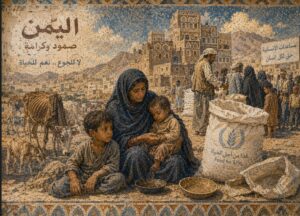 International is working with WFP in food aid in the south of Yemen. UNICEF coordinates much of the nutrition programming for children and mothers, and the U.N. Nutrition Cluster (led by UNICEF), which reports for 44 operational nutrition partners in Yemen.


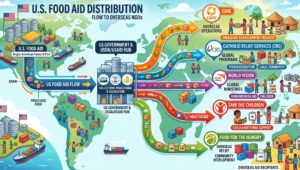 intense competition for these new FFP program awards is expected. NGOs such as CARE, CRS, World Vision, Mercy Corps, Save the Children and Action Against Hunger applied for FFP grants.
 – the Struggle For Food and Dignity in Recent Humanitarian Crises” was a 2007-08 Hunger Watch Report by Action Against Hunger. It
 5,000 Lebanese pounds due to rising fuel costs affecting oven operations and flour transportation.


 nsch, WHES Director