Further Increases of Starvation in Darfur, Sudan

April 12, 2026

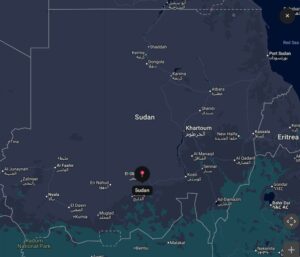
The arid, poor, western region of Sudan, called Darfur, has been a complex emergency for twenty-three years, with mass displacement and an increasing problem of starvation and malnutrition.  Aid to prevent starvation is prevented by the inability of aid agencies to reach those in need, due to violence. A two-year siege of the regional capital of El-Fasher reflected the unending war between the two combatant groups, the Rapid Support Forces (RSF) and the SAF (Sudanese Armed Forces).

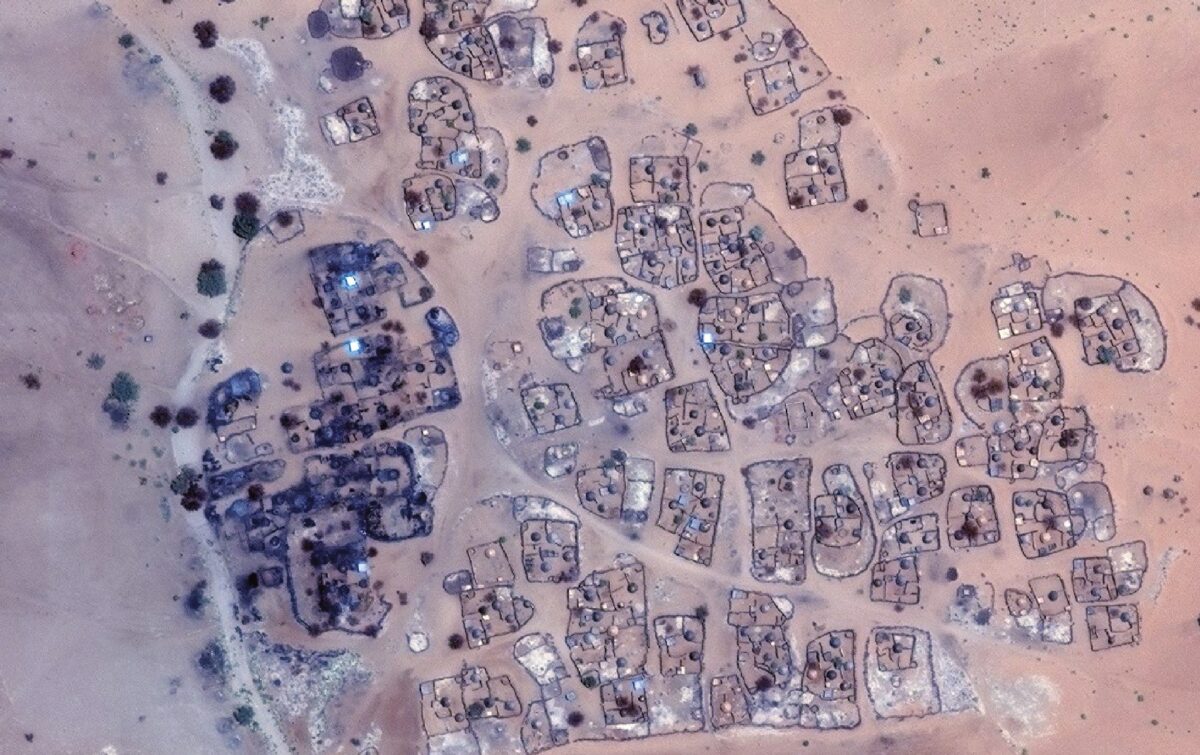
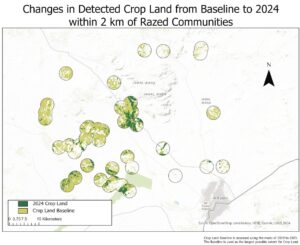
Using themal imaging, the Humanitarian Research Lab (HRL) at Yale University has recently published evidence of attacks against civilians Darfur.  Yales’s new HRL report provides detail of targeted burning, destruction and razing of 41 agrarian villages northwest of El-Fasher in darfur.  These communities were ethnically Zaghawa who produce food for the region, but following attacks, they halted agricultural work.  The Yale lab report finds:  “decreases in agricultural activity during the growing period following the razing of communities assessed through year-on-year changes in land use/land cover.”

The Yale lab and this report use remote sensing to measure changes in food security in non-permissive environments.  Satellite imagery of farming communities are shown in the photo at the top-left and at the map at right.

Oona Hathaway has called attention to famine as a war crime in Darfur, western Sudan.  “We conclude that the new Yale HRL report provies compeelling evidence relevant to multiple RSF starvation crises in the vicinity of El-Fasher, including war crimes, crimes against humanity…. Well over 11 million people have been displaced by the conflict, which has caused desperate levels of food insecurity, including multiple determinations of famine.”   She continues, “the fighting and the parties’ well-documented obstruction of humanitarian relief have, for extended periods, made the, made the transportation of food and aid to places that desperately need it nearly impossible.”

The economic and livelihood implications of the crisis have spread beyond the agricultural sector.  “Nearly 70 percent of bank branches have closed and ceased operation in conflict zones across Sudan. Bank closures, limited cash liquidity, and high transfer commission rates ranging from 10 to 30 percent have contribu ted to financial strain and limits any ability to sell and purchase food commodities, exacerbating food insecurity.”

Several locations in Darfur report acute malnutrition rates above 50%, which is very high.  Around 800,000 childhood cases of servere malnutrition, the most dangerous and deadly form of malnutrition, are expected nationwide this year in The Sudan.

Food aid does not benefit from a stable pipeline to Darfur, some food coming from Chad.  Much of the food is brought in by the World Food Programme.  NGOs responding include the Norwegian Refugee Council, CARE, Food for the Hungry and Concern Worldwide.

Following the confirmed spread of famine in North Darfur, Action Against Hunger (AAH or ACF) is operating directly in regional hunger hotspots. Their teams provide emergency health and nutrition interventions, alongside water, sanitation, and hygiene (WASH) programs that are critical for preventing malnutrition-related diseases like cholera.

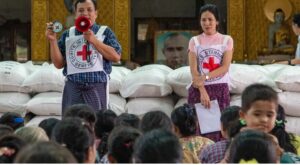
The International Committee of the Red Cross (ICRC) has provided food and cash, and health care for livestock, and rehabilitated water infrastructure (e.g., hand pumps in rural North, Central, and West Darfur) benefiting tens of thousands; conducted cholera response campaigns with chlorination and hygiene promotion in Tawila (North Darfur) and Al Daein (East Darfur), reaching over 117,000 people and distributed water filters.

See:


Lebanon’s 2026 Conflict and Displacement Increase Malnutrition

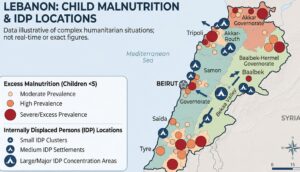
April 8, 2026:  An estimated 1.65 million people in Lebanon are vulnerable to increased food shortages and malnutrition due to the combination of conflict, bombardment, displacement and denied access of food shipments. The conflict between Israel and Hezbollah forces in Lebanon has caused significant agricultural damage, estimated at $704 million, and disrupted livelihoods, especially for small-scale farmers.  However, aid agencies have not reported new rates of malnutrition from population-based surveys.

Pre-conflict, children in Lebanon were found to be 36% anemic from iron deficiency, with reduced dietary diversity and high rates of zinc and Vitamin A deficiency.

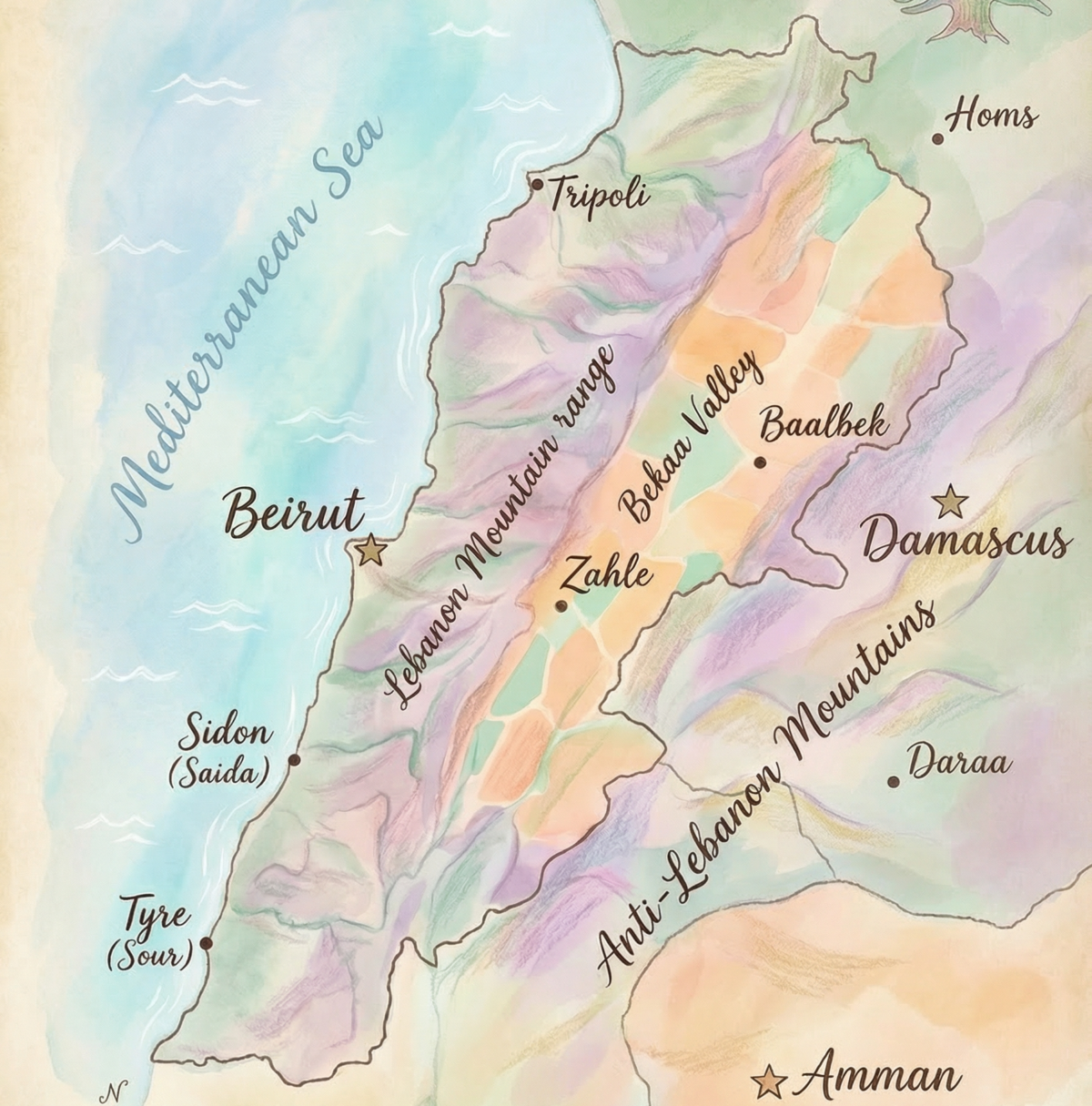
Daily military strikes and incursions continue, particularly in the south of Lebanon and the Bekaa Valley, preventing people from returning home and resuming their livelihood.  People are sheltering in schools, public spaces, and even their cars, with many shelters already overcrowded. Hotspots include Baalbek, El Hermel, Akkar, Bent Jbeil, Marjaayoun, El Nabatieh, and Sour.  Seven bridges across the Litani River — a key transport corridor linking southern areas to the rest of the country — were struck as of late March 2026, disrupting supply routes for food, fuel, and medical goods.   Retail activity collapsed in conflict zones: only 15% of shops in El-Nabatieh and one-third in South Lebanon remained fully operational.   Markets south of the Litani River largely ceased operations, with many shops closed or evacuated and supply deliveries significantly reduced

More generally, Lebanese also have seen increases in the price of food, which has been affected by the regional conflict and constraints on fuel.  For example, the price of bread increased 8% at subsidized rates but 30% at many bakeries.  The Ministry of Economy increased the price of bread  by 5,000 Lebanese pounds due to rising fuel costs affecting oven operations and flour transportation.
International Aid

As needs have increased, the funding for aid has decreased. Food assistance coverage has dropped by about 45% between 2024 and 2025, forcing the WFP to reduce the number of people it assists by 40%.

Aid agencies that are responding with nutrition, food and health assistance include the Mennonite Central Committee, the Lebanese Red Cross, Action Against Hunger (AAH and ACF), the International Federation of Red Cross and Red Crescent Societies, UNICEF, CARE, Caritas, MedAir, and others.

A new digital platform called Sofra is coordinating an innovative response by connecting international donors with local restaurants to prepare and deliver meals to verified shelters. This initiative helps feed displaced families while supporting local businesses and keeping restaurant staff employed.

Increased Hunger and Conflict in Afghanistan

Afghanistan is currently facing a severe food insecurity crisis driven by several compounding factors. According to the UNHCR,  in 2025, both Pakistan and Iran tightened their migration policies, forcing large numbers of Afghan refugees to return to Afghanistan.

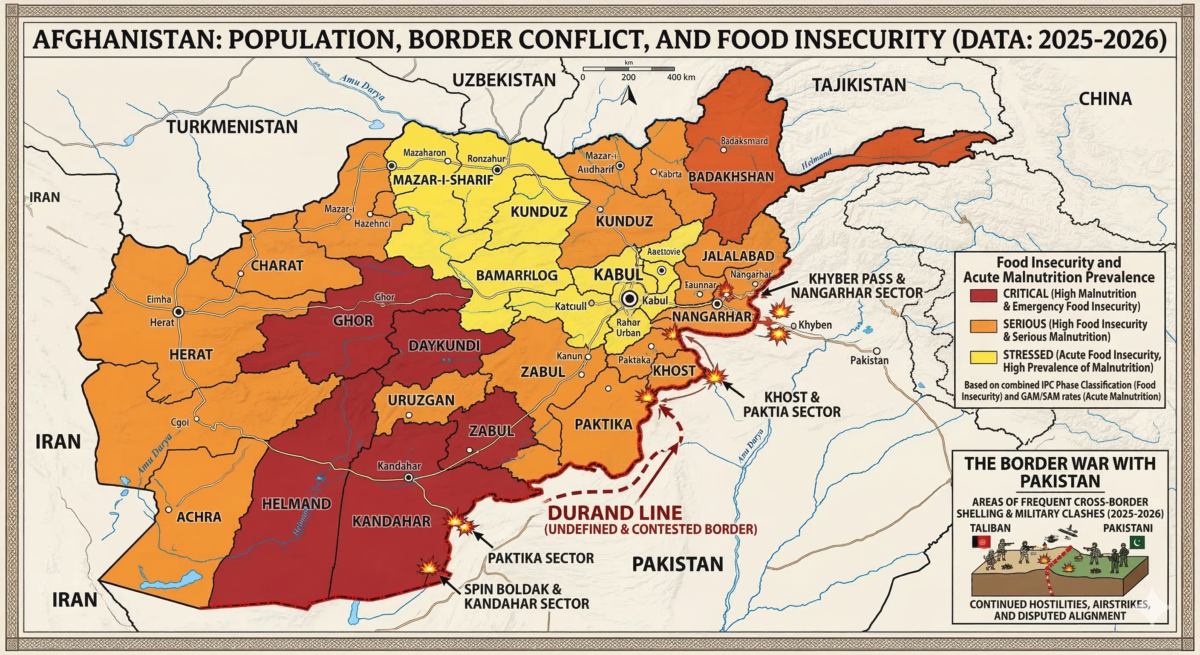
The Pakistan–Afghanistan border has become a combat zone, and Pakistan has conducted airstrikes inside Afghanistan along with ground operations, displacing 66,000 Afghan civilians.  As of mid-March, armed clashes continue in several Afghan provinces (Khost, Paktia, Paktika, Kunar, Nangarhar, Kandahar), with both sides reporting heavy losses. Pakistan claims to have destroyed militant infrastructure, while Afghanistan accuses Pakistan of targeting civilians and civilian areas.

An estimated 2.7 million Afghan refugees were forced back to Afghanistan in 2025 from Pakistan and Iran, straining Afghan public services. Pakistan has also closed the border and suspended trade, a devastating blow to the landlocked Afghan economy.  Many of these returnees are struggling to reintegrate due to limited employment opportunities and the lack of basic services such as food, clothing, and shelter. In addition, many refugees sold their homes when they fled Afghanistan and are now returning with no place to live.

Making things worse, major border crossings have been closed since late 2025 due to the conflict with Pakistan, interrupting food trade.  Compounded by its war with the U.S., Iran (Afghanistan’s western neighbor) has halted exports to Afghanistan of some food products, worsening Afghan food shortages and raising prices.   As a result, Afghanistan is shifting toward northern suppliers.

Kazakhstan nearly doubled grain exports to Afghanistan between late 2025 and early 2026.  Afghanistan cannot produce enough staple food domestically.  For example, wheat consumption for its population of 45 million is roughly 6.8 million metric tons per year, whereas domestic wheat production is about 4.8 million tons, with the shortfall made up through imports from Russia, Kazakhstan, and Central Asia.

The influx of returning refugees is placing additional strain on already scarce resources. At the same time, Afghanistan is experiencing a severe water shortage caused by a drought that has persisted for more than four years. The FAO estimates that snowfall during the 2025–2026 winter is at a 25-year low, significantly affecting agriculture and livestock production. As a result, it is estimated that roughly half of Afghanistan’s population is facing severe food insecurity and poverty.

The prevalence of malnutrition has increased over the last year, reaching record highs.  Acute malnutrition for children under five increased by approximately 7% compared to early 2025. In 2026, an estimated 3.7 to 4 million children are projected to suffer from acute malnutrition, with nearly 1 million of those facing Severe Acute Malnutrition.  Approximately 1.2 million pregnant and breastfeeding women are also expected to be acutely malnourished this year.

Afghanistan’s per capita GDP is estimated at about $400 per year and has declined by 20% from a few years ago.  By this measure, the Afghan people are the poorest in Asia.  The chart at right compares the prevalence of undernutrition in Afghanistan to some of its neighboring countries.

Children are still being measured to identify malnutrition, but the system is under immense strain.  Families stopped taking children to health centers as they knew that supplies of recovery foods would not be available.  Many children are “dying silently at home” because families cannot afford the transport to clinics, or facilities have closed due to earthquake damage and lack of staff funding.

The departure of U.S. troops in August 2021 and the subsequent 2025 cessation of all USAID aid to Afghanistan fundamentally broke the primary supply and distribution model.  Last winter, the WFP provided aid for 6 million people but have cut that back to only 1 to 2 million people.

In addition to UNICEF and WFP, nonprofits who are responding to hunger in Afghanistan are:  Action Against Hunger (ACF), Concern Worldwide, CARE, Norwegian Refugee Council, Save the Children, International Rescue Committee, Mercy Corps, Islamic Relief Worldwide, MSF, and World Vision.

The war is being fought over Pakistan’s demand for Afghanistan to eliminate militant safe havens and Afghanistan’s refusal to comply, compounded by historical grievances and border disputes. Pakistan is accusing Afghan forces of drone attacks on its civilians.  The human cost is mounting daily, with civilians bearing the brunt of the violence and displacement.  The Durand Line, the contested border between the two countries, has long been a flashpoint. Both sides accuse each other of violating sovereignty and supporting insurgent activities across the border.  Recently, China publicly urged both sides to hold face-to-face talks and seek a ceasefire. Turkey has also offered to promote a ceasefire.
Update:   As of March 16, Al Jazeera reports that Afghanistan accused Pakistan’s military of launching an airstrike on Kabul’s Omar Addiction Treatment Hospital, a 2,000-bed facility, killing at least 400 people.  Pakistan dismissed the claim as “false and aimed at misleading public opinion,” saying it only targeted military installations.  The attack entered its third week of the deadliest fighting between the two countries in years.

Humanitarian Impact:  Nearly 66,000 people were displaced in Afghanistan as of early March, with the UN’s International Organization for Migration warning of the “growing humanitarian impact on civilians.”  Schools and markets in several border districts remain closed, mortar fire has forced families to flee villages in northwest Pakistan, and aid operations in parts of Khyber Pakhtunkhwa have been temporarily suspended.

For further learning:

https://fews.net/middle-east-and-asia/afghanistan?utm_source=chatgpt.com

https://reliefweb.int/report/afghanistan/afghanistanpakistan-conflict-update-situation-report-1-march-10-2026?utm_source=chatgpt.com

https://www.fao.org/emergencies/where-we-work/AFG/en?utm_source=chatgpt.com

Concern for Sudan

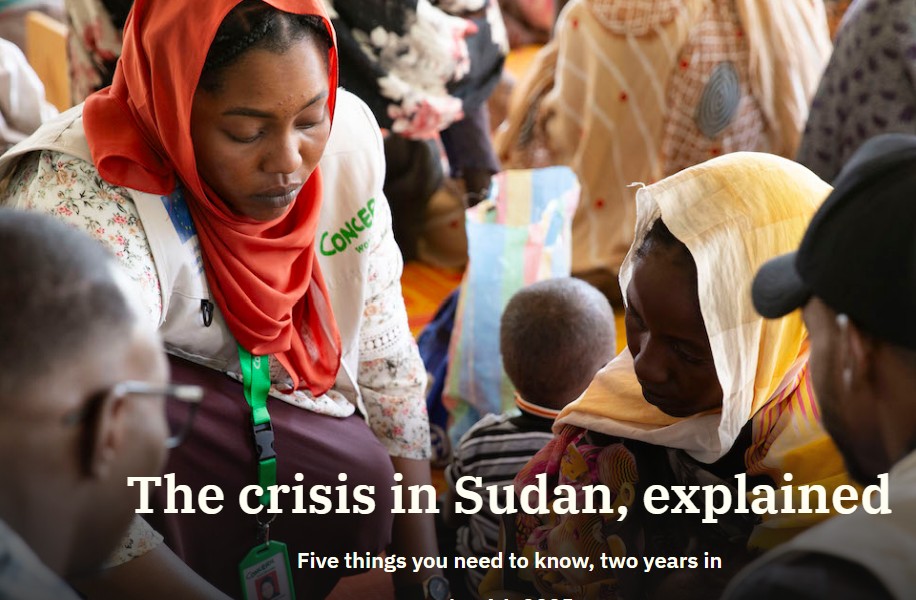
World Hunger Education Service made its annual anti-hunger award, including our recommendation and a cash grant to Concern Worldwide for its food and nutrition assistance in the worst famine crisis in the world, The Sudan, where it manages health clinics, case finding of children with malnutrition and building household resilience amid an intractable civil war. Their operations reach nearly half a million people across several states, including West and Central Darfur, West and South Kordofan, and the Red Sea StateConcern Worldwide has been operating in Sudan since 1985, with programs adapted to address the ongoing humanitarian crisis stemming from the conflict that escalated in April 2023.

Concern’s assistance in the last year included over 11 tons of medical items and 56 metric tonnes of pharmaceuticals and equipment in recent deliveries.   Nutrition programs include distributing 11 tons of ready-to-use therapeutic food (RUTF) to treat childhood malnutrition, addressing the loss of Sudan’s domestic RUTF production capacity due to conflict damage. Overall, nearly 480,000 people received support through these health and nutrition efforts in the first 10 months of 2025, with programs continuing into 2026 amid funding shortfalls highlighted by Concern’s leadership.

To mitigate long-term impacts like poverty, Concern integrates food security, livelihoods support, nutrition, WASH, and disaster risk reduction.  Their aid includes agricultural training, provision of inputs, and village savings and loan associations in Kordofan communities, adapted to the conflict environment. These programs aim to build resilience while addressing immediate needs from the crisis, which has left over 24 million people in Sudan requiring aid.   In 2024, Concern treated 8,312 children for severe acute malnutrition (SAM).  In addition, in 2024, over 12,000 individuals received in-kind food assistance, and 5,875 households were provided with multi-purpose cash assistance totaling approximately €1.2 million.

Concern Worldwide began in 1968, when a small group of Irish volunteers launched an emergency response to the famine in Biafra, Nigeria.  Today, Concern reaches over 30 million people in emergencies.

See:    https://www.concern.net/what-we-do/health-and-nutrition

See Hunger Notes’ previous interview with Dominic MacSorley, former CEO of Concern at:  https://www.worldhunger.org/interview-with-dominic-macsorley-former-ceo-of-concern-worldwide/

Donations from the US can go to:  https://concernusa.org/

https://concernusa.org/search-results/?q=sudan&page=1

Famine Early Warning System Restarted

Correction & Update:  Hunger Notes reported on March 19 about the cancellation of the important, 40-year-old Famine Early Warning System program, created and funded by USAID.  While true at the time, FEWS NET has been re-established. You can access it here.

The May 2025 prediction report is available here and  reports that “Conflict remains the most severe and widespread driver, particularly in settings with protracted violence or rising geopolitical tensions in East Africa, the Middle East, the Sahel, Central Africa, and Haiti. The  intersection of insecurity, inflation, and limited humanitarian access presents critical concerns across the most affected regions…the residual effects of prior droughts and floods are expected to contribute to food insecurity in parts of southern Africa, eastern Africa, and Afghanistan. Additionally, available weather forecasts suggest rainfall patterns in Sudan, South Sudan, and West Africa may mirror those of 2024, bringing flooding to riverine, wetland, and low-lying areas and dry conditions in the Gulf of Guinea. If this materializes, the resultant loss of cereal crops, cash crops, and livestock will be most acute in areas already impacted by concurrent conflict and economic shocks.”


– S Hansch, WHES

WHES Undertakes Research about Attacks Against Food & Nutrition in Humanitarian Aid

This month, toward the end of 2024, World Hunger Education Service  launched a broad  study about the patterns, trends and extent of violent attacks and threats against aid programs delivering food and nutrition solutions in famines, crises, war zones, and for displaced populations.  The results will be published here, in Hunger Notes.  This is an independent study that is at WHES’s initiative.

In recent years, there has been a growth in attention to and professional publications about attacks on health care in fragile states and conflicts, which include missiles, drones, shooting, targeted assassination, roadblocks, air strikes, mortar fire, kidnapping and siege.  All of these are prohibited by the Geneva Conventions.

There has been no corresponding attention to attacks on food assistance or nutrition programs, which this new study hopes to fill in.

WHES’s Lead Researcher, Eline de Looijier, is seeking inputs from a wide range of UN agencies, non-governmental organizations, donors, journalists,  researchers and observers who can help her document not only the extent of attacks on food/nutrition, but also how aid agencies adapt to threats and risks of attacks and seek to mitigate these risks.

WHES is an independent nonprofit and respects the confidentiality of people contributing to this study.  WHES thanks all those who are able to share their thoughts.  Please send inputs to Eline at:  Eline de Looijer <elinejdelooijer@gmail.com>

Central African Republic Facing Acute Food Shortages

A new report finds nearly half of all people in the Central African Republic are suffering acute food shortages. The latest assessment by the Integrated Food Security Phase Classification, a joint effort by eight U.N. and International non-governmental organizations, finds more than 1.8 million people in C.A.R. are facing an emergency food crisis.

Starvation: a weapon of war that could kill 590,000 children by the end of 2018

Starvation being used as a weapon of war has become the new normal, according to Save the Children. Its analysis shows more than half a million infants in conflict zones could die of malnutrition by the end of the year if they do not receive treatment, the equivalent of one every minute.