
Further Increases of Starvation in Darfur, Sudan

April 12, 2026

The arid, poor, western region of Sudan, called Darfur, has been a complex emergency for twenty-three years, with mass displacement and an increasing problem of starvation and malnutrition.  Aid to prevent starvation is prevented by the inability of aid agencies to reach those in need, due to violence. A two-year siege of the regional capital of El-Fasher reflected the unending war between the two combatant groups, the Rapid Support Forces (RSF) and the SAF (Sudanese Armed Forces).

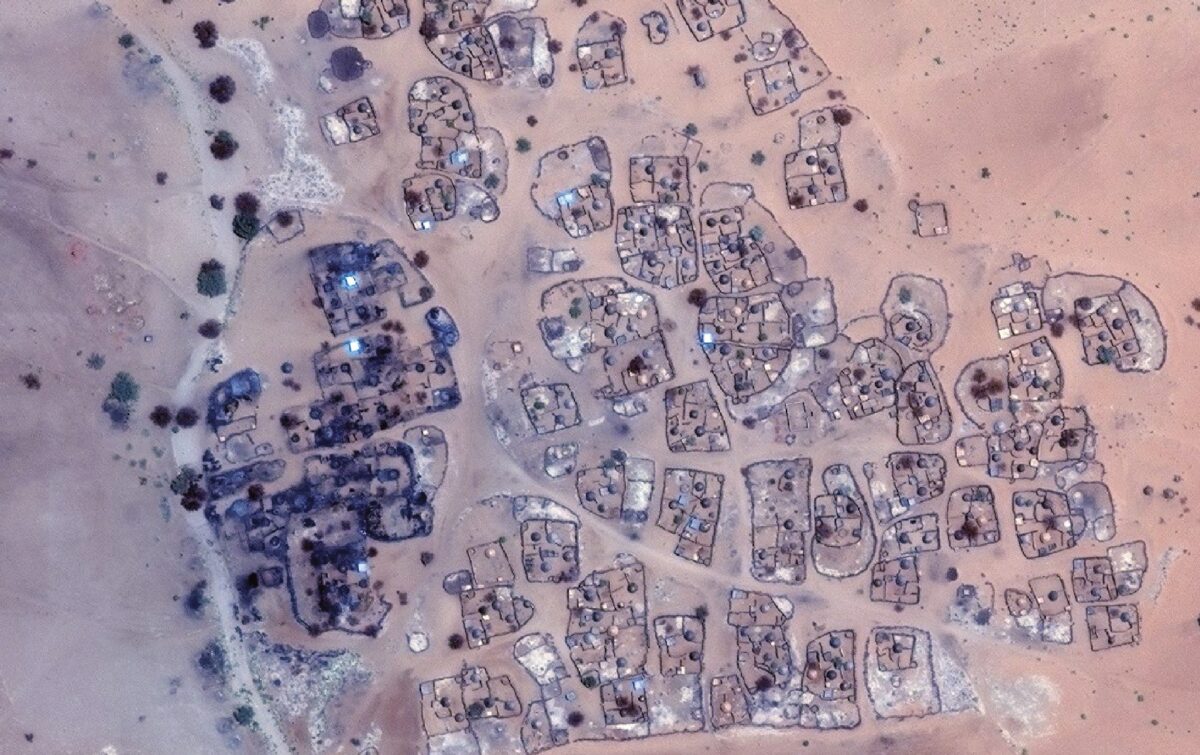
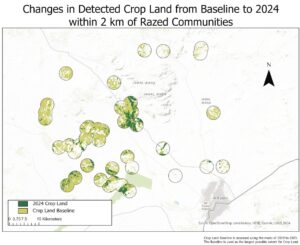
Using themal imaging, the Humanitarian Research Lab (HRL) at Yale University has recently published evidence of attacks against civilians Darfur.  Yales’s new HRL report provides detail of targeted burning, destruction and razing of 41 agrarian villages northwest of El-Fasher in darfur.  These communities were ethnically Zaghawa who produce food for the region, but following attacks, they halted agricultural work.  The Yale lab report finds:  “decreases in agricultural activity during the growing period following the razing of communities assessed through year-on-year changes in land use/land cover.”

The Yale lab and this report use remote sensing to measure changes in food security in non-permissive environments.  Satellite imagery of farming communities are shown in the photo at the top-left and at the map at right.

Oona Hathaway has called attention to famine as a war crime in Darfur, western Sudan.  “We conclude that the new Yale HRL report provies compeelling evidence relevant to multiple RSF starvation crises in the vicinity of El-Fasher, including war crimes, crimes against humanity…. Well over 11 million people have been displaced by the conflict, which has caused desperate levels of food insecurity, including multiple determinations of famine.”   She continues, “the fighting and the parties’ well-documented obstruction of humanitarian relief have, for extended periods, made the, made the transportation of food and aid to places that desperately need it nearly impossible.”

The economic and livelihood implications of the crisis have spread beyond the agricultural sector.  “Nearly 70 percent of bank branches have closed and ceased operation in conflict zones across Sudan. Bank closures, limited cash liquidity, and high transfer commission rates ranging from 10 to 30 percent have contribu ted to financial strain and limits any ability to sell and purchase food commodities, exacerbating food insecurity.”

Several locations in Darfur report acute malnutrition rates above 50%, which is very high.  Around 800,000 childhood cases of servere malnutrition, the most dangerous and deadly form of malnutrition, are expected nationwide this year in The Sudan.

Food aid does not benefit from a stable pipeline to Darfur, some food coming from Chad.  Much of the food is brought in by the World Food Programme.  NGOs responding include the Norwegian Refugee Council, CARE, Food for the Hungry and Concern Worldwide.

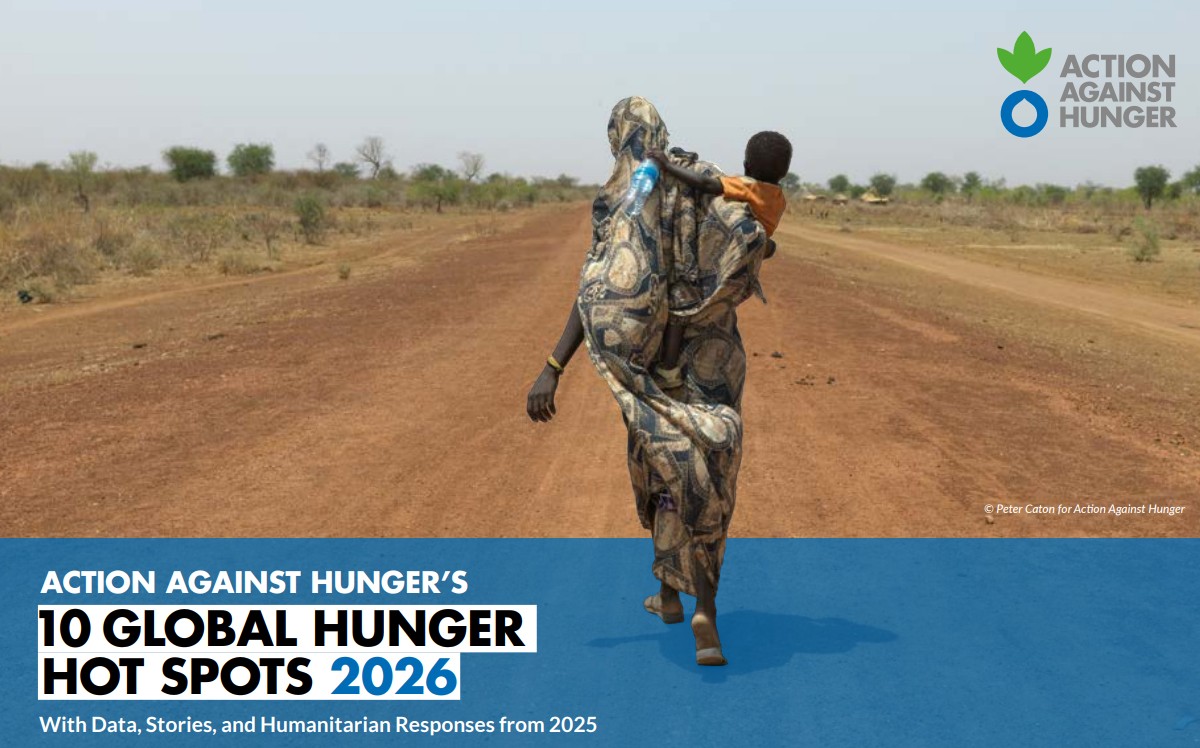
Following the confirmed spread of famine in North Darfur, Action Against Hunger (AAH or ACF) is operating directly in regional hunger hotspots. Their teams provide emergency health and nutrition interventions, alongside water, sanitation, and hygiene (WASH) programs that are critical for preventing malnutrition-related diseases like cholera.

The International Committee of the Red Cross (ICRC) has provided food and cash, and health care for livestock, and rehabilitated water infrastructure (e.g., hand pumps in rural North, Central, and West Darfur) benefiting tens of thousands; conducted cholera response campaigns with chlorination and hygiene promotion in Tawila (North Darfur) and Al Daein (East Darfur), reaching over 117,000 people and distributed water filters.

See:


HOPE in Gaza

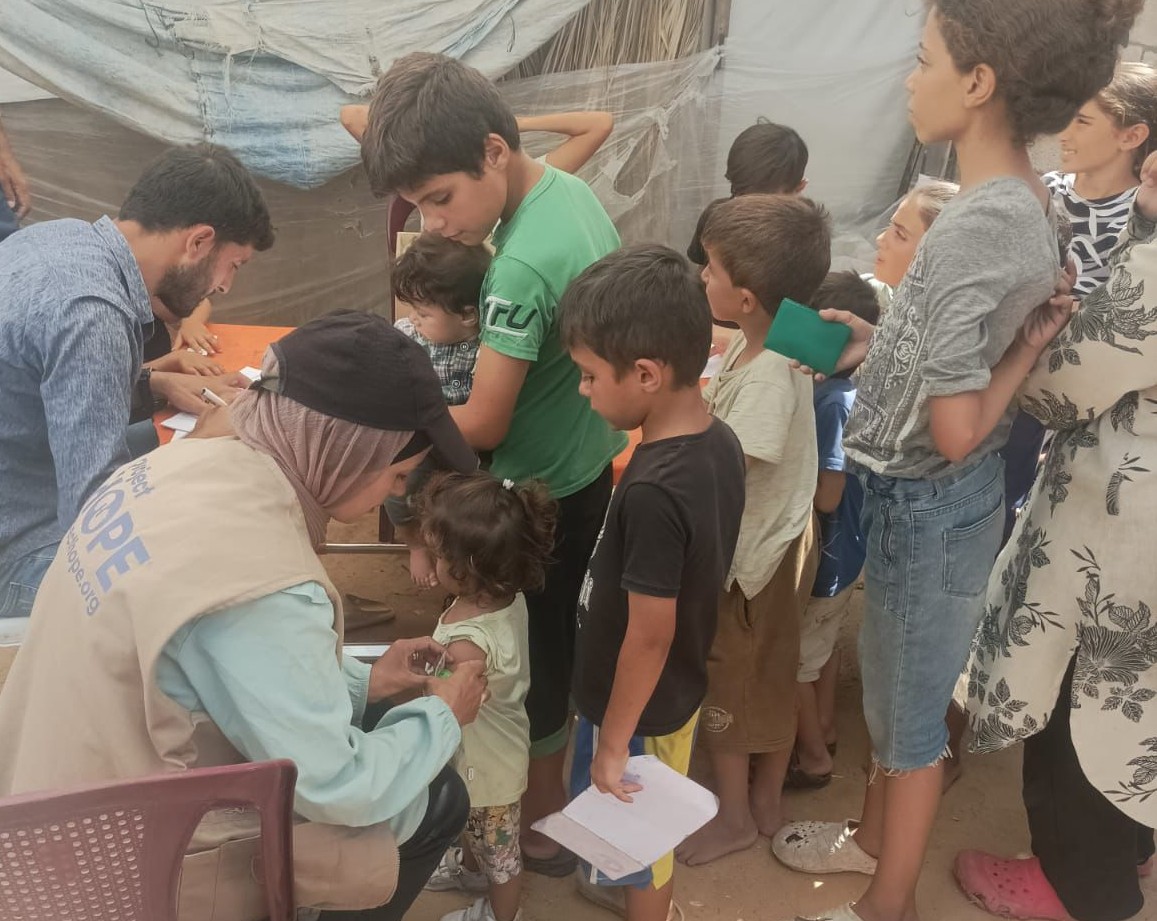
Project HOPE is the recipient of a donation by the World Hunger Education Service (WHES), a non-profit dedicated to educating the public about solving hunger which selected Project Hope to highlight and affirm its excellent work providing recovery foods for malnourished children in Gaza.

Project HOPE supports nutrition through its seven health clinics across Gaza, helping to reach tens of thousands of children with wasting (“acute”) malnutrition, which carries a high risk of death.   Gaza has been prone to increased prevalence of malnutrition over the last year or more as food imports and aid from outside, and movement/ distribution within Gaza have been blocked.  The highest prevalence of malnutrition has been measured in Gaza City.

Since the October 2025 ceasefire took effect, Gaza has experienced a partial recovery in market activity and food availability across Gaza, but supply shortages, cash-flow constraints, damaged infrastructure, and limited local production continue to hamper both supply and access. Food prices remain far above pre-conflict levels, with many basic commodities costing up to 200% more than before the fighting began. As a result, many households still struggle to afford a diverse diet, with consumption generally limited to staple cereals and pulses while meat, fresh produce, and other nutrient-rich foods remain largely out of reach.

From July 2024 to November 2025, Project HOPE screened 158,884 people for malnutrition, particularly focusing on children under five years of age and pregnant or breastfeeding women.   They provide High Energy Biscuits (HEB), Ready-to-Use Therapeutic Food (RUTF), rapid rehydration, and case management for those suffering from malnutrition.  RUTF is a food optimized to save the lives of young children who are severely malnourished.  They also have provided Psychological First Aid to 18,000 people. and distributed over 2 million liters of potable water.

In Gaza, they operate health clinics in Khan Younis, Gaza City, and Deir al-Balah, providing an average of 1,170 medical consultations a day.  Because of their work in Gaza, World Hunger Education Service has granted them an award of $2,500 and recommendation to the public.

Supplies of RUTF are trucked via convoys into Gaza via roughly five border crossing points as palletized cargo.  Once inside Gaza, supplies are moved along major routes such as the Philadelphi Corridor and Al Rashid Rd to approximately 23 treatment sites.

Project HOPE is an international non-profit established in 1958.  Operating with public support for over 68 years, Project Hope strengthens health systems, combats infectious diseases and deploys emergency response and nutrition teams in crisis zones to provide humanitarian aid.  In severe crisis settings (e.g., conflict in Ethiopia, displacement in Gaza and Ukraine), Project HOPE’s emergency response includes clinical care and nutritional support for populations facing acute shortages.  They also work with communities and health workers about how to prevent waterborne illnesses like cholera and diarrheal disease.

For much of its history Project HOPE was known for its hospital ship which inspired people to choose careers in foreign aid.  Its flagship was originally the USS Consolation, which operated during the Korean war and then converted with 230 beds into a civilian aid ship.  Project Hope pioneered the concept of the first peacetime hospital ship operating the S.S. Hope for 14 years. For every American doctor or nurse on board, there was a local professional counterpart.   It traveled to many countries including Southeast Asia and South America.  Today they work in more than 25 countries across Africa, the Americas, Asia/Pacific, Europe, and the Middle East.

Similar to its work in Gaza, Project HOPE had been a lead US NGOs also responding Ukraine and Lebanon.  In Ukraine, the team operates mobile medical units, reconstructs health and social facilities, trains health workers, provides extensive mental health and psychosocial support, and more. In Lebanon, Project HOPE has been working around the clock to support urgent needs, including the distribution of water, sanitation, and hygiene (WASH) supplies and shelter items to displacement sites, as well as procuring essential medicines and medical supplies for hospitals and primary health centers.

See:  https://www.projecthope.org/

– WHES Board

Book Classic: The Challenge of Famine, Recent Experience and Lessons Learned by John Osgood Field

The anthology edited by John Osgood Field, The Challenge of Famine, Recent Experience Lessons Learned” remains one of the premier books about predicting and measuring famine ever published.  Field, until his retirement a professor of food studies at Tufts University School of Nutrition, published this in 1993 with Kumarian Press, arrayed a dozen key scholars of famine who including Joel Charney, Mary Anderson, Dirk Stryker, Peter Cutler, Jack Shepard and others.  Field wrote the introduction, the first chapter, and the final summary chapter.  The book is as appropriate to read today as when it was published as it hones in on the ambiguity of when to say that there is a famine.

Field writes that when in full bloom, famine is dramatically clear to the naked eye.  However, he writes, how to recognize famine before it becomes obvious is the dilemma around which much of the book revolves. This is relevant at a time when there are hot debates over which parts of Sudan may or may not be in famine, which parts of Gaza may or may not be in famine with data sets pointing in different directions as to the answer.

Field clarifies that famine is a slow onset disaster, which does not happen suddenly, but has a lengthy gestation. He makes the key point that notwithstanding the complexity of famine and the multiple factors underlying it, the principal indicators are few and manageable. In other words, famine may be caused by different processes, but there are fewer cases, but the data for recognizing famine are fewer. The dilemma facing early warning is that it is very difficult, perhaps impossible to be definitive, clear and compelling about something that does not yet exist. Ambiguity is inherent in famine prediction.

This means that political decision making will come into play. Early warning does not eliminate the role of politics. Both political early warning and administrative early warning have better track records in inducing early decision making and response than early warning systems that are purely technical.

Writing about the famine codes in India, Field dissects detection and response with responsibility of the same individuals who typically were district level officials.

Contributor William Torrey reflects on community famine surveillance in Sudan, which is very timely in 2025.  Torrey dives into Darfur, including about participation by locals in Al-Fasher who were also involved in relief work, early warning, and famine response.

In his chapter about Oxfam America’s disaster response, Joel Charney mentions that honest reflection and self-evaluation are not exactly hallmarks of the voluntary agency community.  “According to their own public relations pieces, it seems that the agencies always do well regardless of the grave mistakes in judgment that journalists and other independent investigators continually uncover.”  He reviews the 1978 famine in Cambodia.

Mary B. Anderson and Peter Woodrow draw on their extensive case studies of disasters in many countries for key lessons, such as how disaster victims have important capacities which are not destroyed in disaster and therefore should be built on.  They argue that outside aid to these victims must be provided in ways that recognize and support these capacities.

In his chapter, Jack Shepard summarizes his research into American assistance to Ethiopia during the 1981-1985 famine period.  He recounts hos U.S. food aid became an important part of foreign policy in the 1970s and 1980s at a time of increasing American food production and increasing malnutrition around the world.  Shepherd recounts the evolution of aid policies including destabilizing Marxist regimes.  “Nowhere is the Reagan policy more clear than in its treatment of Catholic Relief Services (CRS), the official relief and development agency of the American Roman Catholic Community.  From 1982 through 1984 the administration deliberately delayed its response to emergency food aid requests for Ethiopia by CRS.”  In time, US food aid ramped up largely cross-border through Sudan into Tigray and Eritrea (fighting against the government of Ethiopia).

The most distinctive chapter was by Peter Cutler:  “Responses to Famine and Why They Are Allowed to Happen.”   Among Cutler’s observations is that rural famine victims are likely to become a political issue only if their case is taken up by influential urban elites, such as university students or the press.  He catalogs various contradictions in our aid system.

For instance, NGOs are in a contradictory position with regard to famine control.  On the one hand, their field staff are among the best informed of all actors operating in a famine zone, yet at the same time they are the least likely to challenge the system or influence governments. This is because NGOs are highly vulnerable. Cutler concludes the professional relief and development agencies will avoid the risks of challenging donors and the host governments when famine breaks out among unpopular groups of victims.

Publisher:  Kumarian Press, West Hartford Connecticut.  ISBN:  1-56549-019-3

Articles about Malnutrition Field Programs, “Field Exchange”, October 2025

The Emergency Nutrition Exchange, based out of Dublin, Ireland, has published groundbreaking, field-level technical research about attacking malnutrition for the last few decades.  The latest edition, Issue 76 (October 2025) showcases community-led, data-informed, and systems-focused approaches to improving nutrition in fragile and resource-constrained settings, with a strong emphasis on adolescents, maternal nutrition, and service delivery quality.

The lead editorial underscores that practitioners are working in a period of acute crisis, including famine in Gaza, famine risk in Sudan, and constrained global humanitarian funding, yet highlights hopeful examples of innovation, local leadership, and adaptation.  Core cross-cutting messages are: community-owned initiatives matter, data and routine information systems can meaningfully guide programme improvements, and linking frontline programming to system-level frameworks and global guidance is crucial to sustain gains.  The issue repeatedly concludes that national regulation, better financing (including social protection), and stronger primary healthcare systems are needed to turn promising pilots into scaled, equitable nutrition responses.

Food assistance and local leadership in Sudan and the Sahel

The Sudan article concludes that different displacement contexts require tailored food assistance modalities: central kitchens are effective where households have lost cooking facilities, while food baskets better support dignity and agency in more stable settings.  A central finding is that local implementing partners are indispensable for access, contextualised design, and operational continuity, reinforcing calls to invest in local NGO capacity and leadership rather than relying solely on international actors.

Maternal nutrition in humanitarian settings

Analysis from Ethiopia, South Sudan, and Somalia finds that national guidelines and policy frameworks for maternal nutrition are largely in place and that pregnant and breastfeeding women are increasingly included in assessments and targeting. ] However, major gaps persist: maternal nutrition is routinely deprioritised relative to child wasting treatment, antenatal care coverage and quality are low, and key interventions such as multiple micronutrient supplements, balanced energy–protein products, and social protection for pregnant and breastfeeding women remain underfunded or small-scale.

IMAM coverage and use of routine data in Zimbabwe

Zimbabwe’s national IMAM coverage assessment, combining routine DHIS2 data, supply databases, and targeted SLEAC surveys, finds low coverage across all assessed districts, with high defaulter and non-recovery rates and recurrent RUTF stock-outs.  The analysis shows that routine data can reliably flag bottlenecks such as weak case-finding, poor growth monitoring, and commodity gaps, though data quality problems need continuous attention.

Using MUAC data to estimate wasting people in need in Afghanistan

A letter from Afghanistan describes an adjusted MUAC-based method to estimate wasting people in need when recent SMART survey data are unavailable, using correlations between MUAC and WHZ from historical surveys to correct for MUAC’s underestimation of total wasting.

Humanitarian nutrition must systematically include often-overlooked groups

Key articles stress gaps in maternal nutrition services in emergency settings and highlight the need to integrate infants under six months into SMART surveys through methodological adaptations. Research snapshots further underscore vulnerabilities among adolescents, pregnant women, and infants—groups whose needs frequently fall between existing program mandates. Expanded, life-course-oriented programming is essential to address these blind spots.

As always, the full edition can be downloaded free of charge at  https://www.ennonline.net/fex/en/76

Review by WHES Team

Famine as Weapon of War — Lancet Commentary

The medical journal, the Lancet, on July 30 2025 ran an appeal against famine titled “The Famines in Gaza and Other Conflict Areas are a Moral Failure,” writing:  “Widespread starvation is deliberately used as a weapon of war, at a scale that we never thought possible….  Every child — every person — has the right to the nutrition they need to survive and thrive.”  This was by members of the “Standing Together for Nutrition Consortium”, or ST4N.

See:  https://www.standingtogetherfornutrition.org/

They continue:  “Wasted children are about 12 times more
likely to die before their fifth birthday than children
with a healthy weight.18 Those children who do survive
famine will bear the impacts for life…

“The science of malnutrition and the solutions are
known.  Treatment of severe acute malnutrition, access to nutritious foods, clean water, nutrient supplements, and medical care are not radical ideas—they are proven strategies that save lives and rebuild communities.”

The authors include staff at the Canadian Micronutrient Forum and include Saskia Osendarp, Lawrence Haddad, Robert Blackand others.

Hunger Hotspots Report, Summer 2025

Hotspots for elevated hunger and malnutrition during the summer of 2025 were highlighted for Sudan, Gaza, South Sudan, Haiti and Mali in the new report produced by the Food and Agricultural Organization of the UN, along with the World Food Program, with support from the European Union and the Global Network against Food Crises.  This is a semi-annual report published collaboratively by U.N. agencies.

See:  https://www.fightfoodcrises.net/sites/default/files/resource/file/HungerHotspots2025_CD5684EN.pdf

As reported on Reliefweb:  This report makes it veryclear: hunger today is not a distant threat – it is a daily emergency for millions,” FAO Director-General QU Dongyu said. “We must act now, and act together, to save lives and safeguard livelihoods.  Protecting people’s farms and animals to ensure they can keep producing food where they are, even in the toughest and harshest conditions … is essential.”

“This report is a red alert. We know where hunger is rising and we know who is at risk,” said Cindy McCain, World Food Programme Executive Director. “We have the tools and experience to respond, but without funding and access, we cannot save lives.”

In the Sudan, conditions are expected to persist due to the continuing conflict and ongoing displacement, particularly in the Greater Kordofan and Greater Darfur regions.  Displacement will further increase while humanitarian access remains restricted. The circumstances are driving the country toward the risk of economic collapse, with high inflation severely limiting food access. by the poor.  Around 24.6 million people were projected to face “Crisis” level food insecurity or worse.

In Haiti, record levels of gang violence and insecurity are displacing communities and crippling aid access.  in Mali, high grain prices and ongoing conflict are eroding the coping capacities of the most vulnerable households, particularly in conflict-affected areas.

In contrast to prior reports, however:   Ethiopia, Kenya, Lebanon, Lesotho, Malawi, Mozambique, Namibia, Niger, Zambia, and Zimbabwe have been removed from the Hunger Hotspots list.  In East and Southern Africa, as well as in Niger, better climatic conditions for harvests and fewer weather extremes have eased food security pressures. Lebanon has also been delisted following reduced intensity of military operations.

Vdieo of the report launch:  https://www.youtube.com/watch?v=K0_t_tCH-5s&t=11s

https://reliefweb.int/report/occupied-palestinian-territory/hunger-hotspots-fao-wfp-early-warnings-acute-food-insecurity-june-october-2025-outlook-enarit