
Threat of Child Malnutrition in Iran Amid U.S.–Iran Conflict

The U.S.–Iran war that began today, 28 February 2026, threatens to sharply worsen malnutrition among children under five in low-income urban neighborhoods of strike zones (Tehran, Isfahan, Kermanshah) and in rural border provinces (e.g., Sistan-Baluchestan and Kurdistan) that already experience high malnutrition rates.

Iran, with a total population of 93 million people, has 7 ½ million children under five years of age, which is more children than Germany, the UK, Canada, Iraq, Syria, Italy, Turkey, or France.

Over the last few decades the occurrence of childhood stunting (a form of long-term malnutrition) and of wasting (short-term) malnutrition have declined in Iran, reflected by the government’s attention to treating malnutrition.   However, studies in southern Iran from 2018 to 2023 show a significant increase in underweight and wasting among young children, with the annual % change of severe wasting increasing by 8.9%.  Nationally, the rate of wasting has averaged 4.2%, which is medium for regional and peer countries.  Iran’s Ministry of Health and Medical Education (MoHME) manages child malnutrition programs through primary healthcare centers, hospitals, and nutrition initiatives.  Treatment follows protocols similar to WHO/UNICEF guidelines for community-based management of acute malnutrition, which emphasize outpatient therapeutic care using Ready-to-Use Therapeutic Food (RUTF) for severe malnutrition.

The most widespread micronutrient deficiency diseases in Iran include vitamin D (rickets), iron (anemia), vitamin A, and zinc deficiency.  Iran addresses these through national programs (e.g., supplementation, fortification of foods like flour with iron/folate, salt iodization, and targeted UNICEF-supported interventions in high-risk provinces), but challenges persist due to economic factors, dietary habits, and regional disparities.

Even before the current war threats, Iran’s food economy was struggling under the weight of international sanctions and mismanagement.  The conflict will further reduce Iranian families’ ability to afford food.  In fact, the protests that broke out in December 2025 were in part over increased food prices after the rial plunged against the U.S. dollar.   There has been criticism by Iranians that their government has failed to present a clear emergency response plan, leaving citizens to fend for themselves. 

Iran produces much of its own wheat, dates, barley, rice, pistachios, walnuts, citrus fruits, and saffron.  It imports rice, cooking oils, soybeans, sugar, tea, and dairy.  The fighting will disrupt Iran’s ability to import food commodities, tightening supply.  Agricultural supply chains, transportation networks, storage facilities, and water infrastructure are all vulnerable.  Damaged roads and ports will impede food distribution across the country.

Urban bombardment now underway in Tehran and other major cities will displace families.  Reuters today reports that Iranians have fled cities in search of safety, rushed to stock up on food, and formed long queues at fuel stations as attacks by the United States and Israel spread fear and panic throughout the country.  Iranian government messages have explicitly encouraged people to leave Tehran and other targeted cities to avoid attacks.  This kind of internal displacement typically leads to overcrowded towns, strain on services, and informal settlements on the periphery of safer cities.

Internally displaced populations lose access to stable food sources, income, and caregiving routines.  Young children are disproportionately harmed by the disruption of feeding practices and by unhygienic displacement conditions that compound malnutrition with infectious disease.

Iran is known as a country that takes care of refugees.  Estimates vary, but UNHCR and other agencies report roughly some 3.8 million refugees and people in refugee-like situations in Iran as of 2025, overwhelmingly from Afghanistan and a smaller number from Iraq and other countries.

Iran has been prone to disasters due to large earthquakes and famines.  As well, in February 1972, a week-long series of storms  brought up to 26 feet (8 meters) of snow in rural areas of western Iran which buried over 200 villages, killing thousands.

Iran also suffered severe famines in 1870-72 and during the First and Second World Wars.  The most recent UN Food and Agriculture Organization report about Iran (November 2025) notes that persistent dry weather has hampered winter wheat plantings, leading to an estimated cereal production nearly 10% below the five-year average in 2025.  It found that wheat prices in Tehran had risen 50% and rice prices had tripled, compared to the previous year.

Iran has a fairly extensive domestic social protection system by regional standards, though it has faced significant strains in recent years.  The Imam Khomeini Relief Committee (IKRC) is one of the largest non-governmental charitable organizations in the world by some measures. It operates under government supervision and provides cash transfers, food assistance, healthcare subsidies, and vocational training to millions of low-income Iranians. It draws on religious endowments (waqf) and public donations alongside state funding.   The State Welfare Organization (SWO) handles a broader range of social services including disability support, elderly care, and assistance for vulnerable families.

International aid agencies help Iran in disasters, including the Red Cross.  The national Red Crescent society of Iran, part of the global IFRC network, has deep roots in domestic disaster relief, rescue, and healthcare operations.  The International Committee of the Red Cross (ICRC) has been working in Iran since the late 1970s.  The ICRC provides humanitarian services related to conflict-affected populations, health, and protection.

Médecins Sans Frontières (also known as Doctors without Borders) has been operating health programs in Iran.  Many other international NGOs have been hesitant to work in Iran, where the government distrusts Western organizations.  An exception has been Relief International (RI), which was founded in 1990 following the catastrophic Manjil–Rudbar earthquake in northern Iran.

The convergence of active conflict, pre-existing economic strain, and disrupted supply chains creates a compounding crisis for Iran’s most vulnerable — particularly children under five.  International humanitarian organizations face their own obstacles operating in Iran, given longstanding government suspicion of Western NGOs. The children most at risk — those in strike zones like Tehran and Isfahan, and those in already-malnourished border provinces like Sistan-Baluchestan — are precisely the populations least able to weather further disruption to food access, clean water, and caregiving. Without rapid and coordinated humanitarian response, the malnutrition crisis that predates this conflict will deepen sharply, with consequences that will outlast the fighting itself.


HOPE in Gaza

Project HOPE is the recipient of a donation by the World Hunger Education Service (WHES), a non-profit dedicated to educating the public about solving hunger which selected Project Hope to highlight and affirm its excellent work providing recovery foods for malnourished children in Gaza.

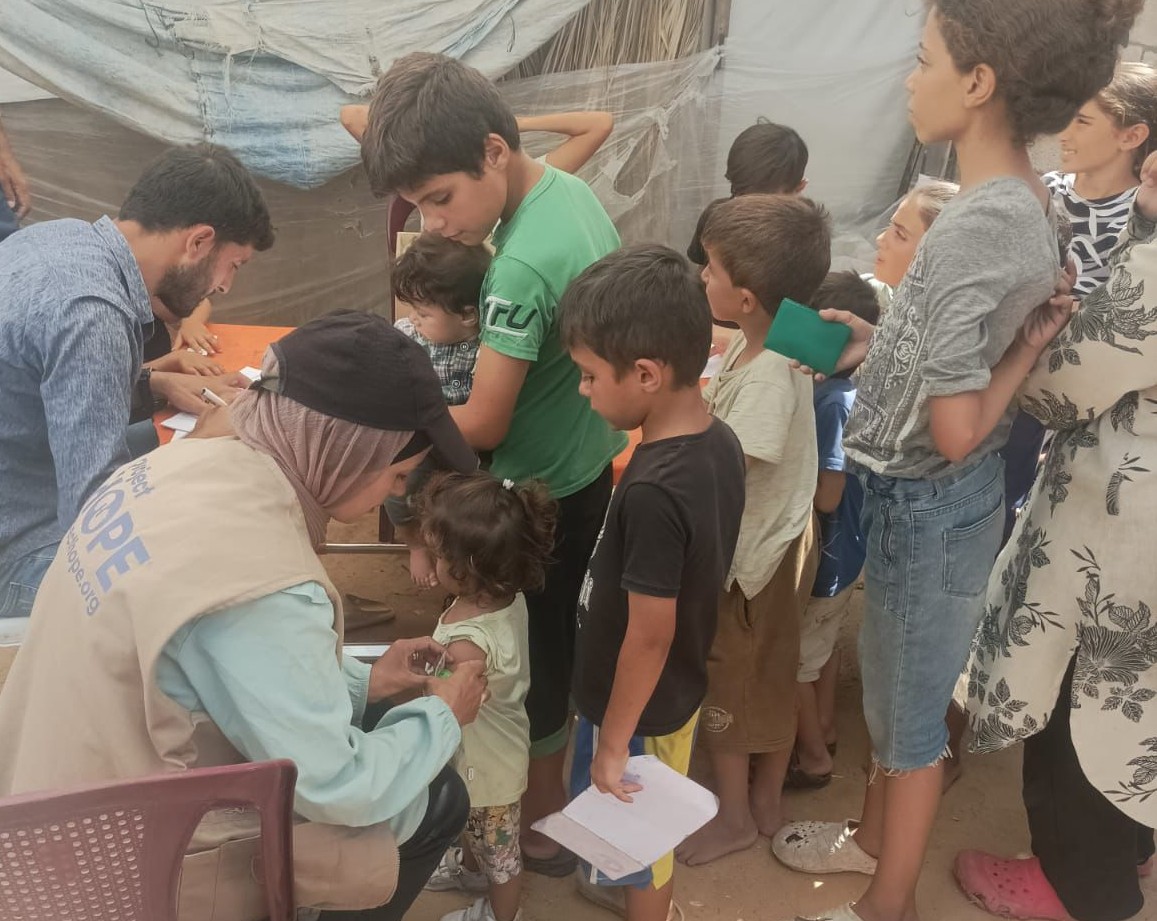
Project HOPE supports nutrition through its seven health clinics across Gaza, helping to reach tens of thousands of children with wasting (“acute”) malnutrition, which carries a high risk of death.   Gaza has been prone to increased prevalence of malnutrition over the last year or more as food imports and aid from outside, and movement/ distribution within Gaza have been blocked.  The highest prevalence of malnutrition has been measured in Gaza City.

Since the October 2025 ceasefire took effect, Gaza has experienced a partial recovery in market activity and food availability across Gaza, but supply shortages, cash-flow constraints, damaged infrastructure, and limited local production continue to hamper both supply and access. Food prices remain far above pre-conflict levels, with many basic commodities costing up to 200% more than before the fighting began. As a result, many households still struggle to afford a diverse diet, with consumption generally limited to staple cereals and pulses while meat, fresh produce, and other nutrient-rich foods remain largely out of reach.

From July 2024 to November 2025, Project HOPE screened 158,884 people for malnutrition, particularly focusing on children under five years of age and pregnant or breastfeeding women.   They provide High Energy Biscuits (HEB), Ready-to-Use Therapeutic Food (RUTF), rapid rehydration, and case management for those suffering from malnutrition.  RUTF is a food optimized to save the lives of young children who are severely malnourished.  They also have provided Psychological First Aid to 18,000 people. and distributed over 2 million liters of potable water.

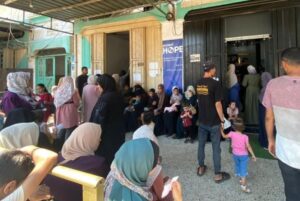
In Gaza, they operate health clinics in Khan Younis, Gaza City, and Deir al-Balah, providing an average of 1,170 medical consultations a day.  Because of their work in Gaza, World Hunger Education Service has granted them an award of $2,500 and recommendation to the public.

Supplies of RUTF are trucked via convoys into Gaza via roughly five border crossing points as palletized cargo.  Once inside Gaza, supplies are moved along major routes such as the Philadelphi Corridor and Al Rashid Rd to approximately 23 treatment sites.

Project HOPE is an international non-profit established in 1958.  Operating with public support for over 68 years, Project Hope strengthens health systems, combats infectious diseases and deploys emergency response and nutrition teams in crisis zones to provide humanitarian aid.  In severe crisis settings (e.g., conflict in Ethiopia, displacement in Gaza and Ukraine), Project HOPE’s emergency response includes clinical care and nutritional support for populations facing acute shortages.  They also work with communities and health workers about how to prevent waterborne illnesses like cholera and diarrheal disease.

For much of its history Project HOPE was known for its hospital ship which inspired people to choose careers in foreign aid.  Its flagship was originally the USS Consolation, which operated during the Korean war and then converted with 230 beds into a civilian aid ship.  Project Hope pioneered the concept of the first peacetime hospital ship operating the S.S. Hope for 14 years. For every American doctor or nurse on board, there was a local professional counterpart.   It traveled to many countries including Southeast Asia and South America.  Today they work in more than 25 countries across Africa, the Americas, Asia/Pacific, Europe, and the Middle East.

Similar to its work in Gaza, Project HOPE had been a lead US NGOs also responding Ukraine and Lebanon.  In Ukraine, the team operates mobile medical units, reconstructs health and social facilities, trains health workers, provides extensive mental health and psychosocial support, and more. In Lebanon, Project HOPE has been working around the clock to support urgent needs, including the distribution of water, sanitation, and hygiene (WASH) supplies and shelter items to displacement sites, as well as procuring essential medicines and medical supplies for hospitals and primary health centers.

See:  https://www.projecthope.org/

– WHES Board

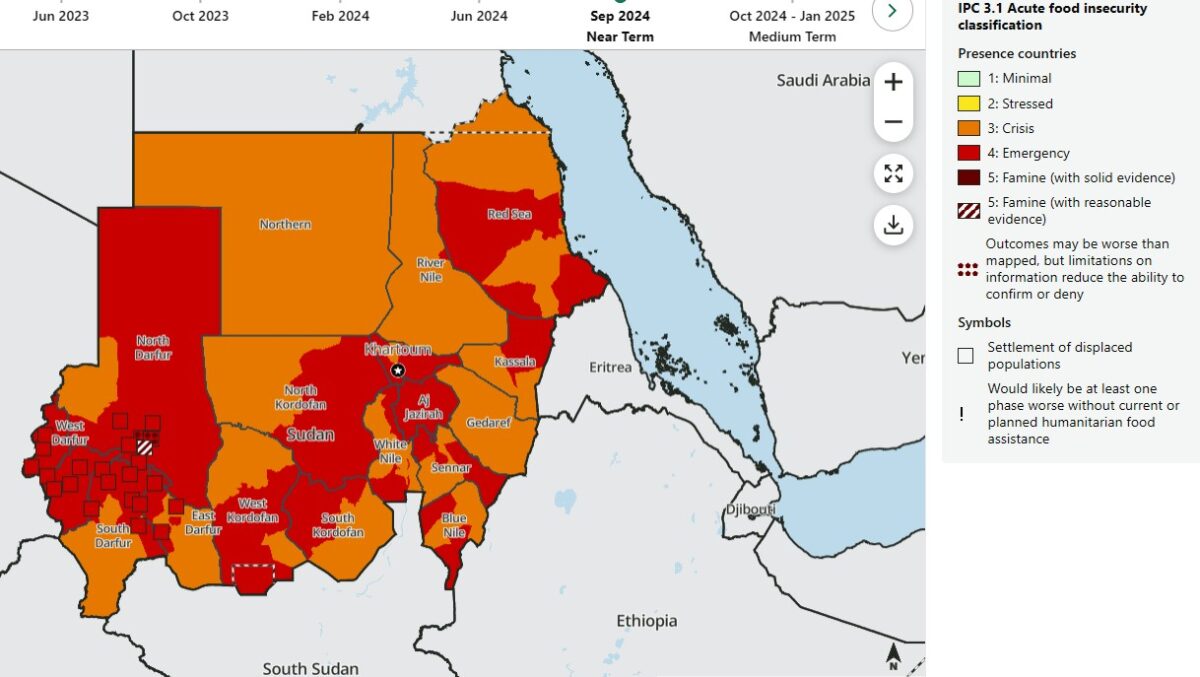
Hunger Increases Even Further in The Sudan

August 28, 2025:  Aid agencies estimate that malnutrition in Sudan increases in scale, depth and scope.  Much of the reporting comes from the far western region of Darfur, where, between January and May 2025, North Darfur saw a 46% increase in children admitted for SAM treatment at health centers compared to the same period in 2024 — with over 40,000 children treated in just that region.

As a result of 2 1/2 years of civil war, over 14 million Sudanese have been displaced by violence, both internally and across borders.  In the largest camp for displaced persons, Zamzam in North Darfur,  Médecins Sans Frontières (MSF) reported devastating malnutrition rates — as high as 29–30% acute malnutrition, and high mortality (e.g., one child dying every two hours.  Similarly,  Save the Children reported a nearly fourfold increase in severe acute malnutrition cases seen in one South Kordofan clinic from June 2023 to June 2024, with 1,457 children admitted in June 2024 alone.

Though access by international organizations to children in this large, rural country is limited, UNICEF estimates that some 3.2 million children under 5 may have  acute malnutrition in 2025, including about 770,000 experiencing Severe Acute Malnutrition, meaning they are extremely wasted.

The U.N.’s advisory body about famine, the Integrated Food Security Phase Classification (IPC) reported 25.6 million people in the Sudan are food insecure, and of those, 8.5 million are in Emergency (Famine degree Phase 4) and another 755,000 are in Catastrophe/Famine (Famine degree Phase 5).

Humanitarian access is greatly constrained, with persistent fighting preventing deliveries of food or supplies into many areas, notably in Darfur, Khartoum, and regions with large numbers of internally displaced person.

Concern Worldwide is supporting 81 health facilities across Sudan, particularly in West and Central Darfur, treating children under five for acute malnutrition, with a focus on delivering ready-to-use therapeutic food (RUTF).  Despite the destruction of Sudan’s only RUTF factory in 2023, Concern has secured and delivered 10 metric tons of RUTF to vulnerable communities. In 2024, they reached nearly 484,000 people with lifesaving health and nutrition support.


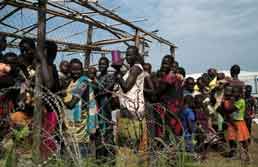
In South Sudan, mothers are so hungry many can no longer breast-feed

Weeks after the outbreak of deadly fighting in South Sudan, aid groups say their movement is being restricted by continued violence and government checkpoints, harming their ability to get food and medicine to severely malnourished children.  “We already have an extremely serious food-insecurity crisis,” said U.N. Emergency Relief Coordinator Stephen O’Brien in an interview. “And there are many circumstances where, appallingly, this only gets worse.”…O’Brien said that during a trip to South Sudan this week, he met with mothers unable to breast-feed their babies because they themselves were not getting enough food.

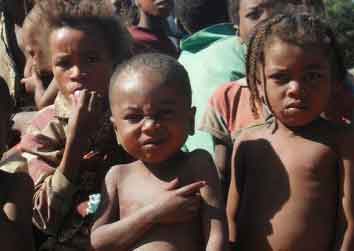
Malagasy children bear brunt of severe drought

Voahevetse Fotetse can easily pass for a three-year-old even though he is six and a pupil at Ankilimafaitsy Primary School in Ambovombe district, Androy region, one of the most severely affected by the ongoing drought in the South of Madagascar. “Fotetse is just like many of the pupils here who, due to chronic malnutrition, are much too small for their age, they are too short and too thin,” explains Seraphine Sasara, the school’s director.