



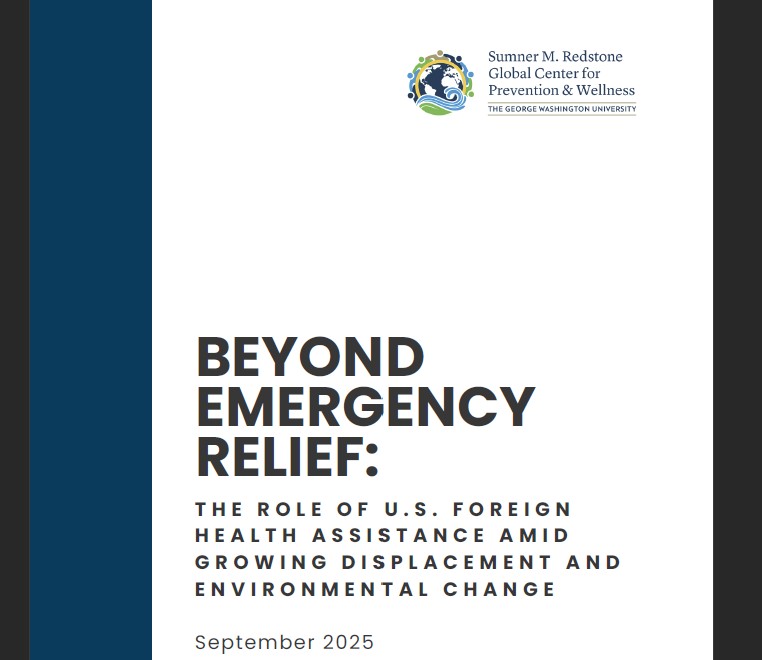
A roundtable of two dozen experts, including leaders of key international NGOs, met at George Washington University to examine the global implications of environmentally-induced migration and health, in a context of declining aid. The report, Beyond Emergency Relief: the Role of U.S. Foreign Health Assistance Amid Growing Displacement and Environmental Change(Sept 2025) is available here or at the George Washington University Sumner Redstone Global Center for Prevention and Wellness site. The roundtable was co-sponsored by the NGO CORE Group Consortium and followed Chatham House rules of non-attribution of comments to any individual.
Participants spoke of increases in malnutrition, communicable diseases, interrupted treatment of diabetes, and other risks that will follow from climate change and the mass migrations it will cause. Among the recommendations were: “U.S. foreign policy for health assistance in displacement and conflict settings should enhance coordination with global and local actors to address the complex interplay of environmental, political, and economic drivers of displacement, and enable communities to drive these efforts. The U.S. is well positioned to address… holistic approaches, given its… technical expertise in data science, technological innovation, and health information systems.”
 The report also reports how: “disrupted services and disease outbreaks compounded by environmental change can threaten global health security, putting people at risk of health hazards both in countries where they occur and across borders.”
One issue that the NGO participants raised was the increasing violence against aid workers. “These actions not only violate humanitarian law but also have profound short- and long-term impacts in driving cross-border displacement and reducing access to health care for people who have depended on facilities and health workers who have been attacked. One participant also warned about the growing trend of “criminalization of humanitarians” for providing lifesaving support to people on the move.”
The report’s conclusions build on the tradition of aid for mass migration by the U.S.: “Foreign assistance for health aligns with American values and interests and is critical to averting deaths… The U.S. government should retain its technical capacity in global health and identify synergies with the private sector, international aid organizations, and local institutions for cost effective and relevant interventions that mitigate the health risks of people impacted by displacement.”