
Micronutrient Forum Conference: Vitamins and Minerals in the Changing Environment

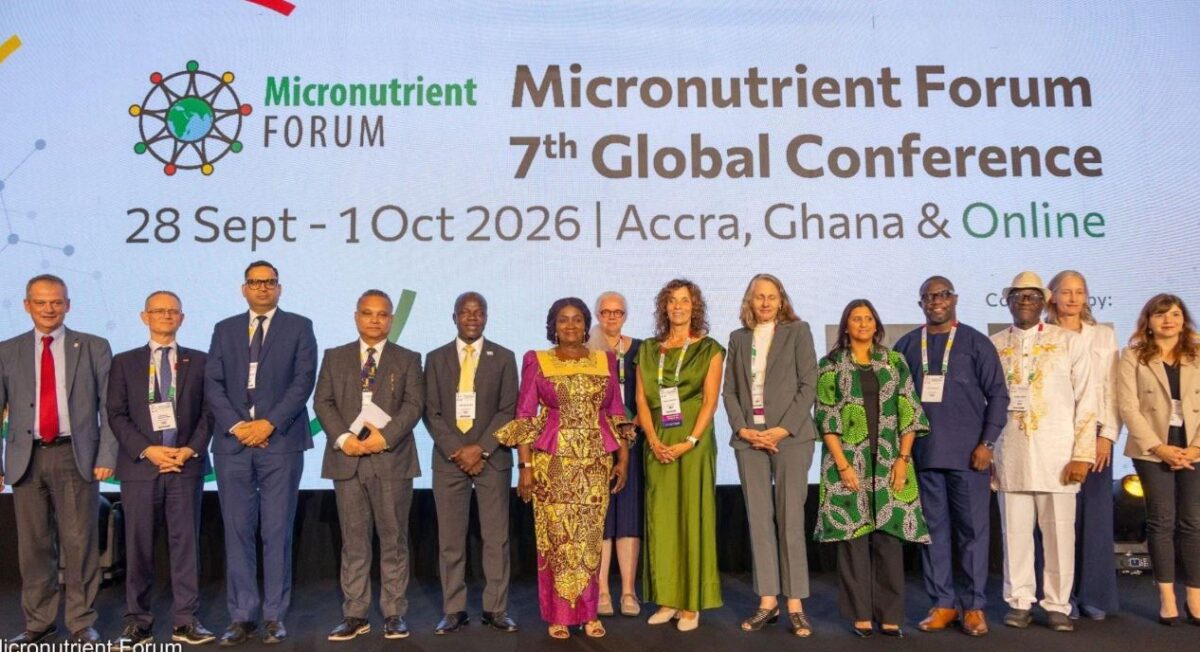
October 8, 2026    Nutrition specialists gathering in Accra last week returned to a recurring challenge: how to translate evidence on preventing malnutrition into policies and programs that reach people at scale.   Several thousand nutrition and aid specialists participated in person and online in the Micronutrient Forum’s 7th Global Conference, held in Accra, Ghana, from September 28 to October 1.     With the theme “Nutrition at the Frontiers of a Changing Environment,” the conference brought together research, policy, and program experience across nutrition, food systems, climate, and development.

Presentations examined climate-resilient, nutrient-rich crop varieties; improvements in food storage and processing; and innovative financing. Across these topics, speakers emphasized the importance of political leadership, sustained investment, and coordination.

Presenter Ziauddin Hyder reflected on the event:

“Ending malnutrition requires more than isolated projects. It demands strong political leadership, sustainable domestic financing, and coordinated action across sectors. Bangladesh is committed to transforming this vision into action by integrating nutrition into primary health care and ensuring that multisectoral investments converge to improve maternal and child nutrition.”

Participants included Action Against Hunger, World Vision, Catholic Relief Services, the Hunger Project, GAIN, Population Action International, AGRA, iDE, UNICEF, IFPRI, FAO, WFP and the Ghanaian Government.  Private sector participants included BioAnalyt Gmbh, Hexagon Nutrition, and Particles for Humanity.  A number of presentations were by the Consultative Group on International Agricultural Research (CGIAR) or IFPRI. The Government of Ghana, the African Union (AU), and the African Development Bank (AfDB) were major participants as well.

Dr. Saskia Osendarp, who is Executive Director of the Micronutrient Forum, called on the international community to not only take stock of progress but also translate evidence into actionable recommendations for research, policy, and programs, while building on and celebrating African leadership in nutrition.

Presentations covered a wide range of recent progress in battling malnutrition, spanning climate change, behavior change, processed foods, testing for deficiencies, fortification, nutrient supplements and funding.

FORTIFICATION

A widely echoed takeaway from the forum was the growing body of evidence on what works: across diverse contexts, food fortification emerged as one of the most cost-effective and impactful public health interventions, especially when implemented with mandatory legislation.

The Food Fortification Initiative presented a systematic review about the effectiveness of large-scale food fortification across 10 fortification vehicles, plus reviews on milk fortification, fortified soy/fish sauce, the impact of mandatory folic acid fortification on neural tube defects, congenital heart defects, and clefts, folate status, methods for estimating fortified-food coverage, integration of fortification into food systems, and a new rapid spot assay for zinc in fortified grains.

The ten-person CRS delegation concluded that: “We know what works. Now is the time to scale it,” supported by abstracts from their fortification work in Madagascar, Niger, and Ghana.  CRS highlighted how its fortification programming in West Africa,  built with governments, regional institutions, the private sector, and civil society, has strengthened policy frameworks, regulatory monitoring, quality assurance, and compliance, improving access to micronutrient-rich foods “for millions of vulnerable populations.”

Gaps in Compliance:  Research from countries like Bangladesh and Nigeria revealed significant compliance gaps, particularly highlighting the disparity between branded and unbranded staple foods (like edible oil and salt). Experts noted that markets frequently fail to deliver adequately fortified foods to consumers due to these blind spots.  From Cambodia, a 2023 cross-sectional assessment of vendors in about 150 public rural primary schools, related to unhealthy school foods found that 98% of vendors said they knew the directive, and most could identify sugary and energy drinks as prohibited.  Yet, that awareness did not change what was sold.

A rapid zinc test may make food-fortification monitoring much easier.  The Food Fortification Initiative featured an abstract about developing and validating a qualitative spot assay for zinc in fortified cereals. The associated method uses xylenol orange, which produces pink or purple spots when added zinc is present in refined wheat flour or fortified white rice. Testing takes only 10–15 minutes, excluding reagent preparation.  This gives millers and inspectors a relatively inexpensive screening tool for checking whether zinc was added. It detects presence, however, rather than establishing that the food contains the legally required concentration.

GAIN’s contributions included Svenja Jungjohann’s presentations on discrepancies between market assessments and household exposure in Bangladesh, and compliance gaps in branded and unbranded oil and salt in Bangladesh and Nigeria. Annette Mongina Nyangaresi presented implementation research about digital fortification-quality systems.

Latin America has been a historic pioneer in large-scale food fortification (vitamin A–fortified sugar in Guatemala, near-universal salt iodization, wheat flour fortification in 18 countries.  Rice fortification (already mandatory in Costa Rica, Nicaragua and Panama, and being developed in the Dominican Republic, Brazil and Colombia) was flagged as an underused frontier.

SUPPLEMENTS FOR A WIDE RANGE OF VITAMINS AND MINERALS

There was a heavy push for expanding distribution of “multiple micronutrient supplements” (MMS) for pregnant women, with  48 countries now exploring or implementing it, noting that women prefer a full 180-day supply, which supports adherence.   Vitamin Angels, profiled earlier in Hunger Notes, presented about scaling up multiple micronutrient supplements, and Ghana’s phased rollout of Multiple Micronutrient Supplements (MMS) focused on evidence building and system preparedness.
Participants noted that supplement packaging is a sensitive part of nutritional efficacy: repackaging can reduce vitamin potency.

A poster looked at the effect of nutrition education on multiple micronutrient supplementation knowledge, attitudes, and practices among pregnant women in Abuja, Nigeria.  In selected antenatal clinics, structured nutrition education produced large gains: about 89% reached a good knowledge score and 81.6% a positive attitude toward use of multiple micronutrient inputs.

One session moderated by Jian Yan and Parul Christian of Johns Hopkins, addressed dose-response trials in undernourished women. A supplement’s nominal nutrient content does not by itself establish whether it corrects deficiency. Dose-response research seeks amounts that achieve adequate status without excessive exposure.

UNDERSTANDING MICRONUTRIENT DEFICIENCIES

UC Davis and Cambridge experts underscored that half the world has inadequate intake of at least one micronutrient, and biological stressors amplify these gaps.  Sight and Life  presented about anemia among women, noting that anemia is the #1 global cause of lost DALYs for adolescents 10–19,  University researchers emphasized that blood loss, infections, and genetic conditions are major contributors to anemia—often overshadowing simple iron deficiency narratives.  This has implications for screening, treatment protocols, and national anemia strategies.
Dr. Parmi Suchdev presented about “Micronutrients, inflammation, and life-course vulnerability,” explaining how systemic inflammation can change or obscure bio-markers of nutrient deficiencies.

CHILD NUTRITION

The Child Health and Mortality Prevention Surveillance (CHAMPS) team presented key research highlighting maternal health and life-course vulnerabilities: Malnutrition is the main underlying cause in older children. It was the most frequent underlying cause among infants and children (20.8%), with sepsis and pneumonia more often the final event. An earlier analysis found malnutrition causal or significant in 39.5% of these deaths, 89.1% of which also had an infectious cause.

World Vision presented about father-to-father support groups which helped exclusive breastfeeding increase from 64.8% to 94.7%, while women meeting minimum dietary diversity increased from 11.2% to 54.9%.  WV also presented about strengthening RUTF supply chains for continuity of care of child wasting, with West Africa as their example.

CLIMATE CHANGE IMPACTS

University scholars presented evidence that climate change is reducing the micronutrient content of staple crops.   Crop science experts showed that rising CO₂ levels and erratic rainfall patterns lower iron, zinc, and protein density in cereals.  At the same time, rapid dietary transitions in African cities are reducing micronutrient diversity, increasing reliance on processed foods, and stressing traditional food systems.

The AGRA Regional Director, Sunil Dahiya:  “Higher carbon dioxide levels reduce the zinc and iron in staples like rice and wheat. The bowl looks the same, but there is less nutrition in it.  ….The crop is changing.”

DATA AND LEARNING

Discussions emphasized the urgent need to improve the timeliness, availability, and sourcing of data feeding into the Global Fortification Data Exchange (GFDx) to help policymakers track scaling progress in real-time.

The Nutrition in City Ecosystems (NICE) Project emphasized south-south learning between Asian and African cities, showcasing how urban areas can lead in addressing micronutrient deficiencies.

Action Against Hunger, PAI, CORE Group, FP2030, HMHB, and SUN’s Civil Society Network co-convened an October 2 follow-up gathering on linking nutrition, family planning, and maternal and child health.

Overall, the conference reinforced the need for a unified, evidence-based agenda linking nutrition directly to improved child health outcomes and survival rates.

Overall, the conference reinforced the need for a unified, evidence-based agenda linking nutrition directly to improved child health outcomes and survival rates.

FURTHER INFORMATION

In the future, presentations will be available at:  https://mnfconference.org/

The program is seen at:  https://booklet.kenes.com/export/mnf26

See also:  https://www.myjoyonline.com/measure-food-systems-progress-not-only-by-productivity-but-also-ability-to-deliver-healthy-diets-agra/

GAIN’s poster presentations and side event about business:  https://www.gainhealth.org/events/micronutrient-forum-7th-global-conference-mnf#gain-participation

AGRA’s presentation:  https://youtu.be/4SjNVlZyjb8

Food Fortification Initiative:  https://ffinetwork.org/micronutrient-forum-7th-global-conference/

IFPRI:  https://www.ifpri.org/event/ifpri-micronutrient-forum-7th-global-conference/

– Edited by Steven Hansch of the World Hunger Education Service

Micronutrient Supplements from Kirk Humanitarian

September 10, 2026     One of the least known players in fighting global hunger is a quiet foundation based in Salt Lake City, Kirk Humanitarian, which buys micronutrient supplements from commercial manufacturers and donates them to UNICEF and to NGOs including Vitamin Angels, Direct Relief, Sight and Life, World Vision, and Americares, which in turn distribute them to mothers in lower-income countries.

Kirk Humanitarian, a private family foundation, acts as the leading advocate and donor for the UNIMMAP MMS formulation, shown at right, which it describes as a global gold standard for prenatal nutrition. It is a bottle for an entire course of pregnancy of 15 vitamin and mineral prenatal supplement formula, originally established by the WHO, UNICEF, and United Nations University in 1999.

Multiple Micronutrient Supplements (MMS) address widespread “hidden hunger.”  Sub-clinical (no outward signs) micronutrient deficiencies affect an estimated 2 in 3 women of reproductive age and 1 in 2 preschool children globally.  Sub-clinical deficiencies affect far more people than those with obvious signs, but impair essential metabolic, immune, and developmental functions during pregnancy.  The UNIMMAP MMS formula addresses these underlying gaps cheaply and effectively through key doses of 15 “essential” vitamins and minerals that every human requires.  Because fetal development relies on a full spectrum of micronutrients (including zinc, iodine, copper, selenium, and vitamins D and E), MMS has reduced the risks of low birthweight, preterm birth (<37 weeks), and small-for-gestational-age (SGA) births.  The vitamin C included is protected from degradation.  Vitamin C is notoriously difficult to fortify with as it does not survive well in sunlight or air.  The provided folic acid is beneficial, but the timing of the MMS provision is too late to prevent Spina Bifida.
…
Origins and Model:   Kirk Humanitarian was established in 2002 by Spencer F. Kirk and his wife, Kristen Kirk, as a family-funded private operating foundation.  Spencer Kirk is an entrepreneur and philanthropist who previously co-founded Megahertz Corporation in 1985 and served as CEO of Extra Space Storage, Inc. from 2009 to 2016.
…..

The Kirks identified maternal malnutrition and hunger as a critical, under-addressed gap in low- and middle-income countries (LMICs).  They use family capital to make advance-purchase commitments with pharmaceutical manufacturers.  Over the past two decades, this model has scaled from small donation efforts to supplying millions of pregnant women across dozens of countries to replace traditional iron-folic acid (IFA) supplements.
The foundation tries to work with NGOs that collaborate with national ministries of health to transition from traditional iron supplements to UNIMMAP MMS.  It increasingly works through multilateral mechanisms like UNICEF’s Child Nutrition Fund (CNF).  Their MMS have been distributed in over 111 countries and it now targets 12 million more women.

Impact:  Over its tenure, the foundation has assisted 80 million pregnant women with 14 billion tablets.  This translates to Kirk Humanitarian having averted approximately 12-20 million disability-adjusted life years (DALYs) since 2002.

Of equal importance going forward, the foundation has driven the cost of MMS down on a global level, through their large-scale advance purchase arrangements.   It claims “a little over $0.01 per dose,” a cost-reduction roughly fourfold since their founding.

Collaborations and Programs:  In November 2025 Kirk committed an additional US$50 million in prenatal vitamins and minerals, accessible to more than 60 countries through the UNICEF-led Child Nutrition Fund, aimed at 23 million pregnant women, bringing the total to $92 million committed to UNICEF and the Child Nutrition Fund since 2024, providing product to 43 million women.

Kirk Humanitarian partners with groups like UNICEF and the Gates Foundation to improve manufacturing quality and standardize product labeling through a new USP verification program.  In 2024, the Eleanor Crook Foundation, Gates Foundation, Children’s Investment Fund Foundation, and Kirk Humanitarian jointly released an investment case/roadmap to scale MMS.  It works with the Healthy Mothers Healthy Babies Consortium (Kirk is a founding member, plus a member of the MMS Technical Advocacy Group and Stronger Foundations for Nutrition).

Countries targeted: 

      • Asia:  Afghanistan, Bangladesh, Mongolia, Myanmar, Nepal, Pakistan, Philippines, and Sri Lanka;
      • Sub-Saharan Africa:  Burkina Faso, Ethiopia, Madagascar, Nigeria, Rwanda, Somalia, and Tanzania;
      • Latin America:  Venezuela.

Note:  Kirk Humanitarian declined World Hunger Education Service’s request for an interview for this Hunger Notes article.

– by Steven Hansch, contributing member of the WHES board

Hunger Crisis in Myanmar/Burma

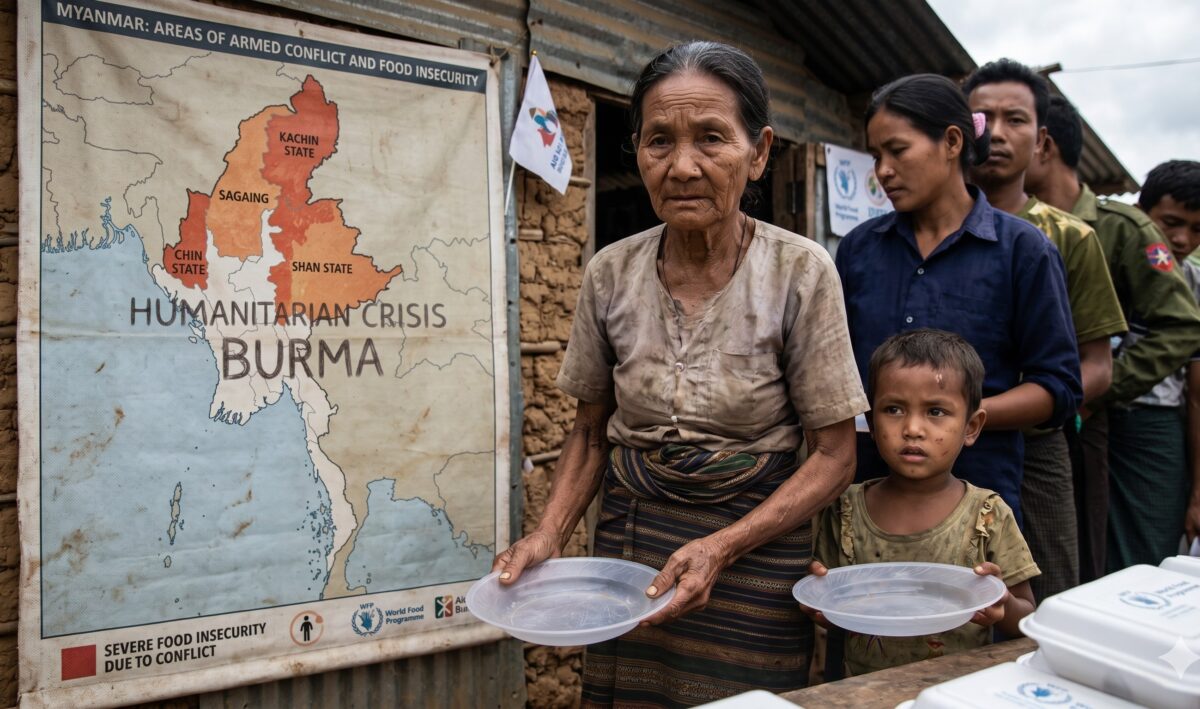
May 2, 2026      According to the latest Hunger Hotspots Report, 16.7 million people, or one in three citizens of Myanmar (also known as Burma), are acutely food insecure, a sharp increase from 13.3 million in 2024. Myanmar now ranks fifth globally for the highest number of people facing severe hunger.

More than 400,000 young children and mothers suffering from acute malnutrition are surviving on nutrient-deprived diets of plain rice or watery porridge. WFP’s country director has said the crisis is invisible to the world. WFP can target just 1.5 million of the 12.4 million people in need and requires $150 million to do even that. No recent national prevalence data exist on wasting, but subnational surveys (for example, one in Yangon and Ayeyarwady Regions in late 2023) found about 8 percent wasting, slightly higher than the prior national figure. Broader food security and nutrition monitoring, including Myanmar Household Welfare Survey rounds from 2021 to 2025, shows worsening dietary diversity, higher food insecurity affecting millions, and increased household hunger since 2021.

Related to malnutrition, Myanmar’s under-five mortality rate—39 deaths per 1,000 live births—is nearly three times higher than the East Asia and Pacific regional average of 14.4.

The roots of the current hunger crisis lie in the military takeover of the government in February 2021. Since the coup, intensifying conflict has led to an estimated 15.2 million people, nearly a third of Myanmar’s population, facing acute food insecurity in 2025. The junta has retaliated against resistance forces by blockading aid, restricting humanitarian access, limiting trade routes, and targeting humanitarian workers, further compounding the food crisis. Military attacks have destroyed agricultural equipment and contaminated farmland with landmines and unexploded ordnance, exacerbating challenges for local food production. The average price of a basic food basket has increased fourfold compared with prices before the military takeover.

The situation is particularly critical in Rakhine State, home to the Rohingya and other ethnic minorities. UNDP has reported that Rakhine State is on the brink of famine, with two million people at risk of starvation. The Myanmar military’s near-total blockade of humanitarian aid to Rakhine State since 2023 violates international humanitarian law and likely constitutes a war crime.

Many readers may remember the large 7.7-magnitude earthquake that struck central Myanmar on March 28, 2025, killing more than 3,700 people, destroying infrastructure, and reverberating through neighboring countries. A large share of aid donations was made in response to that quake.

International aid organizations working to address malnutrition in Myanmar include Action Against Hunger (ACF), Save the Children, Mercy Corps, Solidarités International, the International Rescue Committee (IRC), and Catholic Relief Services (CRS).

World Vision provides aid in 11 of the country’s 14 states and regions. ACF is currently implementing projects addressing malnutrition, mental health and care practices, food security and livelihoods, water, sanitation, and hygiene, nutrition security, and disaster risk reduction in Chin State, Kayah State, and Rakhine State. MSF has mobile teams in Naga and Sagaing, a remote, mountainous region in northern Myanmar where communities have limited access to basic healthcare. Despite restrictions on humanitarian access to conflict-affected areas, mobile teams based in Sittwe, in central Rakhine, offer primary healthcare and emergency referrals for patients from all communities.  The IRC works in Rakhine, Kachin, Kayin, and Shan States in close collaboration with the Ministry of Health.  Save the Children provides aid in Mandalay, Sagaing, Bago, Magway, Shan, and Naypyidaw. CRS’s current projects in Myanmar focus on agriculture and livelihoods and support for emergency response. CRS works with local Caritas partners to build capacity for community-led project design and implementation.  CRS Myanmar also supports partners in Kachin on community-led shelter efforts and provides technical assistance in community-led return and resettlement.

Community Partners International (CPI) provides community-based healthcare, particularly in conflict-affected border regions where government services are non-existent.  This includes “Backpack Medics,” who travel to remote villages to provide primary care, trauma surgery, and vaccinations. CPI also runs maternity waiting homes and trains community health workers to support safe births in conflict zones.

In Myanmar, the UN World Food Program (WFP) provides food rations to vulnerable populations, including internally displaced persons (IDPs), refugees, and people affected by natural disasters or conflict.  WFP also runs school feeding programs in areas with high food insecurity, providing nutritious meals to children in schools.

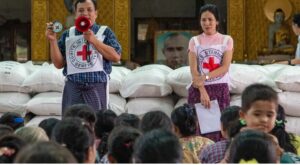
The International Committee of the Red Cross (ICRC) provides nutrition and health support for war victims in Myanmar.  In 2024 and 2025, the ICRC provided food rations, including rice, oil, and beans, to thousands of displaced families in areas such as northern Shan State, Mandalay, and Sagaing.

To the east of Myanmar, there are some two million refugees in Thailand.  The Border Consortium (formerly the Burma Border Consortium) of NGOs has operated in  nine refugee camps along the Thai–Myanmar border since the 1980s, providing foodIt remains the primary agency responsible for food assistance.  However, its operations have been severely reduced. By mid‑2025, TBC announced that food assistance for most households would be cut by 75% or eliminated entirely.

–  Contributed by WHES board member, Steven Hansch

Roundtable on June 5 about American Foreign Assistance and Faith-Based Organizations

World Hunger Education Service (the nonprofit overseeing this Hunger Notes site), joins with Fordham University, HIAS, Lipscomb University, and George Washington University’s Milken Institute School of Public Health in organizing and convening a virtual (online) roundtable of experts on June 5, 2025, a Thursday,  to discuss how American faith-based organizations may be able to lead in the delivery of foreign aid against poverty, assisting development and providing humanitarian relief.

This will be a roundtable conversation with no panels or presentations, and is open to all faiths.

Invited organizations include operational NGOs, universities, research groups and other faith-based organizations in the United States.

Among the questions the roundtable will discuss are:

  •          How well do faith-based organizations blend donations from different sources (citizens, private sector corporations and foundations) to solve problems and relieve crises? Are they more localized, sustainable and cost-efficient in their assistance?
  •         In which sectors are faith-based organizations best at addressing, comparing for instance hunger, primary health care, basic education, food security, trade, industrialization, governance, marine conservation, or higher education?
  •         Looking ahead to future years, what expanded role should faith-based organizations play in executing new programs funded by the United Statessponsoring organizatons Government?

The roundtable will adhere to “Chatham House” rules in that no quote or perspective will later be attributed to any person or organization, whether in the meeting summary or by anyone attending.  Participants are asked to leave their organizational affiliations “at the door” and speak candidly, as experts, about the issues from their experiences over their careers.

This is one in a series of roundtable about the future of American foreign aid.

Interested faith-based organizations may email to:  WorldhungerEd@gmail.com, or ForeignAidRoundtable@gmail.com