



October 1, 2026 Vitamin Angels, a United States-based nonprofit organization works internationally in global public health nutrition. They reach tens of millions of women and children each year with Vitamin A and iron in more than 60 countries, spanning South and Southeast Asia, sub-Saharan Africa, Latin America, and the Caribbean.
Headquartered in Santa Barbara, California, the organization operates on a vision that everyone, everywhere, deserves health equity and a chance to fulfill their potential.
Origins and History: From Disaster Relief to Global Scale: The organization was founded in 1994 by Howard Schiffer, who has served continuously as its president. Following the devastating 1994 Northridge earthquake in Los Angeles, a local aid group reached out to Schiffer, who had close ties to the natural products industry, requesting vitamins for displaced families with children. Schiffer researched the deadly impact of pervasive childhood vitamin A deficiency across low-income countries, where it serves as a primary driver of blindness and child mortality. Vitamin Angels was born to channel the vast resources of the supplement industry toward global child health.
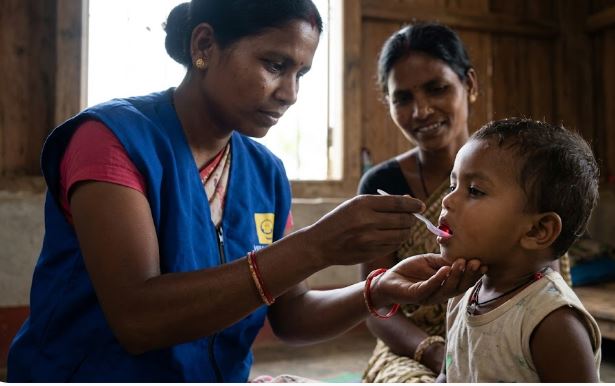
Vitamin Angels does not deliver services directly to individuals; it partners with other agencies. They function as a massive supply chain and technical-assistance intermediary. It supplies, trains, and supports a vast network of local implementing partners who already serve the target populations. The organization deliberately targets populations that are hard to reach or poorly served by existing, mainstream health systems.
Their current programs include targeting children aged 6 to 59 months with vitamin A to prevent deficiency-related blindness and reduce overall child mortality; providing prenatal multiple micronutrient supplements (MMS), which contain about 15 essential vitamins and minerals, and distribution with albendazole for deworming. Deworming is crucial because it significantly reduces nutrient loss and anemia linked to parasitic infections in young children.
They partner with and support local NGOs, community health programs, clinics, and faith-based organizations that directly deliver the supplements to beneficiaries, World Vision, and Save the Children.
They collaborated in creating guidelines with the Micronutrient Forum and Nutrition International, Vitamin Angels and UNICEF co-authored the 2021 interim country guidance on introducing MMS.
Plans for the Future: Systems, Equity, and Climate
As Vitamin Angels looks to the future, its plans have expanded far beyond operating as a donor-to-NGO product pipeline. In 2018, leadership set a bold, time-bound target: to completely eliminate infant mortality surrounding childbirth due to vitamin deficiency diseases by the year 2030.
While it still supplies commodities, Vitamin Angels increasingly aims to influence national health policies and integrate its nutritional interventions into routine, public health services. Collaboration with national governments is a rapidly growing focus. In nine specific countries, the organization plans to work directly with government ministries on policy adoption, local supply chain management, financing, and health systems monitoring.
Furthermore, Vitamin Angels has officially recognized climate change as a massive threat multiplier for global malnutrition. The organization cites dire projections indicating that climate change could raise global hunger and malnutrition by as much as 20% by the year 2050. In response, Vitamin Angels has positioned its future programmatic work as a direct intervention to address the nutritional effects of climate change on mothers and children. Demonstrating this commitment, the organization recently joined the “1% for the Planet” initiative as an environmental partner.
Finally, the organization is actively stepping into the realm of policy advocacy. In the United States, Vitamin Angels has endorsed the proposed Healthy Mothers, Healthy Babies Act, U.S. legislation that seeks to increase $150 million annually into maternal and child nutrition programs, including the distribution of MMS. As H.R. 9583 it was introduced inJuly 2026 by Representative Young Kim to expand global access to maternal and child nutrition programs.

 mineral prenatal supplement formula, originally established by the WHO, UNICEF, and United Nations University in 1999.
 donation efforts to supplying millions of pregnant women across dozens of countries to replace traditional iron-folic acid (IFA) supplements.