


June 16,2026 In Ethiopia, Africa’s second-most populous country, roughly one in eight Ethiopians suffer food shortages in mid-2026 in many region-specific overlapping crises caused by fighting, drought, population displacements, refugees, sky-high prices, and sudden cuts in international aid.
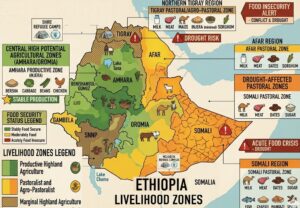
A 2026 humanitarian analysis citing FEWS NET projected about 15. to 16 million Ethiopians in acute food insecurity, with IPC Phase 3 Crisis and Phase 4 Emergency conditions expected in parts of the country by this coming July 2026. Large parts of eastern and southern Ethiopia are at “Crisis” level, meaning families are skipping meals, selling their animals, and running out of options. Some pockets near Harar, Dire Dawa, and the lowlands of East Hararghe in the east are Emergency level. Conflict-hit areas in Amhara and Tigray are also food insecure.
Children suffer most. Many are “wasted” (too thin for their height), which weakens their immune systems and can cause lifelong problems. In treatment centers in Gambella, the death rate for severely malnourished children reached 3.2%. . Similar death rates appear in Benishangul-Gumuz (2.7%) and South Ethiopia (2.8%). These are regions with almost no aid organizations working on nutrition, even though the need is urgent.
Tigray has repeatedly been a particular famine zone. SMART surveys and rapid nutrition assessments in Tigray and Amhara found child acute malnutrition above 15%, and 20% in four Tigray woredas. From 2020 to 2022, a war between the government of Ethiopia and Tigray created a humanitarian crisis in Tigray. Nutrition reporting from Tigray during the war was sparse. Estimates of famine and civilian deaths during the war range from 96,000 to 378,000.
Causes for Ethiopia’s food crisis today:
- Conflict and displacement Fighting in Amhara, parts of Oromia (especially Wellega zones), and earlier wars in Tigray have forced more than 1.5 million people from their homes in Amhara and Afar alone. When people flee, they lose their farms, livestock, and access to clinics. Many health centers were looted or destroyed, so children cannot be screened or treated for malnutrition.
- Drought and climate shocks Pastoral communities in the Somali region (especially Doolo and Korahe zones), Afar, and South Ethiopia have suffered years of failed rains. Herders lose their animals — their main source of food and income. Some areas also face floods that destroy crops. These zones are often remote and “data-dark,” meaning they have not been properly surveyed recently, so the true scale of suffering is hidden.
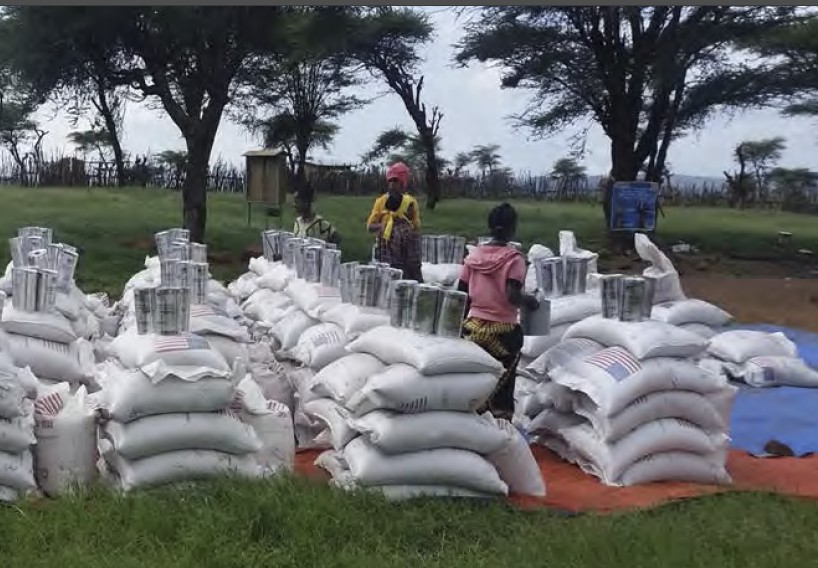
- Aid cuts and supply breaks In 2023 a major scandal over stolen food aid led to a nationwide pause in deliveries. In 2025, big funding cuts (especially from the United States) caused the main program that feeds moderately malnourished children to stop across the entire country. Special peanut-paste treatment for severely malnourished kids also ran short. Refugee camps in Gambella region saw nutrition services shut down in several camps.
Foreign Assistance
Over the last fourty years, Ethiopia has received more food aid than any other country, around $20 billion worth, about half of it from the United States. Most of the food aid has been to avert malnutrition among children or respond to famine. Food aid was interrupted in 2023 over findings of food theft.
In the last decade, the U.S. Government has invested heavily in a single country-wide program called the Joint Emergency Operations Program (JEOP), led by Catholic Relief Services and including CARE, World Vision, Save the Children, Food for Hungry, ORDA, and REST. Currently, the US Department of Agriculture is funding WFP in Ethiopia and reviewing proposals for new NGO emergency food and nutrition assistance, likely in the $80 million range.
Separately, the Joint UN Initiative for the Prevention of Wasting was launched in Ethiopia in August 2025 by the Federal Ministry of Health with WHO, UNICEF, and WFP, supported by FCDO. It is a five-year, multisectoral effort to prevent wasting among children 0–18 months in food-insecure settings.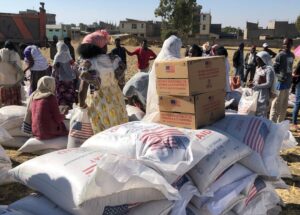
The Ethiopia Nutrition Cluster (a group of UN agencies and NGOs) coordinates humanitarian assistance. dozens of high-need zones, especially in Gambella, South Ethiopia, parts of Somali, and conflict areas of Amhara and Oromia, have zero or only one nutrition partner. These “neglected gap zones” are the places where extra help could save the most lives.
In addition to the agencies mentioned above, aid nonprofits (NGOs) that address food and nutrition in Ethiopia include: Oxfam, Welthungerhilfe, GOAL, Mercy Corps, Action Against Hunger, Project Hope, Tearfund, Plan International, Concern Worldwide, Islamic Relief, Cordaid, Terre des Hommes, and Norwegian Church Aid.
Many aid agencies work via networks such as the half-century-old Consortium of Christian Relief and Development Associations (CCRDA). In Tigray, a long-term relief agency that managed food aid in multiple famines is the Relief Society of Tigray, known as REST.
– Contributed by WHES board member, Steven Hansch
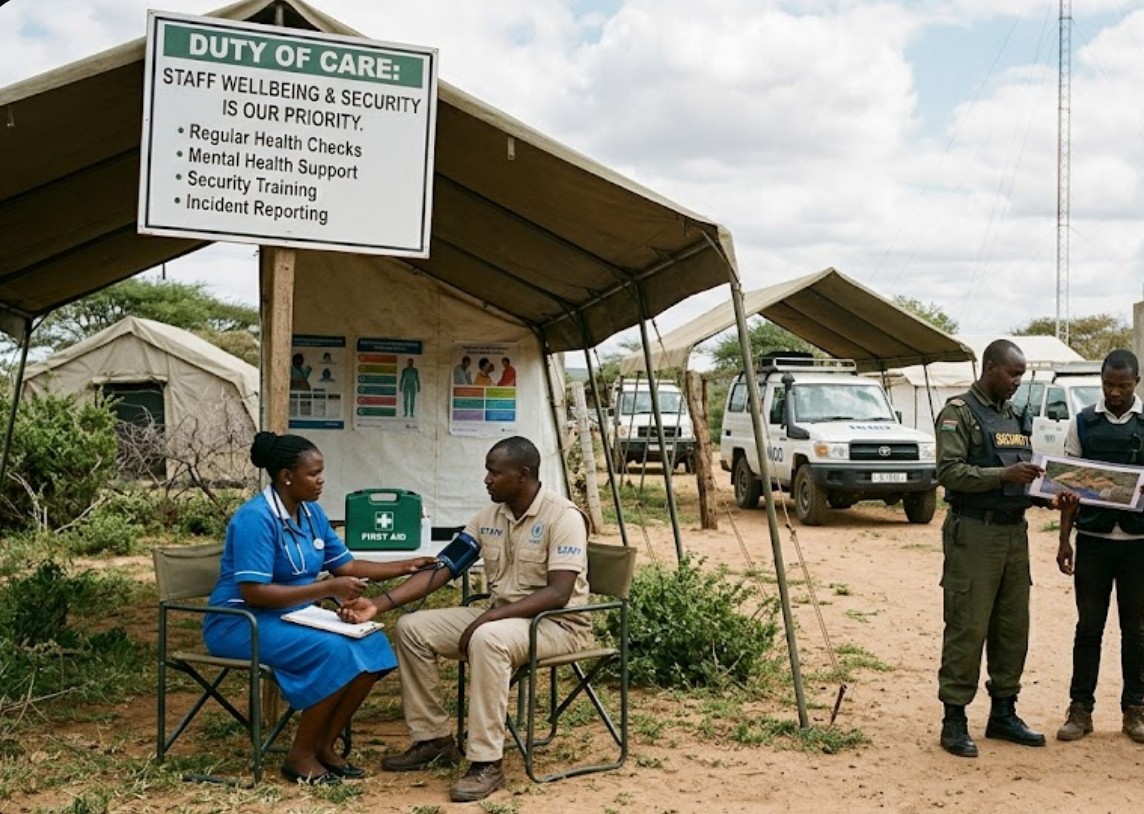
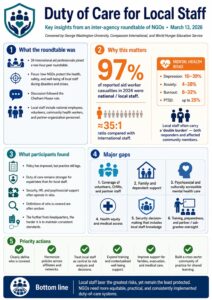 remain siloed within organizational systems and responsibilities, weakening crisis response.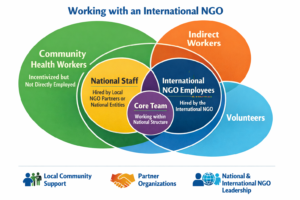

 Government?