
Food Needs from Nepal’s Glacial Lake Outburst Flood

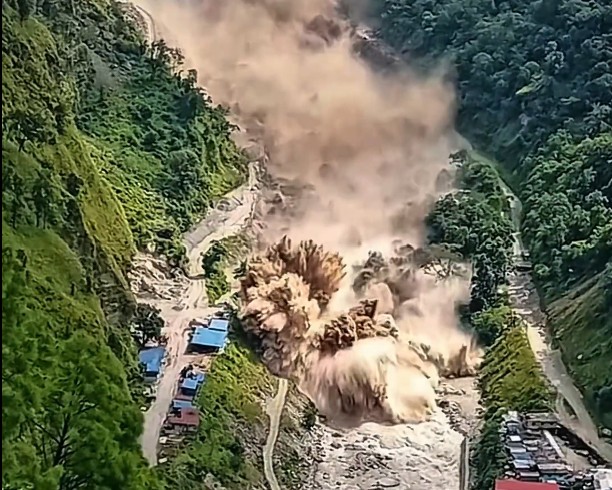
September 1, 2026     The large flash floods that tore through the Himalayas on August 26, 2026 killed over 1,000 Nepalese, with another 5,000+ people missing.  Triggered by a catastrophic high altitude mountain collapse along the border of Nepal and China, a towering wall of ice, boulders, and mud cascaded down narrow valleys, completely overwhelming the Bhote Koshi and Trishuli rivers. As search and rescue operations continue.  Entire villages have been buried under thick mud, and massive infrastructure projects, including the Upper Trishuli 1 Hydropower Project where hundreds of workers are trapped, have been severely damaged or destroyed.  More than 900 workers in hydropower plants are unaccounted for as rescue teams combat tough terrain, difficult weather, and flood waters to try to find survivors following last week’s devastating flash flood. Many of the hydropower workers are feared trapped in the tunnels and underground areas of 11 facilities in the region. 

Unlike a classic glacial lake outburst flood, which typically occurs when a slowly expanding pool of meltwater eventually breaches its natural moraine dam after weeks or months of visible pressure buildup, this event was triggered by a sudden and massive ice and rock avalanche. Glaciologists note that high altitude ice and rock avalanches release significantly more kinetic energy in a matter of seconds, acting instantly to pulverize rock and collect immense volumes of debris as they plummet into river valleys. This mechanism creates a  very concentrated slurry of mud and boulders that causes far greater and more immediate (sudden, without warning) destruction than typical water floods.

The disaster began when bedrock gave way below a mountain glacier near the Langtang Lirung peak in the Himalayas. Part of this glacier, measuring almost a mile, split off from the mountain. Then, this fast-moving flood raised water levels along downsream rivers by 9 meters.

In recent years, Chinese and Nepalese scientists collaborated to build a cross border monitoring network designed to track glacial lakes and issue alerts. This system had successfully issued warnings for previous hazards, yet it missed the August 26 catastrophe. Researchers now understand that the existing water level monitors were primarily optimized for detecting gradual monsoon floods or perennial river swells. When the ice avalanche struck, the upstream monitoring stations in Nepal were instantaneously swept away by the force of the debris before a single alert could be transmitted. Mountain hazards experts have pointed out that even in a theoretical scenario where sensors remained intact, detecting an ice and rock avalanche upstream would provide a maximum of only twenty minutes of warning to the communities below. The disaster highlights a critical need to overhaul early warning systems in fragile mountain ecosystems.

In the immediate aftermath of the disaster, the Nepali Red Cross stepped up as a leader in the emergency response. Coordinating the national humanitarian effort, the organization has led search and rescue operations across the hardest hit areas like the Rasuwa and Sindhupalchok districts. The Nepali Red Cross estimated that the catastrophe has severely affected as many as 93,000 people, leaving a vast population in desperate need of assistance. First responders from the organization have been working around the clock to establish emergency camps, providing displaced families with support, emergency shelter, and sleeping mats. Furthermore, the Nepali Red Cross has emphasized the immense psychological trauma inflicted upon the survivors, many of whom witnessed their families and homes swallowed by the earth in mere seconds. The organization is also actively monitoring the landscape for secondary flood risks, as natural debris dams created by the avalanche threaten to burst and unleash additional water on the already decimated downstream villages.
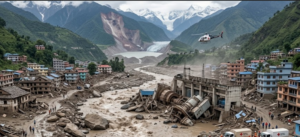
The needs of the survivors in terms for food aid is challenging given the geographical isolation caused by the flood. With at least 19 bridges and nearly 40 kilometers of vital roadways swept away by the surging rivers, traditional supply trucks cannot reach the most needy populations. Consequently, aid agencies are relying heavily on helicopters to airlift emergency food supplies, a method that is slow, expensive, and frequently disrupted by the unpredictable Himalayan weather patterns.

Before the flood waters ever rose, Nepal struggled with significant gaps in public nutrition. According to data from the World Food Programme, approximately 25 percent of children under the age of five in Nepal suffer from stunting due to chronic malnutrition.  Vitamin and mineral deficiencies remain widespread, with an estimated 43 percent of children under five being anemic from dietary iron deficiency.

The U.N. World Food Programme has rapidly mobilized its resources, dispatching specialized nutrient packed ready to eat food rations to the hardest hit areas. Because the displaced families have lost access to cooking facilities, cooking fuel, and clean water, standard rations of dry rice or lentils are currently useless to them in the immediate term. Instead, aid workers are distributing high energy biscuits that are fortified with essential vitamins and minerals.

Catholic Relief Services has mobilized its teams to provide emergency food, shelter, and water sanitation support to displaced families across multiple districts.  Catholic Relief Services (CRS) and Caritas Nepal, who have already transported 2.5 tons of food supplies into affected districts such as Rasuwa.

Similarly, the United Nations Children’s Fund is deploying specialized emergency health and nutrition supplies aimed specifically at preventing pediatric malnutrition, while organizations like Convoy of Hope are prepositioning emergency food kits for distribution through local partner networks. 

The United States Government announced more than $3.6 million in humanitarian assistance, including up to three months of emergency food aid for up to 10,000 flood‑affected households.  CARE Nepal, Save the Children, and World Vision were among the fastest aid agencies to deploy

shelter and clothes. Because they run ongoing development programs in the hardest-hit provinces (like Koshi and Madhesh), they immediately pivoted their local staff to distribute pre-stocked emergency hygiene kits, water purification tablets, and shelter materials.

Future food production in the area has been set back.  The concentrated mudflow scoured the fertile topsoil from terraced mountain farms, replacing it with a thick, barren layer of rocks and glacial sediment. Thousands of livestock, which served as a primary source of protein and dairy for the mountain communities, were drowned in the deluge. The upcoming harvest has been wiped out, meaning the survivors will have no local crop yields to rely on for the brutal winter months ahead.   For the many villages cut off by the destroyed infrastructure, physical food deliveries remain a critical option over cash distribution.   This matters for Rasuwa, Nuwakot, Dhading, and downstream Bhote Koshi settlements.
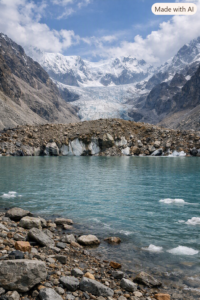
Hazards like this may reoccur.  The Himalayas are warming twice as fast as the global average, degrading the permafrost that acts as the “glue” holding steep mountain slopes and glaciers together. This exponentially increases the frequency of ice avalanches and Glacial Lake Outburst Floods (GLOFs).  Managed retreat to higher ground, while economically and culturally disruptive will be necessary for these populations.

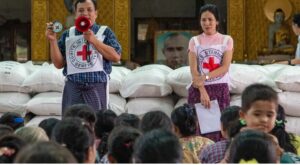
Rebuilding warning networks:   ICIMOD (International Centre for Integrated Mountain Development): Based in Kathmandu, ICIMOD was one of the fastest actors in predicting the risk. Through their SERVIR Hindu Kush Himalaya initiative and their specialized flood early warning systems, they monitored real-time satellite imagery and river gauge data. They issued rapid alerts regarding the swelling of major river systems (like the Koshi and Bagmati) and the high risk of landslides in vulnerable hill districts days before the worst of the flooding hit.  This international NGO has spent years building community-based Early Warning Systems (EWS) in Nepal’s flood-prone Terai region and hill districts. Because they have pre-existing networks of local volunteers equipped with sirens, megaphones, and SMS networks, they were among the fastest at translating ICIMOD and government forecasts into immediate evacuation orders at the village level.

– contributed by Steve Hansch and the WHES Board
U.S. Food Aid (Part 8): Nawiri in Arid Lands of Kenya

July 24, 2026    This is the eighth Hunger Notes article about Food for Peace programs to help inform the public and USDA about lessons learned during past decades about the design and evolution of US food aid, intended to inform USDA which has an outstanding request for information.

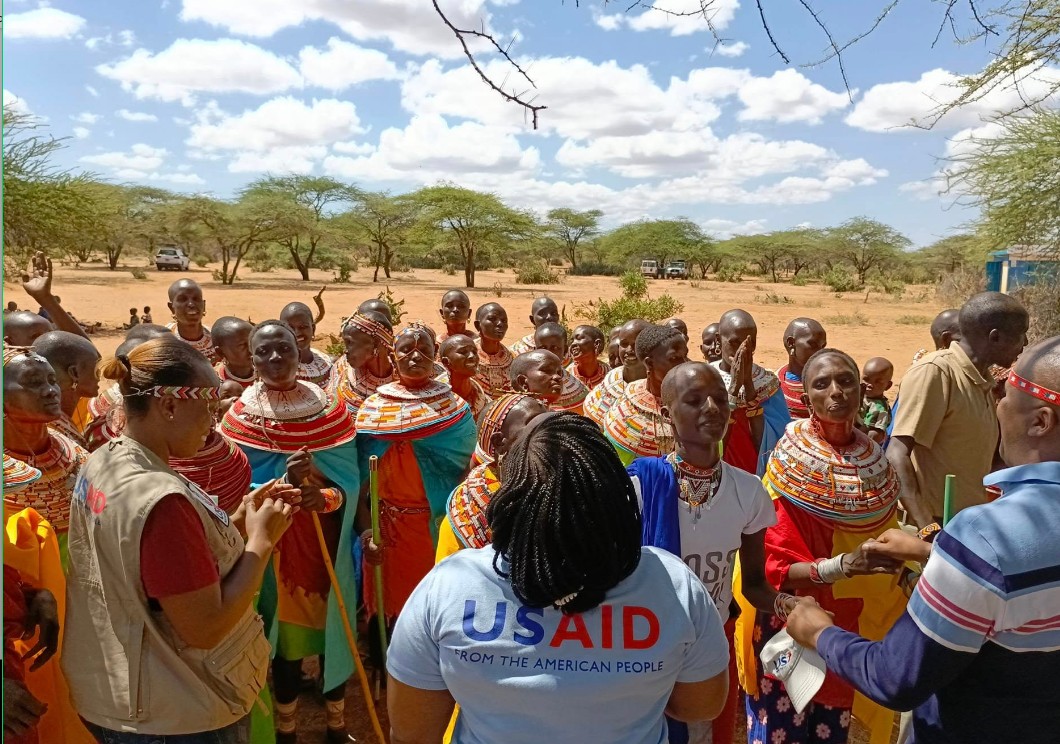
Nawiri was the most recent Food for Peace program for Kenya, with about $200 million to different NGOs, led by two groups, Catholic Relief Services and Mercy Corps, covering drought-prone arid lands with mixed pastoral and agricultural economies.  The CRS consortium included Caritas, Tufts University, IBTCI, Concern, Village Enterprise and Kenyatta University and worked in Isiola and Marsabit counties, while Mercy Corps worked in Samburu and Turkana counties, with Research Triangle Institute, AVSI, Viamo, Caritas and the African Population and Health Research Center.  Together these teams  reached some 550,000 people.

Program metrics showed that Nawiri achieved substantial positive impacts but the benefits were often uneven, context-dependent, and constrained by severe environmental shocks.   The implementing agencies found that acute (wasting) malnutrition varies significantly between neighboring wards, across different seasons, and over time, meaning that generalized regional approaches are often ineffective.  Also, screening methods like mid-upper arm circumference (MUAC) and weight-for-height z-scores (WHZ) behave differently across seasons, sex, and age groups.  Relying solely on MUAC can delay the identification of malnourished children; employing both metrics is necessary to accurately capture different characteristics and stages of malnutrition.  Not surprisingly, they found that dry climate correlated with worse malnutrition.

NGO evidence generally showed that where their interventions were concentrated, malnutrition measurably fell.   During the period of study, wasting malnutrition declined by over 20% in target areas, though it increased 40% in Turkana. Furthermore, longitudinal studies noted that stunting (long-term malnutrition) increased significantly over time for the sample as a whole, particularly in Laisamis.

Increased systematic screening and referral of malnourished children to health posts were an important reason for those declines seen in wasting.  In the  Turkana, Nawiri equipped 210 community health volunteers in 4 communities with dosage carts, pneumonia beads, and malaria test kits.  Concern piloted an integrated health intervention that added malaria, pneumonia and diarrhea case management with existing integrated-management of acute malnutrition.

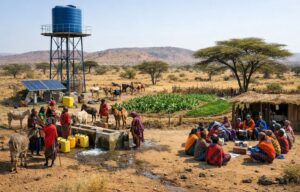
Some 57 water systems were rehabilitated, important in a dry lands, and Nawiri fostered 35 local “Water Use Associations” for ongoing improvements for tanks, pipes and water points.  Crops were expanded with irrigation: sorghum, maize, watermelon, green grams, fodder. A 7 km canal was desilted.

“The primary pathway between water insecurity and malnutrition in the arid lands of Kenya is women’s time burden collecting water to meet the minimum drinking and hygiene needs of the household. Water collection is performed exclusively by women and girls and remains one of the pervasively gender inequitable elements of pastoral life. Nawiri aims to address the role of water system functionality through borehole rehabilitation.”

The project found that traditional pastoralist strategic mobility and social institutions (like sharing milk, food, and childcare) are the frontline of disaster response and foundational to community resilience.  Nawiri helped establish retail shops (dukas) in remote areas to stock better varieties of nutritious foods, bringing vibrant markets to communities that previously had to travel up to 7 kilometers for basic goods.  Nawiri promoted livestock health and livestock disease surveillance.

Applying the graduation model, some 500 households in 14 villages graduated with Village Enterprise assistance.  In The Isiolo pilot (600 households) launched 204 businesses and 20 savings groups; Food Consumption Score rose from 51.3% to 83.8% in 3.5 months and children (6–23 mo) meeting minimum acceptable diet rose from 6.38% to 31.65%.

The Double-Edged Sword of Diversification: While livelihood diversification provides alternative income, it can act as a maladaptive coping mechanism if it forces women into labor-intensive, low-return activities,. The program observed that as women spent more time on business activities, time spent on childcare decreased, which in some zones led to reduced breastfeeding and higher acute malnutrition.  While the drought pushed communities to diversify away from livestock, weak local economies meant many new businesses sold the same basic goods (like sugar and flour), fast-tracking local market saturation

Under CRS, 207 teenagers graduated the “Nawiri na Ujuzi” course (tailoring, masonry, plumbing, electrical, mechanics, driving), which was jointly funded by Nawiri and the County Government of Isiolo.  CRS Deputy COP Margaret Kahiga notes all beneficiaries come from households with under-five children facing malnutrition.  In a separate area, a randomized controlled tiral conducted with the Rural Entrepreneur Access Project (REAP) in Samburu revealed a limitation to these economic benefits:  if market saturation crossed a certain tipping point (over 60% enrollment in a specific locality), the income impact for individual businesses could reduce over time as businesses competed against one another

Resilience was highly dependent on informal safety nets, asset ownership, and access to savings.   The program emphasized layered, sequenced interventions (e.g., combining water with agriculture, nutrition education, and markets) and local ownership, leading to better resilience against shocks like drought. The partner county governments agreed to sustaining gains post-closeout, including asset handovers and policy integration. The NGOs also observed a chronic deficiency in prioritizing and budgeting of government resources for nutrition, and political leaders frequently lack awareness of the importance of multisectoral nutrition approaches.
Much of Nawiri intentionally focused on formative research and theory-of-change-analysis during the first two years.  The  Feinstein International Center at Tufts University managed a longitudinal study (bimonthly surveys) in four sentinel sites.  Tufts found that few individual/household variables predict malnutrition, whereas basic structural drivers (pastoralism under pressure, climate variability, weakening customary institutions) dominate.  Mercy Corps’ review of longitudinal data found that wasting malnutrition had persistently been above 15% for three decades, without improvement.

Notably, DOGE terminated the CRS program, despite positive progress and investments, because DOGE’s simplistic word search through the fun. ding agreement found politically-offensive words, like “gender”, and “climate.”  Because Nawiri was terminated early, a full, independent endline evaluation of final impact may be incomplete.

–  Contributed by WHES board member, Steven Hansch


Hunger Crisis in Myanmar/Burma

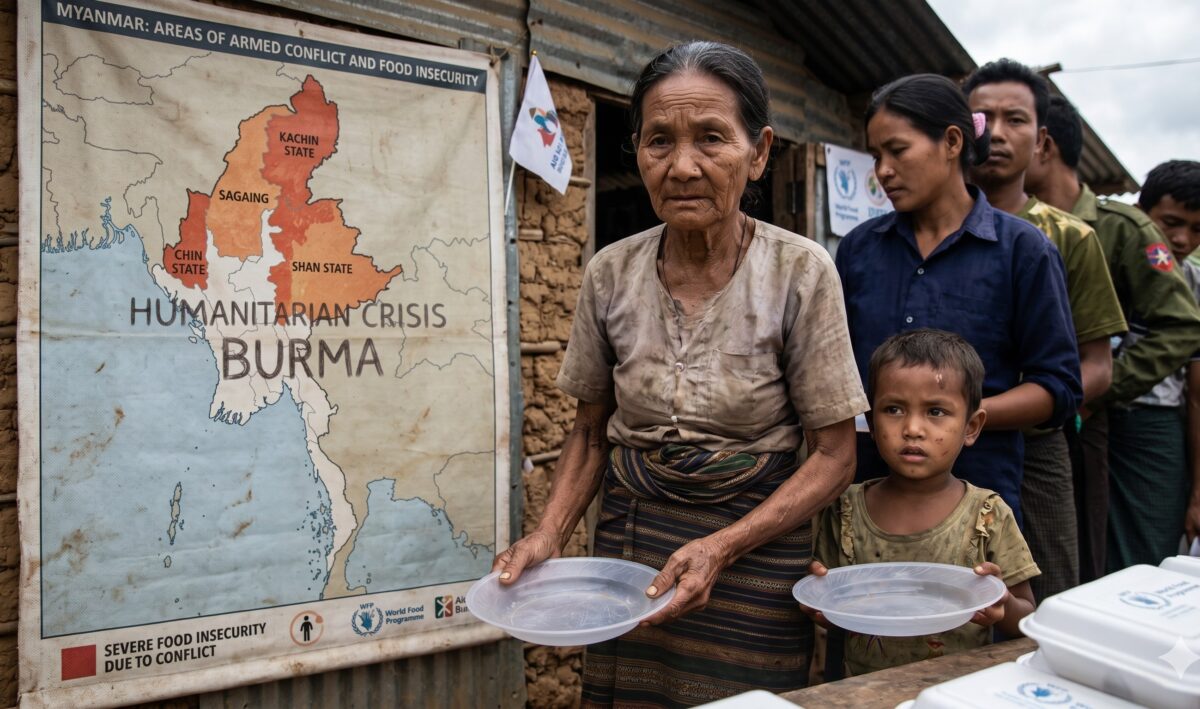
May 2, 2026      According to the latest Hunger Hotspots Report, 16.7 million people, or one in three citizens of Myanmar (also known as Burma), are acutely food insecure, a sharp increase from 13.3 million in 2024. Myanmar now ranks fifth globally for the highest number of people facing severe hunger.

More than 400,000 young children and mothers suffering from acute malnutrition are surviving on nutrient-deprived diets of plain rice or watery porridge. WFP’s country director has said the crisis is invisible to the world. WFP can target just 1.5 million of the 12.4 million people in need and requires $150 million to do even that. No recent national prevalence data exist on wasting, but subnational surveys (for example, one in Yangon and Ayeyarwady Regions in late 2023) found about 8 percent wasting, slightly higher than the prior national figure. Broader food security and nutrition monitoring, including Myanmar Household Welfare Survey rounds from 2021 to 2025, shows worsening dietary diversity, higher food insecurity affecting millions, and increased household hunger since 2021.

Related to malnutrition, Myanmar’s under-five mortality rate—39 deaths per 1,000 live births—is nearly three times higher than the East Asia and Pacific regional average of 14.4.

The roots of the current hunger crisis lie in the military takeover of the government in February 2021. Since the coup, intensifying conflict has led to an estimated 15.2 million people, nearly a third of Myanmar’s population, facing acute food insecurity in 2025. The junta has retaliated against resistance forces by blockading aid, restricting humanitarian access, limiting trade routes, and targeting humanitarian workers, further compounding the food crisis. Military attacks have destroyed agricultural equipment and contaminated farmland with landmines and unexploded ordnance, exacerbating challenges for local food production. The average price of a basic food basket has increased fourfold compared with prices before the military takeover.

The situation is particularly critical in Rakhine State, home to the Rohingya and other ethnic minorities. UNDP has reported that Rakhine State is on the brink of famine, with two million people at risk of starvation. The Myanmar military’s near-total blockade of humanitarian aid to Rakhine State since 2023 violates international humanitarian law and likely constitutes a war crime.

Many readers may remember the large 7.7-magnitude earthquake that struck central Myanmar on March 28, 2025, killing more than 3,700 people, destroying infrastructure, and reverberating through neighboring countries. A large share of aid donations was made in response to that quake.

International aid organizations working to address malnutrition in Myanmar include Action Against Hunger (ACF), Save the Children, Mercy Corps, Solidarités International, the International Rescue Committee (IRC), and Catholic Relief Services (CRS).

World Vision provides aid in 11 of the country’s 14 states and regions. ACF is currently implementing projects addressing malnutrition, mental health and care practices, food security and livelihoods, water, sanitation, and hygiene, nutrition security, and disaster risk reduction in Chin State, Kayah State, and Rakhine State. MSF has mobile teams in Naga and Sagaing, a remote, mountainous region in northern Myanmar where communities have limited access to basic healthcare. Despite restrictions on humanitarian access to conflict-affected areas, mobile teams based in Sittwe, in central Rakhine, offer primary healthcare and emergency referrals for patients from all communities.  The IRC works in Rakhine, Kachin, Kayin, and Shan States in close collaboration with the Ministry of Health.  Save the Children provides aid in Mandalay, Sagaing, Bago, Magway, Shan, and Naypyidaw. CRS’s current projects in Myanmar focus on agriculture and livelihoods and support for emergency response. CRS works with local Caritas partners to build capacity for community-led project design and implementation.  CRS Myanmar also supports partners in Kachin on community-led shelter efforts and provides technical assistance in community-led return and resettlement.

Community Partners International (CPI) provides community-based healthcare, particularly in conflict-affected border regions where government services are non-existent.  This includes “Backpack Medics,” who travel to remote villages to provide primary care, trauma surgery, and vaccinations. CPI also runs maternity waiting homes and trains community health workers to support safe births in conflict zones.

In Myanmar, the UN World Food Program (WFP) provides food rations to vulnerable populations, including internally displaced persons (IDPs), refugees, and people affected by natural disasters or conflict.  WFP also runs school feeding programs in areas with high food insecurity, providing nutritious meals to children in schools.

The International Committee of the Red Cross (ICRC) provides nutrition and health support for war victims in Myanmar.  In 2024 and 2025, the ICRC provided food rations, including rice, oil, and beans, to thousands of displaced families in areas such as northern Shan State, Mandalay, and Sagaing.

To the east of Myanmar, there are some two million refugees in Thailand.  The Border Consortium (formerly the Burma Border Consortium) of NGOs has operated in  nine refugee camps along the Thai–Myanmar border since the 1980s, providing foodIt remains the primary agency responsible for food assistance.  However, its operations have been severely reduced. By mid‑2025, TBC announced that food assistance for most households would be cut by 75% or eliminated entirely.

–  Contributed by WHES board member, Steven Hansch