
Interview with Edesia’s Maria Kasparian about Anti-Hunger Foods

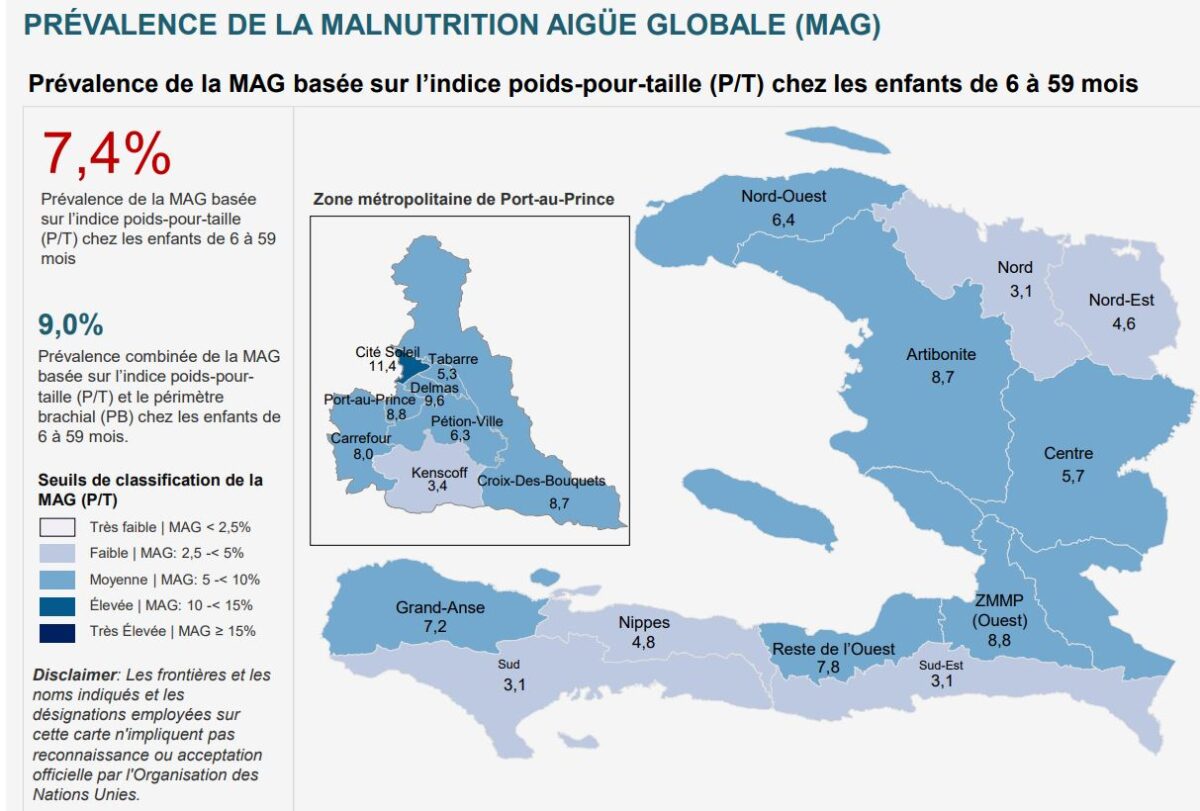
April 20, 2026      Plumpy’Nut has become one of the most recognizable tools in the fight against severe acute malnutrition among young children around the world.  Plumpy’Nut is one brand of the broader food type called “Ready to Use Therapeutic Food”, or “RUTF.”  RUTFs have been a key topic in recent articles in Hunger Notes; nonprofits have used RUTFs in the Sudan, Gaza, Haiti, Afghanistan and in other countries in need.

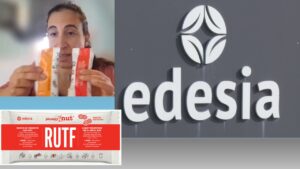
In the United States, one of the leading producers is Edesia, the Rhode Island–based nonprofit that manufactures Plumpy’Nut and related products for UNICEF,  the World Food Programme, and NGO partners, while also participating in a wider global network of therapeutic food producers.
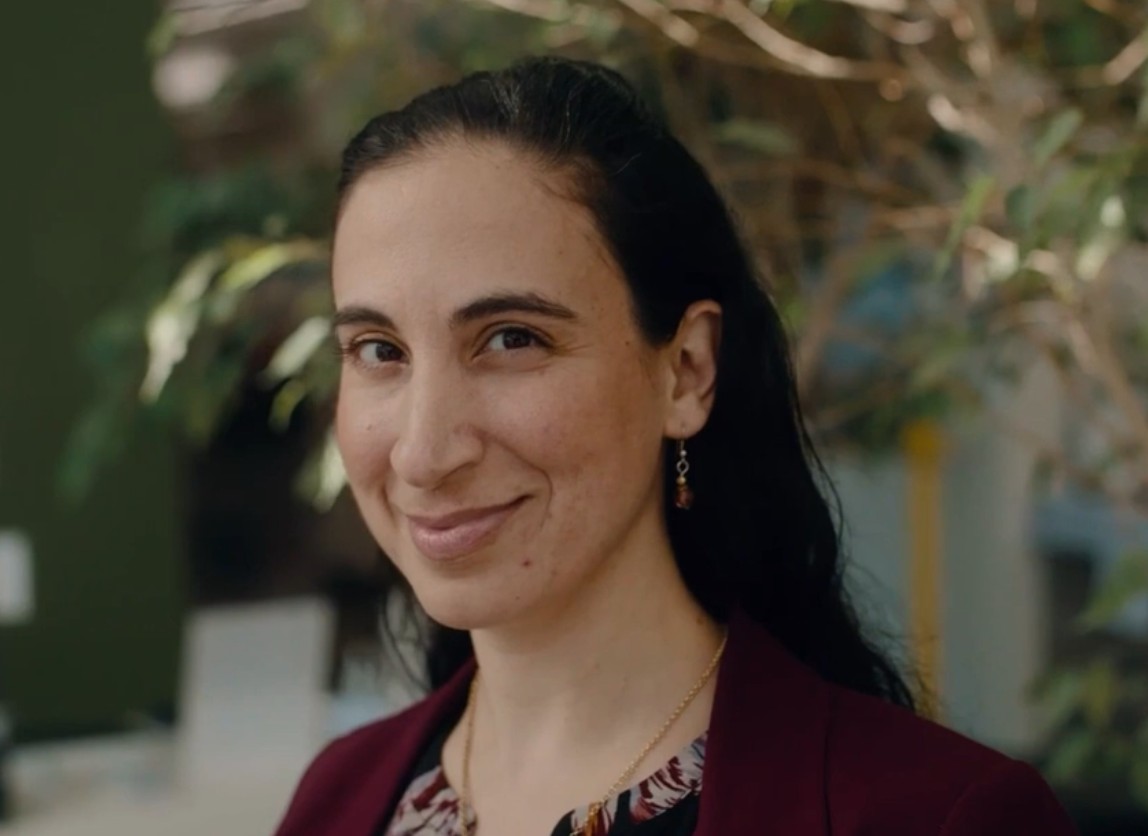
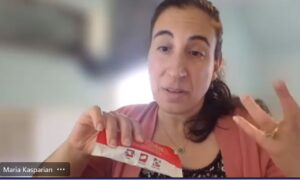
Following are selections from WHES’ interview with Ms. Maria Kasparian, Edesia’s Executive Director in 2023, about Edesia and now head of Strategic Partnerships.  The interview highlights several of these trends: rising interest in alternative formulations using ingredients such as soy, corn, chickpea, or millet; debate over procurement rules; the slow pace of agency adoption; and growing recognition that the challenge is not only making therapeutic food, but also building efficient supply chains that can deliver it where children need it most.

WHES: Thank you so much for taking time out to talk with us today. What should our readers know about Edesia?

Kasparian:  One of Edesia’s mandates is to educate and advocate global nutrition. We have school field trips, work with senators, channel our programming through Scouting America, and we do advocacy work in DC.
We produce in the US, taking with PL 480 (Food Aid) funds. We are producing 1.2 million packets of Plumpy’Nut each day. Edesia has had a ticker of how many children that our products have reached since we started producing in March 2010 – and distributing through partners. Today we are at 19.9 M children reached with full treatments. Our goal is to reach a total of at least 10 M more children within 2023 and 2024.

We’re also part of the “PlumpyField network” of partners in ten partners, spanning Madagascar, India, and other countries. We work to help these producers in other countries, such as Ethiopia and Haiti. For instance, we support Meds and Foods for Kids in Haiti. There are now 22 producers worldwide of RUTF, and each uses slightly different formulations.

WHES: Do all the producers of Ready to Use foods follow the same formulae?

Kasparian: Across the 22 suppliers of foods, there are no two formulas that are identical. But as long as we meet the robust recommendation, we’re okay.
Even within the PlumpyField Network, there are tweaks. There are differences, depending on what’s available locally. For example, you have to achieve certain omega-3 to omega-6 balance with the fats. You need to do that. The vegetable oils are important. You can get different kinds of vegetable oils depending where you are. There might be some variety there. You might have different forms of milk powder available. You might have different forms of whey available that have different amounts of protein. You’ve got to balance the formulas, depending on what ingredients you have available. But they’re very similar. We’ve actually done taste tests where we meet and have everybody’s and we blindly try to guess whose is who. So, they’re a little different, but the difference is small. But the formulations do vary a little bit. There will be a greater degree of difference with those outside the network formulations are.

WHES: Thank you. So, how do donors specify what they want or accept new ideas for specialty foods to address malnutrition?

Kasparian: Well, the Interagency oversight group (UNICEF and WFP) have discussed for many years, having a common standard. It’s the long game. Over time, things do get accepted. Governments and the U.N. don’t move quickly. So generally, though, progress does happen. It just happens slowly. You keep pushing, and over time, things do improve. So you must continue innovating.
The Tufts Food Aid Quality Review study comparing the effectiveness of different foods looked at RUTF (compared Corn Soy Blend or CSB+ with fortified vegetable oil (CSB+ w/oil), Corn soy whey blend (CSWB) with fortified vegetable oil (CSWB w/oil), and Super Cereal Plus with amylase (SC+A)) for the treatment of moderate malnutrition.  The cost-effectiveness was similar between the products, and caregivers had a slightly lower of their own opportunity costs when using RUTF.  The main conclusion was that NGOs/programmers should pick the products that would be most appropriate for their contexts.

WHES: Is it only about the formula of the food composition?

Kasparian: The ecosystem is not only about making RUTF, but also about improving the supply chain. Customs fees for incoming fees mean that local production is not necessarily cheaper. You know, it’s cheaper to get our foods from here to South Sudan than it is from Khartoum to South Sudan. As well, we’re shipping a lot to Somalia right now.

WHES:  Has demand grown for your RUTF?

Kasparian: We have doubled the numbers of kids getting treatment. Most of it goes to Africa, over 70%. Our main goal is to reach more kids. The price of RUTF was going down significantly before the Covid-19 pandemic. As background, 70% is the cost of the ingredients. In 2005 a box of RUTF cost $55 but we brought that down to $35 a box in 2019.

WHES: How is it working with UNICEF and WFP?

Kasparian: One of the barriers we face is the way that Unicef and WFP work together. They work differently and in different places.

WHES: How do you relate to other producers in other countries?

Kasparian: We are a U.S.-based producer. We’re a non-profit U.S.-based producer, and that we care a lot about having a good balance of what’s coming from the U.S. and what is coming from local and regional procurers, and that balance is really important. And we do various things to support these
suppliers in other countries. We work particularly closely with Meds and Food for Kids in Haiti. We help them with their formulations. We just help them to get their codex, upgraded codex specification in order. We help them with procurement of raw materials. We help them troubleshoot from a maintenance engineering perspective.

WHES:   Edesia has a history going back to Tanzania, right?

Kasparian: Yes.  Before we set up a factory in the U.S., we established one in Tanzania, which, unfortunately, is no longer operational, but was, for about five years.  Thus, our experience kind of went that way. Our founder, Navyn Salem, has family roots in Tanzania.  Her father and three generations of the family are Indians who lived in Tanzania for a period of time. Ms. Salem’s father was born and raised in Tanzania before he came to the U.S. on a USAID scholarship for college.  This leads me to another interesting part of the story: USAID is really responsible for Edesia’s existence. Her father, and therefore she, would not be in the U.S. if not for USAID. The U.S. factory, Edesia, was an afterthought to Tanzania because, at the time, USAID’s Food for Peace, was looking to have RUTF and RUSF suppliers in the U.S. because they wanted to be able to use the Title II PL-480 funds for nutrition-specific commodities like RUTF, RUSF. Which, at the time, this is 2008, 2009, at the time, no one was making in the U.S. And there was a push to improve the food aid basket of what was coming out of the U.S. And to take more vulnerable groups into account and to add these nutrition-specific commodities. So, they kind of approached us and others to say, hey, can you do this in the U.S.?

WHES: Do you engage much with the public here in the U.S.?

Kasparian: Our factory doors are open. We have school field trips come through. We have senators and congresspeople whenever we can. We have Scouting America, Rotary Clubs, and the like. And then we also do advocacy work in D.C. around global nutrition.

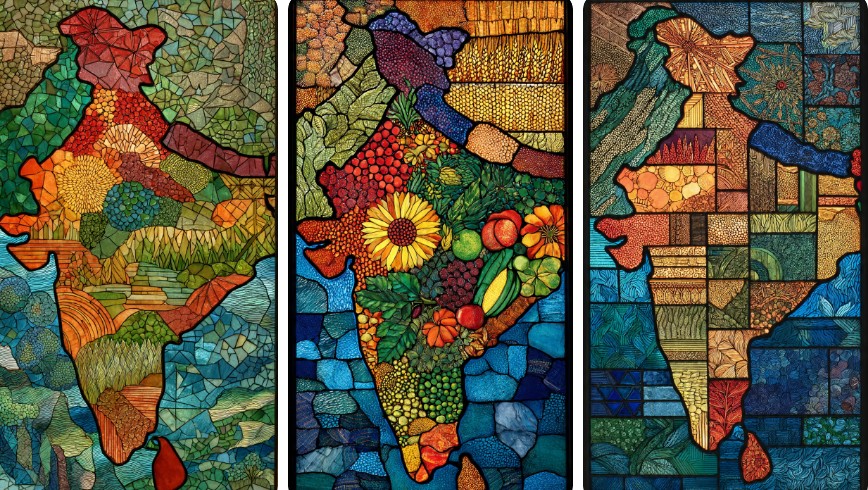
India’s Conquest of Famine

April 19, 2026     In the weeks since Paul Ehrlich’s passing away, there have been many articles about the change that have occurred since his publication of the Population Bomb, where he warned about trends in risk of famine in India.

Indeed, one of the greatest stories in human history of overcoming food insecurity and famine has been India over the last 50 years. Not only has India grown in terms of food production, but it has diversified its economy, built infrastructure, and increased its GNP, which also supports improvements in long-term resilience.  In the 1990s, India turned away the food assistance provided in large quantities by the US Government’s Food for Peace, and India became itself a food aid donor to other countries.

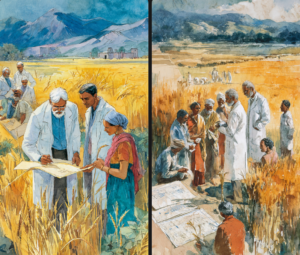
In the late 1960s, India began intensively experimenting with ways to improve yields of key food crops, particularly wheat.  A few Indian scientists played an historic, important role in feeding this country which today has more people than any other.  The most important was M.S. Swaminathan, an unassuming man who, in his own gentle way, revolutionized India’s agricultural sector.
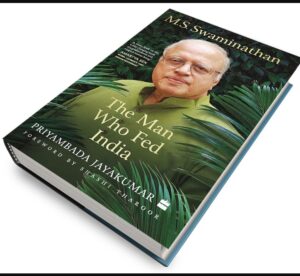
Swaminathan started out in 1947 working on plant breeding at the Indian Agricultural Research Institute (IARI) in New Delhi. Swaminathan collaborated with US plant breeder Norman Borlaug touring India, breeding Mexican wheat with Japanese varieties. This new crop produced high yields of good quality.  In 1964 he earned funds to plant demonstration plots which convinced Indian farmers to experiment with its use.  Further experimentation led to wheat varieties which by 1968 increased wheat production to 17 million tons.

Swaminathan’s lifelong commitment to transparency pushed him to establish various systems of accountability of the institutions he headed; therefore, he placed the entire international rice collection under the supervision of an international rice board even though it was already a part of IRRI.  Swaminathan never tired of crediting that the seeds of the green revolution in India were actually sown far back in 1949 in the fields of the Central Rice Research Institute in Cuttack, India long before Norman Borlaug came to India.  Working with the UN’s Food and Agriculture Organization, he established a commission for plant-based genetic resources to address issues related to the conservation and sustainable use of genetic resources for food and agriculture. This included plants, animals, and aquatic organisms.  The commission’s focus was on the management of biodiversity.  In the 1980s, Swaminathan led, as Director General, the International Rice Research Institute (IRRI). Here he shone as a brilliant and dedicated scientist, an excellent leader, and kind-hearted.  Despite occasional setbacks, he persevered in promoting international cooperation in the utilization and conservation of genetic resources.  His vision extended beyond yield per hectare. He was a prophet of sustainability long before it became a buzzword of the 21st century. From championing greater participation of women in agriculture to espousing ecological balance, from advancing research in Russian attics to promoting sustainable coastal farming, from advocating for tribal food security to establishing gene banks for endangered crops, his canvas was vast, and his brush precise. Swami Nathan was generous and humane, embodying the best and noblest of the India into which he was born and by which he was shaped.
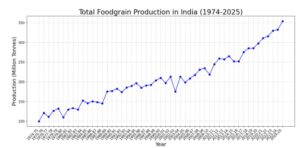
As shown in the graph at right, food production in India has more than kept pace with population growth due to ongoing improvements in applications of scientific methods. In these same last fifty years, India’s population hasalmost tripled, from 520,000,000 to about 1.5 billion today.

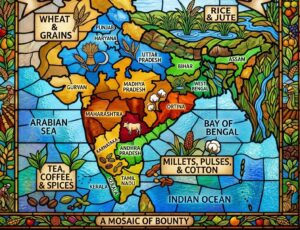
India’s agricultural geography has shifted from a northwest “Green Revolution core” (1970s) to a much more broad-based and increasingly central/eastern growth pattern (last decade).  In the 1970s, increases in production were largely in the Punjab, Haryana, and Western Uttar Pradesh.   More recently, Indian States with the strongest increases in food production:

    • * Madhya Pradesh – often cited as India’s fastest-growing agricultural state in the 2010s
    • * Chhattisgarh – rapid expansion in rice production and procurement
    • * Jharkhand – gains from irrigation and diversification
    • * Bihar & Eastern Uttar Pradesh – improvements in rice, maize, and horticulture.

The elimination of famine has not meant that there is no malnutrition in India.  Fifty years ago half of children were stunted (low height per age) from undernutrition, while today 1 in three are.

Meanwhile, rate of wasting malnutrition (as measured by weight for height) has remained stubbornly high over the last 50% years, by many estimates stuck in the range of 17-18%.

The government’s most current estimate for the national prevalence of wasting (low weight for height) among children under five in India for 2025 is estimated the 5.4% though estimates from prior years are closer to 18% among children.  Wasting malnutrition also varies across different areas.  For instance, the Union Territory of Lakshadweep reported the highest wasting rate at 11.6%, followed by Bihar (9.31%) and Madhya Pradesh (8.2%).

Much of the growth of production in India has been facilitated by increases in application of synthetic fertilizers. This is relevant today because, as reported yesterday, India’s food economy is seriously dependent upon fertilizers from the Middle East that are now blockaded and will be increasingly expensive, which may challenge food production in India this year.

Read more:   M.S. Swaminathan in conversation with Nitya Rao: The Ethics and Politics of Science, M.S. Swaminathan Research Foundation Centre for Research on Sustainable Agriculture and Rural Development, 2014.

Charles C. Mann, The Wizard and the Prophet: Two Remarkable Scientists and Their Dueling Visions to Shape Tomorrow’s World (New York: Alfred A. Knopf Inc., 2018).

Priyambada Jayakumar, M S Swaminathan: The Man Who Fed India,  HarperCollins India, September 10, 2025

Threat of Child Malnutrition in Iran Amid U.S.–Iran Conflict

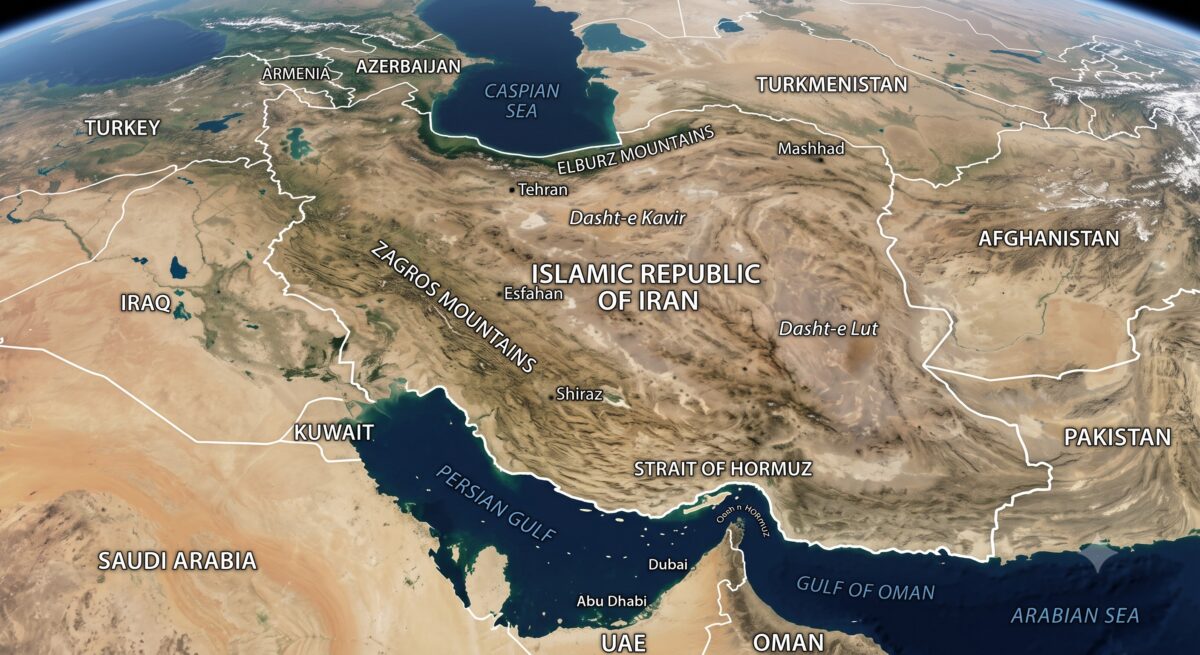
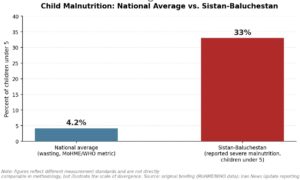
The U.S.–Iran war that began today, 28 February 2026, threatens to sharply worsen malnutrition among children under five in low-income urban neighborhoods of strike zones (Tehran, Isfahan, Kermanshah) and in rural border provinces (e.g., Sistan-Baluchestan and Kurdistan) that already experience high malnutrition rates.

Iran, with a total population of 93 million people, has 7 ½ million children under five years of age, which is more children than Germany, the UK, Canada, Iraq, Syria, Italy, Turkey, or France.

Over the last few decades the occurrence of childhood stunting (a form of long-term malnutrition) and of wasting (short-term) malnutrition have declined in Iran, reflected by the government’s attention to treating malnutrition.   However, studies in southern Iran from 2018 to 2023 show a significant increase in underweight and wasting among young children, with the annual % change of severe wasting increasing by 8.9%.  Nationally, the rate of wasting has averaged 4.2%, which is medium for regional and peer countries.  Iran’s Ministry of Health and Medical Education (MoHME) manages child malnutrition programs through primary healthcare centers, hospitals, and nutrition initiatives.  Treatment follows protocols similar to WHO/UNICEF guidelines for community-based management of acute malnutrition, which emphasize outpatient therapeutic care using Ready-to-Use Therapeutic Food (RUTF) for severe malnutrition.

The most widespread micronutrient deficiency diseases in Iran include vitamin D (rickets), iron (anemia), vitamin A, and zinc deficiency.  Iran addresses these through national programs (e.g., supplementation, fortification of foods like flour with iron/folate, salt iodization, and targeted UNICEF-supported interventions in high-risk provinces), but challenges persist due to economic factors, dietary habits, and regional disparities.

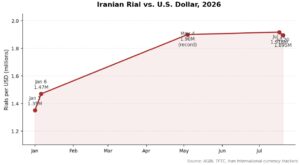
Even before the current war threats, Iran’s food economy was struggling under the weight of international sanctions and mismanagement.  The conflict will further reduce Iranian families’ ability to afford food.  In fact, the protests that broke out in December 2025 were in part over increased food prices after the rial plunged against the U.S. dollar.   There has been criticism by Iranians that their government has failed to present a clear emergency response plan, leaving citizens to fend for themselves. 

Iran produces much of its own wheat, dates, barley, rice, pistachios, walnuts, citrus fruits, and saffron.  It imports rice, cooking oils, soybeans, sugar, tea, and dairy.  The fighting will disrupt Iran’s ability to import food commodities, tightening supply.  Agricultural supply chains, transportation networks, storage facilities, and water infrastructure are all vulnerable.  Damaged roads and ports will impede food distribution across the country.

Urban bombardment now underway in Tehran and other major cities will displace families.  Reuters today reports that Iranians have fled cities in search of safety, rushed to stock up on food, and formed long queues at fuel stations as attacks by the United States and Israel spread fear and panic throughout the country.  Iranian government messages have explicitly encouraged people to leave Tehran and other targeted cities to avoid attacks.  This kind of internal displacement typically leads to overcrowded towns, strain on services, and informal settlements on the periphery of safer cities.

Internally displaced populations lose access to stable food sources, income, and caregiving routines.  Young children are disproportionately harmed by the disruption of feeding practices and by unhygienic displacement conditions that compound malnutrition with infectious disease.

Iran is known as a country that takes care of refugees.  Estimates vary, but UNHCR and other agencies report roughly some 3.8 million refugees and people in refugee-like situations in Iran as of 2025, overwhelmingly from Afghanistan and a smaller number from Iraq and other countries.

Iran has been prone to disasters due to large earthquakes and famines.  As well, in February 1972, a week-long series of storms  brought up to 26 feet (8 meters) of snow in rural areas of western Iran which buried over 200 villages, killing thousands.

Iran also suffered severe famines in 1870-72 and during the First and Second World Wars.  The most recent UN Food and Agriculture Organization report about Iran (November 2025) notes that persistent dry weather has hampered winter wheat plantings, leading to an estimated cereal production nearly 10% below the five-year average in 2025.  It found that wheat prices in Tehran had risen 50% and rice prices had tripled, compared to the previous year.

Iran has a fairly extensive domestic social protection system by regional standards, though it has faced significant strains in recent years.  The Imam Khomeini Relief Committee (IKRC) is one of the largest non-governmental charitable organizations in the world by some measures. It operates under government supervision and provides cash transfers, food assistance, healthcare subsidies, and vocational training to millions of low-income Iranians. It draws on religious endowments (waqf) and public donations alongside state funding.   The State Welfare Organization (SWO) handles a broader range of social services including disability support, elderly care, and assistance for vulnerable families.

International aid agencies help Iran in disasters, including the Red Cross.  The national Red Crescent society of Iran, part of the global IFRC network, has deep roots in domestic disaster relief, rescue, and healthcare operations.  The International Committee of the Red Cross (ICRC) has been working in Iran since the late 1970s.  The ICRC provides humanitarian services related to conflict-affected populations, health, and protection.

Médecins Sans Frontières (also known as Doctors without Borders) has been operating health programs in Iran.  Many other international NGOs have been hesitant to work in Iran, where the government distrusts Western organizations.  An exception has been Relief International (RI), which was founded in 1990 following the catastrophic Manjil–Rudbar earthquake in northern Iran.

The convergence of active conflict, pre-existing economic strain, and disrupted supply chains creates a compounding crisis for Iran’s most vulnerable — particularly children under five.  International humanitarian organizations face their own obstacles operating in Iran, given longstanding government suspicion of Western NGOs. The children most at risk — those in strike zones like Tehran and Isfahan, and those in already-malnourished border provinces like Sistan-Baluchestan — are precisely the populations least able to weather further disruption to food access, clean water, and caregiving. Without rapid and coordinated humanitarian response, the malnutrition crisis that predates this conflict will deepen sharply, with consequences that will outlast the fighting itself.