
Lipid-Based Nutrient Supplement(s) to Fight Malnutrition

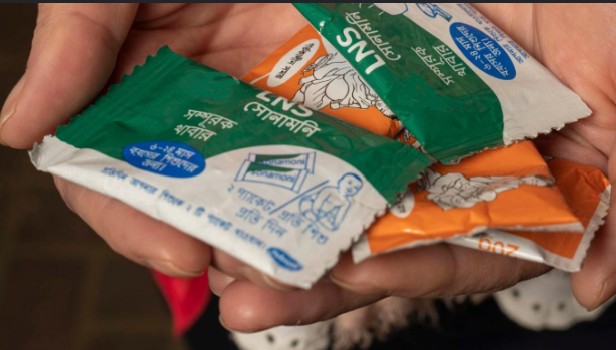
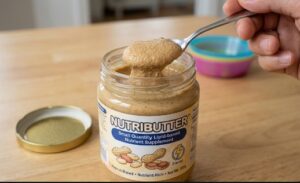
August 17, 2026      Aid agencies are scaling up the distribution of Small-Quantity Lipid-Based Nutrient Supplements (SQ-LNS, or LNS) to help reduce malnutrition in vulnerable families worldwide.  Delivered in compact, 20-gram pouches roughly the size of a ketchup packet, this peanut butter-flavored paste is designed for home fortification, helping to fill vital micronutrient and essential fatty acid gaps in young children’s diets. By providing a concentrated dose of essential nutrients that can be eaten directly from the packet, SQ-LNS has become a highly effective tool for preventing stunting, severe wasting, anemia, and child mortality. However, as a supplement and not a caloric substitute, its success depends on integration within broader social protection, cash assistance, and healthcare platforms.

SQ-LNS consists of a nutrient-dense paste containing a blend of vegetable oils (rich in omega-3 and omega-6 fatty acids), legumes (typically peanut, chickpea, lentil, or soy), milk powder, and a small amount of sugar for palatability. Each 20-gram sachet is fortified with 23 essential vitamins and minerals, providing approximately 110 to 124 kilocalories of energy, 2.4 to 3.2 grams of protein, and 8 to 10.6 grams of lipids per day. The supplement is formulated to satisfy the daily recommended nutrient intake (RNI) of key micronutrients without risk of excess intake.

A key operational benefit of SQ-LNS is its practicality in challenging environments. The paste is ready-to-use: it requires no cooking, no dilution with clean water, and no utensils. Children can consume it straight from the sachet, or caregivers can mix it directly with locally prepared complementary foods. This ease of use is critical in displacement camps and fragile settings where families often lack access to safe cooking facilities, clean fuel, or potable water.

Operational Insight: SQ-LNS is designed strictly as a supplement, not a substitute. It is engineered to fill specific nutritional gaps in diets that are otherwise calorie-adequate. If a household is facing an absolute caloric shortage, distributing a 20-gram sachet to a child will not resolve the underlying starvation. It must be paired with general food distributions.

The critical difference between a supplement and a substitute was demonstrated in a study of refugee camps in Kenya and Djibouti. In camps where families received adequate baseline food rations, adding SQ-LNS to children’s diets successfully cut cases of anemia by 12 to nearly 30 percentage points. Conversely, in a refugee camp in eastern Chad, when general household food rations were cut in half and SQ-LNS was distributed to children to compensate, child growth outcomes actually worsened. This provides stark evidence that SQ-LNS cannot paper over a raw calorie deficit. It is a specialist, micronutrient-fortification tool, not a cure-all, and it works best when integrated into a larger response that includes adequate general rations, cash transfers, and primary healthcare services.

Institutional Supply Chain and Distribution

The global supply chain and procurement model for SQ-LNS is highly consolidated, presenting unique operational advantages and vulnerabilities. The primary institutional buyers are UNICEF and the World Food Programme (WFP), which purchase the product in bulk directly from manufacturers. These organizations then work on the ground with national governments, local non-governmental organizations (NGOs), and community health networks to manage delivery. Rather than managing SQ-LNS as an independent, vertical campaign, distribution is strategically folded into existing touchpoints. It is commonly integrated into growth monitoring sessions, routine healthcare consultations, vaccination clinics, or general food and cash distribution programs already visited by vulnerable families.

Global Supply Vulnerabilities and the Turn to Local Production

Historically, the global supply of Ready-to-Use Foods (RUF), including SQ-LNS and therapeutic pastes, has been concentrated among a small group of offshore manufacturers. Nutriset (the French creator of Plumpy’Nut) and its patented PlumpyField network—which licenses formulations to specialized local producers and includes major non-profit manufacturers like Edesia in the United States—produce the bulk of the world’s supply. While global offshore capacity is substantial, global supply chain shocks and sudden surges in emergency demand have historically caused localized product shortages.

This vulnerability has driven a significant policy shift toward local and regional production. Manufacturing similar lipid-based pastes in programme countries, such as Malawi, Kenya, India, and Bangladesh, offers multiple strategic benefits, including increased supply chain resilience, reduced shipping lead times, economic support for local farmers, and the ability to customize flavors (such as chocolate or vanilla) to better fit regional dietary habits. In Bangladesh, for example, Frontier Nutrition manufactures LNS locally, utilizing regional ingredients while remaining cost-competitive with major offshore manufacturers. Nonetheless, local manufacturers face significant obstacles, including high import duties on specialized ingredients (such as milk powder), fluctuating local currency rates, high costs of borrowing capital, and a lack of certified local testing laboratories to verify strict quality and aflatoxin standards, which often forces them to send samples overseas.

Price Trends, Budgetary Impact, and Cost-Effectiveness

In recent years, the cost to make SQ-LNS has risen, driven by rising raw ingredient costs (including peanuts, sugar, and milk powder) and global logistics inflation. In early 2023, a standard carton of 600 sachets was listed in the UNICEF Supply Catalogue at approximately $45.70.  By early 2025, the average price rose to approximately $60.00 per carton.  This represents a unit price increase from roughly 7.6 cents per sachet to exactly 10.0 cents (a dime) per sachet.

For a single child, a standard course of supplementation consists of one 20-gram sachet daily for a full year (365 days). Under early 2025 pricing, this pushes the direct commodity cost per child to approximately $36.50 to $37.00. While this is an increase, SQ-LNS remains one of the most cost-effective interventions in the humanitarian sector. On a volumetric scale, one metric ton of SQ-LNS contains 50,000 sachets, enough to supplement more than 1,600 children for an entire month.
Economic evaluations demonstrate that the return on investment for SQ-LNS is exceptional. A global benefit-cost analysis concluded that every dollar invested in SQ-LNS targeted at highly vulnerable children returns nearly $14 in long-term health and economic benefits. Furthermore, a rigorous cost-effectiveness modeling study in Uganda found that SQ-LNS was more than ten times more cost-effective at preventing severe child undernutrition and mortality than distributing multiple micronutrient powders (MNPs).

Summary of Scientific and Clinical Effectiveness

The clinical evidence supporting SQ-LNS is robust, validated by large-scale systematic reviews and meta-analyses combining data from more than 14 randomized controlled trials (RCTs) involving over 37,000 children across low- and middle-income countries. The World Health Organization (WHO) integrated SQ-LNS into its 2023 guidelines on complementary feeding and child wasting based on this ‘high-certainty evidence.’ The clinical impacts of SQ-LNS on young children (aged 6 to 23 months) are extensive:

  • – Reduction in Stunting: SQ-LNS reduces the prevalence of stunting by 12% to 14% and severe stunting by 17%.
  • – Reduction in Severe Wasting: SQ-LNS reduces the prevalence of severe wasting by 31% to 33% (around one-third) in early childhood.
  • – Lowering Micronutrient Deficiencies: It significantly lowers child anemia by 16%, iron deficiency by 56%, and iron deficiency anemia by 64%.
  • – Improving Child Survival: SQ-LNS reduces all-cause child mortality by approximately 27% between the critical ages of 6 and 24 months.
  • – Supporting Cognitive Development: SQ-LNS supports healthy brain and motor development, showing developmental gains equivalent to one to five IQ points.

A recent clinical follow-up study in Ghana evaluated the long-term effects of providing SQ-LNS during the child’s first 1,000 days. Following up on children at 9 to 11 years of age, researchers found no significant differences in linear growth (height-for-age z-score) or cardiovascular risk markers (such as blood pressure or obesity rates) compared to control groups. While the direct physical growth advantages from early supplementation did not persist into pre-adolescence, the study confirmed that early LNS supplementation is safe, is well-tolerated, and carries no long-term risk of adverse metabolic effects, such as increased risk of high blood pressure, overweight, or childhood obesity.

Product Comparison: Lipid-Based Nutrient Supplements (RUF Types)

Ready-to-Use Foods (RUF) are standardized to ensure consistent targeting and to prevent unintentional breastmilk displacement or cost inefficiencies in program implementation.

RUF Type Net Weight Protein % Packaging Color Primary Purpose
SQ-LNS 20 grams 9% – 11% Green Prevention of child undernutrition, stunting, wasting, anemia, and mortality (6-23 months).
LNS-MQ 50 grams 11% – 16% Yellow Prevention of moderate acute malnutrition (MAM) and stunting in highly food-insecure contexts.
RUSF / LQ-LNS 100 grams 11% – 16% Orange Treatment of moderate acute malnutrition (MAM) in children.
RUTF (Therapeutic) 92 grams 13% – 16% Red Treatment of severe acute malnutrition (SAM) under medical supervision.
Policy and Programmatic Recommendations

To maximize the impact of SQ-LNS within international nutrition programs, policy makers and humanitarian agencies should prioritize the following programmatic actions:

  • – Avoid Stand-Alone Distribution: SQ-LNS should never be distributed as a standalone product. It must always be integrated with robust counseling promoting optimal breastfeeding, age-appropriate complementary feeding, and dietary diversity.
  • – Secure Household Food Access: SQ-LNS cannot replace a balanced diet or general household food rations. Programs must ensure that general food distributions or cash transfer schemes are secured alongside child supplementation in food-insecure contexts.
  • – Support Local Production: Governments and international donors should work together to build local production capacity. Key measures include waiving import duties and VAT on imported inputs (such as specialized vitamins and dairy proteins), providing low-interest lending, and investing in local, certified laboratory-testing facilities to shorten cash-conversion cycles.
  • – Optimize Resource Allocation (SQ-LNS over MQ-LNS): Recent clinical meta-analyses demonstrate that Medium-Quantity supplements (MQ-LNS, 50g) offer no superior preventive benefits over Small-Quantity supplements (SQ-LNS, 20g), primarily because children are unable to consume the larger 250+ kcal ration on top of normal breastmilk and local foods. Given that MQ-LNS is more expensive per daily dose, agencies should prioritize SQ-LNS for preventitive campaigns to optimize budgets and reach more children.

Further reading:

Cover photo source:  UC Davis

–  Contributors: Steven Hansch and Eleonora Arca 
Specialty Foods for Malnourished Children (Plumpy’Nut and RUTF)

August 2, 2026        Highly-enriched foods tailored to the biological needs of severely malnourished children are a major form of international aid.  At the 2025 roundtable about America’s  comparative advantages for solving hunger, food insecurity and nutrition overseas, organized by World Hunger Education Service with other sponsors,  participants agreed that America should keep providing quantities of “Ready to Use Therapeutic Foods” (RUTFs) as a magic bullet for fighting hunger.

Indeed, aid agencies, foundations and the U.S. Government have provided more and more of this peanut-based, fortified paste around the world in programs of “targeted feeding” that enroll children suffering from wasting (“acute”) malnutrition, which is life-threatening.   Wasting malnutrition is one of the top three main causes of deaths in famines, refugee flight, and complex emergencies.

HISTORICAL BACKGROUND:    Over the last half century, NGOs, governments, and INCAP in Central America have experimented with novel new approaches toward developing foods that best save the lives of severely malnourished children and ensure their recovery.  For most of that time period, the standard food for supplementary feeding for undernourished children has been porridge, frequently corn or wheat-based porridge, supplemented with vegetable oil and sugar. The USG. report, Beyond Child Survival, cataloged other earlier initiatives such as Fafa in Ethiopia and Likuni Phala in Malawi, which were effective at treating malnourished children.

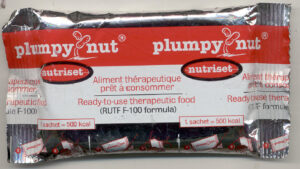
A major step forward came in 1996, when Michel Lescanne of Nutriset and French pediatric nutritionist André Briend came up with a new formulation called “Plumpy’Nut” that closely matched the WHO-recommended formula, “F-100” for inpatient (hospital) treatment of malnourished children.  For children with shrunken stomachs and limited appetite, it optimized the child’s chance to survive and recover from malnutrition.

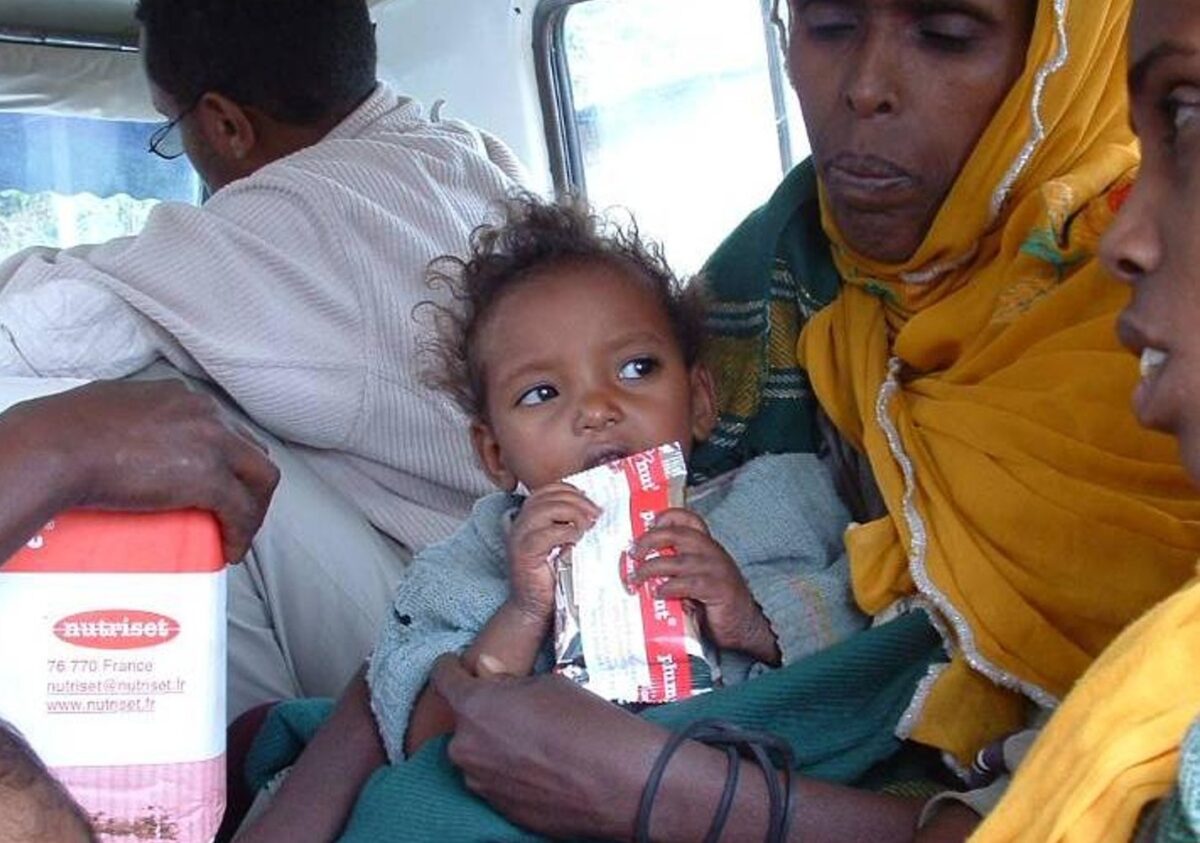
Plumpy’Nut, produced in France by Lescanne’s production organization, Nutriset, was designed to have a long shelf life, to be appetizing for even malnourished children with reduced appetite, to taste good, and to have the right balance of fats, vitamins and minerals that a malnourished child should have.  The idea was to create a food that could be handed to a family once a month, with sachets that a small child could open and eat each day.

Plumpy’Nut became the first in a line of products collectively referred to as “ready-to-use therapeutic foods”, which share similar nutrient compositions and are now used at large scale by groups like UNICEF, MSF, Concern, Action Against Hunger, and Save the Children.

In the last two and a half decades these RUTFs have become a core part of a new model for reaching children with malnutrition, known today as “Community Management of Acute Malnutrition,” or “CMAM.”  This model does not require family members to take time to bring young, malnourished children to a central feeding center, which had been the previous main model.  Children are still observed, measured and given medical attention, but monthly, not daily, and via an outpatient, or mobile community model.

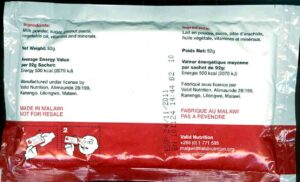
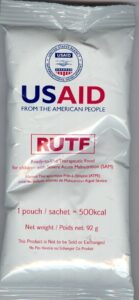
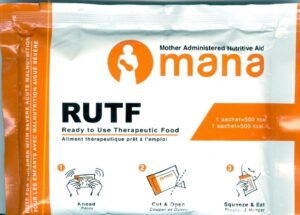
NGOs give families supplies of these 92-gram sachets at a community clinic, mobile van or displacement site. The child eats the paste directly, without cooking, clean water, refrigeration, or admission to a hospital.  A standard sachet supplies approximately 500 kilocalories and comprises:  Peanut paste, Skimmed-milk powder or other dairy ingredients, Vegetable oil, Sugar, and vitamins and minerals from a commercial premix powder.

CONSCIOUSNESS

There’s something about RUTF and Plumpy’Nut that resonates with people and encourages them to donate.  Plumpy’Nut has proven to be popular among the public, media and donors.  World Vision uses Plumpy’Nut to focus attention and drive private fundraising.  A CBS 60 Minutes episode about the use of Plumpy’Nut in Niger, West Africa was reportedly the most popular episode in the decades-long history of that television show.

SCALE AND COVERAGE

While UNICEF promotes supplies of RUTF across lower-and middle-income countries (LMICs), it is too expensive for poor households to purchase and does not reach most of the children who need it.  Most RUTF has been used in emergencies, where international NGOs tend to be more present, and where malnutrition is often more concentrated.  Despite the increased scaling of RUTF, in most years 80% of malnourished children don’t get any.

In the last few years, governments have been increasingly supportive of RUTF, increasing donations to UNICEF and NGOs to several hundred million dollars worth.  The Eleanor Crook Foundation has sought to engage private foundations and companies to donate.  RUTF is on the approved commodity list of foods that NGOs can request from Food for Peace at USDA.

PRODUCTION

In the early 2000s, there was essentially one qualified international source of RUTF, i.e. Nutriset in France.  Nutriset and donors have encouraged other factories to start up.

By 2025, UNICEF reported more than 20 suppliers across Africa, Asia, Europe, and the Americas. Roughly half of UNICEF-procured RUTF is estimated to be from suppliers in low- and lower-middle-income countries such as Ethiopia Burkina Faso, Kenya, Madagascar, Niger, India, Haiti, Sudan.

In the United States, there are three certified producers: Edesia in Rhode Island, recently profiled by Hunger Notes; MANA Nutrition, based in Georgia, and  Tabatchnick, in New Jersey.  Between 2022-2024, Edesia shipped over 6 million cases (or 900 million sachets) of RUTF, while MANA shipped 300 million packets.

COSTS

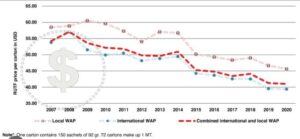
Costs of producing RUTF had been steadily declining from the 2000s to 2020, as seen in the graph at right.  However, the cost of food ingredients, such as dairy milk, has increased in recent years, forcing up the cost of producing RUTF.

Production in LMICs has been limited by the high costs of quality control, ensuring none of the food is contaminated, and the import costs of key ingredients.  The costs of production locally often tend to exceed the costs of importing from France, the U.S., Norway, India, or South Africa.

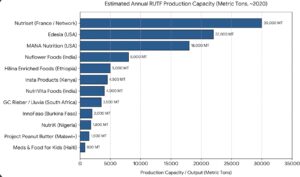
UNICEF is the world’s largest buyer of RUTF, at around 49,000 metric tons each year, deploying cartons to some 3.5 million children.  A graph of estimated annual production of RUTF appears at right.

ALTERNATIVES

As noted in the recent Hunger Notes article about Tufts University’s Food Aid Quality Review, controlled studies of field effectiveness and efficiency suggest that more children could be reached, and lives saved, with other formulations and foods, taking into account the cost.  For example, Tufts noted that Corn Soy Blend Plus was more efficient in the recovery of wasted children.

NGOs are partnering with researchers in finding new solutions.  Edesia Nutrition is working with Action Against Hunger in  “Novel RUTF” development, such as alternative protein sources (e.g., plant-based soy/maize to replace or reduce expensive milk powder) for lower cost, local producibility, climate resilience, and acceptability while meeting nutritional specifications.  They are pursuing microbiome-directed enhancements (e.g., via partnerships with OpenBiome, a U.S. nonprofit microbiome research organization) to incorporate beneficial microbial communities or prebiotics into RUTF-like products.

Ongoing field research is testing the scalability, bio-utilization, and overall benefits of RUTF variants.  One experimental form is MDCF-2, a microbiota-directed food based on chickpeas, soy, and green banana, recently noted in the New England Journal of Medicine.  This MDCF-2 represents a new line of thinking, with fewer calories as it reframes “recovery” to include the microbiome, the plasma proteome, address environmental enteric dysfunction, and durability — not just weight-for-height.

The dairy ingredients in/of RUTF are expensive.  Alternatives that do not use milk replace it with crystalline amino-acid fortification, with alternative bases such as oats or fish.   A recent fish-based paste (NumTrey, Cambodia) matched weight gain among children, when compared with standard RUTF, but suffered intra-household sharing/acceptability problems (other children ate it).

Many locally-produced variants increase the density of the least-expensive inputs.  Mark Moore of MANA wrote, “Most of the newer, lower-cost formulas achieve savings by increasing the cheapest ingredients. Sugar and oil are incredibly cheap most everywhere.”  But, he continues, “If this were my child who was severely malnourished, would I rather have a product built primarily around sugar and oil because it is cheaper, or would I rather have the original formulation with 35-40% peanuts and other more nutrient-dense ingredients?”

The Mark Manary Lab has promoted a new formulation that adds pre-formed DHA (omega 3) needed for brain development.  Using more omega-3 fatty acids and less omega-6 fatty acids adds 6-15 IQ points to every child treated.  Trials in Malawi suggest it led to superior cognitive, brain outcomes 6 months post treatment, compared to standard RUTF.  An MFGM-enhanced variant adds milk fat globule membrane to support brain development.  Separately, a rice-bran-enriched RUTF (SEHAT) was tested in Indonesia and showed increased weight gain among children.

Other advances include the use of additional inputs, as child recovery may be limited due to bacterial infection and gut inflammation, not just nutrients.  An oral antibiotic has been seen to reduce the death rate of children from 7% to 3.5%  So, amoxicillin (antibiotic) provision improved recovery and cut mortality.  An azithromycin trial  in Niger hinted at mortality benefit in underweight children, tempered by antimicrobial-resistance concerns.

–  Contributed by WHES board member, Steven Hansch


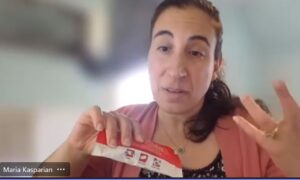
Interview: Edesia’s Maria Kasparian & Specialty Nutrition Foods

April 20, 2026      The WHES board met with and interviewed Maria Kasparian, expert about Plumpy’Nut which has become one of the most recognizable tools in the fight against severe acute malnutrition among young children around the world.  Plumpy’Nut is one brand of the broader food type called “Ready to Use Therapeutic Food”, or “RUTF.”  RUTFs have been a key topic in recent articles in Hunger Notes; nonprofits have used RUTFs in the Sudan, Gaza, Haiti, Afghanistan and in other countries in need.

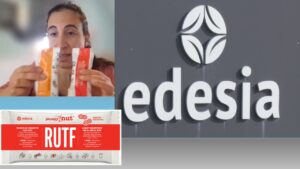
In the United States, one of the leading producers is Edesia, the Rhode Island–based nonprofit that manufactures Plumpy’Nut and related products for UNICEF,  the World Food Programme, and NGO partners, while also participating in a wider global network of therapeutic food producers.
Following are selections from WHES’ interview with Ms. Maria Kasparian, Edesia’s Executive Director in 2023, about Edesia and now head of Strategic Partnerships.  The interview highlights several of these trends: rising interest in alternative formulations using ingredients such as soy, corn, chickpea, or millet; debate over procurement rules; the slow pace of agency adoption; and growing recognition that the challenge is not only making therapeutic food, but also building efficient supply chains that can deliver it where children need it most.

WHES: Thank you so much for taking time out to talk with us today. What should our readers know about Edesia?

Kasparian:  One of Edesia’s mandates is to educate and advocate global nutrition. We have school field trips, work with senators, channel our programming through Scouting America, and we do advocacy work in DC.
We produce in the US, taking with PL 480 (Food Aid) funds. We are producing 1.2 million packets of Plumpy’Nut each day. Edesia has had a ticker of how many children that our products have reached since we started producing in March 2010 – and distributing through partners. Today we are at 19.9 M children reached with full treatments. Our goal is to reach a total of at least 10 M more children within 2023 and 2024.

We’re also part of the “PlumpyField network” of partners in ten partners, spanning Madagascar, India, and other countries. We work to help these producers in other countries, such as Ethiopia and Haiti. For instance, we support Meds and Foods for Kids in Haiti. There are now 22 producers worldwide of RUTF, and each uses slightly different formulations.

WHES: Do all the producers of Ready to Use foods follow the same formulae?

Kasparian: Across the 22 suppliers of foods, there are no two formulas that are identical. But as long as we meet the robust recommendation, we’re okay.
Even within the PlumpyField Network, there are tweaks. There are differences, depending on what’s available locally. For example, you have to achieve certain omega-3 to omega-6 balance with the fats. You need to do that. The vegetable oils are important. You can get different kinds of vegetable oils depending where you are. There might be some variety there. You might have different forms of milk powder available. You might have different forms of whey available that have different amounts of protein. You’ve got to balance the formulas, depending on what ingredients you have available. But they’re very similar. We’ve actually done taste tests where we meet and have everybody’s and we blindly try to guess whose is who. So, they’re a little different, but the difference is small. But the formulations do vary a little bit. There will be a greater degree of difference with those outside the network formulations are.

WHES: Thank you. So, how do donors specify what they want or accept new ideas for specialty foods to address malnutrition?

Kasparian: Well, the Interagency oversight group (UNICEF and WFP) have discussed for many years, having a common standard. It’s the long game. Over time, things do get accepted. Governments and the U.N. don’t move quickly. So generally, though, progress does happen. It just happens slowly. You keep pushing, and over time, things do improve. So you must continue innovating.
The Tufts Food Aid Quality Review study comparing the effectiveness of different foods looked at RUTF (compared Corn Soy Blend or CSB+ with fortified vegetable oil (CSB+ w/oil), Corn soy whey blend (CSWB) with fortified vegetable oil (CSWB w/oil), and Super Cereal Plus with amylase (SC+A)) for the treatment of moderate malnutrition.  The cost-effectiveness was similar between the products, and caregivers had a slightly lower of their own opportunity costs when using RUTF.  The main conclusion was that NGOs/programmers should pick the products that would be most appropriate for their contexts.

WHES: Is it only about the formula of the food composition?

Kasparian: The ecosystem is not only about making RUTF, but also about improving the supply chain. Customs fees for incoming fees mean that local production is not necessarily cheaper. You know, it’s cheaper to get our foods from here to South Sudan than it is from Khartoum to South Sudan. As well, we’re shipping a lot to Somalia right now.

WHES:  Has demand grown for your RUTF?

Kasparian: We have doubled the numbers of kids getting treatment. Most of it goes to Africa, over 70%. Our main goal is to reach more kids. The price of RUTF was going down significantly before the Covid-19 pandemic. As background, 70% is the cost of the ingredients. In 2005 a box of RUTF cost $55 but we brought that down to $35 a box in 2019.

WHES: How is it working with UNICEF and WFP?

Kasparian: One of the barriers we face is the way that Unicef and WFP work together. They work differently and in different places.

WHES: How do you relate to other producers in other countries?

Kasparian: We are a U.S.-based producer. We’re a non-profit U.S.-based producer, and that we care a lot about having a good balance of what’s coming from the U.S. and what is coming from local and regional procurers, and that balance is really important. And we do various things to support these
suppliers in other countries. We work particularly closely with Meds and Food for Kids in Haiti. We help them with their formulations. We just help them to get their codex, upgraded codex specification in order. We help them with procurement of raw materials. We help them troubleshoot from a maintenance engineering perspective.

WHES:   Edesia has a history going back to Tanzania, right?

Kasparian: Yes.  Before we set up a factory in the U.S., we established one in Tanzania, which, unfortunately, is no longer operational, but was, for about five years.  Thus, our experience kind of went that way. Our founder, Navyn Salem, has family roots in Tanzania.  Her father and three generations of the family are Indians who lived in Tanzania for a period of time. Ms. Salem’s father was born and raised in Tanzania before he came to the U.S. on a USAID scholarship for college.  This leads me to another interesting part of the story: USAID is really responsible for Edesia’s existence. Her father, and therefore she, would not be in the U.S. if not for USAID. The U.S. factory, Edesia, was an afterthought to Tanzania because, at the time, USAID’s Food for Peace, was looking to have RUTF and RUSF suppliers in the U.S. because they wanted to be able to use the Title II PL-480 funds for nutrition-specific commodities like RUTF, RUSF. Which, at the time, this is 2008, 2009, at the time, no one was making in the U.S. And there was a push to improve the food aid basket of what was coming out of the U.S. And to take more vulnerable groups into account and to add these nutrition-specific commodities. So, they kind of approached us and others to say, hey, can you do this in the U.S.?

WHES: Do you engage much with the public here in the U.S.?

Kasparian: Our factory doors are open. We have school field trips come through. We have senators and congresspeople whenever we can. We have Scouting America, Rotary Clubs, and the like. And then we also do advocacy work in D.C. around global nutrition.