



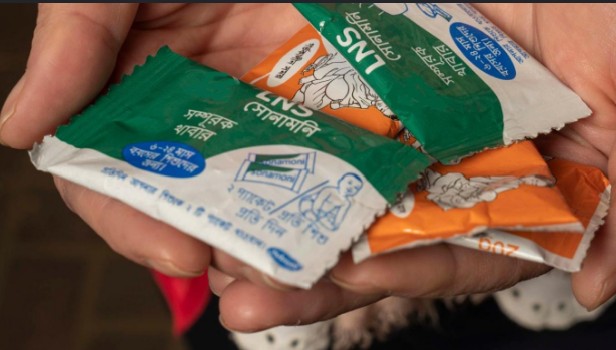
August 17, 2026 Aid agencies are scaling up the distribution of Small-Quantity Lipid-Based Nutrient Supplements (SQ-LNS, or LNS) to help reduce malnutrition in vulnerable families worldwide. Delivered in compact, 20-gram pouches roughly the size of a ketchup packet, this peanut butter-flavored paste is designed for home fortification, helping to fill vital micronutrient and essential fatty acid gaps in young children’s diets. By providing a concentrated dose of essential nutrients that can be eaten directly from the packet, SQ-LNS has become a highly effective tool for preventing stunting, severe wasting, anemia, and child mortality. However, as a supplement and not a caloric substitute, its success depends on integration within broader social protection, cash assistance, and healthcare platforms.
SQ-LNS consists of a nutrient-dense paste containing a blend of vegetable oils (rich in omega-3 and omega-6 fatty acids), legumes (typically peanut, chickpea, lentil, or soy), milk powder, and a small amount of sugar for palatability. Each 20-gram sachet is fortified with 23 essential vitamins and minerals, providing approximately 110 to 124 kilocalories of energy, 2.4 to 3.2 grams of protein, and 8 to 10.6 grams of lipids per day. The supplement is formulated to satisfy the daily recommended nutrient intake (RNI) of key micronutrients without risk of excess intake.
A key operational benefit of SQ-LNS is its practicality in challenging environments. The paste is ready-to-use: it requires no cooking, no dilution with clean water, and no utensils. Children can consume it straight from the sachet, or caregivers can mix it directly with locally prepared complementary foods. This ease of use is critical in displacement camps and fragile settings where families often lack access to safe cooking facilities, clean fuel, or potable water.
|
Operational Insight: SQ-LNS is designed strictly as a supplement, not a substitute. It is engineered to fill specific nutritional gaps in diets that are otherwise calorie-adequate. If a household is facing an absolute caloric shortage, distributing a 20-gram sachet to a child will not resolve the underlying starvation. It must be paired with general food distributions. |
The critical difference between a supplement and a substitute was demonstrated in a study of refugee camps in Kenya and Djibouti. In camps where families received adequate baseline food rations, adding SQ-LNS to children’s diets successfully cut cases of anemia by 12 to nearly 30 percentage points. Conversely, in a refugee camp in eastern Chad, when general household food rations were cut in half and SQ-LNS was distributed to children to compensate, child growth outcomes actually worsened. This provides stark evidence that SQ-LNS cannot paper over a raw calorie deficit. It is a specialist, micronutrient-fortification tool, not a cure-all, and it works best when integrated into a larger response that includes adequate general rations, cash transfers, and primary healthcare services.
Institutional Supply Chain and Distribution
The global supply chain and procurement model for SQ-LNS is highly consolidated, presenting unique operational advantages and vulnerabilities. The primary institutional buyers are UNICEF and the World Food Programme (WFP), which purchase the product in bulk directly from manufacturers. These organizations then work on the ground with national governments, local non-governmental organizations (NGOs), and community health networks to manage delivery. Rather than managing SQ-LNS as an independent, vertical campaign, distribution is strategically folded into existing touchpoints. It is commonly integrated into growth monitoring sessions, routine healthcare consultations, vaccination clinics, or general food and cash distribution programs already visited by vulnerable families.
Global Supply Vulnerabilities and the Turn to Local Production
Historically, the global supply of Ready-to-Use Foods (RUF), including SQ-LNS and therapeutic pastes, has been concentrated among a small group of offshore manufacturers. Nutriset (the French creator of Plumpy’Nut) and its patented PlumpyField network—which licenses formulations to specialized local producers and includes major non-profit manufacturers like Edesia in the United States—produce the bulk of the world’s supply. While global offshore capacity is substantial, global supply chain shocks and sudden surges in emergency demand have historically caused localized product shortages.
This vulnerability has driven a significant policy shift toward local and regional production. Manufacturing similar lipid-based pastes in programme countries, such as Malawi, Kenya, India, and Bangladesh, offers multiple strategic benefits, including increased supply chain resilience, reduced shipping lead times, economic support for local farmers, and the ability to customize flavors (such as chocolate or vanilla) to better fit regional dietary habits. In Bangladesh, for example, Frontier Nutrition manufactures LNS locally, utilizing regional ingredients while remaining cost-competitive with major offshore manufacturers. Nonetheless, local manufacturers face significant obstacles, including high import duties on specialized ingredients (such as milk powder), fluctuating local currency rates, high costs of borrowing capital, and a lack of certified local testing laboratories to verify strict quality and aflatoxin standards, which often forces them to send samples overseas.
Price Trends, Budgetary Impact, and Cost-Effectiveness
In recent years, the cost to make SQ-LNS has risen, driven by rising raw ingredient costs (including peanuts, sugar, and milk powder) and global logistics inflation. In early 2023, a standard carton of 600 sachets was listed in the UNICEF Supply Catalogue at approximately $45.70. By early 2025, the average price rose to approximately $60.00 per carton. This represents a unit price increase from roughly 7.6 cents per sachet to exactly 10.0 cents (a dime) per sachet.
For a single child, a standard course of supplementation consists of one 20-gram sachet daily for a full year (365 days). Under early 2025 pricing, this pushes the direct commodity cost per child to approximately $36.50 to $37.00. While this is an increase, SQ-LNS remains one of the most cost-effective interventions in the humanitarian sector. On a volumetric scale, one metric ton of SQ-LNS contains 50,000 sachets, 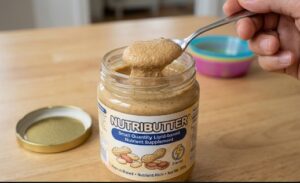 enough to supplement more than 1,600 children for an entire month.
Economic evaluations demonstrate that the return on investment for SQ-LNS is exceptional. A global benefit-cost analysis concluded that every dollar invested in SQ-LNS targeted at highly vulnerable children returns nearly $14 in long-term health and economic benefits. Furthermore, a rigorous cost-effectiveness modeling study in Uganda found that SQ-LNS was more than ten times more cost-effective at preventing severe child undernutrition and mortality than distributing multiple micronutrient powders (MNPs).
Summary of Scientific and Clinical Effectiveness
The clinical evidence supporting SQ-LNS is robust, validated by large-scale systematic reviews and meta-analyses combining data from more than 14 randomized controlled trials (RCTs) involving over 37,000 children across low- and middle-income countries. The World Health Organization (WHO) integrated SQ-LNS into its 2023 guidelines on complementary feeding and child wasting based on this ‘high-certainty evidence.’ The clinical impacts of SQ-LNS on young children (aged 6 to 23 months) are extensive:
- – Reduction in Stunting: SQ-LNS reduces the prevalence of stunting by 12% to 14% and severe stunting by 17%.
- – Reduction in Severe Wasting: SQ-LNS reduces the prevalence of severe wasting by 31% to 33% (around one-third) in early childhood.
- – Lowering Micronutrient Deficiencies: It significantly lowers child anemia by 16%, iron deficiency by 56%, and iron deficiency anemia by 64%.
- – Improving Child Survival: SQ-LNS reduces all-cause child mortality by approximately 27% between the critical ages of 6 and 24 months.
- – Supporting Cognitive Development: SQ-LNS supports healthy brain and motor development, showing developmental gains equivalent to one to five IQ points.
A recent clinical follow-up study in Ghana evaluated the long-term effects of providing SQ-LNS during the child’s first 1,000 days. Following up on children at 9 to 11 years of age, researchers found no significant differences in linear growth (height-for-age z-score) or cardiovascular risk markers (such as blood pressure or obesity rates) compared to control groups. While the direct physical growth advantages from early supplementation did not persist into pre-adolescence, the study confirmed that early LNS supplementation is safe, is well-tolerated, and carries no long-term risk of adverse metabolic effects, such as increased risk of high blood pressure, overweight, or childhood obesity.
Product Comparison: Lipid-Based Nutrient Supplements (RUF Types)
Ready-to-Use Foods (RUF) are standardized to ensure consistent targeting and to prevent unintentional breastmilk displacement or cost inefficiencies in program implementation.
| RUF Type | Net Weight | Protein % | Packaging Color | Primary Purpose |
| SQ-LNS | 20 grams | 9% – 11% | Green | Prevention of child undernutrition, stunting, wasting, anemia, and mortality (6-23 months). |
| LNS-MQ | 50 grams | 11% – 16% | Yellow | Prevention of moderate acute malnutrition (MAM) and stunting in highly food-insecure contexts. |
| RUSF / LQ-LNS | 100 grams | 11% – 16% | Orange | Treatment of moderate acute malnutrition (MAM) in children. |
| RUTF (Therapeutic) | 92 grams | 13% – 16% | Red | Treatment of severe acute malnutrition (SAM) under medical supervision. |
Policy and Programmatic Recommendations
To maximize the impact of SQ-LNS within international nutrition programs, policy makers and humanitarian agencies should prioritize the following programmatic actions:
- – Avoid Stand-Alone Distribution: SQ-LNS should never be distributed as a standalone product. It must always be integrated with robust counseling promoting optimal breastfeeding, age-appropriate complementary feeding, and dietary diversity.
- – Secure Household Food Access: SQ-LNS cannot replace a balanced diet or general household food rations. Programs must ensure that general food distributions or cash transfer schemes are secured alongside child supplementation in food-insecure contexts.
- – Support Local Production: Governments and international donors should work together to build local production capacity. Key measures include waiving import duties and VAT on imported inputs (such as specialized vitamins and dairy proteins), providing low-interest lending, and investing in local, certified laboratory-testing facilities to shorten cash-conversion cycles.
- – Optimize Resource Allocation (SQ-LNS over MQ-LNS): Recent clinical meta-analyses demonstrate that Medium-Quantity supplements (MQ-LNS, 50g) offer no superior preventive benefits over Small-Quantity supplements (SQ-LNS, 20g), primarily because children are unable to consume the larger 250+ kcal ration on top of normal breastmilk and local foods. Given that MQ-LNS is more expensive per daily dose, agencies should prioritize SQ-LNS for preventitive campaigns to optimize budgets and reach more children.
Further reading:
-
- https://www.unicef.org/supply/documents/lipid-based-nutritional-lns-supplement-and-rutf-industry-consultation
- Chaparro: Use of lipid-based nutrient supplements (LNS) to improve the nutrient adequacy of general food distribution rations for vulnerable sub-groups in emergency settings
- Aguayo, V. M., Baker, S. K., Dewey, K. G., Galasso, E., Perry, A., Sifri, Z., Aburmishan, D., de Pee, S., Guerrero Oteyza, S. I., Moloney, G., Prado, E. L., Rawat, R., Shaker-Berbari, L., Shekar, M., Stewart, C. P., Tumilowicz, A., & Wessells, K. R. (2023). Benefits of small-quantity lipid-based nutrient supplements for child nutrition and survival warrant moving to scale. Nature Food.
- Noori, N., Stewart, C. P., McDonald, C. M., Wessells, K. R., Root, E. D., & Dewey, K. G. (2025). Identifying Priority Countries for Scaling Up Small-Quantity Lipid-Based Nutrient Supplements.
- Sustained growth after LNS in Ghana
- UC-Davis Guidance
- K Dewey in the American Journal of Clinical Nutrition, Lipid-based nutrient supplements for prevention of child undernutrition: when less may be more
Cover photo source: UC Davis
– Contributors: Steven Hansch and Eleonora Arca