Most of Yemen is Now Hungry

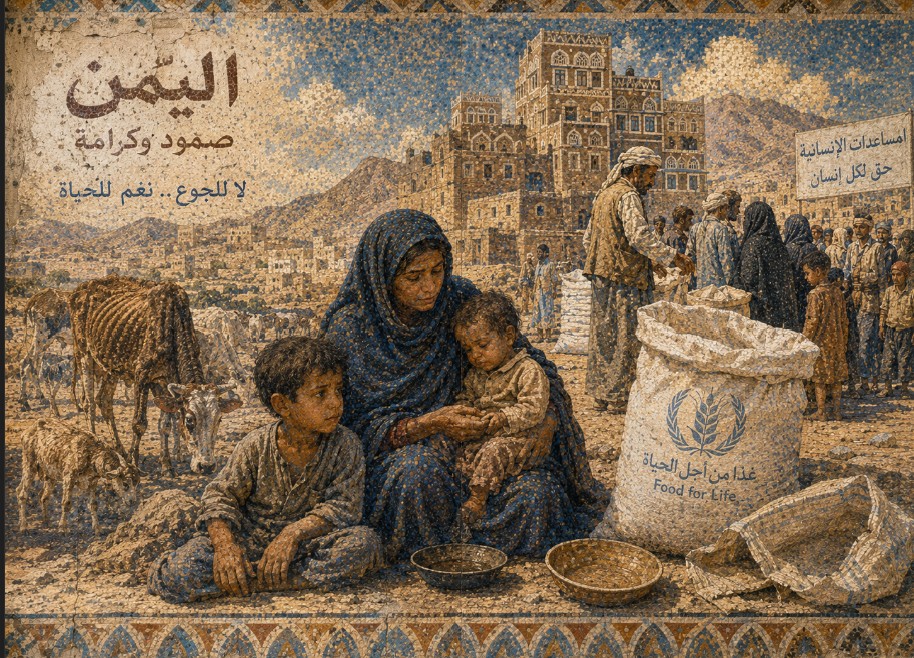
June 17, 2026   Yesterday, the UN was advised that the extent of food insecurity in Yemen had ratcheted up further:  “The hunger crisis in Yemen is worsening sharply, with the share of people unable to meet basic food needs rising from about half to nearly 60 percent within a month,” UN Under-Secretary-General for Humanitarian Affairs and Emergency Relief Coordinator Tom Fletcher warned on Tuesday, calling for urgent funding to prevent further starvation.  “The number of Yemenis facing the most severe levels of deprivation has increased from one in four to nearly one in three. More than 18 million people, …are now experiencing acute hunger, ” Fletcher told the UN Security Council during a June 16 briefing.

Over 2.2 million children under five are acutely malnourished, including more than half a million in the severe, life-threatening form. Nearly half of all children under five suffer chronic malnutrition (stunting), locking in lifelong disadvantages for a generation. In hard-hit areas, half of households with young children report at least one malnourished child, while one in four has a malnourished pregnant or lactating woman.
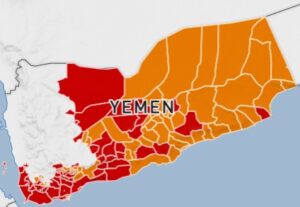
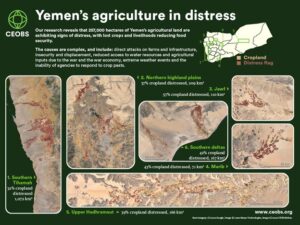
The Integrated Food Security Phase Classification System (IPC) of famine predicts and projects a growing number of regions moving into Phase 4 — Emergency, shown in red in the map at right — for the period September to December 2026.  The Orange Zones are very food insecure and Red are emergency.

The 2026 Yemen Humanitarian Needs and Response Plan of the U.N. requested $2.16 billion for aid in order to reach 12 million of the 22.3 million people in need of assistance.  Yet, donor fatigue and competing global crises threaten another shortfall. Recent floods have destroyed displacement camps and livelihoods, while economic pressures and regional shipping tensions continue to inflate food and fuel prices. In government-controlled areas alone, nearly half the population now are now suffering crisis-level acute food insecurity, with emergency levels expected to climb through the lean season.The country’s arid climate, limited arable land, and chronic water scarcity have always constrained domestic production. Yemen has long depended on imports for over 90 percent of its food, especially wheat, of which it imports around 96 percent, leaving it acutely vulnerable to global price spikes, shipping disruptions, currency collapse, and fuel shortages that drive up transport costs.  War has only deepened this dependency.

The current civil war, fueled by Iranian support to Houthi rebels, has made humanitarian aid more difficult.  NGOs that had been building long-term food resilience for years had to shift to more short-term life-saving aid.  Damaged irrigation, lost livestock, displacement of farmers, and soaring input costs have left cereal production well below average. Even when commercial imports through Red Sea ports remain adequate in volume, economic collapse and rial devaluation put basic staples beyond reach for millions.

The chart at right comes from the CEOBS Report: Yemen’s agriculture in distressceobs.org

What is new and especially alarming in 2026 is the sharp contraction of the humanitarian response itself. In January, the World Food Programme announced it was terminating operations and contracts for its 365 staff in Houthi-controlled northern Yemen, home to roughly 70 percent of the country’s humanitarian needs—after repeated obstructions, arbitrary detentions of aid workers, and an increasingly impossible operating environment. This followed earlier suspensions and adds to chronic underfunding.  The 2025 appeal was only 29 percent funded, forcing agencies to scale back nutrition, health, and food programs nationwide.

Yemen’s food insecurity has deep roots, but the convergence of aid cutbacks, operational halts in the areas of greatest need, economic freefall, and climate shocks risks erasing fragile gains in nutrition and pushing more families beyond their breaking point.

Aid agencies helping to address malnutrition in Yemen include:  the International Committee of the Red Cross, Action Against Hunger, Save the Children, the International Rescue Committee, Médecins Sans Frontières, CARE, Norwegian Refugee Council, Danish Refugee Council, Oxfam, Islamic Relief, Medair and the Adventist Development and Relief Agency.  Relief International is working with WFP in food aid in the south of Yemen.  UNICEF coordinates much of the nutrition programming for children and mothers, and the U.N. Nutrition Cluster (led by UNICEF), which reports for 44 operational nutrition partners in Yemen.

Further information, see:  https://www.nutritioncluster.net/country/yemen

and https://fscluster.org/yemen
 

Malnutrition & Death Risks Rise in Bangladesh

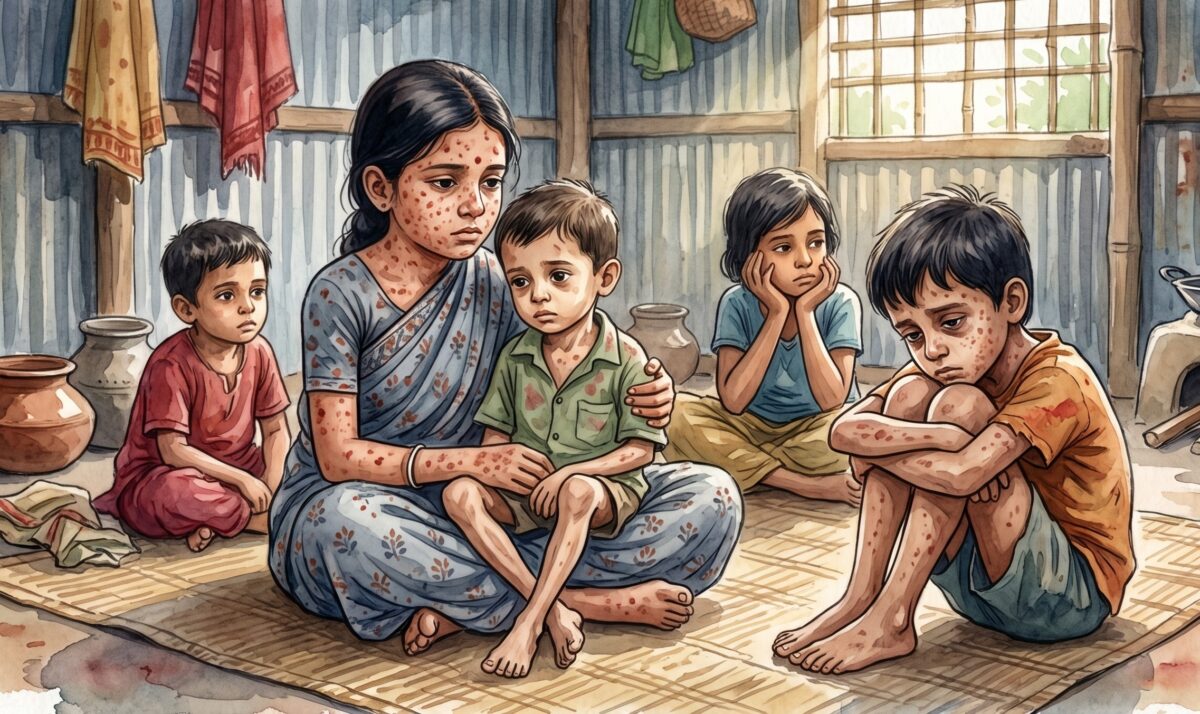
May 11, 2026           Bangladesh’s leading newspaper, Prothom Alo, reported this week about a concerning decline in child health following decades of improvement, specifically regarding nutrition and measles. Health professionals have long recognized the insidious risks for children who are both malnourished and infected with measles; specifically, measles infection is significantly more fatal in children suffering from malnutrition.

According to reports from Prothom Alo, published from Dhaka, Bangladesh has recorded 19,161 suspected measles cases and 2,973 laboratory-confirmed cases across 58 of its 64 districts, resulting in 166 suspected deaths. Three-quarters of these cases involved children under five years of age. Furthermore, two-thirds of the infected children had received no measles vaccine at all—a major failure in public health coverage.  see:  https://en.prothomalo.com/bangladesh/pr0qimrtyr

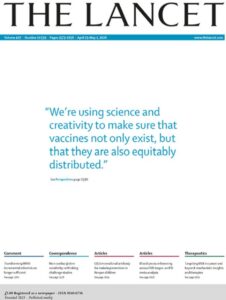
Health experts warn that fatalities will likely continue to climb for several more weeks. The Lancet corroborates this trend, noting that the Infectious Diseases Hospital in Dhaka admitted 560 suspected measles cases in the first three months of 2026, compared to just 69 cases in all of 2025.  (The Lancet)

In this reporting, Prothom Alo correctly identifies malnutrition, Vitamin A deficiency, declining breastfeeding rates, and missed deworming as compounding or co-risk factors of disease and death, as supported by medical literature. While Bangladesh’s child health had improved over many decades, and achieved over 92% first-dose measles vaccine coverage by the mid-2010s, the program has become weak, irregular, and delayed in recent years. For instance, the measles vaccination drive scheduled for June 2024 was delayed by the deadly public protests that toppled then-Prime Minister Sheikh Hasina.

In the long run, chronic malnutrition—measured by stunting (low height-for-age)—has improved, falling from roughly 50% in 2000 to around 24% by 2022, representing a major achievement. Wasting (low weight-for-height) similarly declined from 17% to roughly 9.8% by 2019.

However, recent data show a concerning reversal. The Bangladesh Multiple Indicator Cluster Survey (MICS) 2025 found that wasting among children under five has climbed to 12.5%, up from 9.8%, indicating a steep rise in acute malnutrition. Nutritional health is heavily dependent on surveillance, growth monitoring, and optimal feeding practices, such as exclusive breastfeeding for infants up to six months of age.  Worryingly, exclusive breastfeeding, a critical health practice, has declined by 12% in recent years.

Note:  since this article was published, the Government of Bangladesh has announced a new nation-wide drive to immunize against measles.

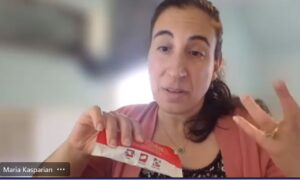
Interview with Edesia’s Maria Kasparian about Anti-Hunger Foods

April 20, 2026      Plumpy’Nut has become one of the most recognizable tools in the fight against severe acute malnutrition among young children around the world.  Plumpy’Nut is one brand of the broader food type called “Ready to Use Therapeutic Food”, or “RUTF.”  RUTFs have been a key topic in recent articles in Hunger Notes; nonprofits have used RUTFs in the Sudan, Gaza, Haiti, Afghanistan and in other countries in need.

In the United States, one of the leading producers is Edesia, the Rhode Island–based nonprofit that manufactures Plumpy’Nut and related products for UNICEF,  the World Food Programme, and NGO partners, while also participating in a wider global network of therapeutic food producers.
Following are selections from WHES’ interview with Ms. Maria Kasparian, Edesia’s Executive Director in 2023, about Edesia and now head of Strategic Partnerships.  The interview highlights several of these trends: rising interest in alternative formulations using ingredients such as soy, corn, chickpea, or millet; debate over procurement rules; the slow pace of agency adoption; and growing recognition that the challenge is not only making therapeutic food, but also building efficient supply chains that can deliver it where children need it most.

WHES: Thank you so much for taking time out to talk with us today. What should our readers know about Edesia?

Kasparian:  One of Edesia’s mandates is to educate and advocate global nutrition. We have school field trips, work with senators, channel our programming through Scouting America, and we do advocacy work in DC.
We produce in the US, taking with PL 480 (Food Aid) funds. We are producing 1.2 million packets of Plumpy’Nut each day. Edesia has had a ticker of how many children that our products have reached since we started producing in March 2010 – and distributing through partners. Today we are at 19.9 M children reached with full treatments. Our goal is to reach a total of at least 10 M more children within 2023 and 2024.

We’re also part of the “PlumpyField network” of partners in ten partners, spanning Madagascar, India, and other countries. We work to help these producers in other countries, such as Ethiopia and Haiti. For instance, we support Meds and Foods for Kids in Haiti. There are now 22 producers worldwide of RUTF, and each uses slightly different formulations.

WHES: Do all the producers of Ready to Use foods follow the same formulae?

Kasparian: Across the 22 suppliers of foods, there are no two formulas that are identical. But as long as we meet the robust recommendation, we’re okay.
Even within the PlumpyField Network, there are tweaks. There are differences, depending on what’s available locally. For example, you have to achieve certain omega-3 to omega-6 balance with the fats. You need to do that. The vegetable oils are important. You can get different kinds of vegetable oils depending where you are. There might be some variety there. You might have different forms of milk powder available. You might have different forms of whey available that have different amounts of protein. You’ve got to balance the formulas, depending on what ingredients you have available. But they’re very similar. We’ve actually done taste tests where we meet and have everybody’s and we blindly try to guess whose is who. So, they’re a little different, but the difference is small. But the formulations do vary a little bit. There will be a greater degree of difference with those outside the network formulations are.

WHES: Thank you. So, how do donors specify what they want or accept new ideas for specialty foods to address malnutrition?

Kasparian: Well, the Interagency oversight group (UNICEF and WFP) have discussed for many years, having a common standard. It’s the long game. Over time, things do get accepted. Governments and the U.N. don’t move quickly. So generally, though, progress does happen. It just happens slowly. You keep pushing, and over time, things do improve. So you must continue innovating.
The Tufts Food Aid Quality Review study comparing the effectiveness of different foods looked at RUTF (compared Corn Soy Blend or CSB+ with fortified vegetable oil (CSB+ w/oil), Corn soy whey blend (CSWB) with fortified vegetable oil (CSWB w/oil), and Super Cereal Plus with amylase (SC+A)) for the treatment of moderate malnutrition.  The cost-effectiveness was similar between the products, and caregivers had a slightly lower of their own opportunity costs when using RUTF.  The main conclusion was that NGOs/programmers should pick the products that would be most appropriate for their contexts.

WHES: Is it only about the formula of the food composition?

Kasparian: The ecosystem is not only about making RUTF, but also about improving the supply chain. Customs fees for incoming fees mean that local production is not necessarily cheaper. You know, it’s cheaper to get our foods from here to South Sudan than it is from Khartoum to South Sudan. As well, we’re shipping a lot to Somalia right now.

WHES:  Has demand grown for your RUTF?

Kasparian: We have doubled the numbers of kids getting treatment. Most of it goes to Africa, over 70%. Our main goal is to reach more kids. The price of RUTF was going down significantly before the Covid-19 pandemic. As background, 70% is the cost of the ingredients. In 2005 a box of RUTF cost $55 but we brought that down to $35 a box in 2019.

WHES: How is it working with UNICEF and WFP?

Kasparian: One of the barriers we face is the way that Unicef and WFP work together. They work differently and in different places.

WHES: How do you relate to other producers in other countries?

Kasparian: We are a U.S.-based producer. We’re a non-profit U.S.-based producer, and that we care a lot about having a good balance of what’s coming from the U.S. and what is coming from local and regional procurers, and that balance is really important. And we do various things to support these
suppliers in other countries. We work particularly closely with Meds and Food for Kids in Haiti. We help them with their formulations. We just help them to get their codex, upgraded codex specification in order. We help them with procurement of raw materials. We help them troubleshoot from a maintenance engineering perspective.

WHES:   Edesia has a history going back to Tanzania, right?

Kasparian: Yes.  Before we set up a factory in the U.S., we established one in Tanzania, which, unfortunately, is no longer operational, but was, for about five years.  Thus, our experience kind of went that way. Our founder, Navyn Salem, has family roots in Tanzania.  Her father and three generations of the family are Indians who lived in Tanzania for a period of time. Ms. Salem’s father was born and raised in Tanzania before he came to the U.S. on a USAID scholarship for college.  This leads me to another interesting part of the story: USAID is really responsible for Edesia’s existence. Her father, and therefore she, would not be in the U.S. if not for USAID. The U.S. factory, Edesia, was an afterthought to Tanzania because, at the time, USAID’s Food for Peace, was looking to have RUTF and RUSF suppliers in the U.S. because they wanted to be able to use the Title II PL-480 funds for nutrition-specific commodities like RUTF, RUSF. Which, at the time, this is 2008, 2009, at the time, no one was making in the U.S. And there was a push to improve the food aid basket of what was coming out of the U.S. And to take more vulnerable groups into account and to add these nutrition-specific commodities. So, they kind of approached us and others to say, hey, can you do this in the U.S.?

WHES: Do you engage much with the public here in the U.S.?

Kasparian: Our factory doors are open. We have school field trips come through. We have senators and congresspeople whenever we can. We have Scouting America, Rotary Clubs, and the like. And then we also do advocacy work in D.C. around global nutrition.

Lebanon’s 2026 Conflict and Displacement Increase Malnutrition

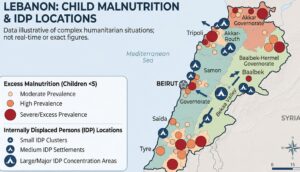
April 8, 2026:    An estimated 1.65 million people in Lebanon are vulnerable to increased food shortages and malnutrition due to the combination of conflict, bombardment, displacement and denied access of food shipments. The conflict between Israel and Hezbollah forces in Lebanon has caused significant agricultural damage, estimated at $704 million, and disrupted livelihoods, especially for small-scale farmers.  However, aid agencies have not reported new rates of malnutrition from population-based surveys.

Pre-conflict, children in Lebanon were found to be 36% anemic from iron deficiency, with reduced dietary diversity and high rates of zinc and Vitamin A deficiency.

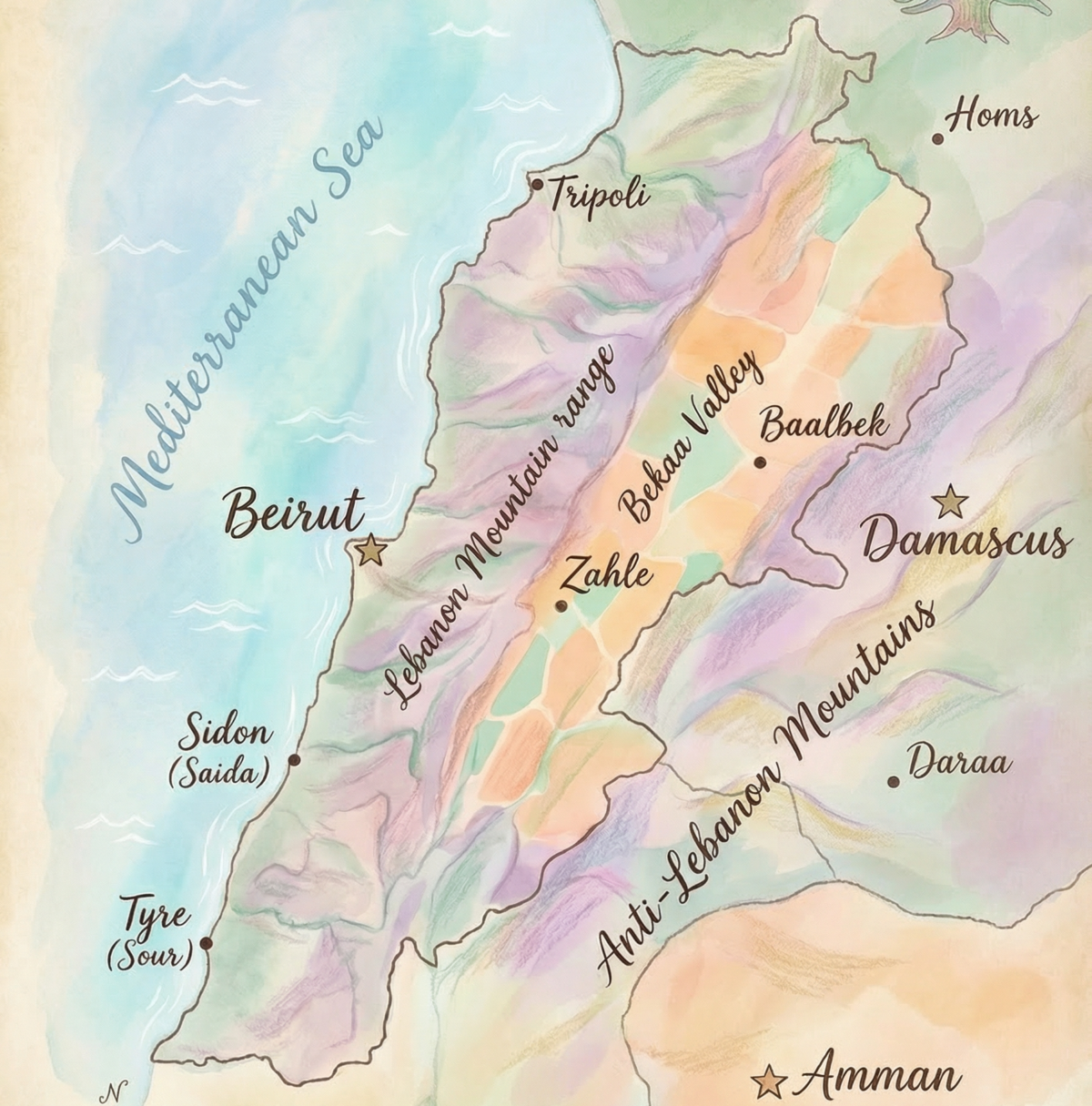
Daily military strikes and incursions continue, particularly in the south of Lebanon and the Bekaa Valley, preventing people from returning home and resuming their livelihood.  People are sheltering in schools, public spaces, and even their cars, with many shelters already overcrowded. Hotspots include Baalbek, El Hermel, Akkar, Bent Jbeil, Marjaayoun, El Nabatieh, and Sour.  Seven bridges across the Litani River — a key transport corridor linking southern areas to the rest of the country — were struck as of late March 2026, disrupting supply routes for food, fuel, and medical goods.   Retail activity collapsed in conflict zones: only 15% of shops in El-Nabatieh and one-third in South Lebanon remained fully operational.   Markets south of the Litani River largely ceased operations, with many shops closed or evacuated and supply deliveries significantly reduced

More generally, Lebanese also have seen increases in the price of food, which has been affected by the regional conflict and constraints on fuel.  For example, the price of bread increased 8% at subsidized rates but 30% at many bakeries.  The Ministry of Economy increased the price of bread  by 5,000 Lebanese pounds due to rising fuel costs affecting oven operations and flour transportation.
International Aid

As needs have increased, the funding for aid has decreased. Food assistance coverage has dropped by about 45% between 2024 and 2025, forcing the WFP to reduce the number of people it assists by 40%.

Aid agencies that are responding with nutrition, food and health assistance include the Mennonite Central Committee, the Lebanese Red Cross, Action Against Hunger (AAH and ACF), the International Federation of Red Cross and Red Crescent Societies, UNICEF, CARE, Caritas, MedAir, and others.

A new digital platform called Sofra is coordinating an innovative response by connecting international donors with local restaurants to prepare and deliver meals to verified shelters. This initiative helps feed displaced families while supporting local businesses and keeping restaurant staff employed.

Paul Ehrlich, Who Warned of Famines, Passes Away

Scientist, educator and global citizen, Paul Ehrlich passed away at the age of 93 on March 13, 2026.   As professor from 1959 to 2016 at Stanford University, he sponsored the first course offered about international hunger and life-saving aid, consistent with his life-long efforts to mitigate suffering from famine, food insecurity and environmental crises.

In a series of publications, Ehrlich called the general public’s attention to the reality of famines around the world. His writings, often with his wife Anne Ehrlich, emphasized the dramatic increase in the number of people exposed to food insecurity and hunger as the world population quadrupled during his lifetime, an observation largely ignored by other major analysts and politicians.

The success of their 1968 book, The Population Bomb, resonated with a public increasingly aware in the 1950s and 1960s of exponential population growth. Demand for his views was reflected in his more than 20 appearances as a guest on NBC’s The Tonight Show.

Some obituaries have denied the recurrence of famine, turning a blind eye to the hundreds of millions of people affected in recent decades by famines in Mali, Sudan, Haiti, Ethiopia, Yemen, Cambodia, India, Malawi, Zimbabwe, Zambia, Angola, and other countries since the publication of The Population Bomb which warned of the threats of future faminesCritics of Ehrlich pretend away the fact that in the decades since its population, over 300 million young children have died from malnutrition in poorer countries and that famines continue to occur in still-growing populations such as South Sudan, Nigeria, Mozambique Somalia, and Kenya.  Remarkably, some obituaries about Ehrlich suggest that malnutrition has not been a problem in the world, despite the fact that an estimated four to five billion people have been seriously hungry and malnourished during the decades since Ehrlich’s warning.

Fortunately, the frequency and severity of very large famines have declined, in part because of Ehrlich’s warnings, which helped spur the U.S. government to create the Famine Early Warning System (FEWS) in the 1980s. This system has helped prevent famines through timely food and humanitarian assistance and is still used today by the U.S. Department of State.

The book also helped galvanize support for women’s reproductive rights, education, and microfinance initiatives, contributing to declines in fertility and more stable population growth in many countries. Governments, including that of the United States, increasingly supported programs to reduce child mortality, which in turn enabled women across Asia and Africa to choose smaller family sizes. For instance, in the 1960s, the average woman in Asia or Africa gave birth to seven children, whereas today the average is three to four.

Ehrlich’s environmental warnings have been less successful, however, in preventing species extinction and habitat loss.  Since his book, millions of species have gone extinct at rates up to 1,000 times the natural background level, largely due to human encroachment on land and marine habitats. As Ehrlich warned decades ago, the 2024 Living Planet Report documents that monitored wildlife populations have declined by an average of 73% since 1970.  This loss is often described as a “sixth mass extinction,” driven primarily by habitat destruction, followed by overharvesting, invasive species, disease, and climate change.

As Ehrlich documented, carbon dioxide emissions have increased by over 115% since 1968.  To feed a growing population, humans have converted vast tracts of forests and grasslands into farmland. Over the past 50 years, agriculture and land-use change have accounted for roughly 23% of total anthropogenic greenhouse gas emissions. The world has also lost about 420 million hectares of forest since 1990 due to land conversion.

Ehrlich spent a career studying the science of population dynamics, including coevolution and population biology. In his 1964 paper “Butterflies and Plants: A Study in Coevolution” (with Peter Raven), he argued that plants and herbivorous insects drive each other’s evolution—an idea that helped launch the modern field of coevolution. He also conducted decades-long field studies on checkerspot butterflies (Euphydryas editha bayensis), examining population dynamics, genetic structure, and the effects of climate and habitat fragmentation. His work documented patterns of local extinction and recolonization, providing empirical support for the concept of meta-populations and shaping modern conservation science.

Ehrlich helped popularize the notion of ecosystem services, the benefits people receive from nature, such as pollination, water purification, and soil fertility. He used this framework to quantify how human demography and consumption threaten the functioning of ecosystems.

As the Peter Bing professor at Stanford University, Ehrlich  founded Stanford’s Center for Conservation Biology and has worked on endangered‑species policy, countryside biogeography (making human‑altered landscapes hospitable to biodiversity), and cultural evolution of environmental ethics.

Over his long career he mentored scores of students at Stanford, cultivating in them the same blend of scientific rigor and moral urgency that defined his own work.

His textbook Ecoscience: Population, Resources, Environment, coauthored with Anne Ehrlich and John Holdren, is a comprehensive and still-relevant compendium. It provides a foundational overview of ecological principles, resource constraints, and environmental systems. The book explores how population growth, industrial agriculture, pesticide use, and pollution strain natural systems, and it outlines pathways for social, political, and economic adaptation. Ultimately, it frames humanity’s environmental challenges as requiring urgent and coordinated global action.
Like his publications, Ehrlich’s lectures were intellectually wide-ranging and provocative, integrating history, global trends, politics, and ecology. Unlike many academics, he was deeply committed to addressing hunger and alleviating human suffering.

Other readings:

Stanford University:  https://humsci.stanford.edu/feature/biologist-and-environmentalist-paul-ehrlich-has-died

Understanding the fragility of our planetary home: The legacy of Paul Ehrlich

Nature Journal:  https://www.nature.com/articles/d41586-026-00939-5

Paul Ehrlich: A Tribute

– by Steve Hansch, board member, World Hunger Education Service


Concern for Sudan

World Hunger Education Service made its annual anti-hunger award, including our recommendation and a cash grant to Concern Worldwide for its food and nutrition assistance in the worst famine crisis in the world, The Sudan, where it manages health clinics, case finding of children with malnutrition and building household resilience amid an intractable civil war. Their operations reach nearly half a million people across several states, including West and Central Darfur, West and South Kordofan, and the Red Sea StateConcern Worldwide has been operating in Sudan since 1985, with programs adapted to address the ongoing humanitarian crisis stemming from the conflict that escalated in April 2023.

Concern’s assistance in the last year included over 11 tons of medical items and 56 metric tonnes of pharmaceuticals and equipment in recent deliveries.   Nutrition programs include distributing 11 tons of ready-to-use therapeutic food (RUTF) to treat childhood malnutrition, addressing the loss of Sudan’s domestic RUTF production capacity due to conflict damage. Overall, nearly 480,000 people received support through these health and nutrition efforts in the first 10 months of 2025, with programs continuing into 2026 amid funding shortfalls highlighted by Concern’s leadership.

To mitigate long-term impacts like poverty, Concern integrates food security, livelihoods support, nutrition, WASH, and disaster risk reduction.  Their aid includes agricultural training, provision of inputs, and village savings and loan associations in Kordofan communities, adapted to the conflict environment. These programs aim to build resilience while addressing immediate needs from the crisis, which has left over 24 million people in Sudan requiring aid.   In 2024, Concern treated 8,312 children for severe acute malnutrition (SAM).  In addition, in 2024, over 12,000 individuals received in-kind food assistance, and 5,875 households were provided with multi-purpose cash assistance totaling approximately €1.2 million.

Concern Worldwide began in 1968, when a small group of Irish volunteers launched an emergency response to the famine in Biafra, Nigeria.  Today, Concern reaches over 30 million people in emergencies.

See:    https://www.concern.net/what-we-do/health-and-nutrition

See Hunger Notes’ previous interview with Dominic MacSorley, former CEO of Concern at:  https://www.worldhunger.org/interview-with-dominic-macsorley-former-ceo-of-concern-worldwide/

Donations from the US can go to:  https://concernusa.org/

https://concernusa.org/search-results/?q=sudan&page=1

HOPE in Gaza

Project HOPE is the recipient of a donation by the World Hunger Education Service (WHES), a non-profit dedicated to educating the public about solving hunger which selected Project Hope to highlight and affirm its excellent work providing recovery foods for malnourished children in Gaza.

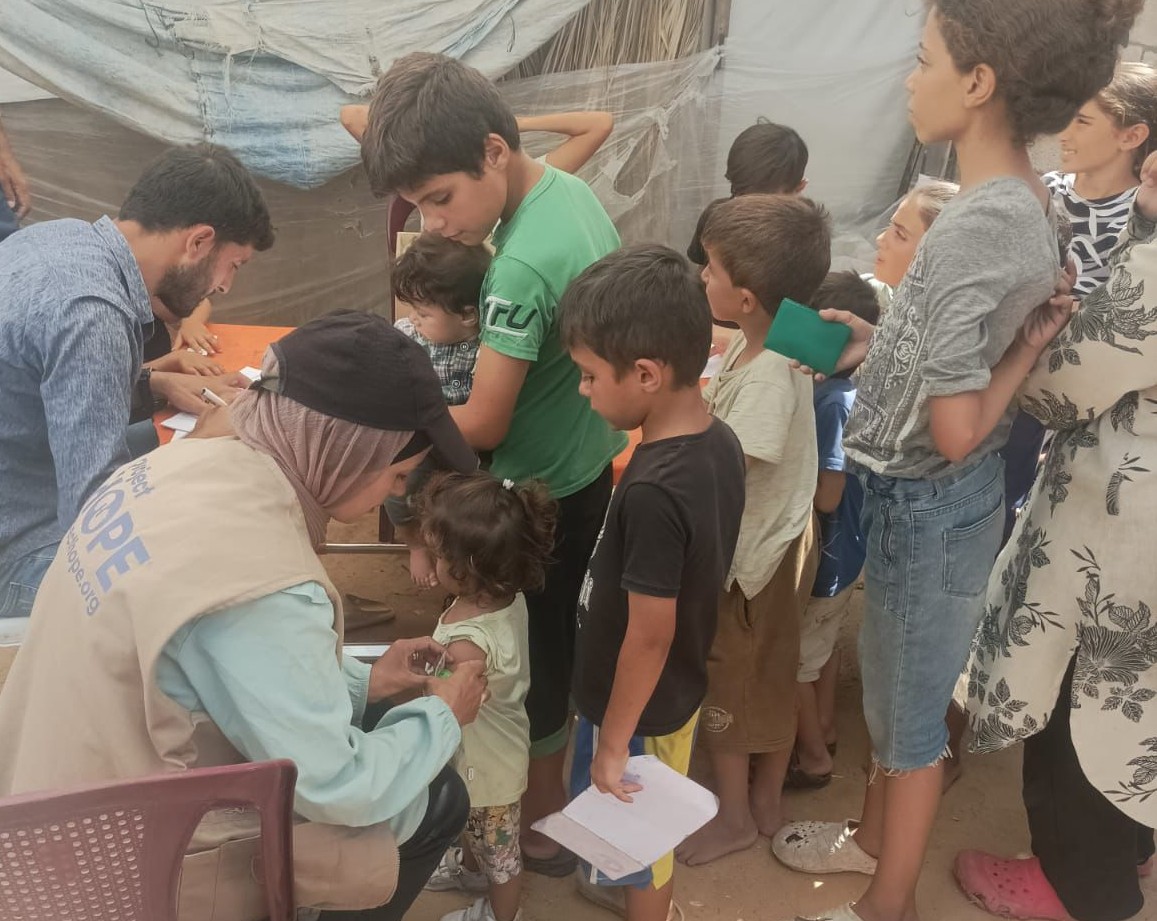
Project HOPE supports nutrition through its seven health clinics across Gaza, helping to reach tens of thousands of children with wasting (“acute”) malnutrition, which carries a high risk of death.   Gaza has been prone to increased prevalence of malnutrition over the last year or more as food imports and aid from outside, and movement/ distribution within Gaza have been blocked.  The highest prevalence of malnutrition has been measured in Gaza City.

Since the October 2025 ceasefire took effect, Gaza has experienced a partial recovery in market activity and food availability across Gaza, but supply shortages, cash-flow constraints, damaged infrastructure, and limited local production continue to hamper both supply and access. Food prices remain far above pre-conflict levels, with many basic commodities costing up to 200% more than before the fighting began. As a result, many households still struggle to afford a diverse diet, with consumption generally limited to staple cereals and pulses while meat, fresh produce, and other nutrient-rich foods remain largely out of reach.

From July 2024 to November 2025, Project HOPE screened 158,884 people for malnutrition, particularly focusing on children under five years of age and pregnant or breastfeeding women.   They provide High Energy Biscuits (HEB), Ready-to-Use Therapeutic Food (RUTF), rapid rehydration, and case management for those suffering from malnutrition.  RUTF is a food optimized to save the lives of young children who are severely malnourished.  They also have provided Psychological First Aid to 18,000 people. and distributed over 2 million liters of potable water.

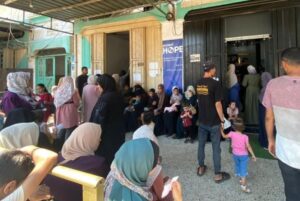
In Gaza, they operate health clinics in Khan Younis, Gaza City, and Deir al-Balah, providing an average of 1,170 medical consultations a day.  Because of their work in Gaza, World Hunger Education Service has granted them an award of $2,500 and recommendation to the public.

Supplies of RUTF are trucked via convoys into Gaza via roughly five border crossing points as palletized cargo.  Once inside Gaza, supplies are moved along major routes such as the Philadelphi Corridor and Al Rashid Rd to approximately 23 treatment sites.

Project HOPE is an international non-profit established in 1958.  Operating with public support for over 68 years, Project Hope strengthens health systems, combats infectious diseases and deploys emergency response and nutrition teams in crisis zones to provide humanitarian aid.  In severe crisis settings (e.g., conflict in Ethiopia, displacement in Gaza and Ukraine), Project HOPE’s emergency response includes clinical care and nutritional support for populations facing acute shortages.  They also work with communities and health workers about how to prevent waterborne illnesses like cholera and diarrheal disease.

For much of its history Project HOPE was known for its hospital ship which inspired people to choose careers in foreign aid.  Its flagship was originally the USS Consolation, which operated during the Korean war and then converted with 230 beds into a civilian aid ship.  Project Hope pioneered the concept of the first peacetime hospital ship operating the S.S. Hope for 14 years. For every American doctor or nurse on board, there was a local professional counterpart.   It traveled to many countries including Southeast Asia and South America.  Today they work in more than 25 countries across Africa, the Americas, Asia/Pacific, Europe, and the Middle East.

Similar to its work in Gaza, Project HOPE had been a lead US NGOs also responding Ukraine and Lebanon.  In Ukraine, the team operates mobile medical units, reconstructs health and social facilities, trains health workers, provides extensive mental health and psychosocial support, and more. In Lebanon, Project HOPE has been working around the clock to support urgent needs, including the distribution of water, sanitation, and hygiene (WASH) supplies and shelter items to displacement sites, as well as procuring essential medicines and medical supplies for hospitals and primary health centers.

See:  https://www.projecthope.org/

– WHES Board

Gaza Humanitarian Food Aid – A Report by Senators Van Hollen & Merkley

A detailed report by U.S. Senators Chris Van Hollen (Maryland) and Jeff Merkley (Oregon) resulting from a fact-finding CODEL mission to Israel, Gaza’s border, the West Bank, Jordan, and Egypt is a review of their observations of destruction and forced displacement.  (Van Hollen, Merkley Report Following  2025 CODEL to Gaza Border, Israel, West Bank, Jordan, and Egypt, released Sept 11, 2025)

The two Senators begin their report observing that “In Israel, we met with families whose loved ones were taken hostage during Hamas’s heinous terrorist attack on Israel on October 7, 2023. We also returned to Kfar Aza, an Israeli kibbutz near the border with Gaza that we had previously visited in the summer of 2023. What we remembered as a vibrant community had become the site of one of the worst massacres on October 7th, with 80 people killed and 19 taken hostage.”

The Senators assert that U.S. complicity and international inaction have enabled a humanitarian crisis as a form of collective punishment against Palestinians. The Senators’ analysis is that collective punishment has replaced Israel’s initial military goal of defeating Hamas, extending suffering to the civilian population through the destruction of homes, hospitals, schools, and essential services: 92% of homes, 92% of schools, 94% of hospitals, and 86% of water/sanitation facilities have been destroyed or rendered unusable.

The report argues that Israel’s strategy combines the systematic devastation of Gaza’s civilian infrastructure—over 90% of homes, schools, hospitals, and water systems destroyed—with the weaponization of food and aid to render Gaza uninhabitable.

The authors observe that over 87% of Gaza’s territory is under military zones or evacuation orders, especially Gaza City where food access is minimal.

The Senators reference warnings of famine and that 132,000 children under five are at risk of food insecurity. NGOs reported instances of “starvation ketoacidosis”, an indication of weight loss.  As a result of patchy distribution of aid, northern Gaza appears to have more children who are malnourished than southern Gaza.

1.9 million people (90% of Gaza’s population) have been displaced, many multiple times.

Much of the Senators’ report is about the tight delivery of limited aid from outside Gaza.  Israel’s rejection of UNRWA’s role in aid delivery left 6,000 trucks of food and medicine warehoused and at risk of expiry.   They criticize Israel’s restrictions on entry points, permitting only Kerem Shalom and Zikim to operate irregularly, while Rafah remains closed.   The Jordan Corridor and Egypt aid crossing routes face high rejection rates (e.g., 68% for Egypt in August 2025), delaying non-food essentials like shelter and medicine, which disproportionately affect displaced families and the elderly ahead of winter.

Meanwhile, new customs and screening rules at Ashdod Port and along the Jordan Corridor drastically slowed aid shipments, reducing throughput to less than 10% of capacity.  Drawing on interviews with the World Food Programme (WFP):  “We were told by WFP officials that following the resumption of aid delivery to Gaza after the blockade was lifted, the Israeli government changed its screening practices and customs policies, resulting in the deliberate and unnecessary slowdown of the flow of food into Gaza.  WFP is only able to screen between 20 to 30 containers a day, whereas before these new requirements were put in place, they were able to screen over a hundred a day. The new screening procedures take about 3 to 5 hours per container, and they must physically check each pallet inside the container before the whole container is cleared.”

The authors expressed concern that new lead aid agency, the Gaza Humanitarian Foundation (GHF), operates only four distribution sites, primarily in southern Gaza Established on May 26, 2025, amid the blockade’s end, the GHF replaced the UN’s extensive network with just four sites (three in southern Gaza, none in the north), leading to deadly chaos. Over 1,300 Palestinians have reportedly been killed near these sites amid chaotic food distributions.  Doctors Without Borders (MSF) called this “orchestrated killing,” with 1,380 casualties (including 174 gunshot wounds to women and children) treated at nearby clinics over seven weeks.

Van Hollen and Merkley write that the current method of aid distribution has devolved into “the rule of the strongest,” where only the most physically able individuals can access assistance.

Israeli authorities have not protected humanitarian convoys from settler attacks, while bureaucratic barriers, including arbitrary “security concerns” and banned “dual-use” lists—further impede deliveries. Items such as water filters, tents, and even peanut butter have been prohibited. The report notes that there are “two sets of laws” for aid delivery at the Kerem Shalom crossing, with GHF trucks having access to a paved, orderly loading platform while UN trucks must use uneven dirt and gravel, making their cargo less secure.  Further, they report, “One of the major problems since the start of the war in Gaza has been that the Israeli government has never published, nor provided to humanitarian organizations, a definitive list of what items are permitted or prohibited. Humanitarian groups we met with on the ground stressed that this lack of transparency has created enormous uncertainty and delays.”

Report Recommendations

The Senators call for:

  •     An immediate ceasefire by both warring factions and hostage release by Hamas.
  •     Unrestricted humanitarian access, including increasing the crossings in Kerem Shalom, Zikim, Kissufim, Gate 96, Rafah. They recommend aid agencies flood Gaza with sufficient humanitarian assistance to restore orderly distributions and lower prices, urgently address shelter needs before winter, and focus on protecting vulnerable populations.
  •     Protection of aid workers and journalists, working inside Gaza. Allow international journalists unfettered access to Gaza to provide independent verification and reporting on conditions; at the same time, push back politically and diplomatically against attempts to dismantle, deregister, or muzzle humanitarian and human rights organizations working in Gaza.

For the full report, see:  www.vanhollen.senate.gov/imo/media/doc/van_hollen_merkley_report_following_2025_codel_to_gaza_border_israel_west_bank_jordan_and_egypt.pdf

Their press presentation can be seen at:  https://www.youtube.com/watch?v=qQBx9SDi2wU

by Steve Hansch, Hunter Notes, Editor, WHES  Board

Hunger Increases Even Further in The Sudan

August 28, 2025:  Aid agencies estimate that malnutrition in Sudan increases in scale, depth and scope.  Much of the reporting comes from the far western region of Darfur, where, between January and May 2025, North Darfur saw a 46% increase in children admitted for SAM treatment at health centers compared to the same period in 2024 — with over 40,000 children treated in just that region.

As a result of 2 1/2 years of civil war, over 14 million Sudanese have been displaced by violence, both internally and across borders.  In the largest camp for displaced persons, Zamzam in North Darfur,  Médecins Sans Frontières (MSF) reported devastating malnutrition rates — as high as 29–30% acute malnutrition, and high mortality (e.g., one child dying every two hours.  Similarly,  Save the Children reported a nearly fourfold increase in severe acute malnutrition cases seen in one South Kordofan clinic from June 2023 to June 2024, with 1,457 children admitted in June 2024 alone.

Though access by international organizations to children in this large, rural country is limited, UNICEF estimates that some 3.2 million children under 5 may have  acute malnutrition in 2025, including about 770,000 experiencing Severe Acute Malnutrition, meaning they are extremely wasted.

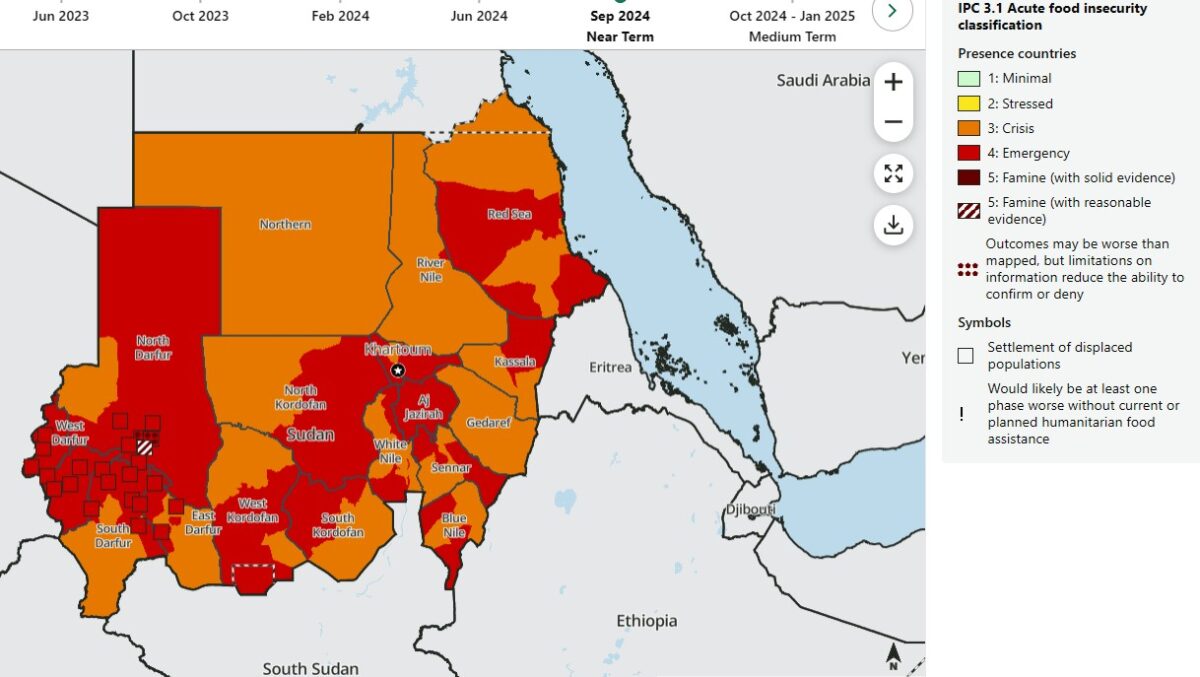
The U.N.’s advisory body about famine, the Integrated Food Security Phase Classification (IPC) reported 25.6 million people in the Sudan are food insecure, and of those, 8.5 million are in Emergency (Famine degree Phase 4) and another 755,000 are in Catastrophe/Famine (Famine degree Phase 5).

Humanitarian access is greatly constrained, with persistent fighting preventing deliveries of food or supplies into many areas, notably in Darfur, Khartoum, and regions with large numbers of internally displaced person.

Concern Worldwide is supporting 81 health facilities across Sudan, particularly in West and Central Darfur, treating children under five for acute malnutrition, with a focus on delivering ready-to-use therapeutic food (RUTF).  Despite the destruction of Sudan’s only RUTF factory in 2023, Concern has secured and delivered 10 metric tons of RUTF to vulnerable communities. In 2024, they reached nearly 484,000 people with lifesaving health and nutrition support.