
New Lancet Commission Report about Health Conflict & Forced Displacement

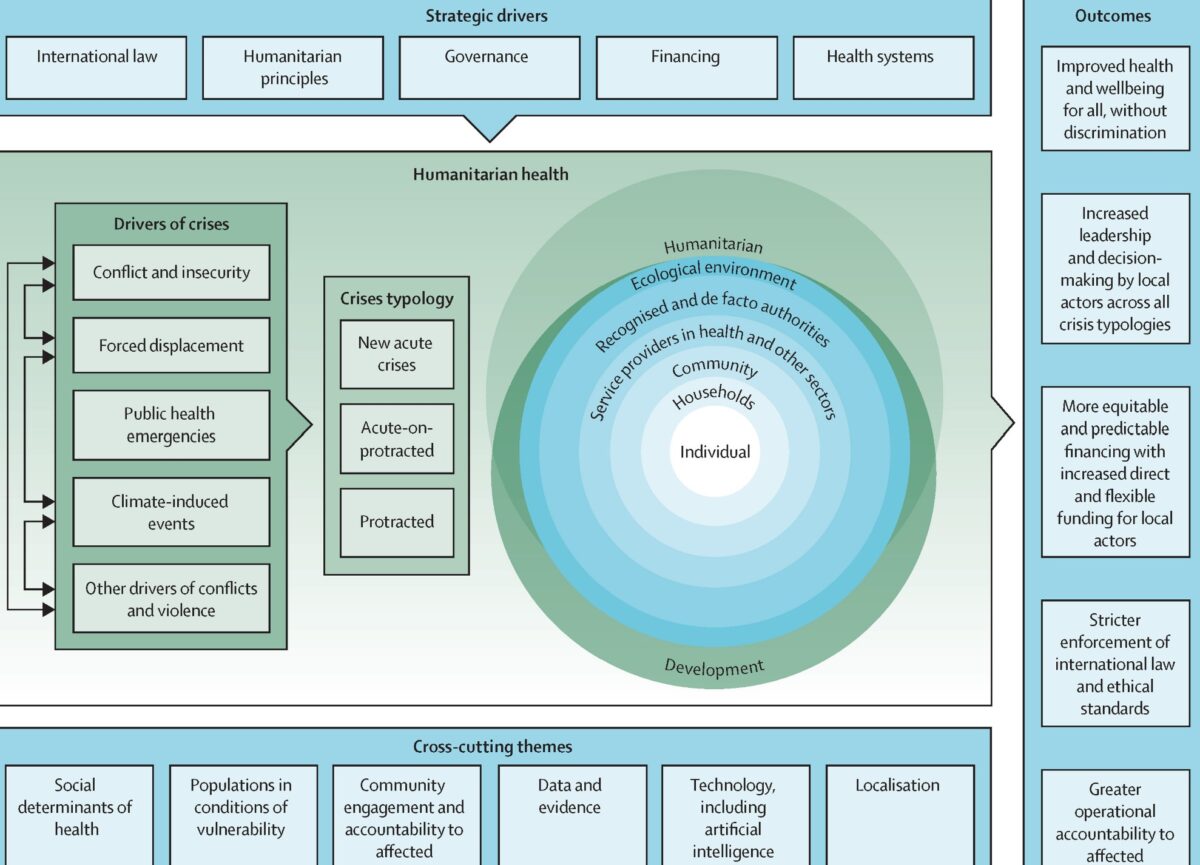
May 21, 2026     The new study, Health in a World of Crises and Impunity, by the Johns HopkinsLancet Commission about Health, Conflict & Forced Displacement, was published this week in the Lancet Journal, with two dozen main authors (commission members), led by Dr. Paul Spiegel.  It critiques the current ways that humanitarian aid flows as “unfit for purpose” because it relies on politicized funding models that ration survival rather than saving lives.
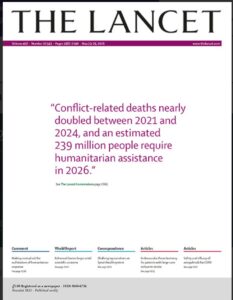
The “Johns Hopkins Center for Humanitarian Health-Lancet Commission” worked for almost three years in leading up to the publication on May 19, 2026 on the Lancet journal’s website, accompanied this week by a launch event in Geneva.  The Commission comprises 42 authors from 20 countries, nearly all academics from universities, some with prior field experience. It includes no representatives from private industry, governments, digital health or technology companies, the military, or financial institutions.

Their 76-page report also notes “Conflict disrupts food production, markets, livelihoods, and humanitarian access, undermining household coping mechanisms and leading to acute and chronic undernutrition among displaced populations and host communities alike.”  Hunger follows from economic harms and job loss:  “Most conflict-affected populations have unstable or no income, affecting 78% of IDPs in Afghanistan and 70% in Iraq in 2022. In Sudan, unemployment in urban households increased by more than ten-fold after the conflict began.”  For example, refugees often lack access to legal employment in countries of asylum.

While the study addresses food and nutrition, it does so only to a limited degree, placing hunger and malnutrition within a broader public health context. In its historical review, it highlights high malnutrition rates in Sudan, Yemen, and the Democratic Republic of the Congo (DRC). The report notes: “Undernutrition is a central pathway through which conflict increases mortality, contributing to more than half of infectious disease deaths globally in children.” Malnutrition significantly raises the likelihood of dying from communicable diseases such as malaria or measles.

Poor nutritional status, the Commission finds, “weakens immune responses, reduces vaccine effectiveness, and prolongs recovery from infection and injury.” It adds: “Recurrent displacement and prolonged food insecurity contribute to wasting, stunting, and micronutrient deficiencies, with long-term consequences for physical growth, cognitive development, and future health.”

The Commission report has many recommendations about reforming the aid system overall, but few that are specifically about food systems, resilience, agriculture, supply chains of recovery foods (such as RUTF), food fortification, school feeding, or other anti-famine programs.  The report largely ignores food aid except to criticize its availability in Gaza, and to diminish it in comparison with cash hand-outs, though the report notes the World Food Programme’s large role in humanitarian aid.

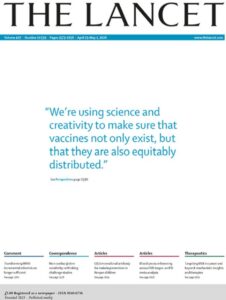
In an accompanying editorial in the same issue of the Lancet (shown above), the editors summarize the findings, including a call to “invert power by shifting resources and decision making to affected populations, making external leadership exceptional, and strengthening nationally led health and social protection systems.”  And then concludes: “Creating an effective community-centred humanitarian system that provides a more just, robust, and sustainable future needs to be managed carefully and responsibly. “
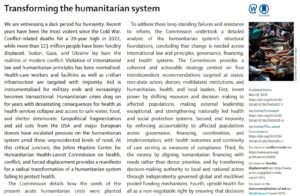
The Commission names climate as both driver and amplifier:

  • * Droughts, dust storms, and floods drive food insecurity, resource competition, and erosion of coping strategies in Somalia, South Sudan, Afghanistan, and the Sahel
  • *  Climate impacts “interact with pre-existing political, economic, and social vulnerabilities, pushing fragile contexts beyond critical thresholds”
  • *  Women particularly affected where they “have limited access to material, social, and institutional resources to cope with, absorb, and recover from climate-related shocks”

Most of the report talks at a higher level. A key finding and recommendation:  “Humanitarian health action remains overly focused on short-term service delivery rather than sustaining health systems across crisis cycles. Fragmentation, disrupted financing, workforce losses, weak integration, and weak digital foundations undermine continuity, quality, and resilience, especially in protracted crises. Emerging technologies and artificial intelligence offer important opportunities to improve early warning, triage, supply chains, clinical decision support, and system planning, but without equitable access, regulation, and accountability they may also deepen exclusion and risk. The way forward is to prioritise health systems protection, ensure continuity and quality of care, integrate humanitarian and national systems where feasible, and invest in preparedness, workforce capacity, climate-resilient services, and ethically governed digital and artificial intelligence capacities that support more resilient, adaptive, and accountable health systems.”

Many readers of the report were pleased to see a vision for a “humanitarian reset.”

The authors try to be bold and do not shy away from controversy.  For example, they call for one big UN agency for humanitarian aid, not the many independent agencies with distinctive mandates seen now.  Repeatedly the report refers to “global health governance and “humanitarian architecture” as if there is now one coordinated system in place that is ill-conceived, as opposed to an ecosystem of independent actors each pushing progress in distinct ways.  While acknowledging the history of humanitarian aid, and in particular groups like UNHCR, World Heath Organization, and the Red Cross, it gives little attention to the thousands of initiatives pioneered by individuals or independent nonprofit or voluntary organizations, directly helping communities in need.
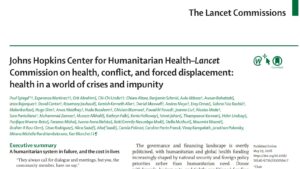
The Commission lumps a lot of “humanitarian” assistance into one concept but does not discriminate between natural disasters and conflict-related crises.  The authors argue that all aid should conform to national policies, even if the government in question are at war with groups of their own citizens.

The report’s strong push for massively expanded multipurpose cash assistance does not address funding sources or potential trade-offs with service provision, vaccination campaigns, food aid to fight famine, shelter materials, etc.

Some readers found the tone strident.  For example the word “must” appears 86 times, giving the impression that the authors are issuing commands without specifying to whom they are directed.

Other launch events are scheduled in other cities.

Supplementary appendix includes

The New Humanitarian reviews the report here.

Numerous podcasts feature the study.  Johns Hopkins’ 20 minute podcast about this can be found here.   
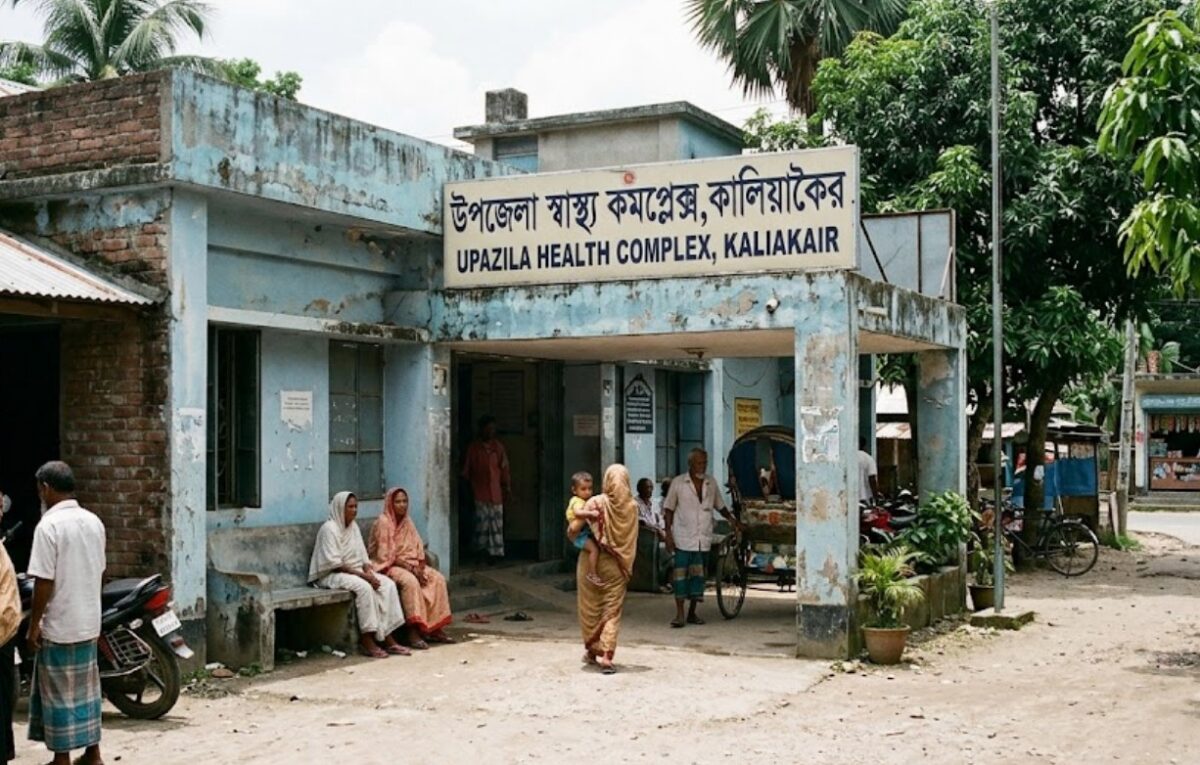


Malnutrition & Death Risks Rise in Bangladesh

May 11, 2026           Bangladesh’s leading newspaper, Prothom Alo, reported this week about a concerning decline in child health following decades of improvement, specifically regarding nutrition and measles. Health professionals have long recognized the insidious risks for children who are both malnourished and infected with measles; specifically, measles infection is significantly more fatal in children suffering from malnutrition.

According to reports from Prothom Alo, published from Dhaka, Bangladesh has recorded 19,161 suspected measles cases and 2,973 laboratory-confirmed cases across 58 of its 64 districts, resulting in 166 suspected deaths. Three-quarters of these cases involved children under five years of age. Furthermore, two-thirds of the infected children had received no measles vaccine at all—a major failure in public health coverage.  see:  https://en.prothomalo.com/bangladesh/pr0qimrtyr

Health experts warn that fatalities will likely continue to climb for several more weeks. The Lancet corroborates this trend, noting that the Infectious Diseases Hospital in Dhaka admitted 560 suspected measles cases in the first three months of 2026, compared to just 69 cases in all of 2025.  (The Lancet)

In this reporting, Prothom Alo correctly identifies malnutrition, Vitamin A deficiency, declining breastfeeding rates, and missed deworming as compounding or co-risk factors of disease and death, as supported by medical literature. While Bangladesh’s child health had improved over many decades, and achieved over 92% first-dose measles vaccine coverage by the mid-2010s, the program has become weak, irregular, and delayed in recent years. For instance, the measles vaccination drive scheduled for June 2024 was delayed by the deadly public protests that toppled then-Prime Minister Sheikh Hasina.

In the long run, chronic malnutrition—measured by stunting (low height-for-age)—has improved, falling from roughly 50% in 2000 to around 24% by 2022, representing a major achievement. Wasting (low weight-for-height) similarly declined from 17% to roughly 9.8% by 2019.

However, recent data show a concerning reversal. The Bangladesh Multiple Indicator Cluster Survey (MICS) 2025 found that wasting among children under five has climbed to 12.5%, up from 9.8%, indicating a steep rise in acute malnutrition. Nutritional health is heavily dependent on surveillance, growth monitoring, and optimal feeding practices, such as exclusive breastfeeding for infants up to six months of age.  Worryingly, exclusive breastfeeding, a critical health practice, has declined by 12% in recent years.

Note:  since this article was published, the Government of Bangladesh has announced a new nation-wide drive to immunize against measles.

The end of my career in global health

The election of Donald Trump in November 2024 was a gut punch, but I did not know then that the real destruction of the world as I knew it would begin to unfold in January 2025, when Trump began the destruction of the United States Agency for International Development (USAID), shuttering almost all of the foreign development assistance that the United States had long led the world in providing.

I have worked in international development assistance for my entire career. I became interested in public health because of a volunteer activity at age 16 when I signed up with a private volunteer organization, Amigos de las Americas, in the summer of 1976 and spent a month in Nicaragua vaccinating children door-to-door with a local Ministry of Health promotor. That experience hooked me on public health, and I spent the next four summers working for Amigos, first as a supervisor of a group of volunteers in Honduras and then three summers in Paraguay. This experience was formative as I learned to speak Spanish fluently and how to deal with mayors, customs officers, and Ministry of Health officials. When I graduated from college, I knew I wanted to pursue a career in international health. I applied and was accepted to the International Health Program of Johns Hopkins University’s School of Hygiene and Public Health.

My Hopkins advisor had received a grant from the Primary Health Care Operations Research (PRICOR) Project, a USAID-funded program to support studies to find ways to improve primary health care (PHC) programs. PRICOR was managed by University Research Co., LLC (URC). The grant was to study community financing of water supply and the Visitadora community health worker program in Brazil. Since I spoke Portuguese, my advisor sent me to Rio de Janeiro to interview one of the principals managing the Visitadora program at the Fundaçāo Serviços Especiais de Saúde Pública (FSESP). In the spring of 1983, I spent a week interviewing FSESP officials and reviewing documents about the program. When I came back from Brazil, I met with my advisor and the PRICOR monitor for the grant, who told me that PRICOR was starting an internship program and encouraged me to apply.

On October 24, 1983, I started at PRICOR as the Spanish-speaking intern, working alongside another recent MPH graduate who spoke French. We supported the staff of five senior scientists at PRICOR who managed funded studies and developed monographs on PHC operations research. As part of the oversight of PRICOR studies, we each accompanied a senior scientist to visit country teams and supported proposal development workshops. After the year-long internship, both of us were offered full-time jobs, and we became involved with other International Division projects and business development activities of URC.

PRICOR I was followed in 1985 by PRICOR II, and PRICOR II by the Quality Assurance Project (QAP) in 1990. I worked on PRICOR II, QAP I, II, and III, working part-time when my children were little. I was fortunate to have pediatrician David Nicholas as my supervisor who was very supportive of family life and flexible working arrangements. This kind of support and my keen interest in the work of QAP and its successor projects made it easy to stay at URC. I went back to work on QAP full-time when my youngest started kindergarten.

When QAP began to focus more on collaborative improvement methods—where purposeful learning among improvement teams is a critical part of the approach—my focus shifted from communication to knowledge management. The inclusion of knowledge management in a project about improving health care was due in large measure to the foresight of Dr. James Heiby, the USAID Project Manager for PRICOR II and QAP.

When QAP was followed by the USAID Health Care Improvement (HCI) Project in 2007, my work increasingly focused on learning from improvement work and creating knowledge products to convey that learning to others. This emphasis on learning and knowledge management became even more important on the USAID Applying Science to Strengthen and Improve Systems (ASSIST) Project (2012-2020). When ASSIST was extended in 2016 to support Zika prevention and treatment in Latin America and the Caribbean (LAC), the value of knowledge management became even clearer, since knowledge management focuses on how to learn from our work and apply that learning to have more impact. The last part of ASSIST through June 2020 was perhaps my most impactful development assistance work, since the improvements we supported benefited not only families affected by Zika but also strengthened prenatal care, newborn care, and early child development services for all mothers and children in 13 LAC countries.

The beginning of the end of my career was Trump’s January 21 Executive Order freezing U.S. foreign assistance pending a 90-day review. Then on February 3, Elon Musk announced on X that “We spent the weekend feeding USAID into the wood chipper. Could have gone to some great parties. Did that instead.” Under the direction of the U.S. Department of Government Efficiency, USAID’s headquarters in Washington, DC was closed, over 2,000 USAID staff immediately terminated, and another 4,765 direct hires placed on administrative leave. By early February, USAID contractors and implementing partners, including those providing humanitarian assistance and emergency food relief, began receiving stop-work orders. Some of these contractors and implementing partners then received communication that the stop-work orders were lifted, but then in many cases were contacted again to say the stop-work orders were still in effect. By July 1, most of the 10,000 staff that USAID had worldwide had been terminated, except for a few hundred who were transferred to the State Department to manage what was left of U.S. foreign assistance.

Effectively gutting the USAID workforce meant that actions to issue waivers for lifesaving programs, as the Trump Administration claimed it was doing, or to support the continuance of “approved” programs, were not happening. USAID’s payment system was frozen, and as a result, most contractors and implementing partners like NGOs and universities had not been paid for work they did before the freeze, and most have been forced to lay off staff or even cease operations.

While U.S. Secretary of State Macro Rubio, who appointed himself acting administrator of USAID, repeatedly said he had issued a blanket waiver for lifesaving programs, including food and medical aid, there being no staff left at implementing partners or USAID meant that promises of such waivers were intentionally misleading and untrue. In early March, Rubio announced that 5,200 USAID programs worth over $1.3 billion had been terminated and that about 1,000 USAID programs would be continued, somehow, but administered by the State Department.

The chaotic way in which USAID implementing partners and grantees were notified of the cuts (often, receiving news that the program was cut, then that the program was reinstated, and then cut again) was cruel. USAID staff were locked out of their emails and offices, placed on administrative leave, and eventually terminated.

Having worked for USAID-funded projects for over 40 years, I know firsthand how USAID was a force for good in the world. As a knowledge management practitioner, I have especially admired how USAID has been a champion of learning, both internally within its own operations and externally as a development strategy. USAID encouraged all of its implementing partners to systemically derive key lessons and knowledge products from the work USAID funded and to make them freely available on the USAID Development Experience Clearinghouse.

I have seen over the past decades a continuous push by staff at USAID to do development better—to make the investments of U.S. taxpayer dollars more impactful and more sustainable. USAID’s policy emphasis on localization and locally led development signaled important shifts in how USAID did business—lessons that will likely not be internalized by staff at the Department of State.

Why should Americans care?  For several reasons.  First, USAID, until it was decimated, was the world’s largest provider of food aid, nutritional, health, and humanitarian assistance, saving millions of lives of women and children around the world.  A recent article in the Lancet used rigorous methods to quantify the impact of USAID assistance over the past 20 years and estimated that USAID programs prevented the death of over 30 million children under five and the deaths of over 25 million people living with HIV and of 8 million with malaria. Cancellation of this aid has direct and immediate impact on vulnerable people. Another recently published study in the Lancet estimated the impact over the next five years of eliminating this assistance as:
       • 4.1 million additional AIDS-related deaths
       • 600,000 additional TB-related deaths
       • 2.5 million additional child deaths from other causes
       • 40-55 million additional unplanned pregnancies
       • 12-16 million unsafe abortions
       • 340,000 additional maternal deaths
       • 630,000 additional stillbirths

Second, the destruction of USAID hurts American businesses and farmers. USAID had a well- established strategy to prioritize contracts for small American companies like Rhode Island-based Edesia which manufactures a lifesaving paste for severely malnourished babies. Cancellation of Edesia’s contract not only harmed its 150 employees but also the farmers across 25 states, the U.S. cargo ships Edesia paid to deliver hundreds of metric tons of its therapeutic paste around the world, and finally, to the international organizations that distributed it to malnourished children.

Third, this assistance, proudly branded by USAID as “From the American People”, created good will towards the United States and its citizens. It also contributed to America’s and global health security by fighting infectious diseases and strengthening local capacity to detect and fight scourges like Ebola, Mpox, and Avian flu which continue to be threats to the United States. Wholesale cancellation of support for infectious disease and research on how to prevent and mitigate pandemics makes Americans less safe and more vulnerable.

I know that my situation, having enjoyed a full and meaningful career and being financially secure, is much better than that of most of my colleagues in the U.S. and other countries. Beyond my sadness at the destruction of USAID and the callous way in which the development assistance sector and so many livelihoods and careers were eliminated, I am fearful of the lasting damage inflicted on our country and the world.

*Views expressed represent the author’s views and not those of WHES.