


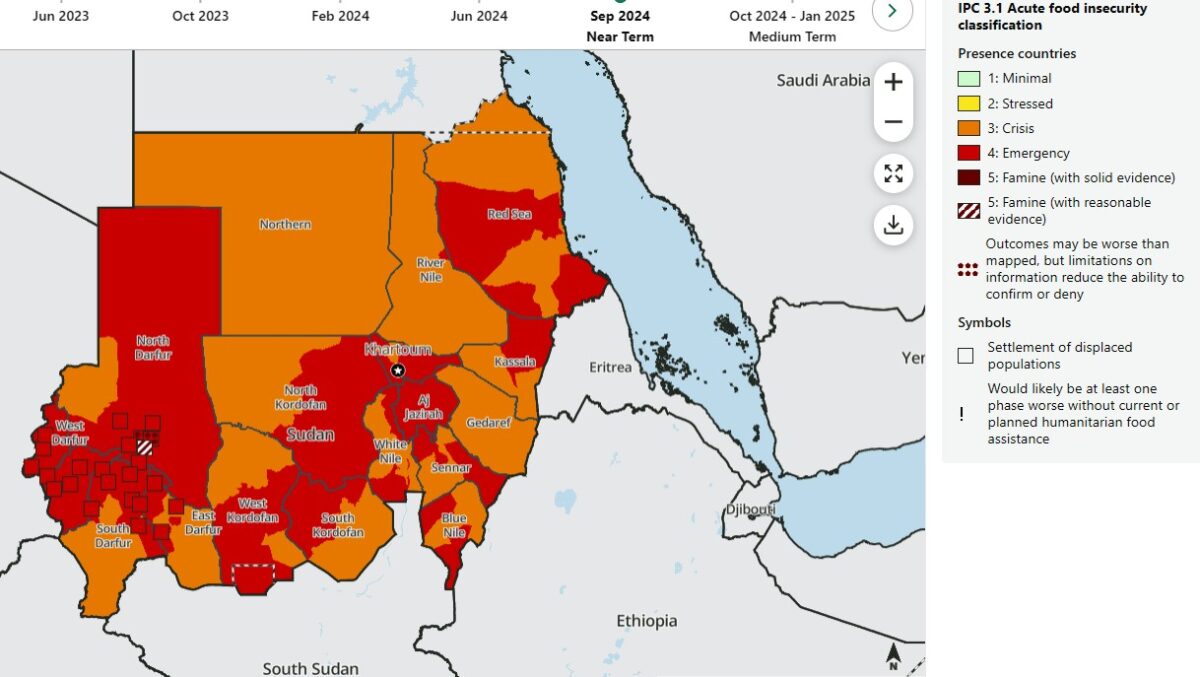
August 28, 2025: Aid agencies estimate that malnutrition in Sudan increases in scale, depth and scope. Much of the reporting comes from the far western region of Darfur, where, between January and May 2025, North Darfur saw a 46% increase in children admitted for SAM treatment at health centers compared to the same period in 2024 — with over 40,000 children treated in just that region.
As a result of 2 1/2 years of civil war, over 14 million Sudanese have been displaced by violence, both internally and across borders. In the largest camp for displaced persons, Zamzam in North Darfur, Médecins Sans Frontières (MSF) reported devastating malnutrition rates — as high as 29–30% acute malnutrition, and high mortality (e.g., one child dying every two hours. Similarly, Save the Children reported a nearly fourfold increase in severe acute malnutrition cases seen in one South Kordofan clinic from June 2023 to June 2024, with 1,457 children admitted in June 2024 alone.
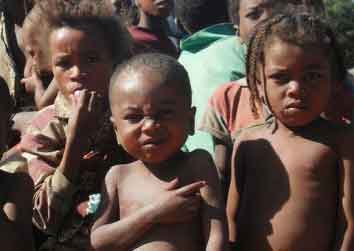
Though access by international organizations to children in this large, rural country is limited, UNICEF estimates that some 3.2 million children under 5 may have acute malnutrition in 2025, including about 770,000 experiencing Severe Acute Malnutrition, meaning they are extremely wasted.
The U.N.’s advisory body about famine, the Integrated Food Security Phase Classification (IPC) reported 25.6 million people in the Sudan are food insecure, and of those, 8.5 million are in Emergency (Famine degree Phase 4) and another 755,000 are in Catastrophe/Famine (Famine degree Phase 5).
Humanitarian access is greatly constrained, with persistent fighting preventing deliveries of food or supplies into many areas, notably in Darfur, Khartoum, and regions with large numbers of internally displaced person.
Concern Worldwide is supporting 81 health facilities across Sudan, particularly in West and Central Darfur, treating children under five for acute malnutrition, with a focus on delivering ready-to-use therapeutic food (RUTF). Despite the destruction of Sudan’s only RUTF factory in 2023, Concern has secured and delivered 10 metric tons of RUTF to vulnerable communities. In 2024, they reached nearly 484,000 people with lifesaving health and nutrition support.