
Fridtjof Nansen: Polar Explorer turned Hunger Activist

May 10, 2026     By Lani Marquez

My husband and I recently visited Oslo, Norway, a beautiful city surrounded by the Oslo Fjord. One of the many very interesting museums we visited there was the Fram Polar Exploration Museum, which houses Norway’s most famous polar ship, the Fram, which sailed to both the North and South Poles.  The ship was designed by the Norwegian scientist Fridtjof Nansen (1861-1930) and launched in 1892.

Nansen had gained fame while pursuing a doctorate in Zoology when at the age of 27, he led a six-month expedition in 1888 to be the first to successfully cross Greenland on skis. He published two books about the journey with his own photographs and drawings, bringing him international fame. He then set his sights on being the first person to reach the North Pole.

Forcing ships through the Arctic ice to reach the North Pole had been tried and had failed many times in the 1800s. But in 1884, a Norwegian professor of meteorology, Henrik Mohn, had put forward a theory of an east-west current over the Arctic Ocean when the remains of the American expedition ship Jeannette were found by the Greenland coast after the ship had been crushed in the ice and had sunk sunk near the New Siberian Islands in 1881.  Nansen noted this and related it to the driftwood from Siberia that he had seen in the ice off Greenland.

Nansen conceived the plan of building a ship “so small and so strong as possible … that it was improbable that it could be destroyed by the ice”.  With such a ship he believed that he could drift over or very near to the North Pole.  In 1893, he and his crew prepared for a two-year journey in which they would let the Fram get frozen in the drift ice north of Siberia with the hope that the currents would carry the ship to reach the pole. While they did not reach the pole, the expedition returned home safely, and Nansen later sailed on the Fram on an expedition to reach the South Pole. He did not reach that goal either. (Robert Peary became the first person to reach the North Pole in 1909, and Roald Amundsen the South Pole in 1911.)
The story of Nansen’s polar expeditions was fascinating enough, but what really captivated me about this man was his humanitarian work.

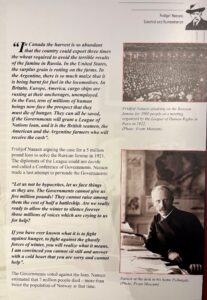
Upon his return to Norway after his polar expeditions, Nansen became Norway’s first ambassador to Britain, and in 1917 led a Norwegian delegation to the United States to seek grain aid for Norway, since the country had depended on imports of grain from Germany and Russia before the first World War due to the very low proportion of its land that is arable and since most of the country is made up of mountains, forests, and glaciers.  Soon afterwards, horrified by the slaughter of World War I, Nansen became a champion for the League of Nations and attended the Versailles Peace Conference in 1919 which helped shape it.

In 1920, the League of Nations appointed Nansen as High Commissioner in charge of the arrangements for the safe exchange of some 250,000 German and other foreign prisoners of war held by the Russians and some 200,000 Russian prisoners of war held in Germany.

At the same time as the prisoner exchange was being organized, the new Soviet Union was experiencing widespread famine. Nansen arranged for food, clothing, and medicines to be provided to the prisoners of war on Soviet territory and appealed for food aid for the Soviet Union. When Western governments refused to provide such aid to the Communist government, Nansen toured Europe and the United States to raise private donations to fund food for starving people in the Soviet Union.

He argued in the League of Nations for a £5 million loan to address the Russian famine, but his pleas were denied. Nansen estimated that 7 million people died in the Soviet Union as a result of the famine—more than twice the population of Norway at the time.  Nansen led relief efforts as High Commissioner for Relief in Russia for the International Committee of the Red Cross (ICRC) and associated organizations, after the League of Nations declined official involvement due to distrust of the Soviet government. His work combined advocacy, logistics, fundraising, and on-the-ground aid distribution.

Through the Nansen Mission (involving Red Cross branches from multiple countries and groups like Save the Children), he helped set up free canteens at orphanages, railway stations, and factories. Field kitchens (hundreds deployed) provided daily rations like half a liter of soup and over 100 grams of bread per person. The effort served hundreds of millions of meals overall.

“The difficult is what takes a little time, the impossible is what takes a little longer”
— Fridtjof Nansen

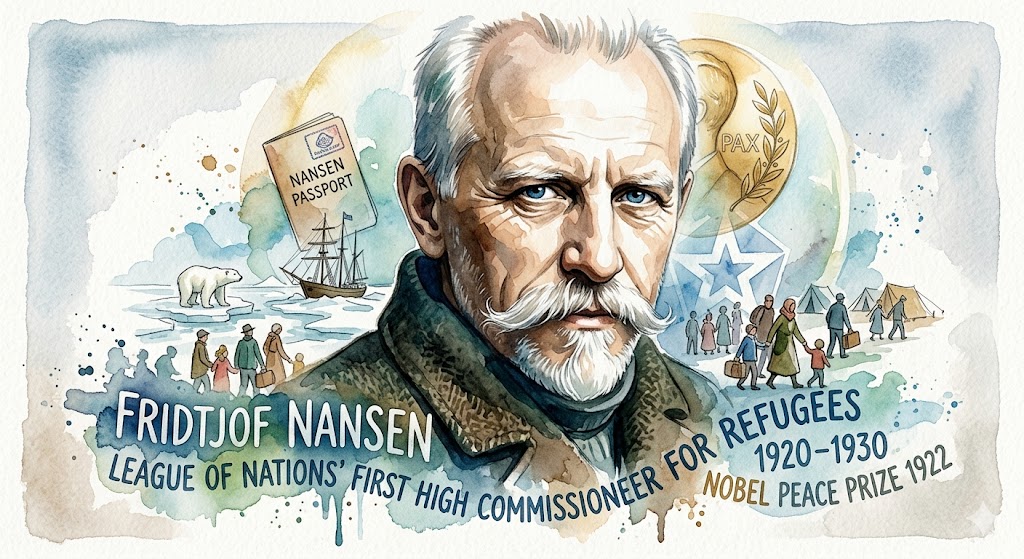
After that, in 1922, the League of Nations appointed Nansen as its First High Commissioner for Refugees, the first High Commissioner for Refugees (what would later become UNHCR), where he continued to use his fame as a polar explorer and diplomat to call attention to the victims of famine and genocide in Russia, Ukraine, and Armenia. In 1922, Nansen received the Nobel Peace Prize for his tireless work for refugees in Europe after the war.
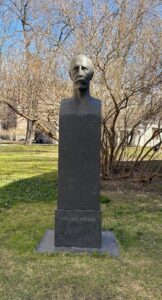
In his biography Nansen: The Explorer as Hero, Roland Huntford wrote, “Nansen is among the few really worthy winners of the Peace Prize, although he is probably the one who spent the shortest time earning it.”  Nansen spent the prize money on the purchase of tractors and the establishment of model farms to develop agricultural improvements in Russia.

Nansen’s legacy as a diplomat and hunger activist is worth remembering today.  His Nobel Prize recognized this work alongside his refugee initiatives. He approached it with the same determination he showed in polar exploration—practical, innovative, and relentless. His legacy influenced modern humanitarian organizations like UNHCR.

see also:  https://www.unhcr.org/il/en/about-fridtjof-nansen-unhcr-israel
Hunger Crisis in Myanmar/Burma

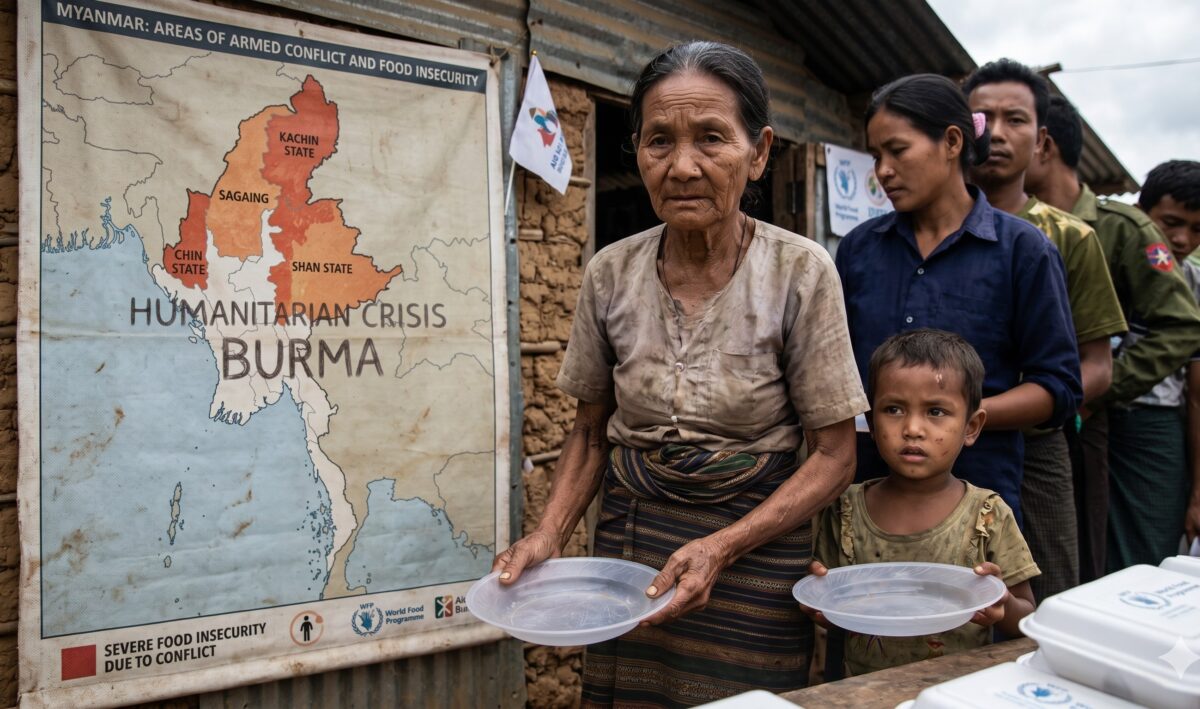
May 2, 2026      According to the latest Hunger Hotspots Report, 16.7 million people, or one in three citizens of Myanmar (also known as Burma), are acutely food insecure, a sharp increase from 13.3 million in 2024. Myanmar now ranks fifth globally for the highest number of people facing severe hunger.

More than 400,000 young children and mothers suffering from acute malnutrition are surviving on nutrient-deprived diets of plain rice or watery porridge. WFP’s country director has said the crisis is invisible to the world. WFP can target just 1.5 million of the 12.4 million people in need and requires $150 million to do even that. No recent national prevalence data exist on wasting, but subnational surveys (for example, one in Yangon and Ayeyarwady Regions in late 2023) found about 8 percent wasting, slightly higher than the prior national figure. Broader food security and nutrition monitoring, including Myanmar Household Welfare Survey rounds from 2021 to 2025, shows worsening dietary diversity, higher food insecurity affecting millions, and increased household hunger since 2021.

Related to malnutrition, Myanmar’s under-five mortality rate—39 deaths per 1,000 live births—is nearly three times higher than the East Asia and Pacific regional average of 14.4.

The roots of the current hunger crisis lie in the military takeover of the government in February 2021. Since the coup, intensifying conflict has led to an estimated 15.2 million people, nearly a third of Myanmar’s population, facing acute food insecurity in 2025. The junta has retaliated against resistance forces by blockading aid, restricting humanitarian access, limiting trade routes, and targeting humanitarian workers, further compounding the food crisis. Military attacks have destroyed agricultural equipment and contaminated farmland with landmines and unexploded ordnance, exacerbating challenges for local food production. The average price of a basic food basket has increased fourfold compared with prices before the military takeover.

The situation is particularly critical in Rakhine State, home to the Rohingya and other ethnic minorities. UNDP has reported that Rakhine State is on the brink of famine, with two million people at risk of starvation. The Myanmar military’s near-total blockade of humanitarian aid to Rakhine State since 2023 violates international humanitarian law and likely constitutes a war crime.

Many readers may remember the large 7.7-magnitude earthquake that struck central Myanmar on March 28, 2025, killing more than 3,700 people, destroying infrastructure, and reverberating through neighboring countries. A large share of aid donations was made in response to that quake.

International aid organizations working to address malnutrition in Myanmar include Action Against Hunger (ACF), Save the Children, Mercy Corps, Solidarités International, the International Rescue Committee (IRC), and Catholic Relief Services (CRS).

World Vision provides aid in 11 of the country’s 14 states and regions. ACF is currently implementing projects addressing malnutrition, mental health and care practices, food security and livelihoods, water, sanitation, and hygiene, nutrition security, and disaster risk reduction in Chin State, Kayah State, and Rakhine State. MSF has mobile teams in Naga and Sagaing, a remote, mountainous region in northern Myanmar where communities have limited access to basic healthcare. Despite restrictions on humanitarian access to conflict-affected areas, mobile teams based in Sittwe, in central Rakhine, offer primary healthcare and emergency referrals for patients from all communities.  The IRC works in Rakhine, Kachin, Kayin, and Shan States in close collaboration with the Ministry of Health.  Save the Children provides aid in Mandalay, Sagaing, Bago, Magway, Shan, and Naypyidaw. CRS’s current projects in Myanmar focus on agriculture and livelihoods and support for emergency response. CRS works with local Caritas partners to build capacity for community-led project design and implementation.  CRS Myanmar also supports partners in Kachin on community-led shelter efforts and provides technical assistance in community-led return and resettlement.

Community Partners International (CPI) provides community-based healthcare, particularly in conflict-affected border regions where government services are non-existent.  This includes “Backpack Medics,” who travel to remote villages to provide primary care, trauma surgery, and vaccinations. CPI also runs maternity waiting homes and trains community health workers to support safe births in conflict zones.

In Myanmar, the UN World Food Program (WFP) provides food rations to vulnerable populations, including internally displaced persons (IDPs), refugees, and people affected by natural disasters or conflict.  WFP also runs school feeding programs in areas with high food insecurity, providing nutritious meals to children in schools.

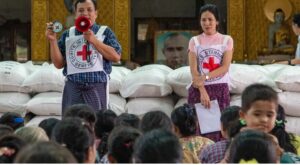
The International Committee of the Red Cross (ICRC) provides nutrition and health support for war victims in Myanmar.  In 2024 and 2025, the ICRC provided food rations, including rice, oil, and beans, to thousands of displaced families in areas such as northern Shan State, Mandalay, and Sagaing.

To the east of Myanmar, there are some two million refugees in Thailand.  The Border Consortium (formerly the Burma Border Consortium) of NGOs has operated in  nine refugee camps along the Thai–Myanmar border since the 1980s, providing foodIt remains the primary agency responsible for food assistance.  However, its operations have been severely reduced. By mid‑2025, TBC announced that food assistance for most households would be cut by 75% or eliminated entirely.

Threat of Child Malnutrition in Iran Amid U.S.–Iran Conflict

February 28, 2026       The U.S.–Iran war that began today, 28 February 2026, threatens to sharply worsen malnutrition among children under five in low-income urban neighborhoods of strike zones (Tehran, Isfahan, Kermanshah) and in rural border provinces (e.g., Sistan-Baluchestan and Kurdistan) that already experience high malnutrition rates.

Iran, with a total population of 93 million people, has 7 ½ million children under five years of age, which is more children than Germany, the UK, Canada, Iraq, Syria, Italy, Turkey, or France.

Over the last few decades the occurrence of childhood stunting (a form of long-term malnutrition) and of wasting (short-term) malnutrition have declined in Iran, reflected by the government’s attention to treating malnutrition.   However, studies in southern Iran from 2018 to 2023 show a significant increase in underweight and wasting among young children, with the annual % change of severe wasting increasing by 8.9%.  Nationally, the rate of wasting has averaged 4.2%, which is medium for regional and peer countries.  Iran’s Ministry of Health and Medical Education (MoHME) manages child malnutrition programs through primary healthcare centers, hospitals, and nutrition initiatives.  Treatment follows protocols similar to WHO/UNICEF guidelines for community-based management of acute malnutrition, which emphasize outpatient therapeutic care using Ready-to-Use Therapeutic Food (RUTF) for severe malnutrition.

The most widespread micronutrient deficiency diseases in Iran include vitamin D (rickets), iron (anemia), vitamin A, and zinc deficiency.  Iran addresses these through national programs (e.g., supplementation, fortification of foods like flour with iron/folate, salt iodization, and targeted UNICEF-supported interventions in high-risk provinces), but challenges persist due to economic factors, dietary habits, and regional disparities.

Even before the current war threats, Iran’s food economy was struggling under the weight of international sanctions and mismanagement.  The conflict will further reduce Iranian families’ ability to afford food.  In fact, the protests that broke out in December 2025 were in part over increased food prices after the rial plunged against the U.S. dollar.   There has been criticism by Iranians that their government has failed to present a clear emergency response plan, leaving citizens to fend for themselves. 

Iran produces much of its own wheat, dates, barley, rice, pistachios, walnuts, citrus fruits, and saffron.  It imports rice, cooking oils, soybeans, sugar, tea, and dairy.  The fighting will disrupt Iran’s ability to import food commodities, tightening supply.  Agricultural supply chains, transportation networks, storage facilities, and water infrastructure are all vulnerable.  Damaged roads and ports will impede food distribution across the country.

Urban bombardment now underway in Tehran and other major cities will displace families.  Reuters today reports that Iranians have fled cities in search of safety, rushed to stock up on food, and formed long queues at fuel stations as attacks by the United States and Israel spread fear and panic throughout the country.  Iranian government messages have explicitly encouraged people to leave Tehran and other targeted cities to avoid attacks.  This kind of internal displacement typically leads to overcrowded towns, strain on services, and informal settlements on the periphery of safer cities.

Internally displaced populations lose access to stable food sources, income, and caregiving routines.  Young children are disproportionately harmed by the disruption of feeding practices and by unhygienic displacement conditions that compound malnutrition with infectious disease.

Iran is known as a country that takes care of refugees.  Estimates vary, but UNHCR and other agencies report roughly some 3.8 million refugees and people in refugee-like situations in Iran as of 2025, overwhelmingly from Afghanistan and a smaller number from Iraq and other countries.

Iran has been prone to disasters due to large earthquakes and famines.  As well, in February 1972, a week-long series of storms  brought up to 26 feet (8 meters) of snow in rural areas of western Iran which buried over 200 villages, killing thousands.

Iran also suffered severe famines in 1870-72 and during the First and Second World Wars.  The most recent UN Food and Agriculture Organization report about Iran (November 2025) notes that persistent dry weather has hampered winter wheat plantings, leading to an estimated cereal production nearly 10% below the five-year average in 2025.  It found that wheat prices in Tehran had risen 50% and rice prices had tripled, compared to the previous year.

Iran has a fairly extensive domestic social protection system by regional standards, though it has faced significant strains in recent years.  The Imam Khomeini Relief Committee (IKRC) is one of the largest non-governmental charitable organizations in the world by some measures. It operates under government supervision and provides cash transfers, food assistance, healthcare subsidies, and vocational training to millions of low-income Iranians. It draws on religious endowments (waqf) and public donations alongside state funding.   The State Welfare Organization (SWO) handles a broader range of social services including disability support, elderly care, and assistance for vulnerable families.

International aid agencies help Iran in disasters, including the Red Cross.  The national Red Crescent society of Iran, part of the global IFRC network, has deep roots in domestic disaster relief, rescue, and healthcare operations.  The International Committee of the Red Cross (ICRC) has been working in Iran since the late 1970s.  The ICRC provides humanitarian services related to conflict-affected populations, health, and protection.

Médecins Sans Frontières (also known as Doctors without Borders) has been operating health programs in Iran.  Many other international NGOs have been hesitant to work in Iran, where the government distrusts Western organizations.  An exception has been Relief International (RI), which was founded in 1990 following the catastrophic Manjil–Rudbar earthquake in northern Iran.

The convergence of active conflict, pre-existing economic strain, and disrupted supply chains creates a compounding crisis for Iran’s most vulnerable — particularly children under five.  International humanitarian organizations face their own obstacles operating in Iran, given longstanding government suspicion of Western NGOs. The children most at risk — those in strike zones like Tehran and Isfahan, and those in already-malnourished border provinces like Sistan-Baluchestan — are precisely the populations least able to weather further disruption to food access, clean water, and caregiving. Without rapid and coordinated humanitarian response, the malnutrition crisis that predates this conflict will deepen sharply, with consequences that will outlast the fighting itself.


S. Hansch, WHES Board