


July 24, 2026 This is the eighth Hunger Notes article about Food for Peace programs to help inform the public and USDA about lessons learned during past decades about the design and evolution of US food aid, intended to inform USDA which has an outstanding request for information.
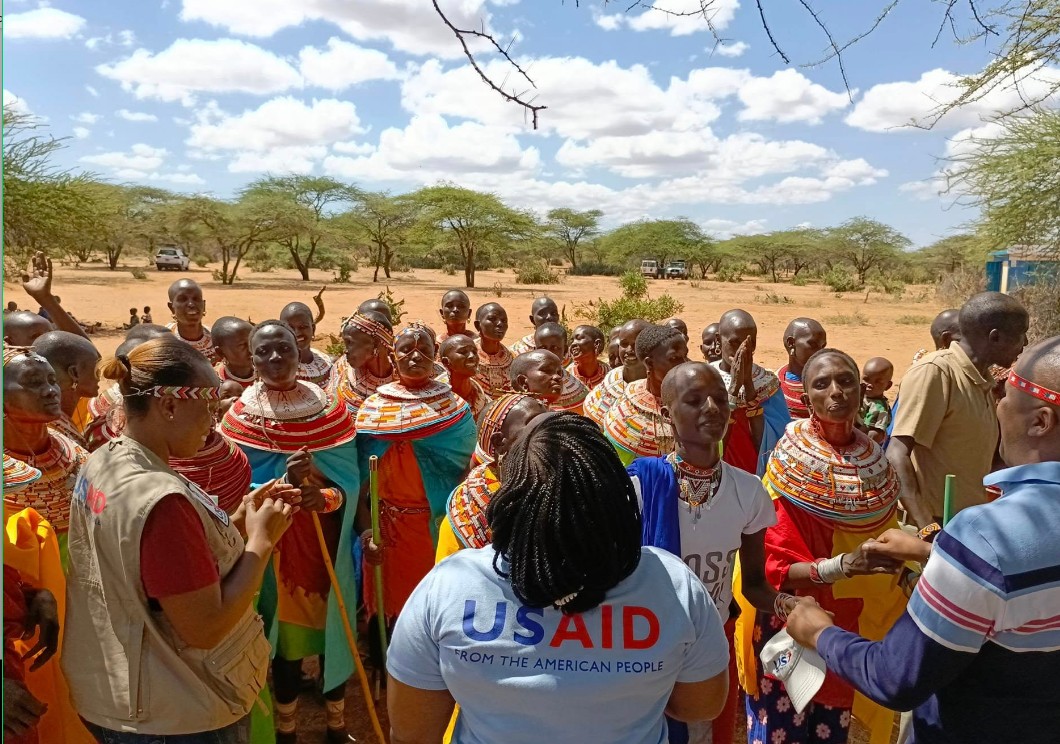
Nawiri was the most recent Food for Peace program for Kenya, with about $200 million to different NGOs, led by two groups, Catholic Relief Services and Mercy Corps, covering drought-prone arid lands with mixed pastoral and agricultural economies. The CRS consortium included Caritas, Tufts University, IBTCI, Concern, Village Enterprise and Kenyatta University and worked in Isiola and Marsabit counties, while Mercy Corps worked in Samburu and Turkana counties, with Research Triangle Institute, AVSI, Viamo, Caritas and the African Population and Health Research Center. Together these teams reached some 550,000 people.
Program metrics showed that Nawiri achieved substantial positive impacts but the benefits were often uneven, context-dependent, and constrained by severe environmental shocks. The implementing agencies found that acute (wasting) malnutrition varies significantly between neighboring wards, across different seasons, and over time, meaning that generalized regional approaches are often ineffective. Also, screening methods like mid-upper arm circumference (MUAC) and weight-for-height z-scores (WHZ) behave differently across seasons, sex, and age groups. Relying solely on MUAC can delay the identification of malnourished children; employing both metrics is necessary to accurately capture different characteristics and stages of malnutrition. Not surprisingly, they found that dry climate correlated with worse malnutrition.
NGO evidence generally showed that where their interventions were concentrated, malnutrition measurably fell. During the period of study, wasting malnutrition declined by over 20% in target areas, though it increased 40% in Turkana. Furthermore, longitudinal studies noted that stunting (long-term malnutrition) increased significantly over time for the sample as a whole, particularly in Laisamis.
Increased systematic screening and referral of malnourished children to health posts were an important reason for those declines seen in wasting. In the Turkana, Nawiri equipped 210 community health volunteers in 4 communities with dosage carts, pneumonia beads, and malaria test kits. Concern piloted an integrated health intervention that added malaria, pneumonia and diarrhea case management with existing integrated-management of acute malnutrition.
Some 57 water systems were rehabilitated, important in a dry lands, and Nawiri fostered 35 local “Water Use Associations” for ongoing improvements for tanks, pipes and water points. Crops were expanded with irrigation: sorghum, maize, watermelon, green grams, fodder. A 7 km canal was desilted.
“The primary pathway between water insecurity and malnutrition in the arid lands of Kenya is women’s time burden collecting water to meet the minimum drinking and hygiene needs of the household. Water collection is performed exclusively by women and girls and remains one of the pervasively gender inequitable elements of pastoral life. Nawiri aims to address the role of water system functionality through borehole rehabilitation.”
The project found that traditional pastoralist strategic mobility and social institutions (like sharing milk, food, and childcare) are the frontline of disaster response and foundational to community resilience. Nawiri helped establish retail shops (dukas) in remote areas to stock better varieties of nutritious foods, bringing vibrant markets to communities that previously had to travel up to 7 kilometers for basic goods. Nawiri promoted livestock health and livestock disease surveillance.
Applying the graduation model, some 500 households in 14 villages graduated with Village Enterprise assistance. In The Isiolo pilot (600 households) launched 204 businesses and 20 savings groups; Food Consumption Score rose from 51.3% to 83.8% in 3.5 months and children (6–23 mo) meeting minimum acceptable diet rose from 6.38% to 31.65%.
The Double-Edged Sword of Diversification: While livelihood diversification provides alternative income, it can act as a maladaptive coping mechanism if it forces women into labor-intensive, low-return activities,. The program observed that as women spent more time on business activities, time spent on childcare decreased, which in some zones led to reduced breastfeeding and higher acute malnutrition. While the drought pushed communities to diversify away from livestock, weak local economies meant many new businesses sold the same basic goods (like sugar and flour), fast-tracking local market saturation
Under CRS, 207 teenagers graduated the “Nawiri na Ujuzi” course (tailoring, masonry, plumbing, electrical, mechanics, driving), which was jointly funded by Nawiri and the County Government of Isiolo. CRS Deputy COP Margaret Kahiga notes all beneficiaries come from households with under-five children facing malnutrition. In a separate area, a randomized controlled tiral conducted with the Rural Entrepreneur Access Project (REAP) in Samburu revealed a limitation to these economic benefits: if market saturation crossed a certain tipping point (over 60% enrollment in a specific locality), the income impact for individual businesses could reduce over time as businesses competed against one another
Resilience was highly dependent on informal safety nets, asset ownership, and access to savings. The program emphasized layered, sequenced interventions (e.g., combining water with agriculture, nutrition education, and markets) and local ownership, leading to better resilience against shocks like drought. 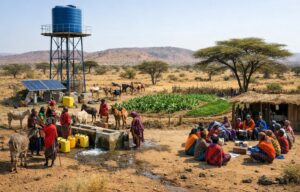 The partner county governments agreed to sustaining gains post-closeout, including asset handovers and policy integration. The NGOs also observed a chronic deficiency in prioritizing and budgeting of government resources for nutrition, and political leaders frequently lack awareness of the importance of multisectoral nutrition approaches.
Much of Nawiri intentionally focused on formative research and theory-of-change-analysis during the first two years. The Feinstein International Center at Tufts University managed a longitudinal study (bimonthly surveys) in four sentinel sites. Tufts found that few individual/household variables predict malnutrition, whereas basic structural drivers (pastoralism under pressure, climate variability, weakening customary institutions) dominate. Mercy Corps’ review of longitudinal data found that wasting malnutrition had persistently been above 15% for three decades, without improvement.
Notably, DOGE terminated the CRS program, despite positive progress and investments, because DOGE’s simplistic word search through the fun. ding agreement found politically-offensive words, like “gender”, and “climate.” Because Nawiri was terminated early, a full, independent endline evaluation of final impact may be incomplete.
– Contributed by WHES board member, Steven Hansch

