Sir David Nabarro, a distinguished British physician, international civil‑servant, and global health visionary, passed away at his home on July 25, 2025, aged 75. His legacy includes decades of transformational work in global nutrition, food security, public health and crisis response — marked by initiative, collaboration, and deep compassion.
In 2010, Dr Nabarro was appointed the first Coordinator of the global Scaling Up Nutrition (SUN) Movement, uniting governments, civil society, donors, the UN, and the private sector in a shared mission to reduce undernutrition in the first 1,000 days of life. As Coordinator of the SUN Movement, he worked closely with NGOs such as Action Against Hunger, Concern Worldwide, CARE, Helen Keller International, and others who were key partners in delivering community-level nutrition programs. Nabarro said, in a Devex interview: “The creation of malnourished societies is an injustice, is itself an act of violence that is causing damage that is just going on for too long.”
Over his career, he led important U.N. aid responses such as for the 2004 Indian Ocean tsunami, avian influenza (2005–14), the Ebola outbreak in West Africa (2014–15), and the cholera epidemic in Haiti (2010). As WHO Special Envoy for COVID‑19, from 2020 until his passing, he emphasized “precision public health” — promoting testing, isolation, and vaccine equity over blanket lockdowns.
His international health colleague, Dr. Ron Waldman remembers: “Nabarro has to be considered among the most important and most influential leaders of our time in global health. It would be difficult to name all of his positions in a single sitting, but even though some of them were brief, he always had a major impact. He led WHO’s efforts on polio, malaria, Ebola, Covid, and disaster relief, among others.
“He was skilled diplomat, but never afraid to ruffle feathers when that would advance a righteous cause; he was a consummate technocrat, but always had innovative and creative ideas and was eager to put them on the table; he was a dreamer and a visionary, but also as much a goal-oriented, down-to-earth pragmatist as any leader could be.
“Dr. Nabarro’s leadership came from deep within, to be sure, but it was as much defined by the loyalty and devotion of his followers from all around the world and from every station, to whom he would never stop listening and from whom he would never stop learning. He was a great man.”
Nabarro championed collaboration across sectors, believing that “dialogue, collective and synergistic action” was essential for sustainable impact—an approach celebrated by the Micronutrient Forum, which lauded him as the “founding father of the Scaling Up Nutrition Movement.” In 2018, Dr Nabarro received the World Food Prize as recognition of his outstanding leadership in maternal and child undernutrition. In his acceptance speech, Nabarro explained “Nutrition is not just about food. It’s about changing societies, empowering communities, ensuring access to clean water, sanitation, and healthcare.”
Peter Morris, the retired chair of World Hunger Education Service (publisher of Hunger Notes) recalls “David was a great soul. I remember the first time I met him he was already a legendary persona in the emergency and humanitarian world and very high-placed in the United Nations. My first impression was how personable and genuinely interested he was in those he spoke to, and what they had to say. A most memorable time for me was when we were in Guinea at the same time during the 2014 Ebola Crisis. I was the USAID Team Leader, and David was leading the UN actions. We were on the same UN helicopter whose schedule had been late. “
“We were up in the air when he was also scheduled to open a meeting via  zoom in Europe. The helicopter was a noisy Russian model yet instead of cancelling the opening, David via his mobile and earphones gave a speech from his webbed seating to a full meeting room without notes, concise, and clear, with great aplomb. Meanwhile the rest of us were hanging on to the webbing in the helicopter, praying for a safe landing.”
Peter interviewed Dr. Nabarro for Hunger Notes for this article: https://www.worldhunger.org/an-interview-with-david-nabarro/
The World Health Organization, where he was a senior leader for much of his career, described him as “a widely respected, impactful and loved champion of health, equity and disadvantaged people worldwide,” noting his kindness, mentorship, and readiness to support others in their careers.
Dr. Rick Brennan, who worked many years leading emergency responses at WHO remembers: “David was one of the most visionary, practical, ethical, and compassionate people with whom I ever worked. There are so many memories and examples of his extraordinary contributions to global health and humanitarian action. In Darfur in 2004, we admired him for his determination to demonstrate to the world the scale, scope, and public health impact of the humanitarian crisis. In Geneva in 2005, partners were amazed by his brilliant management of the first Global Health Cluster meeting – he was the chairman, main technical expert, and rapporteur, writing and projecting the discussions in real time.
“And I will always be grateful for his extraordinary support during the Ebola crisis – his encouragement of the WHO team during difficult times; his frequent and positive participation in our morning meetings in Geneva; and his humble, yet authoritative chairing of the Global Ebola Response Coalition. I envied him for his strategic insights, technical smarts, political savvy, and ability to convey true compassion for the most vulnerable. A unique man of great passion, and extraordinary personal and professional qualities.”
One of his most hands-on and influential contributions was the development of a simple, locally made height board—a tool used to assess stunting in young children, a key indicator of chronic malnutrition. Early in his career, serving as the District Child Health Officer in Dhankuta District, Nepal, Dr. Nabarro recognized that many health workers lacked tools to measure child growth and malnutrition. Deployed by Save the Children UK, Dr. Nabarro helped design and field-test a wooden height board that could be built locally, using simple materials and carpentry skills. The board included a sliding headpiece, a measuring scale, and was constructed to be durable, portable, and easy to use in rural health posts or during outreach clinics.
Dr Nabarro’s legacy is written not just in awards and positions, but in the millions of children saved through improved nutrition programs, the strengthened health systems through crisis response, and the global leaders he mentored.
Other tributes:



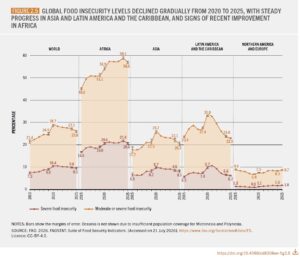 continent and scenarios, extrapolating from the experiences of recent decades.