


U.S. Food Aid (Part 10): To Monetize or Not to Monetize? A Review of Food Aid Monetization
July 30, 2026 by Mara Russell The sale of U.S. food aid overseas, e.g., Title II monetization, has been controversial for decades. Going back to the beginning of Public Law 480 in 1956, food aid was provided through a government-to-government program known as Title I in which recipient governments received large concessional loans of food aid, which were subsequently sold locally, to provide funding for government initiatives and inputs to local food industries.
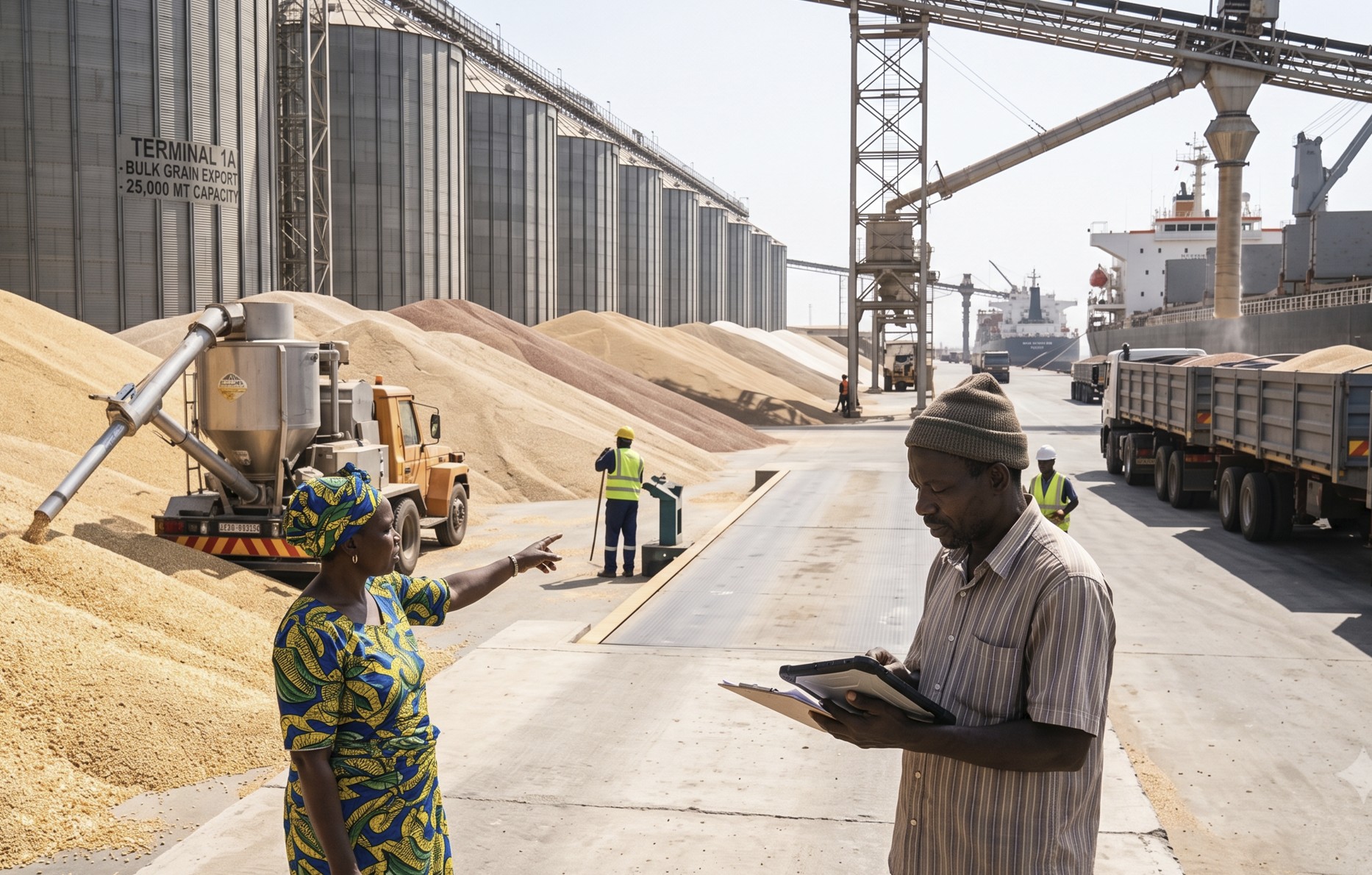
In its recent Request for Information, the U.S. Department of Agriculture (USDA) asked for advice about the monetization of food aid, i.e. when donated bulk food aid is sold after being transported to a target country, typically sold at wholesale markets.
The early Title I program has not been funded formally for many years, but using the Food for Progress program, USDA sometimes provides government-to-government grants consisting of food aid which is subsequently monetized. In FY2013, the Government of Mauritania received commodities worth $5.16 million, in FY 2014, the Government of Guatemala monetized commodities worth $30.5 million, in FY2017 the Government of Jordon monetized commodities worth $18.7 million, and in FY2021, the Government of Sudan received 300,000 metric tons (MT) of Hard Red Winter Wheat worth $120 million. Venezuela is also listed as having received $12,674,433 in FY 2019 as a “Provisional award contingent upon initiation of a democratic transition in Venezuela”. However, until its elimination last year, Title II food aid programs were always led by USAID. Now Title II programs are being managed by USDA because of an inter-office mechanism that transferred them to the latter agency.
Title II programs are, by definition, managed by partner organizations, such as World Food Programme and not-for-profit International Non-Governmental Organizations. These latter organizations became very interested in using Title II monetization during the 1980s to cover the costs involved in delivering food aid while addressing the underlying causes of food insecurity. While the logistics of monetization were complex and often difficult to manage, funding from monetization enabled implementation of programs that would not have been possible otherwise. Throughout the 1990s into the early 2000s, Title II monetization enabled introduction of programs that aimed to improve food security using technical interventions in food production, nutrition, and water, sanitation and health (WASH) in non-emergency programs. Many of these programs used 100% monetization in which food aid commodities were exclusively monetized and not distributed.
This led to a shift in the types of commodities used in Title II programs. Initially, commodities were developed with recipients in mind. Grains were most often milled and highly fortified. For instance, Corn Soy Blend (which until 1990 included Non-Fat Dried Milk, and was called “Corn Soy Milk”), was fortified with a blend of vitamins and minerals as well as including protein-rich soy flour. Bags were manufactured to reduce the potential for loss, spoilage and infestation, and such shipments were containerized. Vegetable Oil came in small metal tins that could be easily carried by recipients. Yet, as monetization involved the sale of commodities to private sector food industry traders and food processing companies in developing countries, it was much easier to sell bulk commodities to these industries. These buyers were much more interested in doing their own value addition and selling these commodities to the private sector. There was reduced attention among NGOs in distributing commodities to poor and malnourished recipients, and more attention to generating resources through monetization, which, several NGOs admitted, diverted organizational resources away from addressing the needs of hungry people and the underlying causes of food insecurity. Instead, commodities such as bulk wheat, rice, corn and soybeans were sold without the need for bags, and bulk crude, degummed, soy oil was pumped directly from tanker ships into processing plants. Instead of value being added in the U.S., value was added in the recipient countries. Bags and tins were not required. Containerization was not necessary. And, while there were hefty costs associated with monetization, with 100% monetization, there were no longer requirements for significant funding for internal transport storage and handling. Unfortunately, as a result, by the mid-1990s, the demand for processed and packaged commodities declined so much that they made up less than half of the non-emergency commodities shipped by Title II, despite a Congressionally mandated minimum of 75% use of processed and packaged commodities. Producers of processed and packaged commodities lost revenue as a result, and some went out of business. Relevant U.S. commodity organizations advocated for bulk commodities for monetization to be reduced in line with the processed and packaged mandate. It also became apparent after a certain point that import of bulk commodities had a negative impact in some countries on farmers and market systems by creating unfair competition.
In addition, after several years, concerns were raised that the costs involved in the purchase and shipment of commodities to developing countries were not being adequately recovered through sales. Although cost recovery varied widely depending on the country, time of purchase in the U.S. and timing of the sale in the receiving county, the buyer, and the method used for sales, overall, cost recovery on monetization sales overall was less than 100%. The GAO reported in 2011 that during the three prior years, USAID cost recovery was 76% and USDA cost recovery was 58%. At the time, the high cost of ocean shipment, heightened by a 75% preference for U.S. flag ships that limited competition for these cargoes further increased ocean freight to make up a third of the overall costs, and made cost recovery much more difficult. This resulted in concerns that the full value of the taxpayer dollar was not delivered to recipients as intended by Title II programs. However, most international NGOs were more interested in being able to provide agriculture and other technical and training services that could enable people to grow out of poverty, or to teach mothers how to improve the nutrition of their children without imported food aid, or how to develop water systems without the need for food distribution. While specialized Title II commodities did not disappear, NGOs often favored using cash to address the underlying causes of food insecurity to prevent hunger and malnutrition rather than simply distributing commodities to people. Monetization provided a source of cash that would not be available otherwise to implement programs that sought to address not only short-term needs, but also long-term causes, thus eventually resulting in self-sufficiency with a focus on building sustainability. In 2003, David Tschirley and Julie Howard of Michigan State University reported that the U.S. share of official development assistance had declined during the past forty years, and that it had fallen by half between the mid-1980s and mid-1990s and continued to fall. Moreover, U.S. funding for agriculture declined to only 4.1% of foreign assistance.
While American INGOs continued to actively advocate for monetization, European NGOs voiced many concerns about it. These included the fact that as the U.S. accepted less than 100% of the cost of food and freight from monetization, this amounted to a subsidy that created an uneven playing field for other commercial exporters. These concerns were raised at the Doha Round of the World Trade Organization and created some confounding issues for U.S. trade negotiations in the early 2000s. Also, many American INGOs had federation members based in donor countries, including many in Europe. These European federation members raised some of the strongest objections to monetization, and organizations that monetized either had to agree to disagree with these European brother and sister agencies or go along with them and stop monetizing.
It was European INGOs, who were largely focused on providing food aid for humanitarian assistance, who raised some of the strongest concerns about food aid that should have been used to help feed hungry and malnourished people being sold to the private sector, which then turned a profit and sold the food in commercial markets. Also, some views changed among staff of American NGOs who were concerned about the growth of hunger and malnutrition, and the fact that food aid being sold to support their programs was not being used to feed increasing populations of people impacted by disasters, conflict and chronic hunger and malnutrition. In the late 1990s and early 2000s, the proportion of U.S. emergency food aid increased significantly in comparison with non-emergency food aid. This led U.S. NGOs to advocate strongly to establish a set aside “safe box” for non-emergency programs.
Added to this was growing evidence that monetization was likely resulting in negative market impacts, including disincentives for local farmers and market actors. While NGOs implementing monetization were required to conduct market analyses to avoid these disincentives, there were concerns that these so-called “Bellmon Analyses” may not have been objective because the end-goal for the NGOs involved was to monetize and generate as much cash as possible. Also, some NGOs began to import Title II commodities in consumer packaging and sell them to buyers outside of the large urban centers so that the commodities could reach people in rural areas, thus making these products more accessible to the people these programs were designed to support in Rwanda. However, there were also concerns about how monetized commodities may create competition with local producers and vendors, which in turn resulted in dependency on these imported commodities.
As well, cost recovery can be very difficult to achieve. If something happens to a shipment or there are significant commodity losses, this can be a problem. If commodities are not sold by the time they are shipped, this can result in commodities going unsold, resulting in lower prices paid than projected. However, in some cases, the opposite was true if an auction methodology was used to sell commodities for which there was strong demand. Nonetheless, if commodity specifications fail to meet buyer expectations, this can also result in defaulted sales or lower prices. Commodity spoilage, theft or other loss can result in lost funding. Buyers have been known to collude to keep prices low, or to renege on contracts. Shipments carrying monetization cargoes have been known to catch fire or sink. Unsold commodities have been known to become unsafe for human consumption or be stolen. As noted above, NGOs that monetized often invested heavily in addressing monetization issues at the expense of fulfilling their mandates of meeting humanitarian among vulnerable populations.
In 2005, long-standing concerns about how to do food aid were explored in a book by Cornell University’s economist Chris Barrett and Dan Maxwell published Food Aid after Fifty Years: Recasting its Role. They recounted how the time needed for food aid to reach malnourished people, and the costs involved in commodity purchasing and ocean shipment were high, whereas, in theory, if food were purchased locally (or in a nearby country), the time needed to transport food could be reduced by six months or more. Also, commodity and transportation costs could be reduced. There could be considerable benefits to local farmers and markets if instead of purchasing and shipping food from the U.S., food is purchased overseas, within the target region. Their book also proposed a global procurement system to obtain the most competitive prices were being paid for food aid. Meanwhile, the World Food Programme uses similar processes to ensure the cost-effectiveness of many of its local, regional and international purchases.
In 2009, CARE changed its policy and took a stand against monetization, proclaiming that it would not monetize. In doing so, CARE reported that it lost approximately $46 million per year by not monetizing. The INGO led an advocacy campaign against food aid monetization, and for increasing the use of cash to address underlying causes of food insecurity. It also advocated for the use of local and regional procurement, cash and vouchers for food assistance that would not only increase local food consumption and hence demand for local production and marketing, enabling people to have a choice about the food they consumed.
However, CARE made an exception by monetizing in Bangladesh. The Bangladeshi Government agreed to purchase Title II wheat for monetization and distribute this through the national food safety-net system, with the idea that people in need would receive this food. The GoB agreed to pay no less than an 80% cost recovery (usually around 82%) and continued to do so through 2020. This was incorporated into the CARE’s food aid policy, stating that it would not conduct “private sector” monetization. CARE also made an exception if it was working in a consortium with one or more organizations, it would use any cash resources that could be made available.
In the years that followed, some other NGOs shifted away from monetization. New other USAID initiatives began that provided cash to NGOs for agriculture, food security, food market growth and nutrition activities (Development Assistance funds). These were in response to an international “Food Price Crisis” that revealed vulnerability in global stocks that resulted in commodity price increases. These programs eventually came to be known as Feed the Future, which was signed into law in 2015. In 2014, funds from this program were first integrated into Title II and could be used in non-emergency programs. These funds were known as “Community Development Funds” or CDF and were finally available to be used in lieu of monetization. A total of $80 million per year was made available for this purpose and were in fact enshrined in Food for Peace legislation. Moreover, while in the past, there was a 15% floor on the use of monetization in Title II programs, there is now a 15% (as of 2018) a ceiling, thus indicating a priority in the legislation to use cash and not monetization proceeds. When CDF funds became available, it became possible for organizations like CARE that do not monetize to implement these programs.
However, since the 2026 transfer of Food for Peace to USDA, it is not clear what funding will be available to provide technical and operational support to these programs. The Feed the Future program is no longer being implemented by the State Department and the recent Food for Peace Emergency Notice of Funding Opportunity stipulated that 50% of resources should be used for commodities and ocean freight, so other resources are needed to cover the costs of internal transport storage and handling to ensure the accountable, effective and secure management of food aid and to ensure that food aid quality is maintained until it is consumed. Funds will also be needed to cover the technical costs associated with addressing the underlying causes of food insecurity, such as increasing food production, building the capacity of people to earn sustainable incomes, adoption of critical health and nutrition behaviors, construction and maintenance of water and sanitation infrastructure, and ensuring communities are more able to address shocks and stresses that impact food security, and ensure that these outcomes outlast the end of these programs. It is not clear where these funds will come from without CDF, and thus monetization funds may be needed to support these programs to ensure that food aid is managed accountably, securely and food quality is maintained, and at the same time ensure that programs are effective in building and ensuring food security in the long run, thus avoiding dependency.
As international non-governmental organizations weigh whether to engage in food aid monetizations, a few questions are likely to be important in decision-making. Since there are many potentially negative outcomes that could result from monetization, would it be an acceptable action in the short term? And, if so, how many years will these monetization programs continue? Will there be a future in which cash funds will cover the costs of internal transport and other program costs? If so, when will that happen and what will it look like?
Will legislation that ensures the use of CDF be acted upon if Development Assistance funding becomes available for use in food security in the future? And, if so, when will that be and what will it look like? CARE and other INGOs advocated for at least a decade for cash funding for use in lieu of monetization. If INGOs such as CARE agree to monetize food aid under the current circumstances, will they continue to advocate effectively for availability and use of CDF funding? Moreover, American farmers and farmer associations that benefit from monetization will strongly push back on efforts to replace monetization funds with CDF or other cash. Will that make it more difficult to implement Food for Peace programs without monetization? As Food for Peace non-emergency programs are among the very few U.S. Government foreign assistance non-emergency food security and nutrition initiatives still operating since the elimination of USAID, would monetization be an acceptable short-term solution? Unfortunately, bringing cash back to these programs may take a long time and this could result in necessitating the use of large-scale monetization activities for years to come. Finally, not monetizing could be seen as not supporting farmers who have, in essence, ensured the continuation of the Food for Peace program.
Faced with a future in which monetization may need to happen, organizations may wish to consider options that support programmatic objectives. For instance, CARE and other U.S. INGOs implementing in Bangladesh negotiated an agreement with the Bangladeshi government in which it purchased wheat at a set rate of cost recovery (80% minimum) and then used the commodity in its food safety-net system. This may not work elsewhere, but it is a bit more predictable and at least ensures that poor people access this food. Other organizations have monetized food as a way of contributing to the manufacture of products that were ultimately distributed.
Land O’Lakes International Development monetized non-fat dried milk powder in several Asian countries, selling it to processors that developed nutritious, fortified, UHT milk snacks for distribution in schools. As mentioned above, monetization among small scale vendors outside of large urban centers could also ensure that monetization commodities create value for traders and households in rural areas. So, there may be options available to “mitigate” some of the downsides of monetization, by ensuring that the food used for monetization eventually provides food for those the program might target with food assistance. Unfortunately, as time and resources devoted to these options may add to the cost of monetization, it will ultimately reduce the ability of humanitarian organizations to fulfill their mandates of addressing the needs of food insecure populations.
Further Reading:
Gaibler, Floyd, Deputy Under Secretary, Farm and Foreign Agricultural Services, U.S. Department of Agriculture, The Impact of the World Trade Organization on Food Aid Policies, Presentation at the USDA and USAID Export Food Aid Conference, Kansas City, Missouri, April 25, 2006.
EveryCRSreport.com, International Food Aid Provisions of the 2008 Farm Bill, July 10, 2008, https://www.everycrsreport.com/reports/RS22900.html#_Toc346816996, accessed July 28, 2026.
Government Accountability Office (GAO), Funding Development Projects through the Purchase, Shipment, and Sale of U.S. Commodities Is Inefficient and Can Cause Adverse Market Impacts, GAO-11-636, June 2011, https://www.gao.gov/assets/gao-11-636.pdf, accessed July 28, 2026.
Harrell, Eben, CARE Turns Down U.S. Food Aid, Time, August 15, 2007, https://time.com/archive/6922467/care-turns-down-u-s-food-aid/, accessed July 28, 2026.
CARE USA, White Paper on Food Aid Policy, June 6, 2006, https://www.care.org/wp-content/uploads/2020/05/CARE20monetization20farm20bill20white20paper5B35D.pdf, accessed July 28, 2026.
Mara Russell has led food aid programming for decades.
-
 World Hunger Education
Service
P.O. Box 29015
Washington, D.C. 20017 -