


U.S. Food Aid (Part 4): GACAP, Monetization, and Food Aid Management
July 18, 2026 This is the fourth in a series of articles about U.S. Food for Peace to inform the public and USDA about lessons of food aid.
For some time, U.S. NGOs or Private Voluntary Organizations (“PVOs”) came together to create a network for sharing lessons, learning, and principles about food aid. This network was called Food Aid Management, or “FAM.” It was originally created and led by Tom Zopf, who had been head of CARE’s food unit.
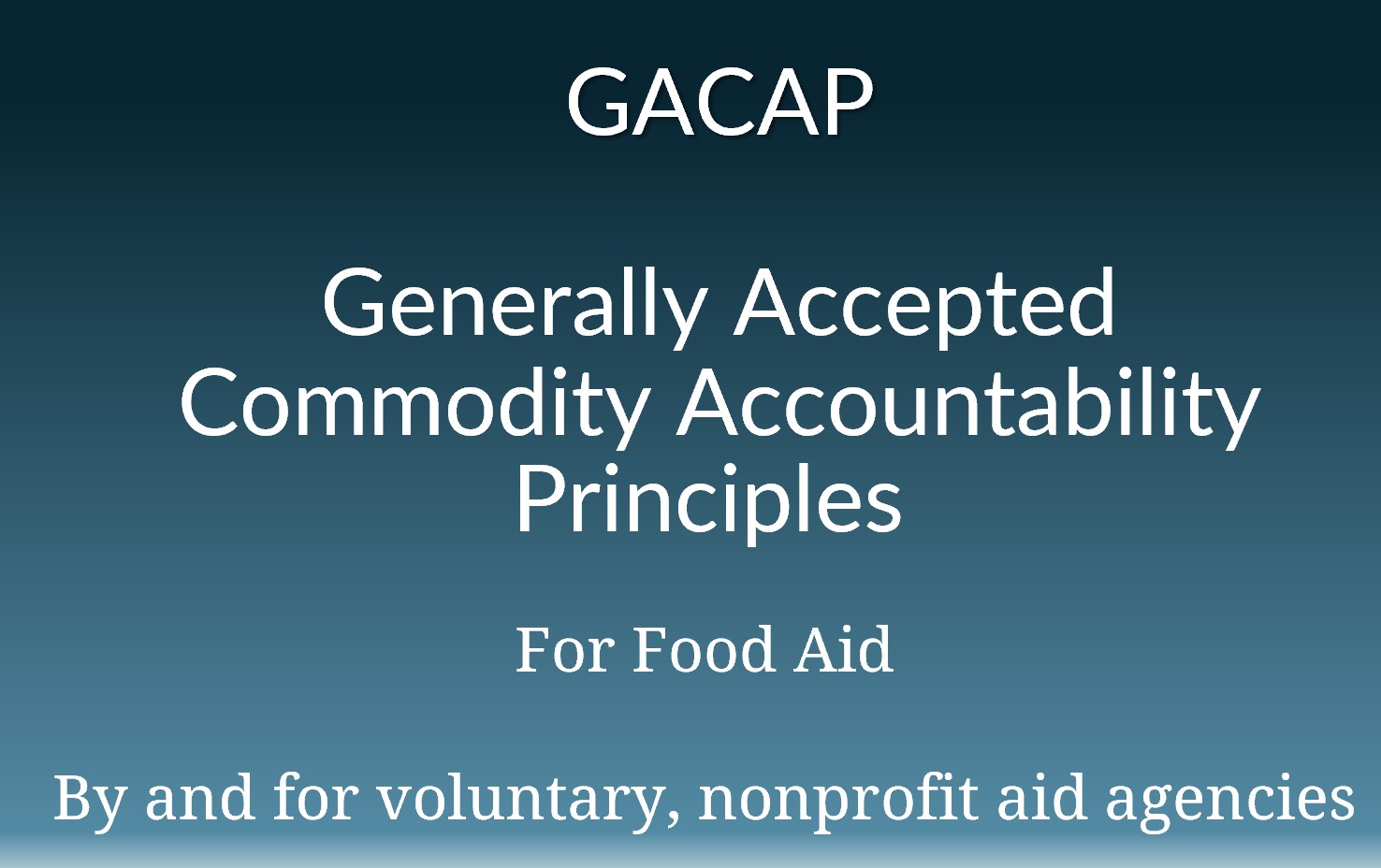
The most important product was the Generally Accepted Commodity Accountability Principles, or “GACAP,” as seen above left. It emphasizes how each aid NGO commits to responsibly shepherding the public’s food donations. As such, GACAP says, “Commodity management organizations engaged in commodity programs should develop and publish for their own use and that of the public and the donor organizations clear statements of the organization’s purpose and operating principles guiding the use of food aid.”
The GACAP name was intended to align with the GAAP standards for accounting (Generally Accepted Accounting Principles), set by FASB.
GACAP preceded the SPHERE project in setting forth NGO voluntary commitments toward accountability, and with greater detail: “An essential aspect of the internal control system is the proper separation of the duties and responsibilities of employees. Organizational charts, statements of functional responsibilities, and policies and procedures manuals should reflect this separation. With respect to commodity accountability this means that the duties and responsibilities related to (1) the authorization to move and disburse commodities, add or delete distribution sites or change the quantities the sites should receive, (2) the physical control (custody) of commodities, and (3) the financial recordkeeping or the validation of commodity transactions should be assigned to separate personnel in, preferably, separate departments. For example, warehouse personnel with keys to and physical control over the warehouse should not be allowed to disburse commodities without the written approval of a separately authorized individual.”
Another FAM product of use by aid aggencies was a guide that collated many lessons from NGOs about their conduct of food aid monetization for both partial monetization and full monetization. This manual “Monetizing Food Aid” can be downloaded here. It was the result of several workshops and conferences and was the basis for various trainings. At the time of the publication, monetization was growing fast among NGOs, and also with the Canadian Foodgrains Bank and World Food Programme. 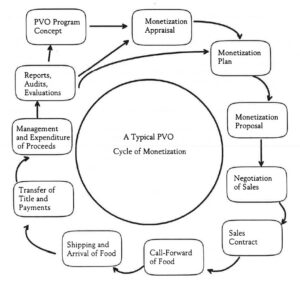
It includes examples from NGOs like Save the Children, CARE, World Vision, Technoserve, Africare and Food for the Hungry. FAM organized trainings about monetization best practices in Ghana, Ethiopia and Washington, DC.
This guide was used by both Food for Peace and Food for Progress, such as USDA’s $103 million food sales in the former Soviet states when it broke part. In the Somalia famine, monetization was the main choice by USAID, CARE and WFP for addressing food access throughout the country, by working with merchants to increase supplies of foods in markets and lower the retail price. The guide attempts to make auction and economic language easily understandable for NGO managers. Among other things, the guide explains how commodity prices vary not only by country and season but across the countryside within a nation.
FAM was reincarnated later as the TOPS network among a few NGOs, which in turn morphed into the Food Security Network (FSN) at https://www.fsnnetwork.org/about which has a website today that offers other recent resources.
-
 World Hunger Education
Service
P.O. Box 29015
Washington, D.C. 20017 -