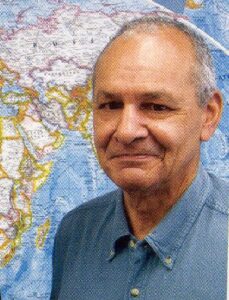



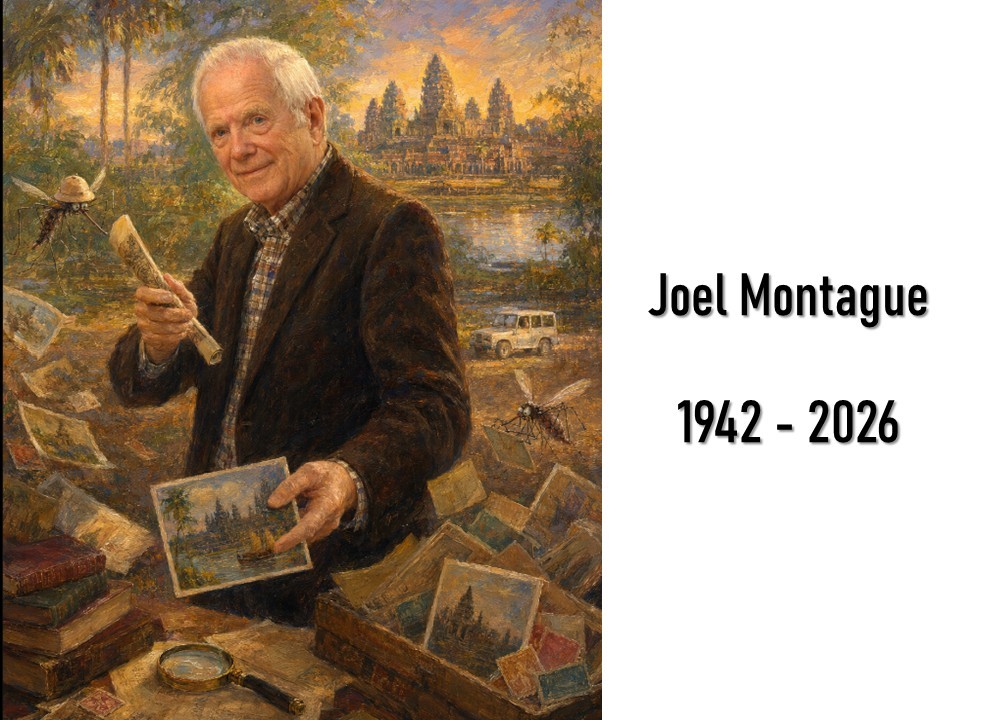
August 21, 2026 Joel Montague, a great and charming food aid and public health worker has passed away. A dedicated humanitarian and lifelong advocate for marginalized persons and communities, he died at age 94 on August 16th 2026 in Wellesley, Masschusetter, his long time residence. Joel was a true “Renaissance man” with boundless empathy and intellectual curiosity. He dedicated over five decades of his life to advancing public health and international development, working in over 55 countries across Africa, Asia, and the Middle East. He was a particular specialist in Cambodia.
Joel pursued higher education with a clear focus on the world beyond his borders, earning his undergraduate degree from Oberlin College in 1959, an MA in Political Science from Johns Hopkins University, and a Master of Public Health from the University of North Carolina, which celebrated him for his enduring legacy in reproductive empowerment.
Joel’s remarkable and colorful career included extensive and impactful overseas assignments with a range of world-renowned organizations, notably CARE, Partners for Devleopment, John Snow International (JSI), Management Sciences for Health, and the Aga Khan Health Services (where he managed a hospital in Tanzania).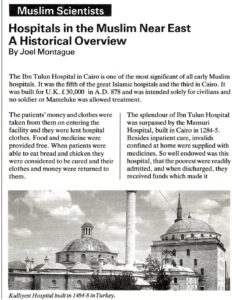
After a Fulbright Fellowship in 1960 to Iran (studying Farsi and tribal relations in Baluchistan), he worked for CARE in three countries. He first visited Afghanistan while with CARE in 1962;. He worked in both food aid and public health. CARE’s Egypt operations, launched in 1954 (just after the 1952 revolution), centered on large-scale U.S. food aid under Public Law 480 (the Agricultural Trade Development and Assistance Act of 1954, later known as Food for Peace). CARE was a key private voluntary organization partner for Title II (and related) donations of U.S. surplus commodities, such as milk powder, cheese, butterfat, and other foods, distributed mainly through school feeding programs, hospitals, and social projects for children, tuberculosis patients, and other vulnerable groups. Early volumes were substantial (tens of thousands of tons annually in the mid-1950s, valued in the tens of millions of dollars). This experience with food aid would help Joel downstream in his career.
Joel later directed CARE/Medico in Tunisia (focused on an orthopedic/rehabilitation facility, the largest of its kind in North Africa at the time) and was decorated by Iran (1964) and Tunisia (1968) for technical assistance.
He joined the Aga Khan aid network’s secretariat at Aiglemont (near Paris) as head of the Aga Khan Health and Hospital Programmes (in the Department of Health, Education and Housing). This was a coordinating/oversight role for expanding health activities across multiple countries, including Kenya.
He then worked in New York for the Population Council. His Population Council responsibilities covered a region extending from Morocco toward Afghanistan and including his distinctive work in Iran.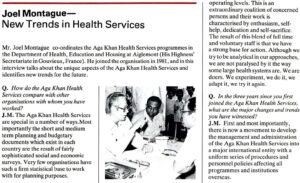
Later in his career he served at John Snow International (JSI), a large global health aid organization. Montague served as director of JSI’s USAID-funded “Enterprise Program,” apparently during the 1980s and possibly into the early 1990s. The program explored whether private organizations could provide good-quality family-planning services without depending indefinitely on government budgets or foreign aid. Under Joel’s leadership, the Enterprise Program supported subprojects in 12 countries and provided technical assistance concerning self-financing, cost recovery and management systems in approximately 22 countries
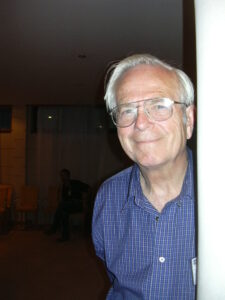 malaria eradication. On top of his routine trustee duties with PfD, Joel undertook many pro-bono field trips on behalf of the organization, including to Liberia, Bosnia & Herzegovina, Nigeria, and Cambodia. After each trip Joel provided a highly readable and insightful report, accompanied by many high-quality photographs.
Fluent in English, French, and Arabic, Joel was beloved for his humility, mirth, cultural respect, and willingness to “do the dirty work.” To Joel, every field worker was a dignified partner; he was known to painstakingly record the names of every malaria volunteer he met during his field visits, ensuring each was addressed with their proper honorifics. From launching a national contraceptive program in Cambodia to operating a hospital in Kenya, Joel’s direct contributions changed countless lives.
Colleague Sophal Ear remembers: “What made Joel so extraordinary was his warmth and generosity. Whether it was sending thoughtful art postcards in the mail, spending his own miles and resources to visit community health workers across Cambodia, or checking in with wry, cheerful updates about raking leaves in Massachusetts, he led with gentle amiability. He was a mentor, a gentleman, and a devoted friend to the Cambodian people.” Joel wrote the definitive guide to private health care facilities across Cambodia. 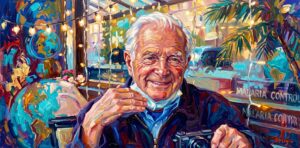
According to PfD’s current Board Chair: “Joel set a precedent as the model of a modern nonprofit trustee, creating our governance manual and leading by example and with his sense of humor. His volunteer field trips resulted in state-of-the-art, extensive reports to the rest of the board and public that made visible what the field programs looked like. His wry sense of humor remained a staple for PFD discussions.”
Former PfD Executive Director, Jack Marrkand, said: “I was very fortunate to count Joel first as a boss and mentor and then friend for 35 years and during that time he was rarely without a tattered but high-quality leather briefcase which when opened might tumble out numerous reports, manuscripts and photographs but also an extra shirt, a toothbrush, and perhaps pieces of jewelry that he had crafted as gifts for friends. In a way that beloved briefcase — present also at my wedding in Massachusetts in 1993 — represented Joel in conversation and company: he was urbane, but practical too, always empathetic, and blessed with a constant and wry sense of humor. [On turning 90 in 2022 Joel told me that Wellesley had ‘shut down’ to mark the occasion] ”
After retiring from JSI in the 1990s Joel devoted much of his time to writing books and conducting lectures whether in Asia (mainly in Cambodia and China) or the Wellesley Public Library.
Beyond his global health career, Joel was a passionate historian and archivist. Having first visited Cambodia in 1991, Joel began collecting cards, and art. He amassed an extraordinary collection of historical global photography, ultimately donating over 55,000 images to the University of Massachusetts, Amherst, establishing the Rheingold Historical Photograph Collection for future generations of scholars.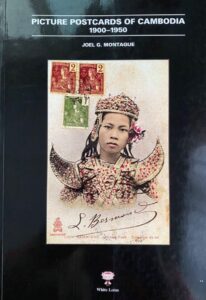
Through his work with DatASIA Press and collaborations with Jim Mizerski, Marie-Hélène Arnauld and others, Montague helped bring older French-language accounts, early photography and Cambodian stories into accessible English editions. He co-authored a book on French colonial cartoons of Indochina.
He organized and interpreted the postcards in his major book: Picture Postcards of Cambodia, 1900–1950 (White Lotus Press, Bangkok, 2010; sometimes catalogued as 2011): approximately 330 pages, with hundreds of reproductions, including a section of rare color postcards. He arranged the images thematically, such as monarchy, the Royal Palace, Phnom Penh, the Mekong, ethnic communities, dance and music, religion, schools, prisons, the military, agriculture, commerce, provincial life, ceremonies, Angkor and international colonial exhibitions.
This utterly unique postcard book presents a brighter, colonial-era view of Cambodia drawn from roughly 650 black-and-white and color postcards (selected from his collection of about 1,700, which he believes is the world’s largest of its kind). These cards, produced mainly by the French in the early 1900s for domestic audiences in Indochina, depict people, culture, arts, architecture, the Mekong River, the monarchy, Khmer dance and music,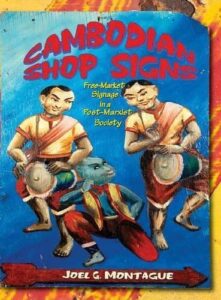 Angkor Wat, and everyday life. Montague argues the postcards functioned as a marketing tool that portrayed Cambodia as an exotic paradise and justified France’s “civilizing mission.” They often show two separate worlds: French administrators building infrastructure and elegant homes versus Cambodians living in villages or posed in anthropological “types,” with little genuine interaction.
Also while working as an international public-health officer, Montague began collecting hand-painted Cambodian shop and business signs in 1991.
Chommie remembers: “Joel was an avid collector of hand-painted signs advertising barbers, bicycle repairs, and other small Cambodian businesses. We spent countless hours scouring the streets of Phnom Penh, haggling with vendors, and prying the signs off of tree trunks.”
These metal signs advertised such things as: Tailoring and clothing, Food and beverages, Auto and motorcycle parts, Medical and beauty services and Musical performances. He published Cambodian Shop Signs: Free Market Signage in a Post-Marxist Society (DatASIA, 2013).
Micaela Arthur remembers Joel as a mentor: “Joel was always looking out for my future,” and,
“I spent many visits to his home in Wellesley discussing the future of development, his projects in Cambodia, and his forays globally. He would walk me through the exquisite collection that was his and Shahnaz’s home. He often mailed me books, news and magazine clippings, and a few pieces from his prized Preah Bot collection (old paintings from Buddhist temples throughout Cambodia that were removed during remodels. He would find them in dusty old cabinets at the back of antique shops. They depict the life of the Buddha.”
Joel leaves behind a legacy of bountiful compassion, reduction of tropical diseases, and a generation of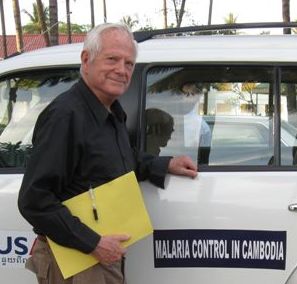 public health workers trained, mentored, and inspired by his example.
He will be deeply missed by his family, his friends, and the countless individuals whose lives were bettered by his lifetime of service.
Joel leaves behind his wife of over 50 years, Shahnaz Montague, M.D., about whose primary care service over many decades to working and middle class families in central Massachusetts, he was immensely proud; daughter, Maryam, based in Morocco. international development professional, businesswoman, and founder of Project SOAR which works in Morocco and Uganda; and Jahan Montague, M.D., a kidney specialist and associate professor at the UMASS Medical Center in Worcester, Massachusetts; two grandchildren; and many other extended family members.
– Contributed by WHES trustee, Steven Hansch
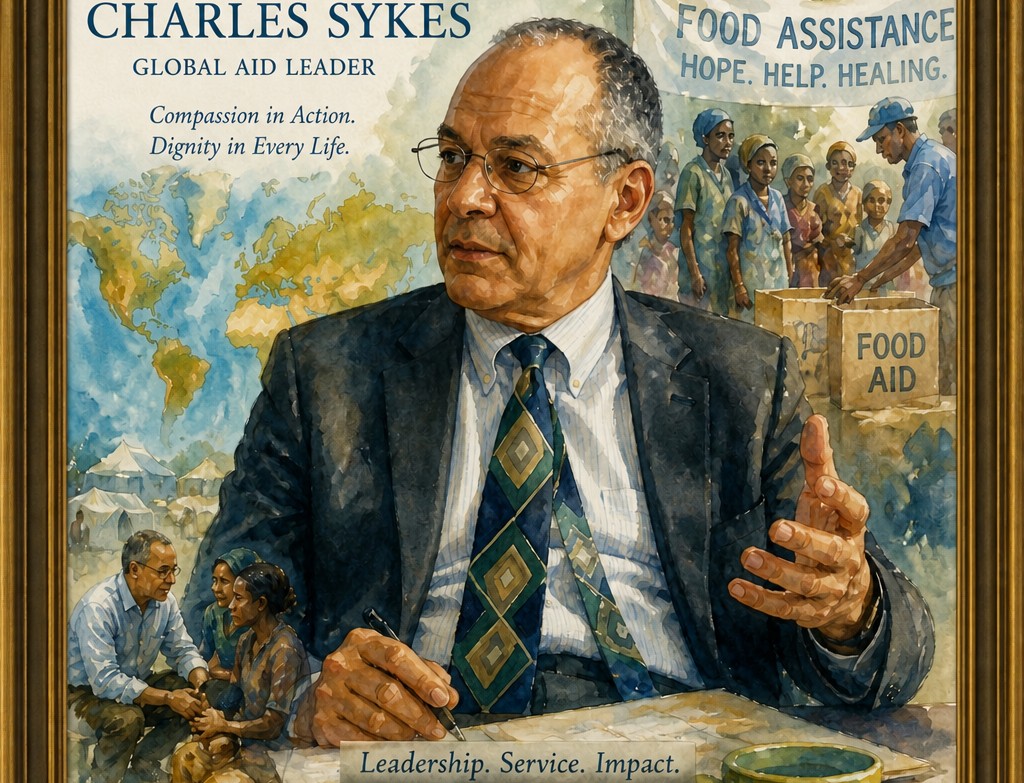
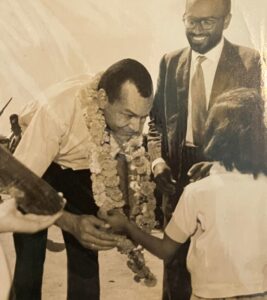
 listened patiently and always with profound empathy and genuine positive interest that drew so many of us to seek his counsel and company…. Wherever he went, he wanted to know where people were from, what their lives were like, how history had shaped their journeys. Charlie read voraciously and liked nothing more than chatting about a great book, a fascinating trip somewhere, or encounters he had had with interesting people. The world never ceased to fascinate. … he was a very free person. His mind could focus on the curious, the beautiful, the uncanny.”
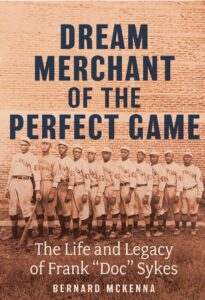
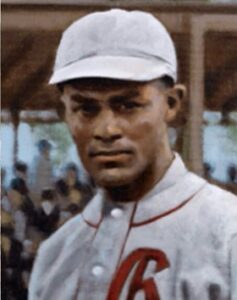 a no-hitter playing for the Baltimore Black Sox, with a career 3.5 ERA over 15 competitive seasons.