Action Against Hunger 10 Global Hunger Hot Spots

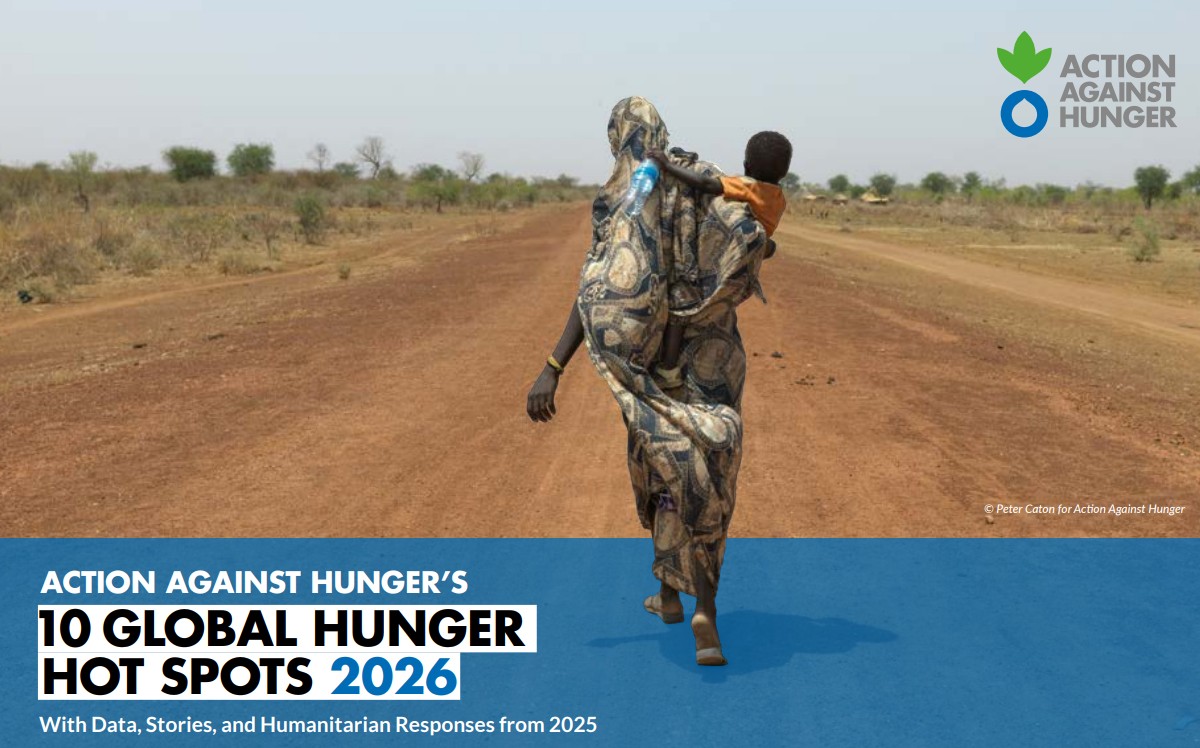
May 6, 2026    This year, as in the past, the international aid agency “Action Against Hunger” (also known as ACF, or Action Contre la Faim) released their annual hunger report, titled “10 Global Hunger Hot Spots.”  This year the report describes a compound crisis model as causing hunger.  The compound crises are: conflict, displacement, climate shocks, inflation, market collapse, disease, and weak public institutions all stack on top of each other. Its real message is that famine is rarely just about food.  Rather, hunger is usually the endpoint of different social and economic crises.

Action Against Hunger estimates that 30 million children are acutely malnourished today, including about 8.5 million severely malnourished children, and at least 13 million pregnant or breastfeeding women are malnourished. That makes this as much a maternal-and-child survival crisis as a food-security crisis.

The report also makes an unusually strong argument that humanitarian access and humanitarian financing are now central determinants of mortality.

The report seeks to quantify the impact of global reducations in aid during the last year in various ways.  It highlights the 65% funding shortfall for hunger-related humanitarian programming and notes that the United States announced an 83% cut to humanitarian support, alongside cuts by several European donors. it explains the cascading effects of these cut-backs (e.g., 300+ nutrition centers closed in Afghanistan).  It cites the  Lancet-linked estimate that USAID-funded programs saved over 90 million lives over 20 years, warning that sustaining cuts through 2030 could lead to 14 million preventable deaths, including 4.5 million children under five. That is one of the report’s most consequential arguments.

It recommends:

  1.  Ensure full and safe humanitarian access of aid to needy people, and prevent the use of hunger as a weapon of war;
  2.  Integrate climate and food security: 3. Focus on women and children.
  3.  Donor funds should be addequate, flexible and multi-sectoral
  4.  Support local and inclusive solutions
  5.  Strengthen prevention: Every strategy should include nutrition, food security, and access to basic health services, aiming to prevent hunger rather than just manage it.
  6.  Uphold adequate nutrition as a fundamental human right,
    ensuring that the right to food is respected and protecte

According to ACF, the top ten countries today in terms of total numbers of  people in acute food insecurity (at risk of hunger) are:

    • → Nigeria: 31.8 million:  “The nutritional crises are exacerbated by prolonged conflicts in the northeast of the country (Boko Haram and ISWAP), which make large areas virtually inaccessible to relief and food supplies, creating a vicious cycle of food insecurity and malnutrition.”
    • →  Sudan: 25.6 million:  “Sudan is facing the world’s most severe food and displacement crisis, but the scale of the suffering remains underestimated and underfunded.”
    • → The DRC: 25.6 million:  “This is not just a matter of a lack of funds: it is a matter of life and death.”
    • → Bangladesh: 23.6 million:  “Bangladesh faces recurring extreme weather events, demographic pressures, economic instability, and vulnerability of urban and rural infrastructure.”
    • → Ethiopia: 22 million
    • → Yemen: 16.7 million
    • → Afghanistan: 15.8 million
    • → Myanmar: 14.4 million
    • → Pakistan: 11.8 million
    • → Syria: 9.2 million

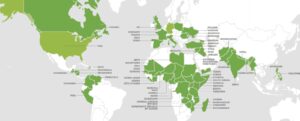
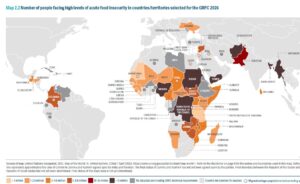
The report includes the map at right showing the countries where ACF, seen here.:

To assist journalists and researchers, the report has chapters by country. The country-specific “Inside Look” sections (written by Action Against Hunger directors) provide expert analysis on barriers like bureaucratic delays (Sudan), siege conditions (Gaza), or climate adaptation (Bangladesh).

For example:  “South Sudan continues to experience levels of malnutrition that reach emergency thresholds, with a steady downward trend each year. Local communities face multiple and interconnected crises, including the collapse of basic services, recurrent displacement due to conflict and flooding, and widespread food insecurity caused by climate shocks and economic
instability. In this context, the difficulties for humanitarian organizations are
multiplying…”

These chapters combine direct stories from affected communities (e.g., Zuwaira in Nigeria, Yasir in Sudan, Fatima in Afghanistan) and operational insights from Action Against Hunger’s country directors. These add emotional depth and ground-level reality to the statistics.

At the same time, the chapters include technical indicators such as population estimates, HDI rank, internally displaced persons, refugees, people in need, Humanitarian Response Plan funding requirements, HRP funding gaps, health-facility functionality, WASH access, cholera cases, food-price inflation, currency depreciation, hectares/crop losses from floods, and ACF operational outputs such as children treated for severe malnutrition, water points rehabilitated, cash assistance, and psychosocial support beneficiaries.

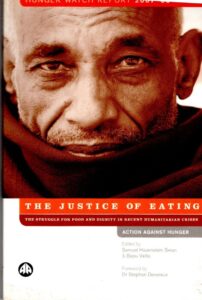
ACF (Action Against Hunger) has published many important publications for many years, such as “the Justice of Eating” shown here.  “The Justice of Eating – the Struggle For Food and Dignity in Recent Humanitarian Crises” was a 2007-08 Hunger Watch Report by Action Against Hunger.  It positioned the right to food as an essential human right and a matter of justice, not charity, arguing that failing to address hunger is a violation of human dignity.  The report, edited by Samuel Hauenstein Swan and Bapu Vaitla, documents the struggles for food access during humanitarian crises and emphasizes that fighting hunger is about upholding human dignity.

see:  https://www.actionagainsthunger.org/app/uploads/2026/01/2025_GlobalEmergencies_Map_v3-compressed.pdf

and:  https://www.actioncontrelafaim.org/

https://accioncontraelhambre.org/en

–  Contributed by WHES board member, Steven Hansch

AI & Food Security Forum, at CSIS

May 5, 2026

The think tank, CSIS, held a forum on April 30, 2026 about “Artificial Intelligence (AI) and Food Security,” bringing together policymakers, agronomists, geospatial data scientists, representatives of multilateral institutions, private-sector technologists, and implementing NGOs to discuss the emerging technical, institutional, and geopolitical dimensions of AI deployment that are increasingly affecting global food systems.

A webcast of the event is available at: https://www.csis.org/events/ai-food-security-forum.

Through panels of and demonstrations by some 26 experts, the forum examined agrifood value chains, from upstream crop phenotyping and remote-sensing-based yield forecasting to downstream supply chain logistics, market access, and anticipatory humanitarian financing.

Application areas included forecasting hunger with early warning systems, leveraging machine learning in research to develop more climate-resilient crops, and using AI to minimize food waste, track food from farm to table, and optimize delivery, all of which are crucial for reducing costs and improving efficiency.

Speakers and panelists came from IFPRI, the World Food Programme, NASA Harvest, the Gates Foundation, Bayer, Google (a sponsor of the event), the World Bank’s AI unit, and the Bezos Earth Fund. They spoke about how machine learning architectures, large language models (LLMs), and Earth observation platforms have advanced at an ever-increasing pace, while the constraints on how AI can support food security remain “non-algorithmic.”  These constraints include the scarcity of geographically granular and ground-truthed agronomic datasets; the absence of robust digital public infrastructure in low- and middle-income countries (LMICs); the chronic underfunding of national agricultural extension systems; and language homogeneity, which remains disproportionately English-centric in geographies with thousands of local dialects and hyper-localized agricultural terms.

A few demonstrations reinforced these themes, including ZeroHungerAI’s news-ingestion model for anticipatory crisis detection, CGIAR’s BriAPI-enabled phenotyping acceleration platform, TomorrowNow’s next- generation smallholder weather forecasting stack, and NASA Harvest’s Harvest2Market tool, which uses satellite images to understand market linkages. Each of these holds promise for improving food systems through AI.

Discussions also considered the duality of AI: it promises large efficiency gains, while at the same time introducing risks related to data bias, privacy, and inequality in data collection.

The forum’s final panel emphasized the need for harmonized regulatory frameworks, multi-level impact evaluation methodologies, and demand-driven AI procurement models that prioritize localization and farmer-centered design over purely technological approaches.

Videos, transcripts and more information are available here.

In Memoriam: Mohamed Warsame Dualeh

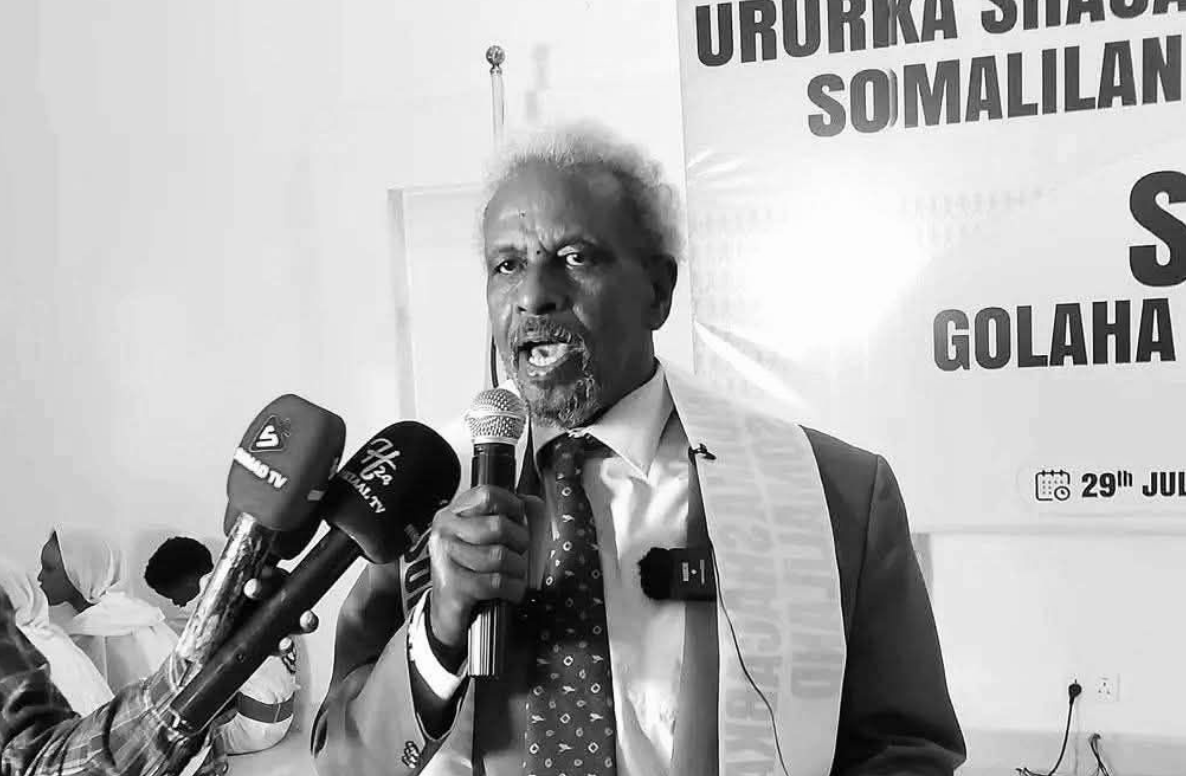
May 3, 2026         Dr. Mohamed Warsame Dualeh, a Somali physician, refugee-health leader, humanitarian official, and later diplomat, died on April 25, 2026 in Germany.  He is survived by his wife, Marie Therese Lenz, and children, Amalie, Issa, and Edna.  Among the positions he held during his distinguished career were Head of Operations in Darfur for UNHCR and Director of the Somalia Refugee Health Unit.

Over a career that spanned public health, refugee operations, and international diplomacy, he served vulnerable communities across Somalia, the Horn of Africa, Sudan, and beyond.  He retired in 2014 and became adviser to the President’s office in Somaliland, working hard to get the new nation organized in public health and soliciting international recognition and support.  He continued to offer his services to the UN into 2025.

He was born on April 14, 1954.  He graduated from the Benadir Medical School in Mogadishu and the University of Sydney where he obtained a Master’s degree in Public Health, writing his thesis on maternal and community health worker care for diarrheal diseases of children in rural Somalia.   As Dr. Ahmed Magan remembers: “Dr. Warsame was my medical school classmate and graduated with distinction. He was a pioneer in Somalia, recognizing early on that public health and Primary Health Care (PHC) were the most effective ways to serve a community with limited resources and a high disease burden.”

His formative experience was with the Refugee Health Unit in Mogadishu, which coordinated care for Ethiopian refugees who had fled to Somalia.  That early work grounded the rest of his career:  he belonged to the generation of Somali doctors whose medical service quickly became inseparable from conflict, displacement, and the survival of uprooted families.  The RHU oversaw up to 35 camps of Ethiopian refugees.  Dr. Dualeh wrote: “It is extremely important to take health care to the refugees – to have an outreach program.”

Mike Toole recalls: “I worked with Mohamed Warsame Dualeh in Somalia in 1981 and 1982 when I was the senior medical adviser in the Refugee Health Unit (RHU) within the Somali Ministry of Health. The RHU coordinated the health programs within … camps for one million ethnic Somali refugees from Ethiopia scattered throughout the country…Mohamed eventually became the RHU director, based in Mogadishu. He was a major force in establishing the RHU as a unique national unit that based the Refugee Health program on epidemiological evidence, primary health care, community participation, standard treatment protocols, and prevention. …He was a trailblazer in Refugee Health …[in] a stellar career in the UNHCR.”

Beverly Snell explains about the RHU: “It was the first …primary health care (PHC), community-based approach to refugee camp health management…. Traditionally refugee health care had been very top down and often dependent on foreign professionals. …it was the leadership of people like Mohamed Warsame that made it work.  So much so that the host population was complaining that refugees had better health care than they did.  And that led to starting the PHC approach in the host population to, (a harbinger for the policy adopted by the Sphere Handbook).  Mohamed Warsame’s contribution in the leadership of both RHU and national PHC made a huge impact.”

Kate Burns remembers: “He was always Warsame to me.  Great guy.  Very easy to get along with…we met again when I joined UNHCR’s Health Unit in 1995/6 in Geneva…a really lovely man.  I loved greeting him in the few Somali words I remembered.  ‘Nabad, Suba Wanagsan, Nabad Geleyo’.”

With the RHU, Dr. Warsame oversaw an historically important model refugee health team, a model that merited being replicated around the world.  It was an all-star team of experts who created standards such as serial surveys of malnutrition among children in the camps to identify changes in the rates of malnutrition, knowledge of breastfeeding and oral rehydration, and other life-saving measures.

Surveillance in the camps in the early-80s revealed an outbreak of scurvy, a vitamin C deficiency disease, caused by a lack of camel’s milk in the refugees’ diet, an overdependence on standard rations provided by donors, and an accompanying lack of access to local markets where they might have bartered for fresh vegetables such as tomatoes and onions.

Dr. Jama Gulaid recalls:  “I will remember Mohamed for his devotion to the health and welfare of refugees. I travelled hundreds of miles with him while doing refugee work. Our challenges were many — heat, dust, and poor accommodation and food — but still immensely better than those facing refugees. Mohamed was undaunted, his energy undiminished, a spark in his eyes as he engaged vulnerable people as warmly as a physician in a comfortable office in a developed country.”

In a 1994 UNHCR paper about refugee family health, Dr. Warsame argued for a practical and humane principle that seems to capture his whole approach: “It is extremely important to take health care to the refugees – to have an outreach program. It has to be easily accessible.”  In the same piece, he recalled conditions in Hartisheik, of Somalis in Ethiopia, this is incomplete in 1988, where mortality among children under age five was exceptionally high in part due to inadequate food rations, and inadequate provision of water and sanitation compounded the crisis. He advocated for training refugees as health workers and birth attendants, and bringing care closer to families instead of forcing desperate mothers to travel long distances for help.

He served in multiple roles for the United Nations High Commissioner for Refugees (UNHCR), including as its focal point for HIV/AIDS and chair of IAAG, serving in the Programme and Technical Support Section in Geneva.

CDC’s Brent Burkholder remembers “I remember him as being a kind, quiet person but very committed to refugee health”

UNHCR Nutritionist Angela Berry Koch remembers: “He was always with a great sense of humor. Very warm and amiable. He had strong humanitarian instincts and argued against the limitations of institutions when they were less than humane. In that sense he showed a subtle kind of leadership   was astute politically, knowing when to push and when to fall back on diplomacy. Very smart guy.”

In the RHU and at UNHCR, he cared about refugee access to health care, distances to clinics, camp layout, and the daily burdens placed on women and children.

Angela Berry:  “Mohamed came with extensive field experience in primary health care… he was always willing to support our field colleagues, always cheerful and joking. He had a very warm personality. He was very tolerant of everyone from whatever background or culture. He was extremely generous and selfless, highly dedicated in all his endeavors.  He never hesitated in being placed in the worst type of conditions while expertly negotiating and spearheading the repatriation program… often found in isolated areas with landmine risks. He showed great courage and flexibility in his work. Always highly intelligent… loved field work. He always had a jovial spirit and a twinkle in his eye.”

Ron Waldman: “I first met Warsame when he was a young, recent medical graduate working for the Somali Refugee Health Unit in refugee camps in what is now Somaliland.  He rose rapidly up the ranks to become the Director of the RHU and went on from there to have a long career at UNHCR.  Throughout he was modest, spoke softly, but had a major impact.  He was a quick learner and what he learned early in his career was the importance of community-oriented primary health care.  Having seen the success of this approach during his RHU years, he continued to advocate for it on behalf of all of the vulnerable and marginalized populations he worked with in East Africa for the following decades.  He was always a pleasure to work with, a great listener who asked insightful questions and then questioned the answers he received.  And always with that quizzical smile and a twinkle in his eye.    He was an important figure in the development of the way we think about refugee and humanitarian health today.”

Rita Bhatia met him in Ethiopia and served a decade with him in Geneva at UNHCR:  “I admired Mohamed’s humility, simplicity & warmth and respect for people…[he] will be deeply missed, but never forgotten. Om shanti.”

In later years, he also moved into diplomacy and public advocacy. He served as Special Envoy of the Republic of Somaliland to the United Nations and other international organizations, while remaining a trustee of AHA.   Matt Bryden says he “will miss his great warmth, humor and intelligence.”

Looking back, Dr. Warsame said “Africa, as a whole, is a great continent welcoming refugees.”

He also said, “Sudan is in my heart. I dream of the great days and friends that I met in Kassala, Khartoum and Al Fasher.”

Dr. Magan reflects: “As a close friend for many decades, I remember Mohamed as a down-to-earth, exceptionally kind, and selfless person. He had a remarkable ability to connect with people and maintained a wide circle of friends globally. He was wonderful company, and whenever he was present, the room was always filled with laughter and jokes.”

He was a doctor shaped by the Horn of Africa, committed to refugees, and convinced that humanitarian work had to begin with dignity, proximity, and respect for the lives people were actually living. His career joined clinic and camp, epidemiology and diplomacy, Somalia and the wider refugee world. He appears to have been one of those indispensable officials whose name was not widely known outside professional circles, but whose work touched thousands of lives.

Further Reading:  Lancet Journal obituary, Aug 8, 2026, at  https://www.thelancet.com/action/showPdf?pii=S0140-6736%2826%2901561-8


– Contributed by Steven Hansch, Board member of WHES


Hunger Crisis in Myanmar/Burma

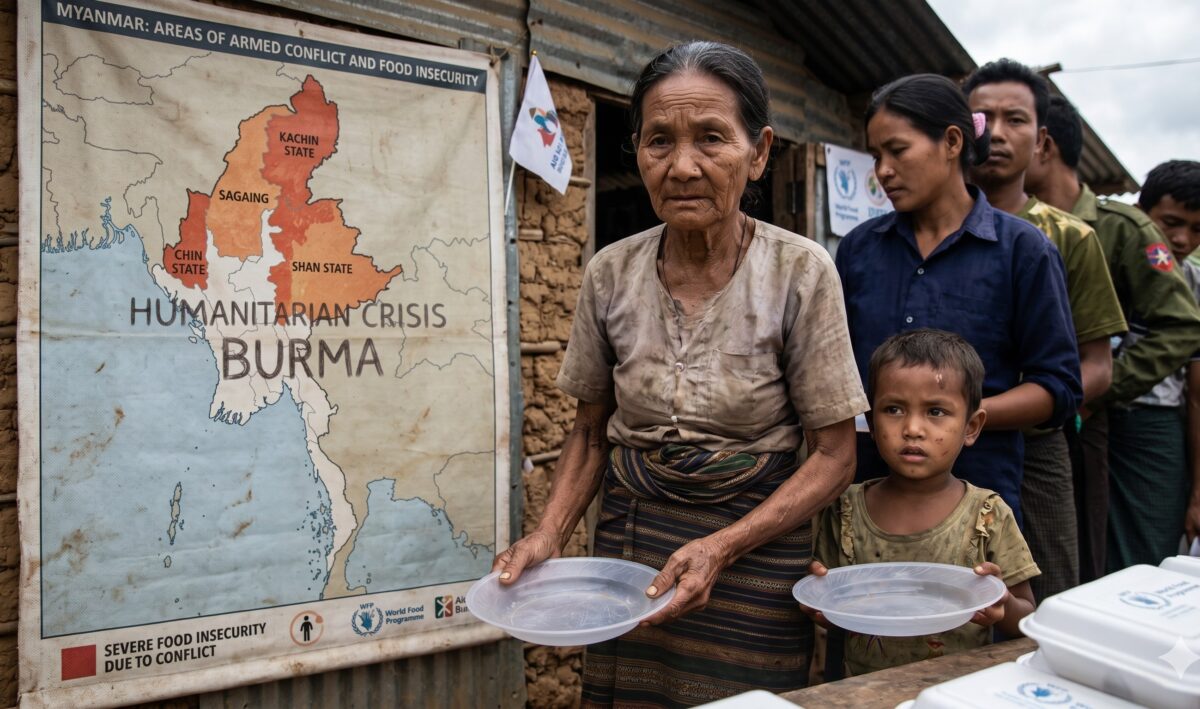
May 2, 2026      According to the latest Hunger Hotspots Report, 16.7 million people, or one in three citizens of Myanmar (also known as Burma), are acutely food insecure, a sharp increase from 13.3 million in 2024. Myanmar now ranks fifth globally for the highest number of people facing severe hunger.

More than 400,000 young children and mothers suffering from acute malnutrition are surviving on nutrient-deprived diets of plain rice or watery porridge. WFP’s country director has said the crisis is invisible to the world. WFP can target just 1.5 million of the 12.4 million people in need and requires $150 million to do even that. No recent national prevalence data exist on wasting, but subnational surveys (for example, one in Yangon and Ayeyarwady Regions in late 2023) found about 8 percent wasting, slightly higher than the prior national figure. Broader food security and nutrition monitoring, including Myanmar Household Welfare Survey rounds from 2021 to 2025, shows worsening dietary diversity, higher food insecurity affecting millions, and increased household hunger since 2021.

Related to malnutrition, Myanmar’s under-five mortality rate—39 deaths per 1,000 live births—is nearly three times higher than the East Asia and Pacific regional average of 14.4.

The roots of the current hunger crisis lie in the military takeover of the government in February 2021. Since the coup, intensifying conflict has led to an estimated 15.2 million people, nearly a third of Myanmar’s population, facing acute food insecurity in 2025. The junta has retaliated against resistance forces by blockading aid, restricting humanitarian access, limiting trade routes, and targeting humanitarian workers, further compounding the food crisis. Military attacks have destroyed agricultural equipment and contaminated farmland with landmines and unexploded ordnance, exacerbating challenges for local food production. The average price of a basic food basket has increased fourfold compared with prices before the military takeover.

The situation is particularly critical in Rakhine State, home to the Rohingya and other ethnic minorities. UNDP has reported that Rakhine State is on the brink of famine, with two million people at risk of starvation. The Myanmar military’s near-total blockade of humanitarian aid to Rakhine State since 2023 violates international humanitarian law and likely constitutes a war crime.

Many readers may remember the large 7.7-magnitude earthquake that struck central Myanmar on March 28, 2025, killing more than 3,700 people, destroying infrastructure, and reverberating through neighboring countries. A large share of aid donations was made in response to that quake.

International aid organizations working to address malnutrition in Myanmar include Action Against Hunger (ACF), Save the Children, Mercy Corps, Solidarités International, the International Rescue Committee (IRC), and Catholic Relief Services (CRS).

World Vision provides aid in 11 of the country’s 14 states and regions. ACF is currently implementing projects addressing malnutrition, mental health and care practices, food security and livelihoods, water, sanitation, and hygiene, nutrition security, and disaster risk reduction in Chin State, Kayah State, and Rakhine State. MSF has mobile teams in Naga and Sagaing, a remote, mountainous region in northern Myanmar where communities have limited access to basic healthcare. Despite restrictions on humanitarian access to conflict-affected areas, mobile teams based in Sittwe, in central Rakhine, offer primary healthcare and emergency referrals for patients from all communities.  The IRC works in Rakhine, Kachin, Kayin, and Shan States in close collaboration with the Ministry of Health.  Save the Children provides aid in Mandalay, Sagaing, Bago, Magway, Shan, and Naypyidaw. CRS’s current projects in Myanmar focus on agriculture and livelihoods and support for emergency response. CRS works with local Caritas partners to build capacity for community-led project design and implementation.  CRS Myanmar also supports partners in Kachin on community-led shelter efforts and provides technical assistance in community-led return and resettlement.

Community Partners International (CPI) provides community-based healthcare, particularly in conflict-affected border regions where government services are non-existent.  This includes “Backpack Medics,” who travel to remote villages to provide primary care, trauma surgery, and vaccinations. CPI also runs maternity waiting homes and trains community health workers to support safe births in conflict zones.

In Myanmar, the UN World Food Program (WFP) provides food rations to vulnerable populations, including internally displaced persons (IDPs), refugees, and people affected by natural disasters or conflict.  WFP also runs school feeding programs in areas with high food insecurity, providing nutritious meals to children in schools.

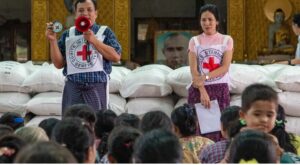
The International Committee of the Red Cross (ICRC) provides nutrition and health support for war victims in Myanmar.  In 2024 and 2025, the ICRC provided food rations, including rice, oil, and beans, to thousands of displaced families in areas such as northern Shan State, Mandalay, and Sagaing.

To the east of Myanmar, there are some two million refugees in Thailand.  The Border Consortium (formerly the Burma Border Consortium) of NGOs has operated in  nine refugee camps along the Thai–Myanmar border since the 1980s, providing foodIt remains the primary agency responsible for food assistance.  However, its operations have been severely reduced. By mid‑2025, TBC announced that food assistance for most households would be cut by 75% or eliminated entirely.

–  Contributed by WHES board member, Steven Hansch

Global Food Crisis Opinion in Irish Times

April 30, 2026

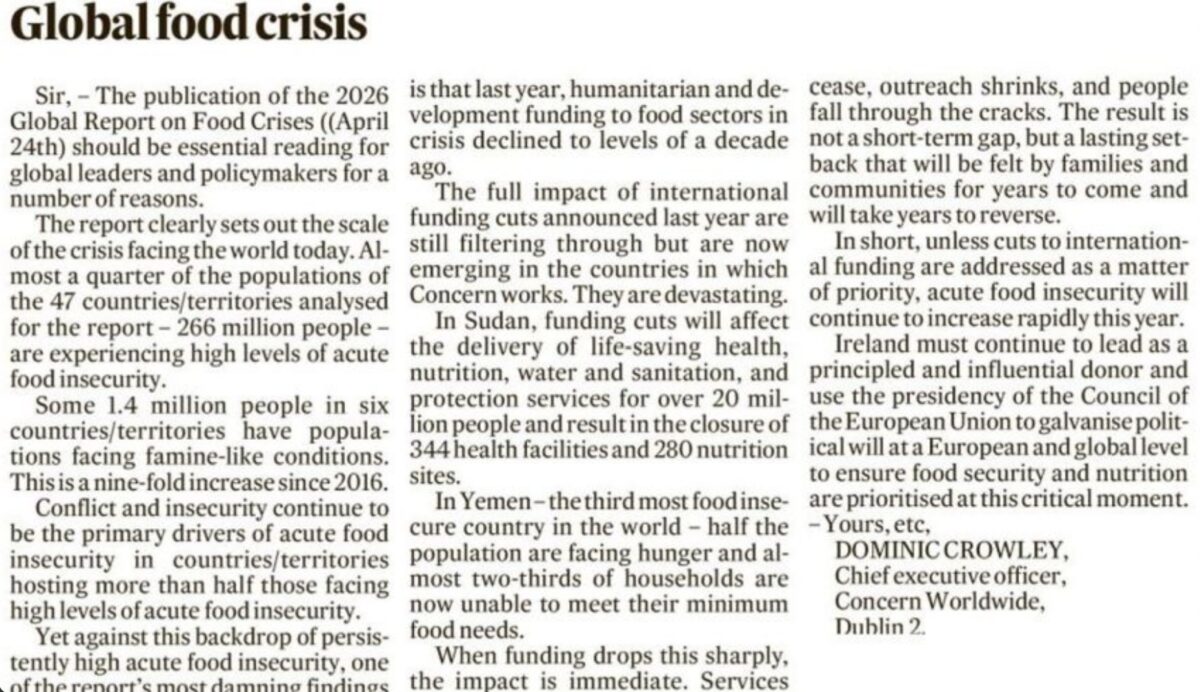
The Executive Director of Concern Worldwide, Dominic Crowley, published in the Irish Times to amplify the findings of the 2026 Global Report on Food Crises, noting how “in total, 266 million people in 47 countries/territories experienced high levels of acute food insecurity in 2025. Nearly one quarter of the population in these countries/territories are acutely food … This acute food insecurity is mostly concentrated in just ten countries.”

He adds that “reflecting our focus on food insecurity, Concern Worldwide works in eight of these countries: Afghanistan, Bangladesh, the DRC, Pakistan, South Sudan, Sudan, Syria and Yemen. Over the past twelve months, Concern has also supported a response to the March 2025 earthquake in a ninth country in the list – Myanmar.”

He writes:  “These figures could get even worse. Harsh reductions in aid and the ongoing conflict in Iran and the Gulf States threatens to push more vulnerable people into poverty and acute food insecurity….It is vital that governments and donors scale up aid and investment in resilient food systems and support safe humanitarian access to prevent further catastrophe.”

Also at:

https://www.threads.com/@concernworldwide/post/DXpDe8ilAvZ/humanitarian-and-development-funding-for-food-sectors-in-crisis-fell-last-year

https://x.com/Concern/status/2048869861472764152

Hunger in Haiti

April 28, 2026:   Over the last six years, the food crisis in Haiti has grown steadily worse.  In 2019–2020, around 3.7 million Haitians were in food insecurity (IPC) Phase 3 or above.  By 2022–2023, that was approaching 4.7 million, nearly half the population. The most recent UN Integrated Phase Classification system analysis shows 5.7 million people (more than half the population) facing high levels of acute food insecurity, with 1.9 million in IPC Phase 4 (Emergency).

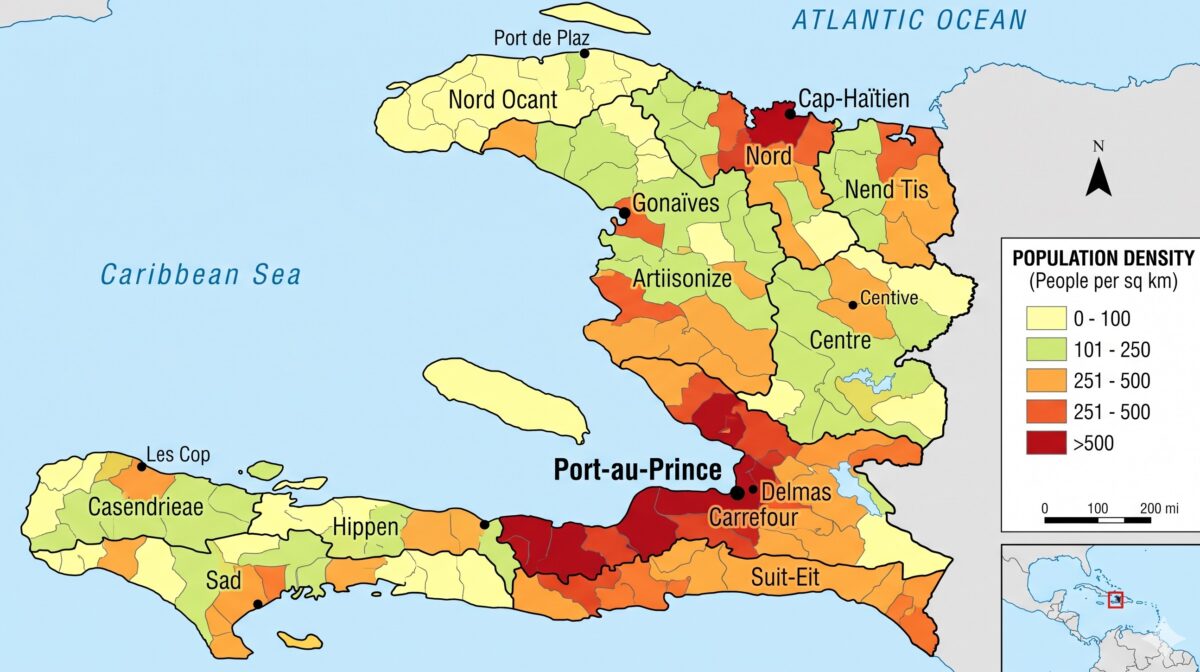
What distinguishes Haiti from other countries is the degree to which hunger is caused by gangs.  Historically, gang violence in Haiti was largely concentrated in specific slums of Port-au-Prince. While devastating for those communities, the national food supply chain, which relies heavily on imports through the capital’s port, remained somewhat functional.  Between October 2024 and June 2025, gang violence expanded westward into the Artibonite and Centre Departments, where 92,000 and 147,000 people were displaced respectively. By early 2025, the violence had also expanded into previously untouched areas of the country, and gangs began expanding north, south and east toward the Dominican Republic border, with the apparent goal of controlling key roads used for illegal weapons trafficking.

Gangs directly affect Haiti’s food economy.   Haiti imports over 70% of its rice and wheat but gangs now control key maritime and overland routes , strangling the entire country’s supply chain.  The Port of Port-au-Prince is blocked, forcing rerouting to Cap-Haïtien, raising costs.

Agricultural output in the Artibonite is down by at least 48%, according to the technical coordinator at the Artibonite Valley Development Organization. Gangs have taken over irrigation canals that feed the valley, leaving fields barren. Agriculture has stopped entirely in areas like Petite Rivière, Verrettes, and Pont-Sondé, where fields lie fallow and are overrun by weeds.   Gangs control irrigation systems (e.g., in Liancourt, Verrettes), forcing farmers to pay “taxes” for water or share their harvest.  Major markets (e.g., Croix-des-Bossales) are >80% non-functional.

UN World Food Program analysis using European Space Agency satellite imagery found up to 3,000 hectares of Artibonite farmland abandoned in 2023 compared to 2018, and hunger in these areas jumped from 40% to 57% in a single year.

According to ACLED, instances of sociopolitical violence almost doubled in three years , from 455 events in 2020 to 874 in 2023. The number of violent events in January 2024 was more than 70% higher than January 2023, and more than 60% above the five-year average.  As a result, over 1.4 million people are displaced (double the number from just a year ago), overwhelming host communities.  More than 5,600 people were killed in 2024 alone. Between October 2024 and June 2025, another 4,864 people were killed.

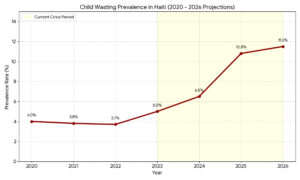
The graph at right shows how the prevalence of child malnutrition has increased over recent years.

The International Rescue Committee (IRC) reports that 75% of households cannot afford health services, and nearly 50% of the population survives on less than $3 a day.

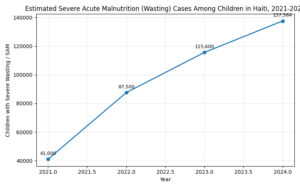
In this 2026 cycle, UNICEF has targeted over 129,000 children (aged 6–59 months) for treatment of Severe Acute Malnutrition.  UNICEF’s estimate of the increase in the number of cases of severe malnutrition is shown in the graph below.

Aid agencies have been continuously trying to provide life-saving assistance.  NGOs such as CARE, Catholic Relief Services and World Vision have led large consortia to promote nutrition in Haiti for decades, though the ability of outside agencies to operate has become constrained.  Today, agencies responding include:

  • -Action Against Hunger US is involved in Haiti. They support populations affected by violence and displacement, delivering critical food assistance and cash support in the Nord-Ouest region. In Nord-Est and Sud, their focus is on preventing malnutrition through targeted interventions. In Port-au-Prince, they provide vocational training, treat children suffering from malnutrition, and offer primary healthcare services to over 30,000 people.
  • -Catholic Relief Services (CRS) provides food assistance.
  • -CARE provides food to displaced populations.
  • -Compassion International provides food and voucher support through 365 church partners, helping children and caregivers.
  • -GOAL is providing cash for food security.
  • -Malteser International supports food security and nutrition, working with community health centers to identify and support malnourished children, pregnant women, and breastfeeding mothers.
  • -Médecins Sans Frontières (MSF/Doctors Without Borders) provides mobile and maternity clinics.
  • -Partners In Health (PIH/Zanmi Lasante): PIH deploys mobile food clinics staffed with medical professionals and community health workers to sites in the Artibonite region. They seek to identify malnourished children early so treatment can be delivered before health problems become fatal
  • -World Vision. World Vision is active in Haiti with child-focused hunger work, including school meals and other food support. Recent World Vision materials also describe food packages and support tied to the hunger crisis in Haiti.
  • -Meds & Food for Kids (MFK). This is a particularly important nutrition-focused Haiti organization. MFK produces therapeutic and supplemental foods in Haiti and works with Haitian clinics to treat malnourished infants and toddlers; it also runs school-feeding support with Vita Mamba.

-Reported by Steven Hansch, for Hunger Notes

Annual UN Report on Global Food Crises, 2026

April 26, 2026

The 2026 Global Report on Food Crises (GRFC), jointly published on April 24 by the Food and Agriculture Organization (FAO), the World Food Programme (WFP), and the Global Network Against Food Crises, estimates that some 35.5 million children were acutely malnourished across 23 nutrition crisis countries.  “This tenth edition… reveals an alarming reality: hunger is increasingly being used as a weapon of war.”  

“Ending hunger is a test of our shared humanity. It is a test we cannot fail.” the U.N. Secretary-General wrote in the Foreword.

In 2025, approximately 266 million people across 47 countries and territories faced crises or acute food insecurity, requiring urgent humanitarian assistance.  The report discusses rates of malnutrition based on medical clinic screening in Gaza and western Sudan, including El Fasher and Kadugli.   Much of the rest of the Sudan is also seen as at risk.

The Global Network Against Food Crises itself is described as an alliance including the UN, EU, Germany’s BMZ, UK FCDO, Ireland, g7+, and other governmental/non-governmental agencies.

Comparing reports over the years, the trajectory from 2020 to 2025 is stark.  In 2020, approximately 155 million people faced high levels of acute food insecurity) across 55 countries, already a sharp rise from 105 million in 2016.  By 2025, that figure stood at 266 million across 47 countries, though the 2026 report explicitly cautions that the apparent drop from the 2023 peak of 282 million partly reflects reduced country coverage rather than genuine improvement. The share of the analyzed population in acute food insecurity nearly doubled from about 11 percent in 2016 to nearly 23 percent in 2025, and had already crossed 21 percent by 2020.

In 2019 and 2020, David Beasley, as the Executive Director of the World Food Programme (WFP), highlighted the risk of multiple concurrent famines, while the organization was awarded the Nobel Peace Prize in 2020.  Beasley delivered the Nobel lecture where he called for action to prevent widespread starvation.    In 2020, the primary crisis concentration was already in a familiar set of countries, Afghanistan, the Democratic Republic of the Congo, Nigeria, the Sudan, Syria, and Yemen, which the 2026 report notes have been among the ten largest food crises for most of the decade.

Myanmar [Burma] and South Sudan were newly classified as very severe nutrition crises in 2026, categories they did not hold in the earlier period.

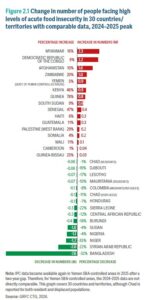
Meanwhile, some populations showed meaningful improvement. Bangladesh saw a significant 32 percent decrease in acutely food-insecure people between 2024 and 2025, and Syria reduced its share from 39 to 29 percent of the population — though both remained at alarming absolute levels.

The report covers various causes of malnutrition, including war and climate. Weather extremes had grown enormously as a driver — from 15 countries affecting 15.7 million people in 2020 to 16 countries affecting 87.5 million people in 2025, a roughly five-fold increase in affected population. The 2023–2024 El Niño, described as one of the strongest on record, drove much of this, devastating Southern Africa in particular.

The report and its annexes reviewed methods.  For instance, WFP conducted 800,000 survey interviews in 2025, a 30 percent reduction from 1.1 million the prior year. FAO’s Data in Emergencies surveys fell 31 percent, from about 170,000 to 118,000 interviews.  An ongoing Acute Food Insecurity Trends Study was specifically designed to correct for temporal, methodological, population, and spatial omission biases that make year-to-year comparisons unreliable. This work was not yet in place for the 2020 edition. Additionally, the 2026 report notes specific methodology changes in individual countries — for instance, Zimbabwe’s IPC methodology changed between periods, and Uganda shifted from FEWS NET to IPC classification, adding 3.3 million people to Phase 3 counts simply through the methodological switch.

Access the report:

https://openknowledge.fao.org/server/api/core/bitstreams/86067cbb-9396-4e7d-8d19-e60ad00d2f73/content

Technical notes:  https://www.fightfoodcrises.net/sites/default/files/resource/file/2026_GRFC_APP_TECHNOTES.pdf

https://www.fightfoodcrises.net/global-report-food-crises

https://reliefweb.int/report/world/2026-joint-analysis-global-report-food-crises

Past reports:

https://www.fightfoodcrises.net/knowledge-hub/search?f%5B0%5D=series%3A39

– Contributed by Steven Hansch for Hunger Notes

World Bank President Seeks Funds for Crisis Response

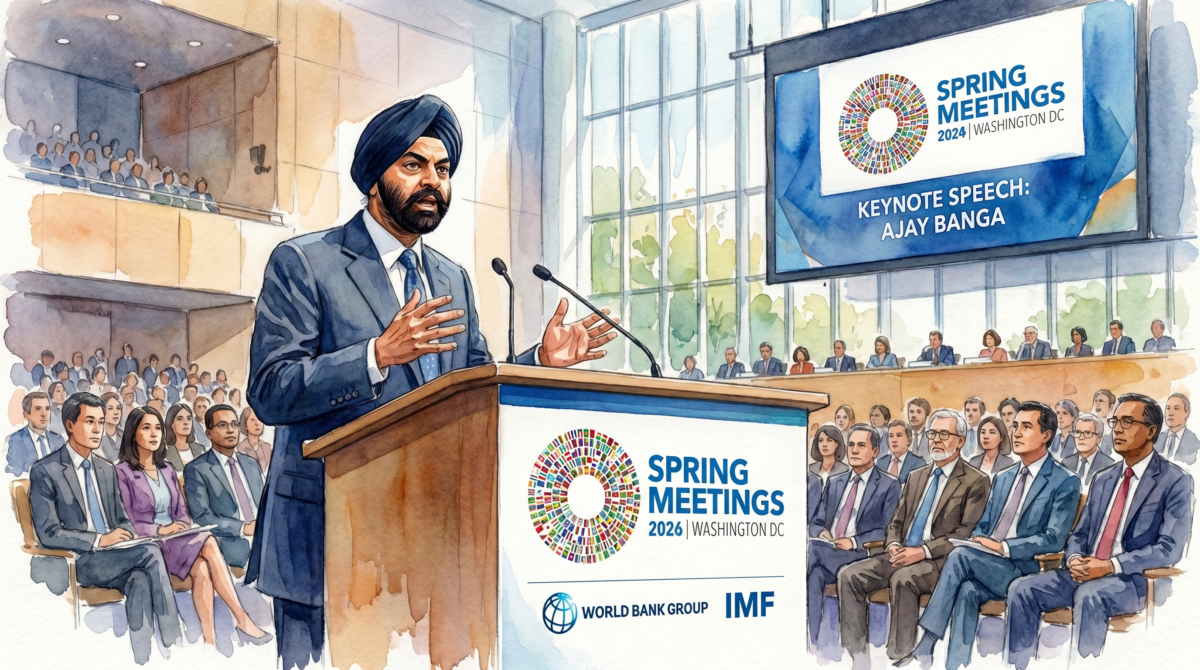
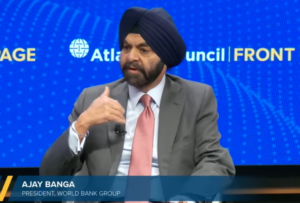
April 24, 2026     At the annual World Bank/IMF annual meeting held April 13–18, 2026, remarks and speeches by the World Bank President, Ajay Banga, addressed the current crises in the world affecting agriculture, fertilizer and increased risks to lower income countries. Banga announced that the World Bank is preparing to mobilize $80 billion to $100 billion in funding over the next 15 months to support countries harmed by the US/Iran war, particularly those facing high energy prices and supply chain disruptions. 

He explained that $20 billion to $25 billion could be made available immediately through existing “crisis response windows” without requiring new approvals.  He warned that the US/Iran conflict could reduce global GDP growth by  to over 1 percentage, depending on its duration, and advised leaders to prioritize reining in inflation in the short term before tackling long-term economic growth.

He framed his comments around ““multiple overlapping global shocks” (war, debt, inflation, supply chains).  These shocks were repeatedly linked to rising food and fuel costs. Broader discussions around the meetings warned that tens of millions could fall into food insecurity amid ongoing crises

More generally, Banga emphasized job growth to help address poverty and hunger.  He emphasized that 1.2 billion young people in lower income countries will enter the workforce over the next decade, but current projections suggest only 400 million jobs will be created, creating a massive 800 million job gap.

The World Bank is responding to how the conflict risks driving a record number of people into acute food insecurity, potentially adding 45 million more individuals to the 318 million already facing severe hunger globally if the conflict persists beyond mid-2026.

On other topics, Banga praised India’s digital transformation, citing examples of women farmers using “Small AI” to identify crop diseases, and expressed a desire to scale this technology in emerging markets.

He also highlighted the launch of the World Bank’s new “Water Forward,” a global initiative to improve water security for a billion people by 2030, noting that water is foundational to economic growth and jobs.

Videos:

CNN:  https://www.c-span.org/program/public-affairs-event/world-bank-group-president-ajay-banga-on-his-organizations-priorities/667023

Jobs:  https://www.youtube.com/watch?v=IeyO7U0_byY

Crisis response toolkit:  https://www.youtube.com/shorts/4bWFDBKWpyY

Readings:

https://www.worldbank.org/en/news/immersive-story/2026/04/19/jobs-water-forward-targets-spring-meetings

https://www.reuters.com/world/world-bank-could-provide-up-100-billion-funds-countries-hit-by-war-banga-says-2026-04-14/

https://www.worldbank.org/en/news/press-release/2026/04/08/conflict-hits-menaap-economies-underscoring-need-for-action-to-boost-resilience-create-jobs

https://www.worldbank.org/en/news/statement/2026/04/08/joint-statement-by-the-heads-of-the-international-monetary-fund-the-world-bank-group-and-the-world-food-programme

In Memoriam: Lionel Rosenblatt, Refugee Champion

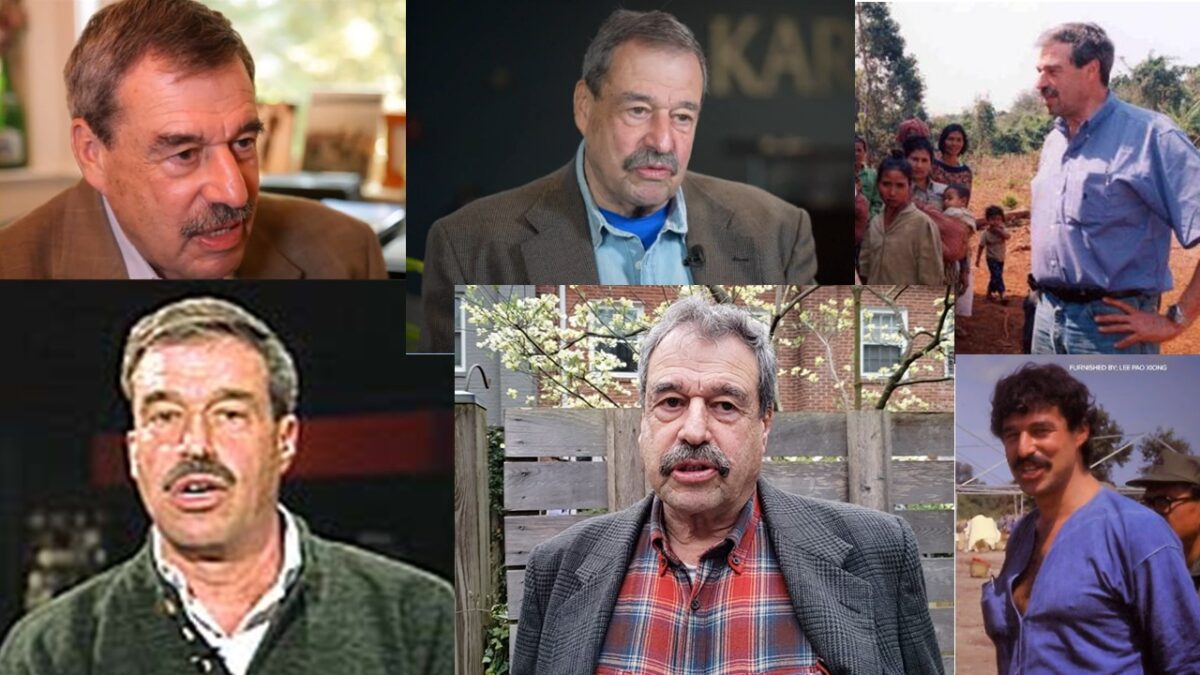
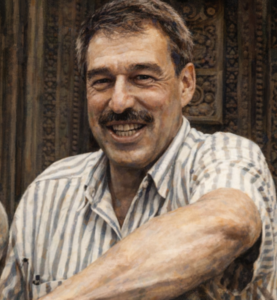
April 22, 2026     Lionel Alexander Rosenblatt, born December 10, 1943; died April 11, 2026.

Lionel Rosenblatt was the most consistent, clear, sane voice on behalf of refugees and war victims in Washington, DC, SE Asia, Switzerland and across the humanitarian community during his many years building up the stature of Refugees International (RI), the NGO he led as Executive Director.  During those years he was the most accessible, humane and down to earth of Washington leaders, always putting others at ease while steering conversations with a strong moral compass.

He is survived by his wife of 55 years, Ann Grosvenor Rosenblatt, whom he met in Vietnam and saved from a rhinoceros in Africa; his sister Sarah; and the generations of humanitarian workers he taught, cajoled, inspired, and sent off to places that needed them.

Born in New Rochelle, New York, and educated at Harvard College and Stanford Law School, he entered the U.S. Foreign Service in 1966 beginning a career that would span the fall of Saigon, the Indochinese refugee crisis, the wars in the Balkans, the Rwandan genocide, and crises in Somalia, Chechnya, and the Congo.

He is perhaps best remembered by many for an act of principled insubordination: in April 1975, he and colleague Craig Johnstone defied State Department orders and flew to Saigon on personal leave, arranging the evacuation of 400 greatly at-risk Vietnamese before the city fell as the war came to an end.  Michael Eiland, who succeeded him in Bangkok, says “It was truly a bold and remarkable undertaking and illustrated the depth of Lionel’s moral courage.”  Soon thereafter, Lionel was called before Secretary of State Henry Kissinger in Washington, DC to answer – he thought – for his clear violation of State Department instructions.  He was instead complimented by Kissinger who praised him for doing exactly the right thing.
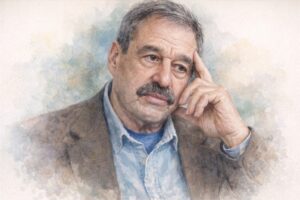
Selected quotes by Lionel himself:

  • “The treatment of refugees is a measure of whether countries live up to their stated principles.”
  • “It was always a mystery to me why they [the Hmong] were good enough to fight for us but not good enough to consider for resettlement.”. “They were willing to risk everything for us. We should have been willing to do more for them.”
  • “Humanitarian relief cannot substitute for political will. Feeding people under siege while allowing the siege to continue is not a policy—it is an abdication.” (about the crisis in Bosnia and the failure to act).
  • “Governments respond when they are pressed to respond. If they are not pressed, they will do as little as possible.”
  • “The lesson of Rwanda [after the genocide] is not that we did not know; it is that we did not act on what we knew.”
  • “If you go to the field and you see what is happening, you cannot come back and pretend that incremental steps are enough.” And “Working on the ground, listening to the customers, the refugees, and finding out how to help them…”
  • “The most vulnerable are those who have not crossed a border—because they have no legal status and no one assigned to protect them.”
  • “Early action saves both lives and resources; delay multiplies both the human and financial cost.” (From Humanitarian Emergencies: Ten Steps to Save Lives and Resources, 1995)
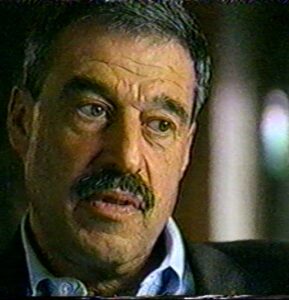
  • “We have one of the worst refugee crises of modern times — we have hundreds of thousands of people [from Rwanda in DR Congo] — one need not quibble over numbers, but all of us saw the camps — we know there are hundreds of thousands of people formerly supported by all of us as wards of the international community who’ve gone missing and are without food or water now for three weeks from this sector. … [we] must decide to go ahead more aggressively or we’ll really have written off substantial numbers of people to certain death.”
  • “We spend far more responding to crises than we would have spent preventing them.”
  • “You’ve got to be sure that you don’t get killed in the semifinals.”
  • “Our job is not simply to report what we see, but to force those who can act to do so.”
  • “Our enemies were not the Viet Cong… our enemies were the Koreans and the Americans and the South Vietnamese who didn’t like what we’d done.”
  • “Everybody [in the US Government] reported [only] success up the chain of command… so it was very hard for the senior Americans [officials] to know what was really happening.”
  • ”Many experts agree that a force of just 5,000 peacemakers could have saved hundreds of thousands of lives in Rwanda in 1994.”
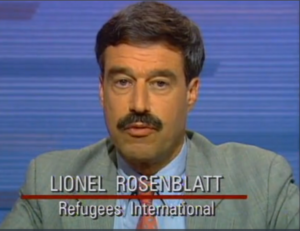
  • “While the international community is focused on Bosnia, little attention is paid to Burundi, a country that is close to exploding into a frenzy of killing that would dwarf the carnage of the Balkans. The United States should supply logistical and financial backing and solicit troops from other countries, including African nations, such as Botswana and Zimbabwe. The mission: to protect the moderate central government and the operations of foreign relief organizations.”
  • “When the United States leads, others follow; when it hesitates, others find reasons to hesitate as well.”
  • “Because of the funding shortfall, in beleaguered Bosnia meager rations are now being cut by half. In Croatia, the UNHCR has been forced to cut back drastically on support for the 600,000 Bosnian refugees there. … strong U.S. leadership is required to sustain a relief effort that must quickly resume feeding [to avert] the terrible precedent of permitting the remainder of Bosnia to be starved into submission.”
  • “The difference between acting now and acting later is measured in lives.”
  • “My life has always been dictated by strange, unpredictable circumstances.”
  • “You become a crusader for the underdog. And that’s much more satisfying than going to diplomatic functions and having high titles.”
  • “I realized that if I ever have to go on the run again, the quickest way to change my appearance is to have a mustache to shave off.”

Lionel was famous for hard-hitting one-page fax sheets specifying 5-to-10-point plans for immediate action to solve emerging problems.

This box below is from the 1996 Annual Report of Refugees International:
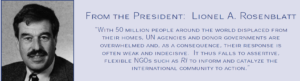
His leadership was moral alertness:  refusal to let distance, numbers, or diplomatic protocol numb the conscience.  He was part of a generation that built the modern humanitarian system, but his particular gift was persistence without cynicism.

Selected quotes by others about Lionel:

“Lionel was a lion hearted and compassionate advocate for refugees and saved so many lives because of his commitment.”  – Patricia Frye Walker

“He was a walking soundbite, able to eloquently and persuasively articulate why aiding others was beyond a moral imperative but of importance for national security at any time.   He had to have one of the world’s best rolodexes. There was almost no one in the humanitarian space he could not get on the phone.  I recall fondly seeing firsthand Lionel’s willingness to forcefully rattle cages and go out on a limb for the sake of those in need. I was in the room at the Orchid Hotel in Bukavu when he was being interviewed by the Washington Post about the ongoing civil war in what became the DRC. During the interview he called for the U.S. Ambassador to Rwanda to be recalled to Washington and read-in on the current US position on the war. The reporter asked Lionel if he really wanted to go on record for saying this. Lionel’s response, “‘You can !@$%ing print it.’  It made the article.”    – Kirkpatrick Day

“He was a giant.”   – Ellen Frost

“Lionel was a powerhouse: loud, bold, principled and fearless. He fought tirelessly for refugees and their human rights. I began my career in the humanitarian sector at Refugees International and Lionel modeled purpose and ferocity in a way that emboldened me to never shy away, to always speak up, to ask the tough questions and be relentless in the pursuit of solutions. So many of us became better advocates and allies because we had the chance to learn from him, to argue with, be challenged and encouraged by him.”  – Joung-ah Ghedini-Williams, former RI field analyst

“He always encouraged me to be bold, go for broke, do whatever our tiny RI team could do to give refugees voice and marshal the support they needed.” – Susan Goodwillie, who preceded Lionel as head of Refugees International

    “Even then he was investing in the next generation of advocates imploring a multilateral organization in which he strongly believed but pushed daily to hold up the 1951 convention and the foundation of international refugee protection.”   – Kelly Clements, Deputy High Commissioner of the United Nations High Commissioner for Refugees

“Lionel Rosenblatt, who led the refugee section [in Cambodia] was incredible, a real dynamo on this disaster. He would call me from a remote area to report that one refugee was being mistreated… He had that unique ability to care as much for one as for a thousand.”  – Ambassador Morton Abramowitz

“At that time, Lionel had very little experience in Laos and almost none with Hmong at the beginning, before ‘75, because his experience was in Vietnam. But he became extremely knowledgeable and very involved, and the key player in all this was Lionel. He was the refugee coordinator, so—and very articulate.  The refugees could not have had a better advocate for them. And this was within the State Department, so it made a big difference.“  – Dennis Grace, RI field advocate

“The enumeration of the sheer volume of his accomplishments is almost overwhelming. It is impossible to convey in words, though, his energy, passion, and selfless dedication to the refugee cause.”   – Michael Eiland, who suceeded Lionel in Bangkok

“Lionel could figure out how to get around problems.  When I needed to figure out how to get rid of landmines in my camp, he got me a landmine detector.  He found people.  He had a huge contact list; he knew people, he raised money for Refugees International.  It had almost been falling apart; he really rescued it.  He spoke straight forward and testified often to Congress. This small group made big changes in the international system.  People trusted him…. I went out to his Llama farm in West Virginia before he took the job at RI.”  – Dr. James Cobey

“Lionel Rosenblatt was a relentless advocate for refugees. He never gave up. An. example. He became a supporter of Hmong refugees who had been supporters of the US during he Vietnam conflict. Being mountain people , a resettlement site in the mountain west would be ideal. That site turned out to be the Bitterroot Mountains of Montana just south of Missoula, my home town.  As the Hmong were mountain people, the Bitterroots were a perfect resettlement site for them. Still, they needed livelihood help. Next thing I knew, Lionel had somehow gotten some llamas and had them sent to Missoula!”  – Don Krumm, former refugee officer at Dept of State

“I think without Lionel Rosenblatt we wouldn’t be here” – Lee Pao Xiong, Hmong leader

“Lionel had three key components of an effective humanitarian advocate — passion, smarts, and heart — and he offers all of us a model of a life well-lived.” – U.S. Assistant Secretary of State Eric Schwartz

“He did a great job leading meetings at the Burundi Policy Forum in the mid to late 1990’s.” – Margaret Zeigler

“Whenever he appeared, it was to encourage people towards engagement, participation, solutions. The message was always clear: we can and must do better.  Lionel Rosenblatt was one of the handful of giants that influenced my career. Just the right suggestion or correction at just the right time, typically without preamble, steered me to better helping others. He wasn’t great at following the status quo and, yeah, I loved that”.  – Bill Hyde, IOM Emergency coordinator

“He was so insightful and so relentless. He was a magnificent person to witness and work with. He was always looking for evidence of wrongdoing by whoever cast the characters in that. He was in there all the time holding up a vision of themselves to themselves and fighting for refugee rights.”  – Don Krumm

“He seemed like a bulldog, a pit bull even, pressing one administration after another to do the right thing on humanitarian issues.”  – John Prendergast

“Rosenblatt displayed special empathy for ethnic minorities whose fates were largely regarded as collateral damage.  These included the Hmong hill-tribe minority in Laos, who served as proxy soldiers for the U.S. in its “Secret War” to support a pro-Western government against the communist Pathet Lao.  – Washington Post

“Lionel’s influence extended well beyond the organization itself. His relationships and advocacy helped connect policymakers to the realities on the ground in conflict zones. Notably, his role in bringing Richard Holbrooke into besieged Sarajevo became part of a chain of events that would later influence U.S. engagement in Bosnia and the eventual Dayton Peace Accords – a powerful example of how principled action can reverberate at the highest levels of policy.” – Refugees International
“His working style as head of Refugees International was to visit areas where conflict was creating refugees and publicize the plight of these individuals not only in Southeast Asia, but the former Yugoslavia, Russia, and Africa, often to the irritation of authorities in the host country and in the United States. His advocacy more than once produced news coverage of events that otherwise might have been overlooked. “Harassing” governments was the term Dick Holbrooke used in his book To End A War about Rosenblatt’s style.”       – Legacy.com

Other readings:  Numerous other obituaries provide a chronological litany of his career postings and involvement in different crises.
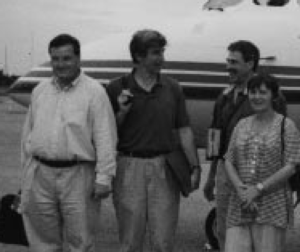
 https://apnews.com/article/lionel-rosenblatt-obituary-vietnam-war-refugees-hmong-cambodia-5f6056bf5b75173897fc2fca7567d156

 https://www.jstor.org/stable/40209567

 Humanitarian Emergencies: Ten Steps to Save Lives and Resources” (1995)


– Contributed by Steven Hansch, WHES Board member
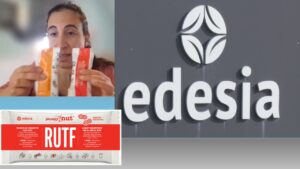
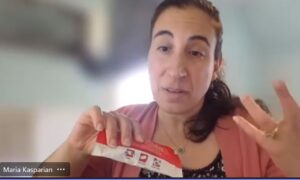
Interview: Edesia’s Maria Kasparian & Specialty Nutrition Foods

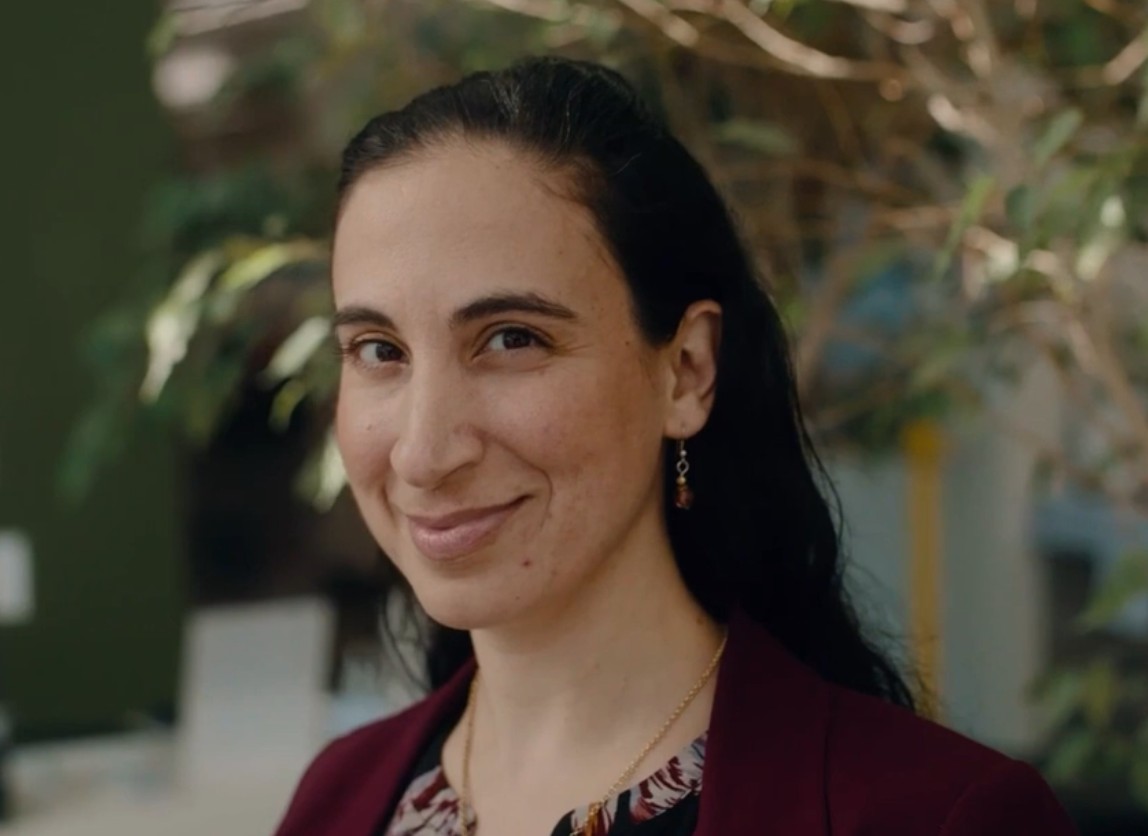
April 20, 2026      The WHES board met with and interviewed Maria Kasparian, expert about Plumpy’Nut which has become one of the most recognizable tools in the fight against severe acute malnutrition among young children around the world.  Plumpy’Nut is one brand of the broader food type called “Ready to Use Therapeutic Food”, or “RUTF.”  RUTFs have been a key topic in recent articles in Hunger Notes; nonprofits have used RUTFs in the Sudan, Gaza, Haiti, Afghanistan and in other countries in need.

In the United States, one of the leading producers is Edesia, the Rhode Island–based nonprofit that manufactures Plumpy’Nut and related products for UNICEF,  the World Food Programme, and NGO partners, while also participating in a wider global network of therapeutic food producers.
Following are selections from WHES’ interview with Ms. Maria Kasparian, Edesia’s Executive Director in 2023, about Edesia and now head of Strategic Partnerships.  The interview highlights several of these trends: rising interest in alternative formulations using ingredients such as soy, corn, chickpea, or millet; debate over procurement rules; the slow pace of agency adoption; and growing recognition that the challenge is not only making therapeutic food, but also building efficient supply chains that can deliver it where children need it most.

WHES: Thank you so much for taking time out to talk with us today. What should our readers know about Edesia?

Kasparian:  One of Edesia’s mandates is to educate and advocate global nutrition. We have school field trips, work with senators, channel our programming through Scouting America, and we do advocacy work in DC.
We produce in the US, taking with PL 480 (Food Aid) funds. We are producing 1.2 million packets of Plumpy’Nut each day. Edesia has had a ticker of how many children that our products have reached since we started producing in March 2010 – and distributing through partners. Today we are at 19.9 M children reached with full treatments. Our goal is to reach a total of at least 10 M more children within 2023 and 2024.

We’re also part of the “PlumpyField network” of partners in ten partners, spanning Madagascar, India, and other countries. We work to help these producers in other countries, such as Ethiopia and Haiti. For instance, we support Meds and Foods for Kids in Haiti. There are now 22 producers worldwide of RUTF, and each uses slightly different formulations.

WHES: Do all the producers of Ready to Use foods follow the same formulae?

Kasparian: Across the 22 suppliers of foods, there are no two formulas that are identical. But as long as we meet the robust recommendation, we’re okay.
Even within the PlumpyField Network, there are tweaks. There are differences, depending on what’s available locally. For example, you have to achieve certain omega-3 to omega-6 balance with the fats. You need to do that. The vegetable oils are important. You can get different kinds of vegetable oils depending where you are. There might be some variety there. You might have different forms of milk powder available. You might have different forms of whey available that have different amounts of protein. You’ve got to balance the formulas, depending on what ingredients you have available. But they’re very similar. We’ve actually done taste tests where we meet and have everybody’s and we blindly try to guess whose is who. So, they’re a little different, but the difference is small. But the formulations do vary a little bit. There will be a greater degree of difference with those outside the network formulations are.

WHES: Thank you. So, how do donors specify what they want or accept new ideas for specialty foods to address malnutrition?

Kasparian: Well, the Interagency oversight group (UNICEF and WFP) have discussed for many years, having a common standard. It’s the long game. Over time, things do get accepted. Governments and the U.N. don’t move quickly. So generally, though, progress does happen. It just happens slowly. You keep pushing, and over time, things do improve. So you must continue innovating.
The Tufts Food Aid Quality Review study comparing the effectiveness of different foods looked at RUTF (compared Corn Soy Blend or CSB+ with fortified vegetable oil (CSB+ w/oil), Corn soy whey blend (CSWB) with fortified vegetable oil (CSWB w/oil), and Super Cereal Plus with amylase (SC+A)) for the treatment of moderate malnutrition.  The cost-effectiveness was similar between the products, and caregivers had a slightly lower of their own opportunity costs when using RUTF.  The main conclusion was that NGOs/programmers should pick the products that would be most appropriate for their contexts.

WHES: Is it only about the formula of the food composition?

Kasparian: The ecosystem is not only about making RUTF, but also about improving the supply chain. Customs fees for incoming fees mean that local production is not necessarily cheaper. You know, it’s cheaper to get our foods from here to South Sudan than it is from Khartoum to South Sudan. As well, we’re shipping a lot to Somalia right now.

WHES:  Has demand grown for your RUTF?

Kasparian: We have doubled the numbers of kids getting treatment. Most of it goes to Africa, over 70%. Our main goal is to reach more kids. The price of RUTF was going down significantly before the Covid-19 pandemic. As background, 70% is the cost of the ingredients. In 2005 a box of RUTF cost $55 but we brought that down to $35 a box in 2019.

WHES: How is it working with UNICEF and WFP?

Kasparian: One of the barriers we face is the way that Unicef and WFP work together. They work differently and in different places.

WHES: How do you relate to other producers in other countries?

Kasparian: We are a U.S.-based producer. We’re a non-profit U.S.-based producer, and that we care a lot about having a good balance of what’s coming from the U.S. and what is coming from local and regional procurers, and that balance is really important. And we do various things to support these
suppliers in other countries. We work particularly closely with Meds and Food for Kids in Haiti. We help them with their formulations. We just help them to get their codex, upgraded codex specification in order. We help them with procurement of raw materials. We help them troubleshoot from a maintenance engineering perspective.

WHES:   Edesia has a history going back to Tanzania, right?

Kasparian: Yes.  Before we set up a factory in the U.S., we established one in Tanzania, which, unfortunately, is no longer operational, but was, for about five years.  Thus, our experience kind of went that way. Our founder, Navyn Salem, has family roots in Tanzania.  Her father and three generations of the family are Indians who lived in Tanzania for a period of time. Ms. Salem’s father was born and raised in Tanzania before he came to the U.S. on a USAID scholarship for college.  This leads me to another interesting part of the story: USAID is really responsible for Edesia’s existence. Her father, and therefore she, would not be in the U.S. if not for USAID. The U.S. factory, Edesia, was an afterthought to Tanzania because, at the time, USAID’s Food for Peace, was looking to have RUTF and RUSF suppliers in the U.S. because they wanted to be able to use the Title II PL-480 funds for nutrition-specific commodities like RUTF, RUSF. Which, at the time, this is 2008, 2009, at the time, no one was making in the U.S. And there was a push to improve the food aid basket of what was coming out of the U.S. And to take more vulnerable groups into account and to add these nutrition-specific commodities. So, they kind of approached us and others to say, hey, can you do this in the U.S.?

WHES: Do you engage much with the public here in the U.S.?

Kasparian: Our factory doors are open. We have school field trips come through. We have senators and congresspeople whenever we can. We have Scouting America, Rotary Clubs, and the like. And then we also do advocacy work in D.C. around global nutrition.