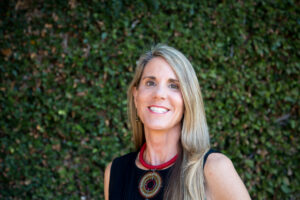
Feeding America’s Claire Babineaux-Fonteno Cited by Time Magazine

The newly released Time Magazine review (Feb. 20, 2025) of “Women of the Year” features Claire Babineaux-Fonteno for her nation-wide advocacy to end hunger.   (https://time.com/7216387/feeding-america-ceo-claire-babineaux-fontenot/)

Babineux-Fonteno heads the nonprofit Feeding America, described by Time as “the country’s largest domestic hunger-­relief organization—overseeing a network of more than 200 food banks and 60,000 partners.”

Time quotes her:  “Babineaux-Fontenot embraces the nonpartisan nature of her work. ‘No matter what your political positions are in this country, people consistently believe that people deserve to have access to nutritious food.'”

A lifelong volunteer with nonprofits and boards, Babineux-Fontenot worked at Wallmart before joining Feeding America, including as executive vice president and global treasurer.  She was recognized by Sothern Methodist University with their Distinguished Alumni Award.

Interviewed by The Cut in December, she explained how “Advocating on behalf of people experiencing hunger is a big part of my role. I get to lift up their aspirations.”

Feeding America, based in Chicago, Illinois, was founded in the 1960s.

The organization supports mobile food distributions, school feeding, disaster relief, public advocacy, education, elderly feeding and other activities.

Their annual report for 2024 explains that their network supported almost 6 billion meals in the twelve months from mid 2023 to mid 2024.  Feeding America raised $5.2 billion in 2024.

Questions to Ask about Aid from USAID

The US Government Agency that Brings Aid – USAID

USAID, started in 1961 under President John F. Kennedy.  Estimates are that some 3 billion people in 150 countries have benefited directly from U.S. food assistance      . The Bureau for Humanitarian Assistance, a part of USAID, identifies food aid      needs in close consultation with foreign governments     .

A common misperception is that the US spends a large percentage of its budget on foreign aid. In reality, it is less than 1% and is widely seen within government as providing some of the most bang for the buck in terms of its return.

The US Administration is asking some good questions of programs across the US government– is this right for America, are we kept safer, does it promote US interests?

As things are continuing to move quickly     , there are some broader questions to ask about USAID in regards to the new administration’s direction.  For example:

  • Are all or most the USAID programs harming US interests?
  • How does humanitarian aid – the supplying of food, water, medicines and other life saving measures – improve the lives of peoples in nearly 130 countries? Is the withdrawal of this aid make us more or less American? That is, does humanitarian aid reflect our values and support to people and countries in need? Is humanitarian aid promoting US interests?
  • Will the abrupt withdrawal of humanitarian aid programs worldwide cause countries to trust America more or less in the future?
  • How will this impact the hundreds of non-profit, non-governmental organizations who have been working with USAID, their operations, their staff and American volunteers, their reach to the most vulnerable, if their resources are cut?
  • Are we more or less safe? Does the trust that other countries have in the USA matter in terms of the overall safety of Americans? Will our adversaries step in and develop relationships with those foreign people’s trust we now might have lost?

These are important and forward-looking questions that should be addressed by government and law makers at this critical time. There are a number of other such questions we should ask.

The good work of USAID in over 100 countries worldwide merits immediate attention and fair review.

Margie Ferris Morris

Former Chairman of the Board, World Hunger Education Service

(Margie worked for decades in the field, as a nutritionist and food expert and has taught about international aid frequently including Tulane and George Washington Universities.


Career, Long-term, Retired USAID Experts Speak about USAID’s Value

February 13, 2025:   The United States Agency for International Development Association’s Alumni Association, of retired USAID experts, petitioned new Secretary of State Marco Rubio, who is also the USAID Administrator, with this letter this week, citing a few of the many USAID-supported projects and programs worldwide that are cost effective and help others on “behalf of the American people”:

USAID Adds Value in Disaster Response, Says Former Hunger Notes Chair

Opinion piece from the former WHES Board Chair:   Most people do not realize what a huge mistake it would be to eliminate the United States Agency for International Development (USAID), as appears to be underway here in February 2025.  It would be like throwing the proverbial baby out with the bathwater.  I cannot imagine that either Elon Musk or President Trump are aware of full range of ramifications this elimination would have on the world.  If we as a nation eliminate USAID whole cloth, then all the disaster response and humanitarian efforts including the USAID Disaster Assistance (DART) teams would stop.  I know it has been said that the State Department will maintain emergency food and material aid.  In practical terms it is unclear how that can happen, when staff with institutional memory are gone, grant making ability is gone, and the  DART is gone.

I recently stepped down as Volunteer Board Chair from the World Hunger Education Service (WHES) Board.  WHES was started 50 years ago to inform the US Congress about international hunger issues and needs.  It widened its scope in the internet age beyond Congress to the public at large.

Prior to my role on the Board, I worked 23 years in USAID.  My USAID career was with the Office of U.S. Foreign Disaster Assistance (OFDA) within USAID. At OFDA, I initially served as a contingency planner and nutrition advisor then as a member of the Senior Management Team and Division Director for the Technical Assistance Division which included all the assistance sectors for disaster relief; Health, Pandemic response, Clean Water and Sanitation, Famine and Nutrition, Volcano and Earthquake risks, Floods and Storm risk, Pestilence, Shelter, Anti-trafficking in persons and Protection of Vulnerables.

Growth of Disasters

OFDA grew as post-cold war disasters and responses around the world became greater.  I was in Rwanda after the 1994 genocide, then DR Congo which had a internal war taking place as well as Sudan and Kosovo.  Historically, disaster assistance was modeled on refugee camps; including feeding, shelter, health care, and food distribution.  As internal wars increased, the global number of Internally Displaced Persons (IDPs) became greater than the number of refugees. As a result, humanitarian assistance became more dangerous and more complicated.  I was familiar with refugee assistance; before OFDA, I worked in Cambodian refugee camps on the Thai border; in Cambodia on health programs with World Vision, and the Red Cross and then in UN refugee camps in Congo during the Rwandan genocide.

Operational DART Teams

Until last week, USAID, through OFDA, funded many different non-governmental organizations (NGOs) like Catholic Relief Services, International Rescue Committee, and World Vision.  However, USAID, through OFDA, was also operational; it had the ability to send Disaster Assistance Response Teams (DART) to disasters.  The purpose of these teams was to report, to coordinate the US efforts and to fund humanitarian partners.  This was a much better model to keep an eye on the funds, literally in the field.

Another clear advantage was the DART also became a platform for coordination for the whole US Government.  As a DART team leader, I witnessed this on the DART during the Indian Ocean Tsunami in 2004; The US Navy, Marines, US Air Force reserve, Embassy Jakarta, and USAID all assisted there, in a coordinated effort.  The response dramatically changed Indonesian public opinion of the United States from negative to positive.

I also witnessed this on the 2014-15 DART when the DART platform was used to combat and eventually defeat the Ebola epidemic.  This involved US Centers for Disease Control and Prevention (CDC), USAID, Embassies in Liberia, Guinea and Sierra Leone and US Defense Department.

Ramifications

During this aid freeze, NGOs will go bankrupt.  The US Government was the largest single supporter of global disaster response and humanitarian efforts.  In my experience, it has always had bipartisan support, and goodwill from the House and the Senate. It would be a terrible mistake to continue down this destructive path.


Regenerative Agriculture to Mitigate Hunger: Thurow’s Latest Book

Book Review:    Roger Thurow’s Against the Grain:  How Farmers Around the Globe are Transforming Agriculture to Nourish the World and Heal the Planet (2024, Publisher:  Agate Surrey)

American journalist, Roger Thurow, has written consistently about global hunger and food issues for many years.  In his latest globe-spanning book he highlights the work of farmers who are “going against the grain” by adopting regenerative agriculture practices.  These methods prioritize soil health, biodiversity, and natural processes, leading to more resilient and productive farms. Thurow introduces readers to farmers in diverse regions, from the American Midwest to Africa and India, who are successfully implementing these practices and achieving remarkable results.

Thurow visits a dozen countries in different continents telling the story of local responses to the upward pressures of world population growth and the strains on global food chains.  He highlights the UN World Food Programme, the NGO World Vision, the International Livestock Research Institute, and others.

Against the Grain’s central theme revolves around the idea that industrial agriculture, with its reliance on monoculture, chemical inputs, and intensive farming methods, has come at a significant cost to both the environment and human health.  Thurow argues that this common approach is unsustainable and undermines the long-term viability of food production.

One of the book’s strengths is its ability to explain the connections between individual farming practices and global concerns such as climate change, food security, and public health. Thurow demonstrates how sustainable agriculture can play a crucial role in mitigating climate change by sequestering carbon in the soil and reducing greenhouse gas emissions. He emphasizes the importance of diverse, nutrient-rich diets in combating malnutrition and promoting public health.  He interviews dozens of farmers, some of whom farmers incurred risks to change their  long-term practices to work with nature and terrace their land to catch more rainwater and prevent soil runoff; to plant a diverse range of vegetables that would balance the nutrients in the soil; to replaced commercial fertilizers with organic matter from their own farms;  to plant more trees and drought-resistant grains; and then shared their success with neighbors and communities.

Regenerative agriculture is a holistic approach focused on restoring and enhancing the health and biodiversity of agricultural ecosystems. Its primary goals include regenerating soil, increasing carbon sequestration, improving water retention, and promoting biodiversity. Key practices include crop rotation, agroforestry, composting, reduced tillage, cover cropping, and integrating livestock in ways that mirror natural ecosystems.

Unlike conventional farming, which aims for sustainability, regenerative agriculture goes a step further by actively enhancing the land’s health rather than simply preserving its current state. The overarching aim is to create systems that are ecologically resilient, economically viable, and socially beneficial.

Throughout the book, Thurow shares examples from diverse ecosystems across the globe where regenerative agriculture has successfully rejuvenated soil and improved farm productivity. However, the book does not delve deeply into economic profitability or provide technical analyses of how specific practices restore farmland. Instead, Thurow provides accessible, layman-friendly descriptions using personal stories and real-life examples.

Here are some of the practices highlighted across different regions:

Location   Practices
Ethiopia Rift Valley   Water catchment, terraces, intercropping, tree planting
Uganda   Tree planting, intercropping, livestock integration, amaranth, mucuna beans, crop rotation
Kenya   Dairy management with perennial forage (Brachiaria grass), transforming garbage dumps with greenhouses, chickens, and rabbits
Indo-Gangetic Plain   Crop diversity, drip irrigation, cold chain management, composting
Pan American Highlands   Preservation of genetic diversity, crop diversity, drip irrigation, composting with crop residue
US Great Plains   Zero tillage, composting with manure, planting Kernza (a perennial forage and grain crop)


Across all of these examples, composting, crop rotation, and intercropping are central practices used to maximize production while simultaneously restoring soil health. Thurow emphasizes that for many smallholder farmers, “livestock are the ATMs of smallholder farmers,” representing their wealth storage. One farmer from the Great Plains shared his positive experience with Kernza, a perennial crop that provides both grain and livestock forage: “Once planted, perennials keep growing year after year, yielding multiple harvests.”

Thurow spends time with farmers in Kenya’s Great Rift Valley who are implementing practices like terracing and agroforestry to restore degraded land and improve their livelihoods.  He highlights the ongoing work of aid organizations like the World Agroforestry Centre (ICRAF) in promoting sustainable agriculture and empowering local communities.

In Uganda, he visits farmers who are diversifying their crops, integrating livestock, and using cover crops to improve soil health and increase resilience to drought.

He explores efforts to combat land degradation and improve food security in Ethiopia, where farmers are adopting techniques like intercropping and water harvesting to enhance productivity in the face of challenging environmental conditions.  He travels to India’s Indo-Gangetic Plain, where he meets Indian farmers who are revitalizing their soil and increasing yields through practices like no-till farming and crop rotation. He also examines the challenges faced by Indian farmers, including water scarcity and climate change.

When visiting Guatemala’s Highlands, Thurow describes the efforts of smallholder farmers to preserve traditional maize varieties and promote sustainable farming practices in the face of pressures from industrial agriculture.

Against the Grain offers a valuable contribution to the conversation about the future of food and farming. It provides a hopeful vision of a more sustainable and equitable food system, while also acknowledging the challenges that lie ahead. Thurow’s engaging writing style and his passion for the subject matter make “Against the Grain” an informative and thought-provoking read for anyone interested in the intersection of food, agriculture, and the environment.

Note:  Some NGOs specialize in promoting this type of agriculture, including Trees for the Future. Thurow serves on the advisory committee for Action Against Hunger, US.

A related book review about Regenerative Agriculture is available at another non-profit’s (Well Being International’s) site:  https://wellbeingintl.org/resources/newsletter-archive/wellbeingnews/wellbeing-news-vol-6-11/  .

*Reviewed by WHES Board

Film Mischaracterizes Humanitarian Aid Work

[Editor’s note:  The following opinion piece was written by career aid worker Amy Leah Potter in response to the recent release of the film “Dirty Angels” which has upset many people in the aid community for its depiction of humanitarian NGOs serving as shells to hide army combatants.  The movie, distributed by Lionsgate, takes serious themes of working in Afghanistan (which many dozens of international aid organizations do) but perverts the depiction of how aid really works.  The movie was released one month ago and has received negative reviews and earned only $15,000 globally.]

Hollywood’s Fictional Narratives have Real-World Consequences for Humanitarian Aid

Opinion by Amy Leah Potter

In 2017, I was briefly held at gunpoint by members of the Houthi Rebel group in Northern Yemen. My presence in their territory was questioned at a checkpoint, leading to my detainment. For 90 distressing minutes, I awaited the confirmation of my identity before being allowed to continue my assignment: working with a team to establish an emergency surgical program in a conflict zone.

Gaining access to provide care in war-affected areas is an immense challenge. It requires fostering trust with governing factions—whether governments, rebel groups, or militias—convincing them to view international aid organizations as impartial and independent. When this neutrality is not recognized, the consequences are dire. Denied access means critical care cannot reach those in need, leading to preventable suffering and loss of life. Tragically, this mistrust has also cost the lives of both national and international healthcare workers.

In 2011, a covert CIA operation that used a fake vaccination campaign in Abbottabad, Pakistan. The aftermath was catastrophic: an immediate ban on unrelated international aid agencies and a wave of violence. Over the next two years, 56 polio vaccination workers—and the police officers protecting them—were murdered. Polio cases resurged in the region, undoing years of progress and costing even more lives.

The backlash would bring lessons and efforts to avoid replication of such dire scenarios. Humanitarian workers welcomed the statement from the White House, affirming that the CIA would no longer use vaccination programs or workers for operational purposes. A CIA spokesperson acknowledged, “By publicizing this policy, our objective is to dispel one canard that militant groups have used as justification for cowardly attacks against vaccination providers.” This recognition of the vital need for humanitarian neutrality was a step forward. However, the damage to trust in global health efforts lingers as evidenced by my experience in Yemen.

Sadly, lessons from the past may have already been forgotten.

A new Lionsgate film Dirty Angels has recently been released. According to its IMDB synopsis, the movie “centers on a group of female soldiers who disguise themselves as medics to rescue teenagers caught between ISIS and the Taliban.” The trailer shows these women armed and posing as members of an “international relief organization.”

I wish I could trust the public, governments, and rebels to distinguish fiction from reality. But in my experience, the paranoia and mistrust in many conflict zones are deeply ingrained. Agencies and workers are currently risking their lives to deliver aid in territories controlled by groups like the Taliban, ISIS, Hamas, the Houthis, Hezbollah, Boko Haram, and others. My concern is that the script in this piece of entertainment will, unintentionally, undermine the essential work of humanitarian organizations as well as endanger thousands of lives.

On behalf of those who rely on life-saving care in the most inaccessible regions—and the individuals delivering it – I urge you not to support this film. A message needs to be sent that these narratives are not just dangerous; they are life-threatening.

Instead encourage productions that share stories of heroism, service, and altruism that bring hope and change. Filmmaking can be a force for good, and an ally to humanitarian workers everywhere in the world.

The world cannot afford to lose more trust, more workers, or more lives.

EDITORS NOTE:  As of Feb 6, 2025, the film Dirty Angels had performed poorly at the box office and received heavy criticism from NGOs and social media.  It had under 1/3 approval on Rotten Tomatoes and seems to have earned almost no revenue.  The distributors may have pulled it for a later re-release on streaming sites.

As well, other streaming TV series, including “the Agency” also distort truth by characterizing US government spies pretending to be medical relief workers.  In early episodes, a top secret program codenamed Felix in Ukraine includes four spies working in a health aid camp.  This violates the law, jeopardizing real civilian aid workers, and violates international norms.

WHES Undertakes Research about Attacks Against Food & Nutrition in Humanitarian Aid

This month, toward the end of 2024, World Hunger Education Service  launched a broad  study about the patterns, trends and extent of violent attacks and threats against aid programs delivering food and nutrition solutions in famines, crises, war zones, and for displaced populations.  The results will be published here, in Hunger Notes.  This is an independent study that is at WHES’s initiative.

In recent years, there has been a growth in attention to and professional publications about attacks on health care in fragile states and conflicts, which include missiles, drones, shooting, targeted assassination, roadblocks, air strikes, mortar fire, kidnapping and siege.  All of these are prohibited by the Geneva Conventions.

There has been no corresponding attention to attacks on food assistance or nutrition programs, which this new study hopes to fill in.

WHES’s Lead Researcher, Eline de Looijier, is seeking inputs from a wide range of UN agencies, non-governmental organizations, donors, journalists,  researchers and observers who can help her document not only the extent of attacks on food/nutrition, but also how aid agencies adapt to threats and risks of attacks and seek to mitigate these risks.

WHES is an independent nonprofit and respects the confidentiality of people contributing to this study.  WHES thanks all those who are able to share their thoughts.  Please send inputs to Eline at:  Eline de Looijer <elinejdelooijer@gmail.com>

Remembering Don Kennedy, Human Biologist

Don Kennedy, who passed away four years ago, was founder of the  unique Human Biology program at Stanford University, where he served as a role model as arguably the most influential teacher of his generation, particularly teaching about intersections of biology, ecology and policies.  In addition to teaching a unique interdisciplinary program, Kennedy also served as the head of the US Federal Food and Drug Administration (FDA) and  President of Stanford University.

What was remarkable about Kennedy was his obvious love of scientific discovery, evident to his students as he himself kept learning while teaching about all the different sciences that fed into the multi-disciplinary Human Biology program he led.  This infectious curiosity led him to be an ideal lecturer, department head, university president and Food and Drug Commissioner for the US.  He served as commissioner of the U.S. Food and Drug Administration (1977–79). At the FDA Kennedy’s efforts toward comprehensive drug regulation reform helped modernize the regulatory framework to ensure public safety and efficacy of pharmaceuticals.

As Stanford President, he led the university’s Centennial fundraising campaign.  He established overseas campuses in Kyoto, Oxford, and Berlin, broadening Stanford’s global reach.  Later in his career he was senior fellow at Stanford’s Center on Food Security and Environment.  He wrote a seminal monograph  “Environmental Quality and Regional Security” for the prestigious Carnegie Preventing Deadly Violence Project.

Former U.S. Secretary of State Condoleezza Rice remembers “I first met Don when I was a first-year professor.  Imagine what it was like to have the President of the University know your name and what you would be teaching.  I was blown away.  He was a terrific leader because he always cared first and foremost about students, faculty and staff.  Don was an important influence on me and on the way I tried to lead.  I learned a lot from him.”

As Editor-in-Chief of Science Magazine (2000–08) he set a standard for promoting the application of science in public policy.  Professor Wally Falcon (who directed Stanford’s Food Policy Institute, and who passed away in 2023), remembers: Don had a truly amazing capacity to generate 1,000 word essays for the Science editorial page.  And he did it week after week.  He would stroll into my office, saying I am thinking about a topic, we would talk about it, and the next day an amazing draft would appear.  Most Science editorials go unread; Don’s were looked forward to with anticipation.  In the cogent-1,000 word—overnight—scientific-writing genre, he had no peer!”  Ahead of his time, he observed to his students in the 1970s that “global warming has already been observed”   as seen fifty seconds into this retrospective:  https://www.youtube.com/watch?v=ah3B1_gCPoA

Dr. Seth Foldy, a campus leader on many policy issues, and global physician/ epidemiologist, remembers “My biggest recollection of Don Kennedy was how much he believed in us as students.  During a revision of the HumBio Core in 1975-6 he basically gave me and a few other TAs nearly full control of the Spring semester focused on health policy.  4 groups of students had to develop policy solutions; one group I oversaw  had to design the national health plan they thought would produce best results.”  Another student remembers:  “I will never forget Donald Kennedy getting up on the lab table at the front of the lecture hall and assuming a quadruped position to demonstrate to us the concepts of dorsal, ventral, cephalo, and caudal.   His first concern was always with teaching effectively, not preserving his dignity.

Kennedy told the Stanford Daily:  “Teaching is when you plan a course; you invite some other people in to lecture; you create an intellectually coherent and stimulating whole; you develop readings; you develop challenging examinations; you read people’s …papers and you write in the margins — that’s teaching.”

His wife recalled that “he was one of those triple threat guys:  brilliant teacher, brilliant researcher and brilliant administrator.”  He told the Stanford Daily newspaper that he wanted “to be a cultivator of enthusiasm and a good agent of consensus.”  That he did.  He charismatically instilled enthusiasm for learning, by example, in all his lectures.

Professor Falcon remembers Don as being exceptionally kind with his time for his handicapped son, Phillip.   “Don spent hours with him, talking about all manner of things.  Don spoke at Phillip’s memorial service and also arranged for a special appearance of the Stanford singing group that Phillip so enjoyed.  This personal story is part of a larger point having to do with the affection young people had for Don.  The world is a much poorer place without Don Kennedy.”

A neurobiologist by training, Kennedy received his PhD in biology from Harvard in 1956 and came to Stanford in 1960, where he Chaired the Department of Biology (1964–72), then the Program in Human Biology (1973–77), served as Provost (1979-80), President of the University (1980–92), and Bing Professor of Environmental Science.

Foldy also remembers:  “He was also very funny in a dry way.  I remember him in lecture going through all the biofeedback loops that resulted in his sweating only AFTER showering, after a four-mile Dish run.”

Dr. Eric Noji, who led the Centers for Disease Control and Prevention’s global humanitarian work, and served in the White House, remembers:  “Professor Kennedy was a mentor and inspiration to me both personally and professionally while I was an undergraduate at Stanford.  We shared a passion for birdwatching and I met him on a Saturday birding field trip to Jasper Ridge as a freshman.  He later asked me to teach an undergraduate special entitled “field ornithology” which by my senior year had over 40 students!  It was his strong encouragement that led me to pursue a career in biology and medical school.  A day rarely passes when I don‘t think of him, a gifted and rare man who has influenced generations of students at Stanford.”

The alumni of the Human Biology program, which Kennedy co-founded, created this online memorial to him:  https://drive.google.com/file/d/1Y6-wnoK2AZp3CH4wLSVTxcBASJtuWHSz/view 

Kennedy’s own Memoir, A Place in the Sun, derives its title from his love of family and work, ability to share the light, and interact with so many brilliant colleagues.


SHansch

Past World Hunger Prize Winners

Thirteen winners of the World Hunger Prize issued an appeal on October 30,  2024 at the  Borlaug Dialogue gathering in Des Moines, Iowa.  The annual gathering, this year from October 29-31, showcased over 50 speakers from around the world, including the 2024 World Food Prize winners Dr. Geoffrey Hawtin and Dr. Cary Fowler.  Hawtin and Fowler were founders in 2008 of the Svalbard Global Seed Vault, in Norway, which today holds 1.25 million seed samples of more than 6,000 plant species in an underground facility in the Arctic Circle.   The goal is to ensure options for crop diversity long into the future.

In the featured image here, the Governor of Iowa, Kim Reynolds, speaks to the conference participants.

The letter published signed by 13 prize winners   asks for candidates for office and voters in the US to  remember world hunger and its potential solutions, and for the US to participate in multilateral initiatives to avert famine.  It includes:  “As we gather in Iowa, in the heartland of the United States, we are also thinking beyond the U.S. election and planning ahead to bring about a world without poverty and hunger. …Hungry people are struggling for a better life. U.S. leadership can give them hope. ”

Prize winners who signed this are:  Maria Andrade, David Beckmann,
Howarth Bouis, Gebisa Ejeta, Lawrence Haddad, Geoffrey Hawtin,
Gurdev Khush, Heidi Kühn, Rattan Lal, Jan Low, Per Pinstrup-Andersen,
Pedro Sanchez, Shakuntala Haraksingh Thilsted.

The full letter is at:  www.worldfoodprize.org/index.cfm/87428/49164/laureate_statement__world_hunger_the_big_issue_being_overlooked_in_the_us_elections 


SHansch