American Tariffs Hurt Poorest Nations

Recent tariffs imposed by the U.S. President in 2025 have been much in the news.  What has been less reported is how tarrifs more severely affect the poorest nations, with some countries facing tariffs 40% or higher.  These high tariffs will cripple some poorer nations’ export industries and lead to significant economic and human harm.  New American tariffs on poorer nations are 2 – 5 times higher than those placed on wealthier countries, potentially reversing decades of poverty reduction through trade.

Countries such as Vietnam, Bangladesh, South Africa, and Iraq now confront tariffs of 20% or more.  Poorer nations such as Laos are subjected to tariffs as high as 40%.  Burma which is recovering from a devastating earthquake, was hit with a 45% duty.  These countries have economies that are heavily reliant on a few key export sectors, such as textiles, garments, or agricultural products. A high tariff on these goods can have a devastating effect on their entire economy, leading to job losses and a decline in national income.

U.S. tariff rates now on Cambodia are 49%, on Angola 32%, on Mozambique 47%, on Syria 41%, on India 50%.   The tariff on Bosnia is 30% and Moldova 25%.  This represents a regressive policy shift that will un-develop countries, worsten debt crises and lead to higher unemployment.

The U.S. President has demanded in recent months that trading partners invest in the U.S., but few developing countries have anything near the finance to match the hundreds of billions of dollars that Japan, South Korea and the EU have pledged to sink into the American economy.

Wealthier nations generally have more diversified economies and greater resources to negotiate with the U.S. or to find new markets for their goods. In some cases, they have been able to reach agreements that result in lower tariff rates than initially threatened.  As seen in the chart at right, U.S. tariffs are lower for wealthier countries and higher for lower-income populations.

UNCTAD estimates that developing countries could see export losses of up to 15-20% to the U.S., worsening poverty and growth prospects. Wealthier nations, with diversified economies and stronger bargaining power, have secured exemptions or lower rates through “mini-deals,” mitigating impacts. For instance, the EU’s rate is 15% for most goods, reflecting pre-existing low mutual tariffs (around 1.4% average before 2025).

By: WHES Board

Famine as Weapon of War — Lancet Commentary

The medical journal, the Lancet, on July 30 2025 ran an appeal against famine titled “The Famines in Gaza and Other Conflict Areas are a Moral Failure,” writing:  “Widespread starvation is deliberately used as a weapon of war, at a scale that we never thought possible….  Every child — every person — has the right to the nutrition they need to survive and thrive.”  This was by members of the “Standing Together for Nutrition Consortium”, or ST4N.

See:  https://www.standingtogetherfornutrition.org/

They continue:  “Wasted children are about 12 times more
likely to die before their fifth birthday than children
with a healthy weight.18 Those children who do survive
famine will bear the impacts for life…

“The science of malnutrition and the solutions are
known.  Treatment of severe acute malnutrition, access to nutritious foods, clean water, nutrient supplements, and medical care are not radical ideas—they are proven strategies that save lives and rebuild communities.”

The authors include staff at the Canadian Micronutrient Forum and include Saskia Osendarp, Lawrence Haddad, Robert Blackand others.

Book Review: How to Feed the World, by Vaclav Smil

Vaclav Smil has produced an increasing repertoire of books summarizing how humans consume different resources.  Over four decades he has visited many topics including food availability and its constraints.  His latest 2025 book, “How to Feed the World:  The History and Future of Food” stands as his summum opus, and is the best current survey about the tension between human needs and food supplies, comparing key options and constraints.  Therefore it is highly recommended to students, scientists, aid workers and general readers alike.  The first section of his book tracks the inevitability of humans to depend on grains and legumes.

Smil highlights the paradox that some of the world’s largest food producers, like India, have significant undernourished populations. He attributes this to unequal “global entitlements to food” rather than insufficient production, pointing to economic, political, and social barriers that prevent equitable distribution.  But he also is concerned with the ability of societies to grow enough food for a population growing toward 10 billion persons, particularly in Africa where crop yields are low and water/irrigation is limited.

Smil causes particular attention to food waste.  He emphasizes the colossal scale of food waste—approximately 1,000 kcal per person daily in Western countries, with a third of food produced (around 3,300 kcal per person per day) wasted, including a quarter of unopened food in places like Britain. This inefficiency exacerbates hunger by reducing available food and straining resources, a critical issue as populations grow.

Much of the book tries to explain  why certain crops and animals are produced and others are not, and why a few specific foodstuffs provide the majority of the world’s calories today, and how hard it would be to shift away from those key crops.

The book reviews the history of the human race and how most humans over millions of years were primarily hunter gatherers.  Meat consumpion increased after domestication of animals (beginning around 10,000 years ago), “though it became more stratified by social class over time.”

Looking to the future, he recommends:

 Improve Agricultural Efficiency:  Boost crop productivity (especially in developing nations) through better agronomic practices (precision farming, optimized irrigation, soil health management) rather than just expanding farmland.

Reduce waste:  About 30–40% of food is lost post-harvest or wasted in distribution and consumption. Smil advocates for better storage, transport, and consumer habits.

Reduce Meat Consumption:  Shift toward less resource-intensive diets—Smil stresses that industrial meat production (especially beef) is grossly inefficient in terms of land, water, and feed use.

 Reform Fertilizer Use:  Nitrogen efficiency is key.  Synthetic fertilizers (especially nitrogen) revolutionized agriculture, but overuse causes pollution (e.g., algal blooms, GHG emissions). Smil advocates for precision application and organic amendments.   Recycle nutrients—Better utilize manure and food waste to close nutrient loops.

Don’t expect magical silver bullets:   No single solution will “fix” global hunger.  Smil critiques techno-optimism, arguing that diverse, incremental improvements are more reliable than radical shifts.  Lab-grown meat & plant-based substitutes may help but will likely remain a niche solution in the near term.  

Stabilize Population Growth:  Slowing population via education, women’s empowerment, and economic development, which reduces future food demand.

Reduce Biofuel Mandates:  channeling crops (corn, soy) into biofuels is inefficient which competes with food production and should be minimized.

Adapt to Climate Change by prioritizing resilient crops and farming systems over geoengineering or untested techno-fixes.  Smil observes that rising temperatures and CO₂ changes will unevenly affect staple crops like rice and corn, especially in Asia and Latin America.

Smil has written often about food and history.  Smil’s work on food production and agriculture emphasizes the intersections of energy, environment, and human systems, often highlighting the challenges of feeding a growing global population sustainably. He explores topics like the efficiency of food systems, the environmental impacts of dietary choices, and the role of technological innovations in agriculture.  He obtained a Ph.D. in geography from Pennsylvania State University in 1971 and joined the University of Manitoba in 1972, where he became Distinguished Professor Emeritus in the Faculty of Environment.


–  steve hansch, WHES


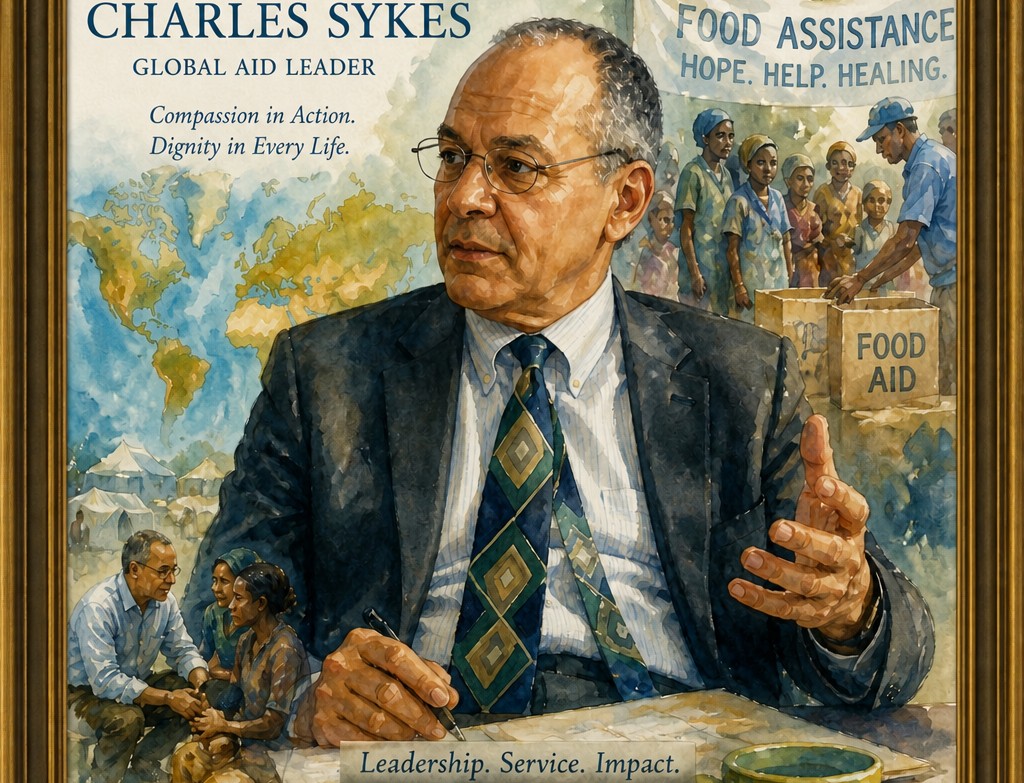
David Nabarro, Nutrition Leader, Passed Away

Sir David Nabarro, a distinguished British physician, international civil‑servant, and global health visionary, passed away at his home on July 25, 2025, aged 75.  His legacy includes decades of transformational work in global nutrition, food security, public health and crisis response — marked by initiative, collaboration, and deep compassion.  

In 2010, Dr Nabarro was appointed the first Coordinator of the global Scaling Up Nutrition (SUN) Movement, uniting governments, civil society, donors, the UN, and the private sector in a shared mission to reduce undernutrition in the first 1,000 days of life.  As Coordinator of the SUN Movement, he worked closely with NGOs such as Action Against Hunger, Concern Worldwide, CARE, Helen Keller International, and others who were key partners in delivering community-level nutrition programs.  Nabarro said, in a Devex interview:  The creation of malnourished societies is an injustice, is itself an act of violence that is causing damage that is just going on for too long.”

Over his career, he led important U.N. aid responses such as for the 2004 Indian Ocean tsunami, avian influenza (2005–14), the Ebola outbreak in West Africa (2014–15), and the cholera epidemic in Haiti (2010).  As WHO Special Envoy for COVID‑19, from 2020 until his passing, he emphasized “precision public health” — promoting testing, isolation, and vaccine equity over blanket lockdowns.

  His international health colleague, Dr. Ron Waldman remembers:  “Nabarro has to be considered among the most important and most influential leaders of our time in global health.  It would be difficult to name all of his positions in a single sitting, but even though some of them were brief, he always had a major impact. He led WHO’s efforts on polio, malaria, Ebola, Covid, and disaster relief, among others.

“He was skilled diplomat, but never afraid to ruffle feathers when that would advance a righteous cause; he was a consummate technocrat, but always had innovative and creative ideas and was eager to put them on the table; he was a dreamer and a visionary, but also as much a goal-oriented, down-to-earth pragmatist as any leader could be.

“Dr. Nabarro’s leadership came from deep within, to be sure, but it was as much defined by the loyalty and devotion of his followers from all around the world and from every station, to whom he would never stop listening and from whom he would never stop learning.   He was a great man.”

 Nabarro championed collaboration across sectors, believing that “dialogue, collective and synergistic action” was essential for sustainable impact—an approach celebrated by the Micronutrient Forum, which lauded him as the “founding father of the Scaling Up Nutrition Movement.”   In 2018, Dr Nabarro received the World Food Prize as recognition of his outstanding leadership in maternal and child undernutrition.  In his acceptance speech, Nabarro explained “Nutrition is not just about food. It’s about changing societies, empowering communities, ensuring access to clean water, sanitation, and healthcare.”

     Peter Morris, the retired chair of World Hunger Education Service (publisher of Hunger Notes) recalls “David was a great soul. I remember the first time I met him he was already a legendary persona in the emergency and humanitarian world and very high-placed in the United Nations.  My first impression was how personable and genuinely interested he was in those he spoke to, and what they had to say. A most memorable time for me was when we were in Guinea at the same time during the 2014 Ebola Crisis.  I was the USAID Team Leader, and David was leading the UN actions.  We were on the same UN helicopter whose schedule had been late. “

      “We were up in the air when he was also scheduled to open a meeting via zoom in Europe.  The helicopter was a noisy Russian model yet instead of cancelling the opening, David via his mobile and earphones gave a speech from his webbed seating to a full meeting room without notes, concise, and clear, with great aplomb.  Meanwhile the rest of us were hanging on to the webbing in the helicopter, praying for a safe landing.”

Peter interviewed Dr. Nabarro for Hunger Notes for this article:  https://www.worldhunger.org/an-interview-with-david-nabarro/

The World Health Organization, where he was a senior leader for much of his career, described him as “a widely respected, impactful and loved champion of health, equity and disadvantaged people worldwide,” noting his kindness, mentorship, and readiness to support others in their careers.

Dr. Rick Brennan, who worked many years leading emergency responses at WHO remembers:  “David was one of the most visionary, practical, ethical, and compassionate people with whom I ever worked.  There are so many memories and examples of his extraordinary contributions to global health and humanitarian action.  In Darfur in 2004, we admired him for his determination to demonstrate to the world the scale, scope, and public health impact of the humanitarian crisis.  In Geneva in 2005, partners were amazed by his brilliant management of the first Global Health Cluster meeting – he was the chairman, main technical expert, and rapporteur, writing and projecting the discussions in real time. 

       “And I will always be grateful for his extraordinary support during the Ebola crisis – his encouragement of the WHO team during difficult times; his frequent and positive participation in our morning meetings in Geneva; and his humble, yet authoritative chairing of the Global Ebola Response Coalition.  I envied him for his strategic insights, technical smarts, political savvy, and ability to convey true compassion for the most vulnerable.  A unique man of great passion, and extraordinary personal and professional qualities.”

One of his most hands-on and influential contributions was the development of a simple, locally made height board—a tool used to assess stunting in young children, a key indicator of chronic malnutrition.  Early in his career, serving as the District Child Health Officer in Dhankuta District, Nepal, Dr. Nabarro recognized that many health workers lacked tools to measure child growth and malnutrition.  Deployed by Save the Children UK, Dr. Nabarro helped design and field-test a wooden height board that could be built locally, using simple materials and carpentry skills. The board included a sliding headpiece, a measuring scale, and was constructed to be durable, portable, and easy to use in rural health posts or during outreach clinics.

Dr Nabarro’s legacy is written not just in awards and positions, but in the millions of children saved through improved nutrition programs, the strengthened health systems through crisis response, and the global leaders he mentored.  

Other tributes:


Social Marketing and Childhood Diets Implications of MAHA in the U.S.

A recent report by Dr. Claudia Parvanta, reviews the implications of the current U.S. Administration’s May 2025 “Make America Healthy Again” (MAHA) report for children’s diets and nutritional education in the U.S.  Responding to a request from the Social Marketing Quarterly editorial team, the author wrote “The MAHA Report and the Demand for Social Marketing: Driving Behavioral Change for Childhood Health Outcomes,” which finds that Social marketing is essential for achieving the MAHA Report’s goals, requiring more than just regulation or promotion.   While the MAHA Report identifies key drivers of chronic diseases, such as ultra-processed foods and environmental chemicals, Parvanta highlights the report’s limitations, including potential misinformation.

She cautions against top-down mandates that alienate stakeholders and consumers.   Borrowing from decades of behavior change research, she argues that effective change needs to address all “four Ps” (product, price, place, promotion) and involve both upstream (policy, industry) and downstream

(consumer) strategies.

She recommends to:

»»    Study consumer behaviors in regard to consumption of ultra-processed foods (those high in added sugars, chemical additives, and saturated fats); promote healthy alternatives; leverage SNAP-Ed and WIC models; incentivize industry to improve food quality; tailor interventions to community needs;

»»    Mobilize public support for stronger regulation of harmful chemicals; educate on safer behaviors (e.g., cooking methods, reducing plastics); make invisible threats visible; balance messaging to avoid confusion with essential nutrients;

»»    Revive and sustain large-scale campaigns for physical activity, like CDC’s VERB; ensure long-term funding; focus on making activity easy, fun, and normative; address broader systemic barriers, and

»»    Restore trust in public health through provider engagement; support evidence-based communication; avoid undermining public health agencies; use social marketing to build credibility and relevance.

Dr. Parvanta supports the urgency of improving children’s health but stresses that policy and regulation alone are insufficient. Sustained, evidence-based social marketing, involving all stakeholders (government, industry, communities) are needed.

She calls attention to the constructive examples of the:

  • National Diabetes Education Program (NDEP) which educates and engages communities to improve diabetes management.
  • Supplemental Nutrition Assistance Program – Education (SNAP-Ed) which improves dietary behaviors through education, partnerships, and incentives.

The report is available from ResearchGate:  DO – 10.13140/RG.2.2.23307.81444.

Food Insecurity Impairs Resilience and Elevates Distress in Young Adults

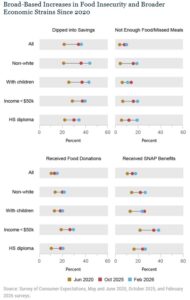
About 13.5% of U.S. households or nearly 18 million families experienced food insecurity in 2023.   Food insecurity manifests as a person’s uncertainty of accessing sufficient and nutritious food.  It is increasingly recognized as a series risk factor for mental health.

A recent cross-sectional study published in Health Science Reports, led by Lena Begdache, PhD, an Associate Professor at Binghamton University, generates new insights on how food insecurity impairs resilience and elevates distress, particularly among young adults. The researchers found that this occurs even in the absence of a negative “stress mindset”.  The study’s design and sample population:

  •      1,099 U.S. respondents were surveyed, 70% of whom were under the age of 30, using validated scales to measure food insecurity, resilience, stress mindset, and mental distress.
  •     The researchers assessed how food insecurity relates to psychological outcomes across gender and age groups.

Their key findings:

  •    Food insecurity was significantly linked to lower resilience and heightened mental distress, but was unrelated to stress mindset. A stress mindset was defined as a person’s orientation toward stress (e.g. seeing it as positive or negative) and it remained unchanged.
  •    Physical activity was the strongest positive factor promoting resilience and improving a stress mindset. This finding suggests that exercise may offset some of the mental stress associated with food insecurity.
  •    The negative effects of food insecurity, like increased mental distress and reduced resilience, were more pronounced in women than in men. This means that when women experience food insecurity, they are more likely than men to also experience emotional or psychological challenges like stress, anxiety, or lower ability to bounce back from hardship.

Why is this important:

  •     The study demonstrated that resilience is not automatically built from  adversity, as is often thought. The researchers found that when hardship involves poor diet quality, it does not build resilience, but rather may leave people more fragile, rather than stronger.
  •    Food insecurity did not affect a person’s stress mindset, but rather by other personality or environmental variables.

Implications for Policy and Practice

  •     The study highlights the need for targeted programs that take gender and age into account.  Responses that treat food insecurity as a gender-neutral issue may miss opportunities to help those most at risk.
  •    Programs should not only address hunger, but address resilience, particularly through promoting exercise.
  •    Improving the quality of a person’s diet, not just caloric sufficiency, could play a critical role in mental well-being

This research highlights a paradox:  food insecurity leads to greater mental distress and lower resilience, even when people maintain a positive stress mindset.  In the U.S., where millions faced food insecurity and many recently lost pandemic-related additional SNAP benefits and many more are poised to lose them under the 2025 national appropriation, referred to as ‘Big Beautiful Bill,’ these findings suggest that solutions must go beyond food access alone.  Quality nutrition, physical activity, and gender- and age‑sensitive mental health interventions all play vital roles in supporting well‑being.

Read the full research report here: https://doi.org/10.1002/hsr2.70787
The Interplay of Food Insecurity, Resilience, Stress Mindset, and Mental Distress: Insights From a Cross-Sectional Study  by Lina BegdacheAmera Al-AmeryKaterina K. NagornyUshima ChowdhuryLexis R. RosenbergZeynep Ertem;  Binghamton University Press Release: https://www.binghamton.edu/news/story/5633/new-research-explores-how-food-insecurity-affects-stress-and-mental-health?

Rest in Peace, Dr. Gretel Pelto

Nutritional anthropologist and inspiration to many, Gretel Pelto, passed away on July 15, 2025 at the age of 85.  “She was a  delightful person who sparked my imagination” said a nutritional anthropologist colleague.

Pelto was a pioneer in promoting formative research as a precondition for effective program design.  She helped institutionalize methods like Rapid Ethnographic Assessment Procedures (REAP), which allow programs to quickly understand.   Pelto emphasized that local caregiving behaviors, feeding practices, and beliefs about illness critically influence child nutrition and diarrhea outcomes. She argued that programs must understand how mothers and caregivers perceive and respond to symptoms like diarrhea.  This led to more tailored and relevant messages and interventions, such as adjusting oral rehydration therapy (ORT) messages to local contexts.

Pelto highlighted the central role of women — not just as caregivers — but also as decision-makers who are constrained by time, income, and intra-household power dynamics.

Perhaps her greatest legacy was her bridging anthropology with applied nutrition and public health programming.  She worked with organizations like WHO, UNICEF, and USAID to integrate qualitative insights into nutrition planning.  At the World Health Organization in Geneva from 1992 to 1999, Gretel led groundbreaking initiatives to improve household management of childhood illnesses, shaping global health strategies across Latin America, Asia, and Africa.

Her classic textbook “Nutrition Anthropology:  Prospects and Perspectives” was one of the earliest to flesh out nutrition anthropology in development and aid.  She authored over 160 research articles, 14 books and monographs, and 35 technical reports and manuals.  Many of which can be found in the Cornell University hosted “Gretel Pelto papers, 1974-2017: ” https://rmc.library.cornell.edu/EAD/htmldocs/RMA04327.html

She was awarded the Malinowski applied anthropology award, and the Kellogg Award in International Nutrition, an honorary doctorate from the University of Helsinki (1996), and fellowships with both the American Society for Nutrition and the Society for Applied Anthropology.

Gretel cherished mentoring students and collaborating with colleagues.  Her enthusiasm and keen intellect fostered a global community of scholars and practitioners.  World Hunger Education Service former Chair, Margie Ferris Morris, remembers Pelto — her mentor and advisor:  “Gretel was always encouraging to her students. She once told me to believe in myself more, as the work I was doing was important! “

Born in Minneapolis, Minnesota, she was an early friend of musician/roubadour Bob Dylan and taught him the song House of the Rising Sun..  She is survived by her beloved husband and collaborator, Dr. Jean-Pierre Habicht, a famous and accomplished nutritionist.


Future of America’s Assistance for Global Health – Roundtable

Hunger Notes joins with other sponsors in convening an expert discussion  on July 17, 2025 about the role of American foreign aid in global health, looking ahead 5+ years.  The Consortium of Universities for Global Health, the Partnership for Quality Medical Donations, the World Hunger Education Service, and George Washington University’s Milken Institute School of Public Health are organizing an online (Zoom) roundtable conversation of American public health professionals about how future United States foreign assistance can best promote global health in least developed countries.

It asks about the ongoing battle against the risks of death and illness among children in many lesser developed countries, but also what are new risks that may become disease priorities?  Neglected tropical  diseases or pandemics?

What American research is making a difference or will be in solving emerging problems?  Where are emerging gaps?  Should U.S. government aid target pneumonia, measles, tuberculosis, malaria, HIV/AIDS, malnutrition or which other priorities?

What are new opportunities for partnerships?  Which new technologies from America will make a difference?  What are the best roles for U.S. NGOs, networks, drug manufacturers, medical equipment providers and U.S. universities?

Results from this roundtable will be synthesized into a 5-page white paper that will be shared with the U.S. Congress, State Department and media.

Hunger  Notes welcomes your inputs on these issues, as well as questions to be posed.  WorldhungerEd@gmail.com.  Questions can also be addressed to:  ForeignAidRoundtable@gmail.com .

This roundtable is one among a series of similar roundtables organized this year about the future of American foreign aid.

Hunger Hotspots Report, Summer 2025

Hotspots for elevated hunger and malnutrition during the summer of 2025 were highlighted for Sudan, Gaza, South Sudan, Haiti and Mali in the new report produced by the Food and Agricultural Organization of the UN, along with the World Food Program, with support from the European Union and the Global Network against Food Crises.  This is a semi-annual report published collaboratively by U.N. agencies.

See:  https://www.fightfoodcrises.net/sites/default/files/resource/file/HungerHotspots2025_CD5684EN.pdf

As reported on Reliefweb:  This report makes it veryclear: hunger today is not a distant threat – it is a daily emergency for millions,” FAO Director-General QU Dongyu said. “We must act now, and act together, to save lives and safeguard livelihoods.  Protecting people’s farms and animals to ensure they can keep producing food where they are, even in the toughest and harshest conditions … is essential.”

“This report is a red alert. We know where hunger is rising and we know who is at risk,” said Cindy McCain, World Food Programme Executive Director. “We have the tools and experience to respond, but without funding and access, we cannot save lives.”

In the Sudan, conditions are expected to persist due to the continuing conflict and ongoing displacement, particularly in the Greater Kordofan and Greater Darfur regions.  Displacement will further increase while humanitarian access remains restricted. The circumstances are driving the country toward the risk of economic collapse, with high inflation severely limiting food access. by the poor.  Around 24.6 million people were projected to face “Crisis” level food insecurity or worse.

In Haiti, record levels of gang violence and insecurity are displacing communities and crippling aid access.  in Mali, high grain prices and ongoing conflict are eroding the coping capacities of the most vulnerable households, particularly in conflict-affected areas.

In contrast to prior reports, however:   Ethiopia, Kenya, Lebanon, Lesotho, Malawi, Mozambique, Namibia, Niger, Zambia, and Zimbabwe have been removed from the Hunger Hotspots list.  In East and Southern Africa, as well as in Niger, better climatic conditions for harvests and fewer weather extremes have eased food security pressures. Lebanon has also been delisted following reduced intensity of military operations.

Vdieo of the report launch:  https://www.youtube.com/watch?v=K0_t_tCH-5s&t=11s

https://reliefweb.int/report/occupied-palestinian-territory/hunger-hotspots-fao-wfp-early-warnings-acute-food-insecurity-june-october-2025-outlook-enarit

Early Humans and Plant-based Diets

The latest edition of Science journal (by the American Association for the Advancement of Science) reports that wooden tools from a 300,000-year-old site in Gantangqing (southwest) China demonstrate the importance of plant foods in early hominin (human) diets in a subtropical environment.  The journal contrasts this with other research oriented toward meat-focused early human diets.

Science writes that “Wooden tools recovered from a site in China… emphasize that ancient hominins ate their vetties too.  The 300,000 year-old implements are digging sticks, carved from branches and tree roots using stone blaades.  The pointing hand-size implements were probably used to harvest carbohydrate-rich tubers and roots from the soft ground of a prehistoric lakeshore.  …Along with the tools, researchers uncovered ample plant remains, including hazlenuts, pine nuts, grapes and kiwis.  In the lake and along its muddy shore, early hominins would also have been able to pluck and eat the leaves and seeds of water lillits.”  This includes edible leaves, seeds, or stems, especially subsoil corms and rhizomes.

See:  “Wooden Tools Point to Ancient Taste for Plans” by Andrew Curry, July 3, 2025 Science.  Also:  https://www.science.org/doi/10.1126/science.adr8540