
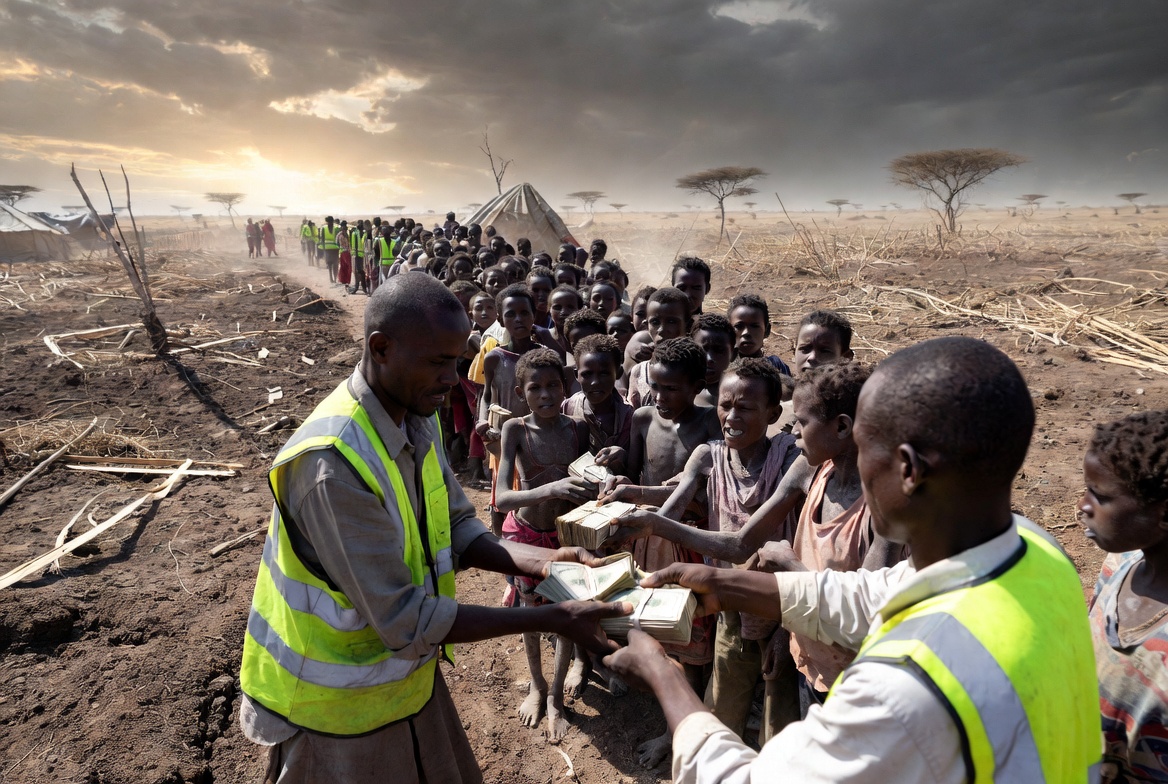
Status of McGovern-Dole School Feeding Unclear

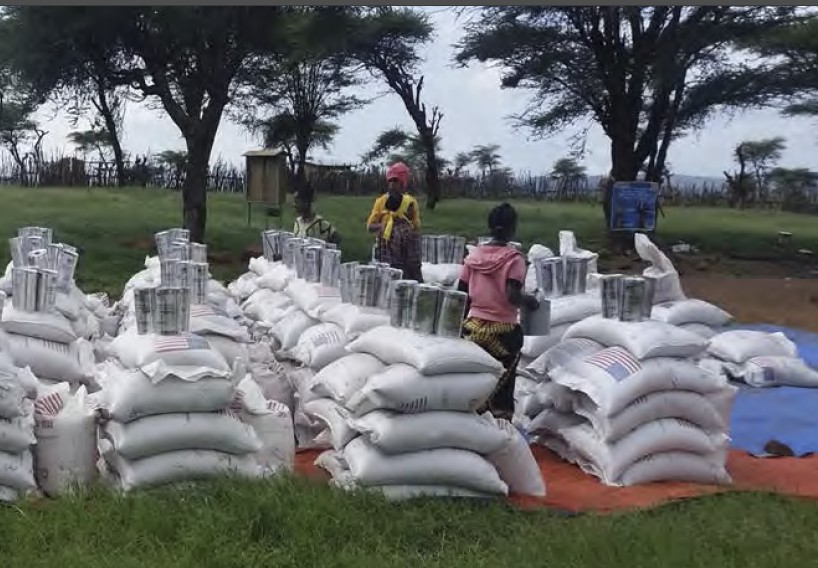
In May 2025, the U.S. Department of Agriculture (USDA) cancelled most of its existing foreign assistance programs, including those involving overseas school feedings.  These projects are referred to as “McGovern-Dole” that were projected for the future.

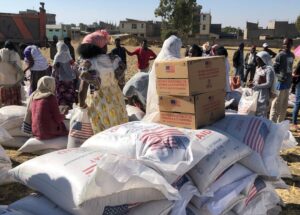
The overall program, named after former senators George McGovern and Bob Dole, has provided life-saving meals in a school setting to over 31 million of the world’s most vulnerable children and has been one of America’s signature child nutrition and food security programs.  In 2022, the program fed nutritious school meals to more than 2.7 million food-insecure children during the school year, while training teachers and rehabilitating schools, in Africa, Asia and Latin America.

All of these school feeding projects were implemented by non-governmental organizations (NGOs) and/or the World Food Programme.  The recent, May 2025 cancellations occured abruptly, as NGOs were preparing to design and compete for new awards in more countries.  No rationale from the U.S. Administration was given, despite Congressional questions to USDA.  The Trump Administration has further deleted the program from its FY2026 budget request.  Currently, American NGOs, such as World Vision, Save the Children, Project Concern and Counterpart International are challenged by the loss sudden and unexpected loss of support.

Catholic Relief Services (CRS), one such NGO, announced how these terminations leave school-age children in the lurch:  “Beginning in July, more than 780,000 children across 11 countries will be left without their school meal, as 11 out of CRS’ 13 projects have been terminated—deepening the crises of hunger, malnutrition and poverty that already threaten their ability to learn, grow and thrive. …. In 2024, evaluations of our work highlighted increased literacy rates, economic growth and reduced absences due to hunger and illness. … A recent study in Guatemala and Honduras revealed that 76% of respondents cited three major benefits of USDA’s McGovern Dole School Feeding program that reduce migration: increased access to education, improved agricultural production and a stronger local economy.”

Civileats reports that “the canceled grants will mean less demand for U.S. farmer commodities, even as other trade policies are pinching growers.  And it will contribute to shrinking the United States’ soft-power influence around the world.”

McGovern-Dole school feeding programs have been seen as a way to encourage young girls to attend schools in settings where many girls find it difficult.

Evaluations of school feeding programs are common, such as by WFP, USDA, and NGOs.  A meta-analysis commissioned by the U.S. government in 2020 found that the effect of take-home rations on school participation is positive for all school children and is the same for girls as for boys, while the effect of in-school meals on school attendance is larger for girls than for boys.

Globally, an estimated 350-400 million children receive school feeding each year.  In years past, reviews by the World Bank and the respected International Food Policy Research Institute (IFPRI) recognized the benefits of school feeding in terms of nutrition, educational gains, women’s empowerment, and long-term development.  In 2009, the World Bank published Rethinking School Feeding: Social Safety Nets, Child Development, and the Education Sector, cast school feeding as part of safety nets and as long-term investments.  In 2021, the World Bank and WFP launched an initiative that evaluated the efficacy of school feeding programs via experimental impact evaluations in countries like Burundi, Guatemala, Jordan, Malawi, and The Gambia.  Results from 2024 found that school meals, benefited an estimated 418 million children globally, enhanced educational outcomes (e.g., enrollment and retention) and acted as social safety nets during shocks.

Senators Bob Dole (Republican) and George McGovern (Democrat), who sponsored the enabling legislation for this school feeding aid, were both nominees of their respective parties for U.S. President, and both served in Europe during World War II.  Senator McGovern flew 35 precarious missions as a pilot during 1944-1945 from Italy over Germany and after the war flew food aid for the recovery of Europe.

Senator Dole championed humanitarian causes abroad.  He played a key role in mobilizing Senate support for Bosnia and Herzegovina from 1992 to 1996, pressuring the Clinton administration and NATO to address the Bosnian War.  Senator McGovern served as the first Director of the U.S. Food for Peace Program before becoming a Senator.  During that time, he worked with the White House to create the U.N. World Food Programme, which was approved by the U.N. General Assembly in 1961 and launched in 1963.

Update: However, on May 12, 2025 USDA announced a call for Fiscal Year 2025 applications for McGovern Dole programming.  The priority countries listed are: Benin, Burkina Faso, Cote d’Ivoire, Honduras, Mozambique, Pakistan, Senegal, and Sierra Leone.

– S. Hansch, WHES Board


This article was updated and corrected on Nov 11, 2025 to note the status of this program remains unclear and that a new funding opportunity was announced. This is a developing issue.


Famine Early Warning System Restarted

Correction & Update:  Hunger Notes reported on March 19 about the cancellation of the important, 40-year-old Famine Early Warning System program, created and funded by USAID.  While true at the time, FEWS NET has been re-established. You can access it here.

The May 2025 prediction report is available here and  reports that “Conflict remains the most severe and widespread driver, particularly in settings with protracted violence or rising geopolitical tensions in East Africa, the Middle East, the Sahel, Central Africa, and Haiti. The  intersection of insecurity, inflation, and limited humanitarian access presents critical concerns across the most affected regions…the residual effects of prior droughts and floods are expected to contribute to food insecurity in parts of southern Africa, eastern Africa, and Afghanistan. Additionally, available weather forecasts suggest rainfall patterns in Sudan, South Sudan, and West Africa may mirror those of 2024, bringing flooding to riverine, wetland, and low-lying areas and dry conditions in the Gulf of Guinea. If this materializes, the resultant loss of cereal crops, cash crops, and livestock will be most acute in areas already impacted by concurrent conflict and economic shocks.”


– S Hansch, WHES

World Hunger Day

May 28 is World Hunger Day, a global initiative to raise awareness about global hunger and inspire action to address food insecurity and malnutrition.  World Hunger Day has been celebrating sustainable solutions to hunger and poverty since 2011, and this year targets the importance of “sowing resilience.”  See:  https://www.worldhungerday.org/

Hunger kills more than AIDS, malaria, and tuberculosis combined, with 9 million deaths annually linked to malnutrition. Sub-Saharan Africa and South Asia are the hardest hit, with countries like Somalia, Ethiopia, Nigeria, South Sudan, and Yemen facing severe crises.

Initiated in 2011 by The Hunger Project, a nonprofit focused on ending hunger through community empowerment, World Hunger Day has grown into a global movement. In 2024, it reached an estimated 48 million people with its message.  The theme of “Sowing Resilience” for 2025 includes messaging about how every local food bank, community market, and volunteer effort is a sign of progress in a long and challenging journey.

In 2025, The Hunger Project hosted a dialogue featuring Rowlands Kaotcha (President and CEO of The Hunger Project) and Amath Pathe Sene (Managing Director Africa for The Africa Food Systems Forum) to discuss building resilience against hunger.

see:  https://www.awarenessdays.com/awareness-days-calendar/world-hunger-day-2025/?utm_source=chatgpt.com

Multiple international aid agencies are leveraging World Hunger Day to highlight the urgency of the global hunger crisis through coordinated awareness campaigns. Organizations are utilizing social media platforms, educational workshops, and community engagement activities to reach diverse audiences and promote understanding of hunger’s root causes.  Feed My Starving Children (FMSC) is commemorating World Hunger Day by highlighting their Project Based Food Assistance (PBFA) initiatives, which represent a comprehensive approach to addressing hunger through both immediate relief and long-term development. The organization’s work in Nakwanya, Uganda, illustrates how aid agencies are moving beyond simple food distribution to support community self-reliance through collaborative initiatives that include maintaining beehives and growing crops like maize and beans that thrive in local climates.

Save the Children is using World Hunger Day to highlight the critical situation facing children globally, emphasizing that 153 million children around the world are facing food insecurity.  The organization’s emphasis on the “triple threat of conflict, climate change and economic cost” reflects how aid agencies are framing hunger as a multifaceted crisis requiring comprehensive solutions.  Mary’s Meals is commemorating World Hunger Day by highlighting their school feeding programs that reach over 2.6 million children daily with food and access to education. The organization’s approach demonstrates how aid agencies are using the day to showcase innovative solutions that address multiple challenges simultaneously. Their model recognizes that hunger affects educational outcomes and that school feeding programs can serve as entry points for broader community development initiatives.

The use of hashtags like #WorldHungerDay, #EndHunger, #ZeroHunger, and #SowingResilience demonstrates how agencies are creating unified messaging that amplifies individual organizational efforts.

In Geneva the U.N. World Health Assembly’s of WHO approving two nutrition-related resolutions.  One expanded provisions of the International Code of Marketing of Breastmilk Substitutes, which counteracts dangerous messaging to new parents about breastmilk powder which increases infant deaths, undermining breast feeding.

The second was the WHO Extension of the Comprehensive Implementation Plan on Maternal, Infant, and Young Child Nutrition: This resolution extended the implementation plan to the year 2030, to address malnutrition in mothers and young children.  It encourages  momentum to address persistent malnutrition, such as the 149 million children under five who were stunted and 45 million who were wasted globally as of 2022, along with addressing disorders such as anemia, overweight, and obesity in women.

2nd Annual International Food Aid Showcase, June 10 in Washington, D.C.

George Washington University (GW), in Washington, D.C. will host a gathering of NGO and food experts on June 10, 2025, to share lessons about overseas food aid and look ahead.  It is co-sponsored by Counterpart International (an international NGO), the Alliance to End Hunger, and GW’s Global Food Institute.   It will be held at the Milken Institute School of Public Health in Northwest D.C.

The day will include representatives from commodity associations, researchers in nutrition innovations and a gallery walk of tables and presentations.  This year’s showcase will convene a diverse group of stakeholders to exchange knowledge, spark collaboration, and explore the future of global food assistance.  The event comes at a time when American food assistance is undergoing turbulent change, with most food projects through NGOs and WFP cancelled.

Online access to this event will be available.

For more information see Counterpart International’s site:  https://www.counterpart.org/events/

To register, see:  https://docs.google.com/forms/d/e/1FAIpQLScRsZuFRNu0dm2o7ES1kxyQfw9QJXcFgJ0qGAvEQyh5M_eVMA/viewform

Wall of Fallen American USAID Staff

Until early 2025, the U.S. Agency for International Development (USAID) showcased a memorial wall in the lobby of its Washington, D.C. headquarters, in the Ronald Reagan Building.  The Trump Administration had it torn down and removed on April 30, 2025 in the process of removing USAID both from the building and from the government.

Depicted here is an image of that wall.  Below are the names of the fallen American staff while serving abroad providing aid to poorer countries, employed by the U.S. government, USAID.  This list includes staff from the beginning of the Four Points Program, the Truman era precursor of economic and technical aid to developing countries, in 1950 to USAID in 1963 to the end of the Agency in 2025.  These 99 persons listed died while in service to their country in humanitarian assistance and international development.  Peter Morris (former WHES Board Chair writes “I personally knew Tresja Denysenko, who worked with the Office of Foreign Disaster Assistance (OFDA) and died while on a DART team in Haiti.”  (This link to Linkedin is Tresja).

  • Ragei Said Abdelfattah
  • Frederick J Abramson
  • Bijnan Acharya
  • Debebe Agonafer
  • Richard Aitken
  • Margaret Alexander
  • Marilyn Allan
  • Rodrigo Santa Anna
  • Bruce Bailey
  • Rolando Barahona
  • Thomas Blaka
  • Robert W. Brown
  • David Bush
  • Anita Huovar Carroll
  • Kevin Carroll
  • Frederick Cheydleur
  • Normal Clowers
  • John Cone
  • Lino De La Cruz
  • Dresja Denysenko
  • Susan Doria
  • Chandler Edwards
  • Walter Stanley Eltringham
  • Stephen Scott Everhart
  • Frank Fairchild Jr.
  • Albert Farkas
  • Richard Fineley
  • Laurence Foley
  • Robert Franzblau
  • Donald Freeman
  • George Gates
  • Gladys Gilbert
  • DAvid Gitelson
  • Thomas Gompertz
  • Dale Gredler
  • Joseph W. Grainger
  • John Granville
  • Robert Handy
  • Robert Hebb
  • Charles Hengna
  • Gustav C. Hertz
  • Edward Hines
  • Oscar Holder
  • Robert Hubbard
  • Peter M. Hunting
  • James Hyde
  • Lisa Isidro
  • W.L. Jacobson
  • Sydney Jacques
  • Rudolph Kaiser
  • Donald Kobayashi
  • Kermit Krause
  • Robert LaFollette
  • Chaplain Lako
  • Nancy Lewis
  • Robert Little
  • Hugh Lobit
  • Jeffrey Lundstedt
  • Justin B. Mahoney
  • John McCarthy
  • William McIntyre
  • Luther McLendon
  • Mark Mitchell
  • Dan Mitrione
  • Dominic Morris
  • Dennis Mummert
  • Michael Murphy
  • John Nuhn
  • Thomas Olmsted
  • Dwight H. Owen, Jr.
  • Dolph Owens
  • John L. Oyer
  • Donald J. Pareteau
  • Carroll H. Pender Sr.
  • Ed Planta
  • Thomas Raggsdale
  • Abdelrahman Abas Rahama
  • Everette Dixie Reese
  • Jerry Rose
  • Francis Savage
  • Richard A. Schenk
  • Harold Sealock
  • Garnett Simmerly
  • D.M. Sjostrom
  • Joseph Smith
  • William D. Smith
  • William Stanford
  • Arthur Stillman
  • Eugene Sullivan
  • Clyde Summers
  • Ralph Brownlee Swain
  • Baudoin Tally
  • Antoinette Beaumont Tomasek
  • Andrew Tombe
  • John Paul Vann
  • Albert Votaw
  • James Wallwork
  • Jack Wells
  • Roberta Worrick
  • Thomas Worrick

Note:  this listing and wall does not begin to include the larger number of American NGO workers or contractors who died while serving overseas.

The memorial wall was moved to a temporary display — seen at right, at the U.S. Department of State.  No information has been provided about where it will end up.

Roundtable on June 5 about American Foreign Assistance and Faith-Based Organizations

World Hunger Education Service (the nonprofit overseeing this Hunger Notes site), joins with Fordham University, HIAS, Lipscomb University, and George Washington University’s Milken Institute School of Public Health in organizing and convening a virtual (online) roundtable of experts on June 5, 2025, a Thursday,  to discuss how American faith-based organizations may be able to lead in the delivery of foreign aid against poverty, assisting development and providing humanitarian relief.

This will be a roundtable conversation with no panels or presentations, and is open to all faiths.

Invited organizations include operational NGOs, universities, research groups and other faith-based organizations in the United States.

Among the questions the roundtable will discuss are:

  •          How well do faith-based organizations blend donations from different sources (citizens, private sector corporations and foundations) to solve problems and relieve crises? Are they more localized, sustainable and cost-efficient in their assistance?
  •         In which sectors are faith-based organizations best at addressing, comparing for instance hunger, primary health care, basic education, food security, trade, industrialization, governance, marine conservation, or higher education?
  •         Looking ahead to future years, what expanded role should faith-based organizations play in executing new programs funded by the United Statessponsoring organizatons Government?

The roundtable will adhere to “Chatham House” rules in that no quote or perspective will later be attributed to any person or organization, whether in the meeting summary or by anyone attending.  Participants are asked to leave their organizational affiliations “at the door” and speak candidly, as experts, about the issues from their experiences over their careers.

This is one in a series of roundtable about the future of American foreign aid.

Interested faith-based organizations may email to:  WorldhungerEd@gmail.com, or ForeignAidRoundtable@gmail.com

Book Review: Hot, Hungry Planet

Lisa Palmer’s book, Hot, Hungry Planet, The Fight to Stop a Global Food Crisis in the Face of Climate Change, presents seven case studies of individuals working in different continents in the race against hunger, noting that “with a growing population, the demand for rice and other cereals is expected to rise by 14 percent every decade.”

A journalist, and affiliate of George Washington University’s Global Food Institute, Palmer explores how farmers are adopting new technologies and land management strategies to increase productivity while minimizing environmental harm such as “climate-smart villages,” where farmers apply solar-powered irrigation systems to manage and conserve water, reduce carbon emissions, and sell excess energy back to the local electrical grid.  Regenerative agriculture methods such as no-till farming and cover cropping can help capture and sequester carbon out of the  air.

Her case studies are drawn from farms in India, Uganda, Kenya, the U.S. Colombia, Syria and Indonesia.  She writes, “We are on the cusp of a global food crisis… How is the global food system meeting the demands of people right now?  Of the more than 7 billion people in the world, about 1 in 6 go to bed hungry every night.  This is not because we don’t have enough food.”  She points to the growing paradox:  “once people have sufficient funds to afford food, they almost immediately want better food, which puts greater strain on the food system.”   As a result, she observes, “the rapid rise of the global middle class is driving half the increase in the world’s predicted food consumption  To prevent more hunger, farmers would have to more than double their production by 2050.”

She extolls drought-tolerant maize and heat-resistant crop varieties.  She argues for plant-based proteins instead of livestock, which demands more inputs.

She points to advances in precision agriculture, using satellite remote sensing and drones for crop monitoring and soil sensors.  For growing urban populations, she points to vertical farms (indoor, high-tech farms using LED lighting and hydroponics) which can locate food production nearer to cities, reducing transportation costs and emissions.  She further gives examples of how integrating trees into agricultural landscapes (including “forest gardens”) can enhance biodiversity, improve soil health, and promote ecosystem services.

See:  https://smpa.gwu.edu/anneliese-lisa-palmer


Book Review: We Fed an Island – the True Story of Rebuilding Puerto Rico, One Meal at a Time

The book, “We Fed An Island – One Meal at a Time” by Chef Jose Andres (2018, Harper Collins Publisher) describes how the NGO, World Central Kitchen (WCK), reacted to the 2017 Hurricane Maria after it hit Puerto Rico, knocking out power and destroying homes. Several days after the hurricane, Chef Jose Andres traveled to Puerto Rico and began organizing kitchens to cook hot meals, largely sancocho (stew) and sandwiches, particularly ham and cheese sandwiches (“the key ingredient was the mayonnaise. Lots and lots of mayonnaise mixed with tomato ketchup.”). At its peak, WCK provided 150,000 meals per day, mobilizing an estimated 20,000 volunteers and partnering with local churches, restaurants, the Southern Baptist Convention and, in places, Mercy Corps.

WCK received donations of food products from various companies and organizations both on and off the island. This included staples, produce, and other necessary items. As WCK received press publicity and donations, it scaled up purchases of bulk foods from the United States.

Andres begins the book explaining Puerto Rico’s history as a U.S. colony. He also explains how World Central Kitchen came about its name: “it was founded in the basement of what was then Washington D.C.’s central homes shelter.”  In Puerto Rica, he describes complex interactions with FEMA, President Trump, local authorities and his disappointment with the Red Cross and Salvation Army.

Andres describes the challenges of roads that were destroyed, shortages of water, and poor communications among relief organizations. He organized several kitchens across the island, while hiring local cooks, chefs and drivers among those unable to work their normal jobs. Andres writes repeatedly about circumventing other relief forums or channels because of his impatience with what he calls red tape. Andres’ focus in Puerto Rico and in other WCK programs is to feed people as much as possible in the short-term and leave other aspects of rehabilitation, resettlement and livelihoods to other actors.  Despite the book’s subtitle, the story is not, strictly speaking, about rebuilding or recovery, but about feeding people as a form of relief.  Andres also distinguishes his approach — hot food — from that of other relief models by other organizations which aim to provide the basics for people to feed themselves.

Andres credits his success, and that of his colleagues, to the complexities of running restaurants.  Running restaurants, he argues, requires the same skills as managing disaster relief.

Note:  In 2019 World Hunger Education Service (the NGO publishing this article in Hunger Notes) donated to WCK for its work.

Note:  Though WHES has written repeatedly to WCK for an interview, both to staff and to Chef Andres, no reply has been received.

In Memoriam: The US Famine Early Warning System, Known as FEWS, as well as SERVIR

The program which many experts considered to be the most effective at stopping famines and starvation and arguably the single most valuable aid program of all time, has ended its 40 year run of success, as the White House shut it down, alongside hundreds of other global initiatives, without review, discussion or debate.  The “Famine Early Warning System” aka “FEWS” was created to address the longstanding problem that U.S. food aid, which takes months to plan, procure and ship across oceans, kept arriving too late to save lives where there was famine.

FEWS has prevented the deaths of an estimated 10 million children from famine during its tenure.  FEWS played an important role in the decline in famine deaths seen in the last century.

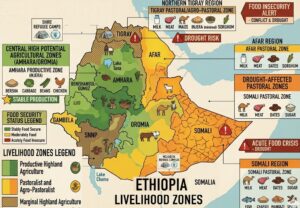
The United States Agency for International Development (USAID) created FEWS following the late famine relief efforts of the mid 1980s when famine hit Ethiopia, Sudan and the Sahel.  In those famines, US food aid saved many lives, but could have saved more, and prevented mass forced migration (the uprooting of refugees) if food aid had reached those in need at earlier stages of crisis.  The President of Tufts University (in Massachusetts), Dr. Jean Mayer, a nutritionist, proposed a new famine early warning initiative to the head of USAID at the time, and the new program was born.  In the decades since, US food aid became dramatically more effective at addressing emergency food needs in a timely way, in the process saving millions of lives.

From its inception, FEWS cleverly combined data from a range of different sources about local crop production in countries from Somalia to Mali, from Afghanistan to Haiti.  FEWS obtained and compared data from satellite imagery of fields under cultivation, ground visitations, rainfall, local retail prices, surveys of malnutrition, and distress sales by households (an early indicator of intention to migrate).  Its methods elegantly blended insights from markets, biology, climate, and remote sensing.  FEWS brought together contributions from other parts of the government:  including NASA, U.S. Geological Survey (USGS), NOAA, and the U.S. Department of Agriculture.  Various universities including the University of California/Santa Barbara and the University of Maryland also provided critical satellite monitoring and analysis, all under USAID management, backed by networks of field analysts and scientists.  The first American group leading FEWS was Tulane University School of Tropical Medicine.

Graduate courses in Geographic Information Systems (GIS) taught about FEWS as a case study of a successful application of layering information in multi-colored maps to target food aid where it was needed most.  Courses in schools of public health taught about FEWS as well.  Humanitarian aid became a science.

USAID renamed the program “FEWS NET” and funded it to avoid appearance of conflict of interest to inflate food needs through funding appeals.  The cost of FEWS NET has been a small fraction of the value of the humanitarian food aid that USAID distributes. As FEWS matured and became a global network, FEWS NET, it provided ongoing, real-time reporting about a several dozen countries spanning continents and became a mainstay of USAID, being renewed continuously.  FEWS provided guidance not only to US food aid, but food from other donor countries including Canada, Japan, Europe and Australia.  To emphasize this collaboration with other contributing nations, in 2000, the initiative was renamed to Famine Early Warning Systems Network (FEWS NET) to emphasize the importance of collaboration with international and local information systems.

FEWS NET integrated varied data to build the most-likely scenarios to project food insecurity conditions in designated countries four and eight months in advance, indicating where timely humanitarian food aid might save lives and livelihoods.  FEWS NET’s analysis have answered the who, what, where, when and why. FEWS NET also reviews livestock conditions, markets and herder mobility (and fisheries, where important), along with crop conditions.  In recent decades, conflict became the biggest driver of food insecurity due to broken market links, shrinking livelihood options, death or injury of main breadwinners, and population displacement, leading to aid dependence.

No other public source has provided this kind of independent and globally consistent food insecurity intelligence.  FEWS NET briefings to all branches of the US Government, UN and NGO community are well respected and eagerly sought.  FEWS NET also reviewed livestock conditions, markets and herder mobility (and fisheries, where important), along with crop conditions.  In recent decades, conflict became the biggest driver of food insecurity due to broken market links, shrinking livelihood options, death or injury of main breadwinners, and population displacement, leading to aid dependence.

Famines will continue to occur, but prevention and early mitigation and response will be hampered now in the absence of FEWS.

In addition to the termination of FEWS, the USG also terminated other early warning projects, such as SERVIR.  The SERVIR program was a joint initiative of NASA and USAID that leveraged satellite-based Earth observation data to support climate resilience, disaster preparedness, and prevention in poorer countries. Established in 2005, SERVIR’s mission is to “connect space to village,” making NASA’s Earth data accessible for locally-driven environmental and development solutions. SERVIR tracked food security, water resources, weather, land use, and natural hazards.  SERVIR partnered with regional organizations in Amazonia, Eastern and Southern Africa, Hindu Kush Himalaya, Mekong, West Africa, and Central America.

Other sources about the demise of FEWS:   New Humanitarian about Data Streams;  and National Public Radio’s piece.

About Servir, see:     https://nasawatch.com/trumpspace/usaid-erasure-impact-nasa-halts-servir-solicitations/ https://ntrs.nasa.gov/api/citations/20210022715/downloads/Anderson2021_Getting-ahead-of-disaster-impacts-EO-CB_20211015.pdf

Prayer Vigil for Foreign Aid Unites Evangelicals for Aid

A prayer vigil for foreign aid was held March 11, among some 50 Christians, at the Capitol Hill Presbyterian Church, attended by Bread for the World, World Relief, Compassion International, Catholic Relief Services, the Adventist Development and Relief Agency, World Renew, Hope International, the Accord Network, and others.

Speakers called on Congress, the Administration and the American people to re-install aid programs serving the hungry around the world.

According to Ministry Watch:  Eugene Cho, president and CEO of  Bread for the World, denounced the “broad, un-targeted cuts” recently implemented at the U.S. Agency for International Development as an assault on vulnerable populations all over the globe.