




February 22, 2026 A round the world, a key shift during the past few decades in combatting malnutrition has been the adoption of social marketing, communications and “behavior change” to improve diets, caretaker behavior, and recognition of failures in child growth. The technical book, “Essentials of Public Health Communication” summarizes the state of the art in applying these tools in public health and nutrition. Written by Claudia Fishman Parvanta, David Nelson, Sarah Parvanta, and Richard Warner.
Chapters walk the reader through implementation, with examples. One example is the “Folic Acid First Campaign,” convincing women to take a multivitamin with folic acid (or a folic supplement) before they get pregnant. Television, radio and print messaging should convey a sense of good health, warmth and energy to reduce the chances of birth defects in newborns.
Claudia Parvanta’s background in designing and evaluating health and nutrition social marketing programs in over 20 countries informs the text’s emphasis on using communication to influence dietary behaviors and address hunger-related issues. The book references other nutrition-related initiatives, such as the Bangladesh Nutrition Education Project, to illustrate how strategic communication plans are developed and implemented in real-world settings. It walks the reader through formative research methods, such as focus groups, to understand barriers to diet choices.
This 416-page text (published by Jones & Bartlett Learning) is divided into four major sections: Section One: Overview. Chapters 1, 2, and 3 provide an overview of public health communications, the planning, and informatics. Section Two: Informing and Educating People about Health Issues. Chapters 4 through 7 describe communication challenges and methods to provide information in a clear and unbiased manner.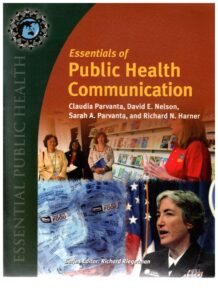
The book analyzes how anti-vaccine content thrives online using emotive narratives and false expertise. It then contrasts this with proactive, empathetic communication strategies from health agencies, such as “pre-bunking” (inoculation theory) and engaging trusted community influencers (e.g., pediatricians, local mothers) as messengers.
The authors frame communication as a core public health function essential for prevention, behavior change, and policy advocacy. Introduces behavioral and social science theories that guide message design (e.g., risk perception, social norms, diffusion of innovations). The book includes discussion of media and channel selection and emphases the 4 “P”s of Social Marketing, namely Product (the idea of being active), Price (reducing social/access barriers), Place (where tweens gather), Promotion (cool, aspirational ads).
Other case examples include the 2009 H1N1 Influenza Pandemic, the 2014 Ebola scare, and tobacco. The “Truth” Campaign is described as an anti-tobacco campaign to illustrate audience segmentation and theory application. It didn’t target smokers with health warnings but segmented a new audience i.e., teenagers, and used the Theory of Reasoned Action/Planned Behavior and empowerment models. The campaign framed tobacco use as a manipulation by big corporations, making rebellion synonymous with not smoking. This showcases moving from “knowledge-attitude-practice” to more sophisticated socio-ecological models. A full chapter is dedicated to public health informatics which highlights how data systems, surveillance, and digital tools support communication planning and evaluation.
Apropos to its subject, the book reads easily for students and professionals and communicates its messages very well, using a mix of steps, examples, cautions and context. The book has received very positive reviews, with a 4.5 out of 5-star rating on Amazon. Reviewers praised it as an excellent resource for nutrition communications and for various types of public health communication work. It remains the best learning resource in its category. It is particularly required reading for anyone planning a public health campaign anywhere in the world.


