

July 24, 2026 Since 2019, U.S. Food for Peace spent between $1.8 and $2 billion in development programs called RFSAs, for Resilience Food Security Activities. RFSAs were more than simple food distribution; they combined food or cash transfers with nutrition educaiton, water supply, hygiene, agriculture, savings groups, market links, mentoring, disaster risk reduction, local governance, gender, and behavior change. The complex designs of these programs made them hard to evaluate, to ascertain whether they reduced hunger or malnutrition. Most of the measurements from these programs were not about nutrition or hunger, but were about NGO activities or skills training, water committees, microfinance organizations or planning.
Making sense of what RFSAs actually accomplished is clouded by all the complex things NGOs sought to do. In their own reporting aid agencies are more prone to showcase their field activities over their outcomes or impacts. For instance, much of what has been written in recent years about the Food for Peace RFSAs is about their design, their theory of change, how many people reached, but not as much about what they accomplished.
The numerous US-funded RFSAs showed many promising near-term outputs, but in the end, showed minimal long-term change in nutrition. In other words, a repeated lesson from RFSAs was that short-term improvements do not prove durable resilience. Food aid and complementary activities may improve consumption and nutrition while the project is operating, but lasting impact requires stronger local systems, markets, income streams, water access, and shock-responsive safety nets.
One RFSA evaluation expert had these reflections about RFSAs:
> “The kitchen sink approach (many sectors, scattered activities) to a problem (malnutrition) is difficult to implement and merits more prioritization;”
> “The USAiD strategy of sequencing and layering makes sense conceptually but it may be hard to implement. It is hard to assess or evaluate, and should not be an after thought;”
> “Revisiting the project’s theory of change each year represents a big burden on everyone involved;”
> “Separating the leaning function from the monitoring and evaluation function, i.e. giving roles to different institutions, is unnecessary and reflects too much micro management. Meanwhile,tThere were too many monitoring and measuring activities;”
> “The subsidies given out as supplemental income to buy food will not work if amounts are too low or if other non-food needs are so great that funds are diverted by families to other ends than food.”
> “Project management offices were too far from the areas of implementation.”
Across the evaluation literature, only a minority of RFSAs produced strong causal evidence that malnutrition rates changed because of the RFSA. One of the larger programs, in Ethiopia, was evaluated by IFPRI: despite high baseline stunting and wasting, there was no measurable average impact on child anthropometric status from the Ethiopian SPIR program package. Meanwhile, in Asia, the multi-year SHOUHARDO RFSA in Bangladesh had a rigorous pre-post evaluation that documented improvements in per capita food expenditures (increasing from $2.03 to 22.22) but found no attributable differences in child malnutrition.
Many of the RFSAs provided cash and food to families and then measured whether the families had more wealth (more cash). In other words, people given money had more money, at least during the project period, and they said they consumed more food. But 18 months later, while families said they were better off, nutrition gains were not sustained.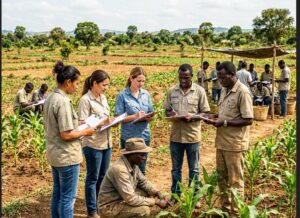
Several of the RFSAs never published final project reports or impact results. The most sobering evidence comes from Malawi’s WALA long-term evaluation, where positive endline trends in nutrition and food-aid need were not clearly sustained several years later under climate and pest shocks. Other evaluations included as Niger’s Hamzari/Girma/Wadata, Zimbabwe’s Amalima/Nuyok/Apolou, Madagascar’s Fararano/Maharo/Fiovana, and Malawi’s UBALE/Njira. These could not isolate RFSA effects from broader trends, shocks, or selection.
Other evaluation lessons of RFSAs include:
The graduation model of sequencing each household’s intervention and mentoring appears to have improved livelihoods and food security. But the sequencing/layering method did not work in other countries.
Nuggets of success can be identified. For example, mothers’ “Care Groups” is a model of improving nutrition that is scalable, and cost-effective. Lead mothers (volunteers) reach 10–15 neighboring households with timed, sequenced messages. Evidence from multiple contexts shows strong improvements in young child feeding practices, hygiene, and service utilization. Greater success was consistently associated with interpersonal nutrition counseling and home visits, population- and community-based Social and Behavior Change Communication (SBCC) strategies, and targeting children under two or three years (the critical window).
Programs providing preventive supplementary feeding achieved twice the rate of stunting reduction, an average annual decline of 1.69 percentage points, compared to recuperative-only or no-ration programs. (Less successful programs often relied on stand-alone Positive Deviance/Hearth (PD/H) approaches focused narrowly on recuperation rather than prevention, or failed to integrate services.)
The RFSA model was most effective when it gave poor households a real consumption floor through food, cash, or vouchers and it layered a credible economic pathway: assets, savings, coaching, agricultural or livestock support, market access.
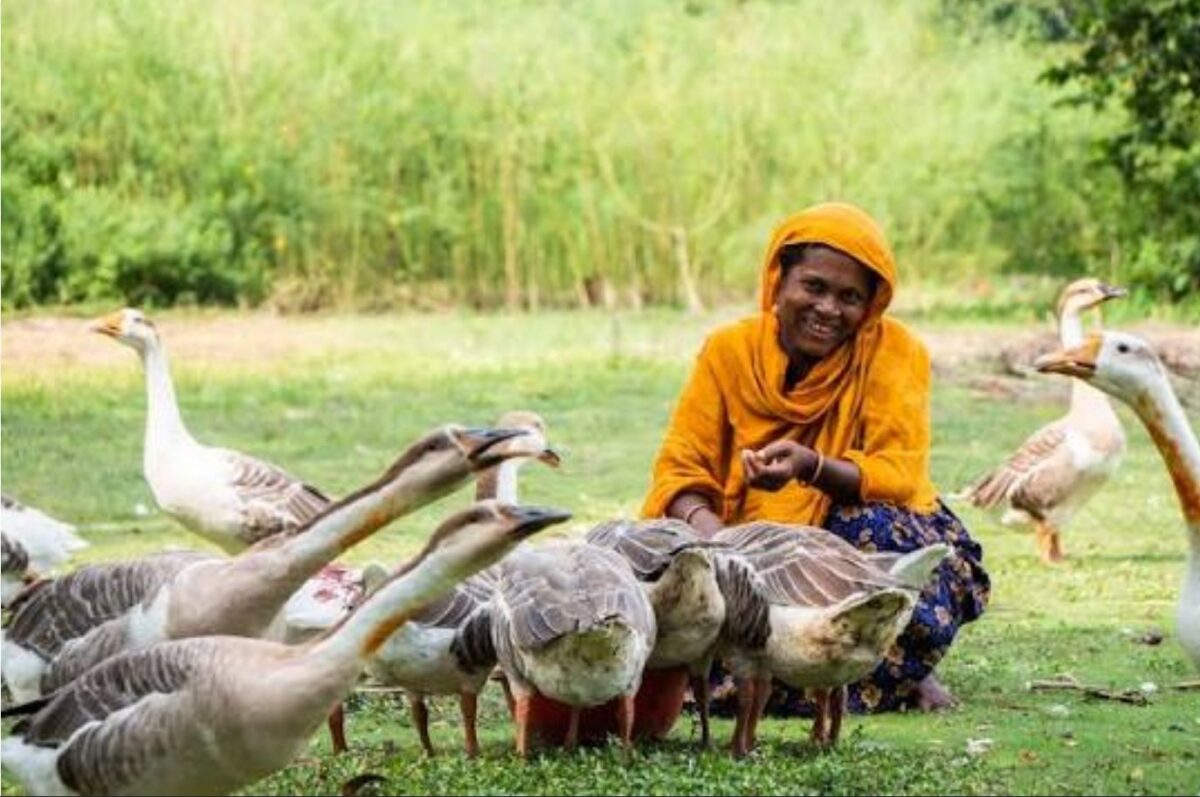
Photo credit: from CARE’s SHOUHARDO III Plus Program page at https://www.facebook.com/groups/2195296804116047/