
India’s Conquest of Famine

April 19, 2026     India’s growth from food dependence to food surplus is one of the most important development stories of the last half century.  At its heart was the science of agricultural research.

Following Paul Ehrlich’s passing away, there have been many articles about the change that have occurred since his publication of the Population Bomb, where he warned about trends in risk of famine in India.  Indeed, one of the greatest stories in human history of overcoming food insecurity and famine has been India over the last 50 years. Not only has India grown in terms of food production, but it has diversified its economy, built infrastructure, and increased its GNP, which also supports improvements in long-term resilience.  In the 1990s, India turned away the food assistance provided in large quantities by the US Government’s Food for Peace, and India became itself a food aid donor to other countries.

In the late 1960s, India began intensively experimenting with ways to improve yields of key food crops, particularly wheat.  A few Indian scientists played an historic, important role in feeding this country which today has more people than any other.  The most important was M.S. Swaminathan, an unassuming man who, in his own gentle way, revolutionized India’s agricultural sector.
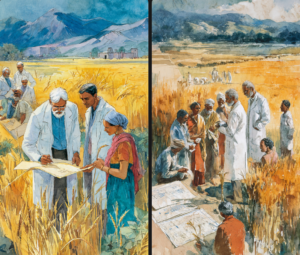
Swaminathan started out in 1947 working on plant breeding at the Indian Agricultural Research Institute (IARI) in New Delhi. Swaminathan collaborated with US plant breeder Norman Borlaug touring India, breeding Mexican wheat with Japanese varieties. This new crop produced high yields of good quality.  In 1964 he earned funds to plant demonstration plots which convinced Indian farmers to experiment with its use.  Further experimentation led to wheat varieties which by 1968 increased wheat production to 17 million tons.

Swaminathan’s lifelong commitment to transparency pushed him to establish various systems of accountability of the institutions he headed; therefore, he placed the entire international rice collection under the supervision of an international rice board even though it was already a part of IRRI.  Swaminathan never tired of crediting that the seeds of the green revolution in India were actually sown far back in 1949 in the fields of the Central Rice Research Institute in Cuttack, India long before Norman Borlaug came to India.  Working with the UN’s Food and Agriculture Organization, he established a commission for plant-based genetic resources to address issues related to the conservation and sustainable use of genetic resources for food and agriculture. This included plants, animals, and aquatic organisms.  The commission’s focus was on the management of biodiversity.  In the 1980s, Swaminathan led, as Director General, the International Rice Research Institute (IRRI). Here he shone as a brilliant and dedicated scientist, an excellent leader, and kind-hearted.  Despite occasional setbacks, he persevered in promoting international cooperation in the utilization and conservation of genetic resources.  His vision extended beyond yield per hectare. He was a prophet of sustainability long before it became a buzzword of the 21st century. From championing greater participation of women in agriculture to espousing ecological balance, from advancing research in Russian attics to promoting sustainable coastal farming, from advocating for tribal food security to establishing gene banks for endangered crops, his canvas was vast, and his brush precise. Swami Nathan was generous and humane, embodying the best and noblest of the India into which he was born and by which he was shaped.
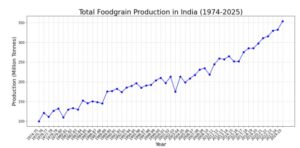
As shown in the graph at right, food production in India has more than kept pace with population growth due to ongoing improvements in applications of scientific methods. In these same last fifty years, India’s population hasalmost tripled, from 520,000,000 to about 1.5 billion today.
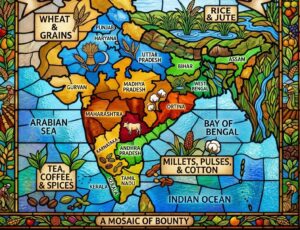
India’s agricultural geography has shifted from a northwest “Green Revolution core” (1970s) to a much more broad-based and increasingly central/eastern growth pattern (last decade).  In the 1970s, increases in production were largely in the Punjab, Haryana, and Western Uttar Pradesh.   More recently, Indian States with the strongest increases in food production:

    • * Madhya Pradesh – often cited as India’s fastest-growing agricultural state in the 2010s
    • * Chhattisgarh – rapid expansion in rice production and procurement
    • * Jharkhand – gains from irrigation and diversification
    • * Bihar & Eastern Uttar Pradesh – improvements in rice, maize, and horticulture.

The elimination of famine has not meant that there is no malnutrition in India.  Fifty years ago half of children were stunted (low height per age) from undernutrition, while today 1 in three are.

Meanwhile, rate of wasting malnutrition (as measured by weight for height) has remained stubbornly high over the last 50% years, by many estimates stuck in the range of 17-18%.

The government’s most current estimate for the national prevalence of wasting (low weight for height) among children under five in India for 2025 is estimated the 5.4% though estimates from prior years are closer to 18% among children.  Wasting malnutrition also varies across different areas.  For instance, the Union Territory of Lakshadweep reported the highest wasting rate at 11.6%, followed by Bihar (9.31%) and Madhya Pradesh (8.2%).

Much of the growth of production in India has been facilitated by increases in application of synthetic fertilizers. This is relevant today because, as reported yesterday, India’s food economy is seriously dependent upon fertilizers from the Middle East that are now blockaded and will be increasingly expensive, which may challenge food production in India this year.
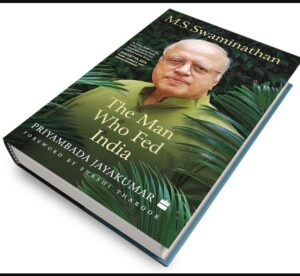
Read more:   M.S. Swaminathan in conversation with Nitya Rao: The Ethics and Politics of Science, M.S. Swaminathan Research Foundation Centre for Research on Sustainable Agriculture and Rural Development, 2014.

Charles C. Mann, The Wizard and the Prophet: Two Remarkable Scientists and Their Dueling Visions to Shape Tomorrow’s World (New York: Alfred A. Knopf Inc., 2018).

Priyambada Jayakumar, M S Swaminathan: The Man Who Fed India,  HarperCollins India, September 10, 2025
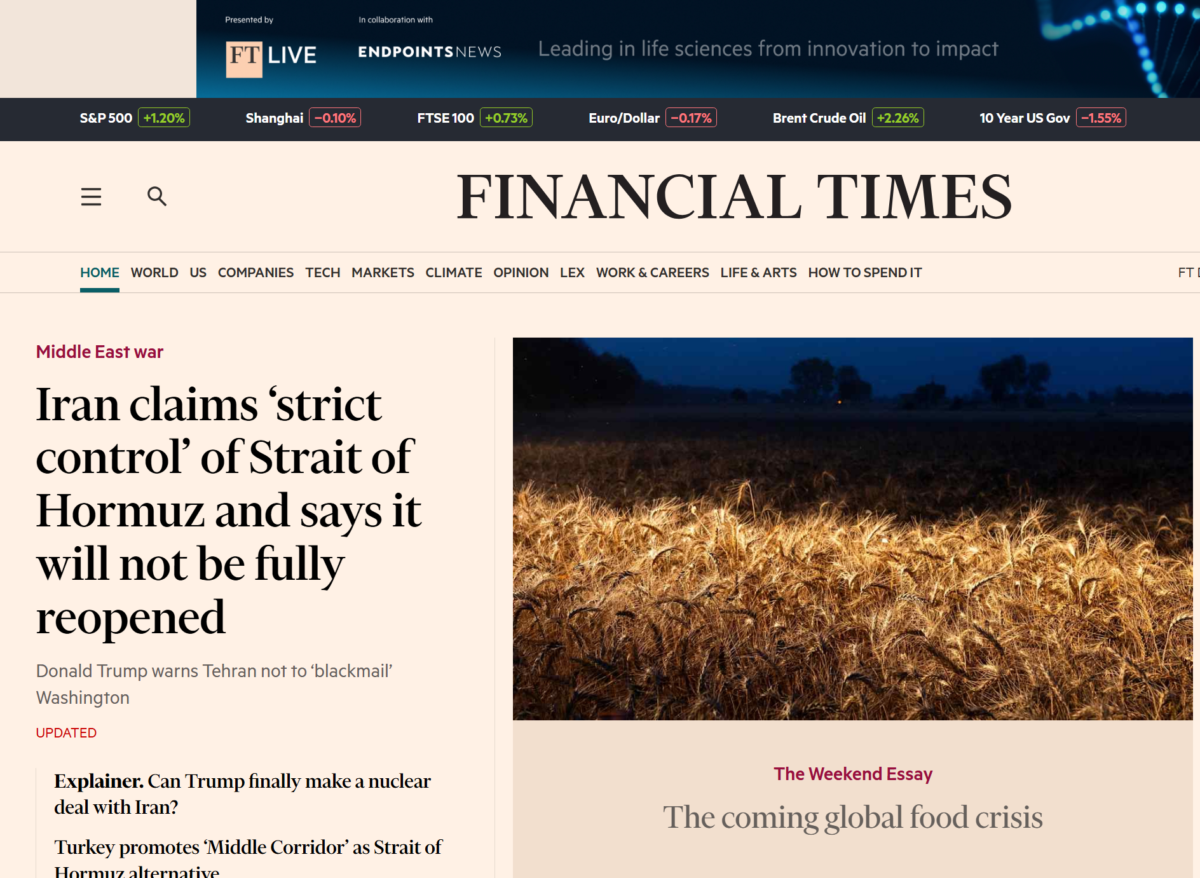
“Coming Food Crisis” Predicted in Financial Times Essay

April 18, 2026          In a major Weekend Essay, Adam Hanieh, writing in the Financial Times British newspaper on April 17 2025, warns that the current Middle East conflict will cause a world food crisis.  Hunger and even famine are foreseeable consequences of the war on Iran. The world should act to shield the poorest from effects that will continue long after the fighting stops.

The contraction in exports from the Middle East is not just a short-term increase in price for agricutural inputs; it risks actual production shortfalls in upcoming harvests.  Rising energy prices always raise food prices.

Referring to how many countries have improved their food production over the last fifty years, the Financial Times essay explains how inter-connected today’s farms are with products from the Middle East, explaining how the the ‘Green Revolution’ of crop research established a link between food production & the fossil fuel industry across every stage of farming and “pushing back famine” across much of Asia and Latin America.   Since many of these fertilisers are derived from natural gas, the Green Revolution meant that the world’s food production became ever more closely tied to a constantly increasing supply of hydrocarbon inputs.

The author details how sulfur, urrea, and ammonia from the Middle East are key components of farm inputs in China, India, Brazil, Morocco, Indonesia, Australia, the United States and other countries.

This Financial Times piece also explains how trans-shipment hubs, such as Dubai have become important for humanitarian supply chains, which will hinder aid to countries like Somalia and Sudan.

The essay argues that this is a slow-moving yet systemic crisis as farmers plant less now, with resulting smaller harvests months ahead, leading to further increases in food prices later this year.  FT recognizes that poor countries will be hit harvest.  While wealthier countries will experience inflation, low income countries may face famine.

The original author of the FT essay, Adam Hanieh is the director of the SOAS Middle East Institute and professor of political economy.

Note:  This and other Financial Times articles are behind a paywall and not readily accessed absent a subscription.  The link to the article is:

https://www.ft.com/content/36343e24-b06f-434d-a7e5-6046e7bcf3df

-Reported by Steven Hansch for Hunger Notes

Further Increases of Starvation in Darfur, Sudan

April 12, 2026

The arid, poor, western region of Sudan, called Darfur, has been a complex emergency for twenty-three years, with mass displacement and an increasing problem of starvation and malnutrition.  Aid to prevent starvation is prevented by the inability of aid agencies to reach those in need, due to violence. A two-year siege of the regional capital of El-Fasher reflected the unending war between the two combatant groups, the Rapid Support Forces (RSF) and the SAF (Sudanese Armed Forces).

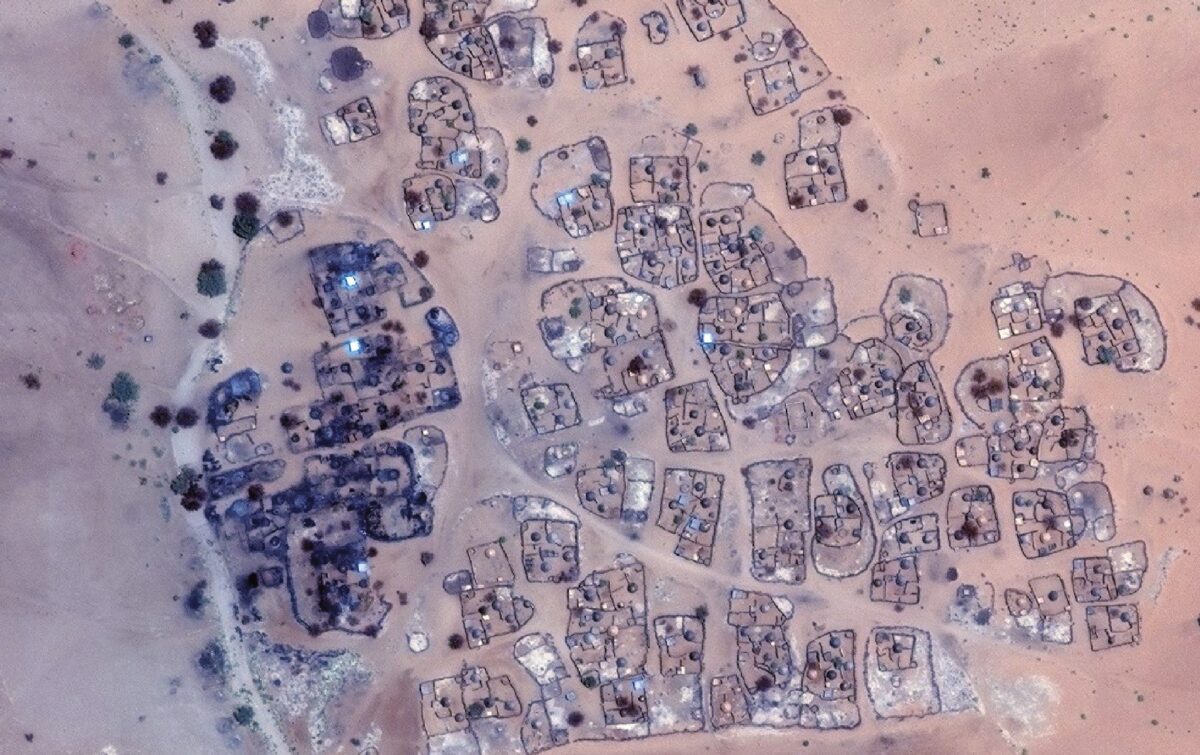
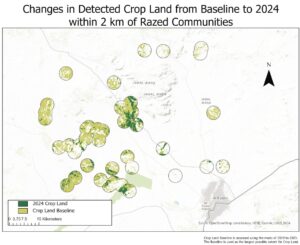
Using themal imaging, the Humanitarian Research Lab (HRL) at Yale University has recently published evidence of attacks against civilians Darfur.  Yales’s new HRL report provides detail of targeted burning, destruction and razing of 41 agrarian villages northwest of El-Fasher in darfur.  These communities were ethnically Zaghawa who produce food for the region, but following attacks, they halted agricultural work.  The Yale lab report finds:  “decreases in agricultural activity during the growing period following the razing of communities assessed through year-on-year changes in land use/land cover.”

The Yale lab and this report use remote sensing to measure changes in food security in non-permissive environments.  Satellite imagery of farming communities are shown in the photo at the top-left and at the map at right.

Oona Hathaway has called attention to famine as a war crime in Darfur, western Sudan.  “We conclude that the new Yale HRL report provies compeelling evidence relevant to multiple RSF starvation crises in the vicinity of El-Fasher, including war crimes, crimes against humanity…. Well over 11 million people have been displaced by the conflict, which has caused desperate levels of food insecurity, including multiple determinations of famine.”   She continues, “the fighting and the parties’ well-documented obstruction of humanitarian relief have, for extended periods, made the, made the transportation of food and aid to places that desperately need it nearly impossible.”

The economic and livelihood implications of the crisis have spread beyond the agricultural sector.  “Nearly 70 percent of bank branches have closed and ceased operation in conflict zones across Sudan. Bank closures, limited cash liquidity, and high transfer commission rates ranging from 10 to 30 percent have contribu ted to financial strain and limits any ability to sell and purchase food commodities, exacerbating food insecurity.”

Several locations in Darfur report acute malnutrition rates above 50%, which is very high.  Around 800,000 childhood cases of servere malnutrition, the most dangerous and deadly form of malnutrition, are expected nationwide this year in The Sudan.

Food aid does not benefit from a stable pipeline to Darfur, some food coming from Chad.  Much of the food is brought in by the World Food Programme.  NGOs responding include the Norwegian Refugee Council, CARE, Food for the Hungry and Concern Worldwide.

Following the confirmed spread of famine in North Darfur, Action Against Hunger (AAH or ACF) is operating directly in regional hunger hotspots. Their teams provide emergency health and nutrition interventions, alongside water, sanitation, and hygiene (WASH) programs that are critical for preventing malnutrition-related diseases like cholera.

The International Committee of the Red Cross (ICRC) has provided food and cash, and health care for livestock, and rehabilitated water infrastructure (e.g., hand pumps in rural North, Central, and West Darfur) benefiting tens of thousands; conducted cholera response campaigns with chlorination and hygiene promotion in Tawila (North Darfur) and Al Daein (East Darfur), reaching over 117,000 people and distributed water filters.

See:


Lebanon’s 2026 Conflict and Displacement Increase Malnutrition

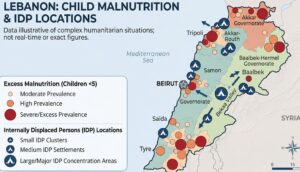
April 8, 2026:    An estimated 1.65 million people in Lebanon are vulnerable to increased food shortages and malnutrition due to the combination of conflict, bombardment, displacement and denied access of food shipments. The conflict between Israel and Hezbollah forces in Lebanon has caused significant agricultural damage, estimated at $704 million, and disrupted livelihoods, especially for small-scale farmers.  However, aid agencies have not reported new rates of malnutrition from population-based surveys.

Pre-conflict, children in Lebanon were found to be 36% anemic from iron deficiency, with reduced dietary diversity and high rates of zinc and Vitamin A deficiency.

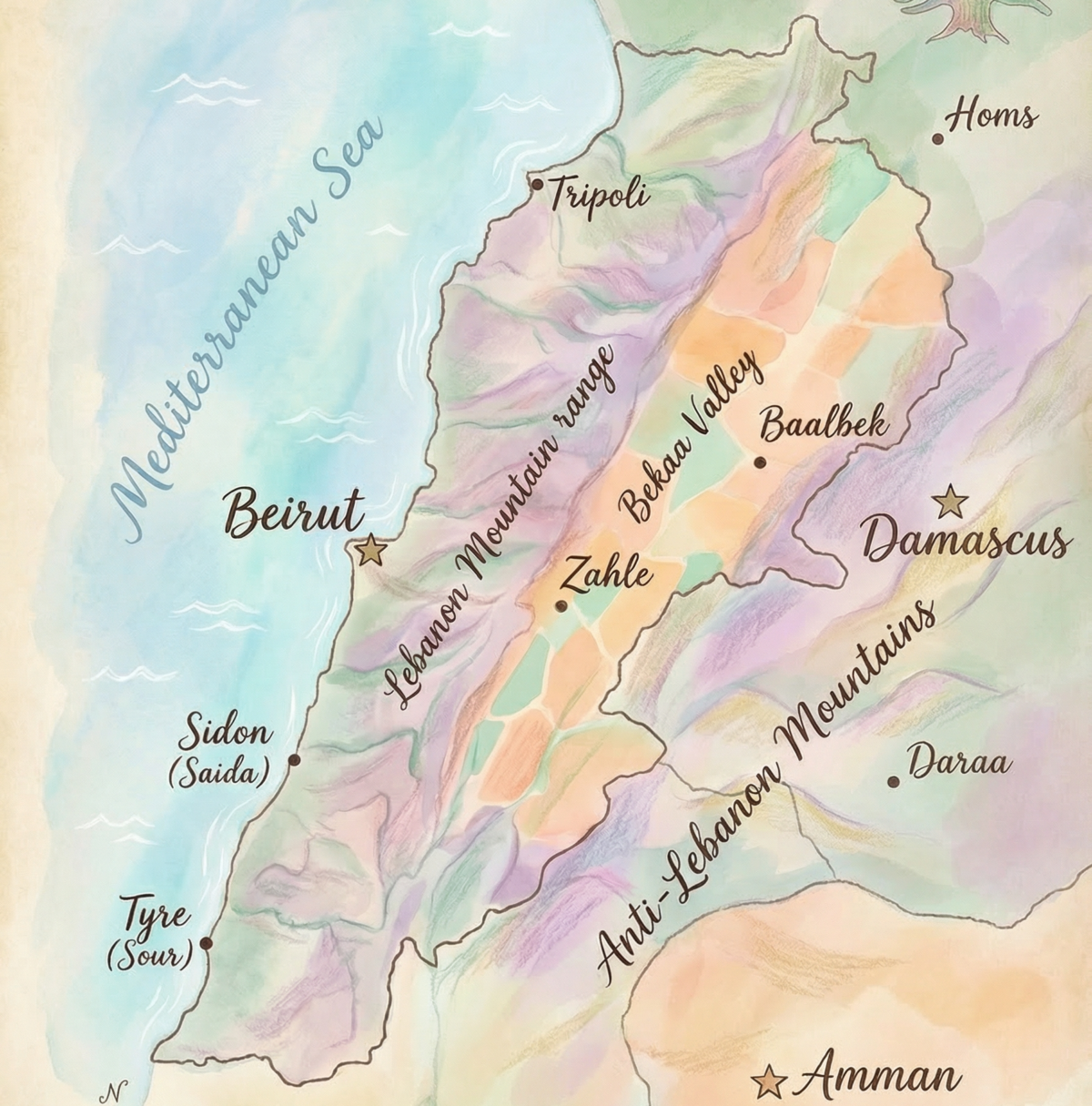
Daily military strikes and incursions continue, particularly in the south of Lebanon and the Bekaa Valley, preventing people from returning home and resuming their livelihood.  People are sheltering in schools, public spaces, and even their cars, with many shelters already overcrowded. Hotspots include Baalbek, El Hermel, Akkar, Bent Jbeil, Marjaayoun, El Nabatieh, and Sour.  Seven bridges across the Litani River — a key transport corridor linking southern areas to the rest of the country — were struck as of late March 2026, disrupting supply routes for food, fuel, and medical goods.   Retail activity collapsed in conflict zones: only 15% of shops in El-Nabatieh and one-third in South Lebanon remained fully operational.   Markets south of the Litani River largely ceased operations, with many shops closed or evacuated and supply deliveries significantly reduced

More generally, Lebanese also have seen increases in the price of food, which has been affected by the regional conflict and constraints on fuel.  For example, the price of bread increased 8% at subsidized rates but 30% at many bakeries.  The Ministry of Economy increased the price of bread  by 5,000 Lebanese pounds due to rising fuel costs affecting oven operations and flour transportation.
International Aid

As needs have increased, the funding for aid has decreased. Food assistance coverage has dropped by about 45% between 2024 and 2025, forcing the WFP to reduce the number of people it assists by 40%.

Aid agencies that are responding with nutrition, food and health assistance include the Mennonite Central Committee, the Lebanese Red Cross, Action Against Hunger (AAH and ACF), the International Federation of Red Cross and Red Crescent Societies, UNICEF, CARE, Caritas, MedAir, and others.

A new digital platform called Sofra is coordinating an innovative response by connecting international donors with local restaurants to prepare and deliver meals to verified shelters. This initiative helps feed displaced families while supporting local businesses and keeping restaurant staff employed.

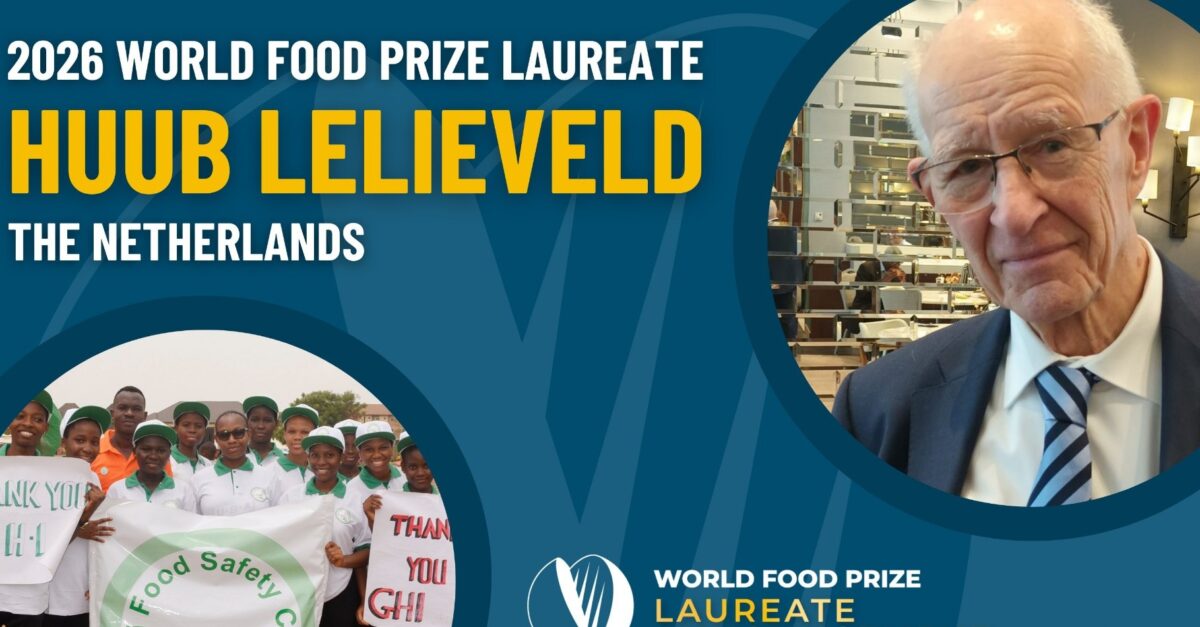
Huub Lelieveld Wins World Food Prize, Fighting Food-Borne Illness

The 2026 World Food Prize was awarded to Dr. Huub Lelieveld for his long-term dedication to establishing standards that prevent diseases transmitted through food. Dr. Lelieveld, a Dutch food scientist, promoted the standardization of technologies such as food irradiation and non‑destructive testing—approaches that have prevented millions of illnesses each year, particularly among children, where infections impair nutrient absorption, cause stunting, and exacerbate “hidden hunger” (micronutrient deficiencies).

Lelieveld founded the Global Harmonization Initiative (GHI) in 2004 as a volunteer-led network of more than 1,600 experts from 113 countries to promote science-based standards related to mycotoxins and microbiologically affected food. These standards have reduced unnecessary destruction of safe food at borders and throughout supply chains, increasing the volume of food available globally. GHI’s work has influenced legislation—such as Kenya’s 2023 requirement for certified food safety professionals—and has contributed to the creation of an international alert system for rapid threat response across more than 100 countries.

Lelieveld stated, “My philosophy was: You should not compete on food safety,” and “The Global Harmonization Initiative… strives not only to reach scientific consensus but also to ensure that findings are accessible to everyone.”

He also worked on Safe Cassava and Safe Water projects in sub‑Saharan Africa to combat toxin-related neurological diseases in children and to improve access to clean water, strengthening nutrition in regions where cassava is a staple. His efforts included training more than 4,000 food professionals and supporting “Safe Food Clubs” in schools to teach safe handling practices. He additionally contributed to atmospheric water generation pilots in eight countries to expand access to safe drinking water.

Further information:

https://www.kcci.com/article/scientist-huub-lelieveld-named-2026-world-food-prize-laureate/70848476

https://www.cfr.org/event/2026-world-food-prize-laureate-announcement-and-discussion

Yu Ying Public Charter School Students Investigate Hunger

World Hunger Education Service was invited to meet with a group of 5th graders at Yu Ying Public Charter School in Northeast Washington, DC to talk with them about hunger in the world.

Fifth graders at Yu Ying are tasked with completing a capstone project called Exhibition. The Exhibition is a group project where students pick a world issue to research and take action on.  They then present their findings to other students at the school who visit their exhibition.

With guidance from their teacher, Amanda Ingram, and Jillian Crandall, the Elementary Director of Yu Ying’s International Baccalaureate Program, I volunteered to meet with them, since I was eager to learn what these young people understood about why hunger exists in the world and what can be done to address it.

On March 25, I met with four Yu Ying 5th grade students who had chosen the issue of world hunger for their group project.  I was impressed at their interest in the topic and in their understanding of the causes of hunger and food insecurity, and how they affect people, especially children.

I asked them about the difference between temporary hunger and chronic hunger, which they understood.  They were also clear about the problem of food insecurity which affects some 50 million Americans each year.

We talked about the infographic The State of Global Hunger which highlights the magnitude of hunger across the global, concentrated especially in Asia/Near East and Africa.  We also talked about hunger in the United States, which affects both rural and urban areas but in different ways.  We watched a short video clip focused on a 5th grader in rural Colorado whose family sometimes doesn’t have food and how hunger makes it difficult for her to pay attention in school.  We talked about programs that can help alleviate hunger and food insecurity, like the U.S. Government’s Supplemental Nutrition Assistance Program (SNAP) and community food banks.

The students already had a good understanding of how unemployment and poverty increase hunger.  We also talked about how wars and conflicts cause hunger as people are forced to flee their homes.  The students were researching innovations like plumpy food, a non-peanut-based high energy food which can treat acute hunger.

They were also clear about things they can do to address hunger globally and in the United States, like educating their friends and family, not wasting food, and supporting organizations that address hunger like UNICEF and many private voluntary organizations and churches.

I recommended they use some of the World Hunger Education Service hunger quizzes in their Exhibition to see what their fellow students know.

Their interest in world hunger and their curiosity about what can be done to alleviate it gives me hope about what these young people can do.

  – Lani Marquez, WHES Board of Trustees


Poetry & Hunger

The growing anti-hunger nonprofit Poetry X Hunger  was founded in 2017 by Dr. Hiram Larew who is a retired director of international programs at the US Department of Agriculture and a poet.  It operates as a component fund of Chesapeake Charities, which is a registered 501(c)(3) organization.

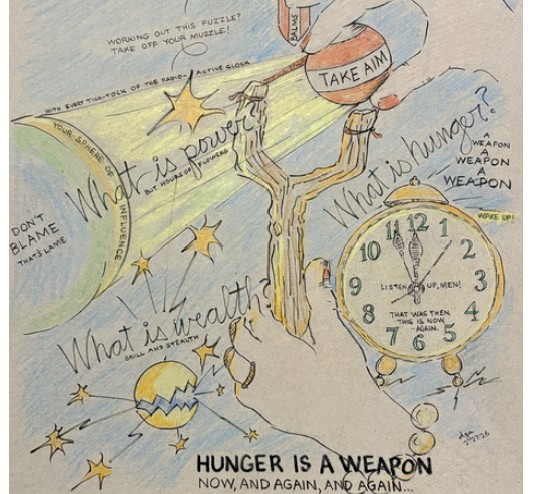
(“Hunger Is a Weapon” artwork is by Donna Anderson.)

Their website offers a number of resources, such as interviews of experts are available at:  https://www.poetryxhunger.com/interviews.html.            The recent poem, “hunger dialogue” is found at:  https://www.poetryxhunger.com/hunger-poems/poem-by-kim-b-miller .    This was featured at the annual meeting of the Alliance to End Hunger, a network of which Poetry X Hunger is a member, and to which World Hunger Education Service is also a member..

A downloadable book of hunger poetry is available from https://www.poetryxhunger.com/uploads/1/2/5/7/125799040/poetsspeakbacktohunger.pdf

Poetry archives are freely available from:  https://www.poetryxhunger.com/international-poets

An example showcased on their website is from the 1942 Bengal famine, when an estimated 2 million people died of malnutrition, is excerpted here:

_____“O great life, no more of this poetry   

_____Now bring the hard, harsh prose,

_____Wipe away the poetry-softened chimes

_____Strike the stern hammer of prose today!

_____No more need for the tenderness of poetry

_____Poetry today I give you leave

_____In the realm of hunger, the world is prosaic”

_____The full moon is like scalded bread.”                    – by Sukanta Bhattacharya, 2947

Paul Ehrlich, Who Warned of Famines, Passes Away

Scientist, educator and global citizen, Paul Ehrlich passed away at the age of 93 on March 13, 2026.   As professor from 1959 to 2016 at Stanford University, he sponsored the first course offered about international hunger and life-saving aid, consistent with his life-long efforts to mitigate suffering from famine, food insecurity and environmental crises.

In a series of publications, Ehrlich called the general public’s attention to the reality of famines around the world. His writings, often with his wife Anne Ehrlich, emphasized the dramatic increase in the number of people exposed to food insecurity and hunger as the world population quadrupled during his lifetime, an observation largely ignored by other major analysts and politicians.

The success of their 1968 book, The Population Bomb, resonated with a public increasingly aware in the 1950s and 1960s of exponential population growth. Demand for his views was reflected in his more than 20 appearances as a guest on NBC’s The Tonight Show.

Some obituaries have denied the recurrence of famine, turning a blind eye to the hundreds of millions of people affected in recent decades by famines in Mali, Sudan, Haiti, Ethiopia, Yemen, Cambodia, India, Malawi, Zimbabwe, Zambia, Angola, and other countries since the publication of The Population Bomb which warned of the threats of future famines.  Critics of Ehrlich pretend away the fact that in the decades since its population, over 300 million young children have died from malnutrition in poorer countries and that famines continue to occur in still-growing populations such as South Sudan, Nigeria, Mozambique Somalia, and Kenya.  Remarkably, some obituaries about Ehrlich suggest that malnutrition has not been a problem in the world, despite the fact that an estimated four to five billion people have been seriously hungry and malnourished during the decades since Ehrlich’s warning.

Fortunately, the frequency and severity of very large famines have declined, in part because of Ehrlich’s warnings, which helped spur the U.S. government to create the Famine Early Warning System (FEWS) in the 1980s. This system has helped prevent famines through timely food and humanitarian assistance and is still used today by the U.S. Department of State.

The book also helped galvanize support for women’s reproductive rights, education, and microfinance initiatives, contributing to declines in fertility and more stable population growth in many countries. Governments, including that of the United States, increasingly supported programs to reduce child mortality, which in turn enabled women across Asia and Africa to choose smaller family sizes. For instance, in the 1960s, the average woman in Asia or Africa gave birth to seven children, whereas today the average is three to four.

Ehrlich’s environmental warnings have been less successful, however, in preventing species extinction and habitat loss.  Since his book, millions of species have gone extinct at rates up to 1,000 times the natural background level, largely due to human encroachment on land and marine habitats. As Ehrlich warned decades ago, the 2024 Living Planet Report documents that monitored wildlife populations have declined by an average of 73% since 1970.  This loss is often described as a “sixth mass extinction,” driven primarily by habitat destruction, followed by overharvesting, invasive species, disease, and climate change.

As Ehrlich documented, carbon dioxide emissions have increased by over 115% since 1968.  To feed a growing population, humans have converted vast tracts of forests and grasslands into farmland. Over the past 50 years, agriculture and land-use change have accounted for roughly 23% of total anthropogenic greenhouse gas emissions. The world has also lost about 420 million hectares of forest since 1990 due to land conversion.

Ehrlich spent a career studying the science of population dynamics, including coevolution and population biology. In his 1964 paper “Butterflies and Plants: A Study in Coevolution” (with Peter Raven), he argued that plants and herbivorous insects drive each other’s evolution—an idea that helped launch the modern field of coevolution. He also conducted decades-long field studies on checkerspot butterflies (Euphydryas editha bayensis), examining population dynamics, genetic structure, and the effects of climate and habitat fragmentation. His work documented patterns of local extinction and recolonization, providing empirical support for the concept of meta-populations and shaping modern conservation science.

Ehrlich helped popularize the notion of ecosystem services, the benefits people receive from nature, such as pollination, water purification, and soil fertility. He used this framework to quantify how human demography and consumption threaten the functioning of ecosystems.

As the Peter Bing professor at Stanford University, Ehrlich  founded Stanford’s Center for Conservation Biology and has worked on endangered‑species policy, countryside biogeography (making human‑altered landscapes hospitable to biodiversity), and cultural evolution of environmental ethics.

Over his long career he mentored scores of students at Stanford, cultivating in them the same blend of scientific rigor and moral urgency that defined his own work.

His textbook Ecoscience: Population, Resources, Environment, coauthored with Anne Ehrlich and John Holdren, is a comprehensive and still-relevant compendium. It provides a foundational overview of ecological principles, resource constraints, and environmental systems. The book explores how population growth, industrial agriculture, pesticide use, and pollution strain natural systems, and it outlines pathways for social, political, and economic adaptation. Ultimately, it frames humanity’s environmental challenges as requiring urgent and coordinated global action.
Like his publications, Ehrlich’s lectures were intellectually wide-ranging and provocative, integrating history, global trends, politics, and ecology. Unlike many academics, he was deeply committed to addressing hunger and alleviating human suffering.

Other readings:

Stanford University:  https://humsci.stanford.edu/feature/biologist-and-environmentalist-paul-ehrlich-has-died

Understanding the fragility of our planetary home: The legacy of Paul Ehrlich

Nature Journal:  https://www.nature.com/articles/d41586-026-00939-5

Paul Ehrlich: A Tribute

– by Steve Hansch, board member, World Hunger Education Service


Fertilizer Prices and Hunger Increase from Middle East War

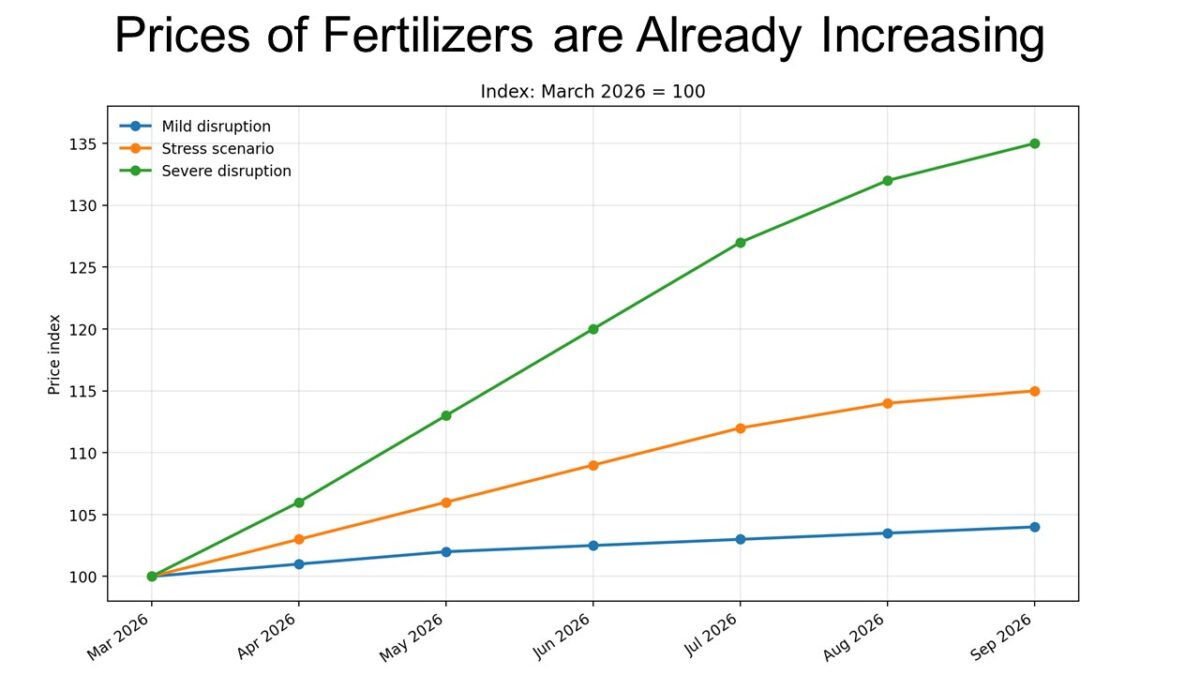
March 20, 2026      Malnutrition rates are likely to increase worldwide due to fertilizers becoming less available.  The primary driver for  significant increases in fertilizer prices is the disruption of nitrogen and phosphate production from the current war in the Middle East.

The Middle East is a critical hub, accounting for roughly 10-50% of the world’s urea production and nearly half of the global tradable supply of sulfur (an essential input for phosphate). Furthermore, record-high natural gas prices in early 2026 have pushed the variable costs of ammonia production significantly higher.  Fertilizer prices were already rising in early 2026, while major upside risks include conflict-related shipping disruption, tighter nitrogen and phosphate exports, and natural-gas uncertainty.  The WorldBank reported that fertilizer prices gained 6.5% in February 2026.  Other groups, such as the FAO, Argus, and CRU have each flagged conflict-related risks to fertilizer and energy flows, especially through the Middle East and shipping routes.

The two charts shown, that are modeled on current trends suggest that key fertilizer prices may double in the coming 6 months.

The critical chokepoint has been the Strait of Hormuz. Following the war in late February 2026, the Hormuz waterway, which is responsible for a third of the world’s seaborne fertilizer trade, has closed, sending urea prices at NOLA up roughly 30% in the first two weeks of March alone.  Shipping costs through the Red Sea have also risen more than 50%, further compressing margins across the supply chain.

The World Economic Forum adds:  “It’s not just shipping that’s been disrupted. Qatar was forced to halt production at one of the world’s biggest urea plants last week, in the midst of what is planting season in much of the world.  As of 2022, Qatar’s exports of synthetic nitrogen fertilizers including urea were keeping nearly 43 million people fed in the US, Brazil, and India alone.”

Sustained 40-to-60% price increases cause farmers, including  smallholders, to under-apply nutrients, which translates into yield losses 6–12 months downstream. That lag is what makes the current moment especially dangerous for food insecure populations heading into late 2026.  In other words, malnutrition is projected to increase after a lag time.  Malnutrition will be widespread and diffuse, not localized to one area.
 

–  Contributed by WHES board member, Steven Hansch


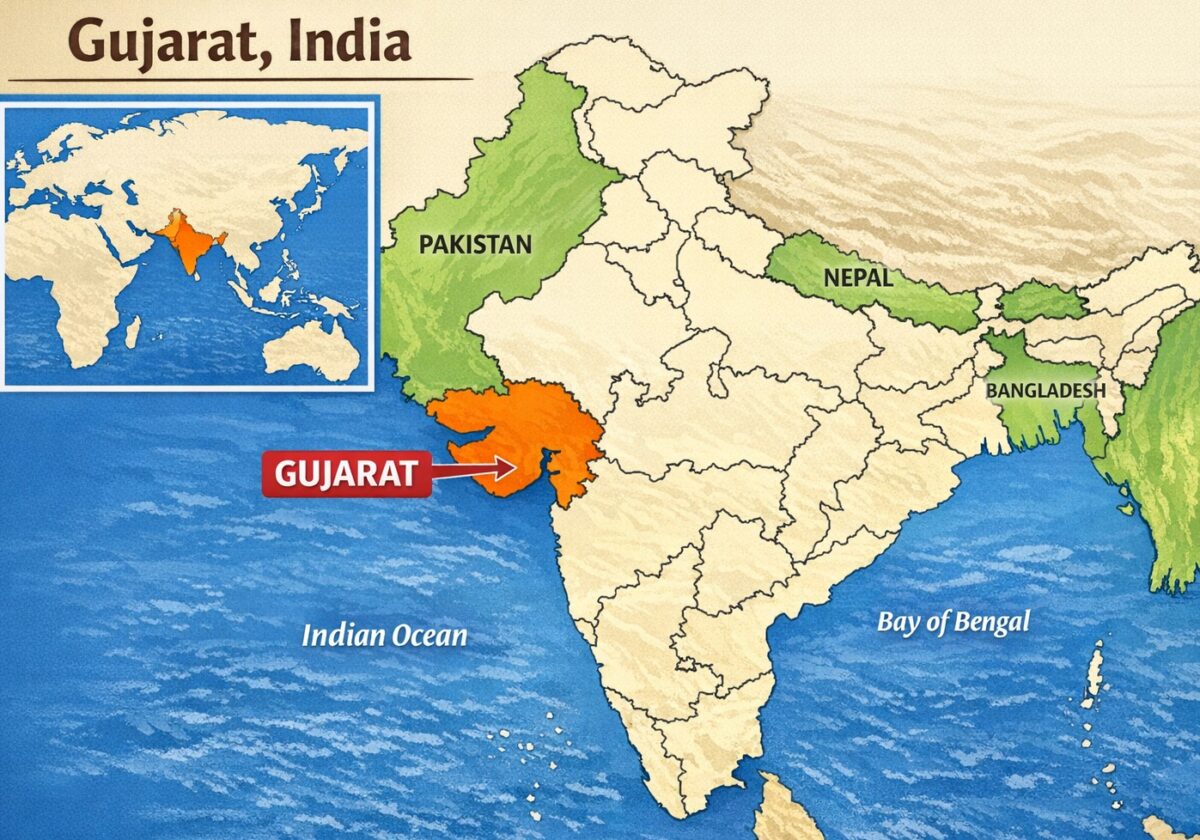
Debate over Child Malnutrition in Gujarat, India

In his book Development as Freedom, Nobel-prize winning scholar Amartya Sen wrote that “no famine has ever taken place in the history of the world in a functioning democracy,” tying that claim to the presence of elections, opposition parties, and a relatively free press.

The press in Gujarat, India is giving a current example of how politicians are being held accountable to metrics of child malnutrition.

As reported in Indian news, quoting the independent, population-based National Family Health Survey (NFHS-5), the opposition party in Gujarat is criticizing the government for a 41% rate of stunting in Gujarat state (or some 260,000 children), whereas the government is quoting a lower rate based on self-selected clinic-based screening of children.  The NFHS also reports 19% of children under age 5 were wasted (acutely malnourished).

The opposition has claimed, “Despite this BJP government with more than 150 seats and 28 years of rule, only one figure comes on record, that 40 out of 100 children are malnourished. A very large section of them are tribals.”    In districts like Panchmahal and Banaskantha, the numbers are objectively worse than the state average, which is why they were the focus of the March 12th debate.

Over roughly the last two decades, Gujarat’s child malnutrition record has improved, but unevenly.  But wasting moved the wrong way for a long stretch: about 19% in 2005–06, 27% in 2015–16, and still about 25% in 2019–20/21; severe wasting also rose from about 7% to 11% and then stayed around 11%.  Several underlying determinants improved substantially over time in NFHS: by NFHS-5, Gujarat had higher coverage of improved sanitation (74.0% vs 63.6% in NFHS-4), clean cooking fuel (66.9% vs 52.6%), improved drinking water (97.2% vs 95.9%), and continued high use of iodized salt (95.6%).  Those changes usually point in the right direction for nutrition security.

Reference about the recent controversy:

https://www.thehindu.com/data/fact-check-are-40-out-of-100-children-malnourished-in-gujarat/article70744284.ece