
Concern Worldwide in Sudan

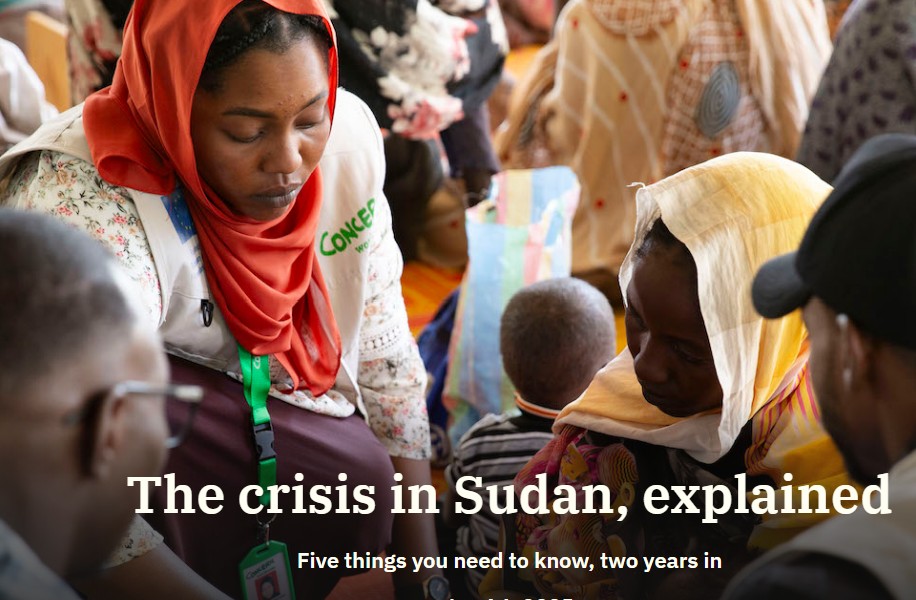
February 24, 2026  Sudan likely has the worst hunger of any country at present.  World Hunger Education Service made its annual anti-hunger award, including our recommendation and a cash grant to Concern Worldwide for its food and nutrition assistance in the worst famine crisis in the world, The Sudan, where it manages health clinics, case finding of children with malnutrition and building household resilience amid an intractable civil war. Their operations reach nearly half a million people across several states, including West and Central Darfur, West and South Kordofan, and the Red Sea State.  Concern Worldwide has been operating in Sudan since 1985, with programs adapted to address the ongoing humanitarian crisis stemming from the conflict that escalated in April 2023.
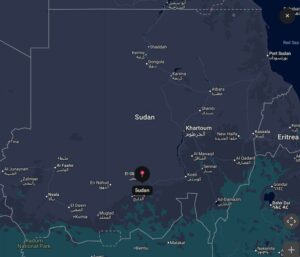
Concern’s assistance in the last year included over 11 tons of medical items and 56 metric tonnes of pharmaceuticals and equipment in recent deliveries.   Nutrition programs include distributing 11 tons of ready-to-use therapeutic food (RUTF) to treat childhood malnutrition, addressing the loss of Sudan’s domestic RUTF production capacity due to conflict damage. Overall, nearly 480,000 people received support through these health and nutrition efforts in the first 10 months of 2025, with programs continuing into 2026 amid funding shortfalls highlighted by Concern’s leadership.

To mitigate long-term impacts like poverty, Concern integrates food security, livelihoods support, nutrition, WASH, and disaster risk reduction.  Their aid includes agricultural training, provision of inputs, and village savings and loan associations in Kordofan communities, adapted to the conflict environment. These programs aim to build resilience while addressing immediate needs from the crisis, which has left over 24 million people in Sudan requiring aid.   In 2024, Concern treated 8,312 children for severe acute malnutrition (SAM).  In addition, in 2024, over 12,000 individuals received in-kind food assistance, and 5,875 households were provided with multi-purpose cash assistance totaling approximately €1.2 million.
Concern Worldwide began in 1968, when a small group of Irish volunteers launched an emergency response to the famine in Biafra, Nigeria.  Today, Concern reaches over 30 million people in emergencies.

See:    https://www.concern.net/what-we-do/health-and-nutrition

See Hunger Notes’ previous interview with Dominic MacSorley, former CEO of Concern at:  https://www.worldhunger.org/interview-with-dominic-macsorley-former-ceo-of-concern-worldwide/

Donations from the US can go to:  https://concernusa.org/

https://concernusa.org/search-results/?q=sudan&page=1

      – Edited by WHES board member, Steven Hansch
Project HOPE’s Aid in Gaza

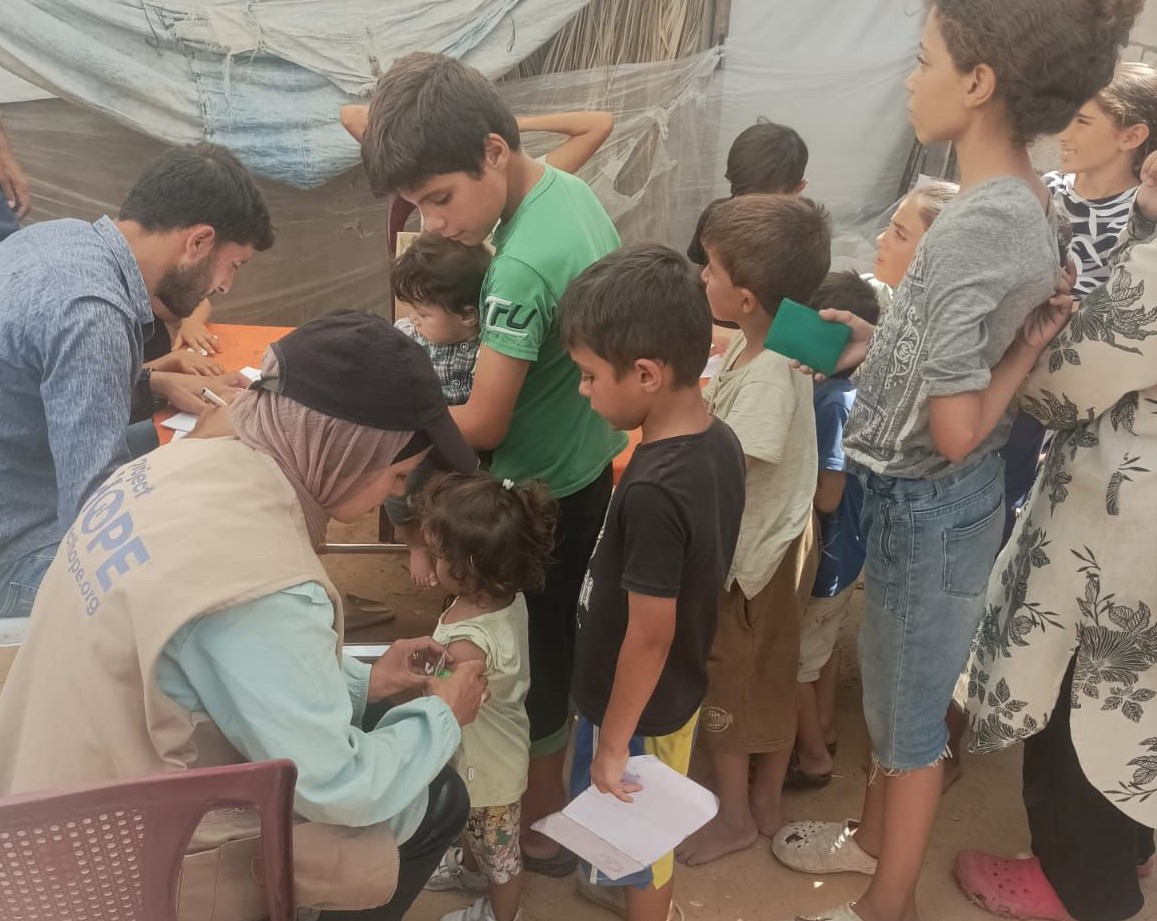
Project HOPE is the recipient of a donation by the World Hunger Education Service (WHES), a non-profit dedicated to educating the public about solving hunger which selected Project Hope to highlight and affirm its excellent work providing recovery foods for malnourished children in Gaza.

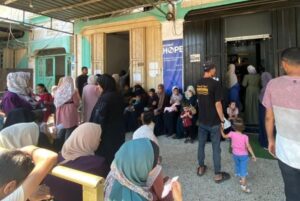
Project HOPE supports nutrition through its seven health clinics across Gaza, helping to reach tens of thousands of children with wasting (“acute”) malnutrition, which carries a high risk of death.   Gaza has been prone to increased prevalence of malnutrition over the last year or more as food imports and aid from outside, and movement/ distribution within Gaza have been blocked.  The highest prevalence of malnutrition has been measured in Gaza City.

Since the October 2025 ceasefire took effect, Gaza has experienced a partial recovery in market activity and food availability across Gaza, but supply shortages, cash-flow constraints, damaged infrastructure, and limited local production continue to hamper both supply and access. Food prices remain far above pre-conflict levels, with many basic commodities costing up to 200% more than before the fighting began. As a result, many households still struggle to afford a diverse diet, with consumption generally limited to staple cereals and pulses while meat, fresh produce, and other nutrient-rich foods remain largely out of reach.

From July 2024 to November 2025, Project HOPE screened 158,884 people for malnutrition, particularly focusing on children under five years of age and pregnant or breastfeeding women.   They provide High Energy Biscuits (HEB), Ready-to-Use Therapeutic Food (RUTF), rapid rehydration, and case management for those suffering from malnutrition.  RUTF is a food optimized to save the lives of young children who are severely malnourished.  They also have provided Psychological First Aid to 18,000 people. and distributed over 2 million liters of potable water.

In Gaza, they operate health clinics in Khan Younis, Gaza City, and Deir al-Balah, providing an average of 1,170 medical consultations a day.  Because of their work in Gaza, World Hunger Education Service has granted them an award of $2,500 and recommendation to the public.

Supplies of RUTF are trucked via convoys into Gaza via roughly five border crossing points as palletized cargo.  Once inside Gaza, supplies are moved along major routes such as the Philadelphi Corridor and Al Rashid Rd to approximately 23 treatment sites.

Project HOPE is an international non-profit established in 1958.  Operating with public support for over 68 years, Project Hope strengthens health systems, combats infectious diseases and deploys emergency response and nutrition teams in crisis zones to provide humanitarian aid.  In severe crisis settings (e.g., conflict in Ethiopia, displacement in Gaza and Ukraine), Project HOPE’s emergency response includes clinical care and nutritional support for populations facing acute shortages.  They also work with communities and health workers about how to prevent waterborne illnesses like cholera and diarrheal disease.

For much of its history Project HOPE was known for its hospital ship which inspired people to choose careers in foreign aid.  Its flagship was originally the USS Consolation, which operated during the Korean war and then converted with 230 beds into a civilian aid ship.  Project Hope pioneered the concept of the first peacetime hospital ship operating the S.S. Hope for 14 years. For every American doctor or nurse on board, there was a local professional counterpart.   It traveled to many countries including Southeast Asia and South America.  Today they work in more than 25 countries across Africa, the Americas, Asia/Pacific, Europe, and the Middle East.

Similar to its work in Gaza, Project HOPE had been a lead US NGOs also responding Ukraine and Lebanon.  In Ukraine, the team operates mobile medical units, reconstructs health and social facilities, trains health workers, provides extensive mental health and psychosocial support, and more. In Lebanon, Project HOPE has been working around the clock to support urgent needs, including the distribution of water, sanitation, and hygiene (WASH) supplies and shelter items to displacement sites, as well as procuring essential medicines and medical supplies for hospitals and primary health centers.

See:  https://www.projecthope.org/

– WHES Board

“11.5: Edge of Life” Campaign Targets to Reduce Deaths from Severe Wasting Malnutrition

A new global initiative to treat children with severe, wasting (short term) malnutrition was announced this past week by Sheikh Mohammed bin Rashid Al Maktoum, Vice President of the United Arab Emirates.  The global campaign is called “The 11.5:  Edge of Life Ramadan campaign”, referring to the common measurement criteria of 11 1/2 centimeters of arm circumference used by aid agencies to identify malnourished children who are most at risk of death.

Announced February 13, 2026, the campaign, under the aegis of the Mohammed bin Rashid Al Maktoum Global Initiatives (MBRGI) organization, will support and work through UNICEF, Save the Children, Action Against Hunger and the Children’s Investment Fund Foundation.

The aim is to raise $270 million to meet the needs of five million children (out of 118 million malnourished children), and thereby save 2.6 million lives.

This continues Sheikh Mohammed’s tradition of launching annual humanitarian campaigns during Ramadan.  Previous campaigns include the 10 Million Meals campaign in 2020, the 100 Million Meals campaign in 2021,

and the 1 Billion Meals campaign in 2022.  A champion of humanitarian philanthropy, he had said “They hesitate, we move ahead. We are living proof that when human beings have the courage and commitment to transform a dream into reality, there is nothing that can stop them. Dubai is a living example of that.”


–  Contributed by Steven Hansch, Hunger Notes

Review of “Channeling Cassandra”

Dennis King’s new monograph, Channeling Cassandra, draws on his over 35 years of experience managing information about international humanitarian disasters, including his creation of ReliefWeb.com and overseeing USAID and US Department of State humanitarian information systems.

Published by the National Intelligence University, the monograph makes the important insight that while there have been endless gigabytes of humanitarian data and publications about information management, there has been relatively little on analysis, or interpreting data, particularly how evidence is used to make decisions.

This book refers to food aid as part of the response to crises of varying severity, and in response to food insecurity driven by climate change.

King asserts that “a keystone for improving humanitarian response is understanding complexity.”  He gives examples of how analysis of humanitarian needs and options require a multi-disciplinary lens.  He writes, “The problem is rarely a lack of information; it is the inability of decision-makers to process complexity and the tendency to prioritize political expediency over humanitarian early warning.”

“Humanitarian crises are non-linear systems where small changes in one variable (like a grain price or a local skirmish) can lead to catastrophic system-wide failures.”

King cautions against causation bias and linear-logic fallacies.  He distinguishes between descriptive analysis of humanitarian emergencies, explanatory analysis, evaluation, comparisons, predictive esimation and anticipatory analysis.

He encourages analysts to consider black swan events that are rare and unanticipated (such as pandemics), gray rhinos that are probable, yet neglected threats; “boiling frogs” that are slow-simmering crises that build in scale and harm; and “Dragon Kings” that are first-time events such as nuclear weapons, transational cyber-shutdown, sea level rise or a solar storm.

He views complexity as a growing problem in part because of accelerating climate change.  “Climate disasters are occuring in unexpected locations.  2023 alone saw tropical storm-induced flooding in Libya; wildfires in Hawaii, Canada and Greece, floods in Niger, drought in the horse latitudes of South America and heat waves in Europe.  Most unresolved armed conflicts have been ongoing for more than 10 years” and have displaced generations of refugees and internally displaced persons.

King utilizes several historical and contemporary disasters to illustrate the “Intelligence-Policy Gap.”

One section reviews applications of technology including information and communication (ICT), Geospatial analysis from remote sensing, and newer applications of artificial intelligence.

He recounts the 2004 Indian Ocean tsnumi, the 2010 Haiti Earthquake, and civil wars in South Sudan and Syria.

He examines how the Ebola outbreak in west Africa that became a priority in 2014 had siloed intelligence and interpretation (medical vs. security) that inhibited a more unified response.

King fears that “the humanitarian ecosystem has not adapted to these threats, challenges and actors…  this has led many to proclaim the international humanitarian system is both broke and broken.”

His recommendations are to adapt to complexity (monitor and adapt), facilitate decision-making, enhance alternative analyses and understand that technology can often introduce more noise than signal.

– Hunger Notes board member Steven Hansch

Former International Food Aid Expert Reflects on U.S. SNAP

Former federal worker Nadira Kabir reflects on her experience navigating access to the SNAP program (U.S. domestic food assistance) after unemployment and pregnancy.  “SNAP exists because hunger doesn’t wait for employment to resume.” 

Beyond the practical support, the author emphasizes SNAP’s emotional significance: it provided stability, reduced constant financial calculation, and preserved dignity during a volatile period.  She writes:  “You don’t lose your worth because your job ends.”

She reframes SNAP not as dependency but as earned protection and temporary scaffolding, urging others who qualify to use it without shame. The piece includes practical guidance on eligibility, application steps, and how SNAP coordinates with other safety net programs like Medicaid and unemployment insurance.

As background, the Supplemental Nutrition Assistance Program, or “SNAP,” formerly known as “food stamps,” is the largest federal nutrition assistance program in the U.S.  It provides monthly benefits to low-income individuals and families via an Electronic Benefits Transfer (EBT) card, which works like a debit card at authorized grocery stores and farmers’ markets.  It is designed to supplement a food budget, not cover it entirely. The benefit amount is calculated based on the “Thrifty Food Plan,” the USDA’s estimate of the lowest-cost diet required for adequate nutrition.  While it is funded by the federal government (USDA), it is administered at the state level.

See:  https://frombureaucrattobabysteps.com/2026/02/04/snap-isnt-a-handout-how-food-assistance-helped-me-breathe-during-unemployment/

Mali Faces Famine

As of early 2026, Mali continues to face a deep nutritional crisis. While there has been long-term incremental progress in reducing chronic malnutrition (stunting), acute malnutrition (wasting) remains at emergency levels, particularly in the conflict-affected northern and central regions.  Mali is among six countries at highest risk of famine or catastrophic hunger in early 2026.  The UN estimates 5.1 million people are in need.

Because of the conflict there have been more than 800 incidents of access denial of aid to people in need in 2025, which has included violence against aid workers.  Mali  borders the Sahara desert and is prone to drought and malnutrition.

Acute malnutrition among children nationwide averages 11.6%, which is well above the African regional average of 6%.  Within Mali, crises areas include Ménaka (22.2%) and Gao (19.3%), where malnutrition rates have surged far past the WHO’s 15% emergency threshold.

An estimated 1.5 million children are acutely malnourished, with over 314,000 cases of Severe Acute Malnutrition, which is the most life-threatening form.

Militant activity and “blockade tactics” in the North and Center have disrupted local markets and restricted access to agricultural fields, making food both scarce and unaffordable.

See:  https://www.fao.org/4/t2860t/t2860t02.htm


New Approach to Controlling Malnutrition in Somalia

Childhood malnutriiton can be addressed by their communities via an initiative in Somalia developed by the “Maternal, Infant, Young Child and Adolescent Nutrition (MIYCAN) working group and fostered by UNICEF and the federal department of health of Somalia in the Horn of Africa.

As of early 2026, the malnutrition has grown in Somalia, driven by a combination of persistent conflict, high food prices, and climate-related shocks like the failure of recent rainy seasons.  In the current cycle (extending through July 2026), an estimated 1.85 million children are estimated to be suffering from acute malnutrition, a 12% increase compared to previous seasons.  Of these, an estimated 425,000 severely wasted.

Potentially a model for other countries, MIYCAN moves beyond treating sick children at clinics to preventing malnutrition via Community Health Workers. It integrates nutrition with early childhood development, play, and disability-inclusive care.

Rolled out in January 2026 this new framework includes “a standardised five‑day training curriculum that strengthens pre‑service and in‑service capacity.  The framework reinforces the role of Community Health Workers (CHWs) as frontline nutrition counsellors, supported by 40 newly developed, culturally appropriate counselling cards designed to enhance caregiver engagement and promote positive behaviour change at both household and community levels.”

It represents Somalia’s first national guidance for feeding infants and young children with physical or neurological difficulties, ensuring “no child is left behind.”

It occurs as UNICEF and its partners increase their use of SQ-LNS (Small Quantity Lipid-Based Nutrient Supplements) and Mother-Infant MUAC Tape.

see:  https://www.unicef.org/somalia/press-releases/somalia-redefines-child-survival-launch-2026-maternal-infant-young-child-and

Meat: How the Next Agricultural Revolution Will Transform Humanity’s Favorite Food and Our Future

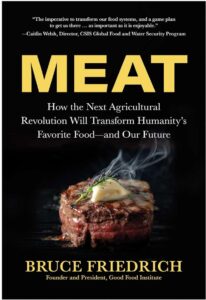
February 5, 2026   As people get wealthier, historically, they eat more meat even though it is inefficient.  the new book, “Meat” by Bruce Friedrich, examines the implications of the world’s dietary choice.  He lays out how six calories going into a chicken result in 1 calorie in chicken meat.  He calls this “fantastically inefficient.”

Friedrich articulates why the world cannot continue its current system of animal-based meat production because it is environmentally damaging, inefficient, and risky for health and food security.

Friedrich recognizes that asking people to eat less meat has not made a difference.  Instead, he says the future of meat lies in alternative proteins (plant-based and cultivated meat) that can match or exceed conventional meat in taste, cost, nutrition, and sustainability.  Increasingly, the world has available new Plant-based meats (made from plants) and cultivated meats (grown from animal cells but without raising/ slaughtering animals) become indistinguishable from traditional meat.

In his interview on the PBS Newshour on television, he problems growing meat entails:  8 times the water, herbicides, pesticides, shipping, operations, gas consumption, pollution compared to plants.

The author believes that transition to non-animal meat will occur when the taste and affordability matches the legacy meat.  He advocates plant-based and cultivated meat.  “Meat” quotes 30 plant-based and cell-based cultivation scientists about the rapid progress.  Once parity in taste with real food is achieved, markets will rapidly shift much like with cars replacing horse-drawn travel or the adoption of smartphones.

In her review of this book, Jane Goodall wrote before she died this year: “Today billions of animals are raised to provide us with meat. This harms the environment and is often unspeakably cruel to farmed animals, yet for many the idea of a main meal without meat is unthinkable. The good news, as Meat explains, is that you can now enjoy real meat that was made without killing any animal. Please read this book: it is engaging, informative, and gives us hope for a kinder future.”

For further information, see the PBS Newshour, Feb 3, 2026

A Troubling Forecast: Early Warning Systems Signal Deepening Global Hunger in 2026

Real-time food insecurity forecasting is critical. Early warning systems identify emerging risks, such as conflict, climate shocks, and price spikes, months in advance, enabling humanitarian actors to mobilize resources and intervene before food insecurity escalates into widespread malnutrition or famine. The FAO-WFP (Food and Agriculture Organization of the United Nations – World Food Programme) Hunger Hotspots[1], is one such early warning analysis which highlights contexts where food insecurity is likely to significantly worsen over the next seven months.  The report does not include all countries that may be facing high levels of acute food insecurity, but, rather, focuses on those with deteriorating conditions over the near-term period.

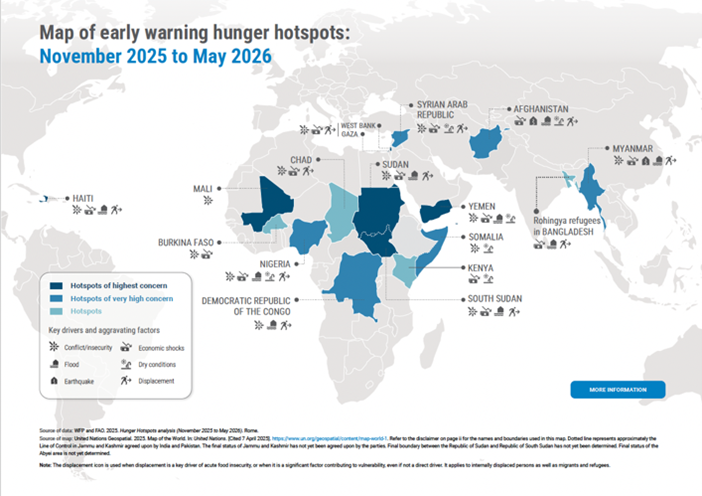
In the latest edition of Hunger Hotspots. FAO–WFP Early Warnings on Acute Food Insecurity: November 2025 to May 2026 Outlook, acute food security is expected to worsen in 16 countries and territories: Burkina Faso, Nigeria, Democratic Republic of Congo, Chad, Somalia, Kenya, West Bank, Syrian Arab Republic, Afghanistan, Myanmar, Rohingya refugees in Bangladesh, with Sudan, Palestine (Gaza), South Sudan, Haiti, Mali, and Yemen among the hotspots of the highest concern. The projections underscore that without timely action, millions could face crisis or worse food security conditions by mid-2026.

The FAO-WFP divides hunger hotspots into three categories:

  • * Hotspots of the highest concern – hotspots facing famine or risk of famine, populations already in Catastrophe (IPC/CH Phase 5)[2], or those in IPC/CH Phase 4 facing worsening conditions.at
  • *  Hotspots of very high concern – large populations are estimated or projected to be facing Emergency (IPC/CH Phase 4) levels of acute food insecurity, or severely food insecure according to the WFP CARI[3] method AND the number of people in Emergency (IPC/CH Phase 4) or severe food insecurity is expected to increase during the period,
  • *  Hotspots – this category includes other countries or contexts where food insecurity is likely to significantly worsen during the outlook period

The FAO-WFP identifies countries falling into these categories by convening an expert panel of food security, conflict analysts, and economists from all levels of the FAO and WFP who use a consensus-based approach in analyzing specific quantitative and qualitative data. These are forward-looking indicators which may cover a 6- to 12-month forecast window, rather than retrospective annual data.[4]

Fourteen of the sixteen countries face conditions of armed conflict and violence, making this the most significant driver of acute food insecurity. Across all regions, conditions are worsening due to climate variability causing droughts, floods, and erratic seasons, economic conditions (debt burdens, food inflation, economic fragility), and funding shortfalls as humanitarian assistance budgets are critically under-resourced means less capacity to intervene early, driving food insecurity across all regions.

For the countries categorized as “hotspots of the highest concern” specific factors leading to the deterioration of conditions include:

  • Sudan: Acute food insecurity is worsening due to ongoing armed conflict that has displaced millions, disrupted markets and agricultural production, and severely restricted humanitarian access amid shrinking funding.
  • Gaza:  Livelihoods have deteriorated as violent conflict, restrictions on movement, and damage to infrastructure severely limit food availability, market access, and humanitarian assistance.
  • South Sudan: Persistent conflict, recurring flooding, economic fragility, and high levels of displacement are undermining food production and access, while reduced humanitarian funding limits the scale of response.
  • Haiti: Escalating gang violence, political instability, and economic shocks have disrupted supply chains and markets, driving food price inflation and severely restricting access to food and humanitarian assistance.
  • Mali: Insecurity linked to armed conflict, population displacement, climate shocks, and economic pressures are eroding livelihoods and food access, with insufficient funding are limiting humanitarian and resilience efforts.
  • Yemen: Prolonged conflict, economic collapse, restricted imports, and reduced humanitarian funding are driving high levels of food insecurity, leaving millions dependent on declining levels of food assistance.

The report urges that actions be taken immediately across all hotspot areas to prevent the deepening of the crises and to save lives, calling for increased humanitarian funding and emergency and anticipatory actions. Contextualized, specific emergency and anticipatory recommendations are listed for each hotspot country/territory.

It explains:  “Famines are never inevitable – they are almost always foreseeable, preventable and driven by human actions. Famine is considered a failure of the humanitarian system.” [5]

As the quote above articulates, early warning data does not need to be a predictor of disaster, rather it can be an opportunity for coordinated and targeted interventions that can save lives if funded and implemented in a timely manner.

Read the full report here https://openknowledge.fao.org/items/fc67d706-e568-4de9-ad59-0a053506994f.

[1] Hunger Hotspots. FAO–WFP Early Warnings on Acute Food Insecurity: November 2025 to May 2026 Outlook available at https://openknowledge.fao.org/items/fc67d706-e568-4de9-ad59-0a053506994f

[2]https://www.ipcinfo.org/fileadmin/user_upload/ipcinfo/manual/IPC_Technical_Manual_3_Final.pdf

[3] https://vamresources.manuals.wfp.org/docs/the-consolidated-approach-for-reporting-indicators-of-food-security-cari

[4] Full details of the quantitative and qualitative indicators as well as the process are provided in detail in the Appendices of the Hunger Hotspots. FAO–WFP Early Warnings on Acute Food Insecurity: November 2025 to May 2026 Outlook

[5] pg vii

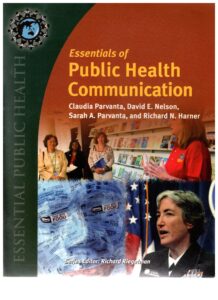
“Essentials of Public Health Communication”: Valuable Curricula

February 22, 2026    A round the world, a key shift during the past few decades in combatting malnutrition has been the adoption of social marketing, communications and “behavior change” to improve diets, caretaker behavior,  and recognition of failures in child growth.  The technical book, “Essentials of Public Health Communication” summarizes the state of the art in applying these tools in public health and nutrition.  Written by Claudia Fishman Parvanta, David Nelson, Sarah Parvanta, and Richard Warner.

Chapters walk the reader through implementation, with examples.  One example is the “Folic Acid First Campaign,” convincing women to take a multivitamin with folic acid (or a folic supplement) before they get pregnant.  Television, radio and print messaging should convey a sense of good health, warmth and energy to reduce the chances of birth defects in newborns.

Claudia Parvanta’s background in designing and evaluating health and nutrition social marketing programs in over 20 countries informs the text’s emphasis on using communication to influence dietary behaviors and address hunger-related issues.  The book references other nutrition-related initiatives, such as the Bangladesh Nutrition Education Project, to illustrate how strategic communication plans are developed and implemented in real-world settings.  It walks the reader through formative research methods, such as focus groups, to understand barriers to diet choices.

This 416-page text (published by Jones & Bartlett Learning) is divided into four major sections: Section One: Overview. Chapters 1, 2, and 3 provide an overview of public health communications, the planning, and informatics. Section Two: Informing and Educating People about Health Issues. Chapters 4 through 7 describe communication challenges and methods to provide information in a clear and unbiased manner.

The book analyzes how anti-vaccine content thrives online using emotive narratives and false expertise. It then contrasts this with proactive, empathetic communication strategies from health agencies, such as “pre-bunking” (inoculation theory) and engaging trusted community influencers (e.g., pediatricians, local mothers) as messengers.

The authors frame communication as a core public health function essential for prevention, behavior change, and policy advocacy.  Introduces behavioral and social science theories that guide message design (e.g., risk perception, social norms, diffusion of innovations).  The book includes discussion of media and channel selection and emphases  the 4 “P”s of Social Marketing, namely Product (the idea of being active), Price (reducing social/access barriers), Place (where tweens gather), Promotion (cool, aspirational ads).

Other case examples include the 2009 H1N1 Influenza Pandemic, the 2014 Ebola scare, and tobacco.  The “Truth” Campaign is described as an anti-tobacco campaign to illustrate audience segmentation and theory application. It didn’t target smokers with health warnings but segmented a new audience  i.e., teenagers, and used the Theory of Reasoned Action/Planned Behavior and empowerment models. The campaign framed tobacco use as a manipulation by big corporations, making rebellion synonymous with not smoking. This showcases moving from “knowledge-attitude-practice” to more sophisticated socio-ecological models.  A full chapter is dedicated to public health informatics which highlights how data systems, surveillance, and digital tools support communication planning and evaluation.

Apropos to its subject, the book reads easily for students and professionals and communicates its messages very well, using a mix of steps, examples, cautions and context.  The book has received very positive reviews, with a 4.5 out of 5-star rating on Amazon.  Reviewers praised it as an excellent resource for nutrition communications and for various types of public health communication work.  It remains the best learning resource in its category.  It is particularly required reading for anyone planning a public health campaign anywhere in the world.