
The Tallest Man: William Foege in Memoriam

February 1, 2026    William (Bill) Foege’s achievements for the health of humanity tower above almost everyone.  He passed away this past week.  Born in 1936, his many diverse achievements include:

  • * Eradicated smallpox. Working with DA Henderson and J Michael Lane, he was a key innovator in the global campaign against this highly fatal communicable disease, the only human disease ever eradicated entirely.  He promoted the successful ring vaccination strategy, using surveillance and containment.  Further reading:  Foege’s book House on Fire, the Fight to Eradicate Smallpox (2011)
  • * Directed the U.S. Centers for Disease Control and Prevention (CDC) from 1977-1983 where he led the expansion of CDC’s work in maternal/child health, HIV/AIDS, environmental health and strengthened CDC’s leadership as a voice for science. He was a proponent of population-level prevention of disease.  He began at CDC in the Epidemic Intelligence Service in 1962.  During his tenure, CDC promoted nutrition programs around the world.  In 1979, he convinced First Lady Rosalynn Carter to visit Thailand at the time of the Cambodian refugee crisis.
  • * Served in the 1990s on the board of CARE USA, at its peak, which has fed upwards of 400 million people during its history. CARE was the premier NGO providing immediate and long-term solutions to malnutrition in famines, crises and failed states.
  • * He was a key early and pivotal Senior Advisor to Bill Gates and the Gates Foundation (as of 1999), influencing their programs for child survival, micronutrients and vaccines.
  • * Served eight years on the board of directors of the Conrad N. Hilton Foundation, including serving on the committee that selected which charities would win the foundation’s annual Humanitarian Prize often given to NGOs reaching homeless people in far corners of the globe. Foege said “We must keep promoting the idea of global citizenship, to erase the divisions between nations, cultures, religions, and races.””
  • * Helped to set up the Carter Center and served as its Executive Director from 1986 to 1992.  He collaborated with President Carter to shape the Center’s early vision and helped to establish its reputation for rigorous, principled engagement in global health, such as its campaign to eradicate Guinea worm disease.
  • * He created the Task Force for Child Survival with President Jimmy Carter’s support. It was later renamed the Task Force for Global Health.
  • * He was known for making other people feel listened to and important. As one colleague said, “you always had the impression that all of his attention was on you and what you were saying.”
  • *  He reframed how a very effective disease-control program was delivered.  He realized that with Onchocerciasis (river blindness), transmission matters more than perfect treatment.  In the late 1980s, the pharmaceutical company, Merck, discovered that ivermectin (also known as Mectizan) suppresses the parasite causing Onchocerciasis affecting millions of people in West Africa.     control program. Foege worked with Merck, saying that if Merck donated the drug, public health agencies would ensure its usage.  As of 2025, the Mectizan Donation Program has delivered 5 billion treatments and saved between 15 and 20 million disability adjusted lifeyears.
  • * He was an amazing public speaker, who really knew how to tell a story. Patrick O’Carroll said of him:  “Whenever he spoke, his vision and compassion would reawaken the optimism that prompted us to choose this field and re-energize our efforts to make this world a better place.”
  • * He was an accomplished author and professor at Emory University School of Public Health. He is remembered for many aphorisms, such as “vaccines are the tugboats of preventive health.”  He encouraged his colleagues to practice ” consequential epidemiology.”

Dr. James Merchant wrote the following memory online:  “To confront famine among children in villages freed from the Biafran blockade, in 1968 Bill designed a famine surveillance program to direct nongovernmental organization food distribution to villages most in need.  … I learned from Bill an early public health lesson, the importance of using systematic surveillance … Using normative data from a survey of western Nigerian children’s height and arm circumference, a volunteer Quaker medical team had designed bamboo sticks marked with 75th- and 80th-percentile scales. …we documented the validity of this method to measure the prevalence of malnutrition among village children. It became the model used to direct the distribution of food by organizations that hasten relief from famine already receding when I served there in the summer of 1969.”
In 2016, Foege’s commencement speech at Emory University was titled “Every Day we Edit our Obituaries.”  He advised the students, “it’s not until you get to be my age that you know how good a life has been. But consciously, daily edit your obituary so you realize that sooner. Edit with care and gusto.”  He added “We like to feel we are civilized.  How do we measure that?… Every measure fails, except one.  But there is one measure of civilization and it comes down to how people treat each other.  Kindness is the basic ingredient.”  Quoting Albert Einstein, he also encouraged the graduates to “be good ancestors.”

Emory professor and colleague Kenneth Castro remembers “He reminded us to be generous with sharing credit during collaborative efforts and to practice “ego subordination””

Bill Gates recalls, in his online GatesNotes how “late in life, Bill spoke openly about his own mortality. “I feel so enthusiastic every day about seeing the newest thing in science and health,” he told an interviewer. “The part that’s going to be hard about dying is not dying but not being able to see what’s happening next.””
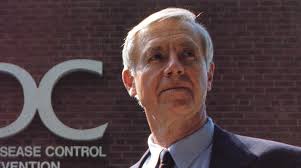
Foege was the third of six children growing up in Decorah Iowa   He is survived by his wife, Paula, two sons, Robert and Michael, three sisters,  four grandchildren; and two great-grandchildren.

One story Foege liked to tell often was from his days organizing vaccinations in West Africa, where the village leaders brought everyone from the fields to get vaccinated.  The village leaders beat their drums and everyone came.  Foege, who stood 6 feet 7 inches tall, asked, “what message did you send?”  The reply:  ‘come quick if you want to see the tallest man in the world.”

Other testimonials:

https://www.who.int/news/item/25-01-2026-in-memoriam-dr-william-h.-foege-(1936-2026)

https://www.cdcfoundation.org/stories/honoring-legacy-health-hero-dr-bill-foege

https://www.taskforce.org/bill-foege-tribute/

https://www.forbes.com/sites/madhukarpai/2026/01/25/lessons-from-william-h-foege-a-global-health-legend/

https://www.gatesnotes.com/home/home-page-topic/reader/remembering-bill-foege

https://www.statnews.com/2026/01/25/william-foege-obituary-smallpox-cdc-vaccination/

https://www.legacy.com/us/obituaries/legacyremembers/william-foege-obituary?id=60632713

Further reading:

A vignette:  https://www.gatesnotes.com/Story-of-A-Hero-Bill-Foege

Collected speeches:  https://muse.jhu.edu/resource_group/167

Life:  https://en.wikipedia.org/wiki/William_Foege

Confronting emerging infections:  https://stacks.cdc.gov/view/cdc/15522
 

A Promising Model to Predict Rates of U.S. Food Insecurity

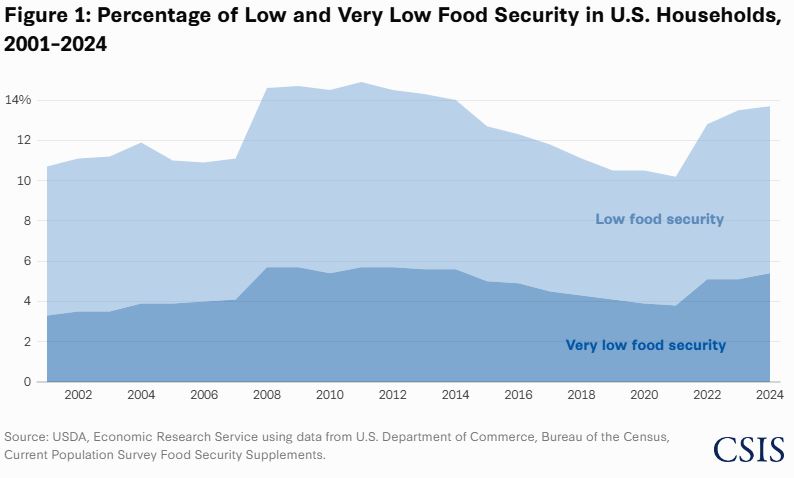
As  covered in a September 20 Hunger Notes article, the USDA announced that they would no longer be collecting the annual data measuring household food insecurity and cancelling the Household Food Security Reports. This means that the 2024 report will be the last under the current format. However, at the same time, food insecurity has been on the rise in the U.S. for the past two decades, 17% from 2001 to 2023.  Ending this annual data collection and report will result in a critical gap in the ability to understand and address food insecurity in the U.S.

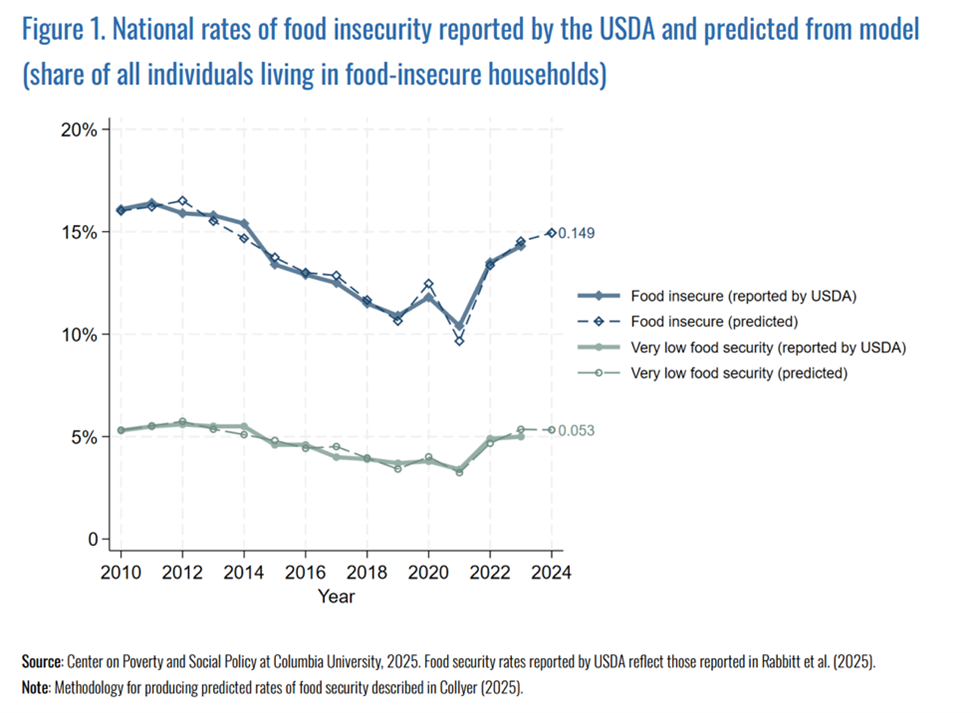
Sophie Collyer, Director of the Center on Poverty and Social Policy, at Columbia University, in a brief published Oct 22, 2025, outlines a model to predict food insecurity rates at the population level, adult, and child levels, in the absence of the USDA’s annual data set.  The model uses secondary data of poverty, unemployment, specific food inflation rates, all of which are highly correlated with food insecurity. When the model was tested against the past 14 years of historical food insecurity rates, it was shown to align closely.  The model was also used to predict food insecurity rates for 2024, which at the time the brief was published, the USDA report was still unavailable.

Figures 1 (above) and 2 (below) are taken from Collyer’s report and demonstrate how close the model’s predictions are to the USDA official rates among the share of all individuals, adults, and children, living in food-insecure homes.

For the results shown in Figure 1 (share of all individuals living in food-secure homes), in all but four of the years, the model was within 0.4 percentage points of the official USDA rate, with the largest difference in those four years 0.7 percentage points.

For the prediction of rates of adults, shown in Figure 2, in all but three years, the model is within 0.4 percentage points or less of the official USDA rates.

The model’s prediction of rates among children was within 0.4 percentage points in half of the years, with the largest difference 1.2 percentage points, the lowest performing among the three predictions.

Collyer indicates that the model will continue to be refined.

With the 2025 cancellation of the USDA’s historic, official household food insecurity dataset, this model offers a promising substitute for providing credible estimates of food insecurity for policy and program planning.

Reference:  https://povertycenter.columbia.edu/sites/povertycenter.columbia.edu/files/content/Publications/Predicting-National-Rates-Food-Insecurity-CPSP-2025.pdf?utm_source=chatgpt.com

https://www.ers.usda.gov/publications/pub-details?pubid=109895

CSIS Reviews Implications of the Final U.S. Hunger Report

A new Jan. 6 report from the think tank, CSIS, reviews the recent U.S. Government study about hunger in America, noting that this until-now annual food security or hunger report will no longer be conducted by the US Government which deemed it political and inducing fear.

Caitlin Welsh, the author of this review observes that “the end of the report represents a rupture in long-standing data on food security among Americans, as there is no report that provides the same information to the public and policymakers today.”  This survey had been created with bipartisan support and helped advise Congress about anti-hunger programs.

The USDA Household Food Security in the US publication looks back at 2024 found that roughly 1 in 7 Americans were food insecure, and that “5.4 percent of households experienced very low food security.”  Hunger was not uniform everywhere in the U.S.  For example, 36% of families in the Washington DC area experienced food insecurity in 2024 and “the Greater Boston Food Bank found that in 2024, 37 percent of Massachusetts households faced food insecurity in 2024.”

Welsh writes that food insecurity in the US has in the past tracked the health of the U.S. economy.  In recent years, hunger has increased, in significant part because of increasing retail food prices.  Welsh says “alongside elevated food prices, experts may be right to assume a continued rise in food insecurity in 2025.  In 2026, cuts in the SNAP program enacted in the One Big Beautiful Bill Act, were estimated to eliminate SNAP assistance for millions of Americans, may further increase food insecurity among U.S. families.”

CSIS is the Center for Strategic and International Studies, an independent, non-partisan think tank based in Washington, DC.  See:  https://www.csis.org/analysis/last-us-hunger-data-what-we-lose-termination-usdas-household-food-security-united-states

For the full US Department of Agriculture report, published on Dec. 30, 2025, see:  https://ers.usda.gov/sites/default/files/_laserfiche/publications/113623/ERR-358.pdf?v=89918  authored by Matthew P. Rabbitt, Madeline Reed-Jones, Laura J. Hales, Shellye Suttles, and Michael P. Burke who are economists in the Economic Research Service of USDA.

See also, the related Hunger Notes article on this issue by Kathy Goss:  https://www.worldhunger.org/united-states-cancels-household-food-security-report/

Death from Malnutrition in the United States

Deaths among Americans caused by malnutrition and hunger have increased 600% according to the Washington Post and data from the Centers for Disease Control and Prevention, as reported by Andrew van Darn on Jan. 5, 2026, who finds that the increase is seen “across the board. Every state, every education level, every race, every gender.”  One risk factor in particular is evident:  “Americans 85 or older die of malnutrition at around 60 times the rate of the rest of the population, and such deaths are rising about twice as fast among that group.”

The Post article further explores the data, noting that malnutrition among the elderly is noticed and reported more than in past decades.  In the past, emaciation and poor nutrition was taken for granted as a part of decline from other causes and not recorded as malnutrition.  The Post examines how professional nutrition societies began promoting, a decade ago, better diagnosis by health professionals, to look for:  “not just for weight loss, but also for factors such as muscle loss, loss of under-the-skin fat pads, fluid retention and simply not eating enough. They held awareness weeks, tons of trainings and — perhaps most.”  The Post article reports, “As a rule of thumb, multiple experts told us that at least 1 in 5 hospital patients probably suffer from some kind of malnutrition. In 2010, about 3 percent were diagnosed with it. By 2018, it hit 9 percent.”

The Post further explores how the health system in America increasingly gives incentives for diagnosing malnutrition among the elderly.  “We’ve seen very little growth in malnutrition deaths in hospitals in recent years. The increase has been sharpest at nursing homes and long-term care facilities, where some residents may arrive with nutrition issues, followed by deaths at home or hospice. Similarly, almost no patients who had an autopsy got malnutrition listed as a cause of death.”

More generally, malnutrition is measured among children via “growth monitoring”, at WIC Clinics, and in sample surveys that repeat over time called the National Health and Nutrition Examination Survey, or “NHANES”, which looks at physical, biochemical and dietary measures of children and adults.  See:  NHANES at CDC;

see:  https://www.washingtonpost.com/business/2025/12/29/why-are-malnutrition-deaths-soaring-america/;

and The Predictive Validity of the Academy of Nutrition and Dietetics American Society for Parenteral and Enteral Nutrition Indicators to Diagnose Malnutrition Tool in Hospitalized Adults:  a Cohort Study

and, the Malnutrition Care Score for IQR Quality Improvement Initiative .


Book Classic: The Challenge of Famine, Recent Experience and Lessons Learned by John Osgood Field

The anthology edited by John Osgood Field, The Challenge of Famine, Recent Experience Lessons Learned” remains one of the premier books about predicting and measuring famine ever published.  Field, until his retirement a professor of food studies at Tufts University School of Nutrition, published this in 1993 with Kumarian Press, arrayed a dozen key scholars of famine who including Joel Charney, Mary Anderson, Dirk Stryker, Peter Cutler, Jack Shepard and others.  Field wrote the introduction, the first chapter, and the final summary chapter.  The book is as appropriate to read today as when it was published as it hones in on the ambiguity of when to say that there is a famine.

Field writes that when in full bloom, famine is dramatically clear to the naked eye.  However, he writes, how to recognize famine before it becomes obvious is the dilemma around which much of the book revolves. This is relevant at a time when there are hot debates over which parts of Sudan may or may not be in famine, which parts of Gaza may or may not be in famine with data sets pointing in different directions as to the answer.

Field clarifies that famine is a slow onset disaster, which does not happen suddenly, but has a lengthy gestation. He makes the key point that notwithstanding the complexity of famine and the multiple factors underlying it, the principal indicators are few and manageable. In other words, famine may be caused by different processes, but there are fewer cases, but the data for recognizing famine are fewer. The dilemma facing early warning is that it is very difficult, perhaps impossible to be definitive, clear and compelling about something that does not yet exist. Ambiguity is inherent in famine prediction.

This means that political decision making will come into play. Early warning does not eliminate the role of politics. Both political early warning and administrative early warning have better track records in inducing early decision making and response than early warning systems that are purely technical.

Writing about the famine codes in India, Field dissects detection and response with responsibility of the same individuals who typically were district level officials.

Contributor William Torrey reflects on community famine surveillance in Sudan, which is very timely in 2025.  Torrey dives into Darfur, including about participation by locals in Al-Fasher who were also involved in relief work, early warning, and famine response.

In his chapter about Oxfam America’s disaster response, Joel Charney mentions that honest reflection and self-evaluation are not exactly hallmarks of the voluntary agency community.  “According to their own public relations pieces, it seems that the agencies always do well regardless of the grave mistakes in judgment that journalists and other independent investigators continually uncover.”  He reviews the 1978 famine in Cambodia.

Mary B. Anderson and Peter Woodrow draw on their extensive case studies of disasters in many countries for key lessons, such as how disaster victims have important capacities which are not destroyed in disaster and therefore should be built on.  They argue that outside aid to these victims must be provided in ways that recognize and support these capacities.

In his chapter, Jack Shepard summarizes his research into American assistance to Ethiopia during the 1981-1985 famine period.  He recounts hos U.S. food aid became an important part of foreign policy in the 1970s and 1980s at a time of increasing American food production and increasing malnutrition around the world.  Shepherd recounts the evolution of aid policies including destabilizing Marxist regimes.  “Nowhere is the Reagan policy more clear than in its treatment of Catholic Relief Services (CRS), the official relief and development agency of the American Roman Catholic Community.  From 1982 through 1984 the administration deliberately delayed its response to emergency food aid requests for Ethiopia by CRS.”  In time, US food aid ramped up largely cross-border through Sudan into Tigray and Eritrea (fighting against the government of Ethiopia).

The most distinctive chapter was by Peter Cutler:  “Responses to Famine and Why They Are Allowed to Happen.”   Among Cutler’s observations is that rural famine victims are likely to become a political issue only if their case is taken up by influential urban elites, such as university students or the press.  He catalogs various contradictions in our aid system.

For instance, NGOs are in a contradictory position with regard to famine control.  On the one hand, their field staff are among the best informed of all actors operating in a famine zone, yet at the same time they are the least likely to challenge the system or influence governments. This is because NGOs are highly vulnerable. Cutler concludes the professional relief and development agencies will avoid the risks of challenging donors and the host governments when famine breaks out among unpopular groups of victims.

Publisher:  Kumarian Press, West Hartford Connecticut.  ISBN:  1-56549-019-3

Key U.N. Updates Show Alarming Hunger Trends

December 2025      Recent UN annual reports and updates about global hunger highlight several important issues and trends as we move into 2026:

WFP will prioritize feeding 110 million in 2026 despite larger need: Declines in global humanitarian funding are forcing WFP to prioritize food assistance to roughly one-third of those in need. In 2026, the agency aims to reach 110 million of the most vulnerable at an estimated cost of $13 billion, but current funding forecasts indicate WFP may only receive close to half that goal. (Source: here)

318 Million People Acutely Food Insecure: WFP also tried to explain updated statistics about hunger such as “Across 68 countries where WFP operates and data is available, it is estimated that 318 million people will be acutely food insecure in 2025.” (Source: here)

Malnutrition in Darfur: There are no WFP humanitarian partners left on ground and no verified reports that any community kitchens are operating, and WFP assisted around half a million people in the Tawila in November. Across Darfur we have consistently reached around two million people per month – half of whom are in North Darfur, in areas surrounding El Fasher.” (Source: here)

Myanmar faces rising displacement and unacceptable hunger levels in 2026: The people of Myanmar already face dire levels of hunger; a place where mothers cannot afford enough food to sustain their health, and malnutrition has become a new reality for thousands of children. More than 400,000 young children and mothers with acute malnutrition are surviving on nutrient-deprived diets of plain rice or watery porridge.  “Conflict and deprivation are converging to strip away people’s basic means of survival, yet the world isn’t paying attention,” said Michael Dunford, WFP Country Director in Myanmar. “This is one of the worst hunger crises on the planet, and one of the least funded. We cannot allow this level of suffering to remain invisible. The scale of need is far outpacing our ability to respond.” (Source: here)

Drought conditions are intensifying in Somalia: UN OCHA finds that Because of funding shortfalls, the number of people receiving emergency food assistance in Somalia has plummeted from 1.1 million in August to just 350,000 in November. Puntland authorities report that 89 supplementary feeding sites and 198 health and stabilization centers are experiencing severe shortages of supplies. Forecasts indicate the situation could worsen further. In a forecast covering 13 to 18 November, the FAO Somalia Water and Land Information Management (SWALIM) program projected that dry conditions will persist across much of Somalia, with isolated light rains in southern regions. Central and northern regions will remain mostly dry and hot.   The drought comes in the midst an already dire humanitarian situation. At least 4.4 million people—more than one-fifth of Somalia’s population—are projected to face high levels of acute food insecurity between October and December. An estimated 1.85 million children under 5 are expected to suffer acute malnutrition through July 2026. (Source: here)

Surging conflicts, rising hunger, global funding cuts, and collapsing basic services are driving humanitarian needs for children to extreme levels worldwide: UNICEF’s Dec. 10 annual Humanitarian Action for Children 2026 (HAC) appeal launched asking for US$7.66 billion is urgently required to provide life-saving assistance to 73 million children – including 37 million girls and over 9 million children with disabilities,  across 133 countries and territories next year.  Global humanitarian funding has deteriorated dramatically in 2025. Announced and anticipated funding cuts by donor governments are already limiting UNICEF’s ability to reach millions of children in dire need. Severe shortfalls in 2024 and 2025 are forcing UNICEF to make impossible choices. Across UNICEF’s nutrition programming alone, a 72 per cent funding gap in 2025 forced cuts in 20 priority countries – reducing planned targets from more than 42 million to over 27 million women and children. (Source: here)

FAO’s new Global Emergency and Resilience Appeal seeks $2.5 billion to support 100 million people in 54 countries: FAO’s December Global Emergency and Resilience Appeal for 2026 finds that acute food insecurity has tripled since 2016, even with high levels of humanitarian funding. The current model simply does not keep pace with today’s realities” the Director-General said. “Supporting farmers to maintain production is critical to ensure food availability. When farmers can keep producing, communities stabilize and the path to resilience becomes real.”  Around 80 percent of people facing acute food insecurity live in rural areas, relying on farming, herding, fishing or forestry. Yet only 5 percent of humanitarian food-sector funding supports agricultural livelihoods—a persistent imbalance that traps families in a cycle of crisis and dependence. Strengthening local food production improves food availability, supports markets, creates jobs, and stabilizes communities—especially in countries such as Sudan, South Sudan, Afghanistan and the Democratic Republic of the Congo. (Source: here)

Classic Publication: Bittersweet Harvests, by Ann Thrupp

A classic publication about food insecurity that is still worth a read today to understand how aid has developed in Latin America is “Bittersweet Harvests for Global Supermarkets: Challenges in Latin America’s Agricultural Export Boom” from 1995 by Lori Ann Thrupp, Gilles Bergeron, and William F. Waters Published: published by the World Resources Institute in Washington, D.C.

The authors give background about how the USG focused aid in the Central America region at the time toward export promotion of food products.  Yet, a  central lesson in it is that hunger and malnutrition can worsen even during increased agricultural production.

Much of the text addresses non-traditional agricultural products (NTAEs) such as vegetables, flowers and nuts, as opposed to coffee, bananas, cotton and sugarcane.  Underlying the regional boom in NTAE exports were national and donor policies.  These crops generate a lot of jobs and a large proportion are women.

Agricultural exports do not automatically translate into improved food security for local populations. Research cited in the book showed that despite gains in income and agricultural productivity from non-traditional export crop adoption, there were “no visible positive effects on nutrition” among farming households.  The authors present a balanced analysis, highlighting both the “sweet” benefits, such as billions in revenue, hundreds of thousands of jobs, and year-round availability of exotic produce in global markets—and the “bitter” drawbacks, including economic volatility, environmental degradation, and social inequities. Drawing on empirical research, interviews with farmers, workers, and policymakers, and case studies, the book argues for more sustainable and equitable approaches to agroexport policies to prevent long-term harm.

Latin America’s export boom prioritized cash crops for international markets over staple foods for domestic consumption. This can lead to food dependency” where producing countries import basic grains while exporting high-value items, driving up local food prices and reducing access for vulnerable populations.  In 2025, this dynamic persists in Latin America and other regions, contributing to food insecurity amid rising global demand for fresh produce.

The authors call for direct action for poor farmers to overcome marketing barriers.  They note the gaps in understanding of market conditions.

Strategic recommendations at the end include:  “promote participatory approaches, including poorer farmers in decision-making;” “promote sustainable agricultural technologies and practices, including integrated pest management, organic practices and crop diversification;” and “balance policy attention … on alleviating hunger and fulfilling local food security needs.”

–  Contributed by Steven Hansch

Articles about Malnutrition & Field Programs, “Field Exchange”

October 2025   The Emergency Nutrition Network (ENN), based out of Dublin, Ireland, has published groundbreaking, field-level technical research about attacking malnutrition for the last few decades in their free journal, “Field Exchange.”  The latest edition, Issue 76 (October 2025) showcases community-led, data-informed, and systems-focused approaches to improving nutrition in fragile and resource-constrained settings, with a strong emphasis on adolescents, maternal nutrition, and service delivery quality.

The lead editorial underscores that practitioners are working in a period of acute crisis, including famine in Gaza, famine risk in Sudan, and constrained global humanitarian funding, yet highlights hopeful examples of innovation, local leadership, and adaptation.  Core cross-cutting messages are: community-owned initiatives matter, data and routine information systems can meaningfully guide programme improvements, and linking frontline programming to system-level frameworks and global guidance is crucial to sustain gains.  The issue repeatedly concludes that national regulation, better financing (including social protection), and stronger primary healthcare systems are needed to turn promising pilots into scaled, equitable nutrition responses.

Food assistance and local leadership in Sudan and the Sahel

The Sudan article concludes that different displacement contexts require tailored food assistance modalities: central kitchens are effective where households have lost cooking facilities, while food baskets better support dignity and agency in more stable settings.  A central finding is that local implementing partners are indispensable for access, contextualised design, and operational continuity, reinforcing calls to invest in local NGO capacity and leadership rather than relying solely on international actors.

Maternal nutrition in humanitarian settings

Analysis from Ethiopia, South Sudan, and Somalia finds that national guidelines and policy frameworks for maternal nutrition are largely in place and that pregnant and breastfeeding women are increasingly included in assessments and targeting. ] However, major gaps persist: maternal nutrition is routinely deprioritised relative to child wasting treatment, antenatal care coverage and quality are low, and key interventions such as multiple micronutrient supplements, balanced energy–protein products, and social protection for pregnant and breastfeeding women remain underfunded or small-scale.

IMAM coverage and use of routine data in Zimbabwe

Zimbabwe’s national IMAM coverage assessment, combining routine DHIS2 data, supply databases, and targeted SLEAC surveys, finds low coverage across all assessed districts, with high defaulter and non-recovery rates and recurrent RUTF stock-outs.  The analysis shows that routine data can reliably flag bottlenecks such as weak case-finding, poor growth monitoring, and commodity gaps, though data quality problems need continuous attention.

Using MUAC data to estimate wasting people in need in Afghanistan

A letter from Afghanistan describes an adjusted MUAC-based method to estimate wasting people in need when recent SMART survey data are unavailable, using correlations between MUAC and WHZ from historical surveys to correct for MUAC’s underestimation of total wasting.

Humanitarian nutrition must systematically include often-overlooked groups

Key articles stress gaps in maternal nutrition services in emergency settings and highlight the need to integrate infants under six months into SMART surveys through methodological adaptations. Research snapshots further underscore vulnerabilities among adolescents, pregnant women, and infants—groups whose needs frequently fall between existing program mandates. Expanded, life-course-oriented programming is essential to address these blind spots.

As always, the full edition can be downloaded free of charge at  https://www.ennonline.net/fex/en/76

Review by Steven Hansch of the WHES Team

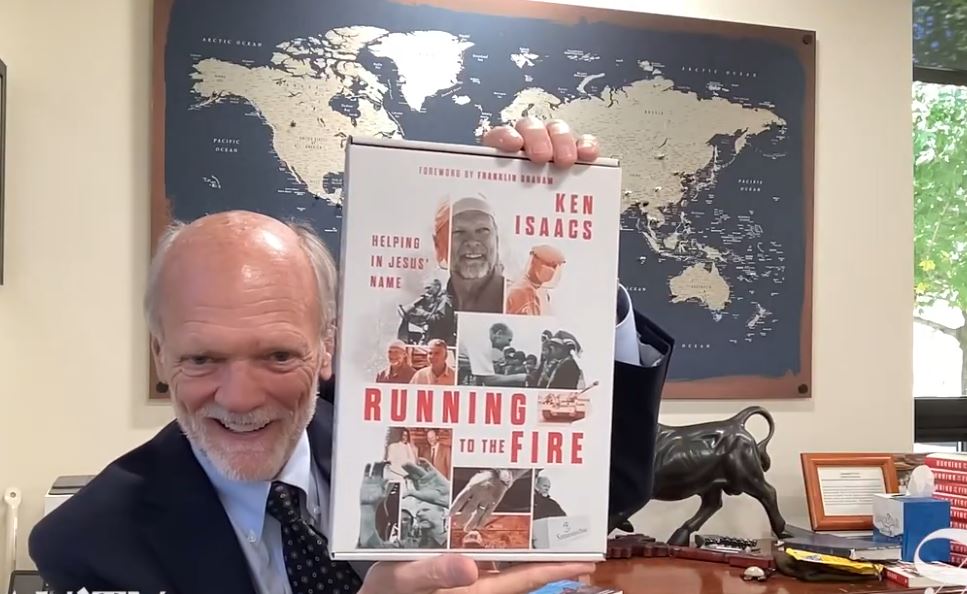
A Crucible of Courage: A Review of Ken Isaacs’ “Running to the Fire”

Ken Isaacs spent more than three decades with Samaritan’s Purse, rising to executive vice-president and helping turn Franklin Graham’s organization into one of the largest Christian relief agencies on earth. In Running to the Fire he recounts that journey through a series of crisply told, boots-on-the-ground stories: drilling wells in Marxist Ethiopia, delivering child “Christmas” care boxes in besieged Sarajevo, providing food aid and building 15,000 transitional shelters after Haiti’s 2010 earthquake, and negotiating with warlords across Sudan and Congo.

Isaacs is candid about the practical lessons learned the hard way: be radically transparent with any armed group, never promise what you can’t deliver, and—if you’re around people with guns—make friends fast.

Isaacs’ journey as a humanitarian worker is marked by a profound sense of purpose and an unwavering dedication to helping others.  The book is a testament to the power of faith in guiding one’s path and the impact that a single individual can have on the lives of countless others. Throughout the book he acknowledges the key roles of his colleagues and his wife and his faith citing inspirational biblical passages in each chapter.

Isaacs begins his story talking about inspiration from Gideon, the Apostle Paul, David, and others from the Bible who were men who thought in terms of what they could do, not what they couldn’t do. He credits his tendency toward having a nomadic lifestyle to his childhood going to different schools in different cities. Isaacs made his first trip to Africa to Togo in March 1985 as a volunteer drilling water wells. He was asked to take a job drilling wells in Ethiopia following the 1985 famine.

The book conveys the unpredictable, helter skelter bouncing around between countries and continents that marks the life of disaster relief workers.  Isaacs began working regularly for Samaritan’s Purse in 1988. In 1988 he hit the ground running on a new well drilling project owned by the Ethiopian Kale Haywat Church. Founded in 1927, the church is now its own denomination of 10 million members with headquarters in Addis Ababa. The immediate dilemma was working within the church’s structure to establish the program while having to liaison with the communist government that was oppressive to Christians.  “Quite the challenge” he describes.

He tells about the origins and population displacements during the Bosnia War of the 1990s.   He praises his colleague there, Dr. Mike Van Royen, who went on to set up the humanitarian program at Harvard.  Isaacs recalls the origins of the U.S.-based Operation Christmas Child Project, a successful program in Bosnia which Samaritan’s Purse later took over globally.

Following a letter from a missionary in 1997 to Franklin Graham, Samaritan’s Purse began organizing relief flights and supplies into South Sudan.  Sudan and South Sudan became one of the largest areas of aid for Samaritan’s Purse over many years.

Isaacs writes with a reporter’s eye for detail and a missionary’s heart for people. His prose is straightforward yet vivid, often weaving biblical reflection into practical accounts of logistics and survival.

While working in Afghanistan he learned about listening to local actors:  “I learned two principles from working in the region of the world. First, you always want to be transparent and let them know exactly who you are. Just be yourself and be the same to everyone. Second, if you’re around people with guns, it’s a good idea to try to make them your friends.  Do not be contentious. Which is why I had no hesitation to sit cross-legged on the floor to eat with the Mujahideen.”

In 2004, Isaacs moved to Washington, taking on the job overseeing the large Office of U.S. Foreign Disaster Assistance at USAID. He reflects, “I soon learned that Washington, D.C., is complicated, diluted, and highly inefficient. While I understood politics and complex power struggles, I wasn’t prepared for the politicization of humanitarian response.” After that assignment, he returned to Samaritan’s Purse as the overall Vice President for Programs and Government Relations.

Flying to Haiti after its 2010 earthquake, he recounts how quickly he was able to organize partnerships, rental of a camp for surgical care for earthquake victims after the 2010 earthquake. “One thing I learned later,” he says, “was that the sand most often used in Haitian concrete has a very high level of salt, which causes corrosion on the rebar inside the concrete, creating structural weakness. The obstacle wasn’t constructing shelters, but as our surveys had revealed, finding available land. We would request residency for 36 months. The next step was to set up a system of prefabrication utilizing a U.S. supply chain of pressure treated dimension lumber, specifically 2x4s.”  For reconstruction, Samaritan’s Purse devised a simple basic house plan of 12 feet by 12 feet. “The roofs would be 9 feet high at the front and sloped to 8 feet in the back for drainage. I am very pleased to tell you that 15,030 houses were constructed and set up.”

While Isaacs provides vivid descriptions of fieldwork, the memoir tends to gloss over failures and tensions within crisis response, limiting the reader’s exposure to the full complexity of humanitarian aid.  Yet it is a valuable primary-source record of what large-scale Christian relief looked like on the ground from the late 1980s through the 2010s, written by someone who was actually in the room (or the refugee camp, or the crashed helicopter) when decisions were made. Readers curious about the mechanics of emergency response—how you charter planes into active war zones, why Haitian concrete fails, or how a shoebox campaign scaled to 200 million children—will find plenty of nuts-and-bolts detail.  The book does not describe other aid agencies or provide systematic analysis of how aid could be improved, though he has recently been an advisor about humanitarian aid to the U.S. Department of State.

“Running the Fire” is not just a personal memoir; it is also a call to action. Isaacs’ experiences serve as a powerful reminder of the urgent need for humanitarian aid and the critical role that organizations like Samaritan’s Purse play in addressing global crises. The book encourages readers to reflect on their own responsibilities and the ways in which they can contribute to making a difference in the world.   In the end Isaacs wants the book to do two things: honor the national staff and local churches who do the real work, and prod comfortable Western Christians to “run to the fire” themselves.

– S Hansch, Hunger Notes Contributor / WHES Board Member

USAID Library of Project Reports and Evaluations Now Available from Third Parties

By: WHES Board (*Note this post was updated from its original Feb 18, 2025 version to add the two new pages with DEC resources.)


American Taxpayers often have questions about how funds for foreign aid work.  In early 2025 there has also been claims — and false information — by Congress and social media about an overall lack of transparency about this aid.

The primary or lead aid agency for the US Government is the United States Agency for International Development or USAID.  In tracking the tens of thousands of projects that have been funded, USAID has maintained a public, transparent, free, easy, searchable database, called the “Development Experience Clearinghouse”, or DEC.   Indeed, World Hunger Education Service has turned to the DEC many times in the last few decades to help provide educational content to the public.

The Development Experience Clearinghouse (DEC) is large database of several hundred thousand reports for sharing and accessing USAID-funded technical and program documentation, including reports, evaluations, studies, and other resources related to international development.   Most of the independent rigorous evaluations conducted of USAID activities can be freely download or read from this site.  In addition to serving as a historical record of USAID’s work, it also fosters knowledge sharing about American solutions to problems and technical advances between countries.  There is no comparably comprehensive, one-stop-shop source of information about development insights, for instance by the UN or in Europe or the UN.

Reports on the DEC are typically written by groups implementing programs overseas, including American nonprofits, universities, research groups and other independent specialists or front-line implementers summarizing their programs.

Ironically, during the January/February 2025 period of claims by some Congresspeople that USAID is not transparent, the new Administration shut down the DEC, so that it is no longer accessible for American citizens, including students or Congresspersons, to learn from.  No explanation was given about why the new Administration is blocking transparent access to details about USAID-funded programs.

However, two different independent groups have attempted to recreate the DEC (or at least portions of it) and make it available to the public for free again.