
Global Hunger Reporting, ACF, ODI, UK Government

Nov 9, 2026   Promoting ACF’s new Hunger Hotspot report, the Overseas Development Institute (ODI) hosted an event last week:  From hunger hotspots to political action: what should the UK do when a hunger crisis is coming?  The keynote presentation was given by Kirsty McNeill MP, UK Minister of State for International Development, Foreign, Commonwealth & Development Office (FCDO) and Scottish Labour and Co-operative MP for Midlothian.

Kirsty McNeill did not say she was sad about world hunger. “I feel absolutely furious,” the UK’s Minister of State for International Development told an audience at ODI Global on the evening of 28 October. Last year, she said, an estimated 645 million people went hungry, a third of humanity could not afford a healthy diet, and famine was confirmed in two places in the same year, “in a world that grows enough food for everyone.”  “So let’s not pretend any of this is bad luck,” she said. “In the 21st century, people make famine.”

McNeill, a former Save the Children executive who took the development brief in July, came with an argument and a recruitment pitch. Food security, she said, is one of five connected “securities” (health, climate, human, economic and food) that will organise her work, and the security lens matters because it forces attention onto risks that cross borders. A harvest in East Africa, a shipping lane in the Gulf and a UK supermarket shelf are one system. When Hormuz is disrupted, “a family in Khartoum and a family in my constituency of Midlothian both feel it,” though not in the same way or to the same degree.

Her second claim was the one the evening kept returning to. Hunger is not mainly a supply problem. It is about who can reach nutritious food, at what price, and who goes without, which makes it a story of inequality and therefore of power. She named both forms. One is siege: El Fasher and Kadugli encircled, markets attacked, convoys blocked, and more than 140 Sudanese volunteers killed for what she called “the so-called crime of helping feed their neighbours.” The other is quieter: a food system in which markets steer away from risk and towards returns. “That’s not a conspiracy, but it is a market failure. And choosing not to fix that market failure is a political choice.”

Dustin Barter of the Humanitarian Policy Group, ODI Global chaired panelists who commented for the rest of the meeting.

Awssan Kamal, advocacy campaigns manager at Action Against Hunger UK, had the job of following the minister with the numbers. He framed them with the question that he said the Hunger Hotspots report kept bringing him back to: “If we can see these crises developing, why do we still wait until people are running out of options?”

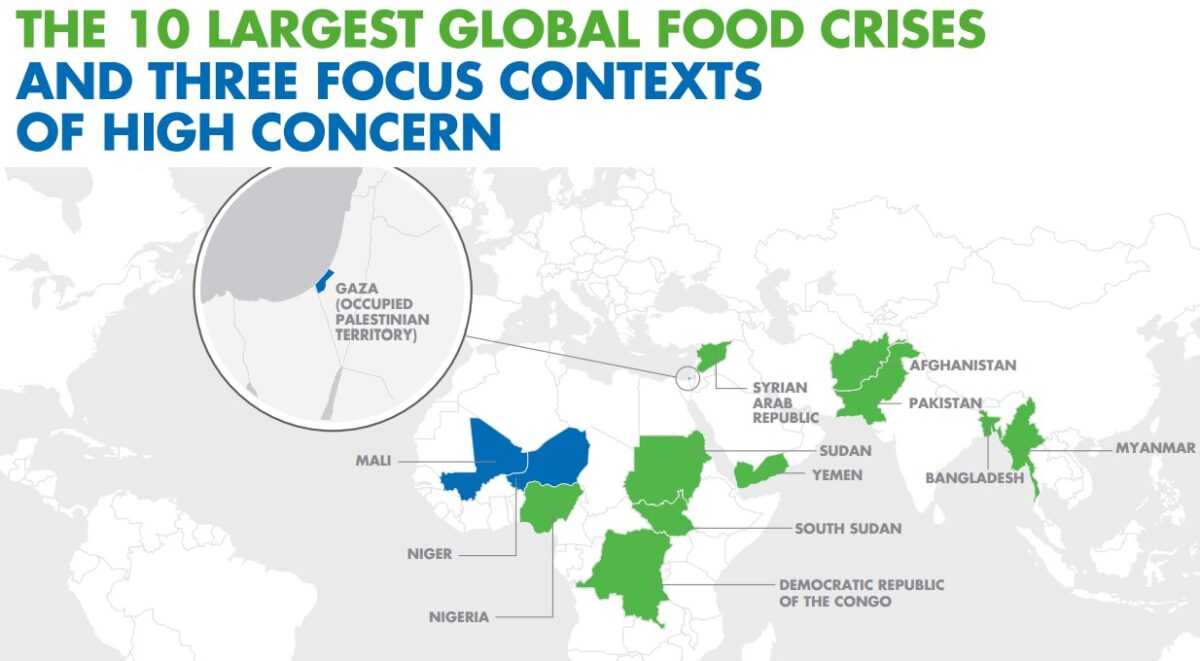
The figures he cited run in opposite directions. Some 266 million people in 47 countries and territories faced acute food insecurity in 2025, double the number in 2016. Over just three years, humanitarian funding for food security fell by more than half. Ten crises account for 170 million of those people, two in every three.

To make 30 million acutely malnourished children imaginable, Kamal, whose son has just started secondary school in Oxford, reached for classrooms. The figure is roughly three times the number of pupils in UK state schools. “Can you imagine 1 million classrooms with 30 children in each classroom?” Every one of those children, he said, is acutely malnourished. He came to Britain from Yemen at the age of ten, he said, and still could not picture it.

He added two cautions that matter to anyone who reads these reports for a living. First, falling numbers are not always good news. Where recorded caseloads have declined, in Nigeria, Sudan, Pakistan and Syria, the declines have to be read through shrinking data coverage, because the surveys and monitoring programmes are losing funding too. Second, real progress is fragile. Bangladesh recorded the largest improvement, 7.6 million fewer people in need, which he linked to climate-resilient agriculture, yet climate shocks earlier this year showed how exposed it remains.

He singled out South Sudan, new to the top ten, where he said more than 80% of the population now needs humanitarian assistance, as the crisis most easily forgotten beside its neighbor.  For the full ACF report, see: https://www.actionagainsthunger.org/press-releases/acute-hunger-has-doubled-worldwide-in-last-decade-as-aid-falls-new-action-against-hunger-report-finds/

The report notes that “Action Against Hunger has been innovating more efficient ways to collect data and to predict hunger hotspots. By responding early, we can prevent acute hunger and save countless lives. Now, we need donors to stay the course.”   In the 10 countries, nearly 30 million children under five suffered from acute malnutrition in 2025, 

Acute wasting Hunger Has Doubled Worldwide in Last Decade as Aid Falls, New Action Against Hunger Report Finds.  Hunger is concentrated.  177 million of the 266 million people facing acute food insecurity globally are in just 10 countries, with Nigeria, DRC and Sudan alone accounting for 82.9 million — the Top 10’s share jumped from 28.1% to 31.2% in one year.  Food-sector humanitarian assistance in crisis contexts fell 59% between 2022-2025 back to 2016 levels, while global ODA fell 23% (-$52B) in 2025, leaving Humanitarian Response Plans funded at 15.9% in Syria to just 67.8% in Afghanistan.  The biggest deteriorations, in Burma +2.3M, the Democratic Republic of Congo+2.1M, Afghanistan +1.6M, Yemen +1.4M, among them have 17.97M internally displaced persons and 10.3M returnees, where loss of homes, land and market access pushes families deeper into hunger.


– Edited by Steven Hansch, WHES board
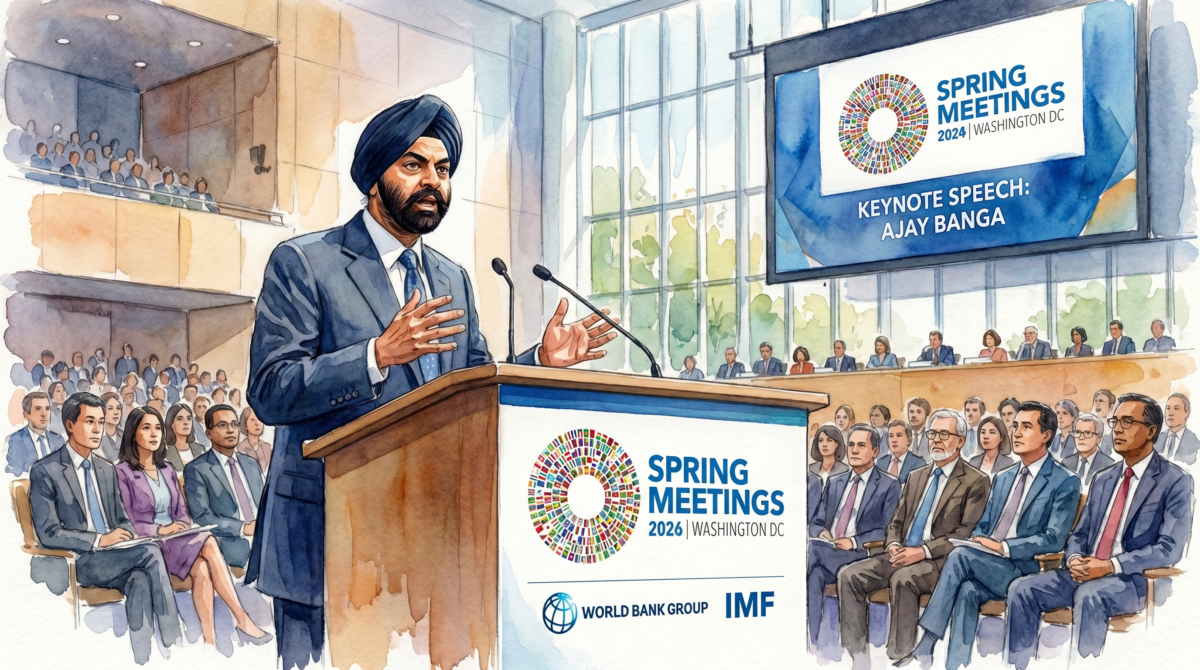
 

World Bank President Seeks Funds for Crisis Response

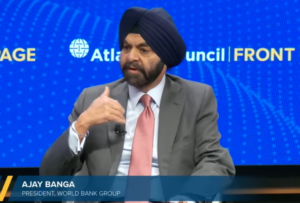
April 24, 2026     At the annual World Bank/IMF annual meeting held April 13–18, 2026, remarks and speeches by the World Bank President, Ajay Banga, addressed the current crises in the world affecting agriculture, fertilizer and increased risks to lower income countries. Banga announced that the World Bank is preparing to mobilize $80 billion to $100 billion in funding over the next 15 months to support countries harmed by the US/Iran war, particularly those facing high energy prices and supply chain disruptions. 

He explained that $20 billion to $25 billion could be made available immediately through existing “crisis response windows” without requiring new approvals.  He warned that the US/Iran conflict could reduce global GDP growth by  to over 1 percentage, depending on its duration, and advised leaders to prioritize reining in inflation in the short term before tackling long-term economic growth.

He framed his comments around ““multiple overlapping global shocks” (war, debt, inflation, supply chains).  These shocks were repeatedly linked to rising food and fuel costs. Broader discussions around the meetings warned that tens of millions could fall into food insecurity amid ongoing crises

More generally, Banga emphasized job growth to help address poverty and hunger.  He emphasized that 1.2 billion young people in lower income countries will enter the workforce over the next decade, but current projections suggest only 400 million jobs will be created, creating a massive 800 million job gap.

The World Bank is responding to how the conflict risks driving a record number of people into acute food insecurity, potentially adding 45 million more individuals to the 318 million already facing severe hunger globally if the conflict persists beyond mid-2026.

On other topics, Banga praised India’s digital transformation, citing examples of women farmers using “Small AI” to identify crop diseases, and expressed a desire to scale this technology in emerging markets.
He also highlighted the launch of the World Bank’s new “Water Forward,” a global initiative to improve water security for a billion people by 2030, noting that water is foundational to economic growth and jobs.

Videos:

CNN:  https://www.c-span.org/program/public-affairs-event/world-bank-group-president-ajay-banga-on-his-organizations-priorities/667023

Jobs:  https://www.youtube.com/watch?v=IeyO7U0_byY

Crisis response toolkit:  https://www.youtube.com/shorts/4bWFDBKWpyY

Readings:

https://www.worldbank.org/en/news/immersive-story/2026/04/19/jobs-water-forward-targets-spring-meetings

https://www.reuters.com/world/world-bank-could-provide-up-100-billion-funds-countries-hit-by-war-banga-says-2026-04-14/

https://www.worldbank.org/en/news/press-release/2026/04/08/conflict-hits-menaap-economies-underscoring-need-for-action-to-boost-resilience-create-jobs

https://www.worldbank.org/en/news/statement/2026/04/08/joint-statement-by-the-heads-of-the-international-monetary-fund-the-world-bank-group-and-the-world-food-programme

New Global Survey of Food Resilience, by the Economist

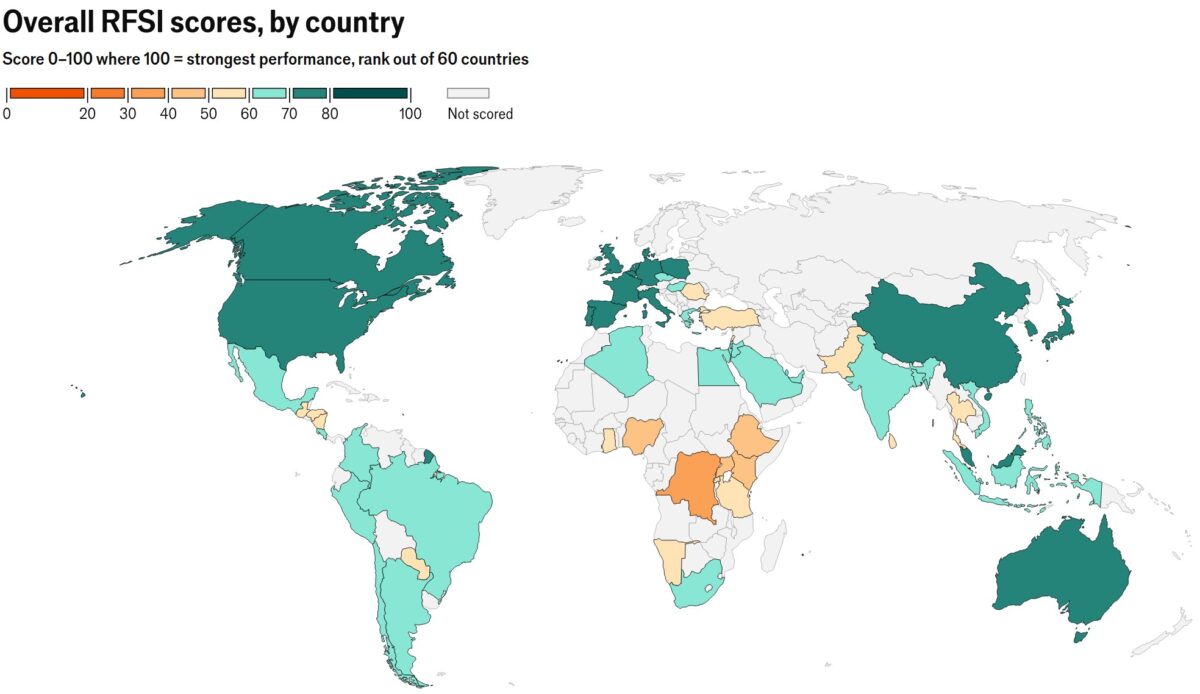
May 6, 2026    The Economist Impact’s inaugural Resilient Food Systems Index (RFSI), supported by Cargill, benchmarks food system resilience across 60 countries using 71 indicators organized into four pillars:   affordability, availability, quality and safety, and climate risk responsiveness.

The accompanying new report, Resilient Food Systems Index: Global Report (Economist Impact, 2026)  delves deeper.

Portugal tops the rankings (76.83/100) as the most resilient country, with France and the UK close behind, while the Democratic Republic of Congo sits last at 34.86 — a 42-point gap that illustrates how unevenly resilience is distributed globally.  Critically, no country scores 80 or above, meaning even the most advanced food systems remain meaningfully exposed. Climate risk responsiveness is the weakest pillar overall, averaging just 56.43, and political commitment to mitigation and adaptation scores a dismal 34.03 globally. The affordability pillar looks deceptively healthy at 71.83, but masks the fact that in 62% of countries, the cheapest nutritious diet consumes roughly two-thirds of the poorest households’ income.

Income Shock Vulnerability.  In low and lower-middle-income countries, food constitutes a massive share of household spending.  The report states that prices in these nations have risen by 23.09% over the past five years. Unlike wealthier nations that can absorb price spikes or subsidize costs, households in countries like the DRC or Nigeria have no buffer. When resilience fails (due to climate or trade shocks), prices skyrocket, pushing basic staples out of reach and directly causing acute hunger.

The “Unaffordable” Healthy Diet.  The report introduces a critical metric: the cost of a healthy diet. In Sub-Saharan Africa, a healthy diet absorbs more than one-third of average income. For the worst-off countries, this figure is catastrophic. The report specifies that in 37 RFSI countries, the cheapest healthy diet costs about two-thirds of the average per capita income. This means that even when calories are available (staving off  starvation), malnutrition persists because nutrient-dense foods (fruits, vegetables, protein) are financially inaccessible.

The worst-off countries score lowest on the “Climate Risk Responsiveness” pillar, which has a global average of just 56.43.  Lack of Early Warning: These countries lack the mechanisms (early-warning systems, disaster reduction strategies) to anticipate shocks. When a drought or flood hits, it becomes a food availability crisis because there is no time to react.  Pests and Pathogens: With weak pest management (only a third of RFSI countries score high here), biological risks like disease and infestations decimate local yields. In countries like Uganda or Kenya, this directly reduces the food available for subsistence and local markets, eroding the availability pillar of food security.

Just 15 countries produce 70% of global food, and 11 of them are also top exporters. Yet none of these “anchor” countries score above 80.   Even the US, Brazil, China, and Australia—collectively producing 37.6% of global food—show weaknesses in climate risk, water stress, and infrastructure.

“The US… ranks 51st out of 60 countries on dietary diversity.”

Despite widespread market‑access support, farmers’ incomes are not rising.  “Annual growth in producer prices remains weak (averaging just 42.05).”  This suggests that productivity gains are not translating into livelihoods, especially for smallholders.  Farmers in countries like the DRC or Ethiopia struggle to get goods to market due to high transport costs and poor connectivity. Without income from their harvest, they cannot afford to buy food during the lean season, leading to seasonal hunger.  Financial Exclusion: Access to basic financial services scores just 51.53. Without savings or credit, a smallholder farmer in Tanzania or Rwanda cannot buy seeds or fertilizer after a bad harvest, perpetuating a cycle of low productivity and food insecurity.

While nearly all countries (97%) have policies for “agritech,” more than half under-invest in the cold-chain capacity needed to prevent food from spoiling before it reaches consumers.

Foundational Needs:  Digital tools are useless without basic enablers. For example, rural internet access and basic financial services (like savings accounts) remain “binding constraints” for smallholder farmers.

The timing is pointed.  The report lands as geopolitical fragmentation, climate volatility and inflationary pressures are simultaneously straining global supply chains.   The report also arrives as countries are submitting updated Nationally Determined Contributions under the Paris Agreement framework, making its finding that agriculture-specific climate targets are nearly absent particularly timely and actionable. It reframes the conversation usefully: the problem is not a lack of innovation or ambition, but a failure to scale what already works. That framing matters because it points toward tractable policy levers rather than distant technological fixes.

About the author:  Economist Impact is a division of The Economist Group that combines evidence-based research  with the creativity of a media brand to inform, engage, and catalyze action on global issues. It partners with  NGOs, and governments, providing expertise in policy research, events, and data visualization, with a focus on sustainability, healthcare, and new globalization.

                                                                                  – S Hansch, WHES Board of Directors