

Fed Up: Human Evolution vs. Modern Diets

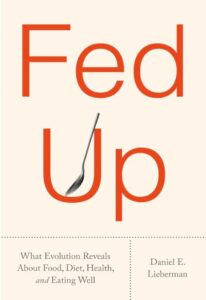
September 29, 2026    In his new 2026 book, Fed Up: What Evolution Reveals about Food, Diet, Health, and Eating Well, Daniel E. Lieberman explains the mismatch between what humans evolved eating over hundreds of thousands of years and the diverse diets eaten today, explaining how ancient survival instincts may be maladaptive for today’s industrialized food.  An anthropologist, Lieberman studied indigenous and subsistence populations in Africa, Latin America, and the Arctic and shows that people can remain healthy on very different macronutrient mixes, especially when diets are less processed and activity levels are high.

Humans evolved powerful defenses against calorie shortage, hunger, preferences for energy-dense food, fat storage, and metabolic adaptations, but evolution had much less reason to protect humans against a permanent abundance of cheap calories. That produces the familiar modern paradox of undernutrition and obesity coexisting in populations.  Humans evolved to store fat and defend body weight, so losing weight is not just a matter of weak willpower. Biology pushes back through hunger, reduced energy expenditure, and rebound effects.

Lieberman observes that evolution does not point to one perfect human diet; instead, it shows that humans are dietary generalists, that modern ultra-processed food environments exploit our evolved vulnerabilities, and that to eat well can be flexible, rather than to buy into a single dietary ideology.  He debunks the fad diets that try to reduce healthy eating to one big idea, such as Paleo, low-fat, low-carb, vegan, carnivore, fasting, which are too usually too simplistic.

Many farming societies have historically obtained most of their calories from grains, tubers, legumes, vegetables, and other plant foods, with meat eaten intermittently or in relatively small quantities. Lieberman treats such diets as perfectly compatible with human biology.  Humans do not need a high-meat diet. Large populations have lived successfully for generations on diets in which meat is a relatively small component.  Moreover, eliminating plant foods from one’s diet can create deficiencies in key nutrients.  “Unlike hunter-gatherers, farmers are susceptible to diseases such as scurvy (from insufficient vitamin C), pellagra (from insufficient vitamin B3), beriberi (from insufficient vitamin B1), goiter (from insufficient iodine), and anemia (from insufficient iron). Relying heavily on a few crops or sometimes just one crops” sacrifices quality and diversity for quantity.”
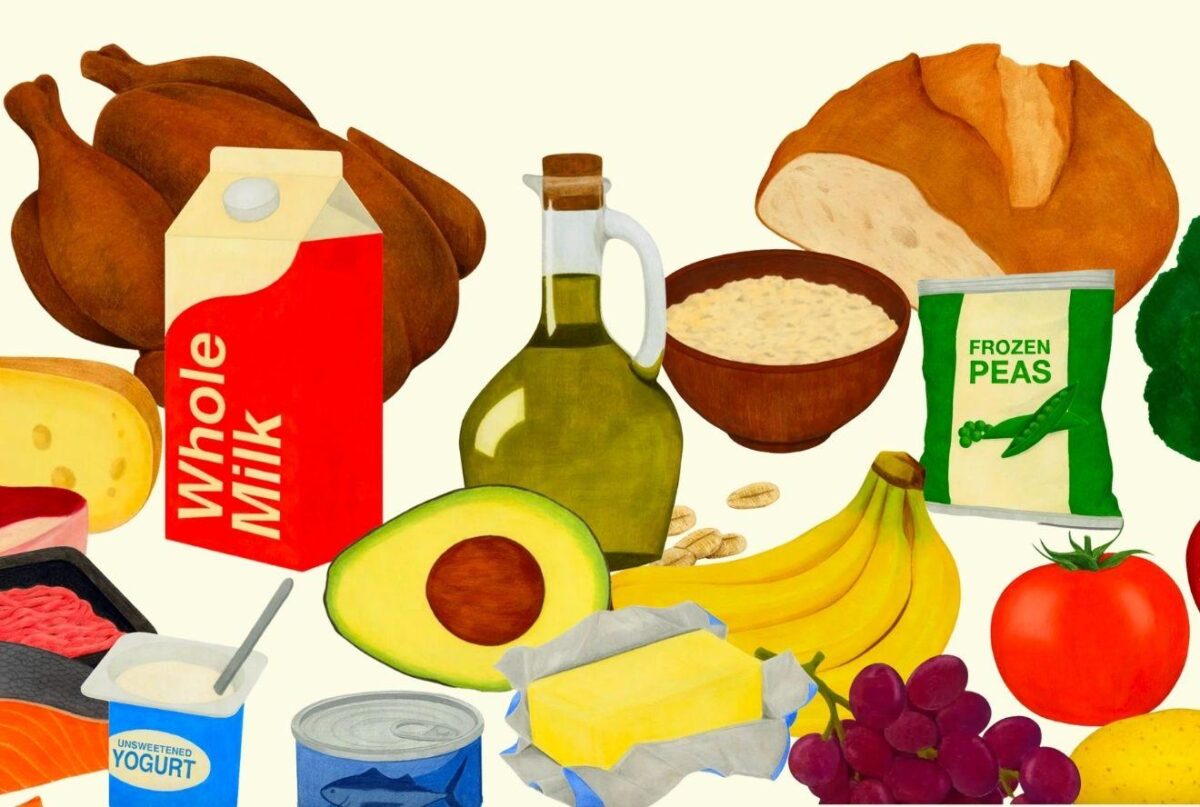
Humans evolved to eat a very wide range of foods, not one ancestral ideal diet.  However, modern highly engineered foods are consistently more harmful than ordinary whole or traditional foods, because they exploit evolved appetites for sugar, fat, salt, and easy calories in ways our bodies and brains are poorly equipped to regulate.

“The invention of agriculture caused the human food supply to increase in quantity and deteriorate in quality, but food industrialization multiplied this effect.”

The book also examines glucose and insulin regulation, fat storage, appetite, cortisol and stress, muscle loss and aging, and how drugs such as GLP-1 agonists affect appetite and body composition.  This evidence is used to explain why some diets can work mechanistically, but also why real-world adherence is so hard and why weight regain is common. “An evolutionary perspective predicts that most diets and fitness programs will fail, as they do, because we still don’t know how to counter once-adaptive primal instincts to eat donuts and take the elevator.”

Lieberman laments:  “We didn’t evolve to be healthy, but instead we were selected to have as many offspring as possible under diverse, challenging conditions. As a consequence, we never evolved to make rational choices about what to eat or how to exercise in conditions of abundance and comfort.”

– edited by Steven Hansch of World Hunger Education Service

Book Review: How to Feed the World, by Vaclav Smil

Vaclav Smil has produced an increasing repertoire of books summarizing how humans consume different resources.  Over four decades he has visited many topics including food availability and its constraints.  His latest 2025 book, “How to Feed the World:  The History and Future of Food“ stands as his summum opus, and is the best current survey about the tension between human needs and food supplies, comparing key options and constraints.  Therefore it is highly recommended to students, scientists, aid workers and general readers alike.  The first section of his book tracks the inevitability of humans to depend on grains and legumes.

Smil highlights the paradox that some of the world’s largest food producers, like India, have significant undernourished populations. He attributes this to unequal “global entitlements to food” rather than insufficient production, pointing to economic, political, and social barriers that prevent equitable distribution.  But he also is concerned with the ability of societies to grow enough food for a population growing toward 10 billion persons, particularly in Africa where crop yields are low and water/irrigation is limited.

Smil causes particular attention to food waste.  He emphasizes the colossal scale of food waste, approximately 1,000 kcal per person daily in Western countries, with a third of food produced (around 3,300 kcal per person per day) wasted, including a quarter of unopened food in places like Britain. This inefficiency exacerbates hunger by reducing available food and straining resources, a critical issue as populations grow.

Much of the book tries to explain  why certain crops and animals are produced and others are not, and why a few specific foodstuffs provide the majority of the world’s calories today, and how hard it would be to shift away from those key crops.

The book reviews the history of the human race and how most humans over millions of years were primarily hunter gatherers.  Meat consumpion increased after domestication of animals (beginning around 10,000 years ago), “though it became more stratified by social class over time.” 

The book also covers related topics like the dominance of a few staple crops (rice, wheat, maize, etc.) for global calories, the history of animal domestication, fertilizer revolutions (e.g., Haber-Bosch nitrogen), and incremental paths forward like precision agriculture, nutrient recycling, and population stabilization via development.  Smil is patient in educating readers about the molecule cycles (such as nitrogen) involved in food ecology.

Much of the book may foment controversy.  For instance, Smil directly poses and scrutinizes the questions: “Could the whole planet go vegan and be healthy?  Should it?” His data-driven analysis highlights that many promoted plant foods (e.g., nuts, certain fruits, or intensive plant-based systems) carry high energy and resource inputs.  Such a shift to veganism may ignore human metabolic realities, historical dietary patterns (meat consumption rose with domestication ~10,000 years ago and became stratified), and practical trade-offs.  Similarly, Smil is skeptical of the scale-up prospects of laboratory-grown meat (without animals).  He notes their high energy demands, costs, infrastructure needs, and biophysical realities that make rapid large-scale deployment unfeasible.  This differs sharply from narratives positioning cultured meat as a near-term revolution for sustainability or feeding the world.

Organic farming also is seen as having limits.  Smil acknowledges the upsides such as improved soil health but emphasizes scalability limits:  heavy reliance on finite or unevenly distributed resources like animal manure and leguminous nitrogen fixation, lower yields compared to conventional systems, high labor demands, and nutrient-cycling bottlenecks. Proposals like massive double-cropping or cover-crop expansion overlook second-order effects (e.g., extra land needed for seeds).

Looking to the future, he recommends:

 Improve Agricultural Efficiency:  Boost crop productivity (especially in developing nations) through better agronomic practices (precision farming, optimized irrigation, soil health management) rather than just expanding farmland.

Reduce waste:  About 30–40% of food is lost post-harvest or wasted in distribution and consumption. Smil advocates for better storage, transport, and consumer habits.

Reduce Meat Consumption:  Shift toward less resource-intensive diets—Smil stresses that industrial meat production (especially beef) is grossly inefficient in terms of land, water, and feed use.

 Reform Fertilizer Use:  Nitrogen efficiency is key.  Synthetic fertilizers (especially nitrogen) revolutionized agriculture, but overuse causes pollution (e.g., algal blooms, GHG emissions). Smil advocates for precision application and organic amendments.   Recycle nutrients—Better utilize manure and food waste to close nutrient loops.

Don’t expect magical silver bullets:   No single solution will “fix” global hunger.  Smil critiques techno-optimism, arguing that diverse, incremental improvements are more reliable than radical shifts.  Lab-grown meat & plant-based substitutes may help but will likely remain a niche solution in the near term.  

Stabilize Population Growth:  Slowing population via education, women’s empowerment, and economic development, which reduces future food demand.

Reduce Biofuel Mandates:  channeling crops (corn, soy) into biofuels is inefficient which competes with food production and should be minimized.

Adapt to Climate Change by prioritizing resilient crops and farming systems over geoengineering or untested techno-fixes.  Smil observes that rising temperatures and CO₂ changes will unevenly affect staple crops like rice and corn, especially in Asia and Latin America.

Smil has written often about food and history.  Smil’s work on food production and agriculture emphasizes the intersections of energy, environment, and human systems, often highlighting the challenges of feeding a growing global population sustainably. He explores topics like the efficiency of food systems, the environmental impacts of dietary choices, and the role of technological innovations in agriculture.  He obtained a Ph.D. in geography from Pennsylvania State University in 1971 and joined the University of Manitoba in 1972, where he became Distinguished Professor Emeritus in the Faculty of Environment.

–  steve hansch, WHES


Early Humans and Plant-based Diets

The latest edition of Science journal (by the American Association for the Advancement of Science) reports that wooden tools from a 300,000-year-old site in Gantangqing (southwest) China demonstrate the importance of plant foods in early hominin (human) diets in a subtropical environment.  The journal contrasts this with other research oriented toward meat-focused early human diets.

Science writes that “Wooden tools recovered from a site in China… emphasize that ancient hominins ate their vetties too.  The 300,000 year-old implements are digging sticks, carved from branches and tree roots using stone blaades.  The pointing hand-size implements were probably used to harvest carbohydrate-rich tubers and roots from the soft ground of a prehistoric lakeshore.  …Along with the tools, researchers uncovered ample plant remains, including hazlenuts, pine nuts, grapes and kiwis.  In the lake and along its muddy shore, early hominins would also have been able to pluck and eat the leaves and seeds of water lillits.”  This includes edible leaves, seeds, or stems, especially subsoil corms and rhizomes.

See:  “Wooden Tools Point to Ancient Taste for Plans” by Andrew Curry, July 3, 2025 Science.  Also:  https://www.science.org/doi/10.1126/science.adr8540