


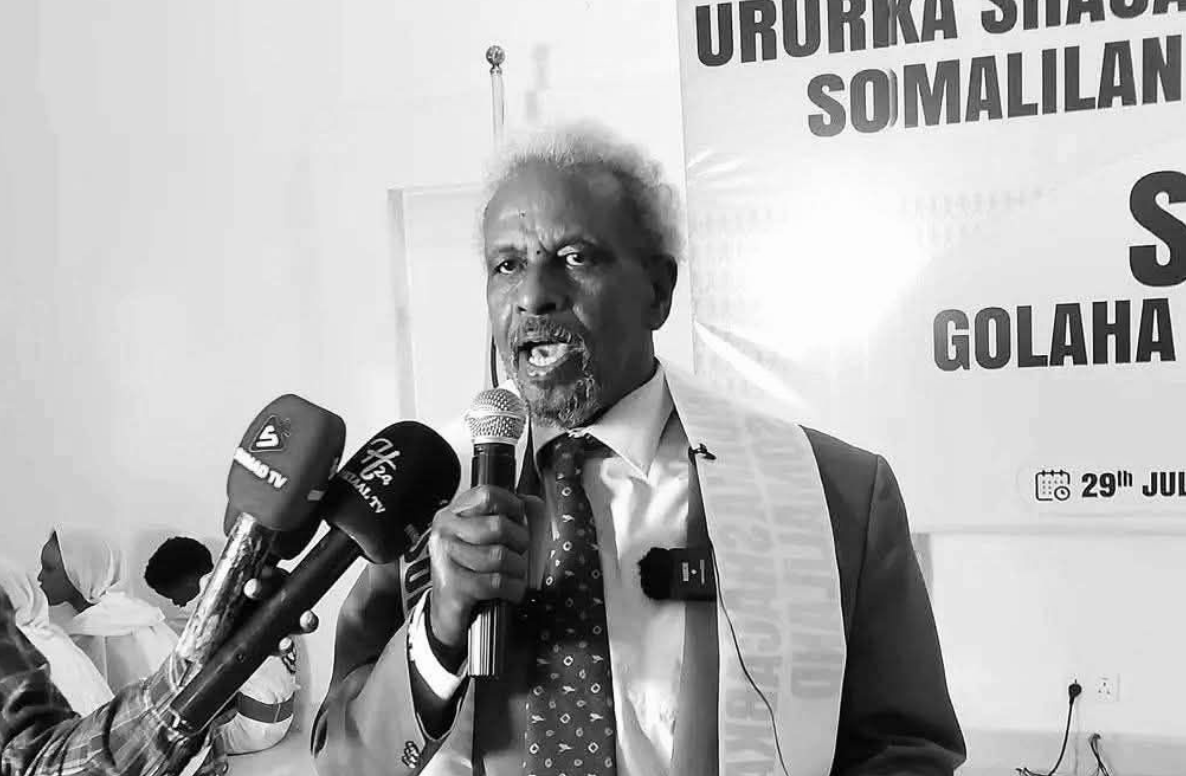
May 3, 2026 Dr. Mohamed Warsame Dualeh, a Somali physician, refugee-health leader, humanitarian official, and later diplomat, died on April 25, 2026 in Germany. He is survived by his wife, Marie Therese Lenz, and children, Amalie, Issa, and Edna. Among the positions he held during his distinguished career were Head of Operations in Darfur for UNHCR and Director of the Somalia Refugee Health Unit.
Over a career that spanned public health, refugee operations, and international diplomacy, he served vulnerable communities across Somalia, the Horn of Africa, Sudan, and beyond. He retired in 2014 and became adviser to the President’s office in Somaliland, working hard to get the new nation organized in public health and soliciting international recognition and support. He continued to offer his services to the UN into 2025.
He was born on April 14, 1954. He graduated from the Benadir Medical School in Mogadishu and the University of Sydney where he obtained a Master’s degree in Public Health, writing his thesis on maternal and community health worker care for diarrheal diseases of children in rural Somalia. As Dr. Ahmed Magan remembers: “Dr. Warsame was my medical school classmate and graduated with distinction. He was a pioneer in Somalia, recognizing early on that public health and Primary Health Care (PHC) were the most effective ways to serve a community with limited resources and a high disease burden.”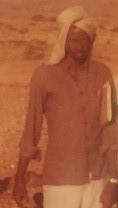
His formative experience was with the Refugee Health Unit in Mogadishu, which coordinated care for Ethiopian refugees who had fled to Somalia. That early work grounded the rest of his career: he belonged to the generation of Somali doctors whose medical service quickly became inseparable from conflict, displacement, and the survival of uprooted families. The RHU oversaw up to 35 camps of Ethiopian refugees. Dr. Dualeh wrote: “It is extremely important to take health care to the refugees – to have an outreach program.”
Mike Toole recalls: “I worked with Mohamed Warsame Dualeh in Somalia in 1981 and 1982 when I was the senior medical adviser in the Refugee Health Unit (RHU) within the Somali Ministry of Health. The RHU coordinated the health programs within … camps for one million ethnic Somali refugees from Ethiopia scattered throughout the country…Mohamed eventually became the RHU director, based in Mogadishu. He was a major force in establishing the RHU as a unique national unit that based the Refugee Health program on epidemiological evidence, primary health care, community participation, standard treatment protocols, and prevention. …He was a trailblazer in Refugee Health …[in] a stellar career in the UNHCR.”
Beverly Snell explains about the RHU: “It was the first …primary health care (PHC), community-based approach to refugee camp health management…. Traditionally refugee health care had been very top down and often dependent on foreign professionals. …it was the leadership of people like Mohamed Warsame that made it work. So much so that the host population was complaining that refugees had better health care than they did. And that led to starting the PHC approach in the host population to, (a harbinger for the policy adopted by the Sphere Handbook). Mohamed Warsame’s contribution in the leadership of both RHU and national PHC made a huge impact.”
Kate Burns remembers: “He was always Warsame to me. Great guy. Very easy to get along with…we met again when I joined UNHCR’s Health Unit in 1995/6 in Geneva…a really lovely man. I loved greeting him in the few Somali words I remembered. ‘Nabad, Suba Wanagsan, Nabad Geleyo’.”
With the RHU, Dr. Warsame oversaw an historically important model refugee health team, a model that merited being replicated around the world. It was an all-star team of experts who created standards such as serial surveys of malnutrition among children in the camps to identify changes in the rates of malnutrition, knowledge of breastfeeding and oral rehydration, and other life-saving measures.
Surveillance in the camps in the early-80s revealed an outbreak of scurvy, a vitamin C deficiency disease, caused by a lack of camel’s milk in the refugees’ diet, an overdependence on standard rations provided by donors, and an accompanying lack of access to local markets where they might have bartered for fresh vegetables such as tomatoes and onions.
Dr. Jama Gulaid recalls: “I will remember Mohamed for his devotion to the health and welfare of refugees. I travelled hundreds of miles with him while doing refugee work. Our challenges were many — heat, dust, and poor accommodation and food — but still immensely better than those facing refugees. Mohamed was undaunted, his energy undiminished, a spark in his eyes as he engaged vulnerable people as warmly as a physician in a comfortable office in a developed country.”
In a 1994 UNHCR paper about refugee family health, Dr. Warsame argued for a practical and humane principle that seems to capture his whole approach: “It is extremely important to take health care to the refugees – to have an outreach program. It has to be easily accessible.” In the same piece, he recalled conditions in Hartisheik, of Somalis in Ethiopia, this is incomplete in 1988, where mortality among children under age five was exceptionally high in part due to inadequate food rations, and inadequate provision of water and sanitation compounded the crisis. He advocated for training refugees as health workers and birth attendants, and bringing care closer to families instead of forcing desperate mothers to travel long distances for help.
He served in multiple roles for the United Nations High Commissioner for Refugees (UNHCR), including as its focal point for HIV/AIDS and chair of IAAG, serving in the Programme and Technical Support Section in Geneva.
CDC’s Brent Burkholder remembers “I remember him as being a kind, quiet person but very committed to refugee health”
UNHCR Nutritionist Angela Berry Koch remembers: “He was always with a great sense of humor. Very warm and amiable. He had strong humanitarian instincts and argued against the limitations of institutions when they were less than humane. In that sense he showed a subtle kind of leadership was astute politically, knowing when to push and when to fall back on diplomacy. Very smart guy.”
In the RHU and at UNHCR, he cared about refugee access to health care, distances to clinics, camp layout, and the daily burdens placed on women and children.
Angela Berry: “Mohamed came with extensive field experience in primary health care… he was always willing to support our field colleagues, always cheerful and joking. He had a very warm personality. He was very tolerant of everyone from whatever background or culture. He was extremely generous and selfless, highly dedicated in all his endeavors. He never hesitated in being placed in the worst type of conditions while expertly negotiating and spearheading the repatriation program… often found in isolated areas with landmine risks. He showed great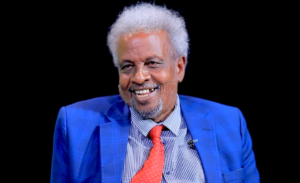 courage and flexibility in his work. Always highly intelligent… loved field work. He always had a jovial spirit and a twinkle in his eye.”
Ron Waldman: “I first met Warsame when he was a young, recent medical graduate working for the Somali Refugee Health Unit in refugee camps in what is now Somaliland. He rose rapidly up the ranks to become the Director of the RHU and went on from there to have a long career at UNHCR. Throughout he was modest, spoke softly, but had a major impact. He was a quick learner and what he learned early in his career was the importance of community-oriented primary health care. Having seen the success of this approach during his RHU years, he continued to advocate for it on behalf of all of the vulnerable and marginalized populations he worked with in East Africa for the following decades. He was always a pleasure to work with, a great listener who asked insightful questions and then questioned the answers he received. And always with that quizzical smile and a twinkle in his eye. He was an important figure in the development of the way we think about refugee and humanitarian health today.”
Rita Bhatia met him in Ethiopia and served a decade with him in Geneva at UNHCR: “I admired Mohamed’s humility, simplicity & warmth and respect for people…[he] will be deeply missed, but never forgotten. Om shanti.”
In later years, he also moved into diplomacy and public advocacy. He served as Special Envoy of the Republic of Somaliland to the United Nations and other international organizations, while remaining a trustee of AHA. Matt Bryden says he “will miss his great warmth, humor and intelligence.”
Looking back, Dr. Warsame said “Africa, as a whole, is a great continent welcoming refugees.”
He also said, “Sudan is in my heart. I dream of the great days and friends that I met in Kassala, Khartoum and Al Fasher.”
Dr. Magan reflects: “As a close friend for many decades, I remember Mohamed as a down-to-earth, exceptionally kind, and selfless person. He had a remarkable ability to connect with people and maintained a wide circle of friends globally. He was wonderful company, and whenever he was present, the room was always filled with laughter and jokes.”
He was a doctor shaped by the Horn of Africa, committed to refugees, and convinced that humanitarian work had to begin with dignity, proximity, and respect for the lives people were actually living. His career joined clinic and camp, epidemiology and diplomacy, Somalia and the wider refugee world. He appears to have been one of those indispensable officials whose name was not widely known outside professional circles, but whose work touched thousands of lives.
Further Reading: Lancet Journal obituary, Aug 8, 2026, at https://www.thelancet.com/action/showPdf?pii=S0140-6736%2826%2901561-8
– Contributed by Steven Hansch, Board member of WHES

 U.S., I set up public weighing stations and posted the expected ration amounts on a board, so people could check whether their distribution matched the standard.
 cal standards.