
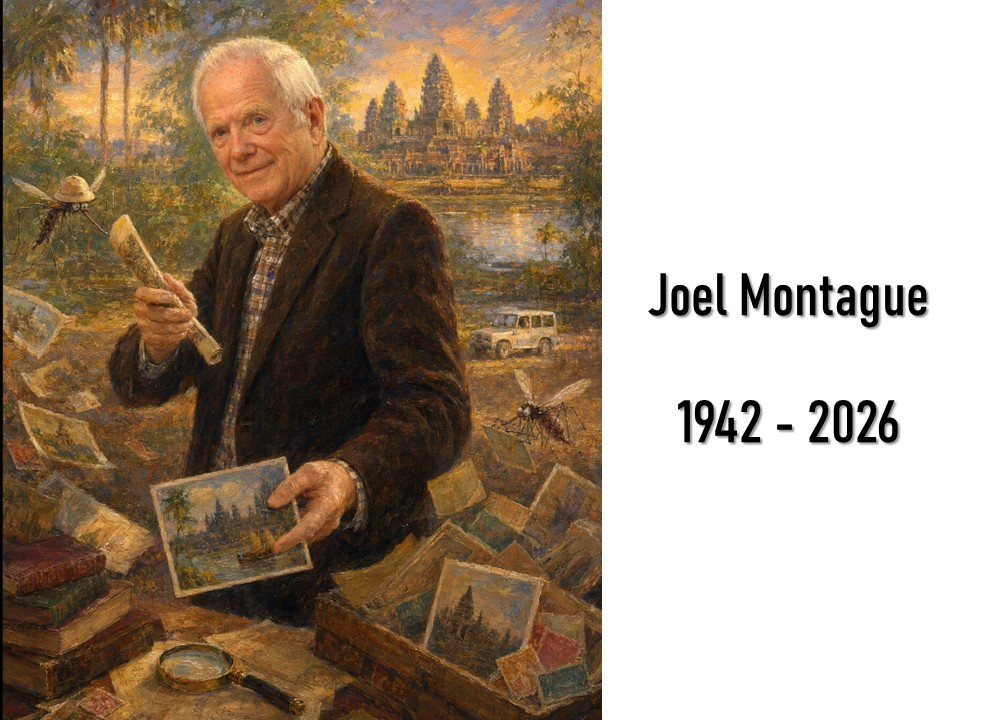
A Tribute to Joel Montague

August 21, 2026      Joel Montague, a great and charming  food aid and public health worker has passed away.  A dedicated humanitarian and lifelong advocate for marginalized persons and communities, he died at age 94 on August 16th 2026 in Wellesley, Masschusetter, his long time residence.  Joel was a true “Renaissance man” with boundless empathy and intellectual curiosity. He dedicated over five decades of his life to advancing public health and international development, working in over 55 countries across Africa, Asia, and the Middle East.  He was a particular specialist in Cambodia.

Joel pursued higher education with a clear focus on the world beyond his borders, earning his undergraduate degree from Oberlin College in 1959, an MA in Political Science from Johns Hopkins University, and a Master of Public Health from the University of North Carolina, which celebrated him for his enduring legacy in reproductive empowerment.

Joel’s remarkable and colorful career included extensive and  impactful overseas assignments with a range of world-renowned organizations, notably CARE, Partners for Devleopment, John Snow International (JSI), Management Sciences for Health, and the Aga Khan Health Services (where he managed a hospital in Tanzania).
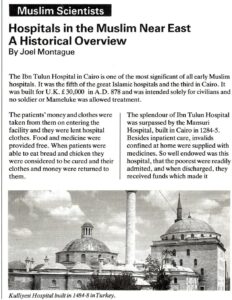
After a Fulbright Fellowship in 1960 to Iran (studying Farsi and tribal relations in Baluchistan), he worked for CARE in three countries. He first visited Afghanistan while with CARE in 1962;.  He worked in both food aid and public health.   CARE’s Egypt operations, launched in 1954 (just after the 1952 revolution), centered on large-scale U.S. food aid under Public Law 480 (the Agricultural Trade Development and Assistance Act of 1954, later known as Food for Peace). CARE was a key private voluntary organization partner for Title II (and related) donations of U.S. surplus commodities, such as milk powder, cheese, butterfat, and other foods, distributed mainly through school feeding programs, hospitals, and social projects for children, tuberculosis patients, and other vulnerable groups. Early volumes were substantial (tens of thousands of tons annually in the mid-1950s, valued in the tens of millions of dollars).  This experience with food aid would help Joel downstream in his career.

Joel later directed CARE/Medico in Tunisia (focused on an orthopedic/rehabilitation facility, the largest of its kind in North Africa at the time) and was decorated by Iran (1964) and Tunisia (1968) for technical assistance.

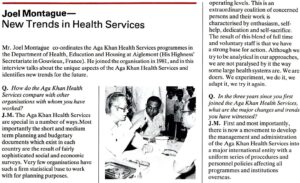
He joined the Aga Khan aid network’s secretariat at Aiglemont (near Paris) as head of the Aga Khan Health and Hospital Programmes (in the Department of Health, Education and Housing). This was a coordinating/oversight role for expanding health activities across multiple countries, including Kenya.

He then worked in New York for the Population Council.  His Population Council responsibilities covered a region extending from Morocco toward Afghanistan and including his distinctive work in Iran.
Later in his career he served at John Snow International (JSI), a large global health aid organization.  Montague served as director of JSI’s USAID-funded “Enterprise Program,” apparently during the 1980s and possibly into the early 1990s. The program explored whether private organizations could provide good-quality family-planning services without depending indefinitely on government budgets or foreign aid.  Under Joel’s leadership, the Enterprise Program supported subprojects in 12 countries and provided technical assistance concerning self-financing, cost recovery and management systems in approximately 22 countries
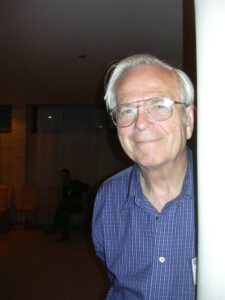
In 1986, along with Jacques Lauriac, Joel co-founded the nonprofit, American Friends of AICF (Action Internationale Contre la Faim or International Action Against Hunger), the American sister agency to AICF/France.  By April 1997, American Friends of AICF had evolved into Partners for Development (PfD), with Joel serving as its first chair.  Joel remained a voting trustee for many years and then an active Advisory Member for many years after that.   From 2008-2010 Joel also served as chair of PfD’s then-local affiliate in Cambodia, PfDC.   Building on Joel’s efforts, PFD continued to work closely with community organizations to build sustainable infrastructure and improve public health in nations like Cambodia, Nigeria, Tanzania, Rwanda, and Benin.  Based on his foundational efforts, PFD has programmed some $100 million in food aid overseas toward development among the poorest.  Joel helped shape these programs to achieve public health goals including malaria eradication.   On top of his routine trustee duties with PfD, Joel undertook many pro-bono field trips on behalf of the organization, including to Liberia, Bosnia & Herzegovina, Nigeria, and Cambodia.  After each trip Joel provided a highly readable and insightful report, accompanied by many high-quality photographs.
Colleague Michael Chommie reflects:
“I had the pleasure of working with Joel while stationed in the Kingdom of Cambodia from 1996–2002. He was our Éminence Grise and brought charm, class, and gravitas to our little ragtag NGO. To this day, he remains the only white person I have ever seen who looked good in a safari suit.”

Fluent in English, French, and Arabic, Joel was beloved for his humility, mirth, cultural respect, and willingness to “do the dirty work.”  To Joel, every field worker was a dignified partner; he was known to painstakingly record the names of every malaria volunteer he met during his field visits, ensuring each was addressed with their proper honorifics. From launching a national contraceptive program in Cambodia to operating a hospital in Kenya, Joel’s direct contributions changed countless lives.

Colleague Sophal Ear remembers:  “What made Joel so extraordinary was his warmth and generosity. Whether it was sending thoughtful art postcards in the mail, spending his own miles and resources to visit community health workers across Cambodia, or checking in with wry, cheerful updates about raking leaves in Massachusetts, he led with gentle amiability. He was a mentor, a gentleman, and a devoted friend to the Cambodian people.”  Joel wrote the definitive guide to private health care facilities across Cambodia. 

According to PfD’s current Board Chair:  “Joel set a precedent as the model of a modern nonprofit trustee, creating our governance manual and leading by example and with his sense of humor.  His volunteer field trips resulted in state-of-the-art, extensive reports to the rest of the board and public that made visible what the field programs looked like.  His wry sense of humor remained a staple for PFD discussions.”

Former PfD Executive Director, Jack Marrkand, said: “I was very fortunate to count Joel first as a boss and mentor and then friend for 35 years and during that time he was rarely without a tattered but high-quality leather briefcase which when opened might tumble out numerous reports, manuscripts and photographs but also an extra shirt, a toothbrush, and perhaps pieces of jewelry that he had crafted as gifts for friends.  In a way that beloved briefcase — present also at my wedding in Massachusetts in 1993 — represented Joel in conversation and company: he was urbane, but practical too, always empathetic, and blessed with a constant and wry sense of humor.  [On turning 90 in 2022 Joel told me that Wellesley had ‘shut down’ to mark the occasion] ” 

After retiring from JSI in the 1990s Joel devoted much of his time to writing books and conducting lectures whether in Asia (mainly in Cambodia and China) or the Wellesley Public Library.

Beyond his global health career, Joel was a passionate historian and archivist.  Having first visited Cambodia in 1991, Joel began collecting cards, and art.  He amassed an extraordinary collection of historical global photography, ultimately donating over 55,000 images to the University of Massachusetts, Amherst, establishing the Rheingold Historical Photograph Collection for future generations of scholars.
Through his work with DatASIA Press and collaborations with Jim Mizerski, Marie-Hélène Arnauld and others, Montague helped bring older French-language accounts, early photography and Cambodian stories into accessible English editions.  He co-authored a book on French colonial cartoons of Indochina.

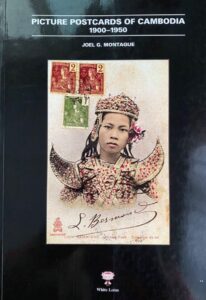
He organized and interpreted the postcards in his major book: Picture Postcards of Cambodia, 1900–1950 (White Lotus Press, Bangkok, 2010; sometimes catalogued as 2011):  approximately 330 pages, with hundreds of reproductions, including a section of rare color postcards.  He arranged the images thematically, such as monarchy, the Royal Palace, Phnom Penh, the Mekong, ethnic communities, dance and music, religion, schools, prisons, the military, agriculture, commerce, provincial life, ceremonies, Angkor and international colonial exhibitions.

This utterly unique postcard book presents a brighter, colonial-era view of Cambodia drawn from roughly 650 black-and-white and color postcards (selected from his collection of about 1,700, which he believes is the world’s largest of its kind). These cards, produced mainly by the French in the early 1900s for domestic audiences in Indochina, depict people, culture, arts, architecture, the Mekong River, the monarchy, Khmer dance and music, Angkor Wat, and everyday life. Montague argues the postcards functioned as a marketing tool that portrayed Cambodia as an exotic paradise and justified France’s “civilizing mission.” They often show two separate worlds: French administrators building infrastructure and elegant homes versus Cambodians living in villages or posed in anthropological “types,” with little genuine interaction.
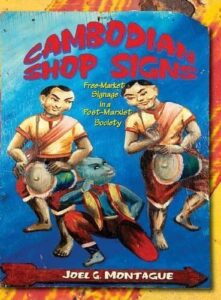
Also while working as an international public-health officer, Montague began collecting hand-painted Cambodian shop and business signs in 1991.

Chommie remembers:  “Joel was an avid collector of hand-painted signs advertising barbers, bicycle repairs, and other small Cambodian businesses. We spent countless hours scouring the streets of Phnom Penh, haggling with vendors, and prying the signs off of tree trunks.”

These metal signs advertised such things as: Tailoring and clothing, Food and beverages, Auto and motorcycle parts, Medical and beauty services and Musical performances. He published Cambodian Shop Signs: Free Market Signage in a Post-Marxist Society (DatASIA, 2013).

Micaela Arthur remembers Joel as a mentor: “Joel was always looking out for my future,” and,

“I spent many visits to his home in Wellesley discussing the future of development, his projects in Cambodia, and his forays globally. He would walk me through the exquisite collection that was his and Shahnaz’s home. He often mailed me books, news and magazine clippings, and a few pieces from his prized Preah Bot collection (old paintings from Buddhist temples throughout Cambodia that were removed during remodels. He would find them in dusty old cabinets at the back of antique shops. They depict the life of the Buddha.”

Joel leaves behind a legacy of bountiful compassion, reduction of tropical diseases, and a generation of public health workers trained, mentored, and inspired by his example.

He will be deeply missed by his family, his friends, and the countless individuals whose lives were bettered by his lifetime of service.

Joel leaves behind his wife of over 50 years, Shahnaz Montague, M.D., about whose primary care service over many decades to working and middle class families in central Massachusetts, he was immensely proud; daughter, Maryam, based in Morocco. international development professional, businesswoman, and founder of Project SOAR which works in Morocco and Uganda; and Jahan Montague, M.D., a kidney specialist and associate professor at the UMASS Medical Center in Worcester, Massachusetts; two grandchildren; and many other extended family members.


– Contributed by WHES trustee, Steven Hansch
Overhaul of Egypt’s Food Safety Net

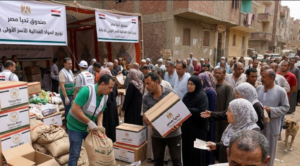
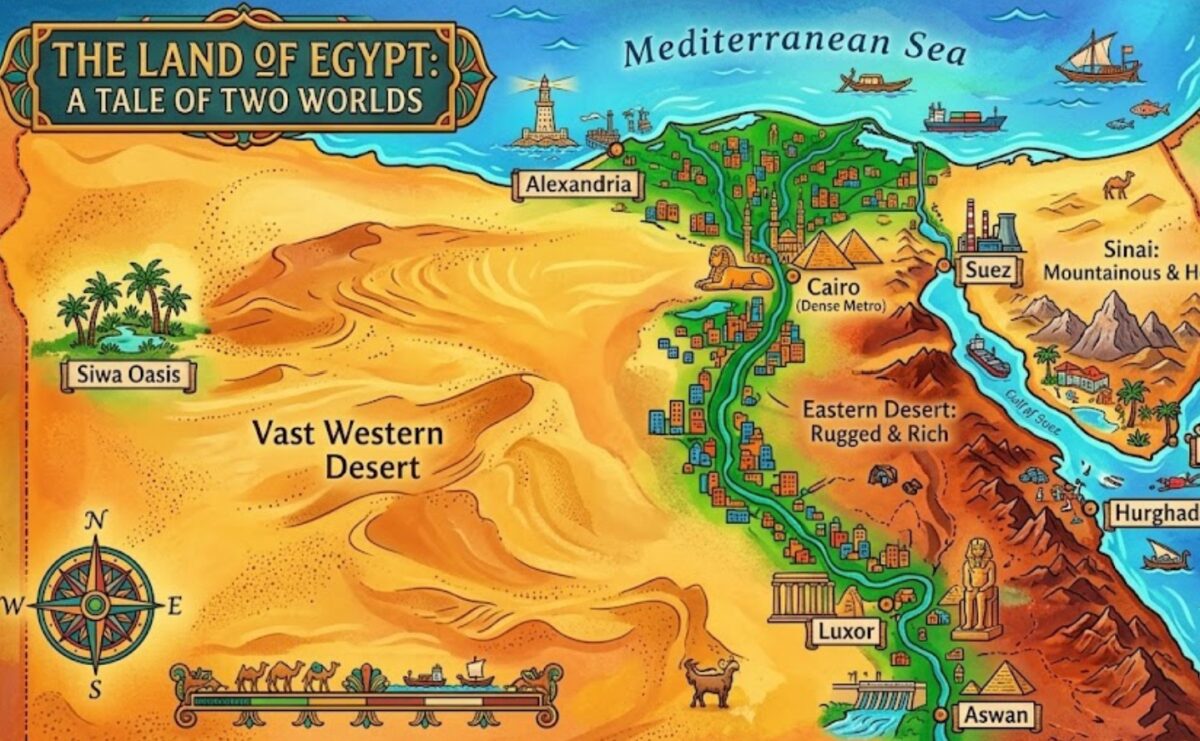
August 20, 2026     Half of Egypt’s population of 120 million will receive new food safety nets in 2027.  Egypt is modernizing and expanding its decades-old massive food-support program by shifting from fixed allocations of in-kind subsidized goods, like bread, to a cash-based assistance model.  Historically, about 60 million eligible individuals have received 50 Egyptian pounds (approximately $1) monthly via a ration card, which restricted their purchases to a limited range of staples at state-approved outlets. The new system aims to provide citizens with the cash value of these goods directly, boosting their purchasing power and flexibility.

Expanding the Food Basket:  at the same time, the reform introduces a significantly wider variety of eligible food items to the program.   Beneficiaries have traditionally been restricted to basic commodities like cooking oil, sugar, and pasta.  The expanded program will now cover meat, grains, tea, milk, lentils, eggs, beans, and poultry.

The Egyptian cabinet initiated this overhaul to address several longstanding weaknesses in its social protection framework:

* Greater Consumer Choice: Households will have the freedom to select products that better meet their specific dietary needs and preferences.

* Reduced Distribution Losses: Moving away from in-kind provisions helps minimize waste, leakages, and the diversion of subsidized goods within the supply chain.

*  Improved Targeting: By categorizing beneficiaries into income tiers, the government intends to direct a larger share of financial assistance to the poorest and most vulnerable families.

Implementation Challenges
While Prime Minister Mostafa Madbouly indicated the transition should occur during the fiscal year ending in June 2027, certain logistical details remain unclear.  The government has yet to announce a definitive implementation date, a specific payment value, or confirm whether the system will launch nationally or through regional pilot programs first.

A central concern for households is whether the cash transfers will be regularly adjusted to keep pace with volatile food inflation, or if the price risk will simply be transferred to consumers.

For further reading:

International Food Policy Research Institute (IFPRI): IFPRI publishes economy-wide modeling and policy research on the transition toward cash or cash-for-food modalities in Egypt. Their research explores how moving to targeted cash subsidies can reduce poverty and accelerate economic growth, while cautioning that cash transfers must be regularly adjusted for food price inflation to remain effective.

The World Bank: The World Bank has extensively criticized the fiscal leakage of the legacy Tamween ration system and actively supports the development of Egypt’s Unified National Registry to improve targeting. They publish independent evaluations detailing how complementary cash transfer programs, like Takaful and Karama, impact household consumption, diet quality, and school enrollment.

Al Majalla offers historical context, noting that the government’s food rationing system has been an essential component for families since World War II. The report highlighted the immense cost of the legacy program, stating that food subsidies accounted for 21.5% of the government’s overall spending in the 2025/26 fiscal year. It also detailed widespread public concern that the cash aid will not keep up with price increases driven by inflation and the devaluations of the Egyptian pound.


-Contributed by World Hunger Education Service Board member, Steven Hansch

2026 State of Food Insecurity & Nutrition in the World

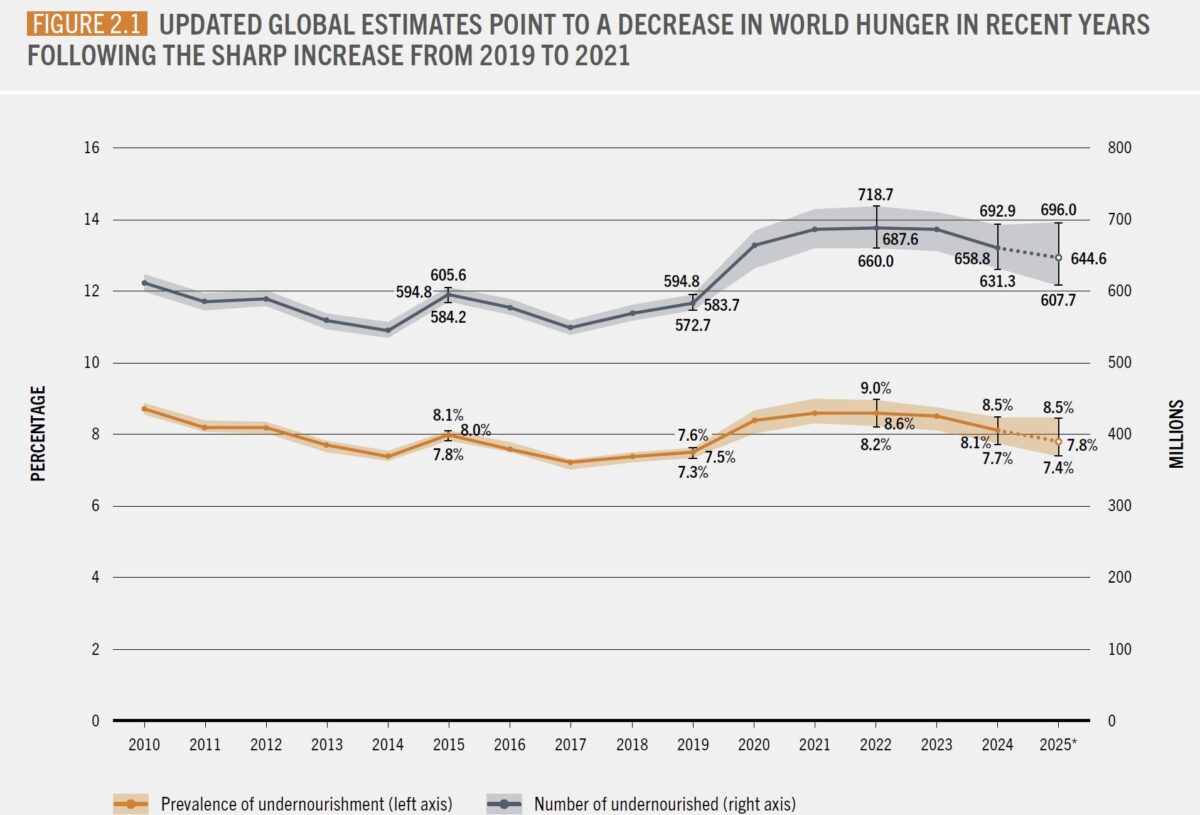
August 19, 2026          Global malnutrition has declined according to the new 2026 State of Food Security and Nutrition in the World (SOFI) report (jointly by FAO, IFAD, UNICEF, WFP, and WHO; focus: “Understanding and addressing the high cost of a healthy diet”).  SOFI has become an annual common reference about global malnutrition.  The image above left from the 2026 report shows the reports trend analysis of the decline in the number of under-nourished children worldwide.

It estimates that 645 million people were hungry during 2025, while approximately 2.7 billion could not afford a healthy diet. The improvement in global prevalence occured while there was deterioration in parts of Africa and some conflict-affected countries.

For the first time, Africa recorded the highest absolute number of undernourished people at 309 million, surpassing Asia.  The average global cost of a healthy diet rose to $4.28 Purchasing Power Parity (PPP) per person per day in 2025, up from $3.44 in 2021. As a result, almost 2.69 billion people (roughly one-third of humanity) could not afford a healthy diet.

SOFI about prevalence of malnutrition:

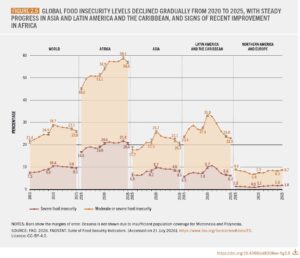
“In Africa [it] decreased from a peak of 20.3 percent in 2024 to 20.0 percent in 2025, still nearly 4 percentage points higher than in 2015 when the SDG Agenda was launched.  However, this marginal improvement in prevalence from 2024 to 2025 did not translate into a decrease in the absolute number of people facing hunger, due to the growing size of the population in Africa.”

Looking at general dietary diversity, including micronutrients:  In Africa, 66.6% of the population could not afford a healthy diet in 2025, compared to 28.9% in Asia and 25.7% in Latin America.

For these balanced diets with micronutrients:  An estimated ~30.8% of children aged 6–23 months get a minimally diverse diet (largely unchanged over a decade); ~62.7% of women aged 15–49 meet minimum dietary diversity.

These trends suggest that hunger is not inevitable when supported by economic policies, social protection, and investments in agrifood systems—but progress remains slow and insufficient for the 2030 Zero Hunger target of many governments and the SDG.

Projections still point to ~510–520 million people being hungry in 2030, with ongoing, uncertain risks from conflicts, El Niño, and reduced financing.

The report presents scenarios of progress against Zero Hunger targes by continent and scenarios, extrapolating from the experiences of recent decades.
To access the full report:  as PDF

– Contributed by WHES Board member, Steven Hansch

How the Other Half Dies, Book Classic

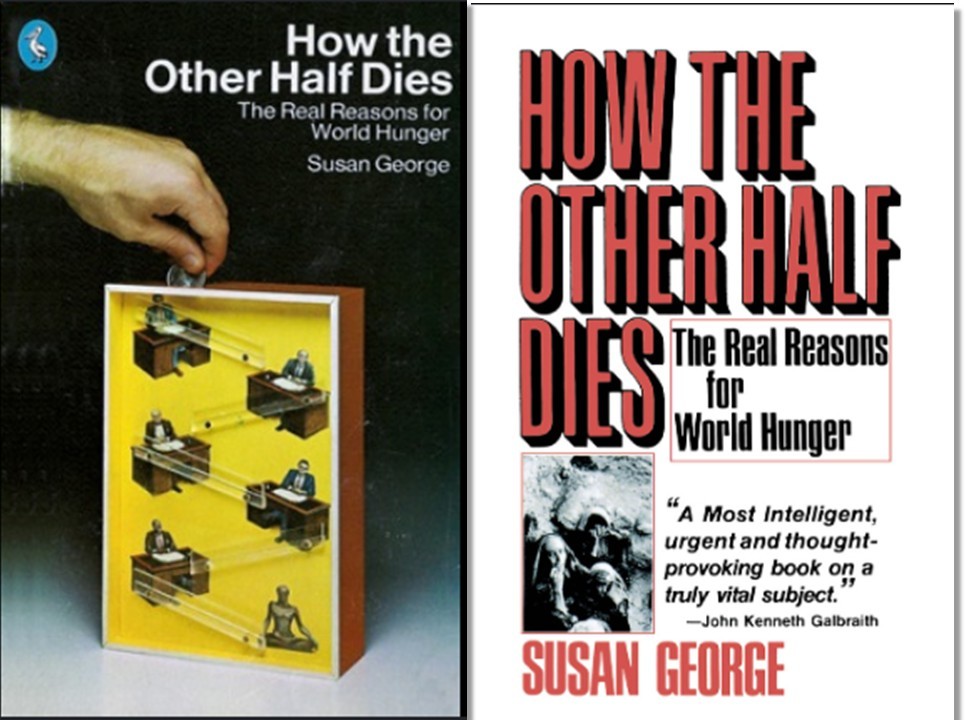
Aug 18, 2026          A key author about world hunger, Susan George, passed away earlier this year, having fought extensively against world hunger and calling for radical global economic reform.  Born in Ohio she moved to France and wrote often about the UK.  All of her writing expanded on her thesis that hunger and poverty are due to unequal distributions of power and the international economics of agribusiness.  Her work inspired Stuart Gillespie, whose book “Food Fight” was reviewed recently.

A staple of college reading about world hunger was Susan George’s classic, “How the Other Half Dies”, a title which was a take on a classic book about poverty in New York tenements, “How the Other Half Lives,” by Jacob Riis, published in 1890.

She wrote:  “Hunger is not a scourge but a scandal.” 

That scandal, in her account, begins on the farm itself. Farming, she argues, had become “a highly sophisticated, highly energy-intensive system for transforming one series of industrial products into another series of industrial products which happen to be edible.”   The Green Revolution, Western technology transfers, World Bank projects, and Food Aid are shown to enrich local elites and integrate countries into markets they don’t control, not to feed the poorest half.  She favors global land reform but ignores the lessons of how that has not worked.

That economic critique, however, blurs into a broader and less careful political one. Her book vacillates between criticizing capitalism, the United States and colonialism, as if all three are identical, often confusing America’s foreign engagement with her home country, the U.K.  Despite living in France, the weight of her criticisms are toward the US and UK.  The only aid groups she likes are in the UK.

That same imprecision carries over into her use of evidence. She gives no credence to the history of poverty that dates back thousands of years.  Her focus is on how current access to food is unfair.  Little of her book involves original field research or case studies from Africa or Latin America, as she draws more on headlines and studies of agribusiness.

The lack of rigor is most visible in her treatment of population and food supply. At times she seems to not take seriously actual food shortages or hunger.  Citing only one speculative source, she claims the Earth can feed 50 billion people comfortably (never mind environmental destruction and climate effects), and criticizes efforts to empower women over their reproductive choices, arguing that family planning programs were in some cases ineffective.  She claims that poor families have to have larger families for labor income.  She ignores the most effective family planning program of all, the reduction in child mortality worldwide from public health programs.

Aid programs fare no better in her account. She writes that if any of the emergency food aid provided by donors have reduced malnutrition it was inadvertent, criticizing the work of dozens of nonprofits that work to build local trust and measure anthropometrics of children.  She similarly ignores all “economic development” programs by governments and aid agencies.  She favors small-scale technology.  She critiques the Green Revolution by quoting Lester Brown’s Seeds of Change at length.

Her skepticism of institutions extends to USAID specifically. Having only academic knowledge of USAID programs, she criticizes USAID’s program in the 1960s and 1970s that trained tens of thousands of people from lower income countries for establishing an elite establishment.  She similarly criticizes the World Bank and most NGOs.

For all these criticisms, though, she does offer a prescription. Her solution to hunger is to organize, to create local groups to study hunger and bring systemic change.

Further reading:

https://www.jstor.org/stable/4366469

https://en.wikipedia.org/wiki/How_the_Other_Half_Dies

– Contributed by WHES Board member, Steven Hansch

Lipid-Based Nutrient Supplement(s) to Fight Malnutrition

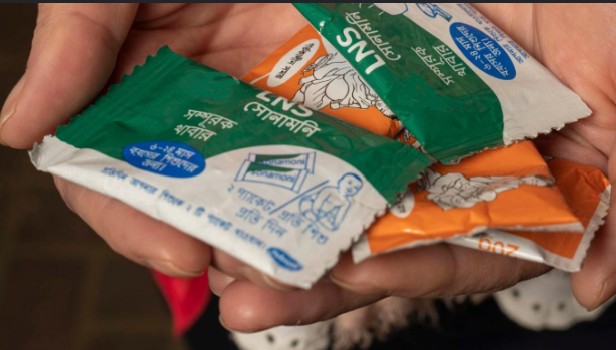
August 17, 2026      Aid agencies are scaling up the distribution of Small-Quantity Lipid-Based Nutrient Supplements (SQ-LNS, or LNS) to help reduce malnutrition in vulnerable families worldwide.  Delivered in compact, 20-gram pouches roughly the size of a ketchup packet, this peanut butter-flavored paste is designed for home fortification, helping to fill vital micronutrient and essential fatty acid gaps in young children’s diets. By providing a concentrated dose of essential nutrients that can be eaten directly from the packet, SQ-LNS has become a highly effective tool for preventing stunting, severe wasting, anemia, and child mortality. However, as a supplement and not a caloric substitute, its success depends on integration within broader social protection, cash assistance, and healthcare platforms.

SQ-LNS consists of a nutrient-dense paste containing a blend of vegetable oils (rich in omega-3 and omega-6 fatty acids), legumes (typically peanut, chickpea, lentil, or soy), milk powder, and a small amount of sugar for palatability. Each 20-gram sachet is fortified with 23 essential vitamins and minerals, providing approximately 110 to 124 kilocalories of energy, 2.4 to 3.2 grams of protein, and 8 to 10.6 grams of lipids per day. The supplement is formulated to satisfy the daily recommended nutrient intake (RNI) of key micronutrients without risk of excess intake.

A key operational benefit of SQ-LNS is its practicality in challenging environments. The paste is ready-to-use: it requires no cooking, no dilution with clean water, and no utensils. Children can consume it straight from the sachet, or caregivers can mix it directly with locally prepared complementary foods. This ease of use is critical in displacement camps and fragile settings where families often lack access to safe cooking facilities, clean fuel, or potable water.

Operational Insight: SQ-LNS is designed strictly as a supplement, not a substitute. It is engineered to fill specific nutritional gaps in diets that are otherwise calorie-adequate. If a household is facing an absolute caloric shortage, distributing a 20-gram sachet to a child will not resolve the underlying starvation. It must be paired with general food distributions.

The critical difference between a supplement and a substitute was demonstrated in a study of refugee camps in Kenya and Djibouti. In camps where families received adequate baseline food rations, adding SQ-LNS to children’s diets successfully cut cases of anemia by 12 to nearly 30 percentage points. Conversely, in a refugee camp in eastern Chad, when general household food rations were cut in half and SQ-LNS was distributed to children to compensate, child growth outcomes actually worsened. This provides stark evidence that SQ-LNS cannot paper over a raw calorie deficit. It is a specialist, micronutrient-fortification tool, not a cure-all, and it works best when integrated into a larger response that includes adequate general rations, cash transfers, and primary healthcare services.

Institutional Supply Chain and Distribution

The global supply chain and procurement model for SQ-LNS is highly consolidated, presenting unique operational advantages and vulnerabilities. The primary institutional buyers are UNICEF and the World Food Programme (WFP), which purchase the product in bulk directly from manufacturers. These organizations then work on the ground with national governments, local non-governmental organizations (NGOs), and community health networks to manage delivery. Rather than managing SQ-LNS as an independent, vertical campaign, distribution is strategically folded into existing touchpoints. It is commonly integrated into growth monitoring sessions, routine healthcare consultations, vaccination clinics, or general food and cash distribution programs already visited by vulnerable families.

Global Supply Vulnerabilities and the Turn to Local Production

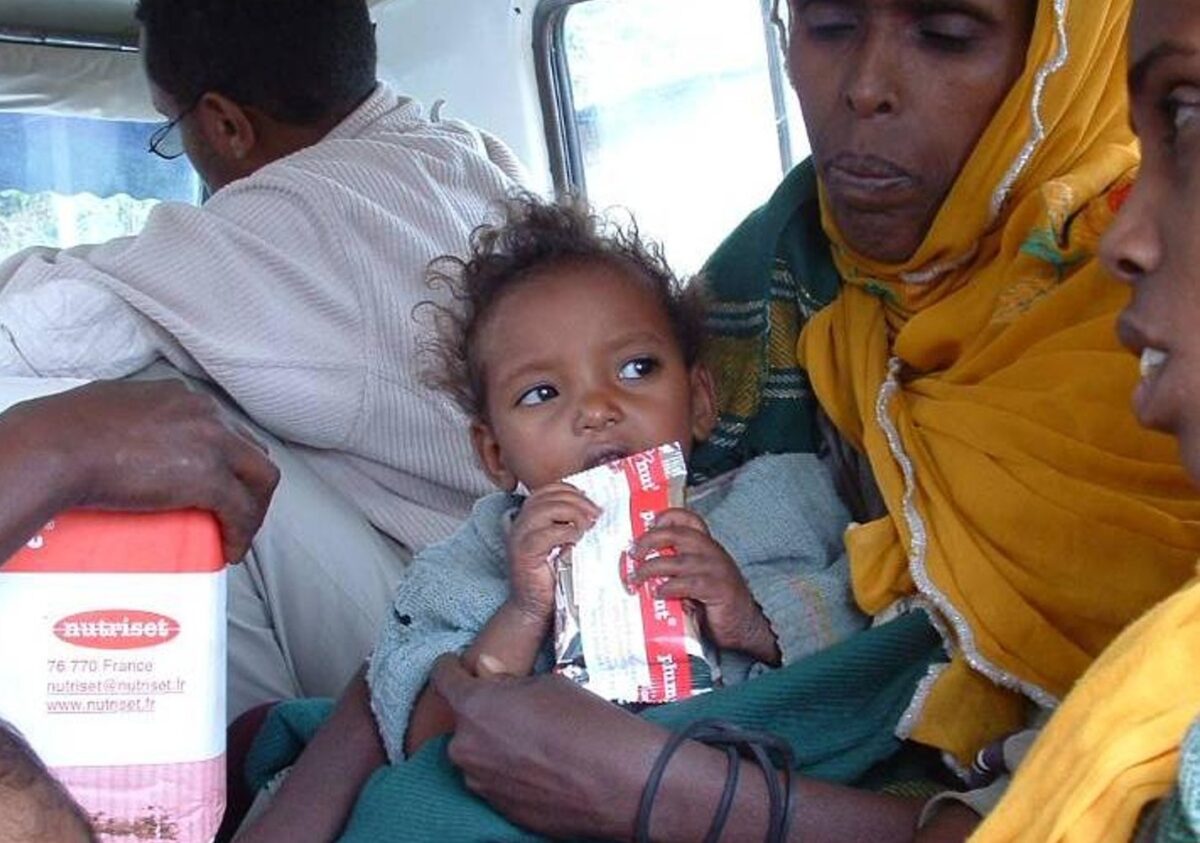
Historically, the global supply of Ready-to-Use Foods (RUF), including SQ-LNS and therapeutic pastes, has been concentrated among a small group of offshore manufacturers. Nutriset (the French creator of Plumpy’Nut) and its patented PlumpyField network—which licenses formulations to specialized local producers and includes major non-profit manufacturers like Edesia in the United States—produce the bulk of the world’s supply. While global offshore capacity is substantial, global supply chain shocks and sudden surges in emergency demand have historically caused localized product shortages.

This vulnerability has driven a significant policy shift toward local and regional production. Manufacturing similar lipid-based pastes in programme countries, such as Malawi, Kenya, India, and Bangladesh, offers multiple strategic benefits, including increased supply chain resilience, reduced shipping lead times, economic support for local farmers, and the ability to customize flavors (such as chocolate or vanilla) to better fit regional dietary habits. In Bangladesh, for example, Frontier Nutrition manufactures LNS locally, utilizing regional ingredients while remaining cost-competitive with major offshore manufacturers. Nonetheless, local manufacturers face significant obstacles, including high import duties on specialized ingredients (such as milk powder), fluctuating local currency rates, high costs of borrowing capital, and a lack of certified local testing laboratories to verify strict quality and aflatoxin standards, which often forces them to send samples overseas.

Price Trends, Budgetary Impact, and Cost-Effectiveness

In recent years, the cost to make SQ-LNS has risen, driven by rising raw ingredient costs (including peanuts, sugar, and milk powder) and global logistics inflation. In early 2023, a standard carton of 600 sachets was listed in the UNICEF Supply Catalogue at approximately $45.70.  By early 2025, the average price rose to approximately $60.00 per carton.  This represents a unit price increase from roughly 7.6 cents per sachet to exactly 10.0 cents (a dime) per sachet.

For a single child, a standard course of supplementation consists of one 20-gram sachet daily for a full year (365 days). Under early 2025 pricing, this pushes the direct commodity cost per child to approximately $36.50 to $37.00. While this is an increase, SQ-LNS remains one of the most cost-effective interventions in the humanitarian sector. On a volumetric scale, one metric ton of SQ-LNS contains 50,000 sachets, enough to supplement more than 1,600 children for an entire month.
Economic evaluations demonstrate that the return on investment for SQ-LNS is exceptional. A global benefit-cost analysis concluded that every dollar invested in SQ-LNS targeted at highly vulnerable children returns nearly $14 in long-term health and economic benefits. Furthermore, a rigorous cost-effectiveness modeling study in Uganda found that SQ-LNS was more than ten times more cost-effective at preventing severe child undernutrition and mortality than distributing multiple micronutrient powders (MNPs).

Summary of Scientific and Clinical Effectiveness

The clinical evidence supporting SQ-LNS is robust, validated by large-scale systematic reviews and meta-analyses combining data from more than 14 randomized controlled trials (RCTs) involving over 37,000 children across low- and middle-income countries. The World Health Organization (WHO) integrated SQ-LNS into its 2023 guidelines on complementary feeding and child wasting based on this ‘high-certainty evidence.’ The clinical impacts of SQ-LNS on young children (aged 6 to 23 months) are extensive:

  • – Reduction in Stunting: SQ-LNS reduces the prevalence of stunting by 12% to 14% and severe stunting by 17%.
  • – Reduction in Severe Wasting: SQ-LNS reduces the prevalence of severe wasting by 31% to 33% (around one-third) in early childhood.
  • – Lowering Micronutrient Deficiencies: It significantly lowers child anemia by 16%, iron deficiency by 56%, and iron deficiency anemia by 64%.
  • – Improving Child Survival: SQ-LNS reduces all-cause child mortality by approximately 27% between the critical ages of 6 and 24 months.
  • – Supporting Cognitive Development: SQ-LNS supports healthy brain and motor development, showing developmental gains equivalent to one to five IQ points.

A recent clinical follow-up study in Ghana evaluated the long-term effects of providing SQ-LNS during the child’s first 1,000 days. Following up on children at 9 to 11 years of age, researchers found no significant differences in linear growth (height-for-age z-score) or cardiovascular risk markers (such as blood pressure or obesity rates) compared to control groups. While the direct physical growth advantages from early supplementation did not persist into pre-adolescence, the study confirmed that early LNS supplementation is safe, is well-tolerated, and carries no long-term risk of adverse metabolic effects, such as increased risk of high blood pressure, overweight, or childhood obesity.

Product Comparison: Lipid-Based Nutrient Supplements (RUF Types)

Ready-to-Use Foods (RUF) are standardized to ensure consistent targeting and to prevent unintentional breastmilk displacement or cost inefficiencies in program implementation.

RUF Type Net Weight Protein % Packaging Color Primary Purpose
SQ-LNS 20 grams 9% – 11% Green Prevention of child undernutrition, stunting, wasting, anemia, and mortality (6-23 months).
LNS-MQ 50 grams 11% – 16% Yellow Prevention of moderate acute malnutrition (MAM) and stunting in highly food-insecure contexts.
RUSF / LQ-LNS 100 grams 11% – 16% Orange Treatment of moderate acute malnutrition (MAM) in children.
RUTF (Therapeutic) 92 grams 13% – 16% Red Treatment of severe acute malnutrition (SAM) under medical supervision.
Policy and Programmatic Recommendations

To maximize the impact of SQ-LNS within international nutrition programs, policy makers and humanitarian agencies should prioritize the following programmatic actions:

  • – Avoid Stand-Alone Distribution: SQ-LNS should never be distributed as a standalone product. It must always be integrated with robust counseling promoting optimal breastfeeding, age-appropriate complementary feeding, and dietary diversity.
  • – Secure Household Food Access: SQ-LNS cannot replace a balanced diet or general household food rations. Programs must ensure that general food distributions or cash transfer schemes are secured alongside child supplementation in food-insecure contexts.
  • – Support Local Production: Governments and international donors should work together to build local production capacity. Key measures include waiving import duties and VAT on imported inputs (such as specialized vitamins and dairy proteins), providing low-interest lending, and investing in local, certified laboratory-testing facilities to shorten cash-conversion cycles.
  • – Optimize Resource Allocation (SQ-LNS over MQ-LNS): Recent clinical meta-analyses demonstrate that Medium-Quantity supplements (MQ-LNS, 50g) offer no superior preventive benefits over Small-Quantity supplements (SQ-LNS, 20g), primarily because children are unable to consume the larger 250+ kcal ration on top of normal breastmilk and local foods. Given that MQ-LNS is more expensive per daily dose, agencies should prioritize SQ-LNS for preventitive campaigns to optimize budgets and reach more children.

Further reading:

Cover photo source:  UC Davis

–  Contributors: Steven Hansch and Eleonora Arca 

Venezuela: Displacement & Food Needs

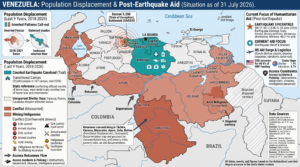
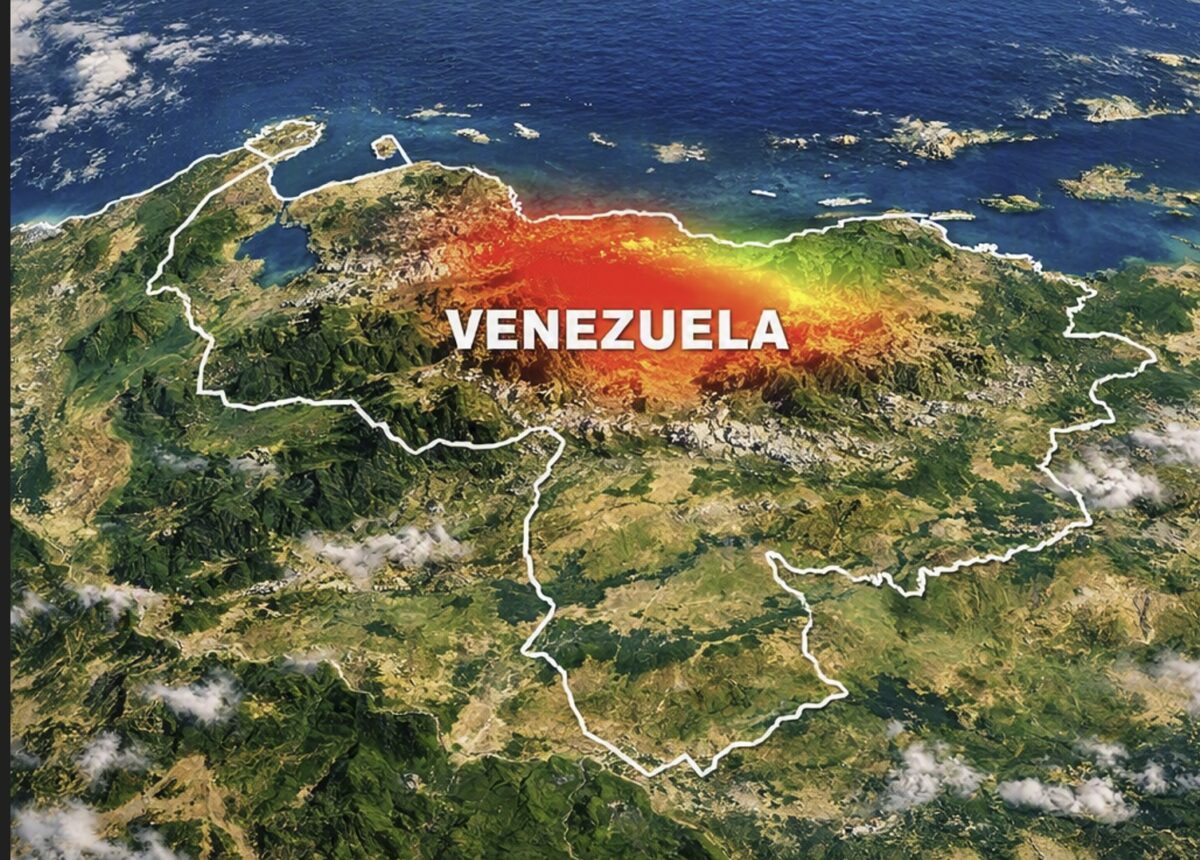
August 16, 2026     Venezuela has had the largest number of refugees fleeing from it, and now is a focus of humanitarian aid following the large June earthquakes that killed between 6,000 and 18,000 citizens.…

Prior to those earthquakes, the U.S. Famine Early Warning System projected some 1.8 million people in need of food assistance.  UNICEF (as U.N. Nutrition Cluster lead) reports that 11% of children under five nationwide are affected by wasting, but the burden is heavily skewed toward marginalized, indigenous, and remote communities where healthcare coverage is minimal and WASH conditions are critical. The cluster’s 2025 response covered 79 municipalities across 23 states.  The Wayuu and Afiú communities in Alta Guajira and the Sinamaica Lagoon face some of the most severe deprivations.  The Amazon and Delta regions also have high rates of malnutrition, particularly among the Yanomami indigenous community.
…
The two large earthquakes that hit northern Venezuela on June 24, 2026 created immediate dislocations with an estimated 3.3 million persons in need of food assistance.  This represents the single largest, and by far the best-counted, displacement event in modern Venezuelan history.  Of those affected, 5,804 children and their caregivers have received nutrition services according to UNICEF.  Hardest hit were La Guaira, Caracas and Yaracuy.  An estimated 18,000 people remain homeless from these recent earthquakes. …
…
Venezuela continues to have high inflation with low purchasing power for its citizens, which is one reason 7 and 8 million Venezuelans have fled the country to exile.   Six years ago Venezuela’s internally displaced people were in the west, on the Colombian border, and the international system was building out to reach them. Today the largest counted caseload sits at the opposite end of the country around the earthquake.  Around 2.8 million refugees still live in neighboring Colombia.
…
The U.N. World Food Program has provided food to 120,000 people, including hot meals in shelters, ready-to-eat rations for displaced families, food baskets for households that can still cook, and prepaid electronic vouchers in areas where markets function.  The U.S. government has been one contributor, channeling support through WFP as part of a broader $386 million earthquake response package.
…
Venezuela has been a crisis for many years because of an autocratic dictatorship. Recent regime change did not open space for anti-hunger aid groups. A state of exception decree, a still-paralyzed NGO registration regime, OHCHR still expelled, and  dozens of aggressive actions against aid actors have limited aid in the period since the earthquake.   Most of the constraints that made humanitarian work in Venezuela difficult in recent years were structural, e.g., the denial of a crisis, the NGO registration regime, hostility to independent monitoring, the security services’ instinct to control assistance. Removing the dictator Maduro did not resolve any of those. In recent weeks there have been dozens of documented incidents against humanitarian aid agencies, including closures of civilian aid collection points, three arbitrary detentions, eight press-freedom violations. Problems include:  Entry permits revoked for German and Austrian emergency medical teams; a Chilean rescue brigade accused of espionage; intelligence officers reported present inside shelters and at aid collection points.

One US nonprofit, International Medical Corps (IMC), has worked in Venezuela since 2019. Since then, the team has reached more than 3.7 million people in 10 states, supported more than 120 health centers, and distributed medications, medical supplies and equipment valued at nearly $2 million.  In addition to building up health systems, IMC manages acute malnutrition, conducts nutritional screening for early identification of acute malnutrition, and promotes infant and young-child feeding practices, integrated into health programming in remote areas of Bolívar and Delta Amacuro states, where referral services for conditions caused by acute malnutrition are otherwise unavailable. Immediately following the earthquakes on June 24, IMC’s in-country team mobilized emergency medical relief to the hard-hit region of La Guaira, including a field hospital, mobile medical units, water trucks and hygiene kits for displaced families.

Another nonprofit, Caritas Venezuela, is one of the country’s largest and most trusted humanitarian organizations, with a nationwide structure. Its broad diocesan and parish networks and permanent presence in communities across the country are why it is often among the first to respond when disaster strikes.  This extensive network enables U.S. Catholic Relief Services and Caritas to work closely with parish priests, lay leaders, health facilities, schools and community organizations to reach vulnerable families in informal urban settlements, remote rural areas and Indigenous territories where humanitarian coverage is often limited. With warehouses, transport authorization and a permanent presence even in hard-to-reach areas, Caritas Venezuela is deeply embedded in communities across the country.

Caritas is now shifting from immediate earthquake assistance toward recovery for those who lost everything, while continuing to maintain field operations, particularly in the coastal city of La Guaira, where the destruction is greatest.  Caritas Venezuela reports that it has received over 19,000 tons of aid and distributed approximately 16,000 tons. The scale of the volunteer mobilization is notable: around 10,000 people — teachers, young people, mothers, retirees and neighbors, joined volunteer efforts across all of Venezuela’s dioceses and parishes.

– Contributed by World Hunger Education Service Board member, Steven Hansch


Djibouti’s Child Hunger

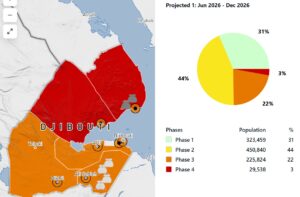
August 15, 2026    Djibouti, which sits next to both Ethiopia and Somalia has refugees and food scarcity.  the latest UN food insecurity estimates that more than 256,000 people, 25% of the population, in Crisis or worse during July–December, up from 166,000, or 16%, in May–June.  About 30,000 people are now projected in Emergency.  Rural Tadjourah and Obock have deteriorated to Phase 4, while nearly 70% of refugees in Ali Addeh and Holl-Holl camps, more than 21,000 people food crisis. Import-price shocks, weak purchasing power and El Niño effects are the main drivers.  The IGAD Climate Prediction Centre forecast that the June–September 2026 season would bring below-normal rainfall across most of the Greater Horn of Africa, including Djibouti, with a high probability of warmer-than-average temperatures

 In the Ali Addeh and Holl-Holl refugee camps, close to 70% of the refugee population (21,000+ people) are classified by the UN IPC as Crisis or worse.  this  small but chronically vulnerable refugee caseload (largely Somali and Ethiopian/Oromo origin, some Yemeni), who typically sit outside normal market and livelihood systems and are first to show acute deterioration when pipelines tighten.

Food inflation stood at 4.60% year-on-year, and the Consumer Price Index reached an all-time high of 106.90.

The UN has flagged that disruptions to regional trade flows and geopolitical tensions around the Bab-el-Mandeb Strait are affecting import costs and supply chains.  The port of Djibouti remains the principal transit point for Ethiopian cargo and a key link for the Black Sea Grain Initiative. The Djibouti Red Crescent Society, operating with only 37 staff, five branches, and roughly 1,000 volunteers, has delivered assistance to 45,000 people through Disaster Relief Emergency Fund allocations, but had to suspend mobile humanitarian service points for migrants due to lack of resources.

Three drivers of risk:

*  Climate hazards:  an emerging El Niño signal bringing irregular rains, elevated temperatures, and drying water points, which is squeezing the last available pasture for pastoral herds and cutting into both crop and livestock production. For a country where pastoralism is a core livelihood strategy in the interior (Dikhil, Ali Sabieh, Tadjourah, Obock — the same zones ACAPS and earlier droughts have flagged), this is the classic pathway from climate shock to acute food insecurity.
*  High food prices via import disruption — Djibouti imports up to 90% of food needs, so it’s structurally exposed to any friction in Red Sea/Bab-el-Mandeb shipping. The analysis flags regional trade disruption and geopolitical tension around the Strait specifically — plausibly tied to the broader Red Sea shipping disruptions and Middle East-adjacent instability that have been running since late 2023, though the report as summarized doesn’t itemize a single incident.

* Economic/inflation shocks — compounding price pressure on already-thin purchasing power among rural and peri-urban poor households, which is also slowing broader economic growth.

The current scope of food assistance is insufficient relative to need,  meaning a large share of even those already receiving aid are still running consumption deficits.  the regions implicated (Ali Sabieh, Arta, Dikhil, Obock, Tadjourah) are the same drought-affected pastoral zones that have been chronically stressed since the multi-season drought that began around 2020–2021, so this reads less like a new shock and more like an existing vulnerability being pushed over a threshold by El Niño plus price/logistics stress.

The World Meterological association has been assisting with preparedness for rainfall and flood risks:  https://wmo.int/media/project-update/from-forecasts-early-action-strengthening-community-preparedness-djibouti

Photo: Fishercd / Wikimedia Commons

–  Contributed by Hunger Notes Editor, Steven Hansch


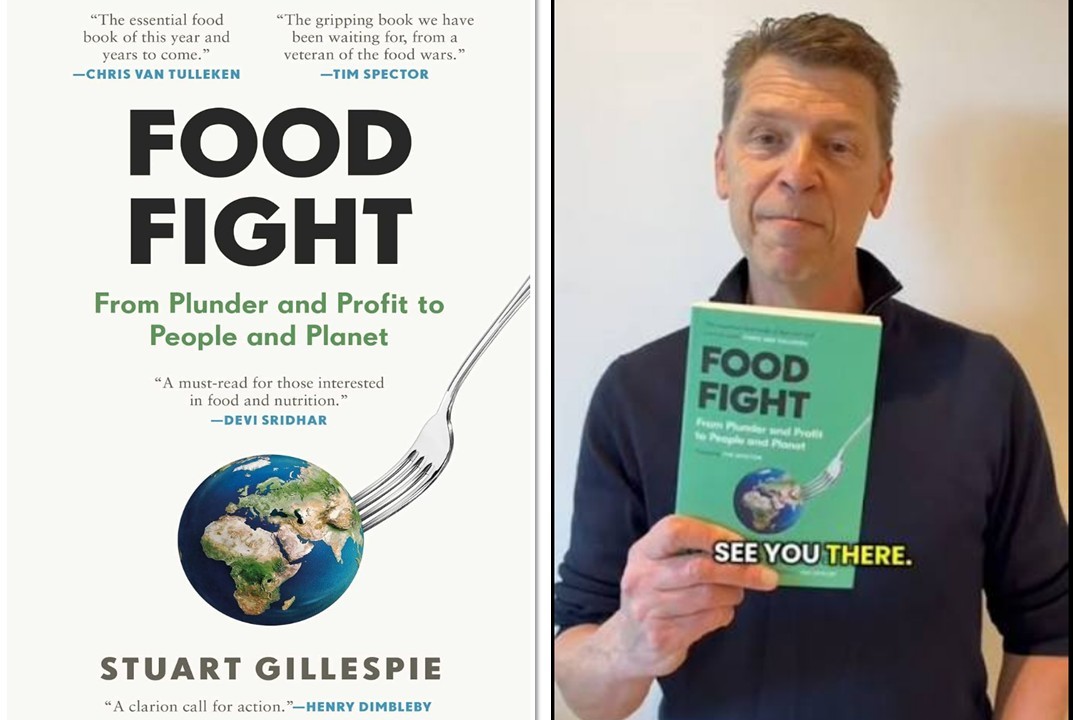
Book Review: “Food Fight” by Stuart Gillespie

August 14, 2026     Agribusiness is out of control, according to  “From Plunder and Profit to People and Planet”, Stuart Gillespie’s 2025 book, “Food Fight” which argues for a new, common vision of human and planetary health in where power over food systems is better balanced.  He writes building on a tradition, which he cites, from Susan George’s “How the Other Half Dies.“

Gillespie argues that the modern food system, as shaped after World War II to mass-produce cheap calories and avert famine (with geopolitical aims), has become a major driver of harm.

His main criticism is aimed at the concentration of food companies on a global scale:  “Five companies – ADM, Bunge, Cargill, Cofco and Louis Dreyfus – control 70-90% of the global grain trade… Never before have we seen such a hyper-concentration of power at all points from farm to fork… Another four companies – ChemChina, Corteva, Bayer and BASF – control 66% of the world’s agricultural chemicals market, while a similar cluster… owns 53% of the global seed market.”   Gillespie details corporate political tactics (analogous to those historically used by the tobacco industry) and policy inertia, while highlighting citizen movements, local successes (e.g., city-level strategies), and practical levers for change such as public procurement, taxes with revenue recycling, marketing restrictions, conflict-of-interest rules, and broader mobilization.  The book mixes exposé with a call for structural transformation toward a system that prioritizes people and planet.  He concludes:  “The large-scale damage done to people and planet is a feature of our food system, not a bug.”

He particularly criticizes global trends in the consumption of ultra-processed foods.

“Governments need to act because malnutrition represents what economists call a market failure, a negative externality – and what the rest of us call an injustice.”    He adds that “malnutrition is multi-causal in nature,” requiring a whole of government response, and “Economic growth won’t fix it.  nor will technology.”

He criticizes nutritionists who promote national food fortification schemes or other efforts to provide vitamin and mineral supplements for involving the private sector (corporations).  Yet he explains the importance of micronutrients:  “micronutrient malnutrition also travels through generations.  A lack of essential vitamins and minerals can be devestating for a pregnant woman and her unborn child.  The micronutrient-deficient mother is more likely to have complications in pregnancy and more likely to die giving birth.  Iron-deficiency anemia causes one in four maternal deaths around the world.”

Some of his history is confusing, such as when he writes about the Bay of Bengal famine “starting” in 1943, when the conditions leading to it began in 1942, and he refers to the United Nations in the same breath, though the U.N. was not founded until 1945.  Yet, he is critical of the donors and aid agencies helping, referring to “white saviourism.”

He correctly critiques an obsession in the 1950s and 1960 with a “protein gamp” and notes how in 1974, Donald McLaren “blew the protein obsession out of the water.”

His recommendations span all of society to take more responsibility and he addresses NGOs like Save the Children, and repeatedly UNICEF.  He seeks a revolution in the governance of for-profit corporations.  Though citing examples in a few countries, his book is generic, about the world.  Though a preponderance of his interviews, analyses and criticisms are targeted to one country, the United Kingdom.

He recommends four “Ins” incentives, institutions, information and interests.  He recommends the use of taxes and subsidies to reshape the food environment.  Governments should tax products and practices that damage health or the environment, especially ultra-processed foods and sugary drinks, and earmark the proceeds to make nutritious foods more affordable for low-income households.

–  Contributed by WHES board member, Steven Hansch

Specialty Foods for Malnourished Children (Plumpy’Nut and RUTF)

August 2, 2026        Highly-enriched foods tailored to the biological needs of severely malnourished children are a major form of international aid.  At the 2025 roundtable about America’s  comparative advantages for solving hunger, food insecurity and nutrition overseas, organized by World Hunger Education Service with other sponsors,  participants agreed that America should keep providing quantities of “Ready to Use Therapeutic Foods” (RUTFs) as a magic bullet for fighting hunger.

Indeed, aid agencies, foundations and the U.S. Government have provided more and more of this peanut-based, fortified paste around the world in programs of “targeted feeding” that enroll children suffering from wasting (“acute”) malnutrition, which is life-threatening.   Wasting malnutrition is one of the top three main causes of deaths in famines, refugee flight, and complex emergencies.

HISTORICAL BACKGROUND:    Over the last half century, NGOs, governments, and INCAP in Central America have experimented with novel new approaches toward developing foods that best save the lives of severely malnourished children and ensure their recovery.  For most of that time period, the standard food for supplementary feeding for undernourished children has been porridge, frequently corn or wheat-based porridge, supplemented with vegetable oil and sugar. The USG. report, Beyond Child Survival, cataloged other earlier initiatives such as Fafa in Ethiopia and Likuni Phala in Malawi, which were effective at treating malnourished children.

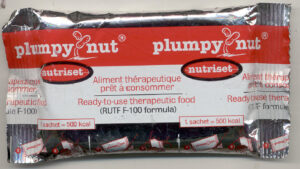
A major step forward came in 1996, when Michel Lescanne of Nutriset and French pediatric nutritionist André Briend came up with a new formulation called “Plumpy’Nut” that closely matched the WHO-recommended formula, “F-100” for inpatient (hospital) treatment of malnourished children.  For children with shrunken stomachs and limited appetite, it optimized the child’s chance to survive and recover from malnutrition.

Plumpy’Nut, produced in France by Lescanne’s production organization, Nutriset, was designed to have a long shelf life, to be appetizing for even malnourished children with reduced appetite, to taste good, and to have the right balance of fats, vitamins and minerals that a malnourished child should have.  The idea was to create a food that could be handed to a family once a month, with sachets that a small child could open and eat each day.

Plumpy’Nut became the first in a line of products collectively referred to as “ready-to-use therapeutic foods”, which share similar nutrient compositions and are now used at large scale by groups like UNICEF, MSF, Concern, Action Against Hunger, and Save the Children.

In the last two and a half decades these RUTFs have become a core part of a new model for reaching children with malnutrition, known today as “Community Management of Acute Malnutrition,” or “CMAM.”  This model does not require family members to take time to bring young, malnourished children to a central feeding center, which had been the previous main model.  Children are still observed, measured and given medical attention, but monthly, not daily, and via an outpatient, or mobile community model.

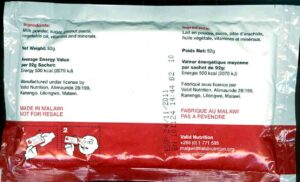
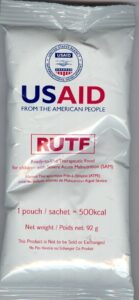
NGOs give families supplies of these 92-gram sachets at a community clinic, mobile van or displacement site. The child eats the paste directly, without cooking, clean water, refrigeration, or admission to a hospital.  A standard sachet supplies approximately 500 kilocalories and comprises:  Peanut paste, Skimmed-milk powder or other dairy ingredients, Vegetable oil, Sugar, and vitamins and minerals from a commercial premix powder.

CONSCIOUSNESS

There’s something about RUTF and Plumpy’Nut that resonates with people and encourages them to donate.  Plumpy’Nut has proven to be popular among the public, media and donors.  World Vision uses Plumpy’Nut to focus attention and drive private fundraising.  A CBS 60 Minutes episode about the use of Plumpy’Nut in Niger, West Africa was reportedly the most popular episode in the decades-long history of that television show.

SCALE AND COVERAGE

While UNICEF promotes supplies of RUTF across lower-and middle-income countries (LMICs), it is too expensive for poor households to purchase and does not reach most of the children who need it.  Most RUTF has been used in emergencies, where international NGOs tend to be more present, and where malnutrition is often more concentrated.  Despite the increased scaling of RUTF, in most years 80% of malnourished children don’t get any.

In the last few years, governments have been increasingly supportive of RUTF, increasing donations to UNICEF and NGOs to several hundred million dollars worth.  The Eleanor Crook Foundation has sought to engage private foundations and companies to donate.  RUTF is on the approved commodity list of foods that NGOs can request from Food for Peace at USDA.

PRODUCTION

In the early 2000s, there was essentially one qualified international source of RUTF, i.e. Nutriset in France.  Nutriset and donors have encouraged other factories to start up.

By 2025, UNICEF reported more than 20 suppliers across Africa, Asia, Europe, and the Americas. Roughly half of UNICEF-procured RUTF is estimated to be from suppliers in low- and lower-middle-income countries such as Ethiopia Burkina Faso, Kenya, Madagascar, Niger, India, Haiti, Sudan.

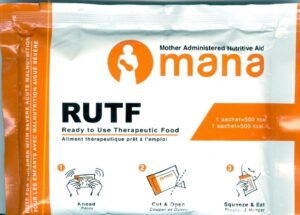
In the United States, there are three certified producers: Edesia in Rhode Island, recently profiled by Hunger Notes; MANA Nutrition, based in Georgia, and  Tabatchnick, in New Jersey.  Between 2022-2024, Edesia shipped over 6 million cases (or 900 million sachets) of RUTF, while MANA shipped 300 million packets.

COSTS

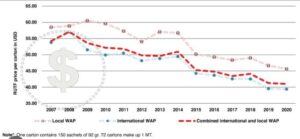
Costs of producing RUTF had been steadily declining from the 2000s to 2020, as seen in the graph at right.  However, the cost of food ingredients, such as dairy milk, has increased in recent years, forcing up the cost of producing RUTF.

Production in LMICs has been limited by the high costs of quality control, ensuring none of the food is contaminated, and the import costs of key ingredients.  The costs of production locally often tend to exceed the costs of importing from France, the U.S., Norway, India, or South Africa.

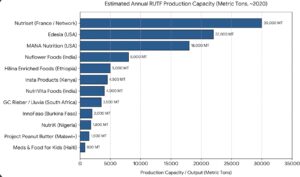
UNICEF is the world’s largest buyer of RUTF, at around 49,000 metric tons each year, deploying cartons to some 3.5 million children.  A graph of estimated annual production of RUTF appears at right.

ALTERNATIVES

As noted in the recent Hunger Notes article about Tufts University’s Food Aid Quality Review, controlled studies of field effectiveness and efficiency suggest that more children could be reached, and lives saved, with other formulations and foods, taking into account the cost.  For example, Tufts noted that Corn Soy Blend Plus was more efficient in the recovery of wasted children.

NGOs are partnering with researchers in finding new solutions.  Edesia Nutrition is working with Action Against Hunger in  “Novel RUTF” development, such as alternative protein sources (e.g., plant-based soy/maize to replace or reduce expensive milk powder) for lower cost, local producibility, climate resilience, and acceptability while meeting nutritional specifications.  They are pursuing microbiome-directed enhancements (e.g., via partnerships with OpenBiome, a U.S. nonprofit microbiome research organization) to incorporate beneficial microbial communities or prebiotics into RUTF-like products.

Ongoing field research is testing the scalability, bio-utilization, and overall benefits of RUTF variants.  One experimental form is MDCF-2, a microbiota-directed food based on chickpeas, soy, and green banana, recently noted in the New England Journal of Medicine.  This MDCF-2 represents a new line of thinking, with fewer calories as it reframes “recovery” to include the microbiome, the plasma proteome, address environmental enteric dysfunction, and durability — not just weight-for-height.

The dairy ingredients in/of RUTF are expensive.  Alternatives that do not use milk replace it with crystalline amino-acid fortification, with alternative bases such as oats or fish.   A recent fish-based paste (NumTrey, Cambodia) matched weight gain among children, when compared with standard RUTF, but suffered intra-household sharing/acceptability problems (other children ate it).

Many locally-produced variants increase the density of the least-expensive inputs.  Mark Moore of MANA wrote, “Most of the newer, lower-cost formulas achieve savings by increasing the cheapest ingredients. Sugar and oil are incredibly cheap most everywhere.”  But, he continues, “If this were my child who was severely malnourished, would I rather have a product built primarily around sugar and oil because it is cheaper, or would I rather have the original formulation with 35-40% peanuts and other more nutrient-dense ingredients?”

The Mark Manary Lab has promoted a new formulation that adds pre-formed DHA (omega 3) needed for brain development.  Using more omega-3 fatty acids and less omega-6 fatty acids adds 6-15 IQ points to every child treated.  Trials in Malawi suggest it led to superior cognitive, brain outcomes 6 months post treatment, compared to standard RUTF.  An MFGM-enhanced variant adds milk fat globule membrane to support brain development.  Separately, a rice-bran-enriched RUTF (SEHAT) was tested in Indonesia and showed increased weight gain among children.

Other advances include the use of additional inputs, as child recovery may be limited due to bacterial infection and gut inflammation, not just nutrients.  An oral antibiotic has been seen to reduce the death rate of children from 7% to 3.5%  So, amoxicillin (antibiotic) provision improved recovery and cut mortality.  An azithromycin trial  in Niger hinted at mortality benefit in underweight children, tempered by antimicrobial-resistance concerns.

–  Contributed by WHES board member, Steven Hansch


U.S. Food Aid (Part 10): To Monetize or Not to Monetize? A Review of Food Aid Monetization

July 30, 2026    by Mara Russell      The sale of U.S. food aid overseas, e.g., Title II monetization, has been  controversial for decades. Going back to the beginning of Public Law 480 in 1956, food aid was provided through a government-to-government program known as Title I in which recipient governments received large concessional loans of food aid, which were subsequently sold locally, to provide funding for government initiatives and inputs to local food industries.

In its recent Request for Information, the U.S. Department of Agriculture (USDA) asked for advice about the monetization of food aid, i.e. when donated bulk food aid is sold after being transported to a target country, typically sold at wholesale markets.

The early Title I program has not been funded formally for many years, but using the Food for Progress program, USDA sometimes provides government-to-government grants consisting of food aid which is subsequently monetized. In FY2013, the Government of Mauritania received commodities worth $5.16 million, in FY 2014, the Government of Guatemala monetized commodities worth $30.5 million, in FY2017 the Government of Jordon monetized commodities worth $18.7 million, and in FY2021, the Government of Sudan received 300,000 metric tons (MT) of Hard Red Winter Wheat worth $120 million. Venezuela is also listed as having received $12,674,433 in FY 2019 as a “Provisional award contingent upon initiation of a democratic transition in Venezuela”. However, until its elimination last year, Title II food aid programs were always led by USAID. Now Title II programs are being managed by USDA because of an inter-office mechanism that transferred them to the latter agency.

Title II programs are, by definition, managed by partner organizations, such as World Food Programme and not-for-profit International Non-Governmental Organizations. These latter organizations became very interested in using Title II monetization during the 1980s to cover the costs involved in delivering food aid while addressing the underlying causes of food insecurity. While the logistics of monetization were complex and often difficult to manage, funding from monetization enabled implementation of programs that would not have been possible otherwise. Throughout the 1990s into the early 2000s, Title II monetization enabled introduction of programs that aimed to improve food security using technical interventions in food production, nutrition, and water, sanitation and health (WASH) in non-emergency programs. Many of these programs used 100% monetization in which food aid commodities were exclusively monetized and not distributed.

This led to a shift in the types of commodities used in Title II programs. Initially, commodities were developed with recipients in mind. Grains were most often milled and highly fortified. For instance, Corn Soy Blend (which until 1990 included Non-Fat Dried Milk, and was called “Corn Soy Milk”), was fortified with a blend of vitamins and minerals as well as including protein-rich soy flour. Bags were manufactured to reduce the potential for loss, spoilage and infestation, and such shipments were containerized. Vegetable Oil came in small metal tins that could be easily carried by recipients. Yet, as monetization involved the sale of commodities to private sector food industry traders and food processing companies in developing countries, it was much easier to sell bulk commodities to these industries. These buyers were much more interested in doing their own value addition and selling these commodities to the private sector. There was reduced attention among NGOs in distributing commodities to poor and malnourished recipients, and more attention to generating resources through monetization, which, several NGOs admitted, diverted organizational resources away from addressing the needs of hungry people and the underlying causes of food insecurity. Instead, commodities such as bulk wheat, rice, corn and soybeans were sold without the need for bags, and bulk crude, degummed, soy oil was pumped directly from tanker ships into processing plants. Instead of value being added in the U.S., value was added in the recipient countries. Bags and tins were not required. Containerization was not necessary. And, while there were hefty costs associated with monetization, with 100% monetization, there were no longer requirements for significant funding for internal transport storage and handling. Unfortunately, as a result, by the mid-1990s, the demand for processed and packaged commodities declined so much that they made up less than half of the non-emergency commodities shipped by Title II, despite a Congressionally mandated minimum of 75% use of processed and packaged commodities. Producers of processed and packaged commodities lost revenue as a result, and some went out of business. Relevant U.S. commodity organizations advocated for bulk commodities for monetization to be reduced in line with the processed and packaged mandate. It also became apparent after a certain point that import of bulk commodities had a negative impact in some countries on farmers and market systems by creating unfair competition.

In addition, after several years, concerns were raised that the costs involved in the purchase and shipment of commodities to developing countries were not being adequately recovered through sales. Although cost recovery varied widely depending on the country, time of purchase in the U.S. and timing of the sale in the receiving county, the buyer, and the method used for sales, overall, cost recovery on monetization sales overall was less than 100%. The GAO reported in 2011 that during the three prior years, USAID cost recovery was 76% and USDA cost recovery was 58%. At the time, the high cost of ocean shipment, heightened by a 75% preference for U.S. flag ships that limited competition for these cargoes further increased ocean freight to make up a third of the overall costs, and made cost recovery much more difficult. This resulted in concerns that the full value of the taxpayer dollar was not delivered to recipients as intended by Title II programs. However, most international NGOs were more interested in being able to provide agriculture and other technical and training services that could enable people to grow out of poverty, or to teach mothers how to improve the nutrition of their children without imported food aid, or how to develop water systems without the need for food distribution. While specialized Title II commodities did not disappear, NGOs often favored using cash to address the underlying causes of food insecurity to prevent hunger and malnutrition rather than simply distributing commodities to people.  Monetization provided a source of cash that would not be available otherwise to implement programs that sought to address not only short-term needs, but also long-term causes, thus eventually resulting in self-sufficiency with a focus on building sustainability. In 2003, David Tschirley and Julie Howard of Michigan State University reported that the U.S. share of official development assistance had declined during the past forty years, and that it had fallen by half between the mid-1980s and mid-1990s and continued to fall. Moreover, U.S. funding for agriculture declined to only 4.1% of  foreign assistance.

While American INGOs continued to actively advocate for monetization, European NGOs voiced many concerns about it. These included the fact that as the U.S. accepted less than 100% of the cost of food and freight from monetization, this amounted to a subsidy that created an uneven playing field for other commercial exporters. These concerns were raised at the Doha Round of the World Trade Organization and created some confounding issues for U.S. trade negotiations in the early 2000s. Also, many American INGOs had federation members based in donor countries, including many in Europe. These European federation members raised some of the strongest objections to monetization, and organizations that monetized either had to agree to disagree with these European brother and sister agencies or go along with them and stop monetizing.

It was European INGOs, who were largely focused on providing food aid for humanitarian assistance, who raised some of the strongest concerns about food aid that should have been used to help feed hungry and malnourished people being sold to the private sector, which then turned a profit and sold the food in commercial markets. Also, some views changed among staff of American NGOs who were concerned about the growth of hunger and malnutrition, and the fact that food aid being sold to support their programs was not being used to feed increasing populations of people impacted by disasters, conflict and chronic hunger and malnutrition. In the late 1990s and early 2000s, the proportion of U.S. emergency food aid increased significantly in comparison with non-emergency food aid. This led U.S. NGOs to advocate strongly to establish a set aside “safe box” for non-emergency programs.

Added to this was growing evidence that monetization was likely resulting in negative market impacts,  including disincentives for local farmers and market actors. While NGOs implementing monetization were required to conduct market analyses to avoid these disincentives, there were concerns that these so-called “Bellmon Analyses” may not have been objective because the end-goal for the NGOs involved was to monetize and generate as much cash as possible.  Also, some NGOs began to import Title II commodities in consumer packaging and sell them to buyers outside of the large urban centers so that the commodities could reach people in rural areas, thus making these products more accessible to the people these programs were designed to support in Rwanda. However, there were also concerns about how  monetized commodities may create competition with local producers and vendors, which in turn resulted in dependency on these imported commodities.

As well, cost recovery can be very difficult to achieve. If something happens to a shipment or there are significant commodity losses, this can be a problem. If commodities are not sold by the time they are shipped, this can result in commodities going unsold, resulting in lower prices paid than projected. However, in some cases, the opposite was true if an auction methodology was used to sell commodities for which there was strong demand. Nonetheless, if commodity specifications fail to meet buyer expectations, this can also result in defaulted sales or lower prices. Commodity spoilage, theft or other loss can result in lost funding. Buyers have been known to collude to keep prices low, or to renege on contracts. Shipments carrying monetization cargoes have been known to catch fire or sink. Unsold commodities have been known to become unsafe for human consumption or be stolen. As noted above, NGOs that monetized often invested heavily in addressing monetization issues at the expense of fulfilling their mandates of meeting humanitarian among vulnerable populations.

In 2005, long-standing concerns about how to do food aid were explored in a book by Cornell University’s economist Chris Barrett and Dan Maxwell published Food Aid after Fifty Years: Recasting its Role. They recounted how the time needed for food aid to reach malnourished people, and the costs involved in commodity purchasing and ocean shipment were high, whereas, in theory, if food were purchased locally (or in a nearby country), the time needed to transport food could be reduced by six months or more. Also, commodity and transportation costs could be reduced.  There could be considerable benefits to local farmers and markets if instead of purchasing and shipping food from the U.S., food is purchased overseas, within the target region. Their book also proposed a global procurement system to obtain the  most competitive prices were being paid for food aid. Meanwhile, the World Food Programme uses similar processes to ensure the cost-effectiveness of many of its local, regional and international purchases.

In 2009, CARE changed its policy and took a stand against monetization, proclaiming that it would not monetize. In doing so, CARE  reported that it lost approximately $46 million per year by not monetizing. The INGO led an advocacy campaign against food aid monetization, and for increasing the use of cash to address underlying causes of food insecurity. It also advocated for the use of local and regional procurement, cash and vouchers for food assistance that would not only increase local food consumption and hence demand for local production and marketing, enabling people to have a choice about the food they consumed.

However, CARE made an exception by monetizing in Bangladesh. The Bangladeshi Government agreed to purchase Title II wheat for monetization and distribute this through the national food safety-net system, with the idea that people in need would receive this food. The GoB agreed to pay no less than an 80% cost recovery (usually around 82%) and continued to do so through 2020. This was incorporated into the CARE’s food aid policy, stating that it would not conduct “private sector” monetization. CARE also made an exception if it was working in a consortium with one or more organizations, it would use any cash resources that could be made available.

In the years that followed, some other NGOs shifted away from monetization. New other USAID initiatives began that provided cash to NGOs for agriculture, food security, food market growth and nutrition activities (Development Assistance funds). These were in response to an international “Food Price Crisis” that revealed vulnerability in global stocks that resulted in commodity price increases. These programs eventually came to be known as Feed the Future, which was signed into law in 2015. In 2014, funds from this program were first integrated into Title II and could be used in non-emergency programs. These funds were known as “Community Development Funds” or CDF and were finally available to be used in lieu of monetization. A total of $80 million per year was made available for this purpose and were in fact enshrined in Food for Peace legislation.  Moreover, while in the past, there was a 15% floor on the use of monetization in Title II programs, there is now a 15% (as of 2018) a ceiling, thus indicating a priority in the legislation to use cash and not monetization proceeds. When CDF funds became available, it became possible for organizations like CARE that do not monetize to implement these programs.

However, since the 2026 transfer of Food for Peace to USDA, it is not clear what funding will be available to provide technical and operational support to these programs. The Feed the Future program is no longer being implemented by the State Department and the recent Food for Peace Emergency Notice of Funding Opportunity stipulated that 50% of resources should be used for commodities and ocean freight, so other resources are needed to cover the costs of internal transport storage and handling to ensure the accountable, effective and secure management of food aid and to ensure that food aid quality is maintained until it is consumed. Funds will also be needed to cover the technical costs associated with addressing the underlying causes of food insecurity, such as increasing food production, building the capacity of people to earn sustainable incomes, adoption of critical health and nutrition behaviors, construction and maintenance of water and sanitation infrastructure, and ensuring communities are more able to address shocks and stresses that impact food security, and ensure that these outcomes outlast the end of these programs. It is not clear where these funds will come from without CDF, and thus monetization funds may be needed to support these programs to ensure that food aid is managed accountably, securely and food quality is maintained, and at the same time ensure that programs are effective in building and ensuring food security in the long run, thus avoiding dependency.

As international non-governmental organizations weigh whether to engage in food aid monetizations, a few questions are likely to be important in decision-making.  Since there are many potentially negative outcomes that could result from monetization, would it be an acceptable action in the short term? And, if so, how many years will these monetization programs continue? Will there be a future in which cash funds will cover the costs of internal transport  and other program costs? If so, when will that happen and what will it look like?

Will legislation that ensures the use of CDF be acted upon if Development Assistance funding becomes available for use in food security in the future? And, if so, when will that be and what will it look like? CARE and other INGOs advocated for at least a decade for cash funding for use in lieu of monetization. If INGOs such as CARE agree to monetize food aid under the current circumstances, will they continue to advocate effectively for availability and use of CDF funding? Moreover, American farmers and farmer associations that benefit from monetization will strongly push back on efforts to replace monetization funds with CDF or other cash. Will that make it more difficult to implement Food for Peace programs without monetization? As Food for Peace non-emergency programs are among the very few U.S. Government foreign assistance non-emergency food security and nutrition initiatives still operating since the elimination of USAID, would monetization be an acceptable short-term solution? Unfortunately, bringing cash back to these programs may take a long time and this could result in necessitating the use of large-scale monetization activities for years to come. Finally, not monetizing could be seen as not supporting farmers who have, in essence, ensured the continuation of the Food for Peace program.

Faced with a future in which monetization may need to happen, organizations may wish to consider options that support programmatic objectives. For instance, CARE and other U.S. INGOs implementing in Bangladesh negotiated an agreement with the Bangladeshi government in which it purchased wheat at a set rate of cost recovery (80% minimum) and then used the commodity in its food safety-net system. This may not work elsewhere, but it is a bit more predictable and at least ensures that poor people access this food. Other organizations have monetized food as a way of contributing to the manufacture of products that were ultimately distributed.

Land O’Lakes International Development monetized non-fat dried milk powder in several Asian countries, selling it to processors that developed nutritious, fortified, UHT milk snacks for distribution in schools. As mentioned above, monetization among small scale vendors outside of large urban centers could also ensure that monetization commodities create value for traders and households in rural areas. So, there may be options available to “mitigate” some of the downsides of monetization, by ensuring that the food used for monetization eventually provides food for those the program might target with food assistance. Unfortunately, as time and resources devoted to these options may add to the cost of monetization, it will ultimately reduce the ability of humanitarian organizations to fulfill their mandates of addressing the needs of food insecure populations.

Further Reading:

Gaibler, Floyd, Deputy Under Secretary, Farm and Foreign Agricultural Services, U.S. Department of Agriculture, The Impact of the World Trade Organization on Food Aid Policies, Presentation at the USDA and USAID Export Food Aid Conference, Kansas City, Missouri, April 25, 2006.

EveryCRSreport.com, International Food Aid Provisions of the 2008 Farm Bill, July 10, 2008, https://www.everycrsreport.com/reports/RS22900.html#_Toc346816996, accessed July 28, 2026.

Government Accountability Office (GAO), Funding Development Projects through the Purchase, Shipment, and Sale of U.S. Commodities Is Inefficient and Can Cause Adverse Market Impacts, GAO-11-636, June 2011, https://www.gao.gov/assets/gao-11-636.pdf, accessed July 28, 2026.

Harrell, Eben, CARE Turns Down U.S. Food Aid, Time, August 15, 2007, https://time.com/archive/6922467/care-turns-down-u-s-food-aid/, accessed July 28, 2026.

CARE USA, White Paper on Food Aid Policy, June 6, 2006, https://www.care.org/wp-content/uploads/2020/05/CARE20monetization20farm20bill20white20paper5B35D.pdf, accessed July 28, 2026.

Mara Russell has led food aid programming for decades.