July 17, 2026 This is the third in a series of briefs about U.S. Food Aid, recognizing the shift of programming to the U.S. Department of Agriculture.
Every year, for over a half century, the United States has shipped more than a million tons of food to hungry people in dozens of countries. During this time the underlying products barely changed. In 2009, USAID’s Office of Food for Peace (FFP) commissioned Tufts University’s School of Nutrition, in Medford (near Boston), Massachuseets to ask basic questions about how effective these foods are. The resulting twelve-year “Food Aid Quality Review” (FAQR), was anchored by two principal investigators, Patrick Webb, and Beatrice Lorge Rogers, working with a team of Friedman School of nutrition faculty and students, and a stakeholder network spanning dozens of NGOs, implementing partners, and UN agencies across more than 40 countries.
Tufts University’s Friedman School of Nutrition Science and Policy’s FAQR, in partnership with USDA and the Department of Defense’s Natick food research laboratories, had three phases over twelve years:
Phase I (2009–2011): a diagnostic review of whether U.S. food aid products, programming, and institutional processes reflected current nutrition science.
Phase II (2011–2016): development and field-testing of reformulated products, including a large randomized prevention trial in Burkina Faso.
Phase III (2016–2021): a randomized treatment trial in Sierra Leone, supply-chain and packaging research, bioavailability science, and the institutionalization of the reforms across USAID and USDA.
The founding evidence base came from a survey of 64 responding USAID implementing-partner field offices across 40 countries, supplemented by expert panels and a formal public-comment period on the draft report. This included extensive consultations with agencies, field trials (working with NGOs), facilitating product alignment among USAID, USDA, the World Food Programme, WHO and UNICEF, and interaction with the the congressionally established Food Aid Consultative Group (FACG), whose membership spans academicians, advocacy organizations, commodity groups, and NGOs.
The flagship Phase I report, “Delivering Improved Nutrition: Recommendations for Changes to U.S. Food Aid Products and Programs” (Webb, Rogers, Rosenberg et al., 2011), was built on a survey of 64 implementing-partner field offices across 40 countries (an 81% response rate), plus expert panels and public comment — the first systematic, evidence-based review of Title II food aid products in the program’s history. It organized its findings around three pillars: product quality, programming quality, and process quality , the idea that better food alone would not fix a broken system unless targeting, procurement, and delivery improved alongside it.
From there, Tufts led two of the largest field trials ever conducted on specialized nutritious foods:
-
-
- Burkina Faso (2014–2017): a geographically randomized prevention trial with roughly 6,100 children aged 6–23 months, comparing four foods for their effect on stunting and wasting.
- Sierra Leone “Four Foods” study (2017–2018): a cluster-randomized treatment trial with 2,683 children aged 6–59 months, testing recovery from moderate acute malnutrition, alongside sub-studies on body composition and gut health, and a novel 1.2 kg consumer package.
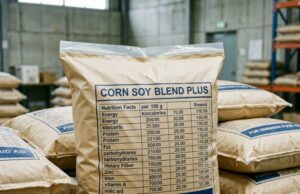
The headline finding surprised many in the field: the newer, more expensive, reformulated products did not outperform the upgraded standard corn-soy blend. In Burkina Faso, no food fully prevented growth decline, and a novel corn-soy-whey blend actually performed worse than standard CSB+ with oil. In Sierra Leone, recovery rates were statistically similar — around 62–65% — across all four products tested. In both trials, cost, not effectiveness, was what separated the products: CSB+ with oil was consistently the cheapest and therefore the most cost-effective option, at roughly $122 per child in Burkina Faso versus $140–$245 for the alternatives.
Tufts also stood up the REFINE database (Research Engagement on Food Interventions for Nutritional Effectiveness), an open-access knowledge-sharing platform built by Friedman School faculty, staff, and students together with a team from the World Food Programme.
KEY INSIGHTS and CONCLUSIONS
Regarding commodity quality, FAQR concluded that U.S. foods used in aid had “barely changed in decades” and were out of step with modern nutrition science, and (among other things) recommended adding a dairy-protein source (whey protein concentrate, WPC80) to fortified blended foods, upgrading micronutrient premixes, and adding lipid-based ready-to-use foods to the approved product list. USAID adopted uniform micronutrient specifications across 21 products, upgraded the micronutrient content of 8 products, developed 4 entirely new products, and set the first global minimum nutrient premix standard for ready-to-use foods.
• About programming quality, FAQR found that programs were commonly judged by tonnage shipped or numbers of people “fed,” not by nutrition outcomes achieved, and that a single “one-size-fits-all” ration could not meet the very different needs of infants, pregnant and lactating women, wasted children, and people on HIV treatment. It developed decision trees to match specific products to specific purposes and emphasized the first 1,000 days of a child’s life (conception to age two) as the priority window for specialized nutrition programming.
• When looking at process quality, FAQR found that the many hand-offs of food from procurement to delivery were poorly coordinated across agencies, and it recommended a standing interagency committee, stronger quality-assurance feedback loops, and later, in a 2021 review of 26 commodity incidents between 2018 and 2020, a formal Commodity Incident Management System with real-time, end-to-end traceability “from producer to consumer.”
FAQR‘s most durable legacy may be less about any single product than about how Food for Peace (today, USDA) should make decisions. Several implications carry directly into current and future food-aid policy:
• Cost-effectiveness, not unit cost, should drive product choice. The central empirical finding, that the cheapest option (CSB+ with oil) matched or beat costlier, more sophisticated products in both prevention and treatment trials, to treat moderate malnutrition is a standing rebuke to the assumption that newer and more expensive automatically means better. USG programs should keep asking “cost per case of malnutrition averted,” not “dollars per ton shipped,” when choosing among products. The FAQR’s Malawi Feasibility study (2013-14): tested increases in fortified vegetable oil (FVO) to Corn Soy Blend (CSB) from the usual ratio to 30g FVO:100g CSB, along with family education and repackaged 2-kg bags. Finding: caregivers could achieve the ratio; intervention was more cost-effective than standard programming.
• Freight and procurement costs, not formulation, usually decide the winner. Because product price and international freight, not nutritional efficacy, drove most of the cost differences observed in the field trials, decisions about where to source, how to package, and how to ship deserve as much scrutiny as decisions about what goes in the bag.
• “Fit for purpose” should stay the organizing principle, not a slogan. No single food worked for every beneficiary group in FAQR’s trials. Continued investment in decision tools that match a specific product to a specific nutritional objective, context, and beneficiary, rather than defaulting to one flagship commodity, is what the evidence actually supports.
• Interagency and international harmonization needs active maintenance, not a one-time fix. The alignme nt FAQR achieved among USAID, USDA, WFP, UNICEF, and WHO specifications reduced confusion for manufacturers and implementers, but harmonized standards drift apart again without a standing mechanism (like the FACG or an interagency committee) to keep revisiting them as new evidence and new products emerge.
• Supply-chain quality control deserves the same rigor as nutrition science. FAQR’s 2021 finding that losses are rare (under 1% of U.S.-sourced food) but that the health risk from what does slip through is high, combined with weak, uncoordinated incident tracking, points to unfinished business: a real-time, end-to-end traceability system was recommended but not fully built out before the project closed in 2021.
• Evidence infrastructure needs a permanent home. REFINE was built specifically because, before FAQR, a lack of evidence on which foods to use and how to deliver them was a genuine gap, not a rhetorical one. Sustaining REFINE, or something like it, as a living, continuously updated evidence base, rather than letting it lapse once grant funding ends, is the clearest way to keep future USG food-aid decisions grounded in current science rather than institutional habit.
Other Recommendations:
• Increase the processed food portfolio in the food aid basket.
• Adopt “feed-the-colon” strategy to promote gut health.
• Improve the stability of vitamin C.
• Use water as a vehicle for fortification of water-soluble vitamins.
• Formulate foods to accommodate the elevated micronutrient needs of beneficiaries with infections.
The main FAQR finding that upended conventional wisdom was not that U.S. food aid needed fancier, costlier products; it was that a smarter, evidence-driven version of what USAID already had, better targeted, better formulated, and more honestly costed, outperformed the alternatives. That is the standard FAQR leaves behind for whatever comes next in U.S. government food assistance.
The USG largely accepted and adopted FAQR’s recommendations. USAID adopted uniform micronutrient specifications across 21 products, upgraded the micronutrient content of 8 products, and developed 4 new products. They also formally added lipid-based products, such as Ready-to-Use Supplementary Foods (RUSF), to their approved list of commodities. USAID adopted the recommendation to add an animal-source protein, specifically whey protein concentrate (WPC80), to fortified blended foods (FBFs) like Corn Soy Blend (CSB) to improve protein quality and bioavailability. This led to the creation of upgraded products like CSB+ and Corn Soy Whey Blend.
….
SELECTED PUBLICATIONS
Michael Joseph et al. , 2019, Enhancing the Nutrient Bioavailability of Food Aid Products, explores current processed foods for malnourished children and recommends adding defatted toasted wheat germ (DWG) or synthetic amino acids (following ideal protein concepts) as cost-effective soy alternatives to boost protein efficiency; diastatic malt (0.25% barley) to enzymatically thin porridges, raise solids/energy density, degrade phytates, and improve mineral/protein digestibility; omega-3-rich oils (e.g., canola) with antioxidants; and prebiotic oligosaccharides (scGOS/lcFOS blends) plus yeast cell-wall components for gut health and mycotoxin binding. Further, processing upgrades such as extrusion, compaction of FBFs for better shelf life/transport, and optimized milling/dehulling further enhance matrix performance, noting that changes can improve cost-effectiveness and health outcomes (e.g., recovery from wasting).
Griswold, Langlois, Manary, Rogers et al. 2020, Comparative Cost-Effectiveness of Four Supplementary Foods in Treating Moderate Acute Malnutrition in Children 6-59 Months in Sierra Leone found no significant differences in recovery rates from moderate acute malnutrition among the four supplementary foods tested: CSB+ with oil, CSWB with oil, SC+A, and RUSF, observing unadjusted graduation rates of 62–65% and no observable differences after covariate adjustment in its sample of 2,653 children. Cost per recovered child ranged from $90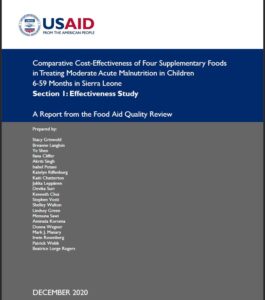 –$94 across arms from the program perspective, with no discernable differences in cost-effectiveness. Caregivers’ opportunity costs were lowest for RUSF but did not alter the overall conclusion of similar cost-effectiveness. The study observed that intrahousehold sharing occurred at similar rates (~25%) across all foods and was unassociated with recovery, as was adherence to recommended recipes. Direct observation confirmed that actual consumption of the supplement by the target child was positively associated with recovery; sustained recovery at four weeks post-discharge was lower for RUSF (73%) than CSB+ (81%), and presence of environmental enteric dysfunction (EED) reduced recovery rates independently of food type, with no food-specific differences in body composition changes.
Ilana Cliffer et al, 2019 Comparative Cost-Effectiveness of 4 Supplementary Foods in Preventing Stunting and Wasting in Children 6-24 Months. In Burkina Faso, FAQR conducted a 3-year, clustered, four-pronged trial with random assignment to determine the effectiveness and cost-effectiveness of four different supplementary foods for the prevention of stunting and wasting in children aged 6 to 23 months. This trial enrolled 6,112 children, with roughly 1,500 per study arm, making it one of the largest randomized controlled trials of supplementary foods. The trial compared Corn Soy Blend plus (CSB+), CSWB, LNS, and a super cereal product, following children monthly during the supplementation period and measuring growth, morbidity, and dietary intake outcomes. The authors found that children receiving CSWB performed worse over time but because it was shared with other household members more frequently and was consumed by the intended child less often. RUSF was the most expensive, largely because of its higher commodity and packaging costs. Flour products required more caregiver time for preparation and feeding, so adding the value of caregiver time substantially increased their total societal cost. Nevertheless, CSB+ with oil was the most cost-effective option. It was the least expensive and was at least as effective as SC+ and RUSF, and more effective than CSWB.
Griswold, Schmall, Webb, Rogers et al. 2021 Additional Analysis of Two Field Studies Comparing Four Supplementary Foods for Treatment or Prevention of Malnutrition, FAQR. The authors discerned that Mid Upper Arm Circumference (MUAC) and Weight for Height (WHZ) measures of malnutrition differ more than previously thought in identifying children. The disagreement between the measures is both by gender and age. The report strengthens the case for dual‑criterion admission (MUAC + WHZ). Authors also found that children whose malnutrition became worse, even after program enrollment, could be identified within the first few weeks, and should be flagged. Programs can introduce early intensified support for children showing stagnation in the first month. Predictors of such decline included fever, diarrhea, vomiting, or cough, even if they had no illness at enrollment. From the data in Burkina Faso, the authors identified that children with the worst stunting had consistently slower growth velocities from early infancy onward, not sudden drops, meaning that support should be continuous. Surprisingly, the authors found that at the family level, dietary diversity, water treatment, latrine use, ration sharing, and caregiver engagement did not predict whether a child improved from wasting malnutrition sustainably.
FACET. FAQR the Food Assistance Cost-Effectiveness Tool (FACET) for Supporting Specialized Nutritious Foods (SNF) Programming Decisions, a novel interactive decision-support instrument designed to help funders and implementing partners integrate cost-effectiveness analysis into nutrition program design. FACET was designed as a computer-based interactive tool that guides users through three categories of input parameters: program specifics (such as target population, duration, and coverage rate), cost
components (including procurement, transport, storage, distribution, monitoring, and overhead costs), and nutrition impact measures (such as changes in anthropometric outcomes, micronutrient status, or
dietary adequacy). The tool generates a range of cost-efficiency indicators, including cost per beneficiary per day, cost per kilocalorie delivered, and cost per unit of specific micronutrient delivered, as well as more complex cost-effectiveness ratios that link program expenditures to measurable
nutritional outcomes. FACET was published in the journal Current Developments in Nutrition in 2020 and has been made freely available to the international nutrition community through the FACET4SNF
website.
Lauren Thompson, AudreyKarabayinga,; Beatrice Rogers, Patrick Webb, . 2021. The Potential Value-Added to USAID of Open Access Data on Food Assistance for Nutrition. Report to USAID. Boston, MA: Tufts University finds that supposedly open-access datasets in food assistance for nutrition research are either inaccessible, lack necessary documentation, or are too heterogeneous to be useful for pooled secondary analyses. Consequently, the FAQR recommends that funding organizations implement tougher data-sharing guidance and infrastructure, such as requiring comprehensive data management plans and the curation of complete datasets with accompanying documentation, to make open data truly meaningful and reusable.
see also: https://evidencesummit2.wordpress.com/resources/
– Contributed by WHES board member, Steven Hansch






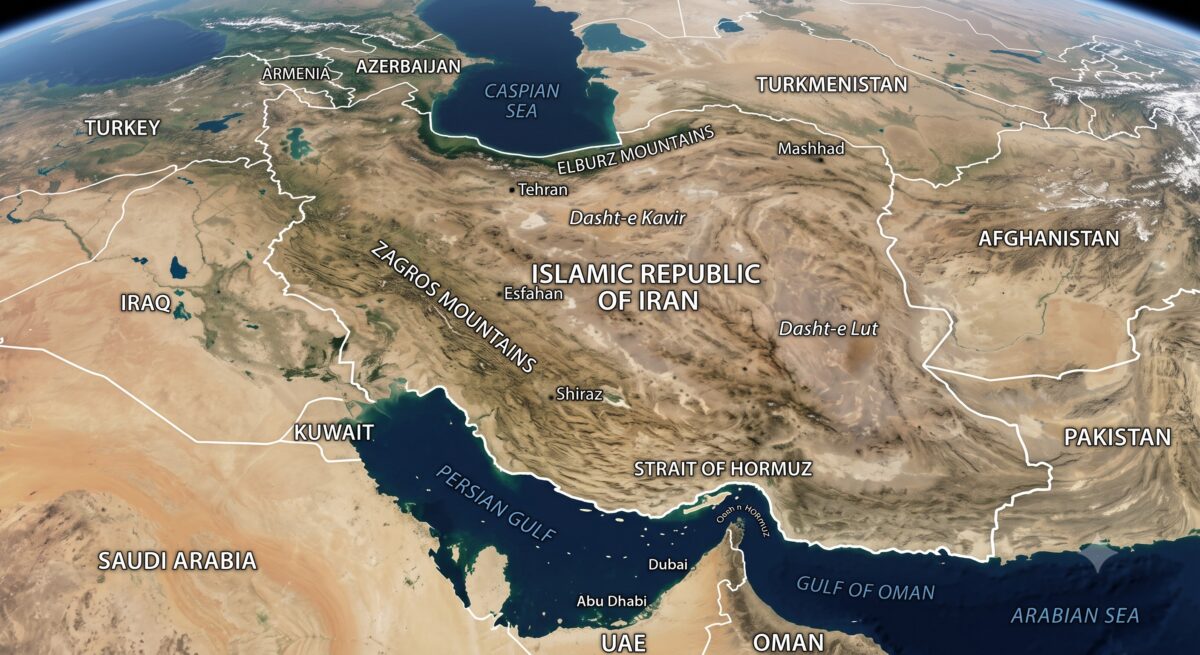
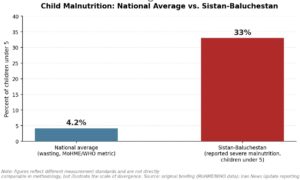
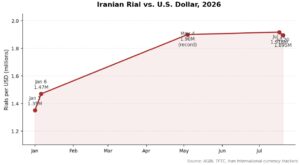 worse than in February. Iran’s currency, the rial, approached 1.95 million to the dollar on July 20 down in value by roughly a third since January,with the IMF projecting nearly 69% average inflation and a contracting economy for 2026, leaving the official minimum wage worth only about $87 a month. Iran has not published GDP data since 2024, and a nationwide internet blackout has made even the country’s own statistics hard to verify from outside.
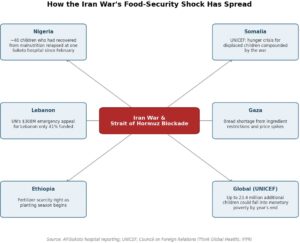 Hunger Notes, UNICEF,

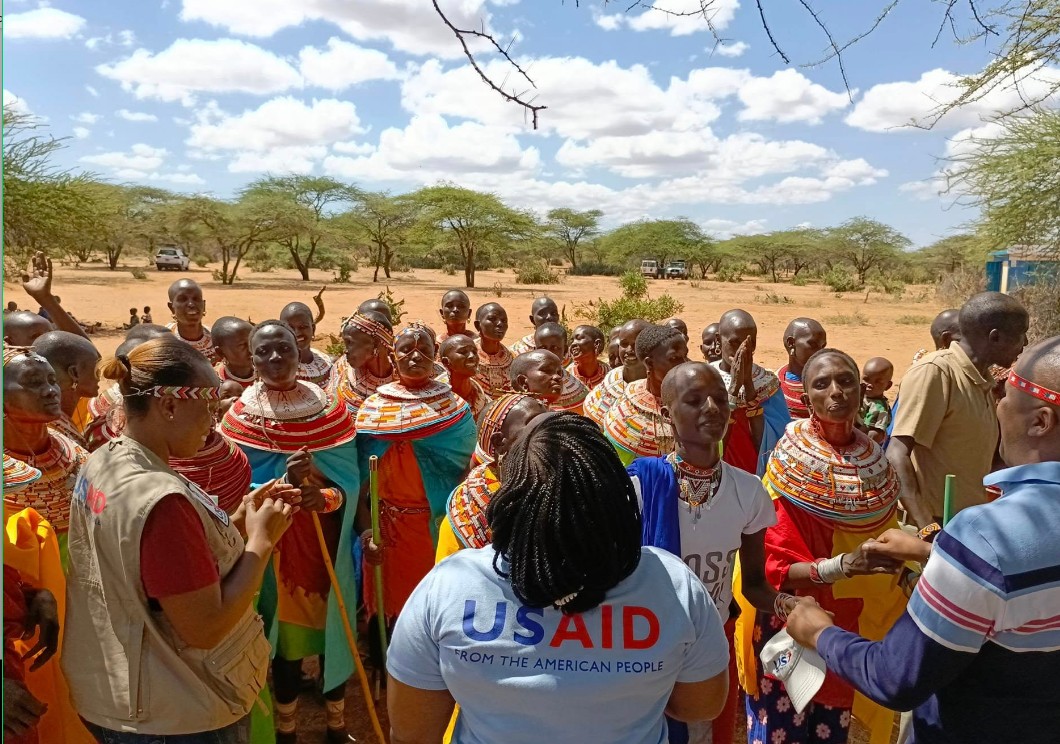
 The partner county governments agreed to sustaining gains post-closeout, including asset handovers and policy integration. The NGOs also observed

 clinics where cash transfers and supplements were available. See:
  government programs. CARE transitioned the food supply chain to the Integrated Child Development Service. Many Anganwadi Centers maintained uninterrupted food supply for preschool children after exit. Take home rations were less reliable. In Orissa, distribution dropped dramatically due to irregular deliveries. In some states, beneficiaries reported that the quality of government rations had degraded so much that some fed it to animals. Mothers continued attending health days only to receive the rations. Catholic Relief Services attempted to transition school feeding programs to the Mid Day Meals program. This largely failed because the government lacked motivation to provide free food to private religious and boarding schools.

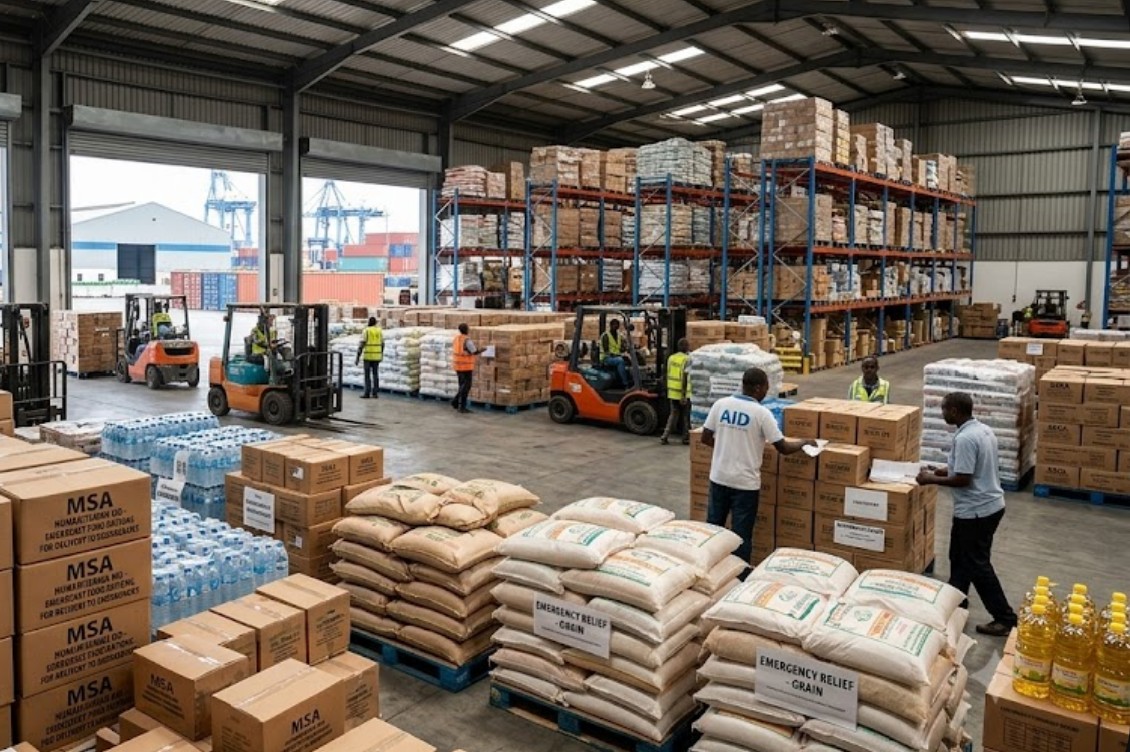
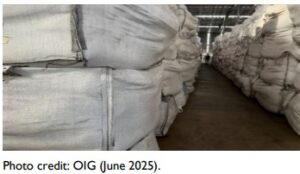 practices, though with some deviations that may risk spoilage.