U.S. Anti-Hunger Efforts by Congressional Hunger Center

On February 22, 2023 the Congressional Hunger Center (CHC) hosted a gathering of 50 staff and Hunger Fellows to look back at their achievements over the decades in addressing hunger in the United States.   A key topic was success in promoting local legislation to provide free meals in schools, and to build the momentum for free meals to be universal.  Successful messages included “hungry children can’t learn” as well as fighting stigma and helping children access the bounty of locally produced foods.

This webcast can be viewed at the CHC site.

The Congressional Hunger Center, based in Washington, DC, sponsors Hunger Fellows to be posted with a wide range of organizations involved in policy, research, advocacy, education and outreach.  Founded in 1993, it has trained and supported hundreds of Fellows around the U.S. and around the world.


Reviewed by Steve Hansch

Niger and Sahel use Farmer-Managed Natural Regeneration Increase Yields to Improve Food Security

As described in this recent National Geographic article (see link below), farmers in Niger let cut trees regrow in their fields, leading to improved crop yields from retained soil moisture and fertilization by fallen leaves. Improved crop yields can improve food security.

Over the past 35 years Niger has added at least 200 million new indigenous trees and has re-established woodlands over at least 12 million acres, a bit less than the size of the state of West Virginia.

Farmer-Managed Natural Regeneration to Increase Crop Yields, or FMNR, is an old approach that is receiving new attention from local farmers and is effective because it is cheap, it can be scaled easily and it meets individual farmers’ needs.

This FMNR approach can be scaled in the Sahel region and other pastoralist zones throughout Africa and on other continents where rainfall is decreasing.  The US Geological Service has verified these changes.  Click this link for the full story:

https://www.nationalgeographic.com/environment/article/how-farmers-in-earths-least-developed-country-grew-200-million-trees?loggedin=true

USAID Administrator Power discusses food insecurity with colleagues

At a meeting held July 18, 2022, sponsored by the think tank, CSIS, USAID Administrator Samantha Power and a panel of specialists discuss the current global food insecurity crisis, noting how it has been exacerbated by the Covid-19 pandemic, climate warming, violent conflict, and the interruption of Ukraine food shipments associated with the Russian invasion of Ukraine, in 2022.
Estimates of 276 million additional people have become food insecure globally because of these events, and these conditions are likely to worsen until the Ukraine war ends.   Samantha Power’s speech begins at around the 18 minute mark. 
click on this link for the archived video feed:

Resilience Book Review: Ending Hunger – The Quest to Feed the World without Destroying It

Anthony Warner’s 2022 book “Ending Hunger – the Quest to Feed the World Without Destroying it” (Oneworld Press) attempts to challenge the myths he sees in social discourse in developed countries about how to address world food problems.  Based on his popular blog “the Angry Chef”, he tries to replace pseudoscience with good science, along the way quoting credible scholars including Norman Borlaug.  For instance, he debunks the notion that eating organic foods helps address poverty or protects the environment.   He’s also skeptical of the health arguments for “paleo” diets.

Earlier in the book he retraces human history and the transition from hunter-gathering societies to agriculture, and then on to the green revolution of the 1960s.    Critical to human population growth was the shift to food crops that could be stored between seasons, namely wheat, barley, lentils, potatoes and rice.  He asserts that the reduction in malnutrition and hunger around the world during the past century is one of the most important achievements of humanity.

Ending Hunger looks at both how individual consumption can make a difference as well as how global solutions need to evolve.   Warner recommends that people shift to diets that rely less on animal products.  He believes that Animal product consumption accounts for almost 15% of greenhouse emissions and growing fast, set to double by 2040 by current trends.  He recommends shifting diets toward lentils, pulses, chickpeas and other plant-based foods.   He said that “We have to get away from the social notion that one has to have some meat at the center of every meal, and instead recognize how plant-based products can be delicious.”  Furthermore, he recommends a more open attitude toward genetic modification of foods, which can improve yields and nutrient density.

Warner warns that  current “agriculture is putting a strain upon the air, the land, the water, the soil and every creature on Earth. The production of food has more negative impacts upon the planet than any other human activity.”  Based on this he argues there is a pressing need for change, with government intervention in agriculture systems.  Organic farming, he writes, takes up too much land and there has been too much deforestation.  “On pretty much every single metric of environmental impact, you’re worse off using organic farming,” he writes.

Warner wrote previous books, such as “The Angry Chef:  Bad Science and the Truth About Healthy Eating” 2017.

Interviews with the author can be found online, such as this from July 2022  — https://www.buzzsprout.com/1973717/10843204-will-world-hunger-be-the-next-pandemic?t=0


-Reviewed by Steve Hansch

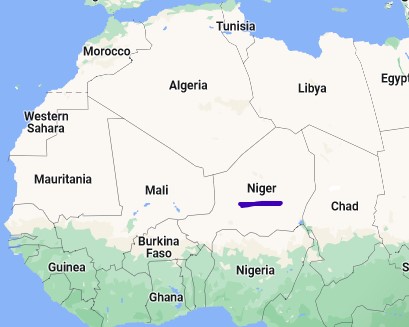
Hunger in Niger

Niger is one of the countries within the Sahel region on the southern border of the great Sahara Desert in West Africa.  Niger rests directly north of Nigeria, and is home to over 24 million people.  As the country enters April which this year is the month of Ramadan, it is sobering to observe the current food security conditions in-country.

Niger is bounded by neighboring countries that suffer from Islamist attacks and recent coups. Niger’s rainy and cropping season runs from roughly May-October, and Niger it entering its lean season.  This is before the annual harvest at the end of the rains, in October/November 2022. An estimated 4.4 million Nigeriens will be food insecure between June-August 2022 (according to the Cadre Harmonise monitoring system) and the number of food insecure individuals is estimated to be roughly double the numbers seen in 2021.  These critical numbers are expected to worsen in the coming months, as the war in Ukraine has already affected world grain supplies, resulting in higher basic food prices within Niger, as well as increases in prices of, fuel and fertilizer which are expected to rise significantly in the coming months.

Malnutrition rates in Niger have not improved significantly in the last ten years and acute malnutrition remains at approximately 10% of children under the age of five.  International aid agencies have been responding, including CARE and Catholic Relief Services which are in the middle of five year food and nutrition programs, funded by USAID, in Maradi and Zinder regions, respectively.  The World Food Programme has piloted vulnerable adolescent girls with folic acid, iron and school meals, with the finding of significantly increased retention and graduation from schools.  The European Union also provides food and humanitarian assistance to Niger.

Niger also hosts over 800,000 internally displaced persons (IDPs), refugees or other uprooted people, and these populations are also food insecure.  Niger’s national cereal production for 2021 of ~3.5 million MT decreased by 40% from the previous 5-year average, food prices for its staples of millet, sorghum and maize have so far all increased by ~15% from the previous 5-year average, and are expected to further increase in the coming months as Niger’s lean season progresses. The food supply, combined with low forage supplies for livestock and continued physical insecurity due to Islamist attacks and threats all paint a very challenging picture for the Niger Government and its international partners to respond to these domestic food and physical security needs.   The nonprofit Action Contre la Faim, or Action Against Hunger in the U.S., provides nutrition, health and water in southwest and southeast Niger.

Compared to its neighbors, Niger is an island of relative stability due to successful elections last year and a relatively lower Islamist threat than the neighboring countries of Mali and Burkina Faso, though conditions can quickly change.  Niger’s continuing food security challenges are similar to hunger challenges throughout the entire Sahel region.  Climate change adds to these continuing challenges, linked to land degradation, water access, lower and inconsistent rainfall, high human fertility rates, and low literacy rates, especially for women.  Niger remains resilient, but this relatively small country and region, a continent away from Ukraine and eastern Europe, show the far-reaching global effects that current conflict will have on both rich and poor countries, especially those that rely on imported food, fuel and fertilizer to mitigate national food insecurity.

Cadre Harmonise:  https://www.ipcinfo.org/ipc-country-analysis/details-map/en/c/1152560/

https://fews.net/west-africa/niger

https://ec.europa.eu/echo/where/africa/niger_en

WFP:  https://www.ennonline.net/attachments/2928/FEX_58_Niger_p2.pdf 

Assistance to Press Freedom can Fight Famine

 “in the terrible history of famines in the world, no substantial famine has ever occurred in any independent and democratic country with a relatively free press” 

                    – Amartya Sen, Nobel Laureate and author of Poverty and Famines

On November 4, 2021  USAID announced new funding in support of a fund for protection of journalists, a step toward improving freedom of the press in poorer countries.  USAID Administrator Samantha Power, who began her career as a journalist, announced that the Biden administration was setting up a Global Defamation Defense Fund in her presentation at Georgetown University.  This initiative follows the precedent set by the UK Government in 2019, when then Foreign Secretary Jeremy Hunt set up the “Global Media Defense Fund” co-funded at the time by Britain and Canada.  This fund is managed by UNESCO (https://en.unesco.org/global-media-defence-fund ) .  Among other things, this fund has been providing local financing to national organizations “supporting investigative journalism that contributes to reduced impunity for crimes against journalists, and enhancing the safety of those conducting this line of work.”

The Georgetown event was co-hosted by the U.S. Global Leadership Coalition, and referenced at:  https://sfs.georgetown.edu/usaid-administrator-samantha-power-discusses-vision-for-global-development-at-sfs-event/


Locusts Add to World Hunger in Africa, the Arabian Peninsula and South Asia 2021

Original Contribution by Sharmin Sultana

Seeing a locust, one cannot imagine that a harmless member of the grasshopper family can become one of the world’s most devastating pests.  Yet, in 2020, within just a few months locust swarms destroyed more than 1.2 million hectares (ha) of crops and pasture in a region where people were already hit by droughts, floods and conflict. In general locusts swarm in different parts of the world.  However, since mid-2019 they have been active across the Arabian Peninsula and East Africa, pushing more than 20 million people at risk of hunger.

Around 23 countries: 9 in East Africa, 11 in North Africa/Middle East and 3 in South Asia have been affected by locusts and face  an unusual threat to food security and livelihoods according to a World Bank report. The UN Sustainable Development Goals list locusts as one of four threats to world food systems.  An adult locust eats roughly 2 grams of food daily. As a result, a large swarm eats enough food for 81 million people, equivalent to 1.8 million metric tons (MTs) of green vegetables.

According to reports by international aid agencies, the most recent locust swarms (2019–2021) caused 356,286 MTs of cereal loss along with wasting 197,163 ha of cropland and 1,350,000 ha of pasture-lands in Ethiopia alone. As a result of this one million Ethiopians required food assistance due specifically to damage from locusts, prior to the start of its civil war in late 2020. Around 20.2 million people in Ethiopia, Kenya, Somalia, South Sudan, Uganda, and the United Republic of Tanzania faced severe acute food insecurity, exacerbated by these locust infestations.

These locust swarms  formed in the regions of East Africa, the Arabian Peninsula, and the Indian subcontinent.  According to the United Nations Food and Agriculture Organization (FAO), these swarms were the worst plague in Kenya in 70 years; in India in 26 years; and in Ethiopia and Somalia in 25 years. They spread throughout counties within Kenya, Ethiopia, Uganda, Somalia, Eritrea, India, Pakistan, Iran, Yemen, Oman, and Saudi Arabia. Usually, the reason for the quick spread of the swarms from one country to another is wind patterns. In this case, southeast monsoons blew in from the Indian Ocean to Kenya and carried the locust swarms to other countries. Specifically, Cyclone Mekunu in 2018 and the warm weather after heavy rains are thought to be the reasons for this particular outbreak.

Previous locust outbreaks in Africa from 2003-2005 led to an estimated $2.5 billion in crop damage. Depending on the cultivating seasons, they can destroy from 50 to 80% of crops. The potential hunger threat is huge in a region where millions of people are already facing chronic food insecurity. The impacts could threaten livelihoods, savings, and push vulnerable people further into poverty.

Typically, locusts are solitary pests.  However, in special environments, they become gregarious. The serotonin hormone in their brains is responsible for this transformation.  This transformation changes not only their body color and size, but also their behavior.  As a result, they congregate in groups instead of staying solitary.  This is how they enter the swarming phase, where they become migratory, traveling from one place to another and consuming huge amounts of crops on their way.

Locusts thrive after heavy rainfall and an abundance of vegetation.  Locusts breed after rainfall because they need moist soil to lay their eggs and an abundance of food for rapid growth. Even a small swarm of one square kilometer  holds 80 million locusts and eats the equivalent of enough food for 35,000 people in one day.  The swarms in east Africa in 2020 may have included a trillion locusts by some estimates.

Types of Locusts

Different parts of the world have different species of locusts. The desert locust (Schistocerca gregaria) is considered the most dangerous of all migratory pests because of its ability to reproduce quickly and destroy crops, pasture, and fodder.  They are found in more than 65 countries of Africa, Asia, and the Middle East.

Migratory locusts become swarms in Africa, Asia, Australia, and New Zealand.  In the 1930s, the High Plains locust was found in the American Midwest but is rare now.  The Rocky Mountain locust was once one of the worst insect pests but it became extinct in 1902.  Thus, North America and Antarctica do not have any locust species. The Senegalese grasshopper and the African rice grasshopper often show locust-like behavior.

History of major infestations

In the last two millennia desert and migratory locusts continued to appear at irregular intervals as outbreaks in Africa, the Middle East, and Europe and destroyed crops and caused famines which led to human migrations

In Kenya, one of the largest swarms was recorded to cover 10,000 square kilometers. According to the Bible and the Koran, humans were victims of  locust swarms that appeared from nowhere to darken the skies. Though the swarming behavior decreased by the 20th century, swarm formations can still be present.

In 1988, swarms originating in North Africa traveled to the Caribbean and South America, and amazingly crossed the Atlantic Ocean. Locusts easily move across countries in a matter of days. They routinely cross the Red Sea, which is a distance of almost 200 miles.

Challenges in control measures

  • Not having enough aircraft to spray appropriate chemicals on the pests.
  • Problems in maintaining supplies of these chemicals and pesticides.
  • Political instability: for instance, ongoing war has made Yemen or Ethiopia increasingly inaccessible to humanitarian assistance, which has slowed down outbreak response; furthermore, Yemen does not have funds for specially trained crews to spray pesticides that kill the insects.
  • Natural disasters make the breeding areas difficult to access.
  • Unpredictability in movement makes it harder to maintain funding, political will, and capacity building initiatives.
  • Lack of coordination in the efforts of neighboring countries.
  • Large logistical requirements to combat an infestation over a vast area; moreover, due to ongoing COVID-19 restrictions, supply chains have been hampered.

What can aid agencies do in response?

  • Forecasting is the best preparation for future locust swarms. Forecasting weather variations, wind speed and direction, temperature, and humidity can help to determine the movement of locusts and gives farmers time to start spraying early. Also forecasting can predict regions that are likely to suffer from locust plagues in the near future. Tracking locust migration patterns and overseeing regional response efforts are necessary. Using modern technologies including tools such as GPS (global positioning systems), GIS (geographic information systems) and satellite imagery for forecasting and tracking is part of a vital response to this threat.
  • The most effective way to fight outbreaks is using chemical insecticides, which can be distributed using packs on the ground, or by aircraft. However, the substances used can be harmful to the environment and to human health.
  • Biological pesticides are another option. Fungus-based pesticides are thought to be harmful to a much narrower range of species. However, bio-pesticides do not work as quickly as chemical sprays, and this threatens greater crop damage.
  • Drones and electrified metal grids can be used to control locust swarms. Drones can help spray chemicals and provide surveillance. Electric grids can be dragged over fields to generate vibrations in open fields to kill and deflect the insects.
  • Changing agricultural practices may also be effective. Instead of relying on traditional crops like maize and cowpeas, investing in fruit and vegetables can deter locusts. An initiative taken by village irrigation projects of Action Aid Kenya in 2009, in partnership with selected farmers, is one example.
  • Locusts are edible and have been eaten throughout history, and may be consumed as food. Locusts are eaten in the Arabian Peninsula and Africa. In Saudi Arabia, the consumption of locust spikes around Ramadan since those are believed to be healthy. Some popular ways of eating locusts are fried, smoked, or dried. However, the use of pesticides can make them unsafe.

Climate change, sea-level rise, and cyclones can all bring extreme rainfall, which enables locusts to hatch and breed.  For example, in the Arabian Peninsula, a heavy rain produced higher vegetation growth which then triggered locusts. Locusts are also highly adaptive to heat and drought. Deforestation and environmental degradation can also create ideal conditions for more locusts to breed. If we want to save ourselves from locust swarm attacks, we have to pay attention to our environment. Failing to tackle the climate crisis might cause more frequent and devastating locust outbreaks, and may result in more hunger and food insecurity.  Hunger and food insecurity are key barriers to sustainable development. Therefore better control of locust destruction of food crops is essential if we are to achieve the status of Zero Hunger (i.e. the second UN Sustainable Development Goal).

  Sharmin Sultana is a public health communication professional with an MPH in community nutrition.  She has been a USAID fellow and has worked in nutrition, food security and social and behavior change communication projects in Bangladesh.
Documentary Looks Back at Norman Borlaug’s Career

A recent documentary available from the Public Broadcast System (PBS) and WGBH “The Man Who Tried to Feed the World“ (2020) briefly surveys the motivations and achievements of food researcher, Dr. Norman Borlaug, who won the Nobel Peace Prize for his important innovations of better-producing types of crops.  Part of “The American Experience” series it can be viewed online.  Dr. Borlaug’s life serves as a demonstration of what one person can accomplish through their own initiative, combined with creativity and persistence.

The documentary recounts Borlaug’s struggles to focus on genetic variations in wheat crops, from his Rockefeller-foundation funded station in Mexico.  Borlaug, who passed away in 2009 at the age of 95, demonstrated important initiative, following his own passion and insights to try to win the war between growing population sizes and food production, the war over hunger.  His critical success in demonstrating higher-yield crops was achieved around the International Maize and Wheat Improvement Center (CIMMYT) in Mexico.

The Green Revolution included tripling of crop yields in Asia where new crop varieties were planted on 82% of land.  These crop varieties leveraged irrigation and fertilizer inputs which have been less available in Africa, where fewer benefits were seen from the new crop varieties.  Overall, between 1960 and 200 developing countries benefited from a general increase of 208% in yields.  In Indonesia, for instance, rice yields, measured as tons per hectare, increased from 1 ton in 1961 to 4 tons in 2018.  In Brazil, average maize (corn) yield increased during that same period from 1.3 to 5.6.

The second half of documentary in a short period attempts to convey some of the environmental criticism of the 1968 “Green Revolution” credited to Borlaug’s initiatives.  What the critics who were quoted do not talk about is what the alternative would have been, nor do they answer whether their implicit message is that it might have been better if Borlaug had done nothing and let tens of millions of people starve.  It is also ironic that Borlaug, a forester by training, believed that increased yields could actually decrease deforestation.  The documentary inaccurately attributes higher yields on rural-to-urban migration trends.  Rural to urban migration had been occurring throughout history and increased when farms became mechanized, but not because yields increased.  The documentary also criticizes Borlaug for the persistence of malnutrition, missing the fact that malnutrition would have been greater in the absence of Borlaug’s efforts.

In Borlaug’s honor, an annual symposium in Iowa about world hunger is held, bringing together experts to discuss world hunger.  The related World Food Prize attempts to further Borlaug’s vision by acknowledging other leaders.

Borlaug’s important work to help stave off famine in the world, while population was doubling, makes for a good topic for classroom discussion.

Many readings (some online) are available that go into greater depth about Borlaug, including Leon Hesser’s biography “The Man Who Fed the World”, 2006 (Durban House Publisher).  Borlaug interviews appear on Youtube, such as a series about the International Rice Research Institute.

A popular best-seller by Charles C Mann  “The Wizard and the Prophet:  Two Remarkable Scientists and their Dueling Visions to Shape Tomorrow’s World” 2018 (Knopf, Penguin) also goes into considerable depth about Borlaug’s research (including fungus-infected flax) and later work with the India Agricultural Research Institute).

Much of the debates today about the challenges of resilience and hunger keep coming back to issues that framed Borlaug’s career and advocacy.


by Steven Hansch, WHES Director & Editor

Veterans Day Lessons for Current Livelihood Crisis

Veterans Day commemorates the many millions of American soldiers who returned home from wars with uncertainty about their futures and livelihoods.  Veterans have faced an extended transition period as unemployed workers seeking to enter an often transforming economy.  A prime example was at the end of World War II when 11 million young veterans found themselves abruptly without a job, wondering whether they were returning to job prospects or the high unemployment of the Great Depression. Similarly, other countries facing severe Covid-19 cases and lockdowns, from India to Brazil, from Spain to Kenya, may address livelihood collapse, resulting in malnutrition and hunger, through medium-term investments in support to job training and education.

Then – the mid 1940s — as now, the world was being remade with old job categories being replaced by entirely new types of employment in new industries.  Then, as now, policy makers struggled to identify effective measures to re-integrate restless, displaced youth.

While World War II still raged, American leaders crafted in 1944 an effective solution – the GI-Bill – which should be instructive to us today, because of the success of the retraining and higher education programs that it catalyzed.  The 1944 “Servicemen’s Readjustment Act of 1944”, more commonly referred to as the GI Bill, ran until 1956 and bolstered the lives of veterans to a large extent through its offering of one year of education for veterans who had served at least 90 days plus additional years of schooling for each year of military service.  Of roughly 15.6 million veterans with eligibility, almost 8 million took advantage of the education and training opportunities, at a cost of $14.5 billion to the government, but yielded decades of high economic growth as America led the world’s economic rebound.

Historian Susanne Mettler found extensive testimonies from veterans about how the education attained from the GI Bill facilitated their employment and livelihoods for decades to come in a major break from history:  “Mid-century men started finding jobs that were not the jobs of their fathers or grandfathers.”

Many other authors have documented how dramatic this leap in advanced education was on American culture.  Thousands of leaders were generated from the GI Bill including many who helped launch USAID.  A friend and colleague on the board of an international NGO fighting hunger who benefited and whose father benefited from the GI Bill wrote me that he is “frustrated that today the benefits to the current generation of service men and women is not as generous.  My payback has been to fund a fellowship for veterans who served in combat.”

This gi bill posterfrom 1945same educational and training support should be considered today for those upturned by the Covid-19 pandemic.  Covid-19 did not start the re-shaping of global economics, but it has hastened it. Unemployment increased from 3.5% to almost 15% in the span of a few months due to Covid-19 and is high today in many states, near or above 10% in California, Massachusetts, Illinois, and 15% in Hawaii.  Instead of seeing this period of bankruptcy and displacement from Covid-19 only as a problem, we can think of it as an opportunity to retool America’s youth for a new generation of jobs, only just being envisioned.

Recommended further reading:

Edward Humes “Over Here:  How the G.I. Bill Transformed the American Dream” 2006, Orlando, FL:  Harcourt Publisher

Susanne Mettler “Soldiers to Citizens:  the GI Bill and the Making of the Greatest Generation” 2007  Oxford University Press


Steven Hansch, WHES Board


A Biblical Surge of Miscommunication

On Language:

In the popular media, including otherwise-intelligent talking heads and world leaders have invented new pretentious, uses for words that have little actual meaning.  Chief among these are:  “surge,” “spike”, “epicenter” and “biblical proportions.”

For example: the head of large United Nations agency has been prolific about how this pandemic might lead to famines and food shortages “of biblical proportions.“   The biblical proportion part has subsequently been repeated by many journalists and in headlines.  In fact, this pandemic has certainly led to dramatic increases in malnutrition across the world, associated with the collapse of livelihoods and jobs of income-earners.  But what about this is of proportions that are “biblical?”  The Bible refers to famines and food shortages on a number of occasions, but never defines how many people were malnourished or died.  In other words, there are no proportions described or implied.  The populations in Biblical times numbered in the tens of thousands or hundreds of thousands, much smaller than those affected today (hundreds of millions).  So, if anything, “biblical proportions” under-plays the extent of death and excess malnutrition occuring today.

Many journalists liked to spruce up their reporting by referring to pockets of Covid-19 cases as “epicenters.”   One anchorwoman referred multiple times to parts of New York as the “epicenter of the epicenter.”  Actually, epicenter is not a term defined to say anything about diseases; it is defined for earthquakes where it refers specifically to the source of the release of the quake waves, i.e. the origin.  So it is untrue, misleading and surely unintended for our media to suggest that the current pandemic began and spread outward from Brooklyn or the Bronx.  Nor from most of the other places called epicenters in this pandemic.  It would be more useful and accurate to say simply “areas of high caseload.”

The most abused terms have been “spike” (an abrupt rise followed by a fall) and “surge.”  Spike was used early in the outbreak to refer to any spread of the disease, or increase in cases.   Mostly, it was misleading as the increase in cases was not followed soon after by a decline, but instead by continued, gradual increases.   Because the word “spike” may have sounded mathematical, it allowed those reporting to sound dramatic while avoiding saying anything specific about the extent of increase, or the rate of spread.  Better to just say “increase.”

“Surge“ has been used the most consistently, at times interchangeably with spike but, now, much more often.   “Surge” has grown in use in 2020 to serve as the all-purpose noun, verb and adjective for Covid-19.  In almost all instances it is undefined, without meaning and another way to avoid reporting anything specific.  Based on the context, surge has displaced terms with clearer meanings such as “increase”, “wave”, introduction into a new area, “outbreak”, “plateau,” and “cumulative caseload.”  Some people think it means acceleration, others simply “spread.”  In most cases it means nothing more than “the disease continues to spread from person to person”, which, after all, is what communicable diseases do.  When the first few cases hit Washington, DC, in the same short speech, the Mayor used the word “surge” several times but each in a different way to mean:  “any new cases”, the overall curve, the cumulative caseload, an eventual “plateau” and a growing epidemic.  As another example:  on August 2, the New York Times ran a headline that “Britain had Europe’s Worst Surge in Deaths.”  The article used surge to mean several things at once:  the cumulative deaths over many months, the extent of geographic spread, and the duration of the outbreak.   Where “surge” sometimes means nothing more than “increase”, it is also now referring to everything else that happens including  to the sum total of the disease’s effects.

The word surge has historic usage connoting a “wave.”  But consistently talking about Covid-19 spread as a wave distracts from the reality that it moves from a single person to another single person at a time.  It does not drop from the sky in one big wave onto a lot of people at once.

We do have simple yet specific terms that journalists have become too lazy to use, such as “spread,” “increase”, “caseload”, “outbreak”, and others which public health scientists have used for decades and continue to use.  What epidemiologists care about is the rate of person-to-person spread, one measure of which is R nought (R0), also known as the Reproduction Number, which can vary from town to town and from week to week but which tells us how quickly a disease is spreading.  When R0 is much higher than 1, the spread is geometric (predicted by an exponential equation).  When it is below 1 for an area, the outbreak is declining.

Early in the outbreak, pundits liked to talk about “flattening the curve”, with accompanying pictures of a simple curve.  The valid point they wanted to make was the importance of slowing the spread of the disease as much as possible so health systems could catch up.  But it was misleading to the public to imply that there was a simple up-and-down curve to the whole epidemic.   In early 2020 we were unsure the extent to which the pattern of the Covid-19 pandemic would have seasonal ebbs or increases, orwhether it could be readily contained, or other patterns.  We misled at that time in pretending that it would be a simple curve.  We know now that the curve can be very complicated, with distinct waves and peaks.

The global health crisis underway can be a good teaching moment for us all to learn more about humanitarian crises and the science associated with them.  Journalists should up their game in learning to use more precise language.


      Steve Hansch is an editor and board member of WHES.