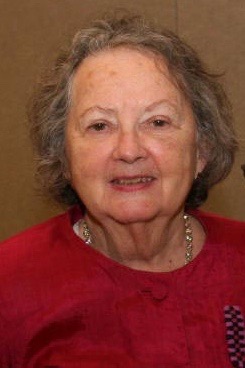



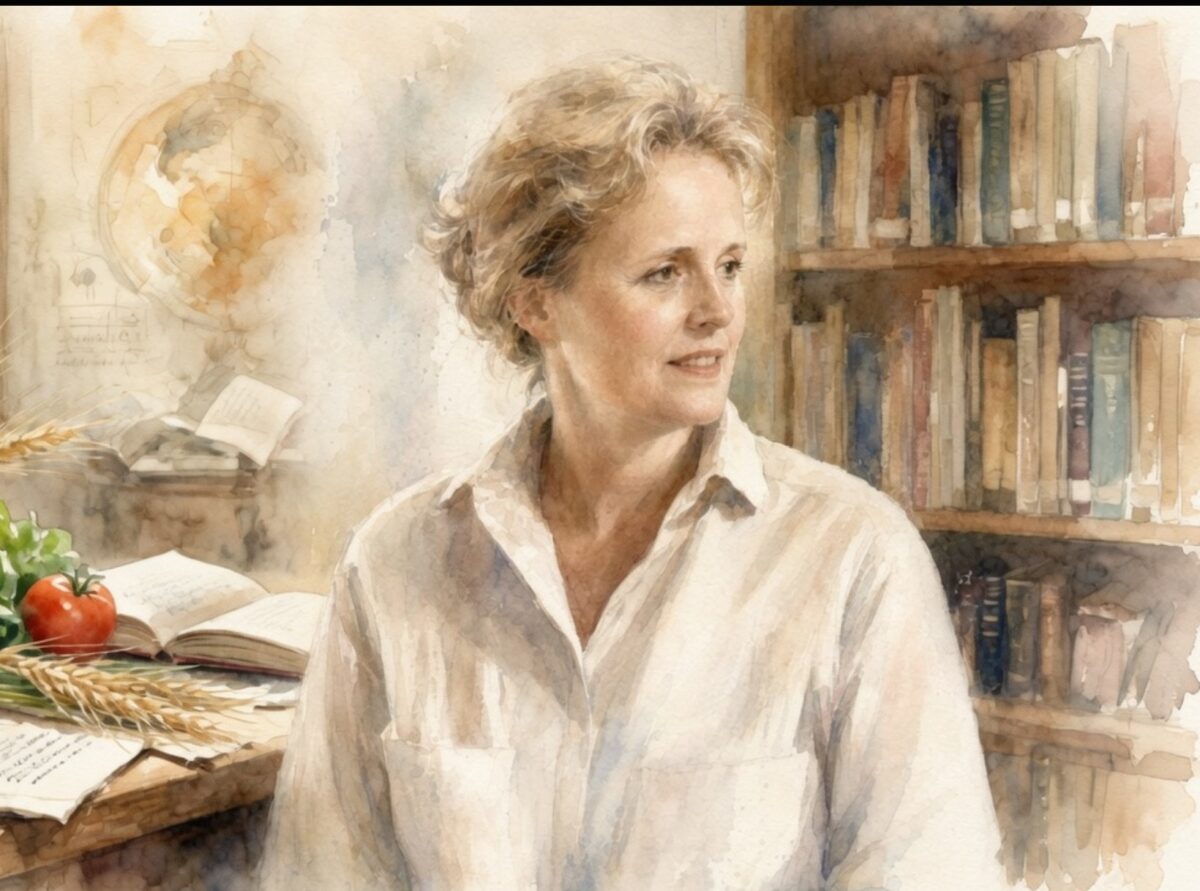
July 5, 2026 This publication, Hunger Notes, is produced by World Hunger Education Service (an independent, volunteer, non-profit) and both were created a half century ago by the force of will of Patricia (Pat) Kutzner (1930-2015) to fill a gap in public education about international and domestic hunger issues. Today, 50 years later, the organization remains defined by her original vision, writing, editing, leadership, dedication, perseverance, and inspiration of others.
Origins: In 1975, soon after moving to Washington, DC, Pat wrote a “Hunger Workshop Notes” report, on her Smith·-Corona portable typewriter while sitting on the floor of the non-air-conditioned room at Trinity College near Catholic University. At that time, Pat was asked to be the Episcopal Hunger Network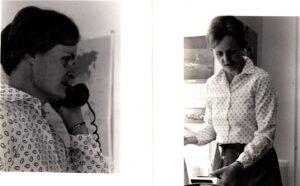 ’s liaison on the Interreligious Taskforce on U.S. Food Policy. Soon thereafter she founded the World Hunger Education Service in April 1976. She saw the need for an information clearinghouse and networking center. Barbara Howell, Bread for the World’s domestic hunger specialist, and Bob Cory, director of William Penn House, the Quaker Center on Capitol Hill, were Pat’s co-founders of World Hunger Education Service. In July 1976 WHES began routine publication and circulation of Hunger Notes in hard copy form to the wider public by subscription, while continuing to provide it under contract with the Episcopal Church Center in New York City for special distribution to the Episcopal Hunger Network.
“Hunger is not caused by a lack of food, but by a lack of power, justice, and knowledge. ” – Pat Kutzner
She was a member of the U.S. Delegation to the 1979 FAO World Conference on Agrarian Reform, where she pushed the delegation to keep the focus on poor and hungry people rather than bureaucratic process. Colleagues recalled her insistence on “the real human dimensions” of development.
PAT’s JOURNEY
Patricia Lou Kutzner was born January 27, 1930 in Billings, Montana, to Clyde Mondelle Kutzner and Nelle Pearson. Her upbringing in rural Montana instilled a lifelong affinity for rural communities, self-reliance, and service.
Pat’s life incorporated deep commitments to scholarship, service and the life of the Spirit. She earned a BA from the University of California Berkeley in 1952 and a secondary education credential (1953). After spending a year in Bad Godesberg, Germany (1957-58), she earned an MA at Stanford University in German Studies in 1962 and a Ph.D. in German Studies in 1972. During the 1960s she served as acting director of the Bridge Mountain Foundation, an “educational community” exploring mindfulness, human connection, and meaningful living. She also served as manager of the Santa Clara Symphony Orchestra where she was involved an amateur violinist.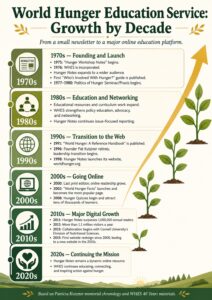
She moved to New York City to work on development education with the National Program of the Episcopal and United Methodist Churches. She realized that she was needed in Washington, DC, the center of policy, where she focused education to:
♥ humanize policy debates
♥ empower citizens with knowledge
♥ connect domestic and global hunger issues
♥ challenge structural injustice
When founding WHES, Pat was inspired by Art Simon and Bread for the World.
Former Board Chair Dan Shaughnessy remembers how “Patricia Kutzner was intensely devoted to the elimination of hunger. Her efforts were a prime example of the importance of advocacy for an essential cause.” Dan further remembers: “In those early years of WHES (1976 – 78) I was Associate Coordinator for Food for Peace at AID, and we would see each other at meetings, gatherings, etc. Then, in 1979, I was appointed by President Carter as the Executive Director of the Presidential Commission on World Hunger, and Pat asked me if the Commission could fund the second edition of Who’s Who in Hunger. I agreed and the Commission funded that edition in late 1979.”
In 1985 Pat traveled to Nairobi as part of a Quaker delegation observing the UN conference ending the Decade for Women. Antonio Gayoso of the WHES board recalled how she constantly reminded government officials that “the objective of development assistance was to improve the lot of common people, who were usually powerless and often hungry.” Antonio also remembered: “We saw her eating plain bread when others had sandwiches. We knew she frequently did not have train fare to return home… Where others frequently jaded as time passed, Pat always kept the vigor and idealism of someone eternally young at heart”.
A chronology of Pat Kutzner’s role with WHES is catalogued by former editor, Lane Vanderslice, in this article.
AFTER WHES
After 20 years, Pat retired from WHES in 1996. Since Pat’s retirement, the organization was led by Lane Vanderslice (editor) and board chairs Tom Zopf, Dan Shaughnessy, Margie Ferris Morris, and Peter Morris.
After traveling to New Mexico to participate in the FWCC Triennial Conference at Ghost Ranch in Abiquiú, she took some time to walk about and found her way to the Navajo Nation. After retiring in 1996, Kutzner relocated to New Mexico, where she worked as a planner and trainer for the Torreon/Star Lake Navajo Chapter. She helped establish a local thrift store, the Eastern Navajo Arts and Crafts Festival, and erosion control and water conservation projects led by Navajo youth.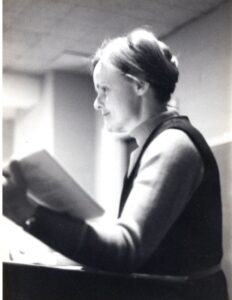
She settled in Cuba, New Mexico, where she would spend the rest of her life with her sheep, dogs and cats. Pat spent 20 years building up the local Torreon/Star Lake Chapter and the Navajo people of Eastern Navajo Agency. Pat served as the first Executive Director of the Torreon Community Alliance. She taught adult education classes through the Crownpoint Institute of Technology (now Navajo Technical University). She assisted in the establishment of a community organization which evolved into an NM-chartered non-profit corporation to house community development efforts initiated by Torreon community members.
Patricia Kutzner passed away on December 8, 2015, in Albuquerque, New Mexico, at the age of 85. Her memorial minute noted that “in living and in dying, Pat Kutzner’s life exemplified the path of enlightenment through selfless service.”
Further reading:
https://www.worldhunger.org/pat_kutzner_in_memoriam/
–Reported by Steven Hansch of WHES
In Memoriam: Pat Kutzner, World Hunger Education Service Founder