


The United Nations World Food Programme (WFP) has released a report today which says that Ethiopia, Nigeria, Yemen and South Sudan are the top countries which are at greatest risk of critical food insecurity. Referring to the risk of famine based on the Integrated Food Insecurity Phase Classification Scale (IPC), WFP advocated for greater financial resources and flexibility to prevent widespread famine and possible starvation.
Author: Peter Morris
Furniture Maker Creates Wooden Bowls for Donations to Help Hunger Causes
This video was featured on January 25, 2021 ABC Nightly News about Mike Mittelman, a furniture maker, who created wooden bowls for those who donated to hunger causes.
JANUARY UPDATE to HUNGER HOTSPOTS ACROSS THE GLOBE

ETHIOPIA
Conflict and Drought
The current food crisis will persist in northern Ethiopia, Across the country, over 1.2 million children under 5 years of age require treatment for severe acute malnutrition; In Tigray region, the conflict has impacted over 90 per cent of people. Limited staff movements, lack of access to cash, fuel and life-saving supplies have greatly hampered humanitarian operations; the prevalence of moderate acute malnutrition and severe acute malnutrition in children under 5 years of age is 18 and 2.4 per cent, respectively, exceeding global emergency global acute malnutrition (GAM) thresholds.
According to FEWSNET (https://fews.net), Ethiopia will be one of the world’s most severe food security emergencies in 2022 due to the combination of conflict and drought. Large-scale food and livelihood assistance will be needed throughout much of the country, coupled with unhindered humanitarian access in northern Ethiopia to prevent further loss of lives and livelihoods.
AFGHANISTAN
Economic collapse and drought
More than half the population, 24.4 million people, need humanitarian assistance, including 12.9 million children. Multiple disease outbreaks (measles, acute watery diarrhea, dengue, COVID-19) are ongoing. In 2022, 8.7 million people will be in emergency level food insecurity and 1 in 2 children under 5 years will be acutely malnourished. Currently, more than three million people are internally displaced, and Afghanistan has had more than 40% of crops lost as a result of drought.
YEMEN
Uptick in War and economic hardship
The protracted situation severely impacted the health and nutrition of children: nearly 400,000 children are severely malnourished, and 2.3 million children are acutely malnourished. The food crisis has been compounded by an increase in the price of food and other basics, which have risen 30 to 70 percent since the start of the conflict. A recent renewal of hostilities in which the Houthi faction has targeted the UAE with missiles has
A United Nations Development Program (UNDP) report (https://news.un.org/en/story/2021/11/1106362) published in November 2021, projected grim outcomes in the near future of the war continued; that 1.3 million people would die by 2030, with 70 percent of those deaths a result of indirect causes, such as economic collapse, malnutrition, and morbidity.
SOMALIA
Rains fail, drought intensifies
The key drivers of acute food insecurity in Somalia include the combined effects of poor and erratic rainfall distribution, flooding and conflict. Moreover, approximately 1.2 million children under the age of five are likely to be acutely malnourished, including nearly 213,400 who are likely to be severely malnourished.
BURKINA FASO
Coup d’etat exacerbates already poor conditions
Prior to the Coup this week that displaced the President of Burkina Faso with a Military Junta; poor food intake, high prevalence of childhood sickness (fever and diarrhea), poor hygiene conditions and low access to drinking water have been major reasons for high levels of acute malnutrition.
In total, it is estimated that 699,027 children aged 6-59 months will likely be acutely malnourished through 2022. Also 163,000 pregnant and lactating women are also projected to suffer from acute malnutrition through 2022.
The negative effects of the security crisis have led to massive population displacements in almost half of the country. The closure/dysfunction of health facilities in provinces with limited humanitarian access has reduced the population’s access to care. The impact of the health crisis related to the COVID-19 pandemic is also a major negative contributing factor to the nutritional situation of the most vulnerable, particularly women and children under five.
MADAGASCAR
Critical but improving
The latest Acute Malnutrition (AMN) analysis shows that around 309,000 children in Madagascar’s Grand South are likely to suffer from acute malnutrition through August 2022. This includes nearly 60,000 expected cases of Severe Acute Malnutrition (SAM). Although still critical this is a significant improvement in the nutritional situation, with several districts moving from IPC AMN Phase 4 (Critical) or 3 (Serious) to IPC AMN Phase 2 (Alert) between November and December 2021. This is mainly related to prevention actions, particularly the effects of humanitarian food assistance.
NIGERIA
Northeast Nigeria conflict becomes protracted.
According to the latest IPC Acute Malnutrition (AMN) analysis, high levels of acute malnutrition are prevalent in many areas between September and December 2021, with over 60% of areas analyzed being in IPC AMN Phase 3 (Serious) or 4 (Critical). Over 1.74 million children under the age of five are expected to suffer from acute malnutrition through August 2022. This includes nearly 614,000 children severely malnourished and over one million moderately malnourished. In addition, over 151,000 pregnant and lactating women will likely be acutely malnourished.
CHAD
Conflict and Poverty
In 2022, it is estimated that around 1.67 million children under the age of five will suffer from acute malnutrition, including around 335,000 severe cases in the areas analyzed.
This precarious nutritional situation is the result of a combination of several aggravating factors, such as poor food intake, poor infant and young child feeding practices, a high prevalence of childhood diseases, lack of access to healthcare, an increase in the frequency of measles outbreaks, low coverage of access to drinking water, and low coverage of nutritional and health interventions. Other contributing factors include ongoing conflict and insecurity, acute food insecurity in some provinces, and the consequences of climate change (flooding, drought, poor rainfall distribution).
DEMOCRATIC REPUBLIC OF CONGO (DRC)
The Democratic Republic of Congo (DRC) is experiencing one of the worst humanitarian crises in the world. More than five million people have been displaced, including three million children. Most of these displaced families have sheltered in local communities that are only just managing to meet their own needs. Other displaced persons live in informal camps where living conditions are even harsher.
According to the latest IPC Acute Malnutrition analysis, nearly 900,000 children under five and more than 400,000 pregnant or lactating women are likely to be acutely malnourished through August 2022 in the 70 health zones analyzed out of a total of 519 health zones. These estimates include more than 200,000 severely malnourished children requiring urgent care.
This precarious nutritional situation is the result of a combination of several factors, mainly poor feeding practices, acute food insecurity, high prevalence of childhood illnesses (malaria and diarrhea) and outbreaks of measles and cholera, poor hygiene conditions (inaccessibility to adequate sanitation facilities), very low access to drinking water, and the consequences of the security situation – mainly massive population displacement.
HUNGER HOTSPOTS ACROSS THE GLOBE
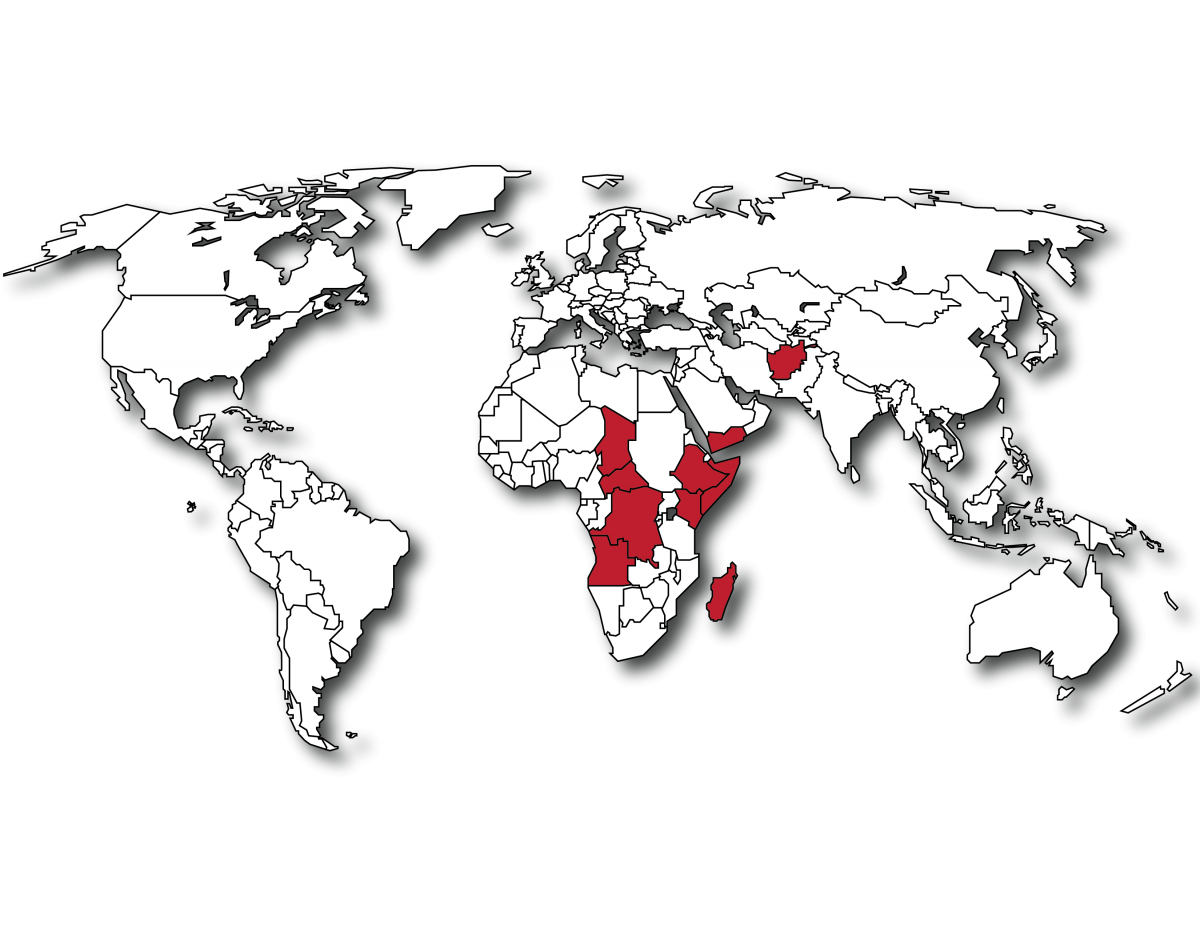
This is a view of the most urgent hunger hotspots around the world. The Integrated Food Security Phase Classification (IPC) used by the United Nations and International Aid Agencies consists of five levels of severity for food insecurity as follows:
1. Minimal – Acceptable
2. Stressed – Alert
3. Crisis – Serious
4. Emergency – Critical
5. Catastrophe – Famine
https://www.ipcinfo.org/ipcinfo-website/ipc-overview-and-classification-system/en/
For the following countries, the operative factor was the prevalence (current rate among children) of Acute Malnutrition (also known as wasting) from 2021 assessments.
AFGHANISTAN
Fourteen (14) million people in Afghanistan are facing acute food insecurity, and an estimated 3.2 million children under the age of five expected to suffer from acute malnutrition by the end of the year. At least 1 million of these children are at risk of dying due to severe acute malnutrition without immediate treatment.
A November 2021 UN survey mission to Kandahar Province to assess the current capacity and needs found increases in number of cases of Severe Acute Malnutrition were also reported. (WFP)
ETHIOPIA
This severe crisis results from the combined effects of civil war, limited humanitarian access, loss of harvest and livelihoods, and collapsed markets.
In May 2021, it was reported that 5.5 million people faced high levels of acute food insecurity and 3.1 million people were in Crisis (IPC Phase 3) while 2.1 million people were in an Emergency (IPC Phase 4).
A food security analysis update conducted in Tigray and the neighboring zones of Amhara and Afar concludes that over 350,000 people were in ‘catastrophe’, according to Integrated Phase Classification or IPC 5 (famine) levels between May and June 2021. Since November 2021, approximately 100,000 people have fled their homes in Tigray, including more than 48,000 who headed westwards and crossed the border into eastern Sudan. Thousands are at risk of hunger, and peace is vital to stop the situation in Tigray from worsening.
YEMEN
The food security situation in Yemen significantly deteriorated during 2020 and has reached crisis levels. Over 2.25 million children under five years old have suffered from acute malnutrition in 2021. The reasons include the ongoing civil conflict, very poor access to health services and poor sanitation in most areas.
SOMALIA
The key drivers of acute food insecurity in Somalia include the combined effects of poor rainfall, as well as flooding and war. Almost 3.5 million people across Somalia faced food gaps or loss of livelihood assets indicative of Crisis (IPC Phase 3) through the end of the year. Moreover, it is estimated 1.2 million children under the age of five are likely to be acutely malnourished, including nearly 213,400 who are likely to be severely malnourished. Desert Locust will continue to pose a serious risk to both pasture availability and crop production across Somalia.
CENTRAL AFRICAN REPUBLIC
During a Food Insecurity analysis of Central African Republic conducted in September 2021, 67 of the country’s 71 sub-prefectures were assessed The Assessment projected that from the period of September 2021 to March 2022, nine sub-prefectures are to be classified in Emergency (IPC Phase 4) and 59 in Crisis (IPC Phase 3). Of the 4.9 million people living in these sub-prefectures, 2.1 million (43%) will experience high levels of acute food insecurity through March 2022, including around 620,000 people in Emergency levels (IPC Phase 4).
DEMOCRATIC REPUBLIC OF CONGO (DRC)
The Democratic Republic of Congo (DRC) is experiencing one of the worst humanitarian crises in the world. More than five million people have been displaced, including three million children. Most of these displaced families have sheltered in local communities that are only just managing to meet their own needs. Other displaced persons live in informal camps where living conditions are even harsher.
According to the latest Acute Malnutrition analysis, nearly 900,000 children under five and more than 400,000 pregnant or lactating women are likely to be acutely malnourished through August 2022 in the 70 health zones assessed out of a total of 519 health zones. These estimates include more than 200,000 severely malnourished children requiring urgent care.
KENYA
An estimated 653,000 children and 96,500 pregnant and lactating women require treatment for acute malnutrition. Due to the COVID-19 pandemic that is affecting all counties in the country, the caseload among children aged 6 to 59 months requires urgent attention. The nutrition situation has remained similar across arid counties compared to the August 2020 analysis.
ANGOLA
An analysis of Acute Malnutrition in 10 municipalities in Southern Angola has revealed that around 114,000 children under the age of five are suffering or are likely to suffer from acute malnutrition in the next 12 months and therefore require treatment
MADAGASCAR
Over 500,000 children under the age of five are expected to be acutely malnourished through April 2022, of which over 110,000 are likely severely malnourished and require urgent life-saving treatment. Food insecurity is a major contributing factor to the nutrition situation, followed by poor access to sanitation facilities and improved drinking water sources due to drought.
Conditions are likely to continue deteriorating in the coming months. Nearly 1.6 million people—approximately 60 percent of southern Madagascar’s population—will likely require humanitarian assistance from June 2021 to May 2022.
CHAD
Over 500,000 children under the age of five are expected to be acutely malnourished through April 2022, of which over 110,000 are likely to be severely malnourished and require urgent life-saving treatment. Food insecurity is a major contributing factor to the nutrition situation, followed by poor access to sanitation facilities and improved drinking water sources due to drought.
WORLD FOOD DAY OCTOBER 16, 2021
Today is World Food Day – International World Food Day is celebrated on the date of the founding of the United Nation’s Food and Agricultural Organization to highlight the issues of hunger and food access in the world. Take time today to think and act on ways to contribute to a more food secure world.
Ethiopia’s Man-Made Famine

Alex de Waal, well known author on humanitarian assistance in the Horn of Africa, explains why and how the current famine in Tigray region in Ethiopia has occurred.
World Food Prize Laureates Appeal for Greater US Leadership to End World Hunger
Lawrence Haddad, who shared last year’s World Food Price with David Nabarro appeals to the United States to lead in ending World Hunger and Malnutrition with Four Calls to Action. 1) Re-establish American leadership to end global hunger and malnutrition, 2) Play a strong leadership role in the upcoming Food Systems Summit and the Nutrition for Growth Summit, 3)Refresh US Evidence-based policy and investment to help end hunger and malnutrition, 4) revitalize the USAID Feed the Future and Innovation Labs initiatives to reach more countries.
What About CORONA Virus and Food Safety?

An interesting assessment of SARS-CoV-2 Virus and food safety.
Conflict in Northern Mozambique emperils food security for 900,000
The escalating violence in the northern provinces of Mozambique has put 900,000 in a food insecure situation.
UN Sanctions Report Accuses Yemeni Government and Houthi Opposition of Corruption.
In January 2021, an UN Independent Sanctions Monitor Report accuses the Government of Yemen of laundering money in 2018 meant for food commodities, and the Houthi-controlled areas of diverting money meant for basic services in 2019 toward their war effort.
