


The Global Hunger Index (GHI) Report at https://www.globalhungerindex.org/ is produced by Concern Worldwide, based in Ireland, and Welthungerhilfe, based in Germany. These Non-Governmental Organizations (NGOs) are expert in global food security and hunger issues. This most recent GHI estimates that as many as 828 Million people, in the 134 poorest countries in the world, will not have enough food to eat this coming year due to Conflict, Climate Change and the Covid-19 Pandemic. The report also calls on world governments to add or enshrine the “right to food” within their regulations and laws.
Author: Peter Morris
Inter-Agency Standing Committee Says Famine Affecting 7.1 Million People Imminent in Somalia
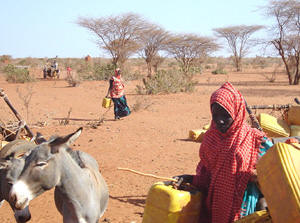
The Inter-Agency Standing Committee (IASC), a United Nations forum which includes the International Committee of the Red Cross, issued a statement last week indicating that up to 7.1 Million people will be affected by famine in parts of Somalia. In a statement on September 5, 2022, the IASC indicated that there is a desperate need for more money from countries around the world.
World Hunger Education Service (WHES) Celebrates Antonio Gayoso’s Long Career as Board Member

On July 30th 2022, World Hunger Education Service hosted luncheon to celebrate Antonio Gayoso, a former Board Chair, and Board member for the past 25 years. Antonio retired from the board in January 2022.
Among the attendees were Joan Dudic-Gayoso, Dr. Tony Gayoso (Antonio’s son), former Board members, Dan Shaughnessy, Margie Ferris-Morris, Lane Vanderslice, and Chuck Woolery, and Chuck’s wife Nicki Beatty-Lagoudakis, as well as current Board members, Peter Morris and Sarah Polaski.
Antonio was born in Cuba and along with other students and professors from Havana’s Villanova University, Antonio served in the post-revolutionary government of Cuba as a junior economist in the Ministry of Finance. However, he became concerned as he observed what was happening in the country and when an opportunity to travel abroad presented itself, he went to Jamaica, asked for asylum, and did odd jobs while he waited to enter the United States.
At the University of Florida, he completed his undergraduate and graduate degrees in business administration, international trade and finance, and under a contract with the U.S. Department of Agriculture, did research toward a Ph.D. in agricultural economics. At the same time he gained his U.S. citizenship.
Antonio joined the U.S. Government in 1969, as an agricultural economist in USAID’s Bureau for Program and Policy Coordination. He spent much of his career in U.S.A.I.D. as an economist and senior manager, responsible for policy development, program planning and implementation, technical design and operational aspects of a wide range of development programs, in the rural and the urban, agricult ure, health and education sectors, Africa, Latin America, and Asia. Mr. Gayoso was the principal officer in the U.S. International Development Cooperation Agency, and subsequently at the Department of State, was responsible for managing U.S. participation in development programs in the UN, including UNICEF, UNDP, FAO, WFP.
He coordinated U.S. participation in the World Conference on Agrarian Reform and Rural Development, the Mexico Conference on Population and Development and U.S. participation in the World Conference on Education for All. He led US negotiating teams to governing boards of a wide variety of multilateral organizations. As Director of the North American Office of the World Council of Credit Unions (l994-2000), Mr. Gayoso supported credit union development in Africa, Asia, Latin American and Central and Eastern Europe, working on the development of financial management systems and regulatory frameworks to insure credit unions are run effectively and transparently under the cooperative ownership principles.

He has taught Latin American development as an adjunct professor for American University, microfinance and project management at Thunderbird Graduate School of Management, now part of Arizona State University, and microfinance and development policy in the Elliott School of International Affairs of George Washington University.
Mr. Gayoso has served in the Boards of VOCA, the Overseas Cooperative Development Council (OCDC); he was Chairman of the World Hunger Education Service, a twenty-year old advocacy NGO focused on hunger issues, and President and Board Member of the U.S. based Association for the Study of the Cuban Economy. He also served as s a Director of Global Expand, an internet based business to business start-up, an advisor on economic development issues, and a recruiter for USAID especially among communities underrepresented among USAID staff. Bringing his career full circle, for many years he moderated and served as commentator for Voice of America/Radio Marti, broadcasting weekly to Cuba on global and national economic issues in programs that engaged participation of Cubans on the island.
WFP’s Chief Economist Comments that World is “Exploding” with Food Insecurity

In an comment on May 4, 2022 about the Global Network Against Food Crises report that Global hunger will increase this coming year; Arif Husain, the Chief Economist for the United Nations World Food Programme (WFP) said the “the world is exploding with food insecurity”.
World Bank Releases New Report on Ukraine War and Global Food Crisis

The World Bank has released a commodity markets report this April on the Impact of the War in Ukraine on World Commodity Markets. In this report, they state that rising oil prices, inflation and the fertilizer scarcity that the war in Ukraine has created has become the greatest shock to global commodity prices since the 1970s; the report predicts this crisis will alter the global patterns of trade, consumption and production for the next two years.
UN/WFP – Ukraine Conflict’s Implications for Global Food Security

The United Nations / World Food Programme has created a publication on the food security implications of the Ukraine Conflict and the ramifications for the global food and energy markets.
Global Food Crisis Grows as Result of Ongoing War in Ukraine

Food commodity price rises mirror global energy price rises. Prices for edible oil as well as grains are rising as a result of the Russian Invasion of Ukraine. Basic commodities well as fertilizers continue to rise globally as the conflict continues.
What War in Ukraine means for World Food Supply

This opinion piece in the New York Times looks into the ramifications of the Russian invasion of Ukraine and the ensuing disruption of an agricultural breadbasket of Europe. Since staple grains are the food of the World’s poorest, Bangladesh, Sudan and Yemen as well as many Middle Eastern countries will see more immediate effects as approximately 50% of their imports are from Ukraine and/or Russia. The war will also increase fuel and fertilizer prices which will impact global agricultural production.
Chef Jose Andres on Ukrainian Refugee Food Situation
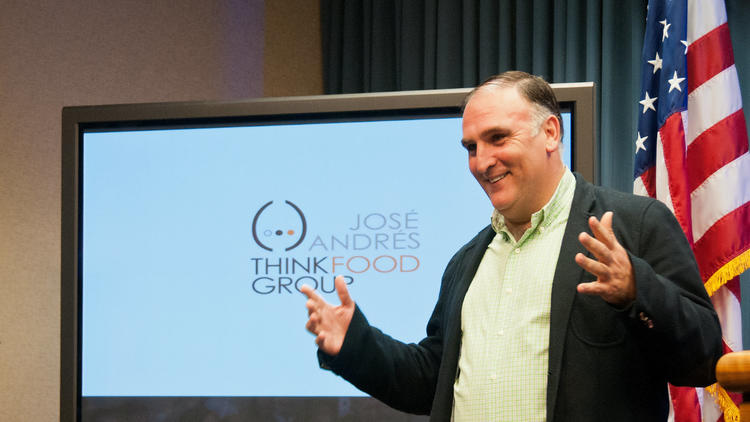
Chef Jose Andres of the World Central Kitchen Organization describes his experience on the Ukrainian-Polish border helping refugees fleeing the Russian Invasion of Ukraine.
SAHEL Will Need Help as Famine is Coming

In this Newsweek Opinion piece, William Lambers reports how 35 million people will have virtually no food to eat in the coming lean season.
