

May 8, 2026 In the mid 2000s, the Bangladesh Rural Advancement Committee (BRAC) pioneered a new approach for helping the very poor to grow out of poverty phase by phase, an approach called the “Graduation Approach.” Replicated since then by many NGOs, the period of implementation tends to be about two years for each family, and averages about $500 per household with researchers estimating $2-5 in benefits for each dollar spent.
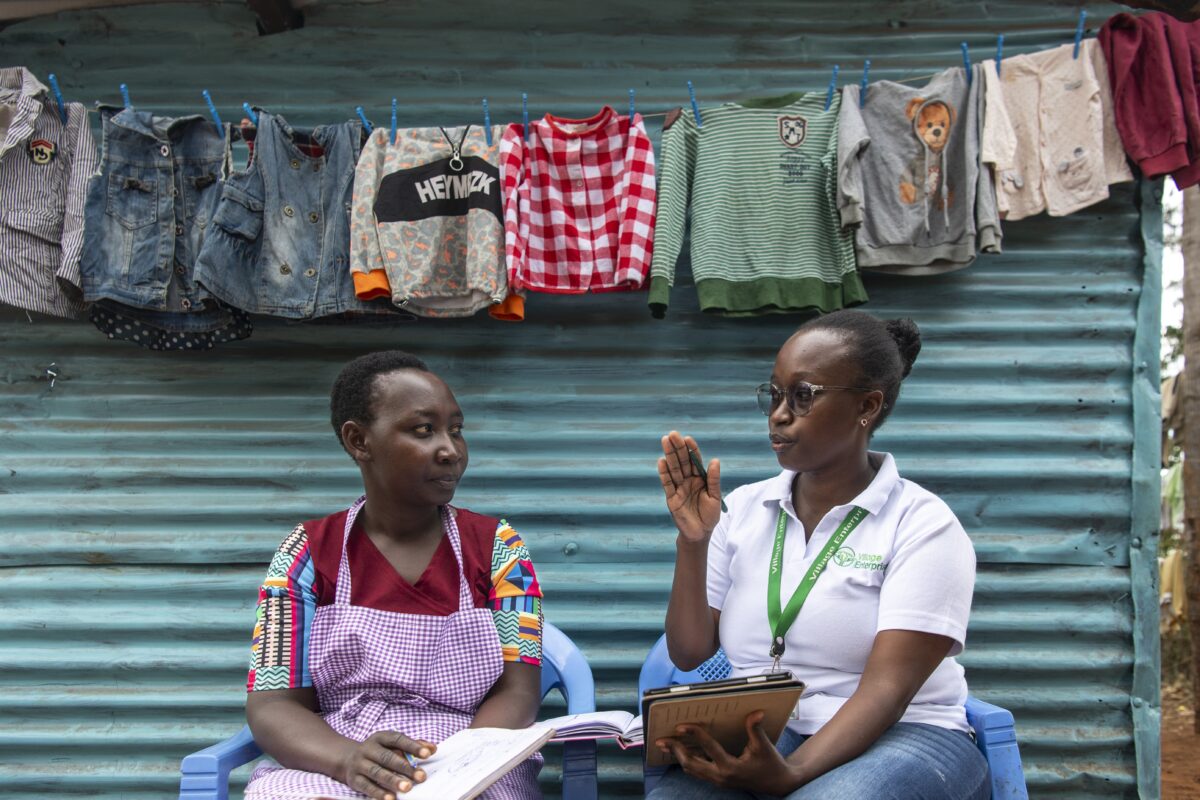
One NGO championing this approach is Village Enterprise which combats hunger and builds resilience. In 2025, Village Enterprise reached over 316,000 people in rural Africa, bringing their cumulative total to more than 2.3 million lives affected, including over 1 million in Uganda alone.
Prior to her stepping down as CEO this year, Hunger Notes had interviewed Diane Calvi, who led the California-based nonprofit from 2010 to 2026, transforming it into a multi-country leader in evidence-based poverty graduation. From her interview:

“Village Enterprise is exclusively working with people living in extreme poverty in rural areas of Africa. We go into villages and introduce ourselves to the local community. All of the staff that implement the program are recruited from the local communities: they speak the local language, they understand the culture. And they introduce the program, which entails targeting the poorest of the poor.”
“I don’t even consider the Graduation Model we implement a livelihood model. I consider it a microentrepreneurship model. We’re really helping people become entrepreneurs for the first time — but not through a microfinance model. We’re doing that through a cash transfer, which gives the poor a lot of agency. It’s not like so many livelihood programs: here are some goats, here are some chickens. You’re giving them cash and saying: write a business plan, figure out how you’re going to run your business.”
“Because we provide the cash in the form of a grant rather than a loan, people aren’t so busy trying to pay back the loan. They’re able to invest in their families, they’re able to invest in the business. And so we see better impacts — both in terms of increasing income, savings, and nutrition….We’ve been rolling out a program called DreamSave, which is a digital bookkeeping application at the savings group level that runs on a smartphone. That’s been really well received and has had some positive impacts on the actual savings of the savings groups.”
“The cash transfer is provided to them on a mobile phone.”
“For every dollar you invest in the program, the participants generate … $5 in lifetime income. At baseline, the households were on average eating 1.7 meals a day. Five years later, on average, they were eating 2.5 meals. In terms of animal protein, they went from eating animal protein every other week to eating animal protein 1.3 times a week. So also pretty significant increases in protein consumption.”
“We need to have results-based funding frameworks. There need to be incentives for the achievement of results. The kind of receipt-based, activity-based funding is not incentivizing achievement. There really aren’t the incentives in place.”
“When I started with Village Enterprise in 2010, it was a very small organization with a $1 million budget and about 18 staff. And of the 18 staff, 8 of them were in Africa and 10 of them were in the U.S., it was mostly run through volunteers in the field. We have primarily been in the rural areas of Kenya and Uganda. We’re now about 530 staff people, and we’re working in Kenya, Uganda, Rwanda, and Ethiopia. We launched that project during one of the worst droughts in the history of East Africa. So it was really timely, the implementation of the project. And it has shown to be successful despite the challenges of working during a very severe drought — which I think is very encouraging.”
“We work both in northern Uganda outside the refugee settlements and in the refugee settlements. In the refugee settlement, yes, most of them are Sudanese refugees — 80 to 90% are from South Sudan.” [End of interview]
A notable evolution of the programming is to embed the graduation model within African government systems. Village Enterprise provided technical assistance to the Government of Kenya throughout the development of the country’s first Ultra-Poor Graduation Strategy, and began providing technical assistance to Nigeria’s Kaduna State Government (with Gates Foundation funding) to support 1,200 women and young people to launch small businesses. A £7 million project funded by the British High Commission — “Kuza Jamii II” benefits 90,000 people across five arid and semi-arid counties in Kenya and the Dadaab refugee settlements, running through March 2026.
More recently, Village Enterprise launched SPRINT (Scaling Poverty Reduction through Innovation and New Technologies), a digitally enhanced version of the graduation model using tools like Kolibri for training, WhatsApp for mentoring, and DreamSave to track savings, enabling product scaling officers to support 5 to 10 times more entrepreneurs than traditional business mentors. The goal is to reach 15,000 entrepreneurs by mid-2026, with potential rollout in Rwanda and Ethiopia.
Update: Replacing Ms. Calvi, Sazini Mojapelo was appointed as the new CEO, becoming Village Enterprise’s first Africa-based CEO, beginning February 17, 2026