


November 20, 2026 Despite severe deterioration in household purchasing power and food affordability, Iran has continued to operate food subsidies and nutrition assistance programs. These measures may have helped cushion vulnerable households, but there is insufficient evidence to determine how effectively they have prevented worsening child malnutrition, particularly in the country’s poorest provinces.
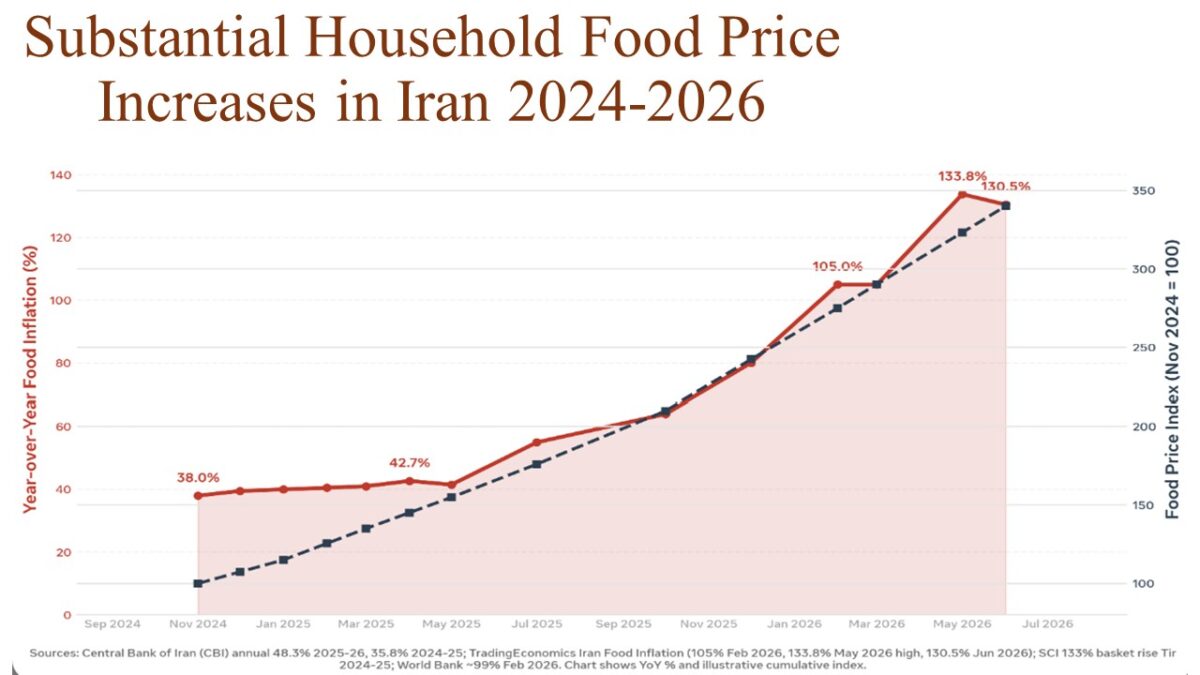
Iranian households have experienced a sharp decline in purchasing power, reducing their ability to afford nutrient-rich foods such as meat and dairy products. Many households have increasingly relied on less expensive staples. According to FAO, prices for food, beverages, and tobacco rose approximately 122% year-on-year in August–September 2026, while bread and cereal prices increased approximately 103%. These increases have placed particularly severe pressure on low-income households. ACAPS 02 Sept 2026: inflation reached 84% in August 2026, up from 52% in December 2025. The IMF projects average inflation at 68.9% in 2026, the highest since 1979. The World Bank estimated food inflation at ∼99% in February 2026. ACAPS notes food prices, including bread and wheat, rising weekly, with some staples up 300%. Bread prices have doubled from a year ago in places such as Tehran.
In November 2026, reports emerged of restrictions on subsidized bread purchases in Markazi, Khuzestan, and Zanjan provinces. Under the reported arrangements, purchases beyond designated quotas could be charged at substantially higher prices. The measures prompted criticism, including from the conservative newspaper Kayhan, although government officials disputed reports that ordinary households faced restrictions. In August 2026, the Mehr News Agency, citing the Deputy Minister for Welfare, reported more than 262,000 children aged 5-59 months suffering from malnutrition.
During November 2026, authorities began quietly capping subsidized bread purchases in at least three provinces (Markazi, Khuzestan, Zanjan). Once a monthly quota is exhausted, buyers face much higher free-market prices. This drew criticism even from some hard-line media.
Sistan-Baluchestan remains the hardest hit. Reports from July 2026 note up to one-third of children under five now face severe malnutrition, with many families subsisting on bread and tea and loss of school meal program. A study published on October 19, 2026, involving 380 rural women with children aged 6–59 months in Mahneshan County, Zanjan Province, found that 87.1% of households experienced food insecurity, including 26.8% classified as severely food insecure. Among the children studied, 34.2% were stunted, 28.4% underweight, and 18.9% wasted. Data were collected from April 2025 through March 2026. Although these findings indicate serious local nutritional deprivation, the study is not nationally representative.
The World Food Program (WFP) is supporting 195,000 people with food and cash assistance across Tehran, Alborz, Bushehr, Hormozgan and Sistan and Baluchestan. WFP’s August country brief also noted 35,611 refugees assisted through bakeries.
– edited by WHES board member Steven Hansch
