Djibouti’s Child Hunger

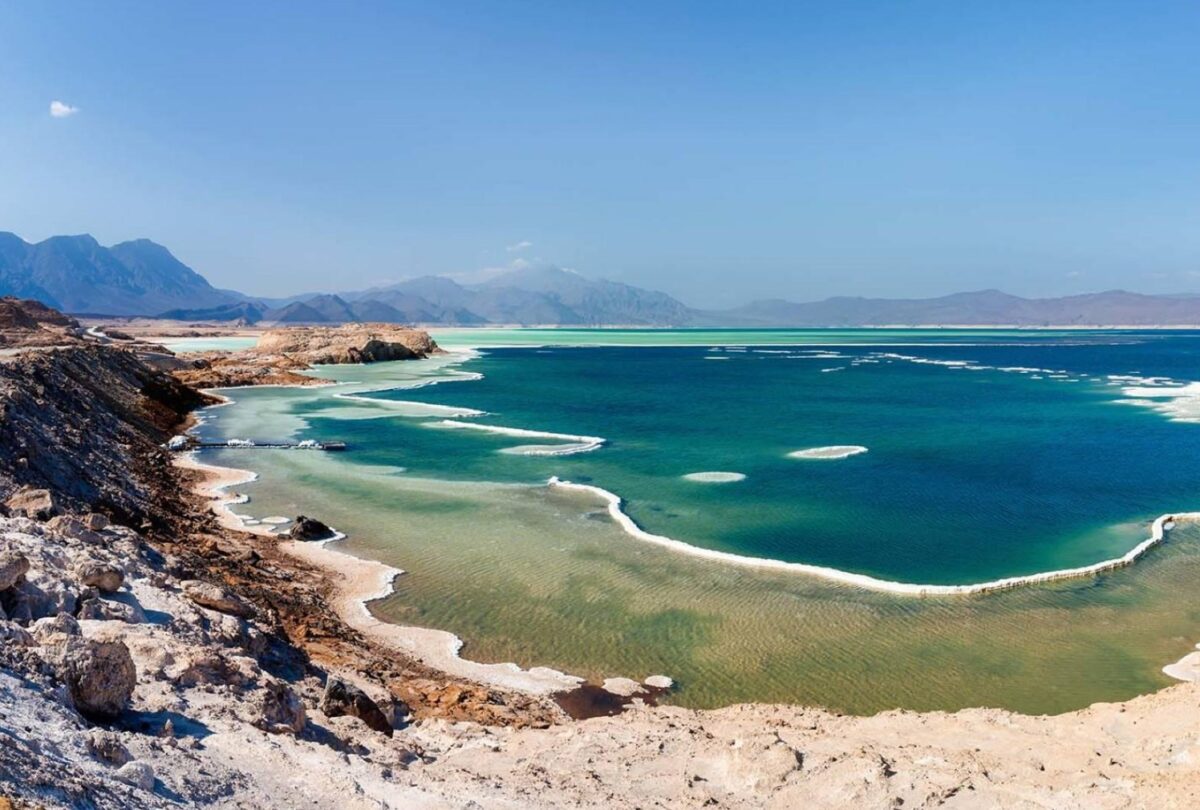
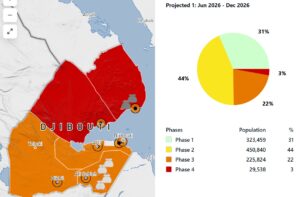
August 15, 2026    Djibouti:  the latest UN food insecurity estimates that more than 256,000 people, 25% of the population, in Crisis or worse during July–December, up from 166,000, or 16%, in May–June.  About 30,000 people are now projected in Emergency.  Rural Tadjourah and Obock have deteriorated to Phase 4, while nearly 70% of refugees in Ali Addeh and Holl-Holl camps, more than 21,000 people food crisis. Import-price shocks, weak purchasing power and El Niño effects are the main drivers.  The IGAD Climate Prediction Centre forecast that the June–September 2026 season would bring below-normal rainfall across most of the Greater Horn of Africa, including Djibouti, with a high probability of warmer-than-average temperatures

 In the Ali Addeh and Holl-Holl refugee camps, close to 70% of the refugee population (21,000+ people) are classified by the UN IPC as Crisis or worse.  this  small but chronically vulnerable refugee caseload (largely Somali and Ethiopian/Oromo origin, some Yemeni), who typically sit outside normal market and livelihood systems and are first to show acute deterioration when pipelines tighten.

Food inflation stood at 4.60% year-on-year, and the Consumer Price Index reached an all-time high of 106.90.

The UN has flagged that disruptions to regional trade flows and geopolitical tensions around the Bab-el-Mandeb Strait are affecting import costs and supply chains.  The port of Djibouti remains the principal transit point for Ethiopian cargo and a key link for the Black Sea Grain Initiative. The Djibouti Red Crescent Society, operating with only 37 staff, five branches, and roughly 1,000 volunteers, has delivered assistance to 45,000 people through Disaster Relief Emergency Fund allocations, but had to suspend mobile humanitarian service points for migrants due to lack of resources.

Three drivers of risk:

*  Climate hazards:  an emerging El Niño signal bringing irregular rains, elevated temperatures, and drying water points, which is squeezing the last available pasture for pastoral herds and cutting into both crop and livestock production. For a country where pastoralism is a core livelihood strategy in the interior (Dikhil, Ali Sabieh, Tadjourah, Obock — the same zones ACAPS and earlier droughts have flagged), this is the classic pathway from climate shock to acute food insecurity.
*  High food prices via import disruption — Djibouti imports up to 90% of food needs, so it’s structurally exposed to any friction in Red Sea/Bab-el-Mandeb shipping. The analysis flags regional trade disruption and geopolitical tension around the Strait specifically — plausibly tied to the broader Red Sea shipping disruptions and Middle East-adjacent instability that have been running since late 2023, though the report as summarized doesn’t itemize a single incident.

* Economic/inflation shocks — compounding price pressure on already-thin purchasing power among rural and peri-urban poor households, which is also slowing broader economic growth.

The current scope of food assistance is insufficient relative to need,  meaning a large share of even those already receiving aid are still running consumption deficits.  the regions implicated (Ali Sabieh, Arta, Dikhil, Obock, Tadjourah) are the same drought-affected pastoral zones that have been chronically stressed since the multi-season drought that began around 2020–2021, so this reads less like a new shock and more like an existing vulnerability being pushed over a threshold by El Niño plus price/logistics stress.

The World Meterological association has been assisting with preparedness for rainfall and flood risks:  https://wmo.int/media/project-update/from-forecasts-early-action-strengthening-community-preparedness-djibouti

Photo: Fishercd / Wikimedia Commons

–  Contributed by Hunger Notes Editor, Steven Hansch
 

U.S. Food Aid (Part 5): Prepositioning Food Stores Overseas

July 19, 2026    This is the fifth article in a series about lessons about U.S. Food for Peace and food aid, recognizing the redesign of food aid by the US Department of Agriculture.   USDA which has requested inputs and advice for future FFP programming in their recent Request for Information, downloadable here.

Large emergency grain reserves, to have food aid ready for food crises were debated in the 1970s.  The USG, the World Bank, and others explored a large buffer stock of grains during years of abundance to release grain during dangerous global shortages.  The FAO and Food for Peace worked toward a distributed reserve.  The costs were, however, too large.  The Food Security Wheat Reserve Act of 1980 authorized a reserve of up to 4 million metric tons of wheat, solely for emergency humanitarian needs in developing countries, and this eventually became the Bill Emerson Humanitarian Trust.  In recent decades FFP concluded that it was more effective to have food aid pipelines — continuously moving food around the world – that permit food to be redirected for new crises.

However, because U.S. food aid often arrived too late to mitigate fast‑moving food crises, Congress encouraged Food for Peace (FFP) in 2000 to adopt prepositioning as a strategy to accelerate emergency response. A 2007 GAO review found that U.S. food aid was “generally too time-consuming to be sufficiently responsive in emergencies, requiring 4 to 6 months on average.”  

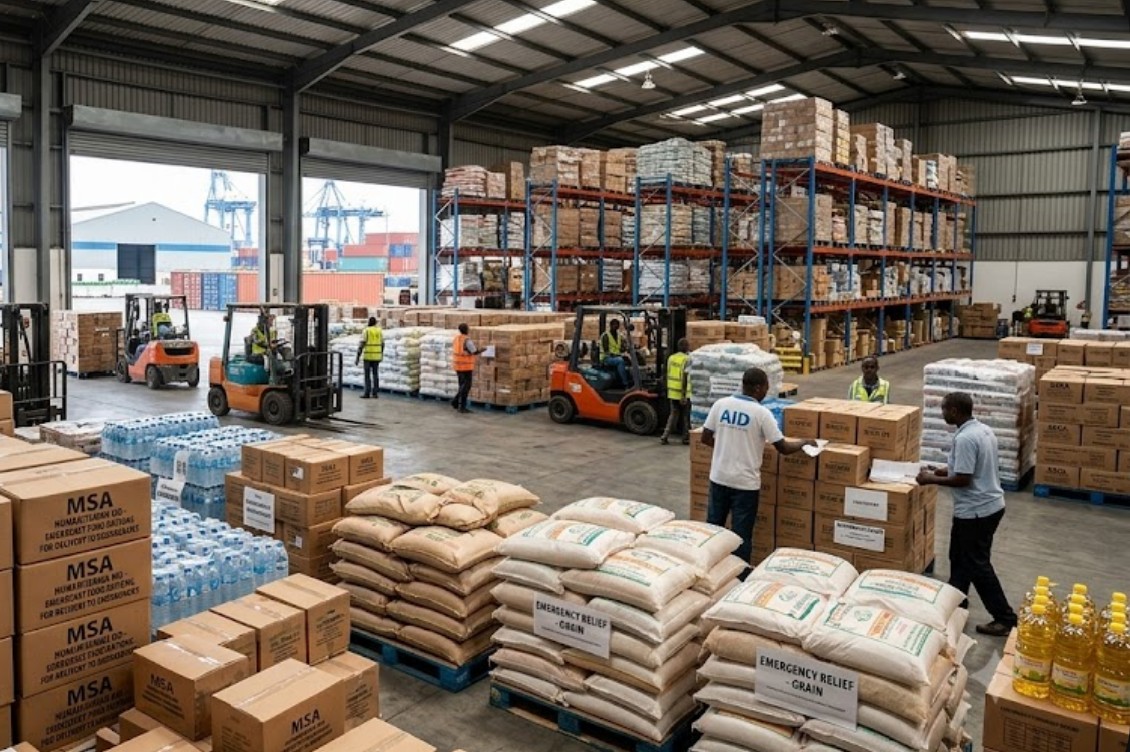
 What Prepositioning Is:  Prepositioning involves procuring and storing shelf‑stable foods, such as lentils, peas, vegetable oil, and other staples, in either U.S. warehouses or overseas sites near high‑need regions. Rather than waiting for a crisis before purchasing and shipping commodities, stocks are positioned in advance.   Prepositioning is also valuable when conditions evolve in complex emergencies and food access changes, and foods need to be offloaded to a prepositioned warehouse (keeping supplies on an ocean vessel is too expensive.).  FFP therefore seeks tactical flexibility that doesn’t rely on bulk ocean vessel carriers which cannot redirect routes.

The first overseas preposition pilot site was Dubai, with broader operational stockpiling beginning in 2005.  The Dubai hub was necessitated because food meant for Yemen had to be placed in storage while access in Yemen was unpredictably blocked due to war.  Questions arose about shelf life after foods were in storage for a period of time.

 Delivery Time Improvements:  The U.S. GAO estimates from FY 2007–2012 show that prepositioning reduced delivery times by one or more months, which can matter when responding to famines.  Timing is particularly relevant in regard to hurricanes, earthquakes and flooding, i.e. short-onset disasters.  But whereas short-onset disasters typically require a few hundred pallets of supplies, famine or larger emergencies often require thousands of tons.

Cost Implications:  Prepositioning adds significant costs due to warehouse storage, additional shipping legs, and sometimes higher commodity prices. Overseas prepositioning is far more expensive than domestic storage. A 2008 analysis found:

  •   __*   +$23/metric ton additional costs, for domestic prepositioning
  •   __*   +$164/metric ton additional costs for overseas prepositioning (about 7× higher) due to two or more ocean voyages

In FY 2012, USAID spent approximately $8 million on warehouses and $13 million on secondary ocean freight from overseas sites.

 Growth of Prepositioning:  Prepositioning expanded from ~3% of food aid (2005–2006) to 22–29% in some regions by the early 2010s.

 Operational Challenges and Losses

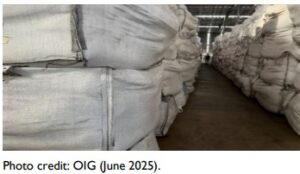
A 2013 Inspector General audit of the Djibouti warehouse found a 0.5% inventory reconciliation gap, far above the 0.02% contractual threshold;  Commodities were “infested by ants and tobacco beetles” that were not fumigated; USAID stopped tracking warehouse losses after 2011, despite recording $235,919 in losses in 2007

Poor warehouse management contributed to spoilage. For example:

  •  * In 2025, $2.9 million of Super Cereal Plus spoiled from insect infestation in Djibouti
  •  * In Dubai, $1.37 million of unused commodities incurred $919,000 in storage costs over two years—two‑thirds of their purchase value

Food for Peace Changes After 2014 GAO Recommendations

USAID improved data collection on shipment times, procurement costs, storage, and vessel tracking.  Additional refinements included:

  •  * Better inventory management and rotation
  •  * More site visits and stronger contracting
  •  * Adjusting domestic/overseas balances based on crisis patterns

Prepositioning sites expanded to include Dubai (UAE), Durban (South Africa), Mombasa (Kenya), Djibouti, Colombo (Sri Lanka), and the Canary Islands (Spain).

During the 2011 Horn of Africa famine, FFP deployed $124 million in prepositioned food:

  •   _*  Djibouti: 57%
  •   _*  Durban, South Africa: 25%
  •   _*  Houston: 10%
  •   _*  Mombasa, Kenya: 6%

A recent 2026 inspection report by the Office of the Inspector General found that during a visit in 2025, the storage of sorghum and vegetable oil in the Durban warehouse generally met the contract requirements and best practices, though with some deviations that may risk spoilage.
Prepositioning has been increasingly paired with strategic local procurement to improve responsiveness.  The USG has gained much experience with local purchase of foods in the last 15 years.  Regional purchase offers flexibility and can save on costs.

FAQR Findings and Recommendations

Tufts University’s Food Aid Quality Review (FAQR) identified prepositioning as essential for rapid emergency response. Key recommendations included:

  •    *   Revising procurement systems to allow 12–18‑month contracts with fixed volumes
  •    *   Supporting prepositioned stockpiles of Fortified Blended Foods (FBFs) and specialized nutritious products

Quality Assurance and Incident Management:  The FAQR found recurring quality problems at PREPO warehouses, including improper fumigation. However, incident reporting systems lacked sufficient detail to determine whether damage originated at the manufacturing plant, during shipping, or during storage. FAQR recommended updating Loss and Damage (L&D) reporting templates to better identify root causes and track where contamination or degradation occurred.

One finding:  Analysis of 2011–2016 data showed that overseas “transit” warehouses were the third‑largest destination for food aid products, primarily holding prepositioned stocks destined for Ethiopia and Sudan.

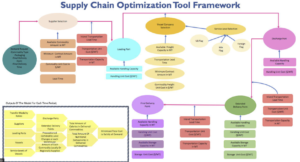
Tufts’ FAQR’s crafted a solution, their Commodity Supply Chain Optimization Model (see diagram below), which was created to help donors and NGOs evaluate prepositioning levels, routing, procurement, and transfer modalities to maximize cost‑effectiveness.

In more recent years, FFP has sought to minimize losses during ocean transport due to humidity, shock and high heat.  This has used advanced methods for small sensors in shipping containers and better tracking of ship routes, temperatures at sea, and queues at ports of disembarkation.