
Ask an Expert
Video: Global Hunger Basics
Fight hunger with knowledge. In this short video, World Hunger Education Service’s Steve Hansch explains global hunger, discusses a few causes, and tells you how to get involved in humanitarian work.




Fight hunger with knowledge. In this short video, World Hunger Education Service’s Steve Hansch explains global hunger, discusses a few causes, and tells you how to get involved in humanitarian work.

Hunger is not having enough nutritious food. To end global hunger, nutritious food needs to be affordable and available to everyone. Learn about the meaning, causes, and solutions to global hunger.
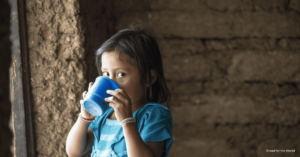
Adequate nutrition in the first 1000 days of a child’s life is vital for proper brain development. Malnutrition can have long-term impacts on a child’s life, including their ability to learn in school and grow properly.

Are you ready to challenge your understanding and make a real impact? Each completed quiz doesn’t just boost your awareness—it also translates into tangible aid for those in need. As you uncover surprising truths about global hunger, Hunger Notes will make a donation to organizations responding to hunger.

Dive deeper into the issue of global hunger with curated resources from our trusted partners. Discover the dedicated organizations joining forces to eradicate hunger worldwide.
Read the latest news and analysis about global hunger below.

In the course of human history many tens of thousands of communities have survived and thrived for hundreds, even thousands, of years. Scores of these largely self-sustaining traditional communities continue to this day in remote jungles, forests, mountains, deserts, and in the icy regions of the No...
The global food sector, which uses 70% of the world’s freshwater, faces extraordinary risks from the twin challenges of water scarcity and water pollution. Rising competition, combined with aging water infrastructure, weak regulation and climate change are creating a water availability emergency t...
CDD/R (the R stands for reconstruction) has three principal goals: improved socio-economic recovery, enhanced social cohesion and better governance. It’s regarded as particularly useful in post-conflict countries where infrastructure is often weak, institutions absent, order and society disrupted....
ROME — European leaders were confronted on Monday with a humanitarian crisis in the Mediterranean, as estimates that as many as 900 migrants may have died off the Libyan coast this weekend prompted calls for a new approach to the surging number of refugees crossing from Africa and the Middle East....

In Brazil water and electricity go together, and two years of scant rainfall have left tens of millions of people on the verge of water and power rationing, boosting arguments for the need to fight deforestation in the Amazon rainforest....
Last week’s post on antibiotic resistance in the environment, promoted by herbicides and spread by dust storms from factory farms is a good segue into this week’s observance of the World Health Organization’s Safe Food Day. We also just had news of an outbreak of antibiotic resistant Shigella ...

Thirty years ago, an Environmental Protection Agency committee determined that the popular weed killer Roundup might cause cancer. Six years later, in 1991, the agency reversed itself after re-evaluating the mouse study that had been the basis for the original conclusion....
The organization’s cancer arm, the International Agency for Research on Cancer, said glyphosate, the active ingredient in the Monsanto herbicide Roundup, was “classified as probably carcinogenic to humans.” It also said there was “limited evidence” that glyphosate was carcinogenic in human...
 World Hunger Education