


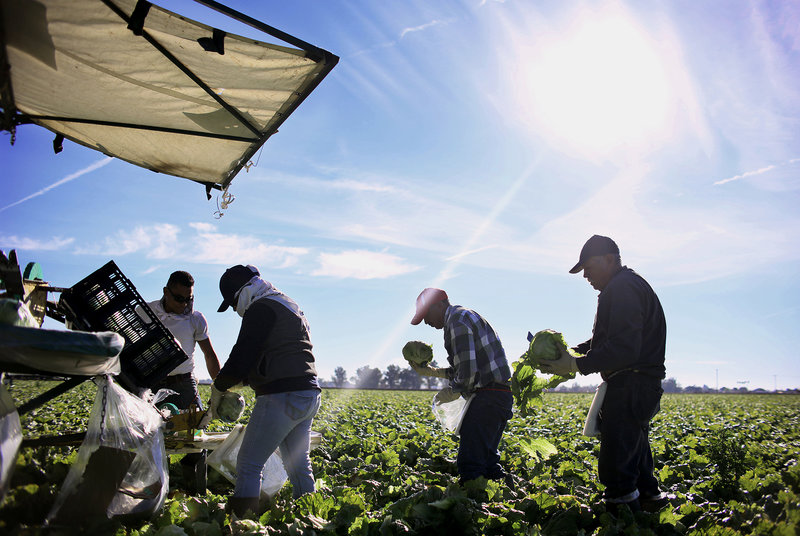
Farm-to-table’s sincere glow distracts from how the production and processing of even the most pristine ingredients — from field or dock or slaughterhouse to restaurant or school cafeteria — is nearly always configured to rely on cheap labor. Work very often performed by people who are themselves poor and hungry.
Author: WHES Team
How an urban school’s gardening project healed a community

“The Power of a Plant” is the inspiring story about how teacher Stephen Ritz incorporated gardening and plants into the curriculum in his South Bronx school, moving the graduation rate of students from 17 percent to 100 percent and improved attendance to 93 percent.
This is what starvation looks like

This picture gallery shows the human face of starvation. More than 20 million people are facing famine in Nigeria, Yemen, South Sudan, Somalia and neighboring countries.
Aid Groups Marshal Scarce Resources to Save Ethiopian Children

The U.N. World Food Program and other aid agencies have responded, but growing need and funding shortfalls are undercutting their efforts. An estimated 7.8 million Ethiopians are in need of humanitarian aid, an increase of more than 2 million since the start of the year.
Armyworm Influx Risks Worsening South Sudan Hunger, UN Says

An invasion of fall armyworms may further damage South Sudanese farming, worsening shortages in the war-torn country where half the population is already facing hunger, the Food and Agriculture Organization said.
Poll reveals 85% of Americans oblivious to hunger in Africa and Middle East

Less than a fifth of Americans are aware that extreme hunger threatens the lives of 20 million people in Africa and the Middle East, yet the overwhelming majority regard it as the most pressing global issue once they have been told…
Food Crises Getting Worse in Somalia, Kenya

Severe food crises are growing in Kenya and Somalia, as the Horn of Africa continues to receive below-normal rainfall, according to the Famine Early Warning Systems Network. The hunger-tracking group says 2.9 million people in Kenya and 3.2 million in Somalia are experiencing Phase 3 or higher on the network’s five-tier warning scale, with Phase 3 being the crisis stage and Phase 5 being a full-fledged famine.
At G20 summit, Trump pledges $639 million in aid to four countries

U.S. President Donald Trump on Saturday promised $639 million in aid to feed people left starving because of drought and conflict in Somalia, South Sudan, Nigeria and Yemen. The new funding brings to over $1.8 billion aid promised by the United States for fiscal year 2017 for the crises in the four countries, where the United Nations has estimated more than 30 million people need urgent food assistance.
PODCAST: People Are Starving

In the worst humanitarian crisis in seven decades, 20 million people face famine in South Sudan, northeast Nigeria, Somalia, and Yemen. On this week’s Deep Dish, Alesha Black, director of the Council’s Global Food and Agriculture Program, talks to Brian Hanson about the causes and reactions to this international emergency. Black also reflects on the long-term implications of famine on Global Food for Thought.
Chokepoints and Vulnerabilities in Global Food Trade

Physical ‘chokepoints’ along trade routes are critical to global food security. The importance of these chokepoints and the risks of closure or disruption are increasing, but such risks and their potential impact remain largely overlooked. Currently, four out of five people live in countries that depend on imports to feed their populations.
