



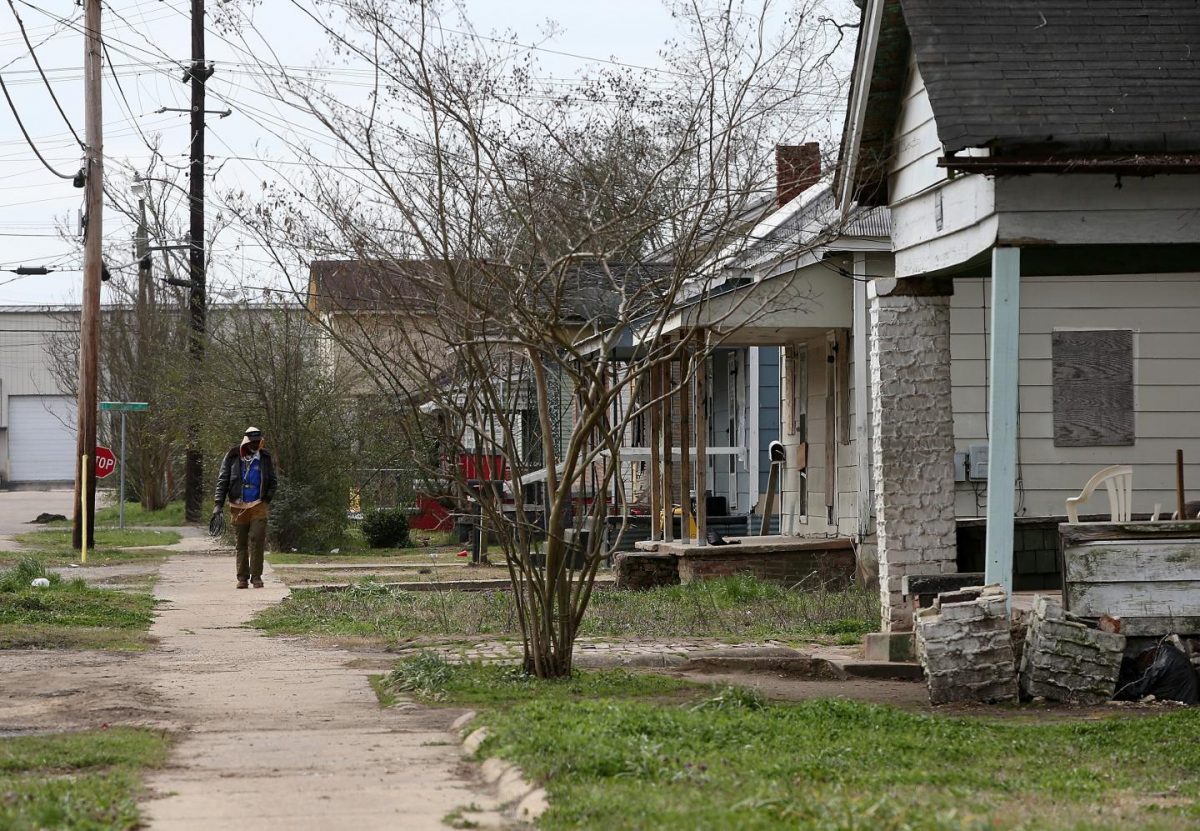
A United Nations official investigating poverty in the U.S. was shocked at the level of environmental degradation in some areas of rural Alabama, saying he had never seen anything like it in the developed world. The tour through Alabama’s rural communities is part of a 2-week investigation by the U.N. on poverty and human rights abuses in the U.S., so far, U.N. investigators have visited cities and towns in California and Alabama, and will soon travel to Puerto Rico, D.C., and West Virginia.
Author: WHES Team
Lake Chad: The World’s Most Complex Humanitarian Disaster
Boko Haram, climate change, predatory armies, and extreme hunger are converging on a marginalized population in Central Africa.
Hunger Fighters Interview: Alex Hart

Biographic Snapshot: Alex Hart is a Program Manager, National Capital for Rise Against Hunger, an organization that works to alleviate hunger in the USA during climate crises and overseas. Alex was involved in a recent volunteer event in McLean, Virginia to assemble food/soup packages.
WHES: How did you (personally) get interested in hunger and hunger issues?
Alex: When I was younger, I was a Boy Scout and Eagle Scout, and there were badges one could earn which involved hunger also, we did “Scouting for food’ collections. As a child I volunteered at a Baltimore soup kitchen for many years. My parents showed us that having enough food to eat was not the situation for everyone. They were instrumental in developing this concern for others. Since both my parents work for non-profits, this was a natural response. I feel my interest in helping others, especially addressing hunger, arose from my younger life experiences.
WHES: What was your first official work on hunger?
Alex: Right after finishing my undergraduate degree at Kent State University I saw this position was open in the DC Metro area. It looked attractive to me. Given my history, the position immediately sparked my interest and I’ve been working at Rise Against Hunger ever since (two years).
WHES: What drew you to work with RISE?
Alex: This was an organization that looked like it was making a difference in peoples’ lives. It is the perfect job for me; it is hands on, one goes out in the community and helps educate people about the issue of hunger and about the work of Rise Against Hunger. It’s not a desk job!
WHES: Can you explain how Rise Against Hunger works? Where does Rise work?
Alex: Rise Against Hunger (formerly called Stop Hunger Now) was founded in 1998 with the vision of ending hunger in our lifetime. Our Meal Packaging Events provide a fun hands on way for volunteers to make an impact. Over the years we have provided over 362 million highly nutritious meals to impact partners in 74 different countries.
Rise Against Hunger has 20 US locations and 5 international offices that facilitate the process of creating a meal from start to finish. We do everything from engaging and educating the community, fundraising, coordinating events and providing the space (if needed) to package our meals. Volunteers fill bags with measured amounts of soy flour, a dehydrogenated veggie blend, and a vitamin and mineral mix.
RISE also will help sponsor corporate events and schools, houses of faith, among other groups. During a meal-packaging event, we have a lot of fun. The idea is you can do something about hunger and it can be fun.
WHES: Who are some of your implementing partners?
Alex: Our primary partner is the volunteer. Those who come to prepare the package, get more informed about hunger issues, and want to do something.
Over 70% of our meals go to youth in the countries we serve through school feeding programs. These programs provide children with the ‘want’ to go to school and the confidence in parents that their child will get at least one meal that day.
We also respond to emergencies. For example, during the Atlantic hurricanes in Houston and Florida in the US, we provided food as well as in the Caribbean islands hit by massive mudslides. We had meals on hand where they are needed.
Lastly we foster empowering communities to do income-generating activities and try to impart a lasting legacy so they could be able produce their own food. We work with international non-governmental organizations to provide the meals, education and income generating activities overseas.
WHES: Do you have a success story to share with our readers?
Alex: I love when Rise Against Hunger works with young people! It’s amazing to see the change in young folk when we tell them about students in other parts of the world who do not have the privilege of eating a meal each day and go to bed hungry. Children start to see the bigger picture and are usually very interested in learning how they can help. Recently I was in Nicaragua and saw first hand that the children were receiving the food and seeing that impact provided me the ability to bring our organization and what we do full circle.
My hope is that the students act on that what ever they are passionate about and go with it, especially if it is something that can help others.
WHES: Are there volunteer opportunities in the US or overseas?
Alex:Yes – there are! That is the bread and butter part of Rise Against Hunger’s work. There are events that come up during the year. Go to our website and type in your location and see where the nearest one is to you. Staff will give advice and help people walk through the steps. Rise can help others learn to do the fund-raising.
WHES: What is your best piece of advice for students and young people who want to fight hunger in their own communities?
Alex:I have three pieces of advice.
1. BE LOUD! There are so many opportunities via social media and internet to get messages across. Hunger is a big problem. Tweet about it, use Instagram, write your Senator.
2. Get involved. Whatever your passion is, lend a little of your time to the issues that are important to you. Even giving 2 hours a year is good.
3. Do your research- read about more things, look up things, and educate yourself.
More information about the organization Alex works for can be found at: http://www.riseagainsthunger.org
This is part of a series we are doing about real people who are working to fight hunger and poverty around the world.
Hunger Fighters Interview: Jessica McClard
Hunger Fighters Interview: Jessica McClard
This is part of a series we are doing about real people who are working to fight hunger and poverty around the world.
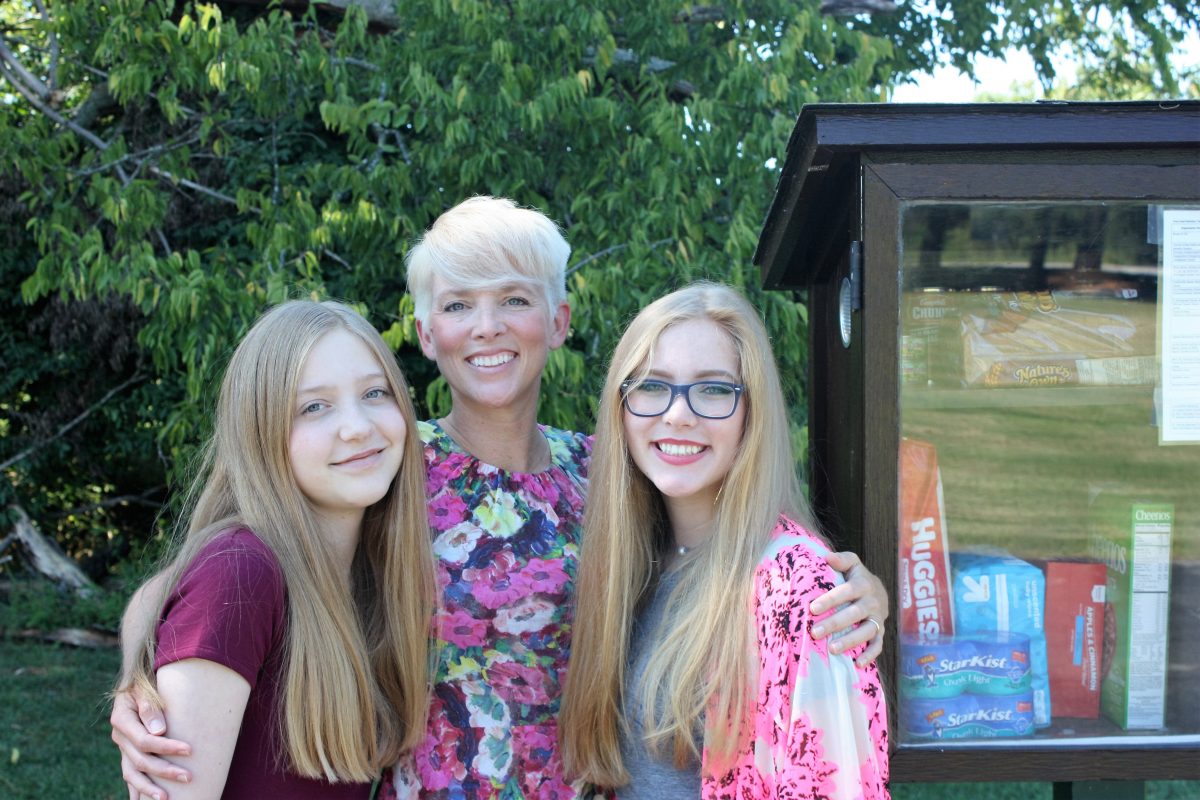
Biographic Snapshot: Jessica McClard is a 42-yr-old native Arkansan and resident of Fayetteville, AR. She is married to Josh and has two daughters, Grier—16, and Charly—13. Jessica has been a pottery painter, a teacher, a server, a nurse, and is currently a financial associate, but her vocation is the Little Free Pantry.
WHES: A lot of people are likely familiar with “Little Free Libraries” where books are offered to borrow in a small house-shaped structure on a pole near playgrounds, schools, and in residential neighborhoods. The “Little Free Pantry” is similar only it contains food. How did the idea of the Little Free Pantry come to you and what does it do?
Jessica: I am a runner and a reader. I’d often swing by a neighbor’s Little Free Library (LFL) on runs and browse its shelves. Then, another neighbor had an LFL. Then another! I do some of my best thinking on my runs. More and more, I thought about the LFL as concept. I have lots of books and imagined my middle class neighbors did too, so the LFLs in my neighborhood weren’t about access. I finally decided the LFL speaks to people because it creates space for neighborliness. The fact it addressed a larger social issue, literacy, was secondary. That meant other things might go inside and work. Books feed the mind and soul. Food feeds the mind and body. I became determined to see if the LFL concept might address food insecurity.
The Little Free Pantry (LFP) is a small, weatherproof space into which anyone may place food or personal care items available to anyone anytime. The LFP creates space to promote giving by neighbors to neighbors, feeding people in the process.
WHES: Little Free Pantries, sometimes called “Blessing Boxes”, have been popping up around the United States, how big has this gotten? Are they in any other countries?
Jessica: The LFP Project exists in lots of iterations—Blessing Boxes, Red Door Pantries, Community Food Boxes, and many others—in most states and as far away as New Zealand! Just this morning, I watched a news segment in Dutch about a gentleman in Purmerend, Netherlands, and his SoGoed Shop. That shop will soon have five siblings!
WHES: How do you build your own Little Free Pantry and what should people keep in mind when setting one up? Are there resources you can share?
Jessica: The Little Free Pantry Project is open source. As with naming, those interested in stewarding a project may utilize any space they want. Pilot plans are available at littlefreepantry.org, but I encourage folks to consult, utilize, adapt, or disregard! Some of my favorite projects are Craigslist upcycles and out-of-commission newspaper boxes.

Site selection is the project’s most challenging component. I recommend doing due diligence to determine whether permitting will be required and obtaining host permission before construction. Generally, good hosts are privately-owned, publicly-operated entities. The website has an FAQ with additional startup information and a way to contact me should the FAQ prompt other questions/concerns. I also recommend reaching out to stewards currently operating projects in one’s area. They’ll know more about local conditions, and connection is what the project is all about.
WHES: What is your best piece of advice for students and young people who want to fight hunger in their own communities?
Jessica: I have two best pieces! The first is leverage social media to amplify your efforts. The second is don’t be afraid of failure. Doing is what’s important.
WHES: What are you working on right now?
Jessica: This time, inspired by DonorsChoose, I have an online giving marketplace called PantryGift in development. PantryGift will assemble participating LFP and LFP-like project campaigns in one place where donors anywhere may support projects anywhere. PantryGift will help the helpers feed more people.
WHES: Any parting thoughts for our readers?
Jessica: The obvious beneficiaries of the project’s work are those experiencing food insecurity. The LFP is about feeding people, yes. But it’s also about working together and about choosing reciprocity, trust, and grace over scarcity, mistrust, and judgment. Less obvious but no less profound is the project’s effect on stewards and communities. It changes them.
WHES: Well thank you for answering for sharing your experiences with our readers! You can learn more about the Little Free Pantry movement here: http://www.littlefreepantry.org/

New Study Finds That 4.2 Million Kids Experience Homelessness Each Year

4.2 million young people experience unaccompanied homelessness in the course of a year, according to a new study from the University of Chicago; 1 in 30 teens experience some type of homelessness and it’s more common the older you get
The Big Washington Food Fight

This article shows how insider changes in Washington power structures could impact the nutrition of US food.
Elementary school ‘share tables’ keep unwanted lunch food out of trash
As we get closer to #Thanksgiving, Hunger Notes is keeping the focus on #foodwaste and ways to fight it: In Florida, 20 public elementary schools are using “share tables”. The easy to implement and no-cost/low-cost solution to the problem is endorsed by the USDA.
James Beard chefs come to the “rescue” of wasted food in Pittsburgh

Learn about 412 Food Rescue, the numerically named nonprofit that works to prevent food waste throughout greater Pittsburgh.
40,000 Rohingya Children Face Malnutrition, Need Life-Saving Aid

A recent survey conducted by humanitarian agencies in the Cox’s Bazar region of Bangladesh found that 40,000 Rohingya children between the ages of 6 months and 5 years require life-saving assistance and more than $12 million is needed to respond to such humanitarian crisis.
UN Warns Manage Climate Risks or Face Much More Hunger by 2050

Climate change threats, from worsening drought and flooding to sea level rise, could increase the risks of hunger and child malnutrition around the world by 20 percent by 2050, food security researchers warned Wednesday.
