


June 28, 2026 by Nadira Kabir. What the 2026 Primaries Could Mean for America’s Food Safety Net
As the United States moves deeper into the 2026 primary season, voters are beginning to choose the candidates who will compete in congressional, gubernatorial, and other state and federal elections. While debates over immigration, inflation, and the economy are dominating campaign rhetoric, another issue, one that affects millions of households every day, is increasingly shaping both state and national political agendas: hunger in America. Hunger policy rarely dominates election headlines. Yet decisions made during primary campaigns often determine which proposals ultimately become law, shaping access to food assistance long before voters cast ballots in the general election.
For decades, hunger policy in the United States has been rooted in public health, child welfare, and poverty reduction. Programs such as the Supplemental Nutrition Assistance Program (SNAP), the Special Supplemental Nutrition Program for Women, Infants, and Children (WIC), school meals, and Medicaid form the backbone of America’s nutrition safety net, supporting millions of households each year. As primary races intensify across the country, however, these programs are increasingly becoming political battlegrounds, with candidates sharply divided over whether the safety net should be expanded, restructured, or reduced.
These debates are no longer theoretical. In states such as Arkansas, new work and eligibility requirements tied to recent federal reforms are already taking effect, and some recipients have begun losing benefits as states implement stricter rules. The outcome of the 2026 primaries may determine not only the future of federal spending, but whether millions of Americans can continue to access food assistance at all.
Hunger in a America
Food insecurity remains a persistent problem in the United States despite declining unemployment and broader economic growth. Food banks across the country continue to report elevated demand years after the height of the COVID-19 pandemic, while grocery prices remain significantly higher than pre-pandemic levels. Millions of Americans continue to struggle to afford housing, healthcare, childcare, transportation, and food simultaneously.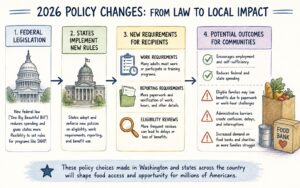
For readers interested in the broader picture, see United States Hunger Facts and Statistics, which provides an overview of current food insecurity trends, who is most affected, and how hunger continues to impact communities across the country. These data help explain why nutrition assistance remains one of the most important—and politically debated—components of the nation’s social safety net.
The United States Government spends billions of dollars annually on nutrition assistance programs, yet hunger remains a reality for many households. The country’s anti-hunger system includes SNAP, school meals, WIC, and Summer EBT, which helps eligible families purchase groceries during summer months when children lose access to school meals.
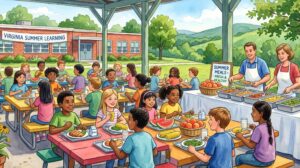
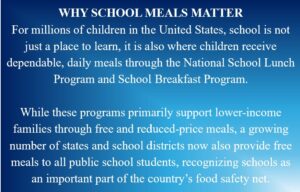
School meal programs provide free or reduced-price breakfasts and lunches to millions of children each day, while Summer EBT helps families purchase groceries when school cafeterias close during the summer months. As discussed in Opinion: School Meals to Combat Hunger, these programs do far more than alleviate hunger. They improve student health, attendance, classroom performance, and long-term educational outcomes, making them among the nation’s most effective investments in child well-being. Yet SNAP remains the largest and most visible component of the nation’s food assistance system, making it a frequent focus of political debate and policy reform.
At the center of the current debate is the recently enacted national appropriation commonly referred to as the “One Big Beautiful Bill,” a sweeping federal package that supporters describe as an effort to reduce government spending, encourage workforce participation, and give states greater flexibility in administering assistance programs. Critics, however, argue that the legislation represents one of the most significant retrenchments of federal anti-hunger protections in decades.
Debates Over America’s Safety Net
Supporters of the legislation argue that stronger work requirements help preserve public confidence in social programs and encourage long-term employment. Many conservative candidates campaigning in Republican primaries have framed the reforms as necessary to reduce dependency on government assistance and restore fiscal discipline. Some have also supported restrictions on what SNAP recipients can purchase, arguing that publicly funded nutrition programs should incentivize healthier eating habits.
Critics contend that many SNAP recipients already work, often in low-wage jobs with unstable schedules and limited benefits. Anti-hunger advocates warn that stricter administrative rules frequently reduce enrollment not because families become financially secure, but because navigating the system becomes more difficult. Increased paperwork requirements, periodic eligibility reviews, and expanded work mandates can disproportionately affect older adults, caregivers, and workers whose hours fluctuate from week to week. Supporters describe the reforms as a necessary modernization of the safety net. Critics see them as a significant rollback of federal anti-hunger protections.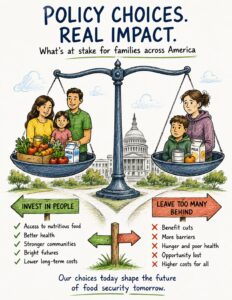
Arkansas: An Early Test Case
Unlike many federal programs, SNAP is administered through partnerships between the federal government and individual states. As a result, policy changes debated in Washington can affect communities differently depending on where people live.
Arkansas offers one of the clearest early examples of how these policy changes are unfolding on the ground.
Updated state SNAP guidance now requires many able-bodied adults between the ages of 18 and 54 to work at least 20 hours per week or participate in qualifying employment and training programs to maintain benefits. Individuals who fail to comply for three months within a three-year period can lose eligibility for the remainder of that period. While work requirements in SNAP are not new, recent federal changes expand who must comply and how aggressively states may enforce eligibility rules. Arkansas has also pursued additional restrictions on SNAP purchases, including efforts to limit the use of benefits for products such as soda and candy. State officials argue these measures encourage workforce participation and healthier food choices. Yet advocates say the practical effect is often the loss of benefits among people who remain poor but struggle to satisfy reporting requirements or maintain stable work hours in difficult labor markets.
Early reports from Arkansas recipients and advocacy organizations suggest their confusion about these new rules, difficulty documenting compliance, and worries that eligible households will lose benefits.
Texas and the Challenge of Administrative Barriers
Arkansas is not alone. Texas, which serves one of the nation’s largest SNAP populations, illustrates another challenge in the fight against hunger: administrative barriers.
Even before the latest federal reforms, advocates and food banks in Texas raised concerns about application backlogs, eligibility reviews, and procedural hurdles that can delay or interrupt benefits for eligible families. For many households, the challenge is not simply meeting eligibility requirements but successfully navigating a complex administrative system.
Missing paperwork, technology challenges, or difficulties documenting work hours can result in benefit interruptions even when households remain eligible. Anti-hunger advocates argue that as states implement new requirements under the One Big Beautiful Bill, these administrative burdens may become even more significant.
Supporters argue that stronger accountability measures ensure taxpayer resources are directed appropriately and encourage workforce participation. Critics counter that increased reporting requirements often reduce participation without addressing the underlying causes of poverty or food insecurity.
Taken together, Arkansas and Texas illustrate the central tension in today’s hunger debate: how to balance program accountability with ensuring that eligible families can access the assistance for which they qualify.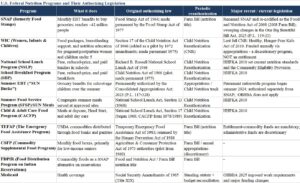
A Familiar Debate with New Consequences
Hunger policy is no longer simply about food assistance. It has become a broader debate about work, health, fiscal responsibility, and the role of government in ensuring that Americans can meet one of their most basic needs.
The hunger policy debate reflects deeper philosophical disagreements about poverty and the role of government in American society. Some candidates emphasize personal responsibility and workforce participation as the best path out of poverty. Others argue that hunger itself undermines the ability to work, learn, and maintain health, making food assistance an essential economic stabilizer rather than simply a welfare program.
Historical context also shapes the current moment. Since the welfare reforms of the 1990s, American policymakers from both major political parties have increasingly tied public assistance to employment requirements. During the COVID-19 pandemic, however, many of those restrictions were temporarily loosened as employment and food security went down. SNAP participation rose during that period, helping many households weather economic instability. Now, the political pendulum appears to be swinging back toward tighter eligibility rules and reduced federal spending.
Analysts warn that if SNAP participation declines under the new rules, food banks and local charities will not be able to absorb the increased demand on private organizations. Hunger relief organizations have repeatedly emphasized that charitable food systems cannot replace the scale or reach of federal nutrition programs.
At the same time, a growing bipartisan conversation has emerged around the concept of “nutrition security”, not simply ensuring that people have enough calories, but that they have access to healthy and nutritious food. Some policymakers see restrictions on sugary foods within SNAP as part of that effort, while others argue that limiting consumer choice risks stigmatizing low-income families without addressing the structural causes of poor nutrition.
At the same time, a growing bipartisan conversation has emerged around the concept of “nutrition security”: not simply ensuring that people have enough calories, but that they have access to healthy and nutritious food. Some policymakers see restrictions on sugary foods within SNAP as part of that effort, while others argue that limiting consumer choice risks stigmatizing low-income families without addressing the structural causes of poor nutrition, such as food deserts, healthcare inequities, and low wages.
Looking Beyond the Primaries
As the 2026 primaries lead to mid-term votes, hunger policy is increasingly becoming a proxy for larger debates about the role of government, public spending, and economic opportunity. From Arkansas to Texas, states are already serving as testing grounds for policies that could reshape food assistance nationwide.
The decisions voters make in the coming months may determine not only the future of SNAP and Medicaid, but also the broader network of nutrition programs, including WIC, school meals, and Summer EBT, which support millions of American families.
Food banks and charitable organizations will continue to play a critical role in responding to need, but anti-hunger advocates consistently note that charitable food assistance cannot match the scale of federal nutrition programs.
In a country like America, of great wealth and agricultural abundance, what responsibility does government have to ensure that its people can afford to eat? As states begin implementing new policies, the answers emerging from these debates may shape food access for millions of Americans for years to come.
Further Reading
- https://www.worldhunger.org/united-states-hunger-facts-and-statistics/https://www.worldhunger.org/opinion-school-meals-to-combat-hunger/
- https://alliancetoendhunger.org/about-hunger/hunger-in-america/
- School Meals to Combat Hunger
- https://alliancetoendhunger.org/wp-content/uploads/2026/06/WIC-Appropriations-Sign-On-June-2026.pdf
- U.S. Department of Agriculture Food and Nutrition Service (FNS). SNAP Program Information.
- U.S. Department of Agriculture Economic Research Service. Household Food Security in the United States.
- Congressional Research Service. Supplemental Nutrition Assistance Program (SNAP): Eligibility and Benefits.
- Arkansas Department of Human Services. SNAP Work Requirements and Time Limits.
- Texas Health and Human Services Commission. SNAP Food Benefits Program.
- Feeding America. Hunger in America Research and Data.
- Center on Budget and Policy Priorities. Food Assistance and SNAP Policy Analysis.
- Food Research & Action Center (FRAC). SNAP and Food Insecurity Resources.
- U.S. Department of Agriculture. WIC Program Overview.
- U.S. Department of Agriculture. National School Lunch Program and School Breakfast Program.
- U.S. Department of Agriculture. Summer Electronic Benefit Transfer (Summer EBT) Program.
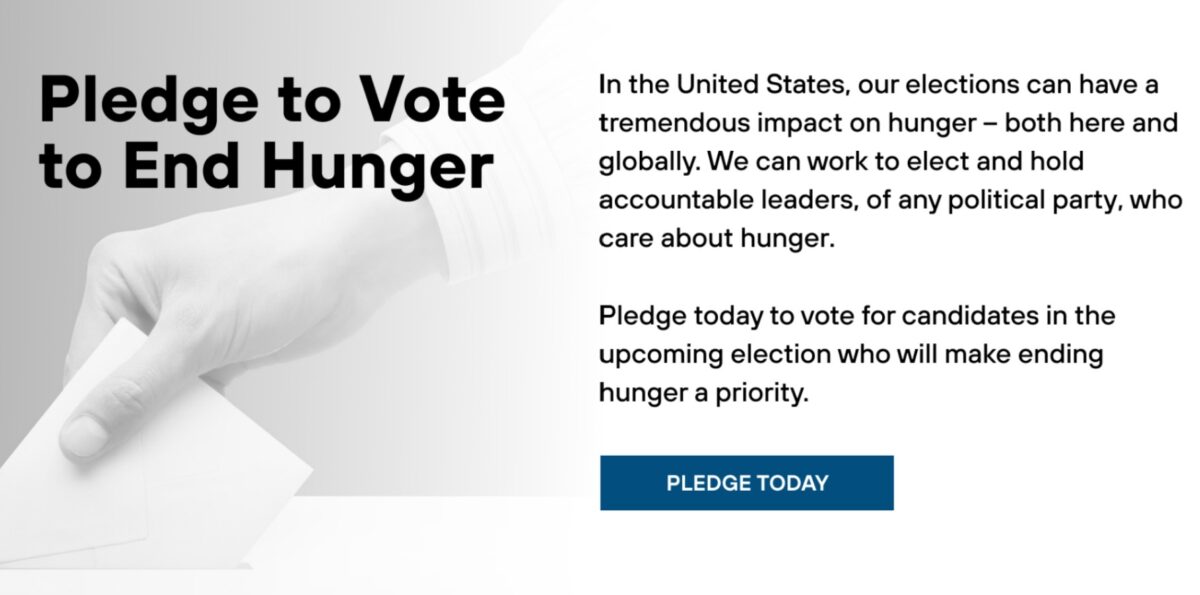
Cover image credit: Bread for the World, https://www.bread.org/article/what-does-voting-have-to-do-with-ending-hunger/
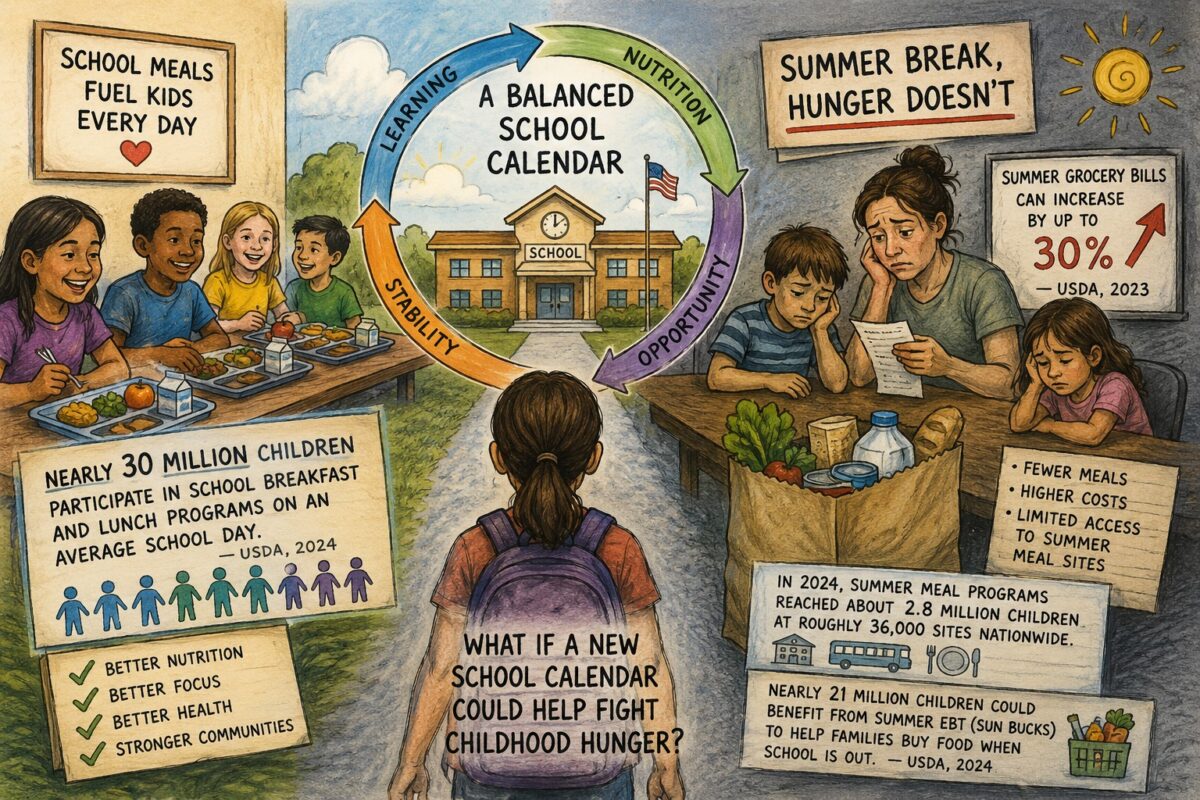
 yogurt, eggs, or milk, while lunches often include sandwiches, pasta, rice dishes, vegetables, fruit, and protein options designed to meet federal nutrition standards.