



Low-income and minority households are more likely to live in neighborhoods exposed to higher levels of water and air pollution. Perhaps it’s time to start thinking about environmental poverty as an additional dimension of poverty.
Author: WHES Team
Q&A: The World Bank’s pivot to fragile states
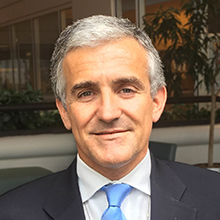
The World Bank is taking steps to move earlier into conflict-affected and fragile countries with more funding, more staff, and a mandate to focus on prevention, according to the institution’s fragility, conflict, and violence director.
Want to save the world from hunger? Start by not wasting food, shoppers told

The World Food Programme has launched a social media movement, #RecipeforDisaster, with the aim of making the public in the UK more conscious of the food waste they generate.
Photographer Matt Black on documenting poverty

For the last four years Black has traveled the country, driving nearly 90,000 miles through 46 states, photographing marginalized communities. He calls his project “The Geography of Poverty.” Watch the video to learn more.
TED Talk: Why Bees Are Disappearing

Honeybees have thrived for 50 million years. So why did colonies recently start dying en masse?
Food Deserts in America

Did you know 2.3 million Americans do not own a car and live over a mile from a supermarket? Check out this infographic and blog on food deserts from Tulane’s School of Social Work to learn more.
Escaping Poverty Requires Almost 20 Years With Nearly Nothing Going Wrong

In his new book The Vanishing Middle Class: Prejudice and Power in a Dual Economy, MIT economist Peter Temin argues that economic inequality results in two distinct classes. And only one of them has any power.
‘How to Feed the World’ offers practical, positive solutions to food insecurity

A new book of essays by a multidisciplinary team of researchers from Purdue University helps readers understand how decisions made today by farmers, scientists, policymakers, educators and consumers are vital to ensuring global food security in coming decades.
Escaping Poverty Requires Almost 20 Years With Nearly Nothing Going Wrong
In his new book The Vanishing Middle Class: Prejudice and Power in a Dual Economy, MIT economist Peter Temin argues that economic inequality results in two distinct classes. And only one of them has any power.
What We Know About Youth – and What We Don’t

Over the past several years, the development community has made a lot of assumptions about youth and their motivations, but without a lot of hard data to inform our programming. RTI has a new survey that sheds some light on youth motivations. (Click the link to read Ms. Davies’ article on the Chicago Council website.)
